
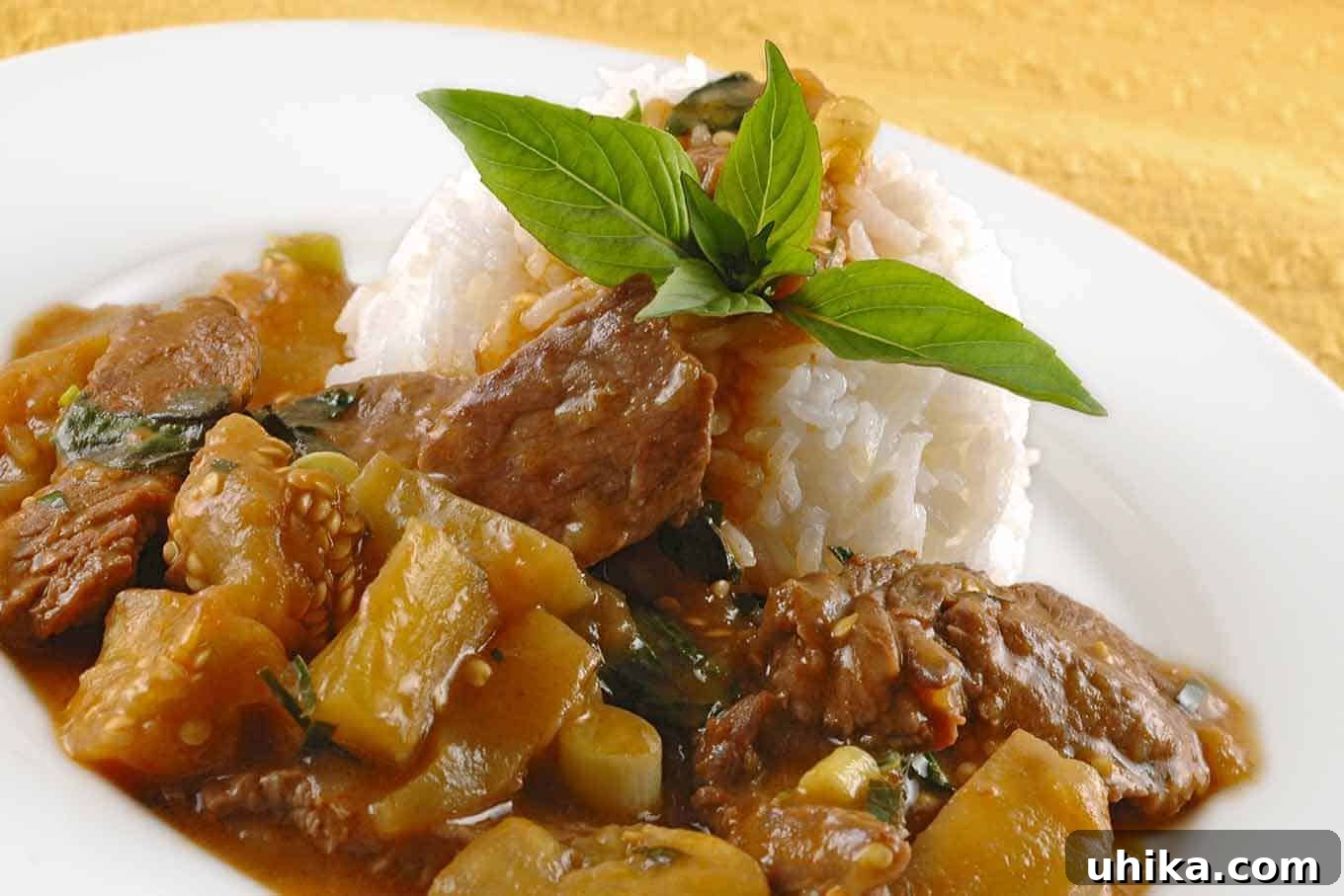
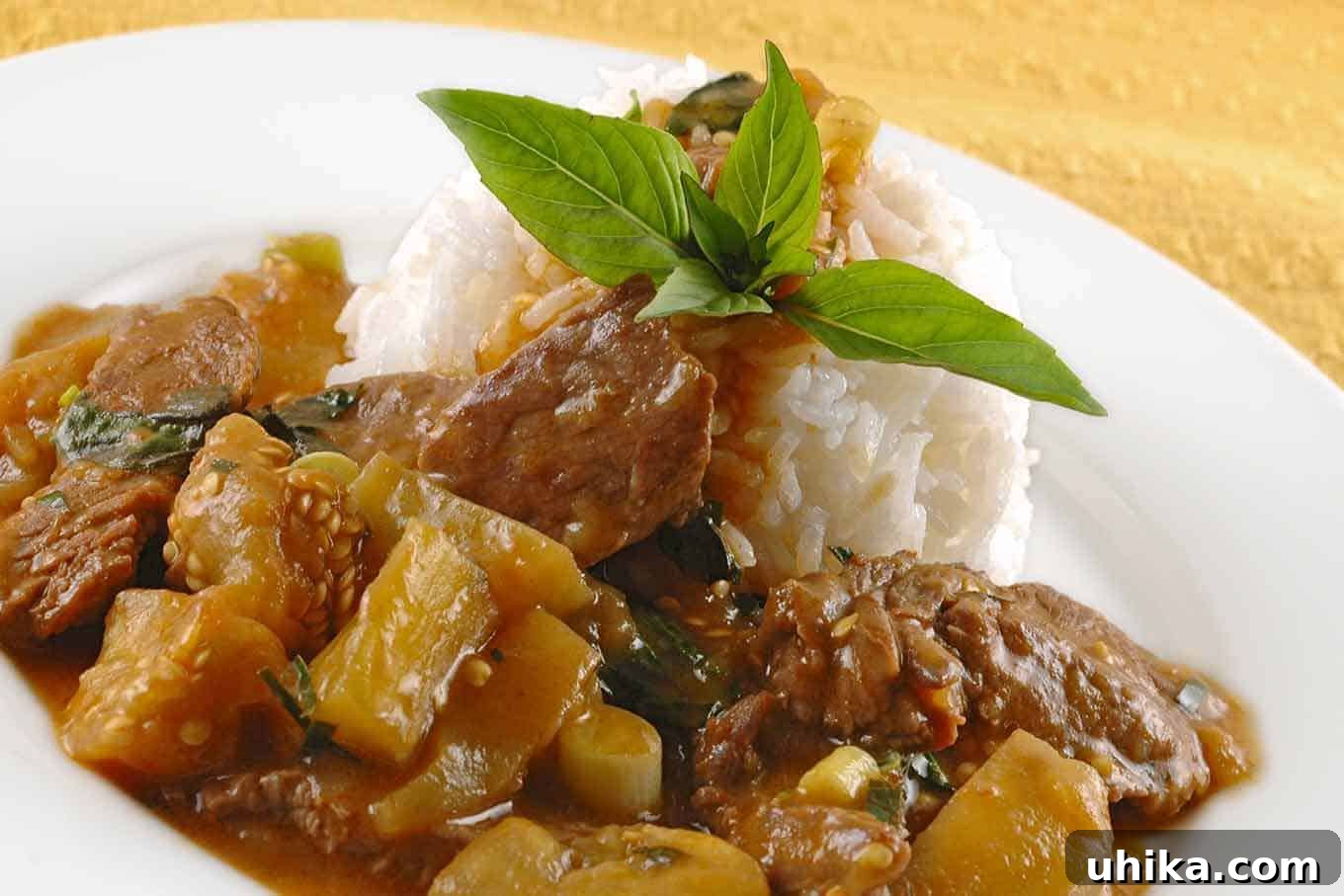
Authentic Thai Red Curry Beef with Eggplant: A Quick & Flavorful Recipe
Embark on a culinary journey to Thailand with this incredibly simple, quick-to-prepare, and intensely flavorful Red Curry Beef with Eggplant recipe. Thai cuisine is celebrated worldwide for its complex interplay of spicy, sweet, sour, and savory notes, and this dish perfectly encapsulates that unique balance. Featuring tender slices of beef, creamy coconut milk, pungent red curry paste, the aromatic zest of kaffir lime, and the peppery freshness of Thai basil, this recipe brings distinctive textures and bold flavors together in perfect harmony. It’s an ideal choice for anyone seeking an authentic taste of Thailand without spending hours in the kitchen.
Why This Red Curry Beef with Eggplant Will Become Your New Favorite
In a world where time is a precious commodity, finding recipes that deliver maximum flavor with minimal effort is a true treasure. This Thai Red Curry Beef with Eggplant recipe fits the bill perfectly, making it an excellent addition to your weekly meal rotation. Here’s why you’ll love it:
- Lightning Fast Preparation: With just 10 minutes of prep and 15 minutes of cooking, you can have a gourmet-quality meal on your table in under half an hour. It’s faster than takeout!
- Explosion of Authentic Flavors: We use classic Thai ingredients like red curry paste, fish sauce, kaffir lime leaves, and Thai basil to ensure a truly authentic taste experience that’s rich, spicy, and deeply aromatic.
- Wholesome and Satisfying: Packed with protein from the beef and fiber from the eggplant, all bathed in a luscious coconut milk sauce, this dish is both hearty and incredibly satisfying.
- Versatile and Customizable: While beef and eggplant are a fantastic combination, this recipe is adaptable. Feel free to swap out the protein or add other vegetables to suit your taste and what you have on hand.
Whether you’re a seasoned chef or a beginner in the kitchen, this recipe makes creating an impressive Thai dish accessible and enjoyable. Get ready to impress your taste buds and your guests!
Exploring the Core Ingredients of Thai Red Curry
The magic of Thai Red Curry lies in its carefully selected ingredients, each contributing a vital note to the symphony of flavors. Understanding these components is key to appreciating and mastering this dish:
Red Curry Paste: The Heart of the Dish
Red curry paste is the foundational ingredient, a vibrant mixture of red chilies, lemongrass, galangal, kaffir lime zest, and other spices. It provides the characteristic heat and depth of flavor. While you can make it from scratch, high-quality store-bought pastes are readily available and incredibly convenient. Look for brands that list fresh ingredients at the top for the best flavor.
Creamy Coconut Milk: The Unifying Element
Unsweetened coconut milk is essential for creating the rich, creamy base of the curry. It mellows the spiciness of the curry paste and provides a luxurious texture. Full-fat coconut milk is recommended for the most authentic and satisfying results, but light coconut milk can be used if you prefer a lighter version. Remember to shake the can well before opening to combine the cream and water.
Tender Beef Sirloin: Protein Perfection
Top sirloin is an excellent choice for this curry due to its lean texture and robust flavor. Slicing the beef thinly ensures it cooks quickly and remains tender, absorbing all the wonderful flavors of the sauce. Other cuts like flank steak or even chicken breast can also be used, always sliced against the grain for tenderness.
Nutrient-Rich Eggplant: The Flavor Sponge
Eggplant, particularly the smaller, elongated varieties like Thai eggplant or Japanese eggplant, works wonderfully in this curry. Its spongy texture readily absorbs the fragrant sauce, becoming incredibly tender and flavorful. Peeling the eggplant is optional; smaller eggplants often have thinner skins that don’t require peeling. Cutting it into bite-sized chunks ensures even cooking.
Aromatic Kaffir Lime Leaves: The Signature Scent
Kaffir lime leaves are a unique and unmistakable aroma in Thai cuisine, offering a bright, citrusy, and slightly floral note. They are typically slivered or bruised to release their essential oils. If fresh kaffir lime leaves are hard to find, you can often find them frozen in Asian markets. As a substitute, the zest of a regular lime can provide a similar citrusy brightness, though the distinct kaffir lime aroma will be less pronounced.
Pungent Thai Basil: The Finishing Touch
Thai basil is distinct from its Italian cousin, featuring a more anise-like, peppery, and slightly spicier flavor. It’s typically added at the very end of cooking to preserve its vibrant taste and color. If Thai basil is unavailable, regular Italian basil can be used, perhaps with a pinch of black pepper to mimic some of its peppery notes.
Savory Fish Sauce: The Umami Depth
Fish sauce is the cornerstone of Thai seasoning, providing a deep, salty, and umami-rich flavor that is crucial for balancing the curry. Don’t be deterred by its strong aroma; it transforms beautifully when cooked, adding incredible depth without making the dish taste “fishy.”
Essential Tips for a Perfect Thai Red Curry
To ensure your Red Curry Beef with Eggplant turns out perfectly every time, keep these expert tips in mind:
- Thinly Slice the Beef: For maximum tenderness and quick cooking, slice the sirloin against the grain into very thin strips. Partially freezing the beef for 15-20 minutes before slicing can make this task much easier.
- Bloom the Curry Paste: Don’t skip the step of cooking the red curry paste in oil for a minute. This “blooming” process enhances its fragrance and deepens its flavors before the coconut milk is added.
- Don’t Overcook the Beef: Beef sirloin cooks very quickly. Stir-fry it just until browned and barely cooked through, then remove it from the pan. It will finish cooking when added back to the sauce, ensuring it remains tender.
- Evenly Cut Eggplant: Ensure your eggplant chunks are roughly the same size so they cook evenly. Eggplant will absorb the curry sauce beautifully, becoming soft and creamy.
- Taste and Adjust: Thai cooking is all about balance. Once the curry has simmered, taste it and adjust the seasonings. You might want to add more fish sauce for saltiness/umami, more sugar for sweetness, or a squeeze of lime juice for brightness.
- Freshness is Key for Herbs: Add the Thai basil and kaffir lime leaves towards the end of cooking. This preserves their vibrant flavors and aromas. For kaffir lime leaves, gently bruise them or sliver them to release their oils.
Recipe: Red Curry Beef with Eggplant
By Lynne Webb
This red curry featuring coconut milk, beef, eggplant, basil, and kaffir lime is quick to prepare and brimming with the bold, aromatic flavors of authentic Thai cuisine.
- Prep Time: 10 mins
- Cook Time: 15 mins
- Total Time: 25 mins
- Servings: 2 servings
- Rating: 4 out of 5 stars (based on 1 vote)
Ingredients
- 1/2 lb top sirloin, sliced thin
- 3 tablespoons fish sauce, divided
- 1 teaspoon cornstarch
- 1 tablespoon vegetable oil
- 1-1/2 tablespoons red curry paste
- 1 can (14-ounce) unsweetened coconut milk
- 2 tablespoons lime juice
- 1 tablespoon sugar
- 4 to 6 kaffir lime leaves, slivered (see recipe notes)
- 1 small eggplant, peeled and cut into chunks
- 1/2 cup Thai basil leaves, loosely packed (see recipe notes)
Instructions
- In a small bowl, whisk together 1 tablespoon of the fish sauce with the cornstarch until smooth. Add the thinly sliced beef and toss to coat evenly. Set the marinated beef aside.
- Heat the vegetable oil in a large pan or wok over high heat until shimmering. Add the red curry paste to the hot oil and cook for about 1 minute, stirring constantly, until it becomes wonderfully fragrant.
- Add the marinated beef to the pan and stir-fry for approximately 2 minutes, or until the beef is browned on the outside and just cooked through. Remove the beef from the pan and set it aside to prevent overcooking.
- To the same pan, add the unsweetened coconut milk, fresh lime juice, the remaining 2 tablespoons of fish sauce, sugar, and the slivered kaffir lime leaves. Reduce the heat to medium-high and stir until the sugar is completely dissolved and the sauce is well combined.
- Add the eggplant chunks to the simmering sauce. Continue to cook for 7 to 10 minutes, stirring occasionally, or until the eggplant is tender and fully cooked through, and the curry sauce has thickened to your desired consistency.
- Return the cooked beef to the pan with the sauce and eggplant. Stir in the Thai basil leaves. Cook for just about 1 minute, or until the beef is thoroughly heated through and the basil has slightly wilted but retains its vibrant color and aroma.
- Serve immediately over a bed of fluffy steamed jasmine rice for a complete and authentic Thai meal.
Chef’s Notes
- Thai Basil Substitution: If you are unable to find authentic Thai basil, regular Italian basil can be used as a substitute. For a closer flavor profile, consider adding a small pinch of black pepper to the dish along with the Italian basil.
- Kaffir Lime Leaves Alternative: Fresh kaffir lime leaves impart a very distinct citrusy aroma. If they are unavailable, you can use the grated zest of 1 fresh lime to provide a bright, citrusy note. While the flavor won’t be identical, your dish will still be absolutely delicious.
- Spice Level Adjustment: Red curry paste can vary in heat. For a milder curry, use a little less paste. For extra spice, you can add a few fresh bird’s eye chilies along with the curry paste.
Serving Suggestions and Delicious Variations
This Red Curry Beef with Eggplant is wonderfully versatile and can be enjoyed in various ways. Here are some ideas to inspire your next meal:
- Classic Rice Pairing: The traditional way to serve this curry is with fragrant steamed jasmine rice, which perfectly absorbs the rich sauce. Brown rice or sticky rice also make excellent choices.
- Noodle Delight: For a different texture, serve your curry over thin rice vermicelli noodles or wide rice noodles.
- Add More Vegetables: Enhance the nutritional value and texture by incorporating other vegetables such as bell peppers, bamboo shoots, green beans, or snap peas. Add them along with the eggplant, adjusting cooking times as needed.
- Protein Swaps: Not a fan of beef? This curry works beautifully with other proteins. Try sliced chicken breast or thighs, shrimp (add in the last 2-3 minutes of cooking), or even firm tofu for a vegetarian option.
- Garnish Galore: A sprinkle of chopped fresh cilantro, a wedge of lime, or a few extra basil leaves can add visual appeal and a burst of freshness. Crushed peanuts can also provide a delightful crunch.
Frequently Asked Questions About Thai Red Curry
Here are answers to some common questions about making this delightful Thai curry:
Can I prepare this curry ahead of time?
Yes, red curry often tastes even better the next day as the flavors meld and deepen. You can prepare the entire dish and store it in an airtight container in the refrigerator for up to 3 days. Reheat gently on the stovetop or in the microwave, adding a splash of water or coconut milk if the sauce has become too thick.
What’s the difference between red, green, and yellow curry?
The primary difference lies in the type and proportion of chilies and other ingredients used in the curry paste. Red curry paste typically uses dried red chilies, resulting in a vibrant red color and a moderate to hot spice level. Green curry paste features fresh green chilies, giving it a bright green hue and often making it the spiciest. Yellow curry paste, influenced by Indian cuisine, uses yellow chilies, turmeric (for color), and often dried spices like cumin and coriander, resulting in a milder and sweeter curry.
Is this recipe very spicy?
The spice level of this curry can be adjusted based on the brand of red curry paste you use and your personal preference. Most store-bought red curry pastes offer a moderate heat. If you prefer a milder dish, use slightly less curry paste. For more heat, you can add a few sliced fresh chilies (like bird’s eye chilies) to the pan along with the curry paste.
Where can I find kaffir lime leaves?
Kaffir lime leaves can typically be found in the produce section of well-stocked Asian grocery stores. They are sometimes sold fresh, but often found frozen. If you can’t find them locally, some specialty online retailers also offer them. Remember, lime zest can be used as an alternative, though the flavor will be slightly different.
Like this recipe? We’d love to hear from you! Please consider sharing your thoughts and rating the recipe in the comments below. Your feedback helps us and other home cooks.