
Podcast: Play in new window | Download (Duration: 46:06 — 69.2MB)
Subscribe or Follow Apple Podcasts | Spotify | Amazon Music | RSS | More
Navigating the world of cookware can be a daunting task for any home chef. With an overwhelming array of materials, brands, and price points, choosing the best pans for your kitchen can feel like a complex puzzle. Each type of cookware, be it nonstick, stainless steel, cast iron, or other specialized options, comes with its own unique set of advantages and disadvantages. Understanding these differences is key to making informed decisions that enhance your cooking experience and lead to consistently delicious results. In this comprehensive guide, we’ll explore the various types of essential cookware, delve into their ideal applications, discuss their respective pros and cons, and help you discover which options might become your new kitchen favorites.
Watch Our Cookware Guide on YouTube
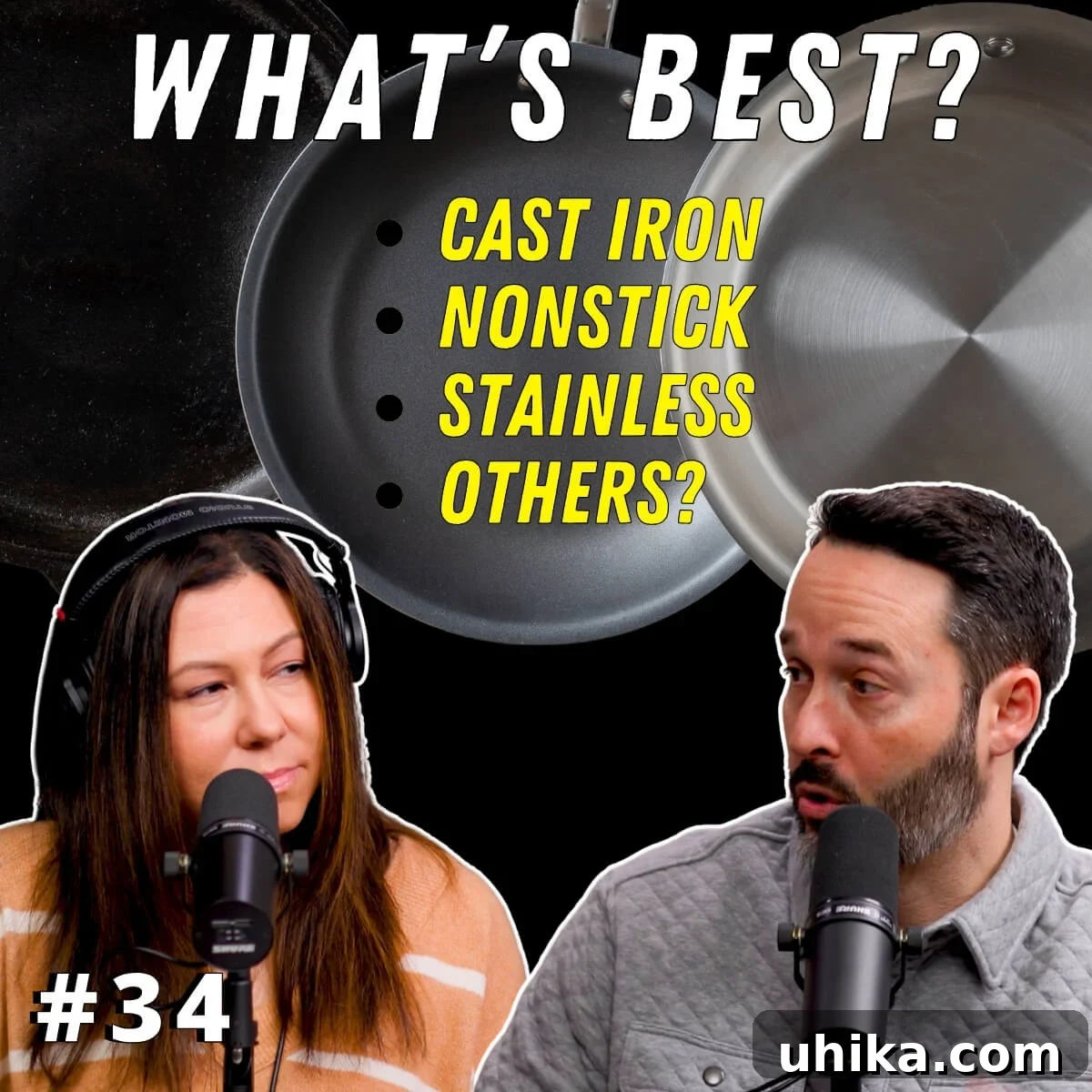
Over the years, a frequent question that surfaces in kitchen conversations and culinary forums is, “Which type of pan truly works best?” While the answer isn’t a simple one-size-fits-all, certain materials consistently stand out in terms of performance and versatility. For our in-depth discussion, we’ve focused primarily on what we lovingly call the “Big 3” essential cookware types: cast iron, stainless steel, and nonstick pans. However, we’ll also touch upon other valuable contenders like carbon steel and aluminum, ensuring you have a holistic view of the best cooking pans available today.
Table of Contents
- Watch Our Cookware Guide on YouTube
- The Ultimate Cookware Showdown: Pros and Cons
- Building Your Versatile Cookware Collection
- Resources
The Ultimate Cookware Showdown: Pros and Cons
Each type of pan brings something unique to the table, and understanding these characteristics is crucial for elevating your cooking. Let’s dive into the specifics of each material, examining their strengths, weaknesses, and optimal applications.
Stainless Steel Cookware: The Workhorse of the Kitchen
Stainless steel pans are renowned for their incredible durability, versatility, and sleek appearance. Often constructed with an aluminum or copper core (known as clad construction), they offer excellent heat distribution and retention, making them ideal for a wide range of cooking tasks. Their non-reactive surface means you can cook acidic foods like tomato sauces or lemon-based dishes without concerns about metallic flavors or discoloration. Stainless steel is particularly adept at achieving a beautiful sear on meats, developing a flavorful “fond” at the bottom of the pan, which is essential for deglazing and creating rich sauces.
However, stainless steel does have its drawbacks. Food can stick if the pan isn’t properly preheated or if insufficient fat is used. Cleaning burnt-on food can sometimes require a bit more effort. While generally dishwasher safe, handwashing is often recommended to maintain their luster. Despite these minor inconveniences, a good quality stainless steel pan is an indispensable tool for sautéing vegetables, searing steaks, making pan sauces, and countless other everyday cooking needs, especially those requiring high heat and oven finishing.
Cast Iron Cookware: The Enduring Classic
Cast iron cookware stands out for its exceptional heat retention and incredible longevity. Properly cared for, a cast iron skillet can last for generations, becoming a treasured family heirloom. Once heated, it maintains a consistent temperature, which is perfect for achieving a deep, even sear, frying, and baking. With repeated use and proper seasoning, cast iron develops a natural nonstick surface that rivals modern coatings. It’s also highly versatile, easily transitioning from stovetop to oven, making it ideal for dishes like frittatas, cornbread, pan pizzas, and baked desserts such as peach blueberry crisps.
The main challenges with cast iron revolve around its weight and maintenance. It’s significantly heavier than other pans, which can be cumbersome. Cast iron also requires specific care: it must be hand washed, thoroughly dried immediately to prevent rust, and regularly seasoned with oil to maintain its nonstick properties. Additionally, acidic foods cooked for extended periods can strip the seasoning and impart a metallic taste. Despite the learning curve for maintenance, the unparalleled cooking results and durability make cast iron a beloved choice for many passionate cooks.
Nonstick Cookware: Convenience for Delicate Dishes
Nonstick pans are celebrated for their unparalleled food release and effortless cleanup. Their slick surface allows you to cook with minimal oil or butter, making them a healthier choice for certain dishes. They are particularly excellent for delicate foods that tend to stick, such as eggs (perfect for over-easy), pancakes, crepes, and delicate fish fillets. The ease of use and quick cleaning make nonstick a go-to for everyday breakfast and lighter meals.
The primary downside of nonstick cookware is its durability. The nonstick coating, typically PTFE (Teflon) or ceramic-based, is susceptible to scratching and flaking, especially with metal utensils or high heat. This means nonstick pans generally have a shorter lifespan compared to stainless steel or cast iron. They also have temperature limitations; extreme heat can degrade the coating and, in some older pans, release harmful fumes (though modern PFOA/PFAS-free options have mitigated many health concerns). To prolong their life, it’s best to use silicone or wooden utensils, cook on low to medium heat, and hand wash them gently. Despite their limitations, a quality nonstick pan is essential for specific, delicate culinary tasks.
Carbon Steel Cookware: The Chef’s Secret Weapon
Carbon steel pans offer a fantastic hybrid experience, combining the best attributes of both cast iron and stainless steel. They are lighter and more responsive to temperature changes than cast iron, yet they can still achieve excellent searing and develop a robust, natural nonstick seasoning over time. Like cast iron, they are incredibly durable and can withstand high temperatures, making them suitable for both stovetop and oven use. Carbon steel heats up quickly and evenly, providing superior heat control.
Similar to cast iron, carbon steel requires seasoning and diligent maintenance to prevent rust and maintain its nonstick surface. It is also reactive to acidic foods, meaning prolonged contact can strip the seasoning. However, for those willing to invest a little care, carbon steel is a phenomenal choice for stir-fries, searing, achieving crispy results, and cooking delicate items like omelets or crepes with precision, often favored by professional chefs for its performance.
Aluminum and Hard-Anodized Cookware: The Everyday Essential
Aluminum cookware, especially when hard-anodized, is a common sight in many kitchens due to its excellent heat conductivity and lightweight nature. Regular aluminum heats up very quickly and evenly, making it efficient for tasks like boiling water or simmering sauces. However, plain aluminum is reactive to acidic foods and can stain or pit. To address this, many aluminum pans are either coated with a nonstick layer or undergo a process called hard anodization.
Hard-anodized aluminum is aluminum that has been electrochemically hardened, making it significantly more durable, non-reactive, and resistant to scratches and corrosion. Often, hard-anodized pans also feature a nonstick coating. They offer good heat distribution, are relatively lightweight, and are easier to maintain than bare aluminum or cast iron. While perhaps not as aesthetically enduring as stainless steel or as uniquely effective as cast iron for specific tasks, hard-anodized aluminum cookware provides a practical, affordable, and robust option for everyday cooking, offering a great balance of performance and convenience.
Building Your Versatile Cookware Collection
As you can see, there isn’t one “best” pan; rather, there’s a best pan for every specific culinary need. My personal preference, after countless hours in the kitchen, is to have a diverse array of cookware on hand. This allows me to select the perfect tool for the ingredients and technique I’m using, ensuring optimal results every time.
For example, if my goal is to achieve a deep, caramelized sear on chicken thighs and develop that crucial fond at the bottom of the pan—a rich layer of browned bits that forms the foundation of an incredible sauce—I’ll unequivocally reach for my trusty stainless steel skillet. Its ability to withstand high heat and promote browning is simply unmatched. Conversely, for a delicate task like frying a few perfect over-easy eggs, where easy release and minimal cleanup are paramount, a reliable nonstick pan is my absolute go-to. It prevents sticking without excess oil, preserving the integrity of the delicate yolk.
Cast iron, with its incredible heat retention and oven-safe capabilities, is a powerhouse for dishes that require a consistent, even heat, or that start on the stovetop and finish in the oven. Think about a hearty potato frittata, a perfectly crispy cast iron pan pizza, or even a delightful dessert like peach blueberry crisps. It’s the ideal choice when you need that deep, even crust or a dish that benefits from prolonged, stable heat.
Ultimately, the secret to a well-equipped kitchen lies not in owning every pan, but in owning the right pans for your cooking style. A curated collection that includes at least one high-quality stainless steel skillet, a well-seasoned cast iron pan, and a couple of dependable nonstick options will cover the vast majority of your cooking needs. Experimenting with carbon steel and hard-anodized aluminum can further enhance your capabilities, offering specialized benefits for unique dishes.
Explore More Delicious Recipes
- Assassin’s Pasta Recipe
- New York Sicilian Pizza Recipe
- Italian Meatballs and Sunday Sauce Recipe
We hope this deep dive into the world of cookware has provided valuable insights and helped you on your journey to choosing the best pans for your kitchen. If you enjoyed this exploration of the Nonstick vs. Stainless vs. Cast Iron Episode and our comprehensive guide to cookware, please leave us a comment below and share your thoughts! Your feedback is incredibly valuable to us.
We absolutely love receiving your questions and engaging with our community. Please feel free to send any queries you might have to [email protected]. Remember, there’s no question too small or insignificant when it comes to cooking and kitchen essentials.
If you’re a fan of our weekly podcast and enjoy the culinary discussions, consider supporting us on Patreon. As a thank you for your support, you’ll receive two exclusive bonus episodes each month, packed with even more cooking tips, recipes, and stories!
Thank you for listening and for being a part of the Sip and Feast community. Happy cooking!
For a complete list of all our podcast episodes, visit our dedicated podcast episode page.