
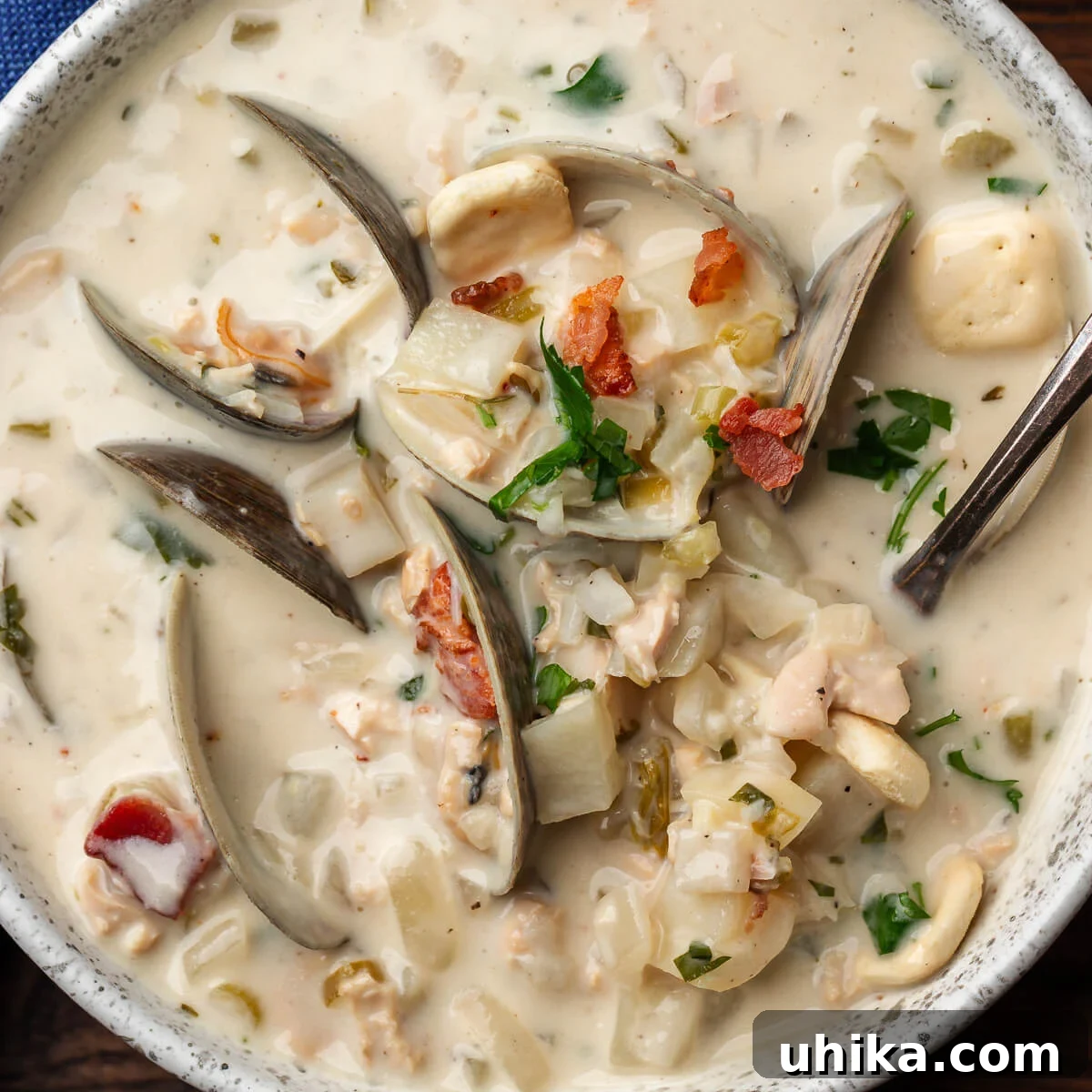
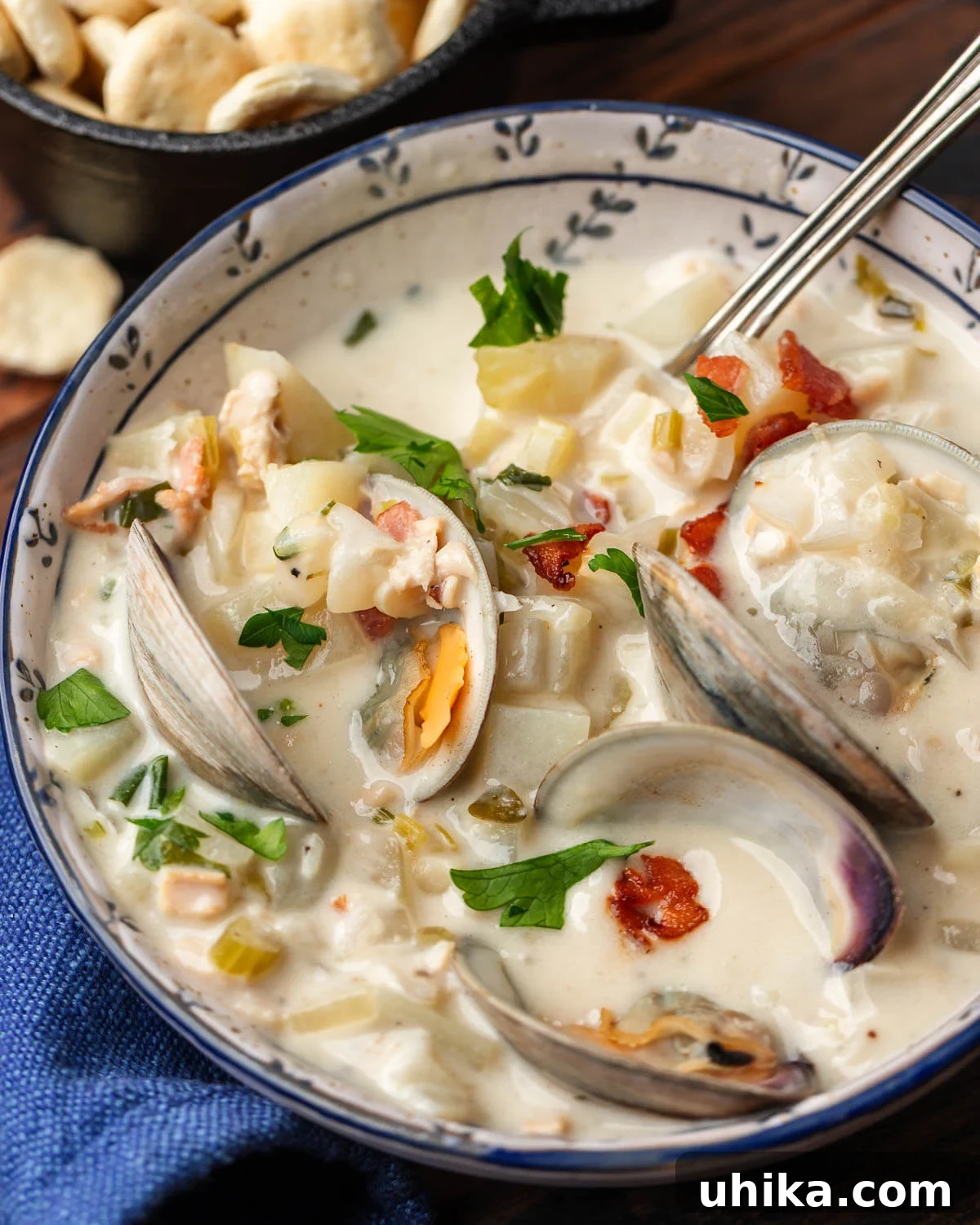
Indulge in the ultimate comfort food with this exquisite New England Clam Chowder, brimming with tender clams and hearty potatoes, all bathed in a perfectly rich and creamy broth. Enhanced with the savory notes of crispy bacon, sweet onions, fresh celery, and a hint of white wine, this classic recipe offers an authentic taste of coastal New England. Surprisingly simple to prepare, it’s a guaranteed crowd-pleaser for any occasion.
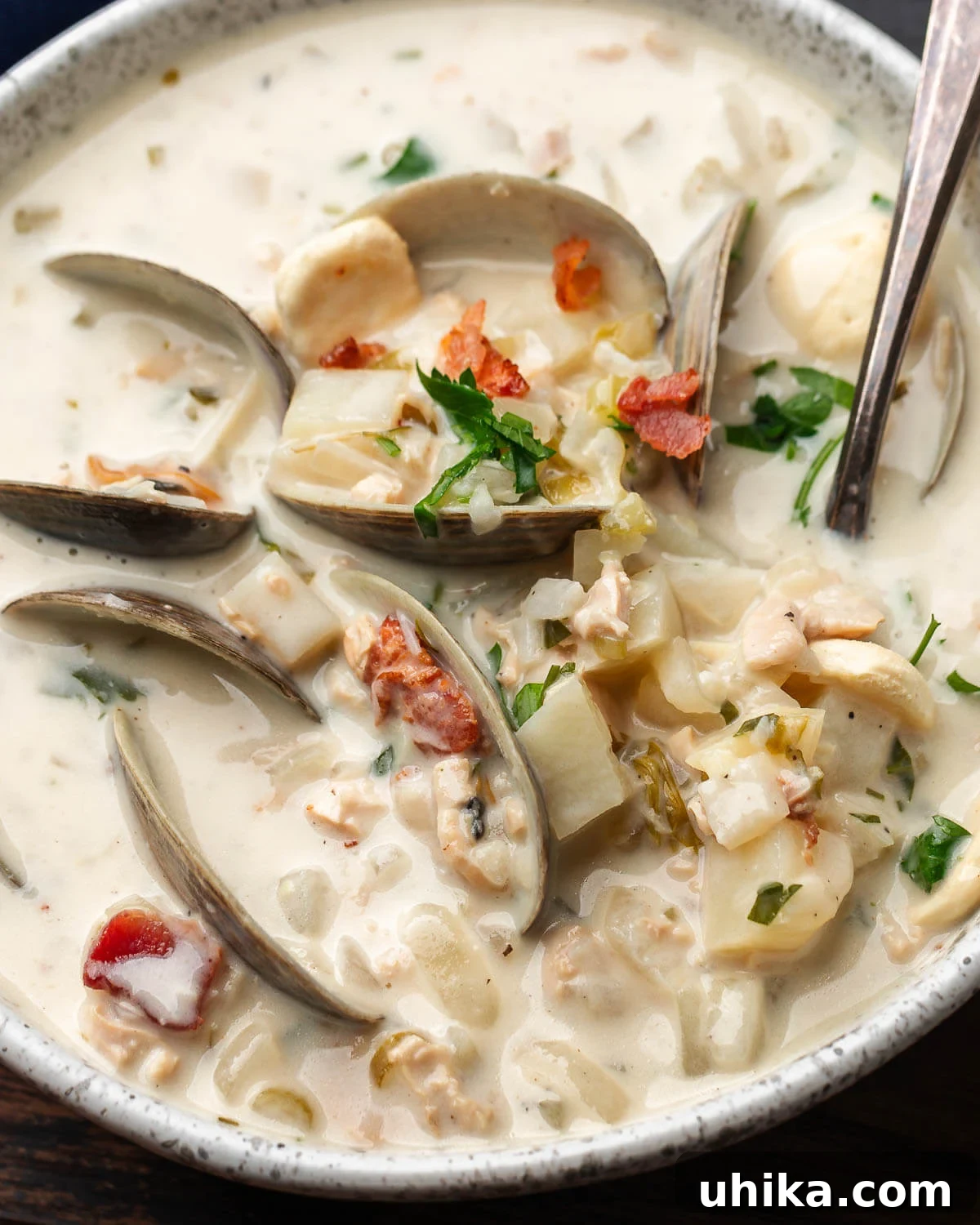
Having traversed the picturesque coastlines of New England for decades, as a proud Long Islander, I’ve savored countless bowls of New England Clam Chowder. Each experience has contributed to my quest for the perfect rendition, and I am thrilled to share a recipe that I truly believe has achieved that elusive perfection. This isn’t just a recipe; it’s a culinary journey that brings the essence of the ocean straight to your table.
What sets this chowder apart is the thoughtful combination of ingredients – substantial chunks of fresh clams, complemented by the briny depth of clam juice. The result is a robust, heartwarming soup that truly embodies the taste of the sea, in the most delightful and comforting way imaginable. It’s a symphony of flavors that evokes memories of breezy coastal afternoons and cozy evenings.
Imagine the ideal setting: a warm, sunny day, perhaps by the water, with this creamy white clam chowder served alongside a succulent lobster roll or a vibrant shrimp scampi roll. Add a side of crispy fried calamari and an ice-cold beer, and you have a quintessential New England feast. However, the beauty of this chowder is its versatility; it’s equally satisfying as a comforting meal on any given night, regardless of the season or the weather outside. It’s a dish that transcends occasions, always bringing a touch of coastal charm to your home.
And don’t forget the quintessential accompaniment: a generous handful of crisp oyster crackers, perfect for crumbling into the rich broth or scooping up every last drop of deliciousness.
Essential Ingredients for Your New England Clam Chowder
Crafting the perfect New England Clam Chowder begins with selecting high-quality ingredients. Below, you’ll find a comprehensive list of what you’ll need, along with specific insights and notes to guide your selection and preparation. Every element plays a crucial role in building the layered flavors of this classic dish. Refer to the full recipe card further down for precise quantities and additional details.
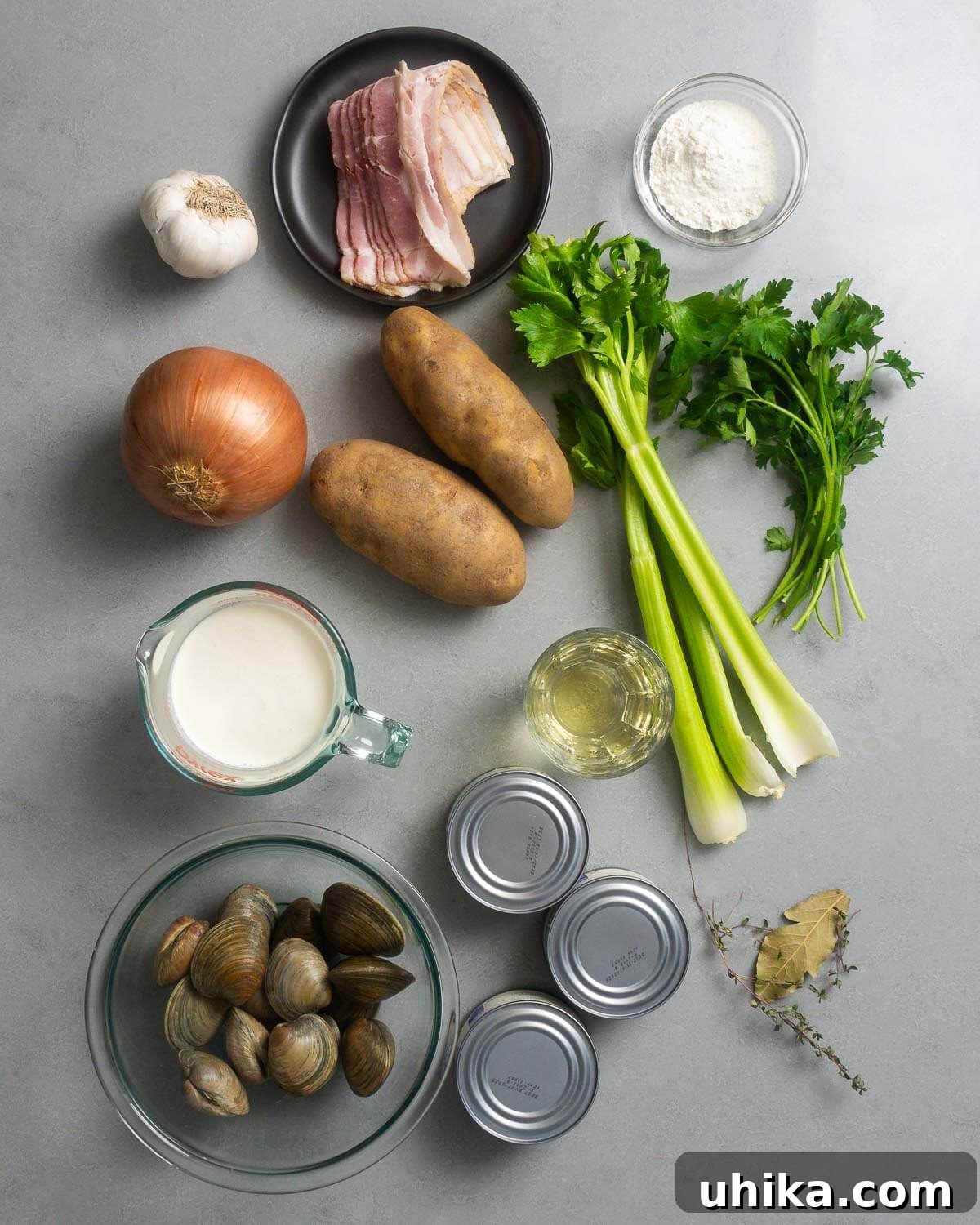
- Clams: For an unparalleled depth of briny flavor, I recommend using a combination of fresh littleneck clams, canned chopped clams, and their accompanying clam juice. Fresh littlenecks provide a delightful chew and a naturally sweet, ocean-fresh taste. Canned clams, with their rich juice, contribute a concentrated clam essence that’s difficult to achieve with fresh clams alone. If fresh clams are unavailable or if you prefer a simpler approach, using only canned chopped clams (and their juice) will still yield a delicious and satisfying chowder. Ensure fresh clams are properly purged and cleaned before cooking.
- Potatoes: The choice of potato is key for the chowder’s texture. Russet potatoes are traditionally favored for their high starch content, which helps thicken the chowder and creates a beautifully tender, almost floury consistency as they cook. Yukon Golds are a good alternative if you prefer a slightly waxier potato that holds its shape a bit more, offering a creamier mouthfeel. For those who enjoy an even thicker chowder, a culinary secret is to stir in a small amount of instant potato flakes at the very end. While not traditional, this is an excellent trick for adjusting thickness without compromising flavor.
- White Wine: A dry white wine, such as a Sauvignon Blanc or Pinot Grigio, adds a subtle layer of acidity and complexity that brightens the rich flavors of the chowder. The alcohol cooks off during simmering, leaving behind only its nuanced taste. If you prefer to avoid alcohol, you can simply omit the wine without significantly detracting from the dish; a little extra clam juice or vegetable broth can be used to maintain liquid volume.
- Bacon: Crispy bacon is non-negotiable in an authentic New England clam chowder. Not only does it add incredible smoky, salty flavor, but the rendered bacon fat serves as the initial cooking base, infusing the aromatics with its irresistible essence. Choose a good quality, thick-cut bacon for the best results.
- Aromatics (Onion, Celery, Garlic): These humble vegetables form the aromatic foundation of the chowder. When gently sautéed in bacon fat and butter, they release their sweet and savory compounds, building a complex flavor base that is essential for a truly great chowder.
- All-Purpose Flour: Flour is used to create a roux with the bacon fat and butter, which acts as the primary thickening agent for the creamy broth. It ensures a smooth, velvety consistency without being overly heavy.
- Heavy Cream: This is where the “creamy” in clam chowder truly shines. Heavy cream provides the luxurious richness and silky texture that is characteristic of New England-style chowder. Do not substitute with lighter creams or milk, as they may curdle or not provide the desired richness.
- Herbs (Fresh Thyme, Bay Leaves, Fresh Parsley): These herbs infuse the chowder with earthy, aromatic notes. Thyme and bay leaves are simmered with the potatoes to deepen the broth’s flavor, while fresh parsley is stirred in at the end to add a bright, fresh finish.
- Salt and Pepper: Crucial for seasoning. Always taste and adjust to your preference, keeping in mind the saltiness from the bacon and clam juice.
Refer to the recipe card below for full information on ingredients and quantities needed to create this spectacular dish. Enjoy the process of bringing these wonderful flavors together!
Mastering Your Homemade New England Clam Chowder: Step-by-Step
Creating this classic New England Clam Chowder is a rewarding experience, and easier than you might anticipate. Follow these detailed steps to achieve a perfectly balanced and deliciously creamy chowder. Each step is numbered to correspond with the written instructions and accompanying process images, ensuring you can follow along with confidence.
- Prepare the Fresh Clams (Optional): If you’re incorporating fresh littleneck clams, begin by thoroughly scrubbing and rinsing 16 clams under cold running water to remove any grit. Place these cleaned clams in a large pot with 3 ½ cups of water, then cover the pot tightly. Bring the heat to medium-high and cook until the clams begin to open, typically within 5-7 minutes. As they open, promptly remove them from the pot with tongs and transfer them to a bowl, tenting with foil to keep them warm and moist. Be sure to discard any clams that do not open. The broth left in the pot is liquid gold! (Photo #1 – illustrating steaming clams)
- Strain the Clam Broth: Carefully strain the reserved clam broth from the pot through a fine-mesh strainer lined with a coffee filter or cheesecloth. This crucial step ensures that any lingering sand or shell fragments are removed, leaving you with a clean, flavorful broth. Set this strained broth aside; it will be a foundational liquid for your chowder. (Photo #2 – showing strained clam broth)
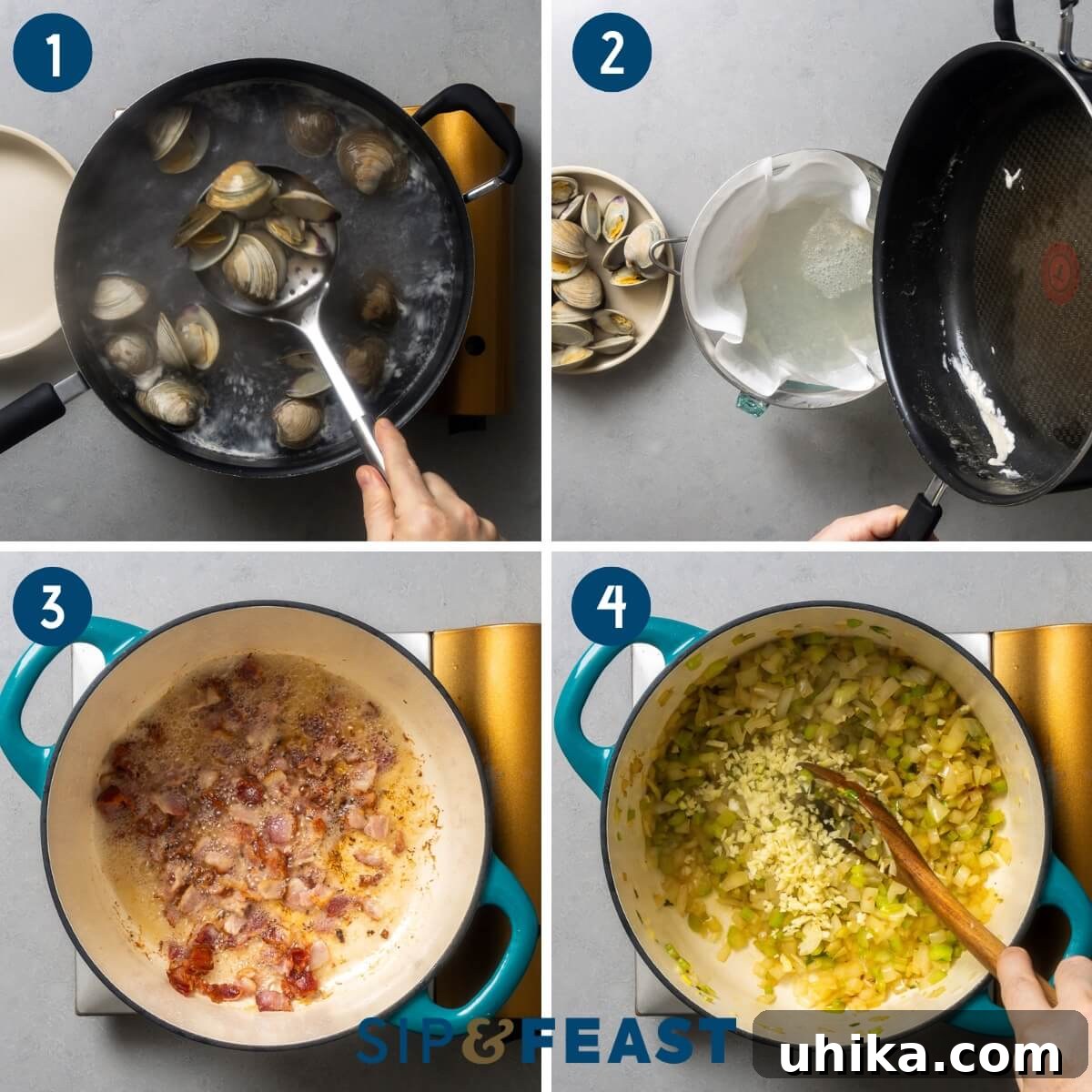
- Prepare Ingredients and Cook Bacon: Begin your mise en place by dicing 1 large onion and 3 ribs of celery. Mince 5 cloves of garlic and dice 6 ounces of bacon into small, even pieces. Peel 1 ½ pounds of Russet potatoes and cut them into ½-inch cubes; this consistent size ensures even cooking. Finally, mince ¼ cup of flat-leaf parsley and set it aside for later. In a large, heavy-bottomed pot or Dutch oven, cook the diced bacon over medium-low heat. Render the fat slowly until the bacon is beautifully crisp. Remove the crispy bacon pieces with a slotted spoon and place them on a plate lined with paper towels, reserving the rendered fat in the pot. This fat is essential for the next steps, imparting a crucial smoky flavor to the chowder. (Photo #3 – showcasing crispy bacon and rendered fat)
- Sauté Aromatics: To the pot with the reserved bacon fat, add 2 tablespoons of butter. Once the butter is melted and shimmering, add the diced onions and celery. Cook these aromatics over medium-low heat for approximately 10 minutes, stirring occasionally, until they are soft and translucent, but not browned. Next, add the minced garlic and continue to cook for another 1-2 minutes, or until the garlic becomes wonderfully fragrant. Be careful not to burn the garlic. (Photo #4 – depicting sautéing onions and celery)
- Create the Roux: Sprinkle 5 tablespoons of all-purpose flour into the pot with the softened aromatics and fat. Stir continuously for 2 minutes, ensuring the flour is thoroughly incorporated and cooked. This process, known as making a roux, is vital; it cooks out the raw flour taste and helps to evenly thicken the chowder later. The mixture should form a pale, cohesive paste. (Photo #5 – illustrating mixing in flour to form a roux)
- Deglaze with White Wine: Pour ½ cup of dry white wine into the pot. Whisk vigorously for 1 minute, allowing the wine to deglaze the bottom of the pot, releasing any flavorful browned bits. The alcohol will evaporate quickly, leaving behind a subtle acidity and depth of flavor. (Photo #6 – showing wine being added to the pot)
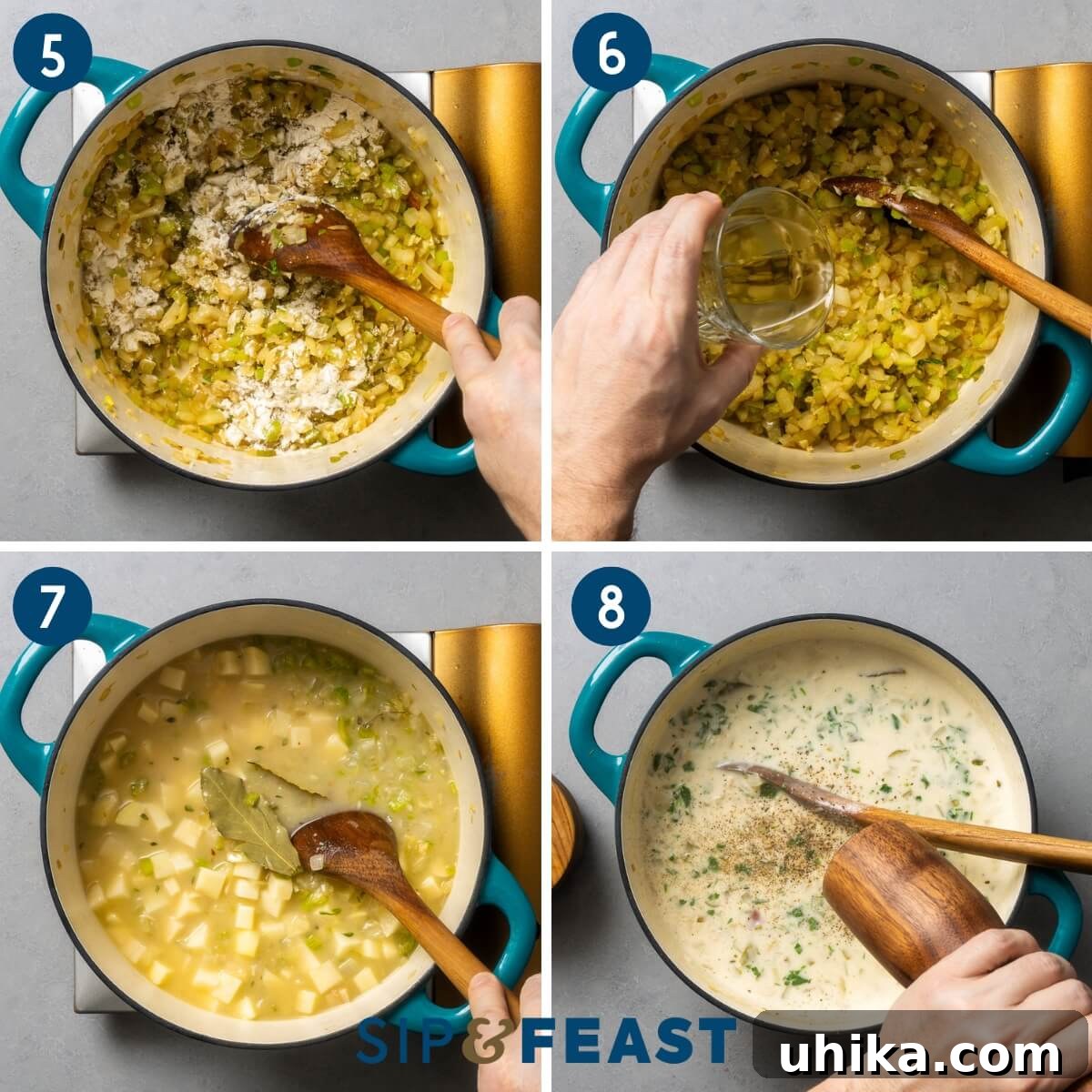
- Simmer the Chowder Base: Gradually add 3 cups of the freshly made clam broth (if you prepared it from whole clams) or store-bought clam juice to the pot, whisking continuously to ensure a smooth consistency free of lumps. Add the cubed potatoes, 2 sprigs of fresh thyme, and 2 large bay leaves. Bring the mixture to a gentle boil, then immediately reduce the heat to low and simmer for 20-25 minutes, or until the potatoes are fork-tender. Frequent stirring is essential during this stage to prevent the potatoes from sticking to the bottom of the pot. This slow simmer allows the flavors to meld beautifully. (Photo #7 – depicting the soup simmering)
- Final Assembly and Seasoning: Once the potatoes are tender, stir in 3 (6.5-ounce) cans of chopped clams, including their flavorful juices. Pour in 1 ½ cups of heavy cream and add half of the reserved crispy bacon. Bring the chowder to a very low simmer, just until it’s warmed through, then immediately remove the pot from the heat to prevent the cream from scalding. Stir in the minced parsley. Now for the crucial step: taste the chowder and adjust the seasoning with salt and pepper as needed. Clam juice and bacon can be quite salty, so season gradually. If your chowder is thinner than you prefer, you can incrementally add 1-2 teaspoons of instant mashed potato flakes, stirring gently after each addition until your desired thickness is achieved. Allow the soup to rest off the heat for at least 5 minutes before serving to allow the flavors to deepen. Ladle the hot chowder into bowls. If you used fresh clams, place a few whole clams in each bowl for an elegant presentation and extra texture. Finish with the remaining crispy bacon bits and a sprinkle of fresh parsley. Serve immediately with a side of oyster crackers and savor every spoonful! (Photo #8 – showcasing the final seasoned chowder)
Expert Tips for the Perfect Clam Chowder
- Achieving Your Preferred Thickness: Traditional New England clam chowder is characteristically not overly thick, aiming for a luscious yet pourable consistency. However, if your preference leans towards a heartier, thicker chowder, there’s a simple trick. After the chowder has finished simmering and you’ve added the cream, slowly stir in instant mashed potato flakes, about a teaspoon at a time. The potato flakes will quickly absorb liquid and thicken the soup without altering its flavor. Continue adding and stirring until you reach your desired consistency. This clever method works wonders for many creamy soups, including my popular corn chowder!
- Elevating Your Garnish: Presentation is key to enhancing the dining experience. For an extra touch of elegance and flavor, I love to serve New England clam chowder with a few freshly steamed littleneck clams placed right on top of each bowl. Not only does this add a wonderful visual appeal, but it also contributes additional briny flavor and a varied texture. Beyond the clams, don’t forget a sprinkle of the reserved crispy bacon and a flourish of fresh parsley. And, of course, a generous side of oyster crackers is absolutely essential for that authentic chowder experience.
- Selecting and Cleaning Clams: The quality of your clams directly impacts the chowder’s flavor. When purchasing fresh clams, always aim for those that are tightly closed. If any are slightly open, tap them gently; they should close. Discard any that remain open or have broken shells. It’s crucial to clean clams thoroughly, especially if they are not farm-raised and commercially purged. While many fishmongers will have already purged their clams, it’s a good practice to double-check. You can purge them at home by soaking them in a bowl of cold, salted water for about 30 minutes to an hour. This encourages them to spit out any sand. Although you will be straining the clam broth through a coffee filter, starting with clean clams ensures the best possible flavor and avoids any unpleasant grit.
- Storing and Reheating Leftovers: New England Clam Chowder makes for fantastic leftovers. Once cooled, transfer any remaining chowder to an airtight container and refrigerate it for up to 3 days. When reheating, gently warm the chowder on the stovetop over low heat, stirring frequently to prevent sticking and ensure even heating. You can also reheat individual portions in the microwave. If the chowder seems too thick after refrigeration, you can thin it out with a splash of milk, cream, or clam juice while reheating. Avoid boiling the chowder vigorously when reheating, as this can cause the cream to separate.
- Variations to Explore: While this recipe is a classic, don’t hesitate to experiment with small variations to suit your taste. For instance, some enjoy adding a cup of fresh or frozen corn kernels during the last 10 minutes of simmering for a touch of sweetness. A pinch of cayenne pepper can introduce a subtle warmth, or a dash of hot sauce for those who prefer a little kick. You could also explore different herbs, though thyme and bay leaf are traditional and highly recommended.
Discover More Delicious Clam Recipes
If your love for clams extends beyond this magnificent chowder, you’re in for a treat! Explore these other fantastic clam-centric recipes that promise to bring more coastal flavors into your kitchen:
- Linguine alle Vongole – A timeless Italian pasta dish featuring tender clams in a delicate white wine and garlic sauce, perfect for a sophisticated yet simple meal.
- Clams Oreganata – Baked clams stuffed with a savory mixture of breadcrumbs, garlic, lemon, and fresh parsley, offering a delightful crunchy texture and bright, zesty flavors.
- Linguine with Canned Clams – An incredibly simple, economical, yet surprisingly delicious pasta dish that proves you don’t always need fresh ingredients to create a satisfying meal.
We hope you’ve thoroughly enjoyed this detailed guide to making our exceptional New England Clam Chowder Recipe. If this recipe has brought joy to your kitchen and your taste buds, please consider giving it a 5-star rating and sharing your experience in the comments section below. Your feedback and ratings are incredibly valuable to us and help fellow home cooks discover delicious new dishes.
We are dedicated to accommodating diverse learning styles. If you are someone who prefers visual instruction, you can find step-by-step video tutorials for many of our recipes on our YouTube channel and engaging content on our Facebook Page. Join our community and feast with your eyes!
New England Clam Chowder
James Delmage
20 minutes
1 hour
40 minutes
2 hours
6
Pin
Ingredients
For the fresh clams (optional)
-
16
little neck clams
purged and rinsed -
3 1/2
cups
water
For the clam chowder
-
6
ounces
bacon
diced -
2
tablespoons
butter -
5
tablespoons
all-purpose flour -
1/2
cup
dry white wine -
1
large
onion
diced -
3
ribs
celery
diced -
5
cloves
garlic
minced -
1 1/2
pounds
Russet potatoes
peeled and cut into 1/2″ cubes -
3
6.5-ounce cans
chopped clams in juice -
3
cups
clam juice
omit if using fresh clams and broth from above -
2
sprigs
fresh thyme
or 2 teaspoons dried thyme -
2
large
bay leaves -
1 1/2
cups
heavy cream -
salt and pepper
to taste -
1/4
cup
flat-leaf Italian parsley
minced -
oyster crackers
for serving -
instant mashed potato flakes
for thickening, optional
Instructions
For the littleneck clams
-
Place the well-scrubbed and rinsed clams and 3 cups of water into a large pot and cover. Turn the heat to medium-high. Once the clams open, remove them to a bowl and tent with foil. Discard any unopened clams. Strain the broth through a coffee filter or fine-mesh strainer and reserve for later.
For the clam chowder
-
Heat a large heavy pot or Dutch oven over medium-low heat. Add the diced bacon and cook until it’s crisp (approximately 7-10 minutes). Remove the crispy bacon pieces to a plate, leaving the rendered fat in the pot.
-
Add the diced onions and celery to the pot along with the butter. Cook over medium-low heat until they are soft and translucent (about 10 minutes). Stir in the minced garlic and cook for an additional 1-2 minutes, until fragrant.
-
Sprinkle the all-purpose flour into the pot. Mix well and cook for about 2 minutes, or until the white specks of flour disappear, forming a roux. Pour in the white wine and whisk continuously for 1 minute, deglazing the pot. Then, add the freshly made clam broth (if using whole clams) or the store-bought clam juice, continuing to whisk until fully incorporated and smooth.
-
Add the cubed potatoes, fresh thyme sprigs, and bay leaves to the pot. Bring the mixture to a gentle boil.
-
Once boiling, reduce the heat to low and simmer for 20-25 minutes, or until the potatoes are tender when pierced with a fork. Stir frequently to prevent the potatoes from sticking to the bottom of the pot.
-
Stir in the canned chopped clams (with their juices) along with the heavy cream. Add half of the reserved crispy bacon to the pot. Bring the chowder to a low simmer, just until heated through, then remove the pot from the heat immediately.
-
Stir in the minced fresh parsley. Taste the soup and adjust seasoning with salt and pepper as needed. If the soup is too thin for your liking, you can add 1 tablespoon of instant mashed potato flakes at a time, stirring well, until the desired thickness is achieved.
-
Let the soup sit off the heat for 5 minutes to allow flavors to meld further, then ladle into bowls. If using the fresh littleneck clams, divide them among each bowl. Garnish with the remaining crispy bacon and serve with oyster crackers. Enjoy your perfect New England Clam Chowder!
Notes
- Authentic New England clam chowder is traditionally not a very thick soup. However, if you prefer a thicker consistency, feel free to add a few teaspoons of instant mashed potatoes, one at a time, and stir until it reaches your desired thickness.
- While fresh whole clams add a wonderful touch, they are not strictly necessary. If you choose to omit them, ensure you use 3 cups of good quality store-bought clam juice to replace the homemade clam broth in the recipe.
- Leftover chowder can be stored in an airtight container in the refrigerator for up to 3 days. Reheat gently on the stovetop over low heat or in the microwave, stirring occasionally, to maintain its creamy texture.
Nutrition
Calories:
490
kcal
|
Carbohydrates:
40.6
g
|
Protein:
15.1
g
|
Fat:
42.2
g
|
Saturated Fat:
24.1
g
|
Cholesterol:
118
mg
|
Sodium:
494
mg
|
Potassium:
271
mg
|
Fiber:
1.4
g
|
Sugar:
1.4
g
|
Calcium:
120
mg
|
Iron:
8
mg
Nutrition information is automatically calculated, so should only be used as an approximation.
Enjoyed this recipe? Share your thoughts below!
Join our community on Instagram at @sipandfeast and tag us using #sipandfeast! We love seeing your culinary creations!