
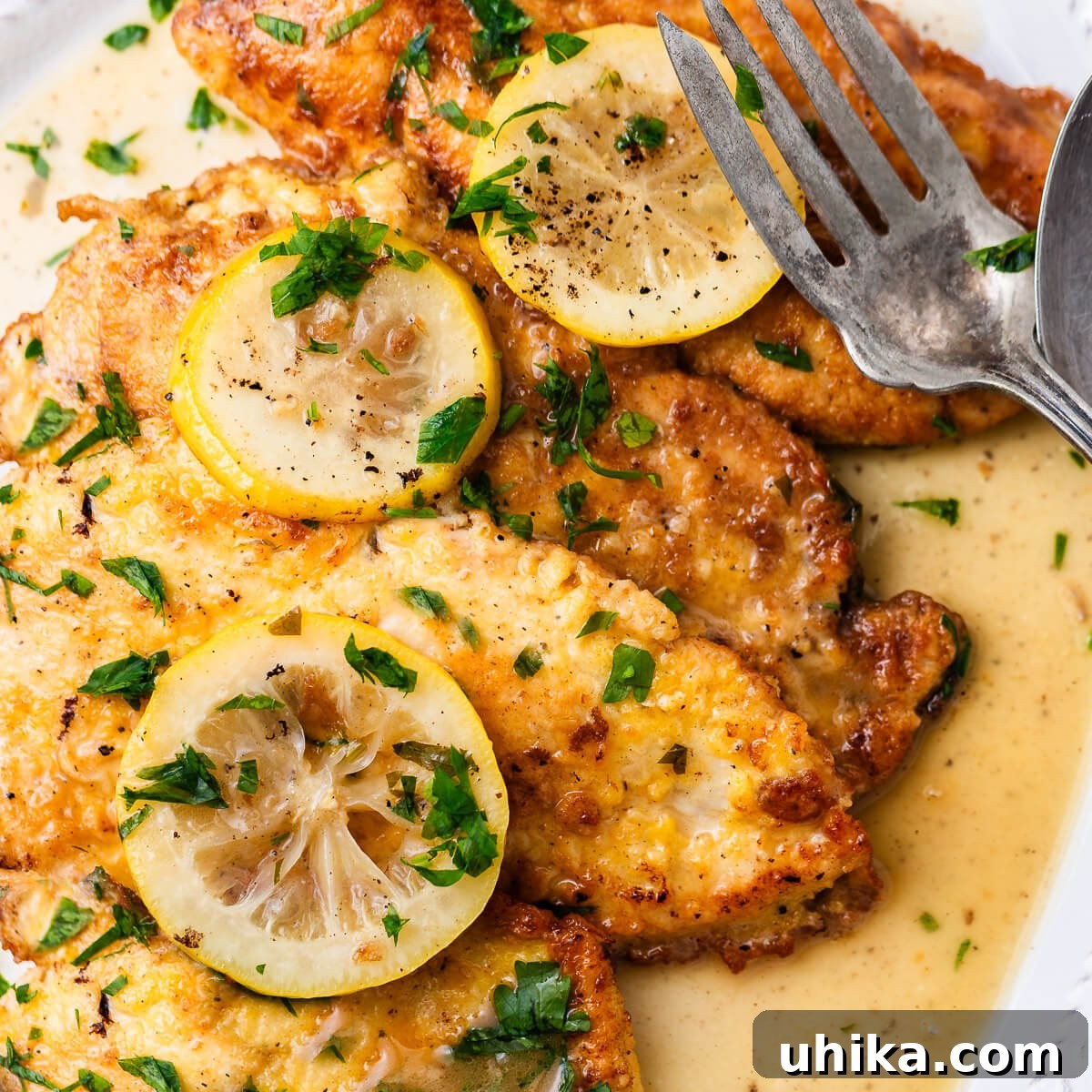
Chicken Francese: An Italian-American Classic with Lemon Butter Sauce
Chicken Francese is a beloved Italian-American masterpiece, featuring delicate chicken breasts, lightly coated in an egg batter, pan-fried to golden perfection, and then lovingly simmered in a luscious, tangy lemon-butter and white wine sauce until incredibly tender. This classic dish is renowned for its elegant simplicity, making it surprisingly easy to prepare while consistently delivering a taste that’s sure to impress any guest at your table.
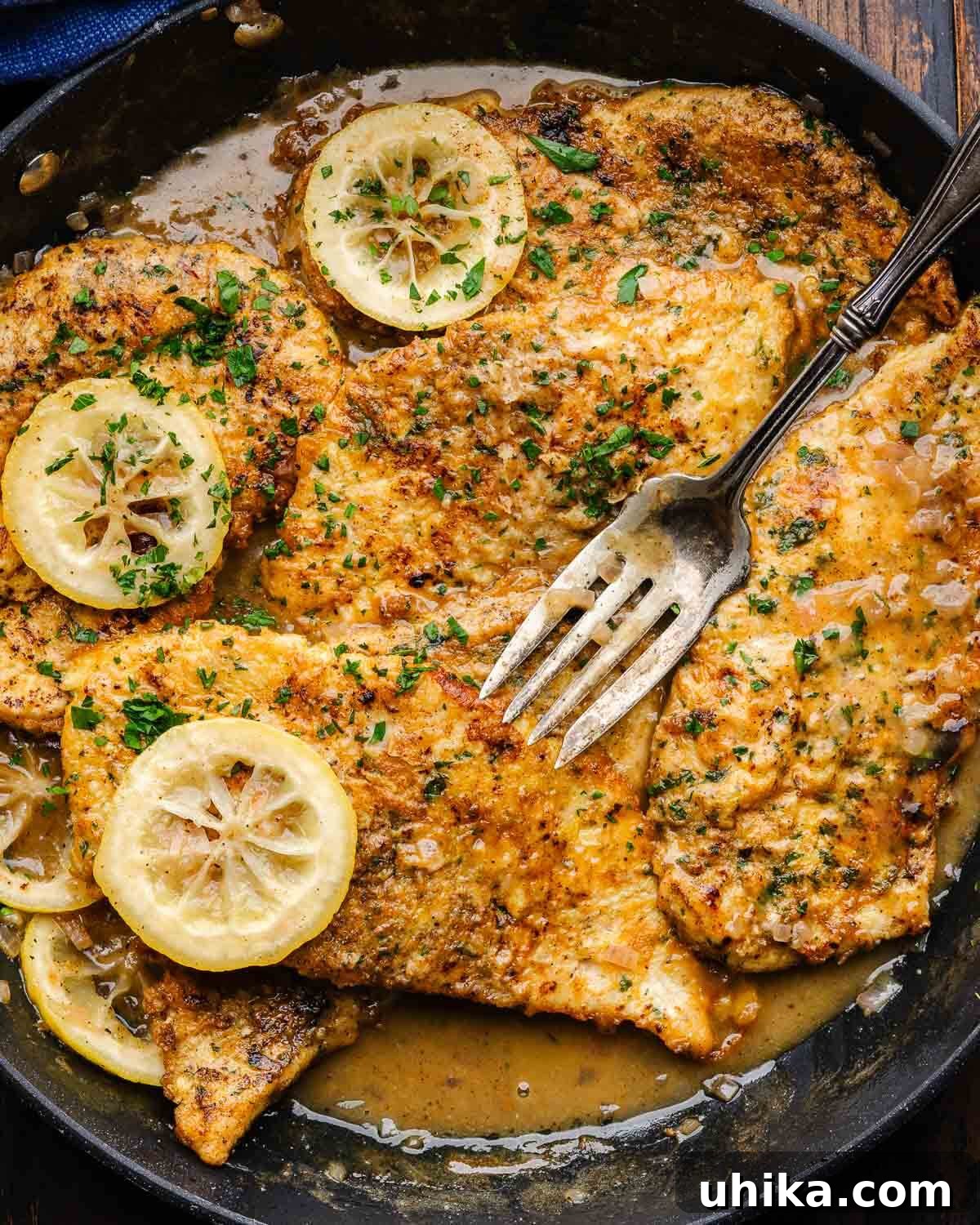
For many, Chicken Francese is more than just a meal; it’s a culinary staple, deeply ingrained in the fabric of Italian-American cuisine, especially in regions like the New York metropolitan area. Growing up on Long Island, this exquisite dish was a regular feature, often gracing family dinner tables and local restaurant menus. It quickly became one of the first dishes I mastered, a testament to its approachable preparation and universally adored flavor profile.
Often referred to as Chicken Francaise or even simply “Chicken French,” its popularity stems from that irresistible combination of rich butter, bright lemon, and a subtle hint of white wine. This harmonious blend creates a sauce that is both comforting and sophisticated, appealing to a wide array of palates. Whether you’re a seasoned chef or a home cook looking to expand your repertoire, mastering Chicken Francese will undoubtedly earn you rave reviews.
Why You’ll Love This Classic Chicken Francese Recipe
There are countless reasons why Chicken Francese has remained a timeless favorite for generations. This particular recipe captures the essence of the traditional dish while offering modern home cooks a streamlined and enjoyable cooking experience. Here’s why it deserves a spot in your weekly rotation:
- Effortlessly Elegant: Despite its gourmet appearance and restaurant-quality taste, Chicken Francese is remarkably straightforward to prepare. The steps are intuitive, allowing you to create a stunning meal without the stress.
- Unforgettable Flavor: The signature lemon-butter white wine sauce is bright, rich, and utterly delicious. It perfectly complements the tender, lightly breaded chicken, creating a symphony of flavors that is both tangy and savory.
- Versatile Pairing: This dish pairs beautifully with a variety of sides, making it adaptable to any meal plan. From simple pasta to hearty vegetables, Chicken Francese elevates any accompaniment.
- Perfect for Any Occasion: Whether you’re planning a sophisticated dinner party or a comforting weeknight meal, Chicken Francese fits the bill. It’s impressive enough for special occasions but quick enough for a busy evening.
- Family Favorite: Its balanced flavors tend to be a hit with both adults and children alike, ensuring that everyone at the table will find something to love.
Essential Ingredients for Perfect Chicken Francese
Creating an outstanding Chicken Francese begins with selecting the right ingredients. Each component plays a vital role in building the layered flavors and achieving the desired texture of this classic dish. Below is a comprehensive list of what you’ll need, along with tips for choosing the best quality items.
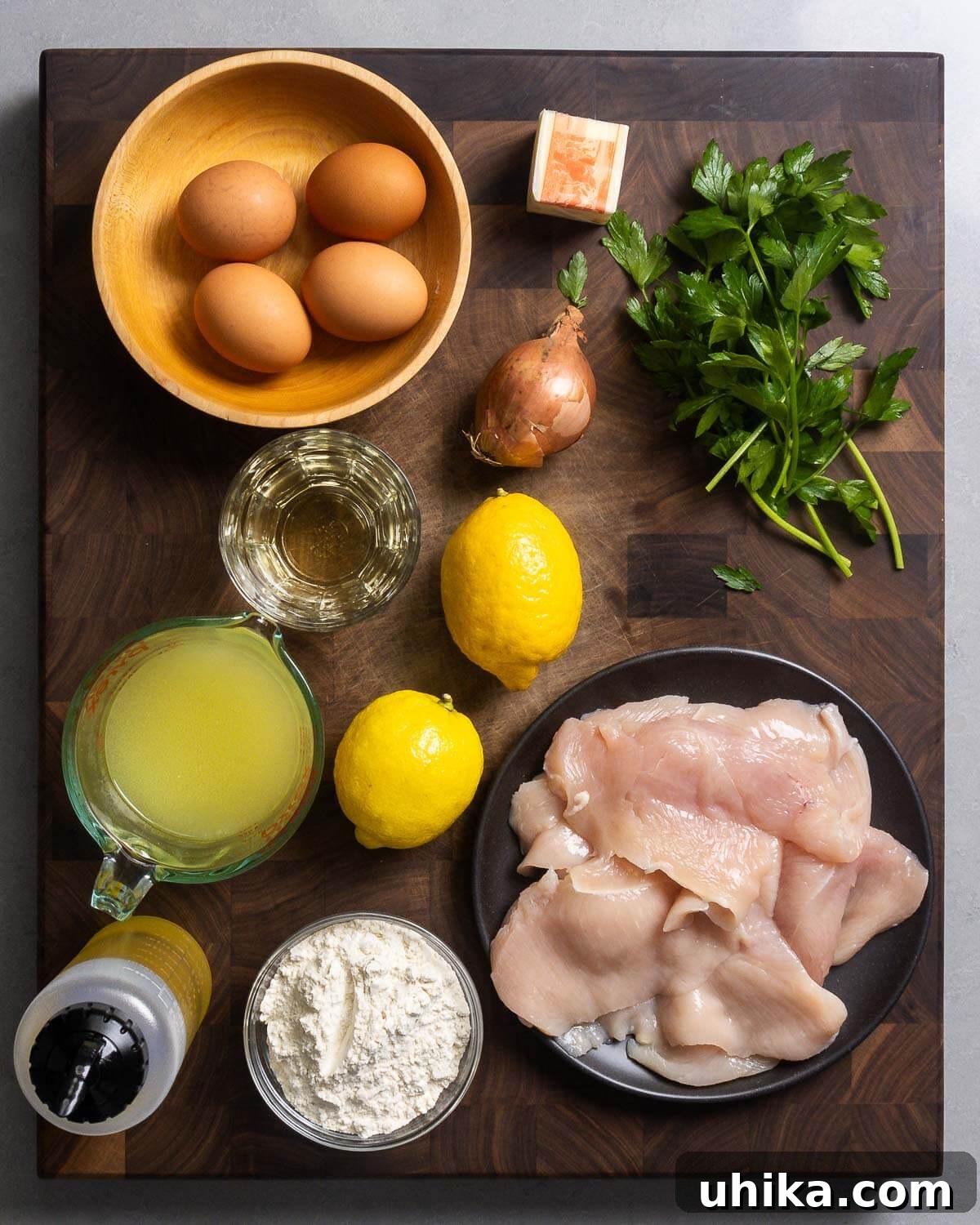
Key Ingredients Breakdown:
- Chicken: For authentic Chicken Francese, thinly sliced chicken breasts are absolutely preferred. You can either purchase pre-sliced chicken cutlets from your butcher or grocery store to save time, or butterfly larger chicken breasts and then pound them to an even 1/4-inch thickness. Uniform thickness ensures even cooking and tenderness.
- Chicken Stock: The quality of your chicken stock will significantly impact the depth of flavor in your sauce. If possible, opt for homemade chicken stock for the richest taste and better control over sodium levels. Alternatively, a good quality low-sodium store-bought stock or a stock made from a low-sodium chicken base (such as Better Than Bouillon) works wonderfully.
- Dry White Wine: A dry white wine like Sauvignon Blanc, Pinot Grigio, or even an unoaked Chardonnay is ideal. The wine adds a crucial layer of acidity and complexity to the sauce, balancing the richness of the butter and eggs. If you prefer to cook without alcohol, you can simply omit the wine and increase the amount of chicken stock, though the flavor profile will be slightly different.
- Lemons: Fresh lemons are non-negotiable! You’ll need both fresh lemon juice for brightness and lemon slices to simmer in the sauce, infusing it with an incredible citrus aroma and flavor.
- Butter and Olive Oil: A combination of butter and olive oil is used for frying. Olive oil helps prevent the butter from burning at higher temperatures, while butter provides a rich, nutty flavor that is essential to the dish.
- Eggs and Flour: These create the classic light batter for the chicken. All-purpose flour is used for the initial dredge, and beaten eggs form the second coating, giving the chicken its characteristic golden crust.
- Shallots: Minced shallots provide a delicate oniony flavor that is milder and sweeter than traditional onions, adding a refined touch to the sauce.
- Fresh Parsley: Flat-leaf Italian parsley adds a fresh, herbaceous finish and a pop of color.
- Salt and Pepper: Essential for seasoning the chicken and adjusting the final flavor of the sauce. Diamond Crystal Kosher salt is often preferred for its clean taste.
Refer to the detailed recipe card further down for precise measurements and quantities of all ingredients.
Mastering Chicken Francese: A Step-by-Step Guide
Creating this Italian-American classic is a rewarding experience. Follow these detailed steps to achieve perfectly cooked chicken and a heavenly lemon-butter sauce. Each stage is crucial for building the incredible flavors that make Chicken Francese so special.
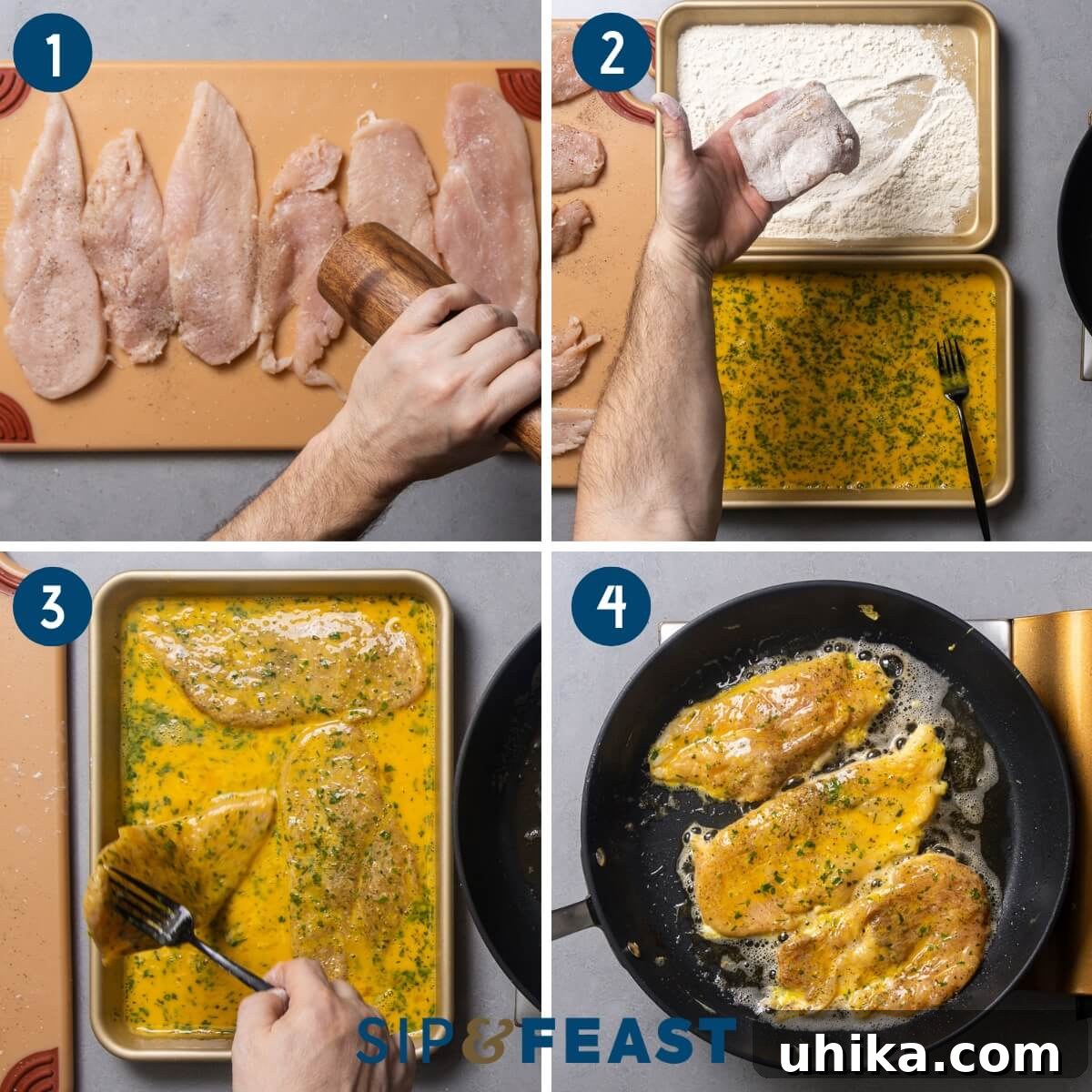
- Prepare Your Mise en Place: Begin by preparing all your ingredients. Cube 4 tablespoons of butter and set aside. Mince 1 large shallot. Juice enough lemons to yield 2 tablespoons of fresh lemon juice, plus slice 1 large lemon into thin rounds. Finely mince 1/4 cup of flat-leaf Italian parsley, dividing it in half for later use. Lay 1 1/2 pounds of thinly sliced chicken cutlets on a flat surface and season both sides generously with salt and pepper.
- Set Up Your Dredging Station: In a large, shallow bowl, beat together 4 large eggs with half of the minced parsley and a pinch of salt and pepper until well combined. In another separate, large, shallow bowl or plate, mix 1/2 cup of all-purpose flour with a pinch of salt and pepper. These will be your dredging stations for the chicken.
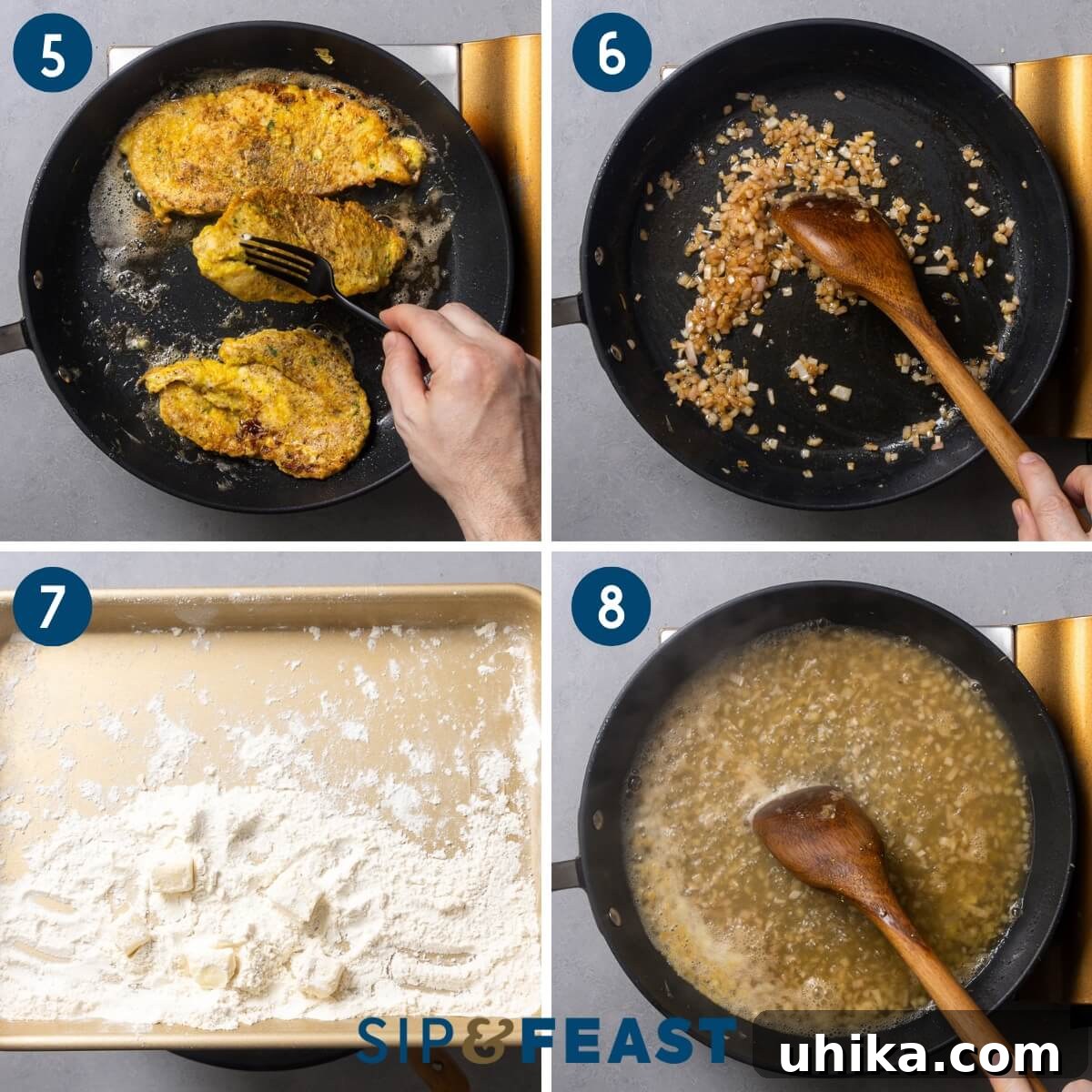
- Pan-Frying the Chicken: Heat a large non-stick pan over medium heat. Add 2 tablespoons of olive oil and 1 tablespoon of the cubed butter. Once the butter has melted and is shimmering, begin coating your chicken. Dredge one chicken cutlet at a time into the seasoned flour, shaking off any excess. Immediately dip the floured cutlet into the egg and parsley mixture, ensuring it’s fully coated.
- Achieving Golden Perfection: Carefully place the coated cutlet into the hot pan. Fry for 3-4 minutes per side, or until the chicken is beautifully golden brown and cooked through. It’s crucial not to overcrowd the pan; work in batches to ensure even frying and crispy results. As needed, add more olive oil and butter for subsequent batches to maintain proper fat levels and prevent burning.
- Keep Warm and Repeat: Once each batch of chicken is cooked, transfer the cutlets to a plate and tent them loosely with aluminum foil to keep them warm while you prepare the sauce. Repeat the frying process until all chicken cutlets are cooked.
- Sauté the Shallots: Using the same pan (no need to clean it – the browned bits, or ‘fond’, will add flavor!), add the minced shallot along with a pinch of salt. Sauté over medium heat for about 2-3 minutes, until the shallots are soft and translucent.
- Prepare the Butter for Thickening: Take the remaining cubed butter and roll it in the leftover flour mixture. This “beurre manié” technique will help thicken the sauce later. Set aside.
- Deglaze and Reduce the Sauce: Pour in 1/2 cup of dry white wine and 1 1/2 cups of low-sodium chicken stock into the pan. Increase the heat to high and bring the sauce to a vigorous boil. While it boils, use a wooden spoon to scrape the bottom of the pan, dislodging any flavorful brown bits. Allow the sauce to boil for approximately 5 minutes, or until it has reduced by half and visibly starts to thicken. This reduction concentrates the flavors beautifully.
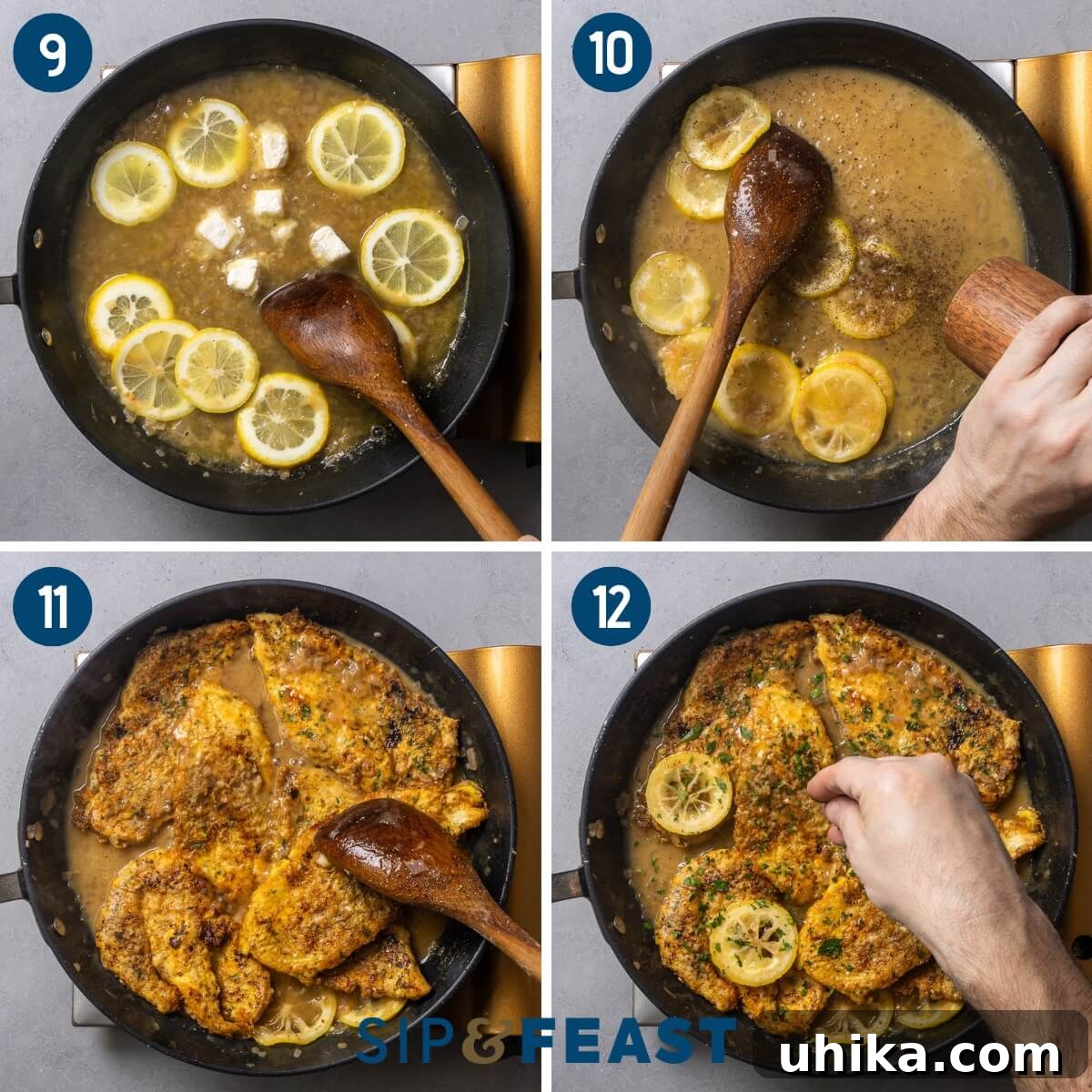
- Thicken the Sauce with Floured Butter: Reduce the heat to just below medium. Add the reserved lemon slices along with the floured butter cubes to the pan. Whisk continuously until the butter has fully melted and incorporated, and the sauce thickens further, about 2-3 minutes.
- Final Seasoning and Flavor Adjustment: Stir in the 2 tablespoons of fresh lemon juice. Taste the sauce and adjust the seasoning as needed. Add more salt and pepper to your preference. If you desire a more pronounced lemon flavor, feel free to add a little more lemon juice.
- Combine Chicken and Sauce: Once the sauce tastes perfect, gently return the cooked chicken cutlets to the pan. Spoon the luscious sauce over the chicken, allowing it to coat each piece. Heat through for another 2-3 minutes to ensure the chicken is thoroughly warmed and infused with the sauce’s flavors.
- Garnish and Serve: Remove the pan from the heat. Sprinkle the remaining minced parsley generously over the chicken. Serve immediately and savor every exquisite bite of your homemade Chicken Francese!
Expert Tips for the Best Chicken Francese
Achieving restaurant-quality Chicken Francese at home is entirely possible with a few insider tips. These pointers will help you master the technique and deliver an unforgettable dish every time:
- Choosing and Preparing the Chicken: Always opt for thinly sliced chicken breasts. If you can’t find them pre-cut, butterfly regular chicken breasts and pound them gently between two pieces of plastic wrap until they are about 1/4 inch thick. This ensures uniform cooking and prevents the chicken from drying out, yielding tender, succulent results.
- The Right Pan Makes a Difference: A high-quality nonstick pan is your best friend for this recipe. It prevents the delicate egg batter from sticking and breaking apart, making frying the chicken much easier and ensuring a beautiful golden crust.
- The Oil and Butter Balance: Using a combination of olive oil and butter for frying is crucial. Olive oil has a higher smoke point, which helps prevent the butter from burning too quickly and turning bitter. Aim for a 2:1 ratio of oil to butter. If, after frying a batch of chicken, the fat in the pan appears very dark brown or burnt, it’s best to wipe out the pan and start with fresh oil and butter for the next batch to avoid imparting a burnt flavor to your chicken.
- Mastering Sauce Thickness: The sauce’s consistency is key to a perfect Francese. It’s important to reduce the wine and chicken stock by half before adding the butter. While this might take around 5 minutes, it could vary depending on your stove and pan. If your sauce is too thin after adding the floured butter cubes, you can add one or two more floured butter cubes and whisk until it reaches your desired thickness. Conversely, if the sauce becomes too thick, simply whisk in a tablespoon or two of chicken stock to thin it out slightly.
- Fresh Lemon is Non-Negotiable: Always use fresh lemons for both the juice and slices. Bottled lemon juice lacks the vibrant, bright flavor that is essential to Chicken Francese. The zest from fresh lemons can also be added for an extra aromatic boost.
- Don’t Rush the Reduction: Allowing the wine and stock to properly reduce concentrates their flavors, forming the flavorful base of your sauce. Be patient during this step; it’s where the magic happens!
- Taste and Adjust: The final seasoning is paramount. Always taste your sauce before returning the chicken to the pan. Adjust salt, pepper, and lemon juice to your personal preference. Some may like it tangier, others a bit milder.
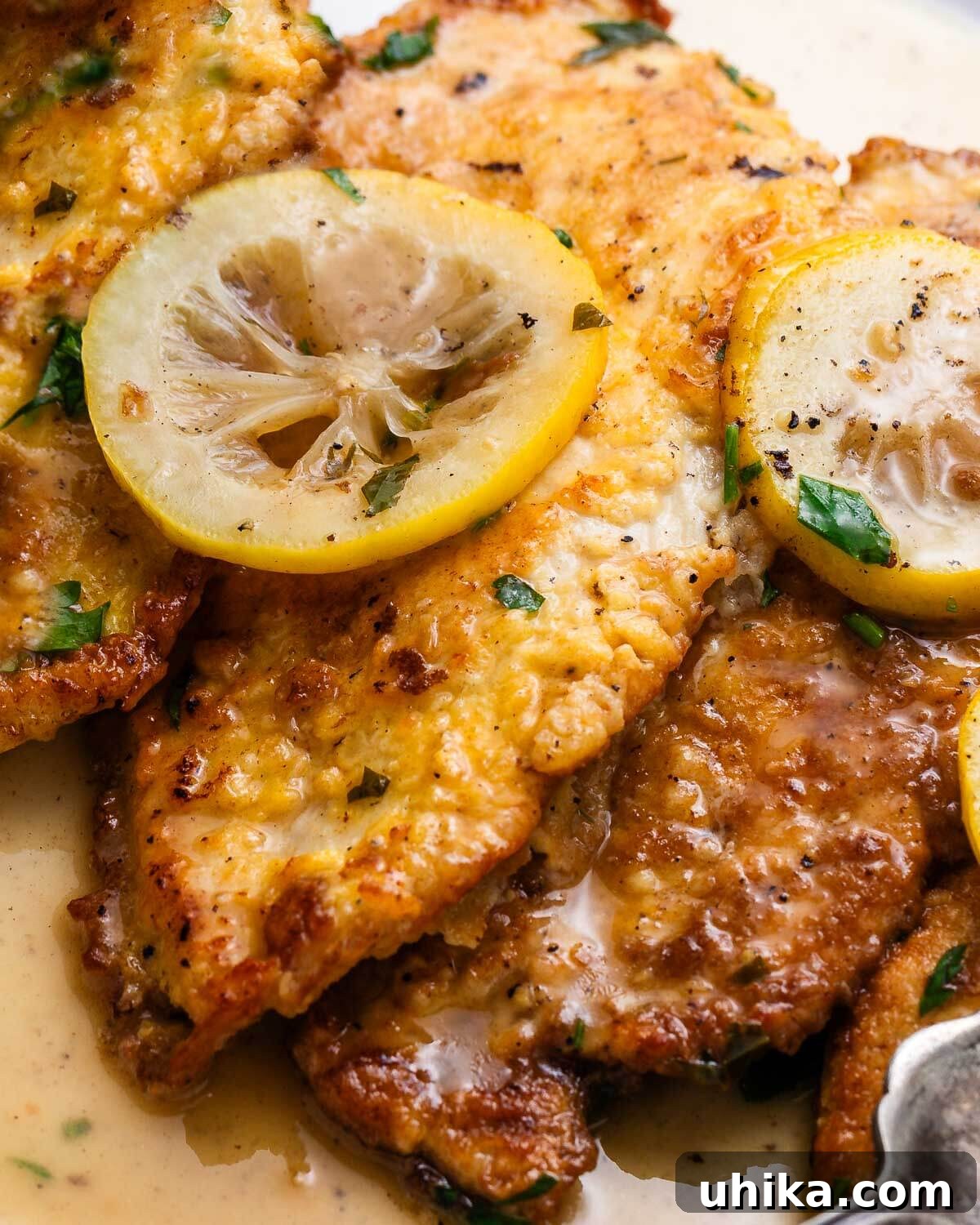
Perfect Pairings: What to Serve with Chicken Francese
Chicken Francese is a versatile dish that shines brightest when accompanied by complementary sides. Its rich, lemony sauce calls for pairings that can either soak up its deliciousness or provide a refreshing contrast. Here are some of our favorite recommendations:
- Rice Pilaf: A fluffy, buttery rice pilaf is a classic choice, perfect for absorbing every drop of that exquisite lemon-butter sauce.
- Sautéed Broccoli Rabe: The slight bitterness of sautéed broccoli rabe with garlic provides an excellent counterpoint to the rich chicken and sauce.
- Garlicky Sautéed Spinach: A simple bed of garlicky spinach adds a healthy and vibrant green element, and its mild flavor doesn’t compete with the Francese.
- Crusty Bread: Don’t forget a chunk of warm, crusty Italian bread to mop up any remaining sauce – it’s too good to leave behind!
- Angel Hair Pasta: A light pasta, such as angel hair, tossed simply with olive oil or a touch of butter, can be a wonderful base for the chicken and sauce.
- Roasted Asparagus: Fresh, crisp roasted asparagus spears offer a delicate flavor and tender-crisp texture.
- Simple Green Salad: A light green salad with a vinaigrette dressing can provide a refreshing, palate-cleansing contrast.
Frequently Asked Questions About Chicken Francese
Here are answers to some common questions you might have about making and enjoying Chicken Francese:
- What is the difference between Chicken Francese and Chicken Piccata?
While both are Italian-American chicken dishes featuring lemon and often white wine, the main differences lie in their preparation and ingredients. Chicken Francese uses an egg-battered chicken cutlet, giving it a richer, softer crust, and the sauce is typically a velvety lemon-butter-wine blend. Chicken Piccata, on the other hand, usually features flour-dredged chicken that’s pan-fried and then served with a sauce incorporating capers, which add a briny, salty kick.
- Can I make Chicken Francese ahead of time?
Chicken Francese is best enjoyed fresh, as the delicate batter and sauce can lose some of their optimal texture upon reheating. However, if you need to prepare it in advance, you can cook the chicken cutlets and make the sauce separately. Store them in airtight containers in the refrigerator for up to 2-3 days. Reheat the chicken gently in the oven (covered at 325°F/160°C until warm) and gently warm the sauce on the stovetop, adding a splash of stock or water if it’s too thick.
- What if I don’t have white wine? Can I substitute it?
Yes, you can substitute the white wine with an equal amount of chicken stock, or even a combination of chicken stock and a splash of white grape juice or non-alcoholic white wine for a similar acidic note. The flavor profile will be slightly different, but still delicious.
- Why do you roll the butter in flour before adding it to the sauce?
Rolling the butter in flour (a technique called beurre manié) is a classic way to thicken sauces. As the floured butter melts into the hot liquid, the flour disperses evenly without clumping, creating a smooth, rich, and thickened sauce. This prevents the need for a separate flour slurry and ensures a silky texture.
- How can I ensure my chicken cutlets stay tender?
The key to tender chicken is not to overcook it. Thinly sliced cutlets cook very quickly, typically 3-4 minutes per side. Overcrowding the pan can also lower the temperature and lead to steaming rather than frying, resulting in tougher chicken. Cook in batches and use a meat thermometer if unsure, aiming for an internal temperature of 165°F (74°C).
More Italian-American Chicken Recipes You’ll Love
If you’ve enjoyed the classic flavors of Chicken Francese, you’re sure to appreciate these other iconic Italian-American chicken dishes:
- Chicken Parmigiana: Breaded chicken cutlets baked with marinara sauce and melted mozzarella.
- Chicken Valdostana: Chicken breasts topped with prosciutto and fontina cheese in a mushroom sauce.
- Chicken Saltimbocca: Pan-fried chicken with prosciutto and sage, finished in a white wine sauce.
- Chicken with Roasted Red Peppers and Mozzarella: A flavorful dish combining tender chicken with sweet roasted peppers and creamy mozzarella.
We hope you thoroughly enjoyed this Chicken Francese with Easy Lemon Butter Sauce Recipe! If you did, please consider giving it a 5-star rating and sharing your thoughts in the comments section below. Your feedback helps us continue to create and improve our recipes.
For those who prefer visual learning, many of our recipes, including similar Italian-American favorites, can be found on our YouTube channel and our Facebook Page.
Please note: While the core essence is the same, recipes sometimes undergo minor updates. The current written recipe features shallots for enhanced flavor, which may differ slightly from older video versions.
Chicken Francese with Easy Lemon Butter Sauce
Cook: 25 mins
Total: 45 mins
This classic Italian-American dish combines thinly sliced chicken cutlets with a butter lemon white wine sauce. It’s easy enough for weeknights but impressive enough for dinner guests!
Ingredients
- 1 1/2 pounds (680g) thinly sliced chicken cutlets
- 2 teaspoons Diamond Crystal Kosher salt for seasoning the chicken
- 1/2 teaspoon black pepper for seasoning the chicken
- 1/2 cup (65g) all-purpose flour (will most likely not need all of it)
- 1/4 cup minced flat-leaf Italian parsley, divided
- 4 large eggs, beaten
- 4 tablespoons (56g) butter, cubed and divided
- 4 tablespoons (60g) olive oil
- 1 large shallot, minced
- 1/2 cup (120g) dry white wine (e.g., Sauvignon Blanc)
- 2 tablespoons (30g) fresh lemon juice, plus more to taste
- 1 1/2 cups (360g) low sodium chicken stock
- 1 large lemon, sliced
- Salt and pepper to taste
Instructions
- Prepare Frying Station: In a large bowl, beat the eggs together and mix in half of the minced parsley and a pinch of salt and pepper. In another large bowl or plate, mix the flour with a pinch of salt and pepper for easy dredging.
- Heat Pan: Heat a large nonstick pan over medium heat with 2 tablespoons of olive oil and 1 tablespoon of butter.
- Dredge and Fry Chicken: Season the chicken cutlets with salt and pepper on both sides. Dredge each cutlet into the seasoned flour, shaking off excess, then dip into the egg and parsley mixture. Gently place the cutlet into the hot pan and fry for 3-4 minutes per side, or until golden brown. Do not overcrowd; work in batches. Add more oil/butter as needed for subsequent batches. Tent the cooked chicken with foil to keep warm.
- Sauté Shallots: To the same pan, add the minced shallot and a pinch of salt. Sauté until soft and translucent, about 2-3 minutes.
- Deglaze and Reduce Sauce: Pour in the white wine and chicken stock. Turn the heat to high and bring the sauce to a boil, scraping the bottom of the pan with a wooden spoon to dislodge any brown bits. Boil for about 5 minutes, or until the sauce reduces by half and begins to thicken.
- Thicken Sauce with Butter: Reduce the heat to slightly less than medium. Add the lemon slices and the remaining cubed butter (rolled in the leftover flour mixture) to the sauce. Whisk until the butter melts and the sauce thickens further, about 2-3 minutes.
- Season Sauce: Stir in the fresh lemon juice. Taste the sauce and adjust salt, pepper, and additional lemon juice to your preference.
- Combine and Serve: Once satisfied with the sauce, return the chicken to the pan and gently coat with the sauce. Heat through for 2-3 minutes. Sprinkle the remaining parsley on top. Remove from heat and serve immediately. Enjoy!
Notes
- Use thin-sliced chicken cutlets for best results and even cooking.
- You will likely have leftover egg wash and flour. These should be used right away for another dish like Italian chicken cutlets or discarded.
- A nonstick pan is highly recommended to prevent the egg batter from sticking.
- Leftovers can be stored in an airtight container in the refrigerator for up to 3 days. Reheat gently in an oven at 325°F (160°C), covered, until warmed through.
Nutrition Information
Calories: 583kcal | Carbohydrates: 13.7g | Protein: 41.4g | Fat: 37.7g | Saturated Fat: 13g | Cholesterol: 317mg | Sodium: 850mg | Potassium: 399mg | Fiber: 0.6g | Sugar: 0.7g | Calcium: 54mg | Iron: 3mg
Nutrition information is automatically calculated and should only be used as an approximation.
Loved this recipe? Share your thoughts!
Connect with us on Instagram at @sipandfeast or share your creations using #sipandfeast!