
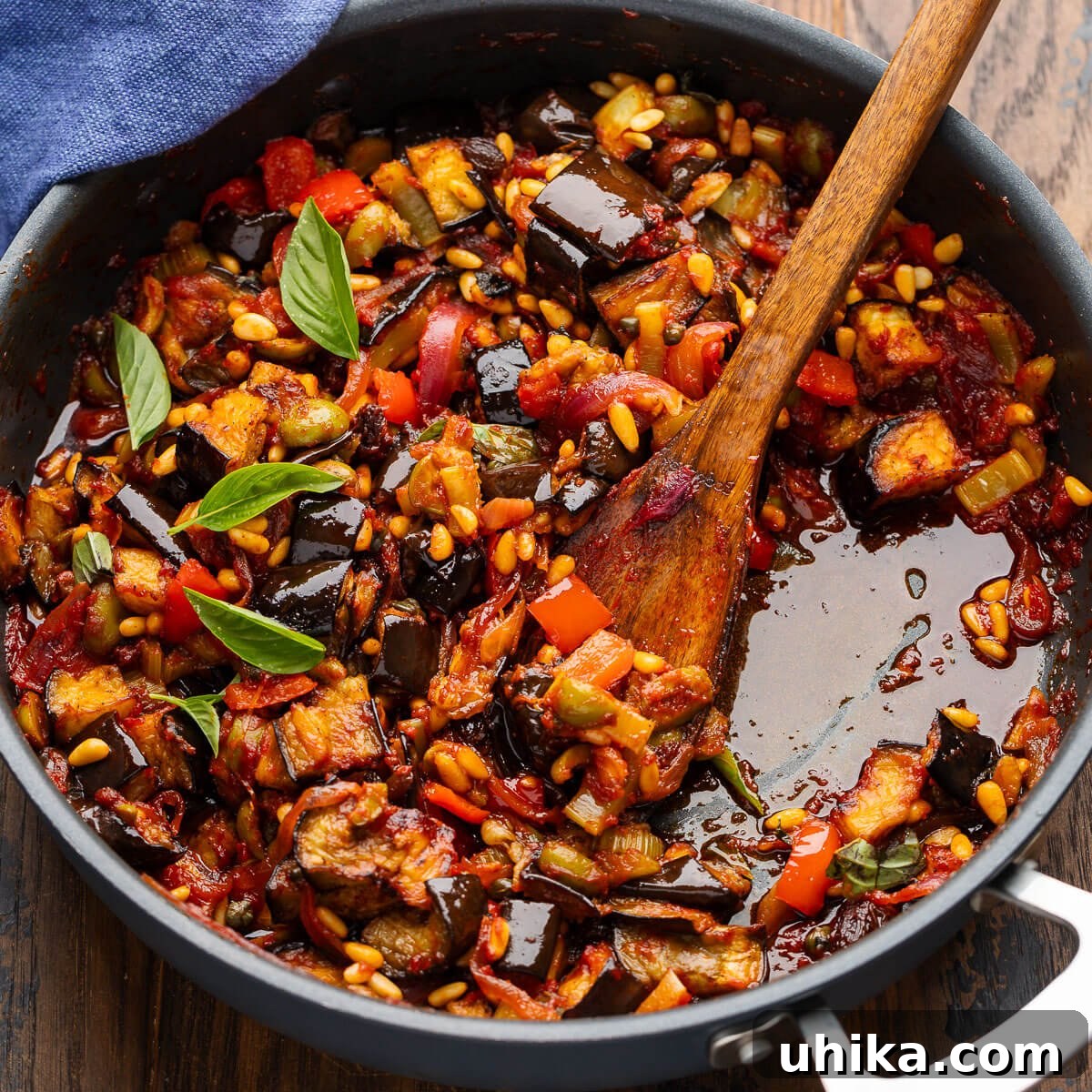
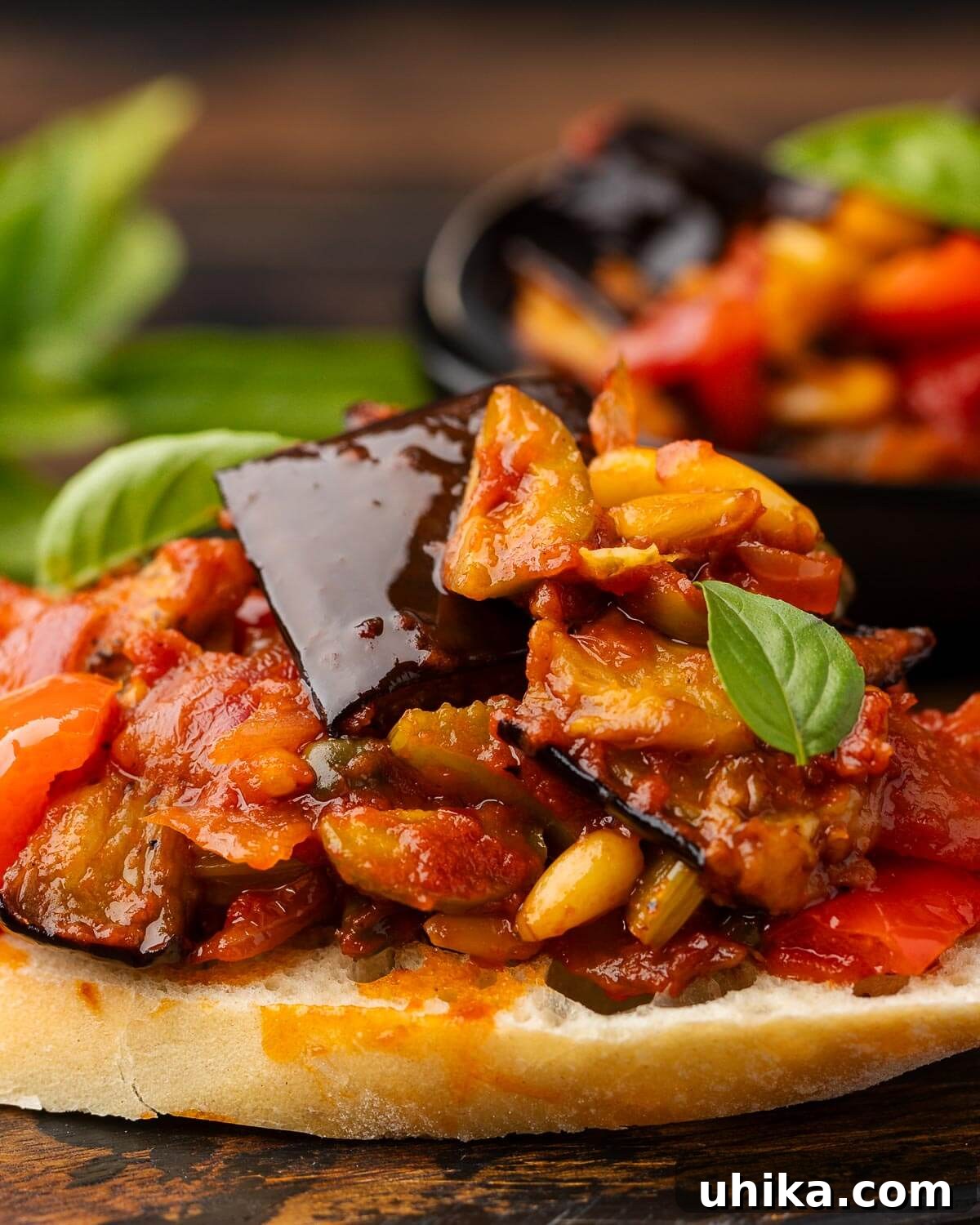
Embark on a culinary journey to Sicily with this authentic Eggplant Caponata recipe. This exquisite appetizer offers a delightful symphony of sweet and salty flavors, harmoniously blending tender eggplant, vibrant bell peppers, savory onions, briny olives, tangy capers, crunchy pine nuts, and plump raisins. More than just a dish, Caponata is a celebration of Mediterranean ingredients, perfect for any occasion. Enjoy it straight from the bowl, generously spread on toasted crusty bread, or as a flavorful topping for gourmet sandwiches and bruschetta.
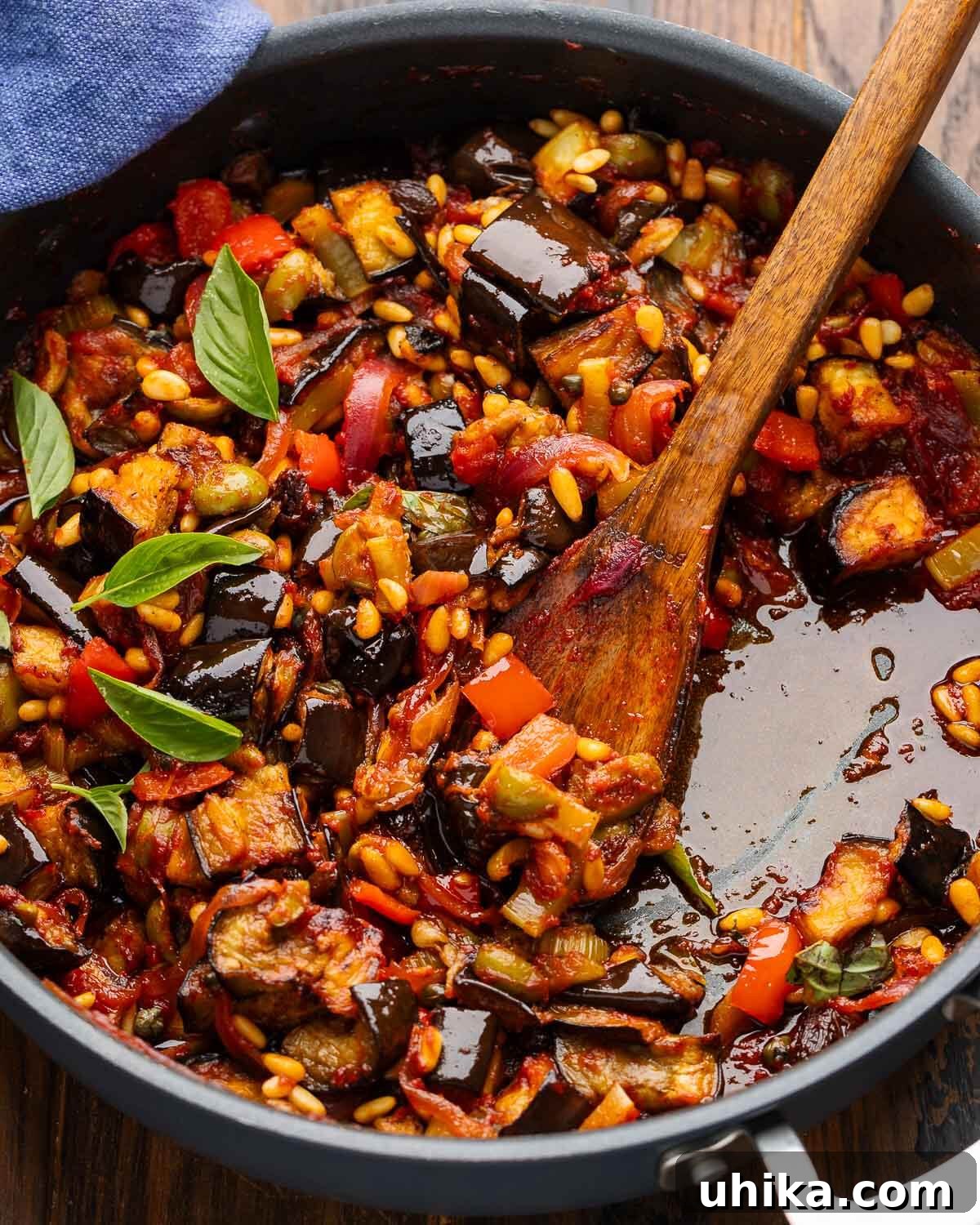
Editor’s Note: This recipe was first published on June 18, 2019, and has been thoroughly updated on July 23, 2024, to include an improved ingredient selection, enhanced preparation methods, expanded information, and new photography for a superior culinary experience.
Discovering the Art of Sicilian Caponata
Having explored countless variations of eggplant caponata, from artisanal store-bought versions to intricate homemade renditions, this particular recipe has consistently proven to be the absolute favorite. It embodies the true spirit of Sicilian cuisine – rich in flavor, steeped in tradition, and surprisingly simple to prepare. Forget those lackluster jarred caponatas; once you experience the fresh, vibrant taste of homemade, you’ll understand why this dish is a staple in Italian homes. Not only is it incredibly easy to make, but it’s also far more economical than its pre-packaged counterparts, offering unparalleled freshness and depth of flavor.
The magic of this caponata lies in its perfectly balanced flavor profile. The natural sweetness of sun-ripened raisins, bell peppers, and caramelized onions beautifully complements the assertive saltiness of capers and olives. A delicate hint of sourness from red wine vinegar ties all these elements together, creating a complex yet harmonious taste that elevates every bite. This medley of flavors truly shines when combined with tender, perfectly roasted eggplant, making it an irresistible appetizer or side dish.
Eggplant caponata is an incredibly versatile addition to any menu. I often feature it prominently on an Italian antipasto platter, where its vibrant colors and bold flavors stand out. It pairs wonderfully with other delightful starters such as crisp zucchini bruschetta and creamy cannellini bean dip, creating a diverse spread that’s sure to impress your guests.
The Heart of Sicilian Cuisine: A Brief History of Caponata
Caponata boasts a rich history, believed to have originated in Sicily, a crossroads of Mediterranean cultures. While its exact origins are debated, it’s generally accepted that the dish evolved from a culinary tradition influenced by Arab, Spanish, and French flavors. The term “caponata” itself might derive from “capone,” an old Sicilian name for mahi-mahi (often served with a similar sweet and sour sauce), or from “caupona,” a Roman tavern where such dishes were served. Historically, caponata was a humble dish, making the most of readily available vegetables and often incorporating fish. Over time, it evolved into the beloved vegetarian appetizer we know today, maintaining its signature agrodolce (sweet and sour) profile which is a hallmark of Sicilian cooking. This balance of flavors is what makes caponata so distinctly Mediterranean and utterly unforgettable.
Key Ingredients for an Authentic Caponata
Crafting the perfect eggplant caponata begins with selecting the finest ingredients. Below, you’ll find a visual guide to the essential components of this recipe, along with important notes to ensure the best possible results.
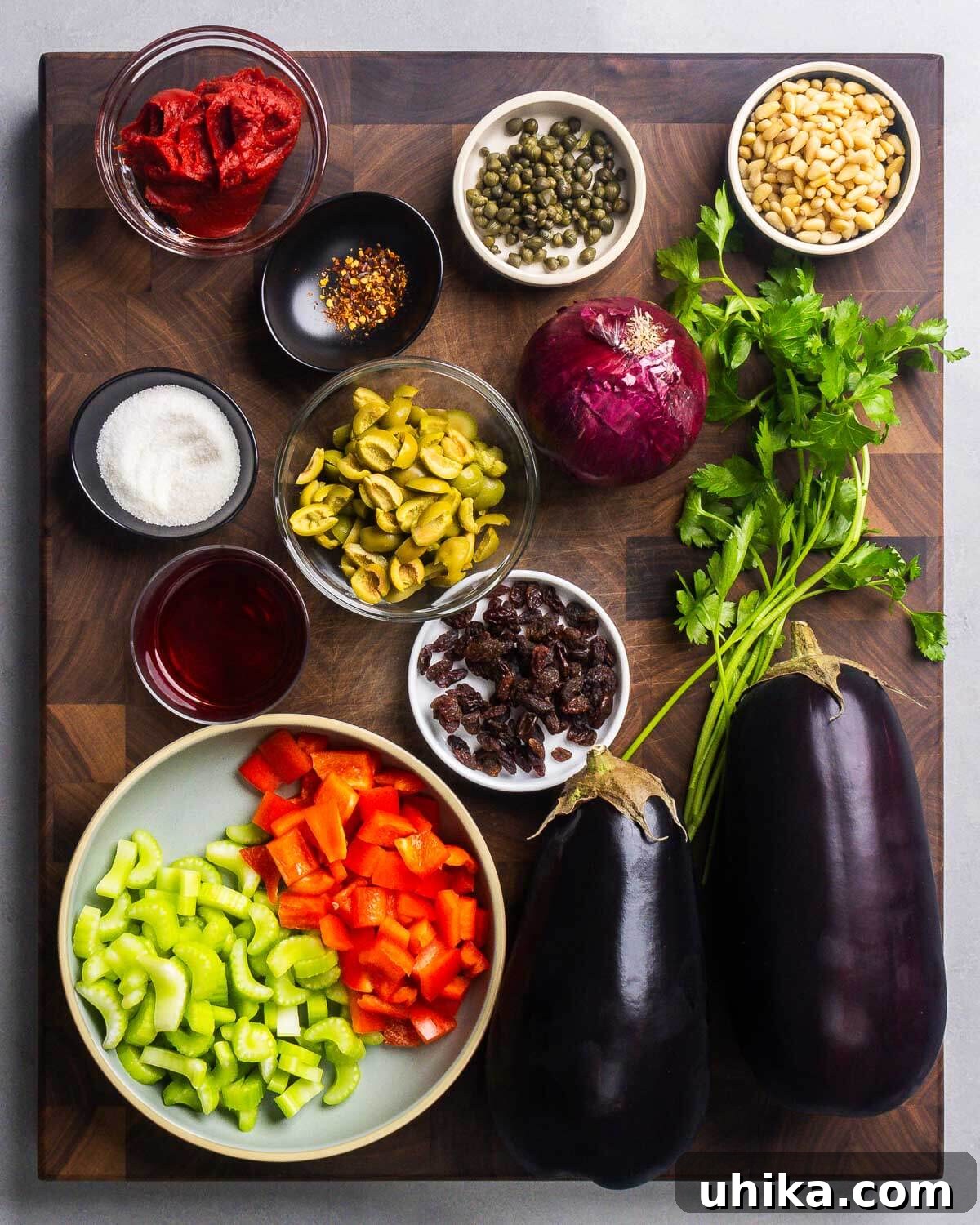
- Eggplant. The star of the show! For this recipe, I recommend using medium-sized American eggplants. When choosing your eggplant, look for ones that are dark, glossy, and firm to the touch. Avoid any with blemishes or soft spots. The medium size ensures a good flesh-to-skin ratio and easier handling for cubing.
- Olives and Capers. These ingredients are crucial for imparting that distinct briny, salty flavor that defines caponata. My preferred choice for caponata are vibrant green Castelvetrano olives. Their mild, buttery flavor and firm texture complement the other ingredients beautifully. You can buy them already pitted for convenience, or pit them yourself. For capers, always remember to rinse them thoroughly under cold water to remove excess salt, which can otherwise overwhelm the dish.
- Raisins. Raisins or small currants are a traditional addition to many Sicilian dishes, including caponata. They provide a wonderful burst of natural sweetness and a chewy texture that contrasts beautifully with the other ingredients. If you prefer to omit them, you certainly can, but you might consider adding a touch more sugar to maintain the desired sweet-and-sour balance.
- Fresh Herbs. The aromatic freshness of herbs elevates caponata significantly. Flat-leaf Italian parsley is a classic choice, but fresh mint and basil also work exceptionally well, adding bright, herbaceous notes that cut through the richness. Feel free to experiment with a combination of these herbs to find your favorite profile.
- Pignoli (Pine Nuts). Also known as pine nuts, pignoli add a delicate nutty flavor and a satisfying textural crunch to the caponata. While they can sometimes be on the pricier side, you can often find more affordable options at large warehouse clubs like Costco or specialty stores like Trader Joe’s. If pine nuts are not accessible or you have an allergy, you can omit them without compromising the core flavor, though their unique texture will be missed.
- Red Wine Vinegar and Sugar. These two ingredients are the cornerstone of the agrodolce (sweet and sour) profile, essential to authentic Sicilian caponata. The red wine vinegar provides a bright acidity that cuts through the richness of the eggplant and tomato, while the sugar balances it with a subtle sweetness. Achieving the perfect balance is key, and this recipe guides you to a harmonious blend.
- Tomato Paste. A small amount of quality tomato paste provides a concentrated umami depth and a rich, savory backbone to the sauce, helping to bind all the flavors together. It’s an indispensable ingredient for the caponata’s robust flavor.
For a complete list of all ingredients and their exact quantities, please refer to the detailed recipe card below.
Mastering the Art of Eggplant Caponata: A Step-by-Step Guide
Creating this exquisite Sicilian appetizer is a rewarding experience. Follow these detailed steps to achieve a caponata that is rich in flavor and perfectly textured. Each numbered instruction corresponds to the visual aids and expert tips provided.
- Prepare and Roast the Eggplant: Begin by preheating your oven to 425°F (218°C) and positioning an oven rack in the middle. Carefully cut 2 pounds of eggplant into uniform 1 ½-inch cubes. In a large bowl, toss the cubed eggplant with ½ cup of olive oil, 1 teaspoon of Diamond Crystal kosher salt, and ½ teaspoon of black pepper, ensuring each piece is lightly coated. Spread the seasoned eggplant cubes onto parchment paper-lined baking sheets, making sure not to overcrowd them. Ample space allows the eggplant to roast evenly and caramelize beautifully, rather than steam. If any pieces appear dry, add a light drizzle of additional olive oil. Roast for 30-40 minutes, or until the eggplant is wonderfully tender and soft throughout. A fork should easily pierce the center.
- Chop Vegetables and Toast Pine Nuts: While the eggplant is roasting, prepare the remaining ingredients to maximize efficiency. Finely chop 3 celery ribs and 1 large red bell pepper. Slice 1 medium red onion into thin strips. Chop 1 cup of pitted green olives and mince ¼ cup of fresh flat-leaf Italian parsley; set these aside separately. In a dry pan over medium heat, gently toast ⅓ cup of pignoli (pine nuts) for approximately 5 minutes. Watch them carefully and stir frequently to prevent burning; they should turn a light golden color and become fragrant. Once toasted, remove them from the pan immediately and set them aside.
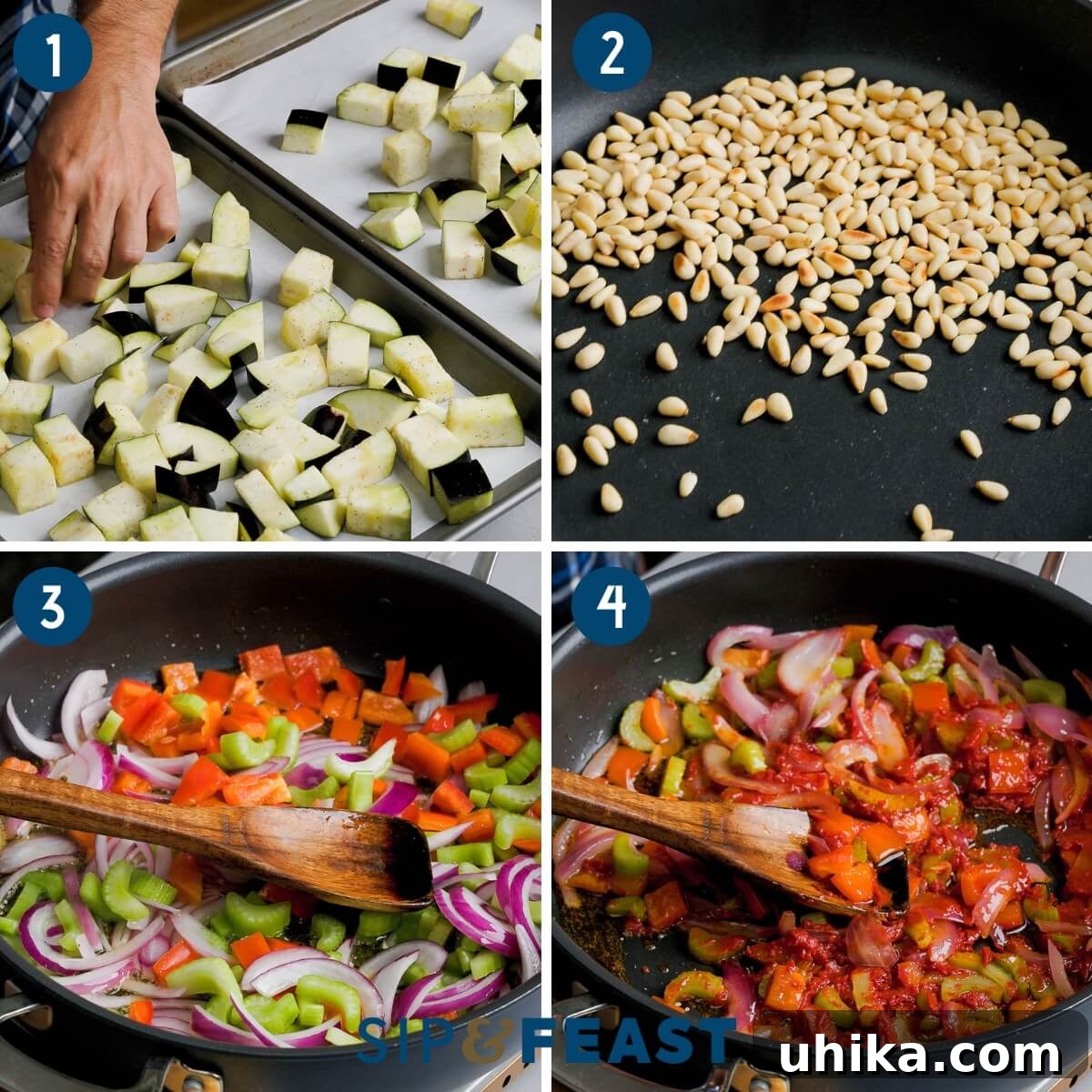
- Sauté the Aromatics: Heat a large, heavy-bottomed pan or Dutch oven over medium heat. Add ¼ cup of extra virgin olive oil. Once shimmering, add the chopped celery, red onion, and bell pepper. Sauté these vegetables for 5-7 minutes, stirring occasionally, until they have softened and become translucent. This step builds the foundational flavor of your caponata.
- Incorporate Tomato Paste and Spice: Add 1 (6-ounce) can of rich tomato paste to the sautéed vegetables. Continue to cook for another 5 minutes, stirring frequently. Cooking the tomato paste helps to deepen its flavor and remove any raw taste. If the paste begins to stick or burn, add a few ounces of water to loosen it. Next, stir in ¼ teaspoon of crushed red pepper flakes for a subtle hint of warmth, and cook for an additional 30 seconds.
- Build the Agrodolce Sauce: Pour in ¼ cup of red wine vinegar, along with the chopped olives, 2 tablespoons of rinsed capers, ¼ cup of raisins, and 2 tablespoons of sugar. Stir well to combine all ingredients. Continue to cook for approximately 5 minutes, allowing the vinegar to mellow and the sugar to dissolve completely, integrating these sweet and sour notes deeply into the sauce. This is where the signature agrodolce flavor truly develops.
- Check Eggplant Doneness: By this stage, your roasted eggplant should be perfectly cooked. Remove it from the oven and perform a quick test with a fork to ensure it is thoroughly tender.
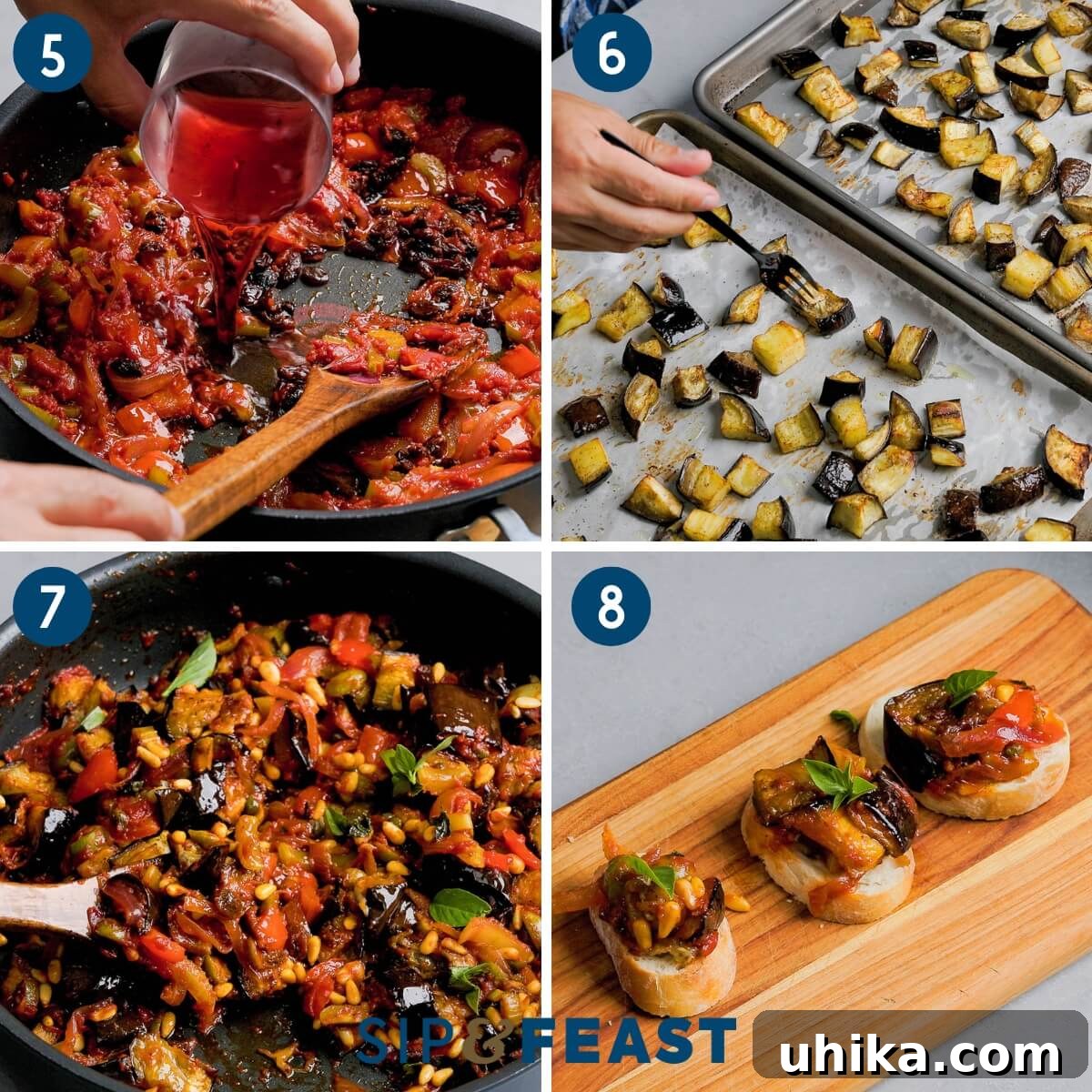
- Combine and Season: Gently add the roasted eggplant cubes to the pan with the sauce. Carefully mix all the ingredients together, taking care not to mash the tender eggplant pieces. Taste the caponata and adjust the seasoning as needed. If you desire more acidity, add a touch more red wine vinegar. For a sweeter profile, stir in a bit more sugar. Finally, season with additional salt and black pepper to your preference, remembering the inherent saltiness of the olives and capers. Remove the pan from the heat and stir in the toasted pine nuts and minced parsley (or other fresh herbs like mint or basil).
- Serve and Enjoy (or Chill for Best Flavor!): Your homemade caponata is now ready to be served! While it can be enjoyed immediately, the flavors truly meld and deepen if the caponata is allowed to rest in the refrigerator overnight. This allows the sweet, sour, and savory components to fully integrate. Eggplant caponata is wonderfully versatile and can be served warm, at room temperature, or chilled. Enjoy this authentic taste of Sicily!
Expert Tips for the Perfect Eggplant Caponata
- Roasting vs. Frying Eggplant: Traditionally, caponata often features eggplant fried in olive oil. While frying can be quicker (approximately 7-10 minutes per batch), it requires constant attention and often multiple batches. I highly recommend roasting the eggplant as outlined in this recipe. Roasting is a more hands-off approach, allowing you to prepare other ingredients simultaneously. It also results in beautifully tender eggplant with a slightly caramelized exterior, soaking up less oil than frying, leading to a lighter yet equally flavorful caponata.
- Mind Your Salt Content: Olives and capers are naturally very salty ingredients. This recipe accounts for their inherent saltiness by keeping the added salt to a minimum. Apart from the initial salting of the eggplant before roasting, any further salt should be added cautiously and strictly to taste. Always taste-test your caponata after all salty components have been incorporated before adding more. This prevents an overly salty dish and ensures a balanced flavor profile.
- Creative Additions and Variations: This caponata recipe is a fantastic base for customization. Feel free to experiment with additional vegetables such as zucchini, which can be roasted alongside the eggplant. For a bolder, umami kick, consider stirring in a few finely chopped anchovy fillets (they will dissolve and meld into the sauce). As mentioned, fresh mint or basil are excellent alternatives or additions to parsley, offering different aromatic dimensions. For a heartier meal, explore my recipe for chicken agrodolce, which combines chicken with a caponata-like sauce, offering a delicious full dinner option.
- The Magic of Resting: While tempting to eat immediately, caponata, like many stews and savory dishes, improves significantly with time. Refrigerating it overnight allows the various flavors to meld and deepen, resulting in a more complex and harmonious taste. The wait is truly worth it!
- Serving Temperature Versatility: One of caponata’s many charms is its adaptability to different serving temperatures. It’s equally delicious warm, at room temperature, or chilled directly from the refrigerator, making it an ideal make-ahead appetizer or side dish for entertaining.
More Italian Appetizers to Savor
If you’ve enjoyed the authentic flavors of this Eggplant Caponata, you’re sure to love these other cherished Italian appetizer recipes. Each one is a testament to the simplicity and richness of Italian culinary traditions. I sincerely hope you find them as delightful as I do!
- Peperonata: Sweet and Savory Braised Peppers
- Zesty Cherry Pepper Spread
- Crispy Fried Zucchini Fritters
- Creamy Cherry Tomato Eggplant and Burrata Salad
If you’ve enjoyed this Eggplant Caponata Recipe or any other recipe on our site, we would be incredibly grateful if you could give it a 5-star rating and share your thoughts in the comments section below. Your feedback helps us grow and improve!
We strive to cater to various learning preferences. If you are someone who prefers to learn by watching, you can find most of our recipes and cooking demonstrations on our dedicated YouTube channel and our vibrant Facebook Page.
For exclusive, never-before-seen FULL MEAL RECIPE VIDEOS and a deeper dive into Italian cooking, consider becoming a Patreon member today! Join our community and unlock a world of culinary inspiration.
Eggplant Caponata
Pin
Ingredients
- 2 pounds (908g) eggplant cut into 1 1/2″ cubes
- 1/2 cup (120g) olive oil plus more as needed
- 1 teaspoon Diamond Crystal Kosher salt
- 1/2 teaspoon black pepper
Remaining ingredients
- 1/4 cup (60g) extra virgin olive oil
- 1/3 cup (45g) pignoli nuts
- 3 ribs celery chopped
- 1 large red bell pepper chopped
- 1 medium red onion sliced
- 1 6-ounce can tomato paste
- 1 cup (140g) chopped pitted green olives
- 2 tablespoons (18g) capers rinsed
- 1/4 packed cup (42g) raisins optional
- 2 tablespoons (26g) sugar
- 1/4 cup (60g) red wine vinegar
- 1/4 teaspoon crushed hot red pepper flakes
- 1/4 cup mince flat-leaf Italian parsley
- 3 tablespoons mint and/or basil for garnish
- salt and pepper to taste
Instructions
For the eggplant
-
Preheat oven to 425°F (218°C) and set the rack to middle level. Toss the cubed eggplant with olive oil, salt, and pepper. Spread the eggplant out onto parchment paper lined baking sheet(s), making sure to not overcrowd the pieces. Roast for 30-40 minutes or until fully cooked through and soft in the middle.
Meanwhile
-
Toast the pignoli nuts in a dry pan over medium-low heat for approximately 5 minutes, being careful not to burn. Once toasted, set aside.
-
Heat a large pan to medium heat with extra virgin olive oil. Add the celery, red onion, and bell pepper and sauté for 5-7 minutes or until softened.
-
Add the tomato paste and continue to cook for another 5 minutes, stirring frequently. If the paste starts to burn, add a few ounces of water to the pan. Next, add the hot red pepper flakes and cook for 30 seconds.
-
Add the green olives, capers, raisins, sugar, and red wine vinegar. Cook for 5 minutes, allowing the vinegar and sugar to cook through and incorporate.
-
Add the roasted eggplant to the pan and gently mix it all together, being careful to not crush the eggplant. Taste test the acidity and add more sugar or vinegar if required. Season with salt and pepper to taste.
-
When satisfied with the taste, turn off the heat and add the parsley and pignoli nuts. Mix well. Caponata can be eaten right away but it’s better to refrigerate overnight so that the flavors meld together. Enjoy!
Notes
- This recipe makes 6 generous or 8 moderate servings, perfect for sharing or meal prepping.
- For the best flavor, prepare caponata a day in advance. The resting period allows all the delicious flavors to meld and deepen.
- Store leftover caponata in an airtight container in the refrigerator for up to 5 days. It also freezes well for up to 3 months.
- Remember that olives and capers contribute a significant amount of salt. Therefore, salt has been kept to a minimum in this recipe. Always taste-test and adjust seasoning only after all salty ingredients have been incorporated.
Nutrition
Nutrition information is automatically calculated, so should only be used as an approximation and for informational purposes.
Enjoyed this recipe? Share your thoughts below!Connect with us on Instagram at @sipandfeast and don’t forget to tag #sipandfeast with your creations!
This recipe was originally published on June 18, 2019. It underwent a complete revision and update on July 23, 2024, to bring you the best possible version.