
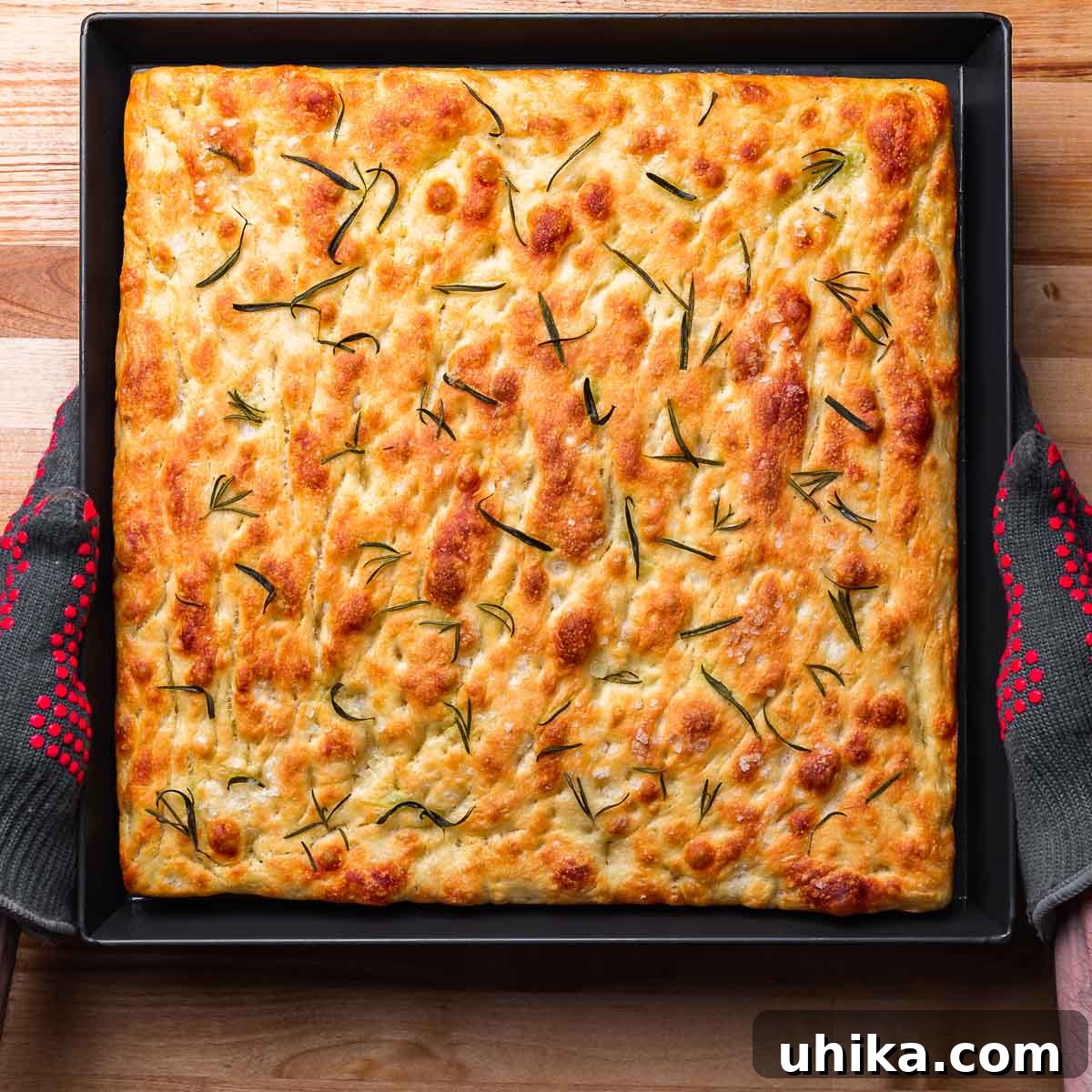
Effortless No-Knead Focaccia: A Beginner-Friendly Recipe for Golden Perfection
Unlock the secrets to baking artisan-quality bread right in your home kitchen with our incredibly easy no-knead focaccia recipe. Imagine a bread that boasts a delightfully light and airy interior, perfectly balanced with a satisfyingly crisp exterior, all without the strenuous effort of kneading. This simple yet sophisticated focaccia, crowned with fragrant rosemary and delicate flaky sea salt, is a testament to the magic of minimal effort producing maximum flavor.
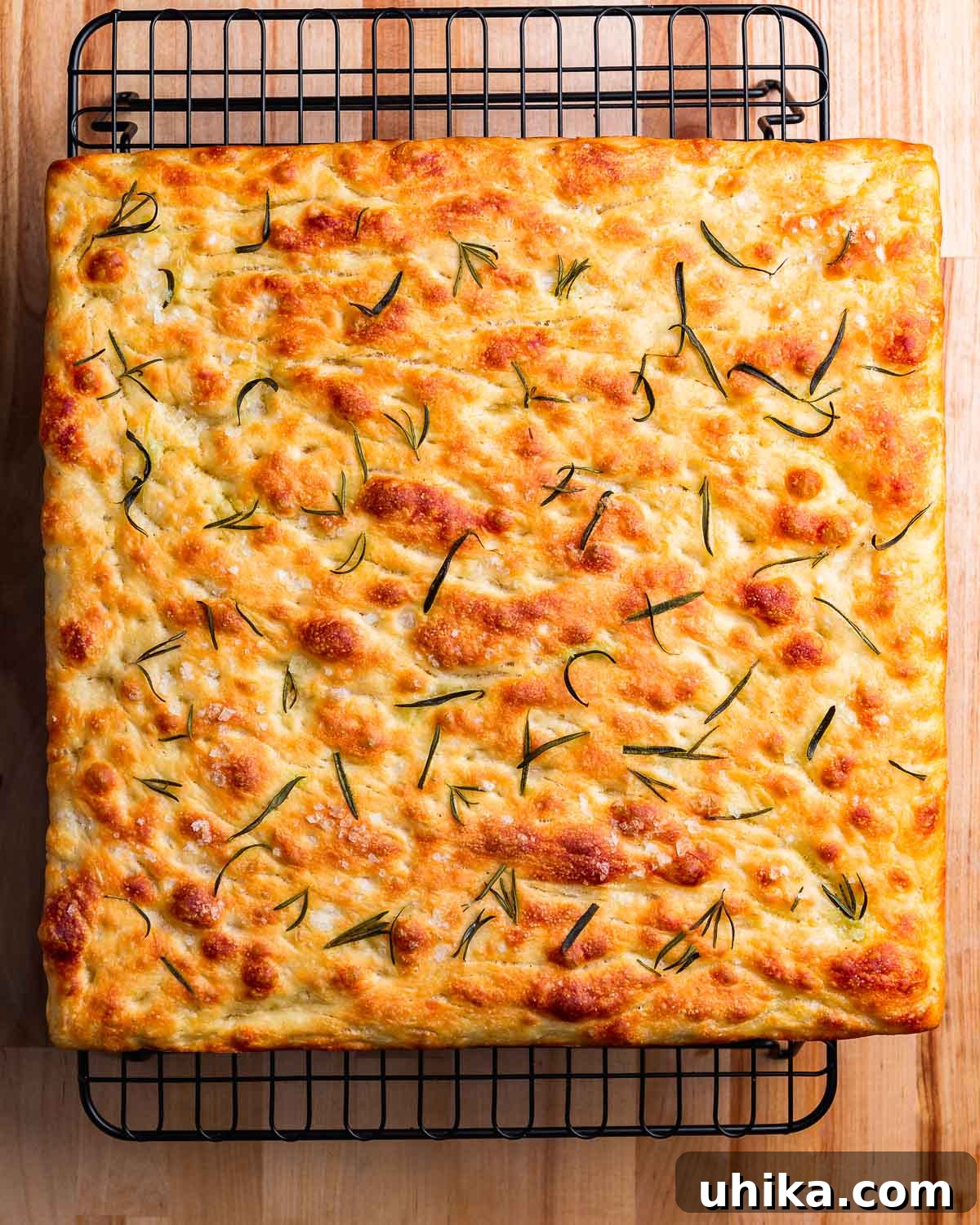
Why You’ll Fall in Love with No-Knead Focaccia
Whether you’re taking your first steps into the rewarding world of breadmaking or you’re a seasoned baker seeking a simpler route to deliciousness, this no-knead focaccia is your perfect companion. It eliminates the traditional demands of dough development, relying instead on time and a clever cold fermentation process to build incredible flavor and texture.
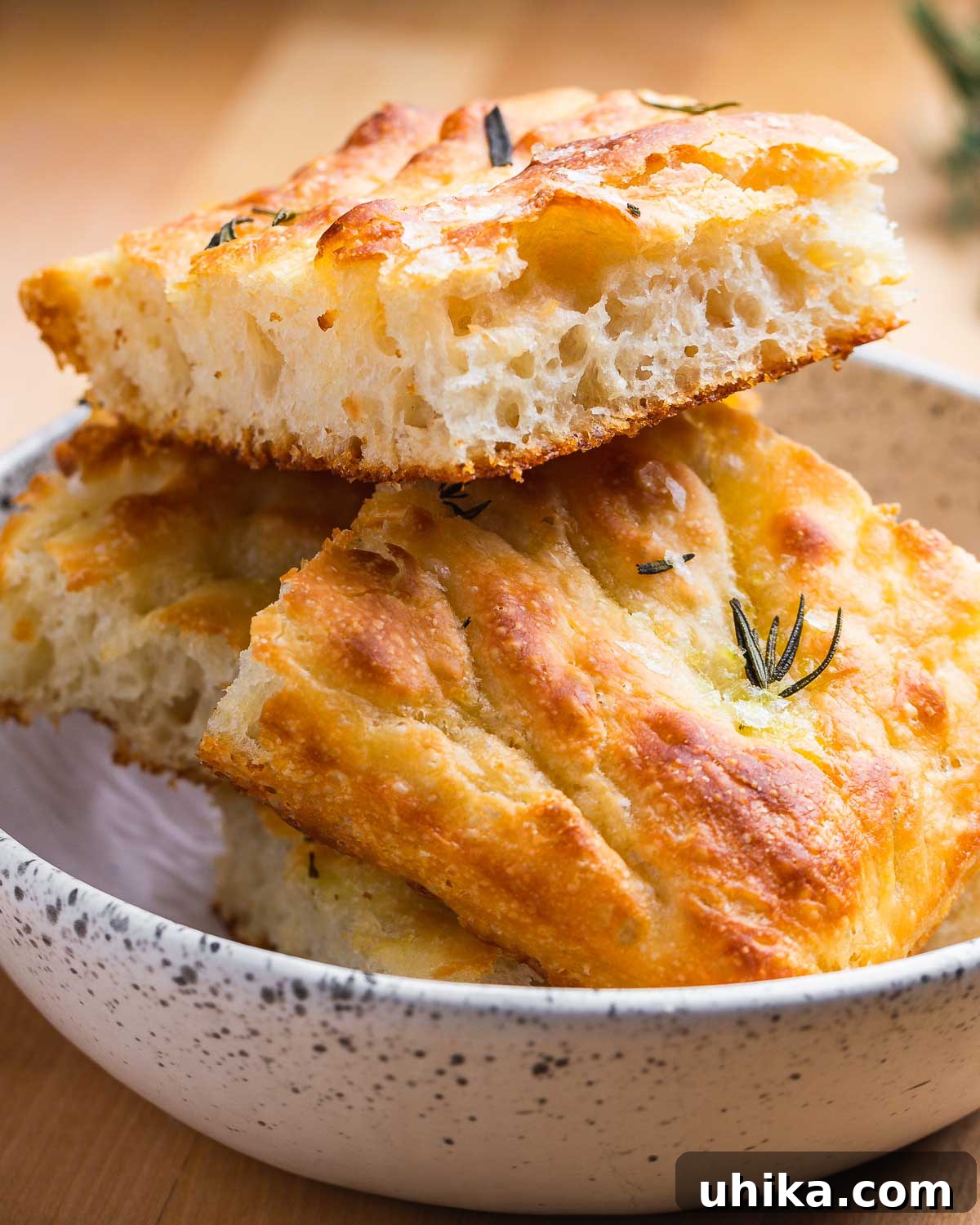
More than just a side dish, this versatile focaccia elevates any meal. It’s an indispensable addition to an inviting antipasto platter, perfect for soaking up the rich flavors of olive oil and balsamic. Its sturdy yet tender crumb also makes it ideal for dipping into hearty bowls of sausage lentil soup, comforting minestrone, or any of your favorite stews.
The Simple Ingredients Behind an Extraordinary Bread
The beauty of this no-knead focaccia lies in its simplicity, requiring just a handful of staple ingredients that transform into something truly spectacular. Each component plays a vital role in achieving the desired taste and texture.
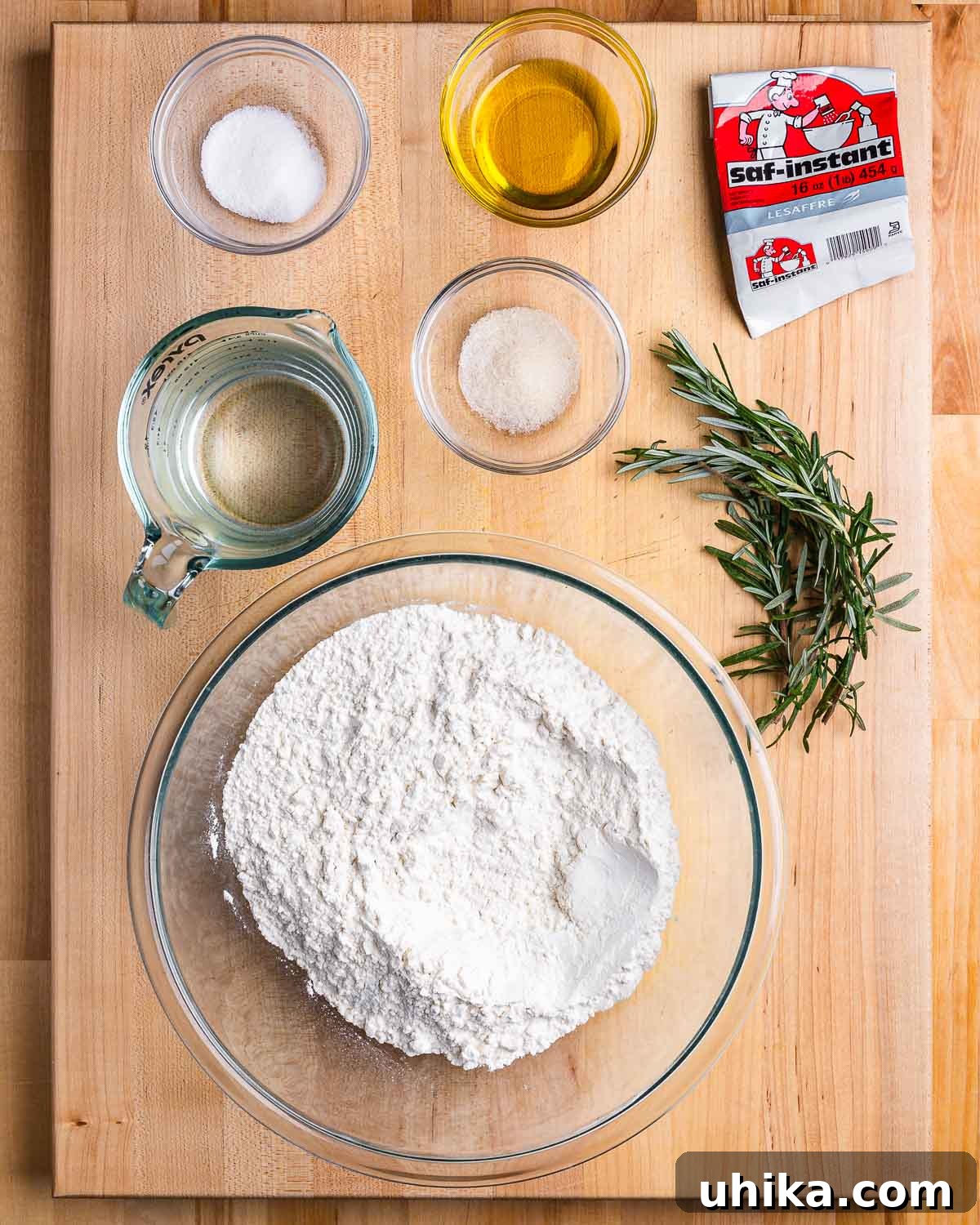
Essential Ingredients for the Dough:
- Bread Flour: The higher protein content in bread flour creates more gluten, which is essential for the chewy texture and structural integrity of the focaccia, especially when no kneading is involved. While all-purpose flour can work in a pinch, bread flour yields superior results.
- Lukewarm Water: The ideal temperature (not exceeding 115°F or 46°C) is crucial for activating the yeast without killing it. Think of it as a warm bath for your yeast, waking it up gently.
- Instant Dry Yeast (SAF recommended): This type of yeast is incredibly convenient as it can be added directly to dry ingredients without prior activation. Its robust nature ensures a consistent rise and makes the no-knead process even simpler.
- Fine Sea Salt: Salt is more than just a seasoning; it controls yeast activity, strengthens gluten, and enhances the overall flavor of the bread. Fine sea salt dissolves easily and distributes evenly throughout the dough.
- Sugar: A small amount of sugar acts as food for the yeast, helping it activate and providing a lovely golden-brown hue to the crust during baking.
- Extra Virgin Olive Oil (divided): A generous amount of good quality extra virgin olive oil is fundamental to focaccia. It contributes richness, moisture, and its characteristic Mediterranean flavor to the dough, both internally and on the surface.
For the Focaccia Topping:
- Extra Virgin Olive Oil: Used again generously to coat the pan and the top of the dough, creating that irresistible crispy bottom and glistening, golden crust.
- Fresh Rosemary: The classic aromatic topping for focaccia. Its piney, earthy notes beautifully complement the richness of the olive oil and the subtle sweetness of the bread.
- Flaky Sea Salt (or coarse sea/kosher salt): These larger salt crystals provide a delightful textural contrast and bursts of savory flavor, making each bite an experience.
Step-by-Step Guide: Crafting Your No-Knead Focaccia
Follow these detailed steps carefully, and you’ll be rewarded with a magnificent focaccia that tastes like it came from an artisan bakery.
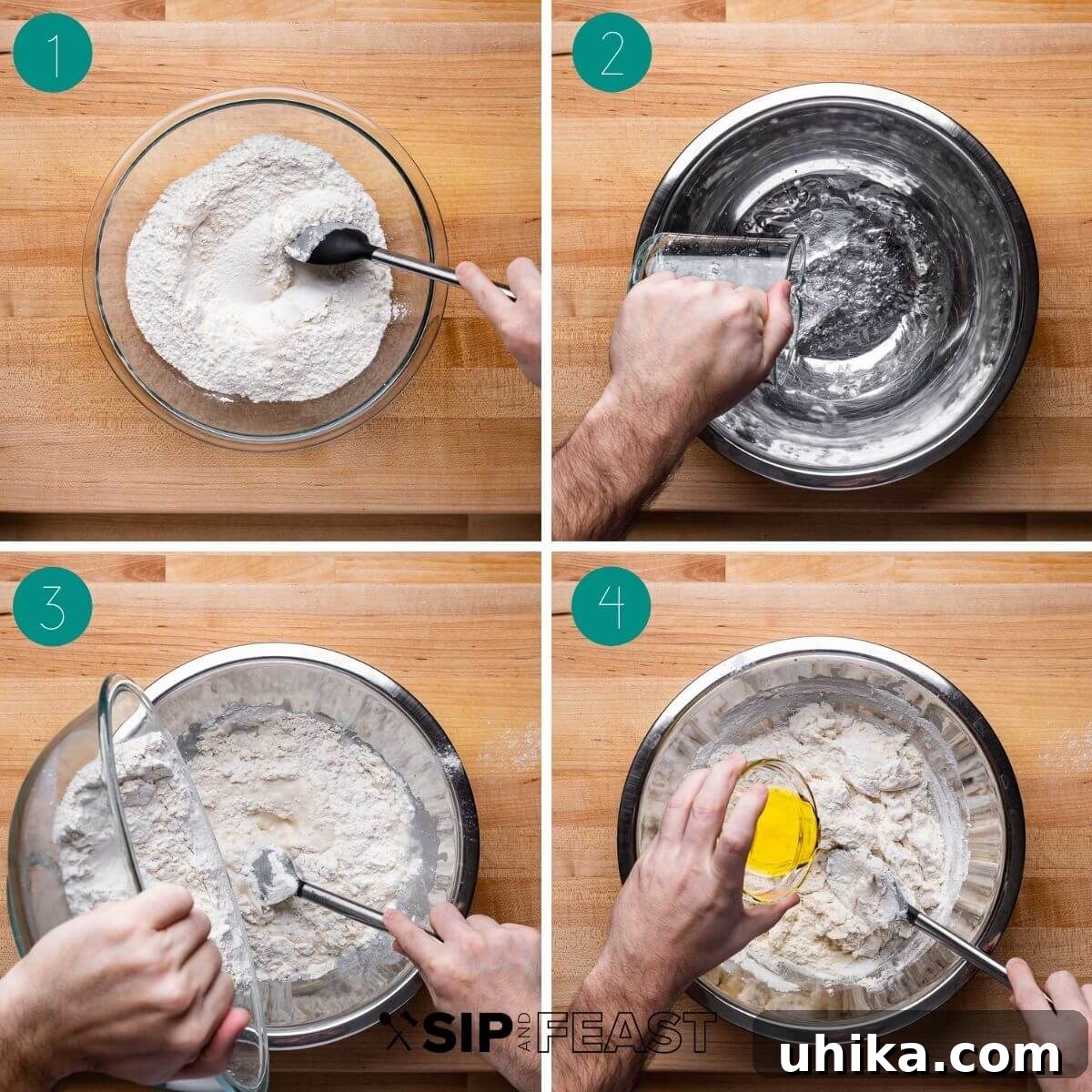
- Prepare the Dry Ingredients: In a very large glass or plastic bowl (ensure it’s large enough to accommodate the dough’s significant rise and fit in your refrigerator later), combine 600 grams (4 ¾ cups) of bread flour, 4 grams (1 teaspoon) of instant dry yeast, 12 grams (2 teaspoons) of fine sea salt, and 7 grams (1 ¾ teaspoons) of sugar. Whisk these dry ingredients together thoroughly to ensure even distribution.
- Combine with Water: In a separate, equally large bowl (this one will hold the dough as it rises), pour 480 grams (17 ounces) of lukewarm water. The water temperature should be no hotter than 115°F (46°C) to protect the yeast.
- Form the Shaggy Dough: Gradually add the dry ingredient mixture into the lukewarm water, stirring continuously with a sturdy wooden or silicone spoon. Continue to mix until all the dry flour is incorporated and no pockets of dry flour remain. The mixture will be very wet and shaggy – this is completely normal for a no-knead dough.
- Add Initial Olive Oil: Drizzle 1 ½ tablespoons of extra virgin olive oil directly into the dough mixture in the bowl.
- Final Mix for the Dough: Stir the dough again, aiming to incorporate the olive oil and ensure a somewhat cohesive, albeit still shaggy, mass. Don’t worry about it being perfectly smooth; the long fermentation will do the work.
- First Rise and Cold Fermentation: Take the first large bowl (the one that held the dry ingredients, now clean) and coat its bottom and sides with 1 tablespoon of extra virgin olive oil. Transfer the shaggy dough into this oiled bowl. Cover the bowl tightly with plastic wrap. Allow the dough to rest and begin its initial rise for 2 hours at room temperature, ideally in a warm spot like on top of a warm oven, refrigerator, or a sunny windowsill. After this initial rise, transfer the covered dough to your refrigerator and let it cold ferment overnight, or ideally for 18-48 hours. This extended cold fermentation is crucial for developing the focaccia’s deep flavor and airy texture.
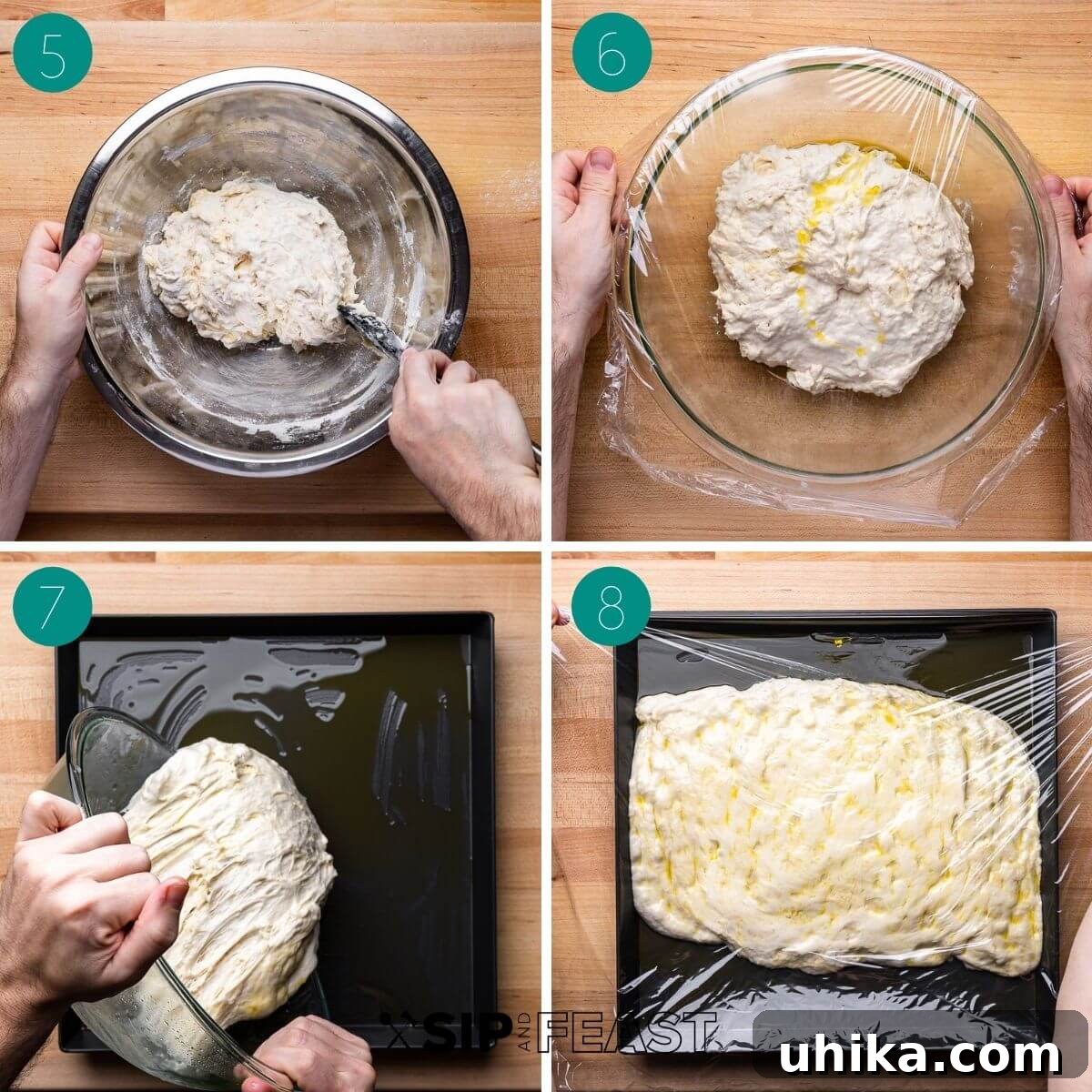
- Prepare the Pan: The next day, it’s time to get your pan ready. Pour 3 tablespoons of extra virgin olive oil into a 14×14-inch square or a similarly sized rectangular baking pan. Use a paper towel to spread the oil evenly across the bottom and up the sides of the pan. Gently transfer the cold, fermented dough into the prepared pan. Pour the remaining 2 tablespoons of extra virgin olive oil over the top of the dough.
- First Stretch and Rest: Using your fingers, gently press the dough outwards towards the corners of the pan. The dough will likely resist and spring back at this stage. This is normal. Do your best to stretch it without tearing. Once stretched as far as it comfortably goes, cover the pan tightly with plastic wrap and let it rest for 45 minutes at room temperature. This rest allows the gluten to relax.
- Second Stretch and Final Rise: After 45 minutes, uncover the dough and repeat the stretching process, pressing it with your fingers into the corners of the pan. You’ll notice it stretches much more easily this time. Once stretched to fill the pan, cover it tightly again with plastic wrap and allow it to undergo its final rise. Place the pan in a warm environment, such as a sunny window, on top of a warm oven, or a refrigerator, for 3-4 hours. The dough should substantially rise, becoming visibly puffy, full of air bubbles, and completely filling the pan.
- Preheat Oven: Approximately 30 minutes before the end of the final rise (when the dough looks fully risen and ready), preheat your oven to 450°F (232°C). Position one oven rack to the lowest level and another to the middle of the oven.
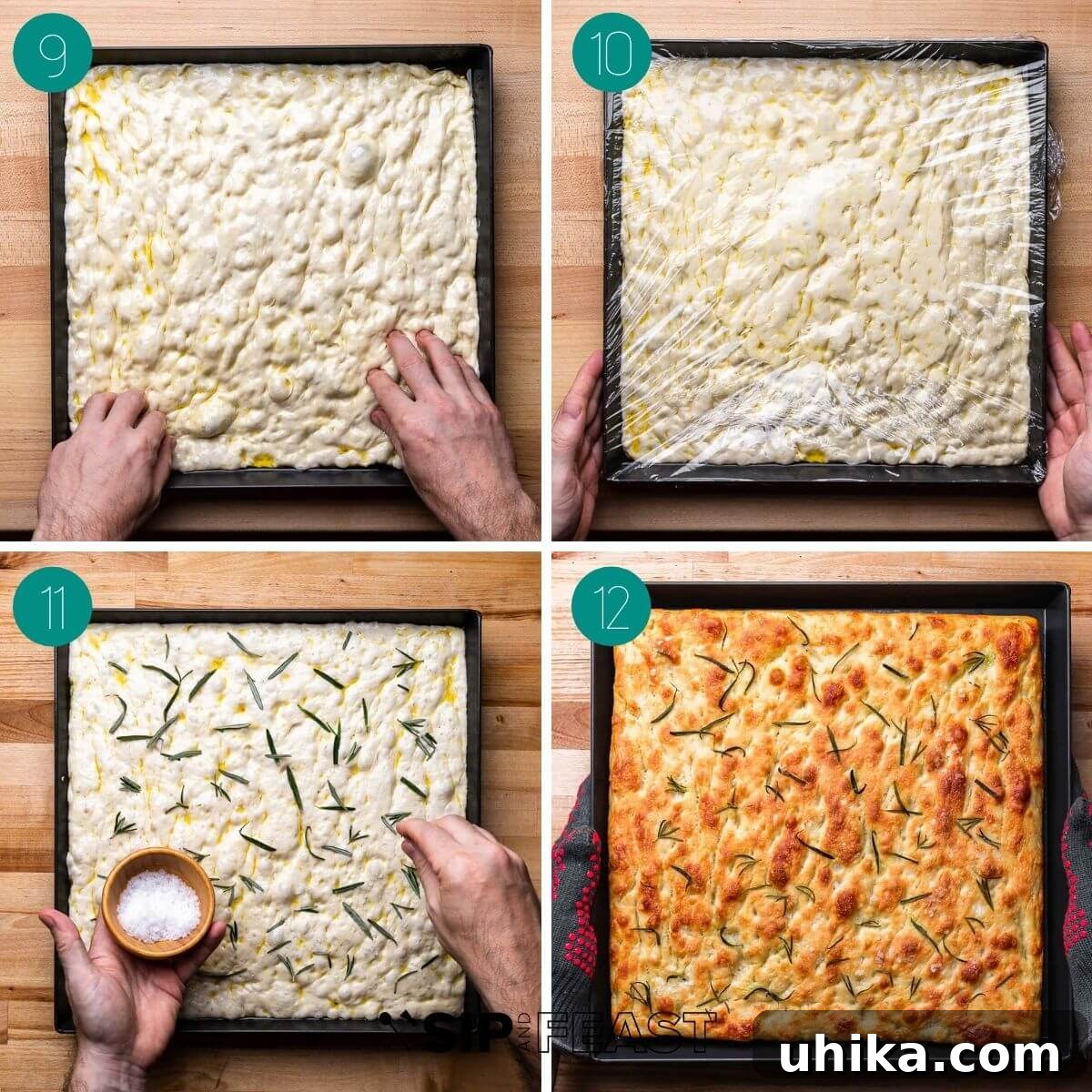
- Dimple and Top: Just before baking, gently uncover the dough. Using your olive oil-coated fingertips, press down into the dough to create the characteristic dimples or “holes” of focaccia. Be gentle to avoid deflating too much of the precious air bubbles. (Note: This step is entirely optional; you can skip it if you prefer a smoother top, and the focaccia will still be delicious!) Evenly sprinkle the surface with fresh rosemary and flaky sea salt.
- Bake to Golden Perfection: Place the pan with the focaccia on the lowest oven rack. Bake for 10-12 minutes, or until the bottom and edges are golden brown and crisp. To check the bottom, you can carefully lift a corner with a spatula. Once golden on the bottom, move the pan to the middle oven rack and continue to bake for another 15 minutes, or until the top is beautifully browned and cooked through. Total baking time will be approximately 25-28 minutes, but remember that all ovens vary. Trust your instincts – if it looks perfectly golden and done a little earlier, remove it. If it needs a few extra minutes for deeper browning, give it the time it needs.
- Cool and Serve: Once baked, carefully remove the focaccia from the oven. Using two spatulas, transfer the hot focaccia from the pan to a wire cooling rack. This prevents the bottom from becoming soggy. Let it rest for at least 10 minutes before slicing and serving. This resting period allows the internal structure to set, resulting in a better texture. Enjoy your homemade masterpiece!
Pro Tips for Focaccia Mastery
Achieving the perfect focaccia is simple with a few key insights:
- Salt and Yeast Harmony: Our recipe utilizes SAF instant dry yeast, which is incredibly forgiving. Unlike active dry yeast, SAF instant yeast can be added directly with your dry ingredients, including salt, without concern that the salt will degrade its potency. There’s no need for a separate proofing step with water, making the process much more streamlined and beginner-friendly.
- Patience is the Secret Ingredient (Cold Fermentation): While some recipes promise a quicker focaccia in 4-6 hours, the true magic of flavor and texture unfolds with time. We strongly recommend allowing your dough to cold ferment in the refrigerator for at least 18 hours. If you can extend this period to 2-3 days, the results will be even more astounding. This extended cold fermentation process, also known as cold proofing, allows complex flavors to develop and strengthens the gluten structure, leading to that characteristic airy, chewy interior and superior taste. It’s the easiest way to achieve an artisan-quality, flavorful focaccia without advanced bread-making techniques.
- Unleash Your Creativity with Toppings: While the classic rosemary and flaky sea salt combination is undeniably delicious and our go-to for this recipe, focaccia is a blank canvas for your culinary imagination. Feel free to experiment with a variety of toppings to suit your taste. Consider adding sliced olives, vibrant bell peppers, juicy sliced tomatoes, thinly sliced red onion, or other fresh herbs like chives, thyme, or oregano. For an artistic touch, arrange these ingredients to create beautiful designs, as we demonstrated with my daughter in our Mother’s Day focaccia YouTube video.
More Delightful Dough Recipes to Explore
While this no-knead focaccia sets the bar for ease, our other dough recipes are also designed with clear, step-by-step instructions to ensure foolproof success for every home baker, no matter the complexity.
- New York Sicilian Pizza: A thick, airy crust that’s surprisingly easy to master.
- Sausage Bread: A savory delight, perfect for parties or a hearty snack.
- Olive Bread: Bursting with briny olives and a delightful aroma.
No-Knead Focaccia
by James Delmage
Average rating: 5 out of 5 stars (based on 4 votes)
Prep Time: 30 mins
Cook Time: 25 mins
Cold Fermentation and Rising Time: 1 day
Total Time: 1 day 55 mins
Servings: 16 pieces
This easy focaccia requires no kneading and just a few ingredients, and time. Soft and chewy on the inside, the crisp exterior is topped with rosemary and flaky sea salt for stand-out flavor. Perfect to serve with soups and salads.
Ingredients
For the Dough
- 600 grams bread flour (or 4 3/4 cups)
- 480 grams lukewarm water (not over 115°F / 46°C, or 17 ounces)
- 4 grams instant yeast (or 1 teaspoon) (recommended brand link)
- 12 grams fine sea salt (or 2 teaspoons)
- 33 grams extra virgin olive oil (divided, or 2 1/2 tablespoons)
- 7 grams sugar (or 1 3/4 teaspoons)
For the Focaccia Topping
- 5 tablespoons extra virgin olive oil (divided)
- 1 tablespoon fresh rosemary
- 1 1/2 teaspoons flaky sea salt (or coarse sea or kosher salt)
Instructions
For the Dough
- Mix Dry Ingredients: In a very large bowl, combine the bread flour, instant yeast, fine sea salt, and sugar. Whisk well to ensure everything is evenly distributed.
- Combine Wet and Dry: In a second large bowl, pour the lukewarm water. Slowly add the dry ingredients into the water while stirring with a wooden or silicone spoon. Continue mixing until all the dry flour is fully incorporated and the dough forms a shaggy, wet mass.
- Add Initial Olive Oil: Drizzle 1 ½ tablespoons of extra virgin olive oil into the dough mixture and stir briefly to incorporate.
- First Rise and Cold Fermentation: Lightly oil the first large bowl (the one that held the dry ingredients) with the remaining olive oil specified for the dough (approx. 1 tablespoon). Transfer the shaggy dough into this oiled bowl and cover it tightly with plastic wrap. Let the dough rest and rise at room temperature for 2 hours. After this initial rise, place the covered bowl in the refrigerator and allow it to cold ferment for at least 18 hours, and ideally up to 2-3 days, for best flavor development.
Making the Focaccia
- Prepare Baking Pan: On the day of baking, pour 3 tablespoons of extra virgin olive oil into a 14 by 14-inch square or a similarly sized rectangular baking pan. Spread the oil evenly across the bottom and sides using a paper towel. Gently transfer the cold dough into the oiled pan. Pour the remaining 2 tablespoons of extra virgin olive oil over the top of the dough.
- First Stretch and Rest: With olive oil-coated fingers, gently press and stretch the dough towards the corners of the pan. The dough will be resistant and spring back; don’t force it. Cover the pan tightly with plastic wrap and let it rest for 45 minutes at room temperature to allow the gluten to relax.
- Second Stretch and Final Rise: After 45 minutes, uncover the dough and stretch it again, pressing it into the corners of the pan. It should stretch much more easily this time. Once the dough fills the pan, cover it tightly once more and let it rise in a warm spot (like a sunny window or on top of a warm oven/refrigerator) for 3-4 hours, or until the dough has risen substantially, become visibly bubbly, and completely filled the pan.
- Preheat Oven: About 30 minutes before the end of the final rise, preheat your oven to 450°F (232°C). Set one oven rack to the lowest position and another to the middle.
- Dimple and Top: Just before baking, gently uncover the dough. Using your fingertips, press gently into the dough to create the characteristic dimples. Sprinkle generously with fresh rosemary and flaky sea salt.
- Bake: Place the focaccia pan on the lowest oven rack. Bake for 10-12 minutes, or until the bottom is golden brown and crisp. Carefully check the bottom with a spatula. Once golden, move the pan to the middle rack and continue baking for another 15 minutes, or until the top is deeply golden brown. Total baking time is typically 25-28 minutes, but adjust as needed for your specific oven.
- Cool and Serve: Once baked, remove the focaccia from the oven. Using two spatulas, carefully transfer the focaccia from the pan to a wire rack to cool. Let it rest for at least 10 minutes before slicing and serving. Enjoy your beautifully baked focaccia!
Notes
- The dough greatly benefits from cold fermentation in the refrigerator, which can last up to 3 days for even deeper flavor development and a more complex crumb structure.
- Baking times can vary based on individual oven calibration. After the initial 10-12 minutes on the lowest rack, the focaccia’s bottom should be golden and crisp. If it appears pale, it may require a few more minutes on the bottom rack, but monitor closely to prevent burning. The transfer to the middle rack is essential to ensure even browning without over-baking the bottom.
- Leftover focaccia can be stored in an airtight container at room temperature for up to 3 days. To reheat, place pieces on a parchment paper-lined baking sheet and warm in an oven preheated to 350°F (175°C) for about 10 minutes, or until heated through and crisp.
Bakers Percentages: 80% hydration, .67% yeast, 2% salt, 3.4% oil, 1.2% sugar
Thickness Factor (TF): .202
Nutrition
Calories: 193kcal | Carbohydrates: 28.7g | Protein: 3.9g | Fat: 6.9g | Saturated Fat: 1g | Sodium: 513mg | Potassium: 44mg | Fiber: 1.1g | Sugar: 0.1g | Calcium: 7mg | Iron: 2mg
Nutrition information is automatically calculated and should only be used as an approximation.
Like this recipe? Leave a comment below!
Check us out on Instagram at @sipandfeast or tag #sipandfeast when you share your creations!
If you’ve enjoyed this No-Knead Focaccia Bread recipe, please consider giving it a 5-star rating.
Watch us on YouTube, follow along on our Facebook Page, and become a Patreon member to receive access to exclusive full-meal videos and content.