
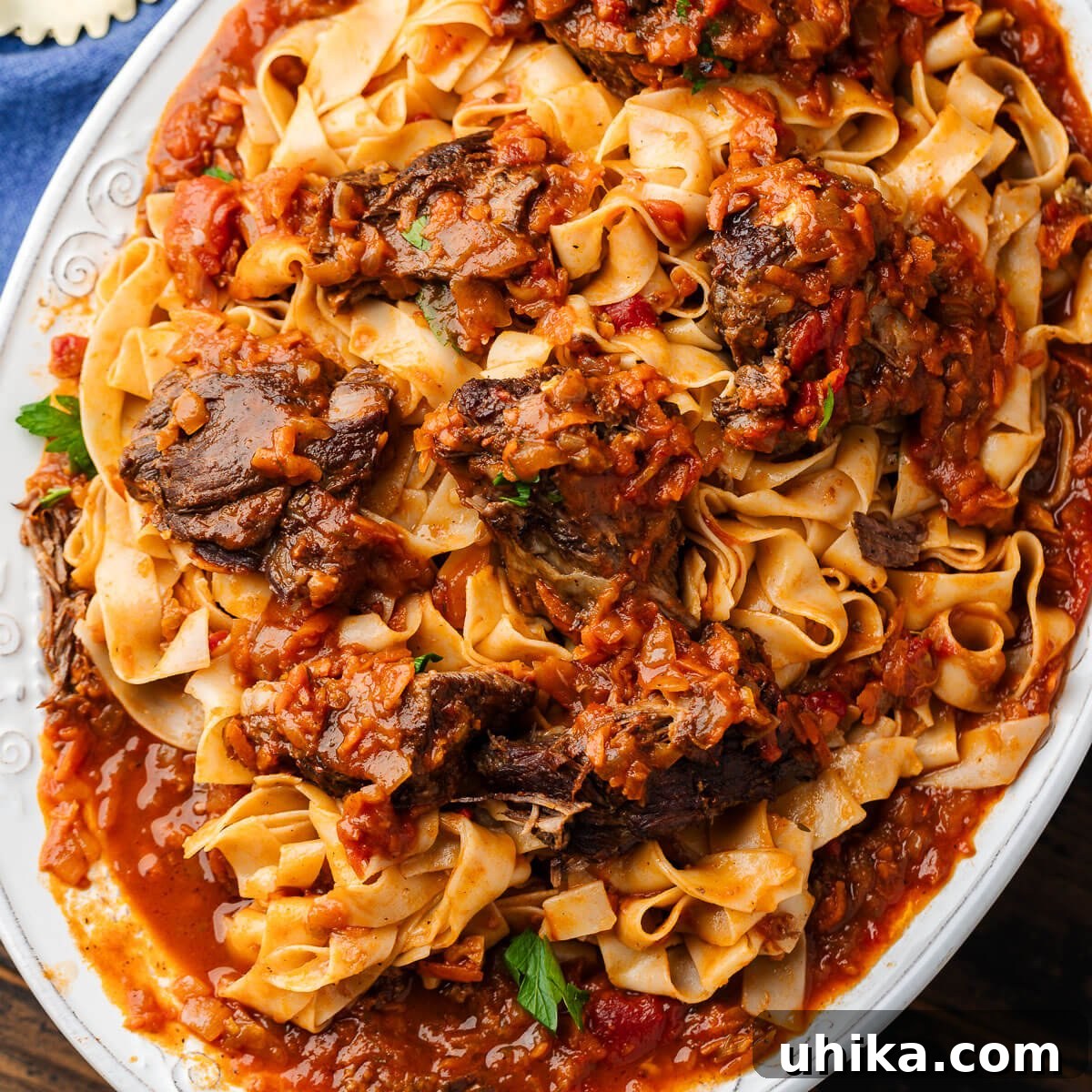
For lovers of robust and comforting beef dishes, **Stracotto**, often known as **Italian Pot Roast**, stands as a culinary masterpiece, consistently ranking among the most delicious and satisfying meals. This revered classic features succulent beef, slowly braised to an exquisite tenderness in a rich, aromatic tomato-based sauce, infused with the deep flavors of red wine, garden vegetables, and fragrant herbs. Served traditionally with creamy polenta or al dente pasta, Stracotto promises an unforgettable dining experience that embodies the heart and soul of Italian home cooking.
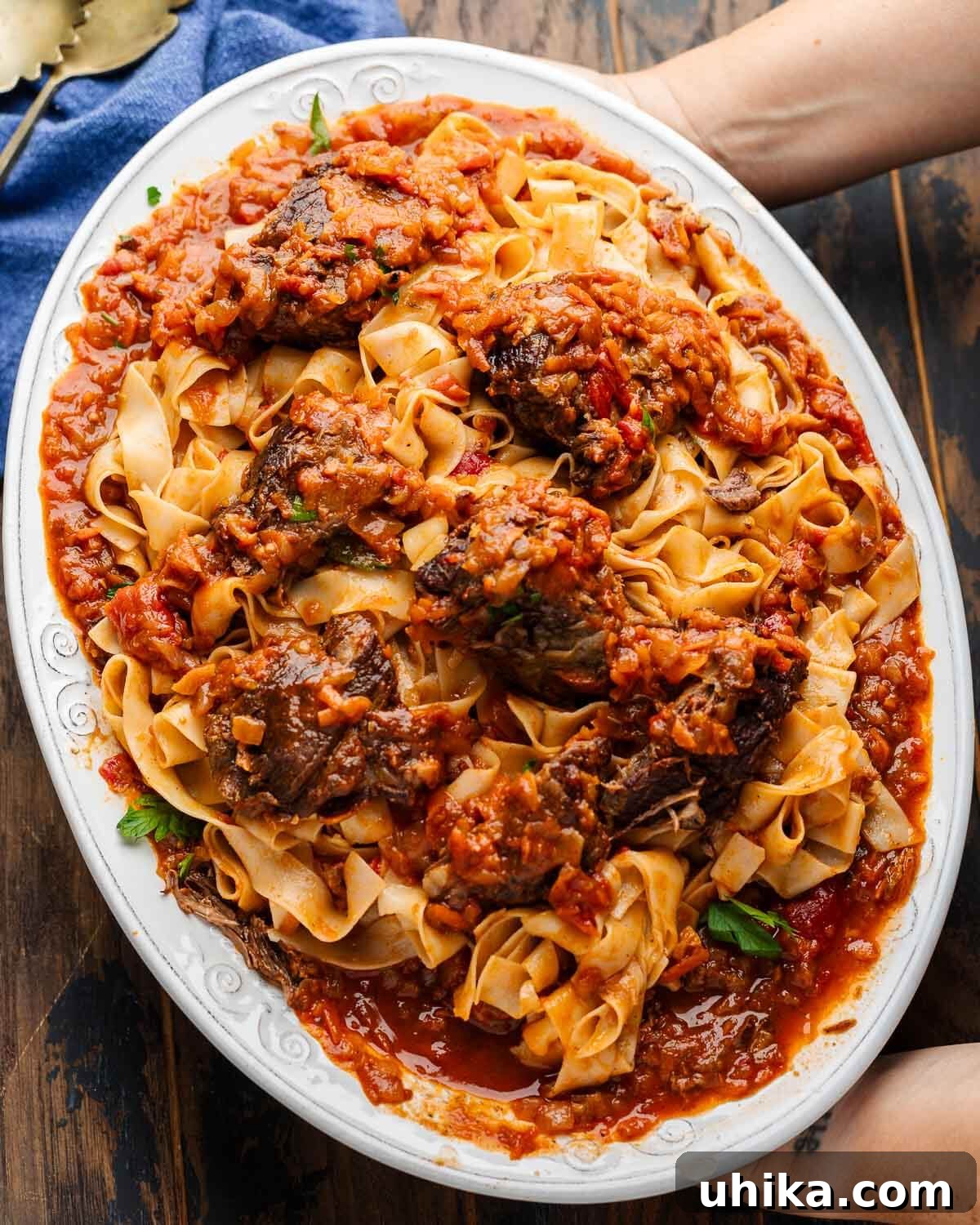
Discovering the Magic of Stracotto: The Ultimate Italian Pot Roast
When the colder months arrive, there’s nothing quite as inviting as a dish that warms you from the inside out. Braised beef recipes are a quintessential part of winter cuisine, and Stracotto is undoubtedly one of the most heartwarming and surprisingly straightforward to prepare. Originating from the Italian verb *stracocere*, meaning “to overcook,” the term *stracotto* literally translates to “overcooked” in English. However, this is far from a culinary mishap. Instead, it perfectly describes the technique of slow, gentle braising that transforms a humble cut of beef into something extraordinarily tender, juicy, and bursting with flavor. Unlike quick cooking methods, the prolonged simmering ensures that the meat breaks down beautifully, absorbing every nuance of the vibrant sauce.
This traditional Italian pot roast is not just a meal; it’s a celebration of patience and simple, high-quality ingredients. The resulting dish offers a depth of flavor that only hours of slow cooking can achieve, making it a perfect centerpiece for family dinners or special occasions. The rich, savory sauce, often thickened naturally from the reduction and the vegetables, is just as much a star as the melt-in-your-mouth beef itself.
Perfect Pairings for Your Stracotto
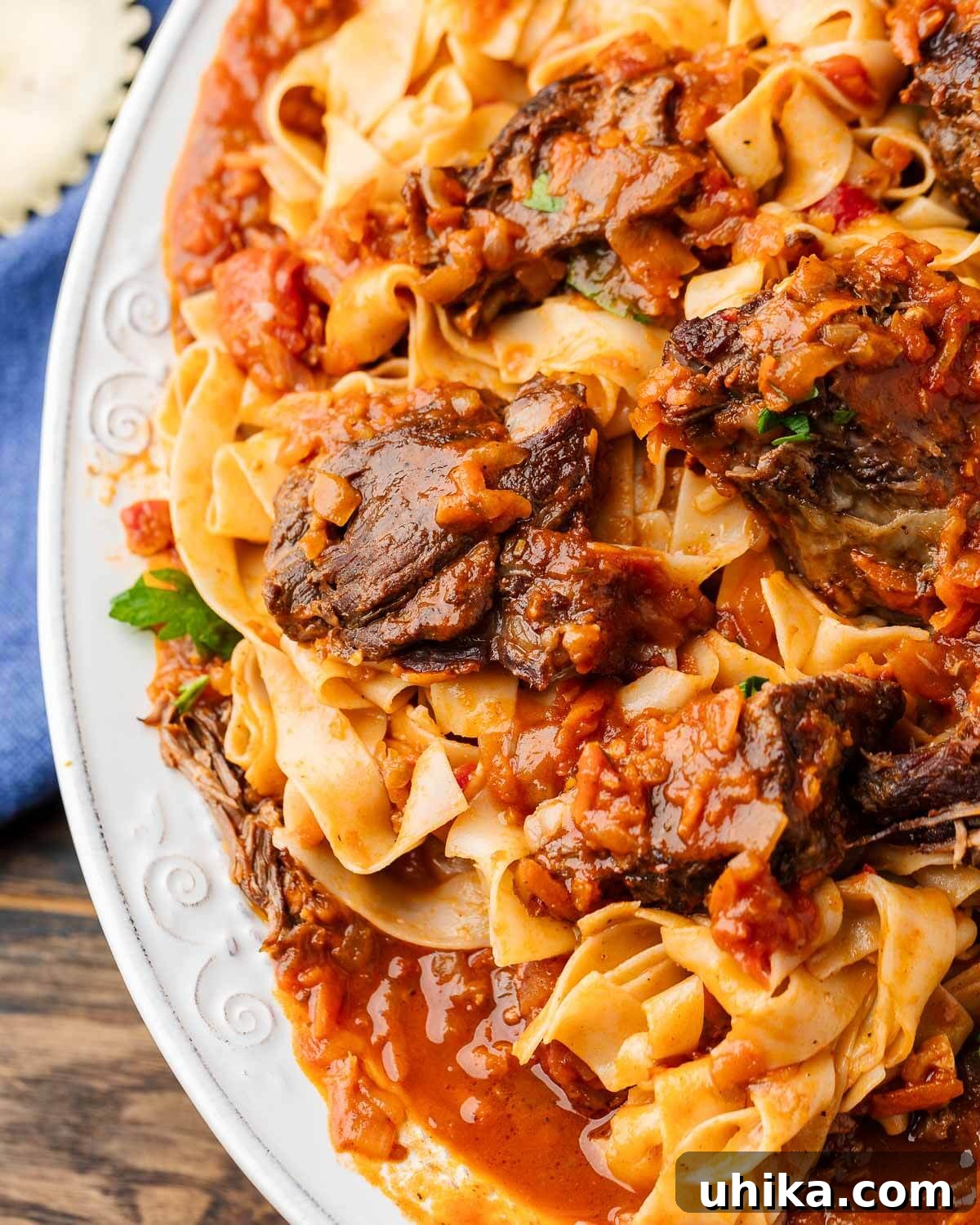
Stracotto di manzo, meaning “overcooked beef,” is incredibly versatile when it comes to serving. For an authentic Italian experience, serve it with a generous portion of creamy polenta, allowing the golden cornmeal to soak up every last drop of the luscious sauce. Alternatively, pair it with garlic mashed potatoes for a comforting, hearty combination that’s universally loved. Pasta lovers will find Stracotto equally delightful with wide, flat noodles like pappardelle, rigatoni, or tagliatelle, which are ideal for clinging to the robust sauce. A sprinkle of fresh Parmesan cheese and a crusty loaf of bread to mop up the sauce are highly recommended to complete this truly memorable meal.
Essential Ingredients for Stracotto
Crafting the perfect Stracotto begins with selecting the right ingredients. Below is a visual guide to the core components, followed by important notes on specific selections to help you achieve the best flavor and texture in your Italian pot roast.
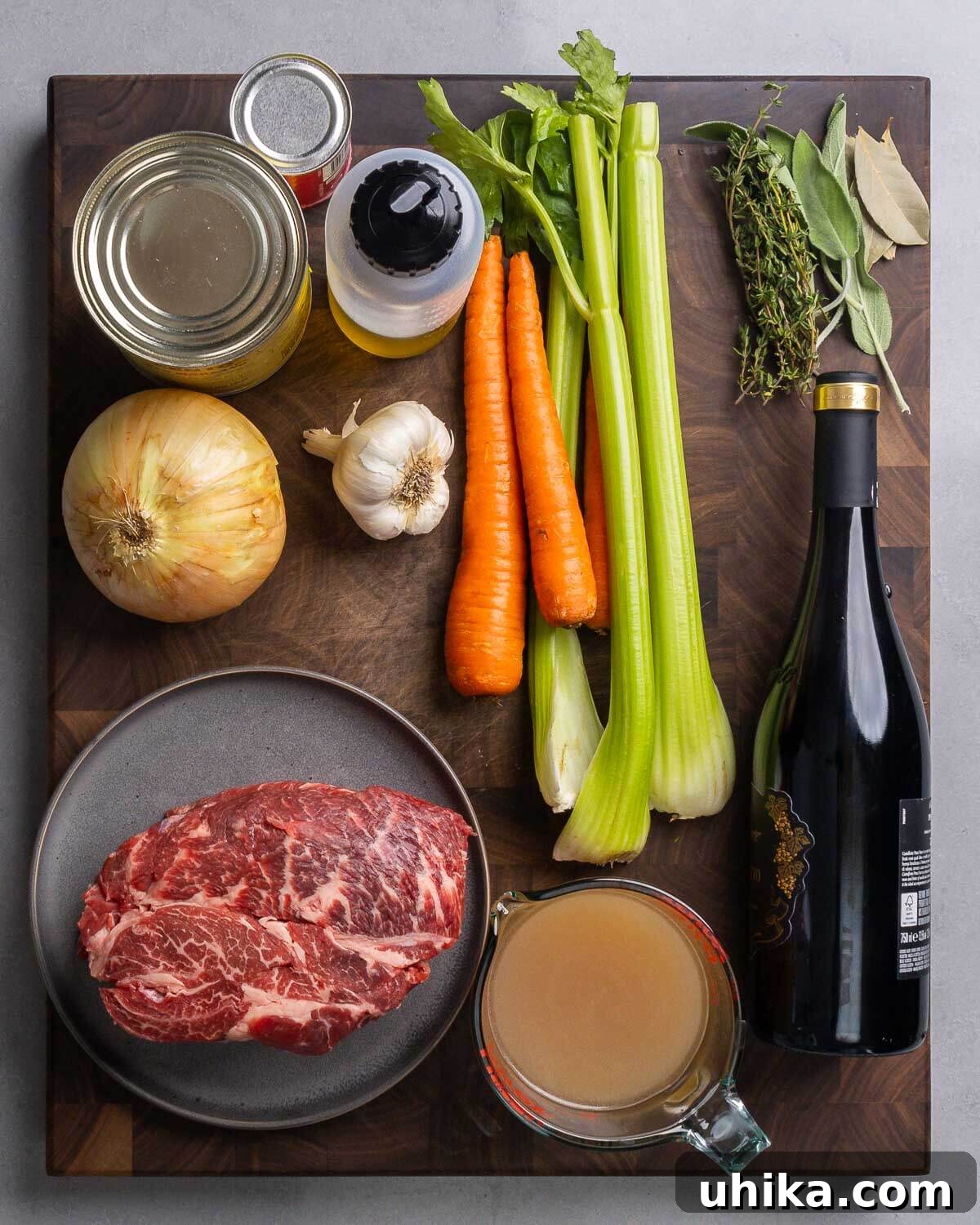
- Beef: The Heart of the Dish. For Stracotto, I highly recommend using a **chuck roast**. This cut is ideal for slow braising because it contains a good amount of marbling and connective tissue, which breaks down over hours of cooking, resulting in incredibly tender, flavorful, and moist meat. While chuck roast offers the most robust flavor and desirable texture, leaner cuts like rump roast, top round, or bottom round can also be used. If opting for a leaner cut, consider larding the beef with strips of pancetta using a larding needle or knife. This technique introduces fat and moisture into the meat, preventing it from drying out during the long braise.
- Wine: A Flavorful Foundation. A dry red wine is crucial for adding depth and complexity to the sauce. Varieties such as Cabernet Sauvignon, Merlot, or Chianti work wonderfully, lending their rich, fruity, and slightly tannic notes to the braise. Choose a wine you would enjoy drinking, as its flavor will concentrate in the sauce. If you prefer to omit alcohol, a good quality beef stock can be used as a direct substitute without compromising the dish’s richness.
- Stock: The Liquid Gold. The quality of your beef stock significantly impacts the overall flavor of your Stracotto. I strongly recommend using homemade beef stock for its superior depth and natural gelatin. As an excellent alternative, a quick stock made with a concentrated beef base, such as Better Than Bouillon low-sodium beef base, provides rich flavor with convenient preparation. Opt for low-sodium options to better control the seasoning of your dish.
- Tomatoes: The Sauce Base. High-quality canned whole plum tomatoes are preferred. Hand-crushing them before adding to the pot creates a more rustic texture and releases their natural sweetness.
- Aromatics & Herbs: Building Flavor. A classic soffritto of onion, carrots, and celery forms the aromatic base. Fresh garlic, bay leaves, sage, and thyme infuse the sauce with herbaceous notes, while a cinnamon stick (optional) adds a subtle, warm complexity that elevates the dish.
- Olive Oil: The Searing Medium. Use a good quality extra virgin olive oil for searing the beef and sautéing the vegetables. Its fruity notes complement the other ingredients beautifully.
For precise measurements and quantities, please refer to the complete recipe provided below.
Crafting Your Stracotto: A Step-by-Step Guide
Creating Stracotto is a labor of love that rewards you with an incredibly tender and flavorful meal. Follow these detailed steps to achieve perfect results every time:
- Prepare Your Workspace and Vegetables: Begin by preheating your oven to 325°F (160°C). Position an oven rack in the middle to comfortably accommodate a Dutch oven with its lid. Next, finely dice one large sweet onion. For the carrots and celery, you have a choice: either shred two large carrots and three ribs of celery by hand for a slightly more rustic texture, or pulse them in a food processor for a finer consistency that will almost “melt” into the sauce. Finally, hand crush one 28-ounce can of whole plum tomatoes, ensuring they break down but retain some texture.
- Prepare and Season the Beef: Slice eight cloves of garlic into thin slivers. Using a sharp knife, make small, deep slits all over the 3-pound chuck roast and carefully insert the garlic slivers into these pockets. This infuses the meat with garlic flavor from within. Pat the chuck roast thoroughly dry with paper towels; this crucial step ensures a good sear. Season the beef generously with 1 tablespoon of Diamond Crystal kosher salt and 1 teaspoon of freshly ground black pepper. Set aside any remaining garlic slivers for later use in the sauce.
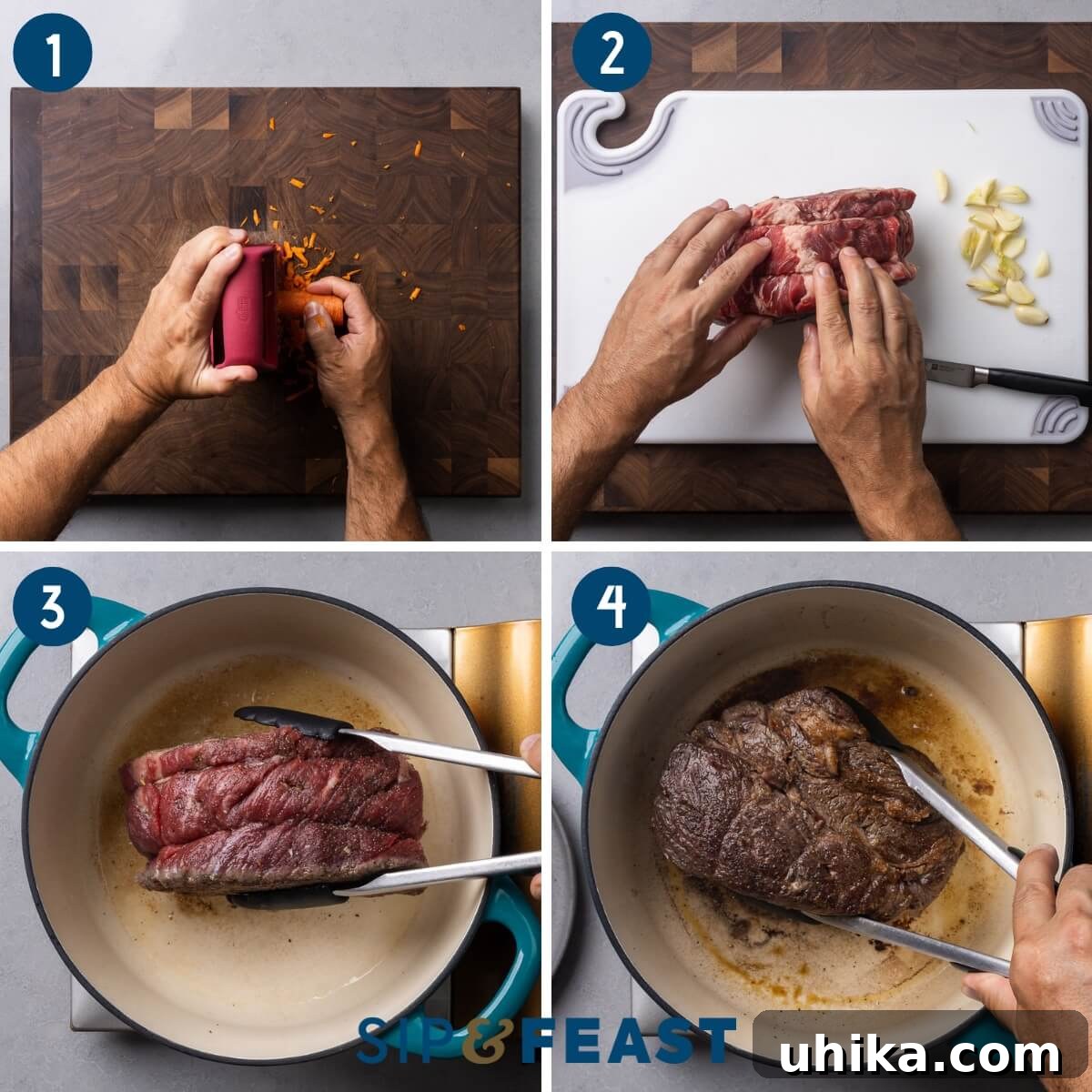
- Sear the Chuck Roast: Heat a large Dutch oven over medium-high heat. Add 3 tablespoons of olive oil. Once the oil shimmers, carefully place the seasoned chuck roast into the pot. Sear the roast vigorously on all sides until a deep, rich brown crust forms, which typically takes about 15 minutes in total. This searing step is vital for developing complex flavors (the Maillard reaction). Once browned, remove the roast from the Dutch oven and transfer it to a plate.
- Sauté the Onions and Deglaze: Reduce the heat to medium. Add the finely diced onions to the Dutch oven, along with ¼ cup of water and a pinch of salt. Cook the onions, stirring frequently with a wooden spoon, and actively scrape the bottom of the pot. The water and the onions’ moisture will help to lift the flavorful browned bits (fond) left behind by the seared beef, incorporating them into the base of your sauce.
- Soften Carrots and Celery: After sautéing the onions for about 10 minutes until translucent and soft, add the shredded or pulsed celery and carrots to the pot. Continue to cook for another 10-15 minutes, or until these vegetables are very soft. During the last few minutes of cooking the vegetables, add any remaining garlic slivers from step 2. Keep a close eye on the vegetables; if they start to stick or burn, lower the heat further and/or add a splash of water or beef stock to prevent scorching.
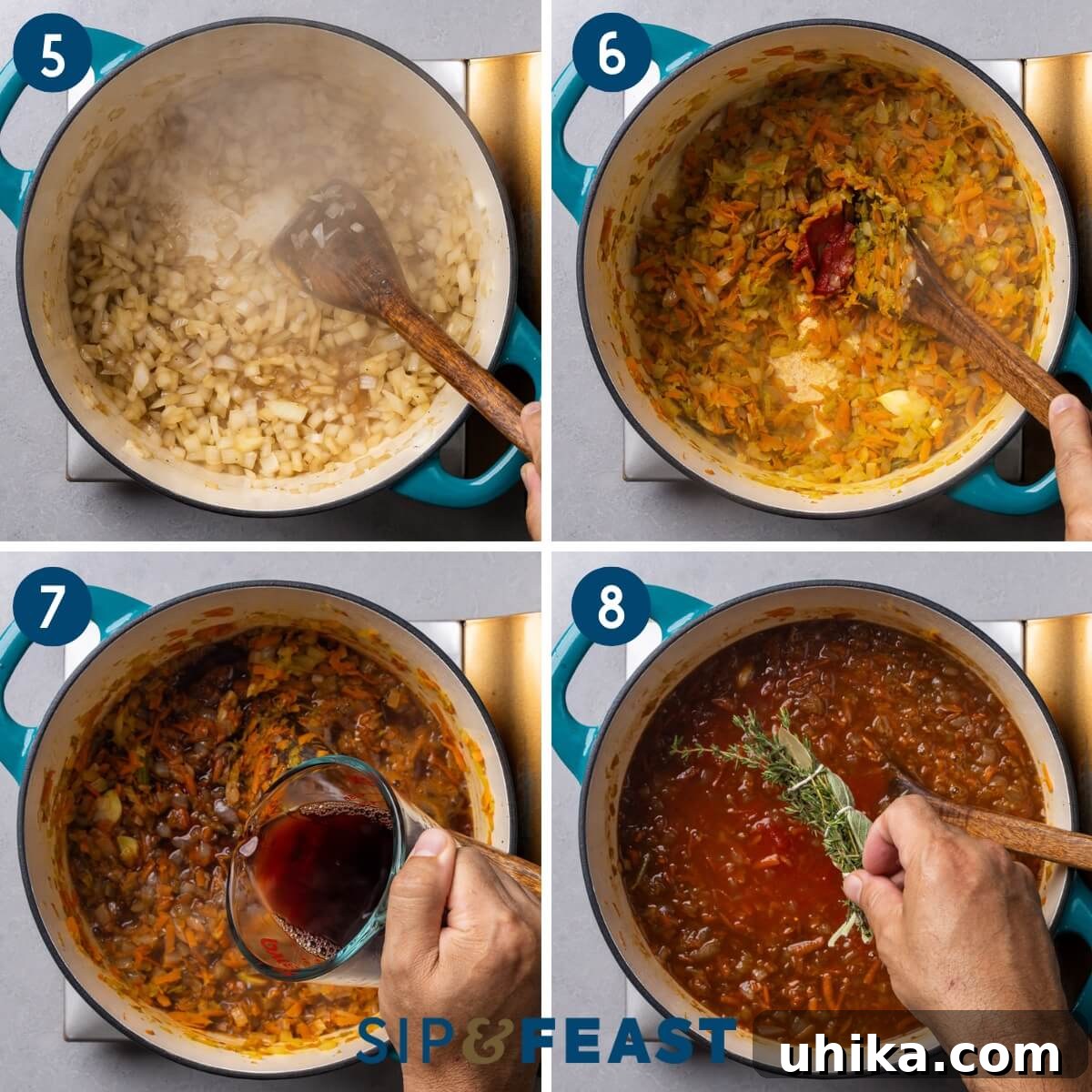
- Build the Sauce Base: Stir in 3 tablespoons of tomato paste and cook for 1 minute, stirring constantly. This step toasts the tomato paste, intensifying its flavor and depth. Pour in 1½ cups of dry red wine and bring the mixture to a simmer. As it simmers, use your wooden spoon to scrape up any remaining browned bits from the bottom of the pot, fully deglazing it and integrating all the flavors.
- Add Liquids and Herbs: Create a *bouquet garni* by tying together 10 sprigs of fresh thyme, 3 large bay leaves, and 5 large sage leaves with kitchen twine. Alternatively, place them in a cheesecloth sachet for easy removal later. Add this herb bundle to the pot, along with 2 cups of low-sodium beef stock, the hand-crushed plum tomatoes, and 1 cinnamon stick (if using). Bring the entire mixture to a gentle simmer.
- Begin the Braise: Once the sauce is simmering, turn off the heat. Carefully return the seared chuck roast to the Dutch oven, ensuring it’s nestled into the sauce. Cover the pot with a tight-fitting lid to trap moisture and heat.
- Slow Cook to Perfection: Place the covered Dutch oven into your preheated oven. Cook for an initial 3 hours. After this time, use a fork or the tip of a knife to check the tenderness of the beef. It should be very tender and easily pierced. If it’s not quite tender enough, return it to the oven and cook for another 30 minutes, then check again. Repeat as needed until the Stracotto reaches a fork-tender consistency, almost falling apart. Once perfectly tender, remove the roast from the pot and tent it loosely with aluminum foil to rest while you finish the sauce. The meat can be cut into large chunks or carefully sliced against the grain.
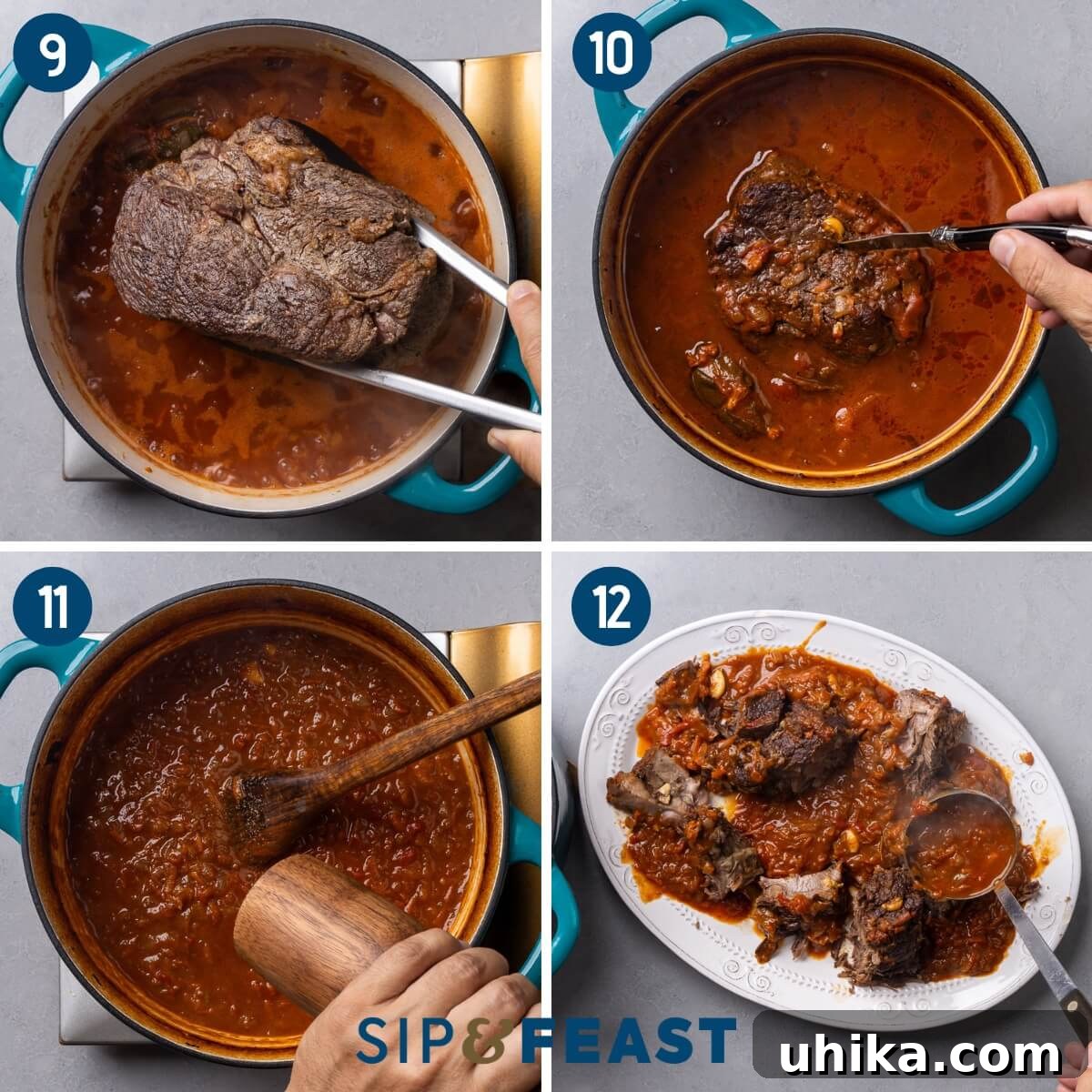
- Refine the Sauce: Chuck roast, while delicious, can release a fair amount of fat into the sauce during cooking. To degrease the sauce, carefully skim off any visible fat using a ladle. For a more thorough degreasing, you can gently lay paper towels on top of the sauce to absorb the fat, then discard them. Alternatively, if time allows, chill the sauce, and the fat will solidify on top, making it easy to remove. Taste the sauce and adjust the seasoning with additional salt and pepper as needed. Remove the herb bundle and cinnamon stick before serving.
- Serve and Enjoy: Arrange the tender chunks or slices of beef on a large platter. Spoon a generous amount of the rich Stracotto sauce over the meat. You will have plenty of extra sauce to serve alongside pasta, polenta, or mashed potatoes. Garnish with fresh minced Italian parsley if desired, and enjoy this incredibly satisfying Italian classic!
Chef’s Tip for Sauce Texture
For a silken, smooth sauce where vegetables seamlessly integrate, I prefer to shred or even pulse the carrots and celery finely in a food processor. This method allows them to almost completely dissolve into the sauce, contributing their flavor without adding chunky texture. However, if you appreciate a more rustic Stracotto with visible, tender vegetable pieces, feel free to finely dice the carrots and celery instead of shredding them. Both approaches yield delicious results; it’s simply a matter of personal preference for sauce consistency.
Explore More Braised Beef Delights
If the rich, comforting flavors of Stracotto resonate with your palate but you’re seeking a braised beef dish with a slightly different profile or a quicker preparation time, be sure to explore these other fantastic options:
- Steak Pizzaiola: A quicker braise featuring steak in a savory tomato and oregano sauce.
- Swiss Steak: Tenderized steak smothered in a hearty tomato-vegetable sauce.
- Beef Braciole: Thin slices of beef rolled with savory fillings and braised in tomato sauce.
Beyond Stracotto: More Comforting Braised Beef Recipes
For those who adore the slow-cooked perfection of braised beef, there’s a world of hearty dishes to explore. Here are a few more of my absolute favorite braised beef recipes, each one perfect for cold weather and guaranteed to bring warmth and satisfaction to your table:
- Brasato al Barolo: A luxurious Italian braise using beef brisket and the esteemed Barolo wine.
- Classic Pot Roast: The quintessential American comfort food, tender beef with root vegetables.
- Beef Bourguignon: A classic French beef stew braised in red wine with bacon, mushrooms, and onions.
If you’ve enjoyed preparing this **Stracotto (Italian Pot Roast) Recipe** or any other recipe from our collection, we’d love to hear from you! Please consider **giving it a 5-star rating** and sharing your experience in the comments section below. Your feedback helps us and our community of home cooks.
We understand that everyone has a unique learning style. If you’re someone who **prefers to learn by watching**, you can find most of our recipes, including detailed cooking demonstrations, on our official **YouTube channel** and our **Facebook Page**. For exclusive, never-before-seen **FULL MEAL RECIPE VIDEOS**, consider becoming a **Patreon member** today and join our passionate culinary community!
Stracotto (Italian Pot Roast)
Pin
Ingredients
- 3 pound chuck roast
- 1 tablespoon Diamond Crystal Kosher salt
- 1 teaspoon black pepper
- 8 cloves garlic
- 3 tablespoons olive oil
- 1 large sweet onion finely diced
- 2 large carrots shredded or pulsed in a food processor
- 3 ribs celery shredded or pulsed in a food processor
- 3 tablespoons tomato paste
- 1 28-ounce can plum tomatoes hand crushed or blender pulsed
- 1 1/2 cups dry red wine
- 2 cups low-sodium beef stock
- 1 cinnamon stick optional
- 3 large bay leaves
- 5 large sage leaves
- 10 sprigs thyme tied
- salt and pepper to taste
- 3 tablespoons minced flat-leaf Italian parsley for garnish
Instructions
-
Preheat oven to 325°F (160°C) and set the rack in the middle of the oven to accommodate a Dutch oven with its lid.
-
Cut 8 garlic cloves into slivers. Make slits in the roast and insert the slivers of garlic. Pat the chuck roast dry with paper towels then season with 1 tablespoon of salt and 1 teaspoon of black pepper. Any remaining garlic can be added to the pot in step 5 below.
-
Heat a large Dutch oven to medium-high heat with 3 tablespoons of olive oil. Add the chuck roast to the pot and sear until browned on all sides (about 15 minutes total) then remove the roast to a plate.
-
Add the finely diced onions along with 1/4 cup of water and a pinch of salt. Cook over medium heat while scraping the pot with a wooden spoon to remove all of the browned bits from the bottom.
-
After sautéing the onions for 10 minutes, add the shredded or pulsed celery and carrots and continue to cook for another 10-15 minutes or until the vegetables are very soft. During the last few minutes, add any remaining garlic. If at any time the veggies start to burn, lower the heat and/or add a splash of water or beef stock to the pot.
-
Add 3 tablespoons of tomato paste and cook for 1 minute while stirring frequently. Add 1½ cups of dry red wine and bring to a simmer. Again, scrape the pot with a wooden spoon to dislodge any remaining browned bits.
-
Tie the thyme, sage, and bay leaves together with kitchen twine or add to a sachet.
-
Add 2 cups of beef stock, the hand-crushed plum tomatoes, the cinnamon stick (if using), and the tied herbs. Bring the mixture to a simmer. Once simmering, turn off the heat and add the roast back to the pot and cover with the lid. Place into the oven.
-
Cook the roast for 3 hours then check for doneness. If it isn’t tender enough, return it to the oven for another 30 minutes and check again. Once the roast is tender, remove it from the pot and tent with foil. The roast can be cut into chunks or carefully sliced.
-
To degrease the sauce, lay paper towels on top of the sauce to absorb the fat then discard or use a ladle to skim some of the fat. Taste the sauce and season with salt and pepper as required. Place the chunks of beef onto a platter and top with sauce. You will have plenty of extra sauce to serve with pasta, polenta, or mashed potatoes if you like. Garnish with minced parsley, and enjoy!
Notes
- Chuck roast is recommended for the best pot roast due to its unique fat profile and connective tissue, which yields the most tender and flavorful results after long braising. However, other leaner roasts such as rump roast, top round, and bottom round can also be used. These cuts may be better sliced rather than shredded.
- This recipe yields enough sauce for the pot roast itself and approximately 1 pound of pasta or other sides.
- Leftovers can be stored in an airtight container in the refrigerator for up to 3 days and reheat beautifully in the oven or on the stovetop over low heat.
Nutrition
Nutrition information is automatically calculated and should be used as an approximation only.