
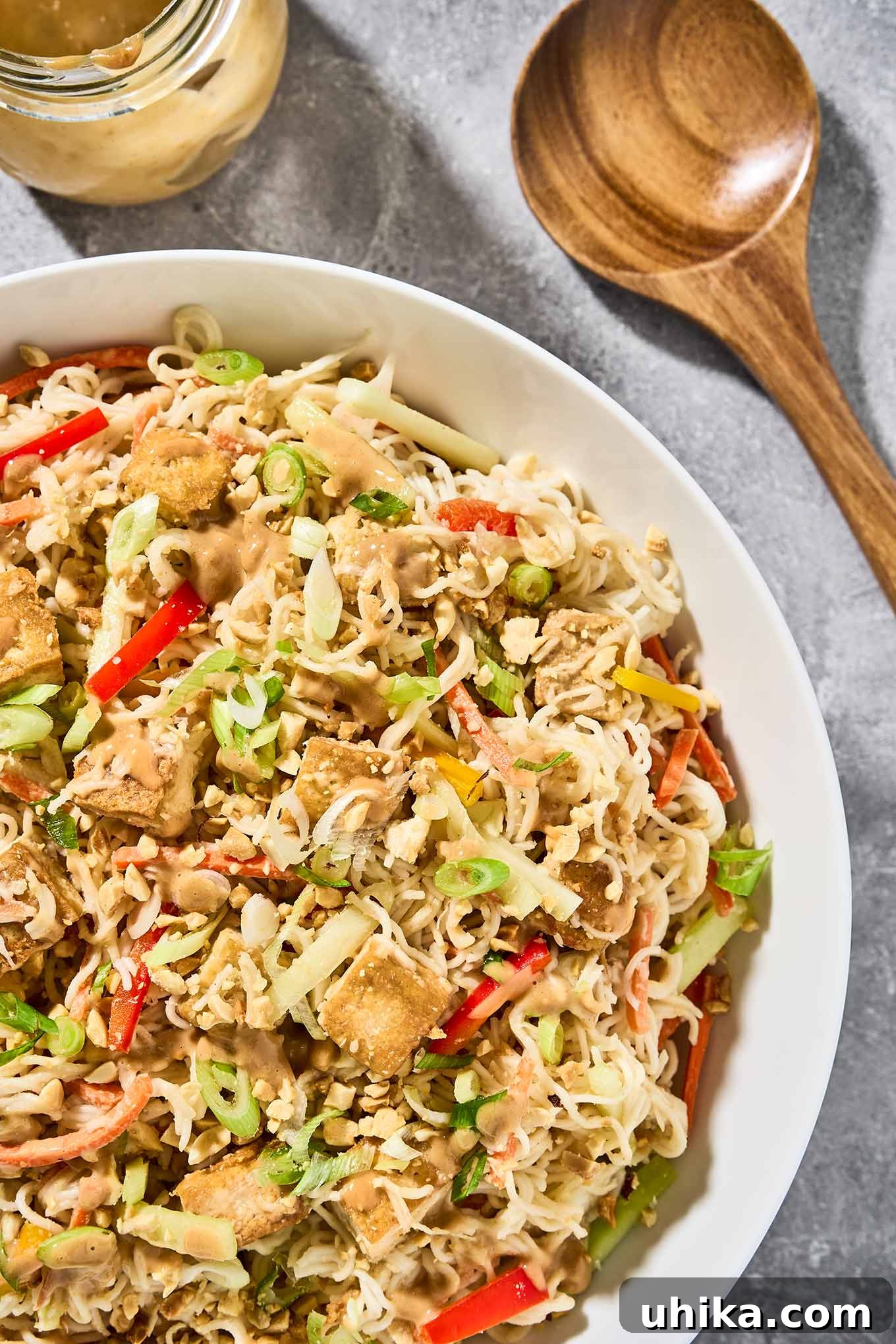
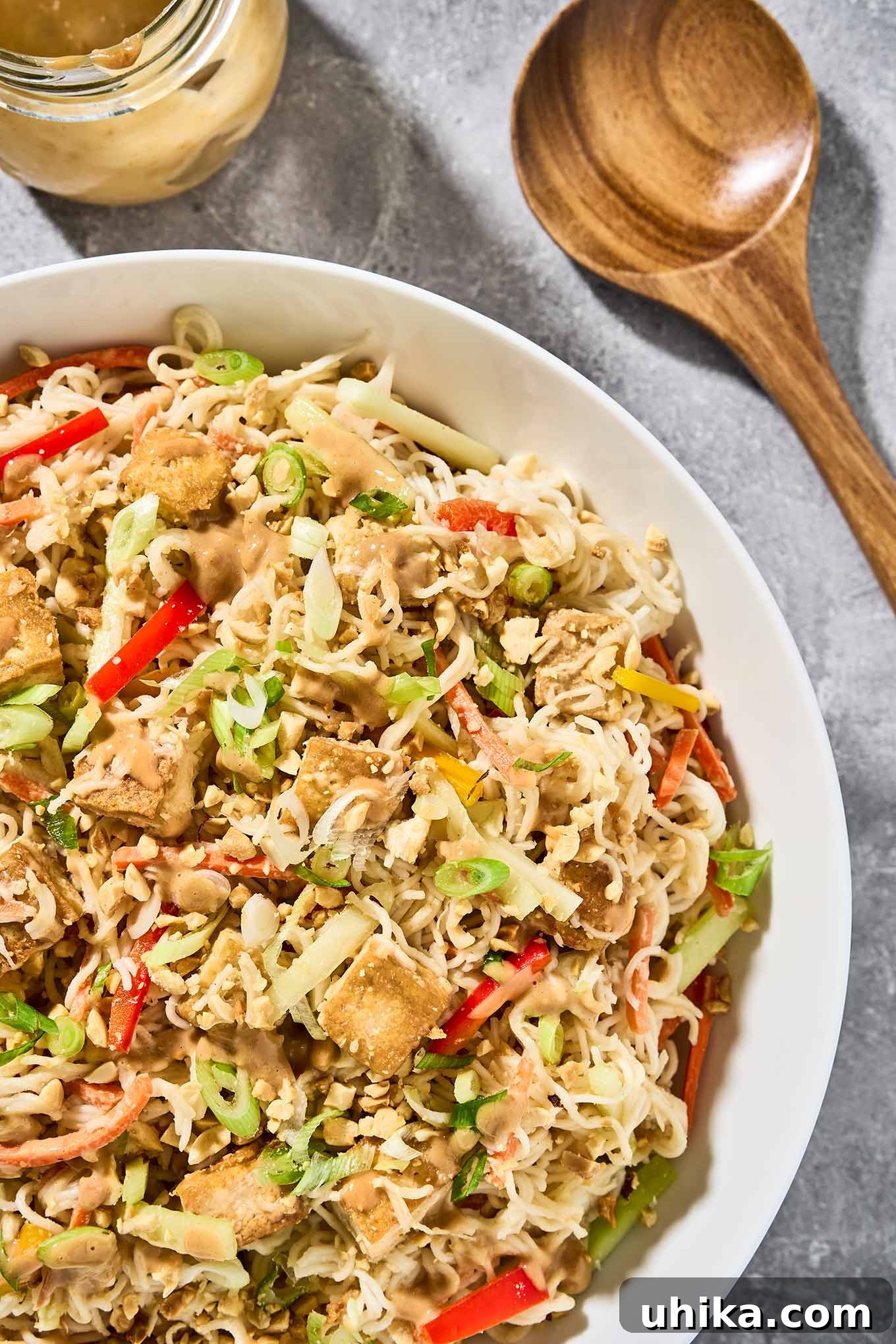
Step aside, traditional ramen salads! This isn’t your average uncooked noodle and seasoning packet affair. This refreshing Asian Noodle Salad with Peanut Dressing elevates the concept to a whole new level, offering a symphony of textures and flavors that will tantalize your taste buds. It features perfectly cooked and chilled ramen noodles, generously tossed with a rainbow of crisp, fresh vegetables, golden pan-fried tofu, and a luxurious homemade peanut dressing that is truly the star of the show.
Forget bottled shortcuts; our rich, tangy, and deeply flavorful dressing is crafted from scratch using fresh ginger, garlic, bright lime juice, and subtle rice vinegar. This commitment to fresh ingredients is what sets this Asian noodle salad apart, delivering an authentic and vibrant taste experience in every bite. The robust, plant-based protein from the crispy tofu ensures this salad is hearty enough to be a satisfying lunch or a delightful light dinner. Its incredible resilience also makes it an excellent choice for meal prep throughout the week or a standout dish at your next potluck or picnic.
Whether you’re looking for a quick, wholesome meal to pack for work, an impressive yet easy dish for entertaining, or a flavorful addition to your weeknight rotation, this cold ramen noodle salad promises a perfect balance of creamy, crunchy, and colorful elements. It’s not just a salad; it’s a complete and satisfying culinary journey that embodies fresh, vibrant Asian-inspired cuisine. Prepare to make this recipe a staple in your home, as its irresistible combination of fresh produce, perfectly cooked noodles, savory tofu, and an unforgettable homemade dressing is sure to earn rave reviews.
Essential Ingredients for Your Asian Noodle Salad
Crafting an exceptional Asian Noodle Salad with Peanut Dressing begins with selecting the right ingredients. Here’s a closer look at what makes this recipe truly special. The comprehensive list, including precise quantities, can be found in the printable recipe card below.
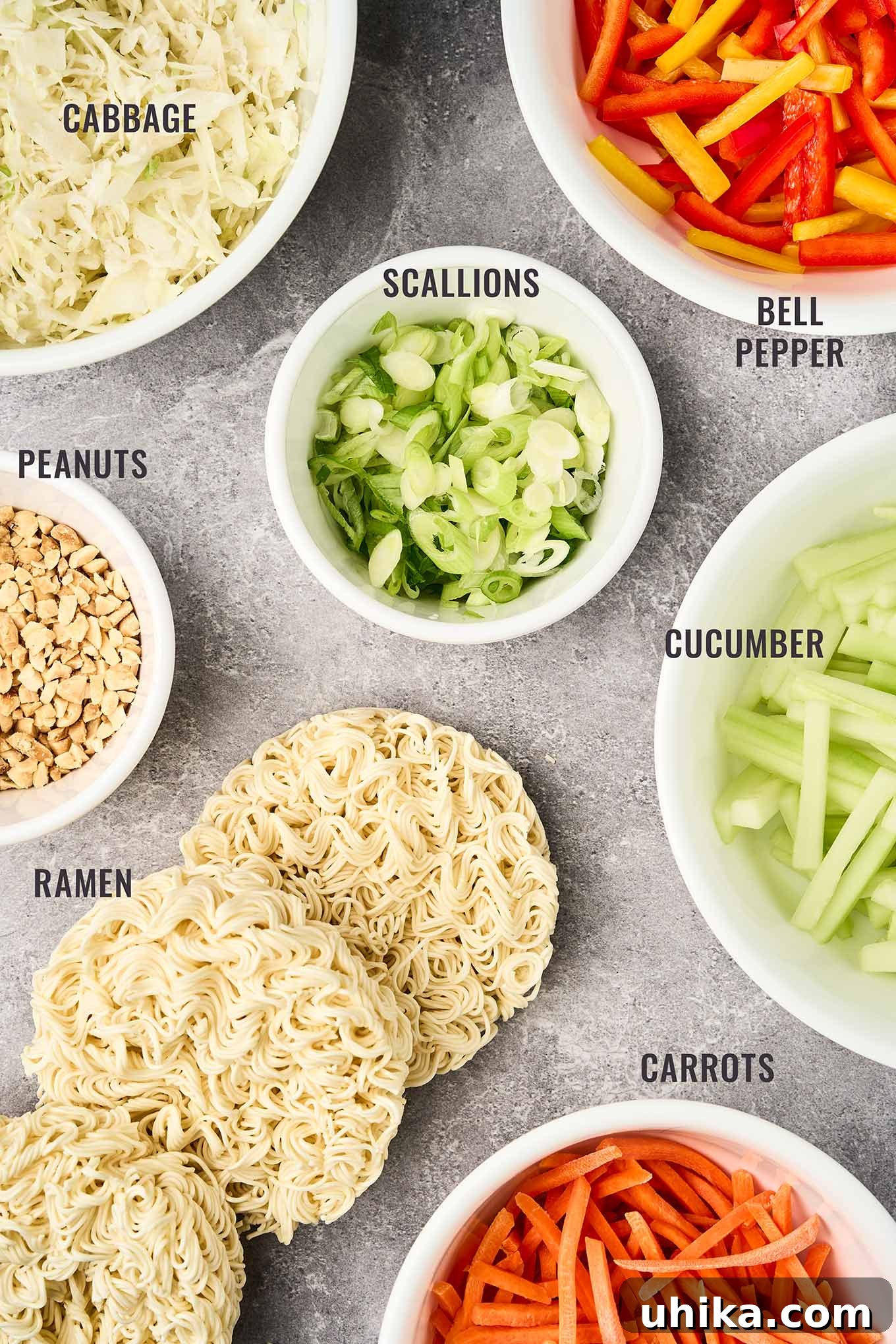
- RAMEN NOODLES: For this salad, opt for plain ramen noodles, specifically those without the accompanying seasoning packets. Cook them according to package directions, aiming for al dente texture – tender but still slightly firm. Immediately after cooking, rinse the noodles thoroughly with cold water. This crucial step not only halts the cooking process but also removes excess starch, preventing the noodles from sticking together and ensuring a perfectly separated, firm base for your cold noodle salad. Any thin Asian-style noodle, like soba or vermicelli, can be a suitable substitute if ramen isn’t available.
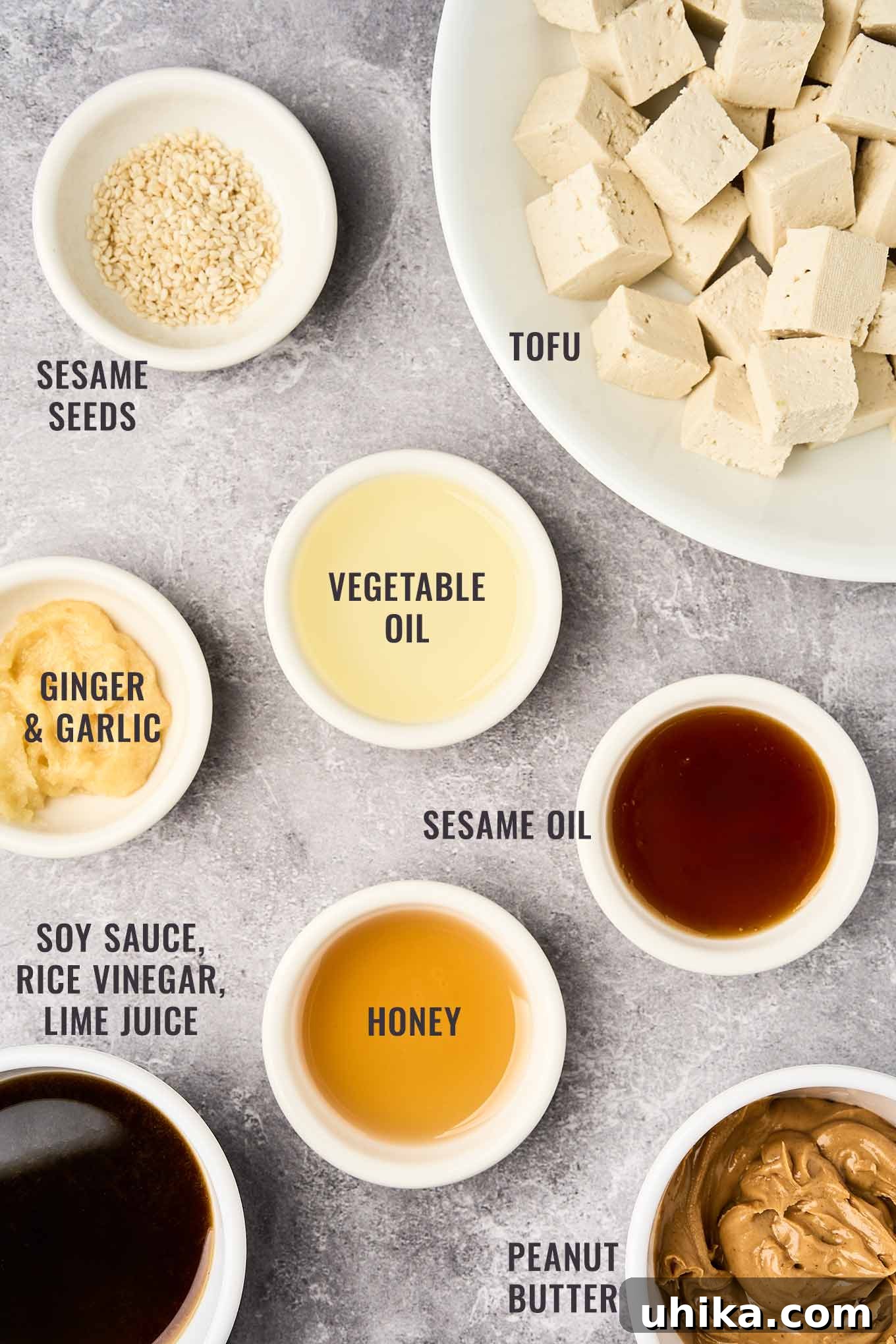
- EXTRA-FIRM TOFU: Extra-firm or firm tofu is your best friend here. Its dense structure allows it to hold shape beautifully and develop a wonderfully crispy exterior when pan-seared. Do not skip or rush the pressing step; it’s absolutely vital for achieving that desired golden, crispy texture. By removing excess moisture, you create a perfect canvas for searing. Aim to press the tofu for at least 30 minutes, ideally longer, before cutting and cooking. For an even crispier result, consider baking or air-frying the tofu instead of pan-searing.
- PEANUT BUTTER: The foundation of our delectable dressing. For the best flavor, consistency, and a healthier profile, choose natural creamy peanut butter that lists only peanuts and salt in its ingredients (avoiding added sugars or hydrogenated oils). Before measuring, be sure to stir the peanut butter thoroughly to reincorporate any separated natural oils, ensuring a smooth and consistent dressing. Almond butter or sunbutter can be used as alternatives for those with peanut allergies.
- FRESH GINGER: Freshly grated ginger infuses the peanut dressing with a bright, zesty, and subtly peppery depth that cannot be replicated. While ginger paste from a tube offers a convenient shortcut, we highly recommend fresh ginger for the boldest, most aromatic, and authentic flavor. A microplane zester works wonders for grating ginger quickly and efficiently.
- GARLIC: Like ginger, fresh garlic is indispensable for building the complex flavor profile of the dressing. Grating or mincing it finely ensures it blends seamlessly into the creamy base, releasing its pungent, savory notes without overpowering.
- LIME JUICE: Freshly squeezed lime juice provides the essential tang and acidity that cuts through the richness of the peanut butter, brightening the entire dressing. Always opt for fresh lime juice over bottled varieties for superior flavor.
- RICE VINEGAR: A staple in Asian cuisine, rice vinegar adds a mild, sweet acidity that complements the lime juice and balances the savory components of the dressing. It contributes to the authentic Asian taste.
- SHREDDED CARROTS AND CABBAGE: These colorful, crunchy vegetables form the bulk of your salad, providing a delightful textural contrast and a boost of nutrients. Pre-shredded carrots and cabbage (or an undressed coleslaw mix) are fantastic time-savers that work perfectly. Just double-check that your mix contains no added dressings or seasonings. For extra freshness, you can always shred them yourself.
- BELL PEPPERS AND CUCUMBER: Thinly sliced bell peppers (any color for visual appeal) and crisp, seeded cucumber add hydrating freshness, a slight sweetness, and another layer of crunch to the salad. They contribute significantly to the vibrant presentation.
- SCALLIONS AND ROASTED PEANUTS: These are crucial garnishes that add a final flourish of flavor and texture. Sliced scallions offer a mild oniony bite, while chopped roasted peanuts deliver an irresistible nutty crunch, making each spoonful an adventure.
Prep Overview
Mastering the Art of Asian Noodle Salad with Peanut Dressing
Ready to create this flavorful Asian noodle salad? Here’s a quick overview of the process, designed to guide you efficiently through each stage. Detailed, step-by-step instructions for perfect execution are provided in the printable recipe card below.
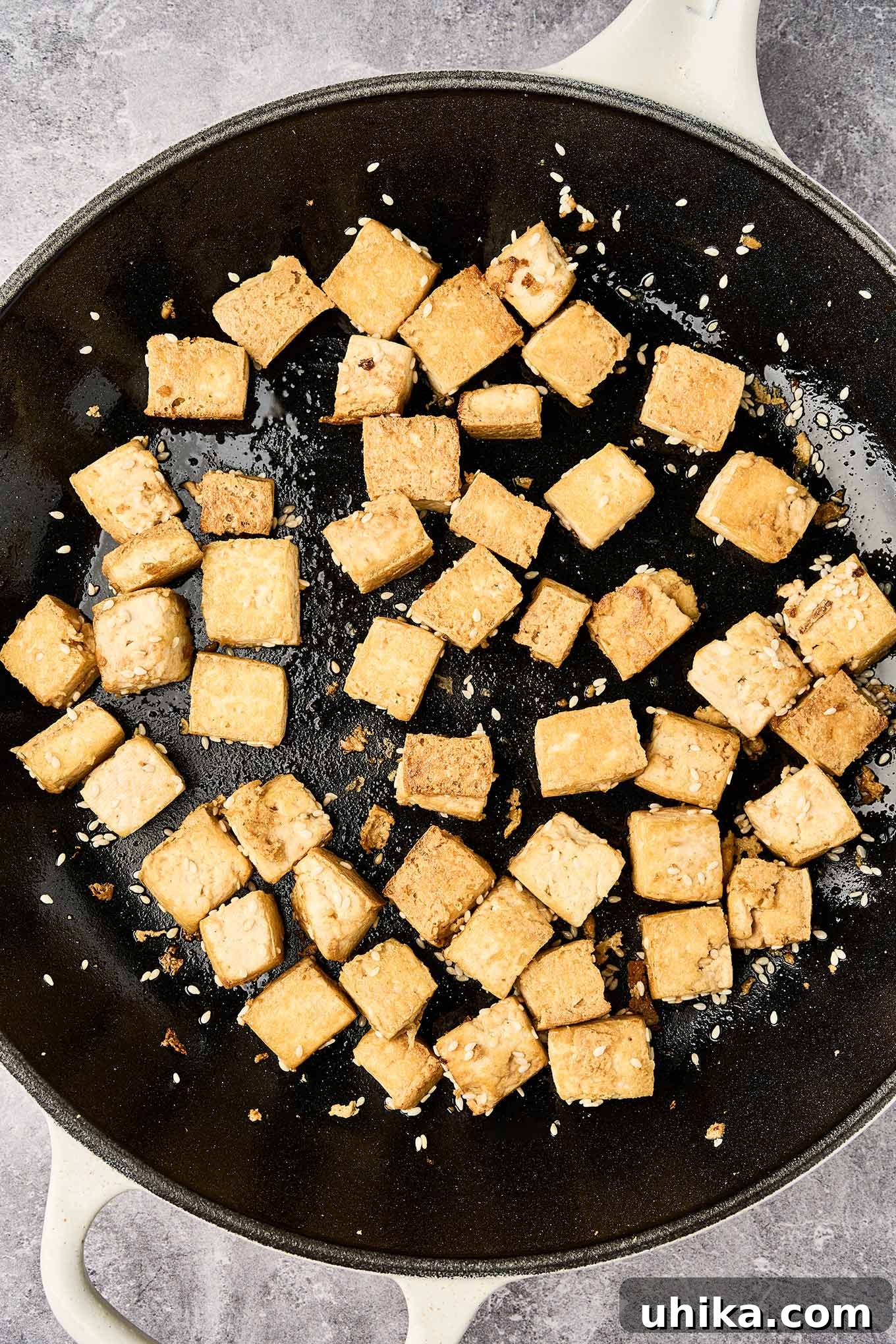
The journey to a perfect Asian Noodle Salad begins with the tofu. First, and most importantly, press your extra-firm tofu thoroughly to expel excess moisture. This critical step is the secret to achieving that coveted crispy exterior. Once sufficiently pressed, cut the tofu into uniform cubes. Heat your skillet to medium-high with a touch of vegetable oil and sear the tofu cubes in a single layer until they turn beautifully golden brown and crisp on multiple sides. A brief toss with a splash of soy sauce and a sprinkle of sesame seeds at the end will infuse them with an irresistible savory flavor and a hint of nuttiness, ready to join your salad.
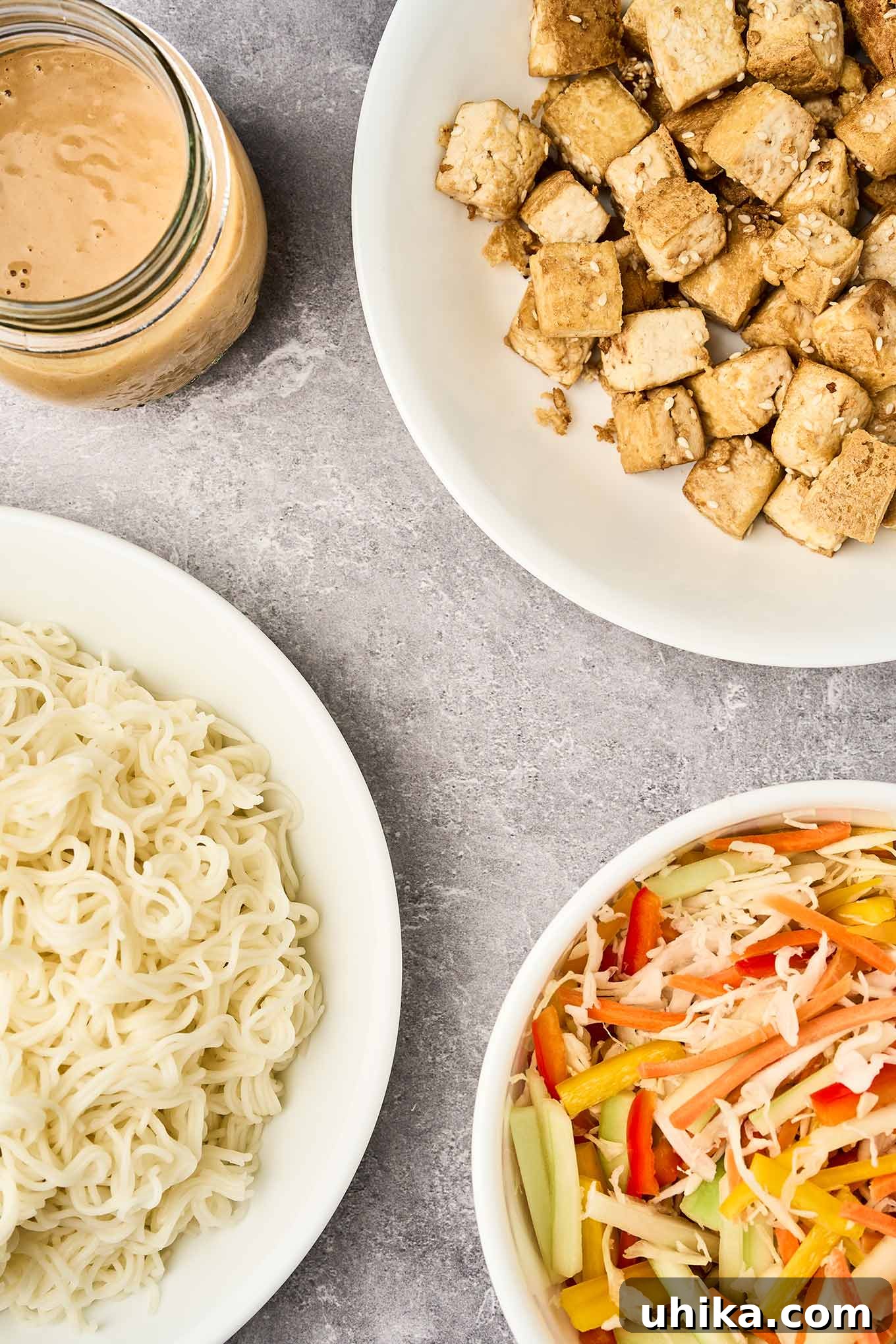
While your tofu is sizzling to perfection, turn your attention to the star dressing. In a food processor or a powerful blender, combine the creamy peanut butter, savory low-sodium soy sauce, tangy rice vinegar, bright lime juice, a touch of sweet honey, aromatic toasted sesame oil, pungent fresh ginger, and fragrant garlic. Blend these ingredients until they form a perfectly smooth and harmonious emulsion. Achieving the ideal consistency is key; gradually add 4 to 5 tablespoons of water, blending after each addition, until the dressing reaches your desired pourable yet luscious texture. Taste and adjust seasonings as needed.
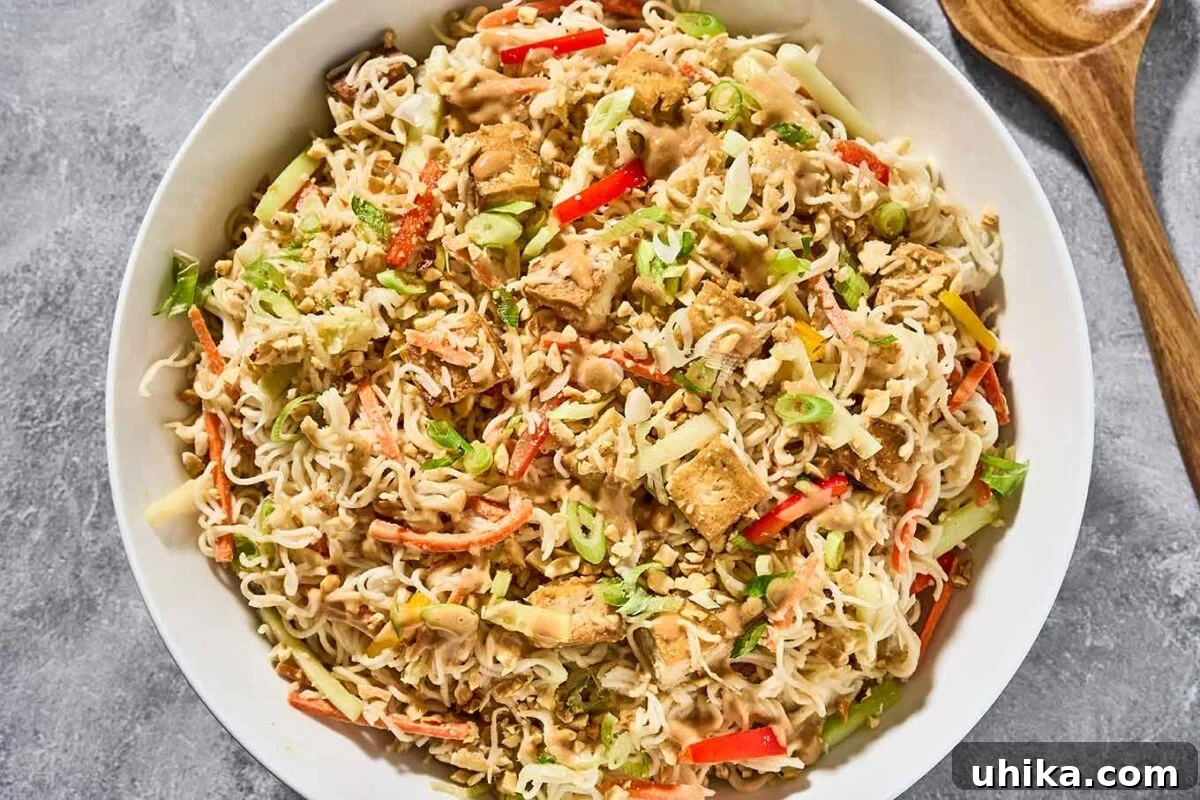
With all your components ready, it’s time for the grand assembly. In a generously sized mixing bowl, combine your perfectly cooked and chilled ramen noodles, the crispy golden tofu, and all the vibrant, prepared fresh vegetables – the shredded carrots, cabbage, sliced bell peppers, and cucumber. Pour the rich, homemade peanut dressing generously over the top of the ingredients. Gently toss everything together, ensuring every noodle strand, every piece of tofu, and every vegetable is thoroughly and evenly coated in the creamy, flavorful dressing. This careful mixing ensures a consistent burst of flavor in every forkful.
To finish, just before you’re ready to serve, sprinkle the salad with freshly sliced scallions and a handful of chopped roasted peanuts. These final garnishes add not only a beautiful visual appeal but also a crucial burst of fresh flavor and an extra satisfying crunch, elevating the overall experience of this incredible Asian Noodle Salad with Peanut Dressing. Serve immediately and enjoy the delightful combination of textures and tastes!
Craving More Asian-Inspired Noodles? Explore These Delicious Recipes!
If you’ve fallen in love with the vibrant flavors of this Asian Noodle Salad, you’ll be thrilled to discover more delightful ways to enjoy Asian noodles. We’ve curated a selection of delicious ideas to satisfy your cravings:
- Our One-Pan Pork and Ramen Noodles offers a quick, fuss-free, and incredibly satisfying skillet dinner, combining tender pork tenderloin with savory ramen noodles in a delectable stir-fry sauce. It’s the ultimate weeknight meal.
- For a dish that’s both bold and wonderfully aromatic, the Five-Spice Beef Noodle Stir-Fry is an excellent choice. It features succulent, tender beef, crisp, fresh vegetables, and a warming blend of traditional Chinese five-spice that transports your palate.
- Prefer a fantastic meatless option that’s packed with flavor? Our Sesame Noodles with Edamame is a light, easy-to-prepare dish that’s brimming with plant-based protein and a savory sesame sauce.
- And for a unique spring-inspired twist, try our Sesame Noodles with Chicken and Asparagus. This recipe perfectly pairs juicy, tender chicken with crisp, seasonal asparagus, all coated in an irresistible sesame-soy sauce that you’ll want to drizzle over everything!
Each of these recipes offers a distinct flavor profile and cooking experience, promising to expand your repertoire of Asian-inspired noodle dishes and keep your taste buds excited.
Asian Noodle Salad with Peanut Dressing
Ramen noodles, crisp veggies, and golden pan-fried tofu come together in this vibrant Asian noodle salad tossed with a creamy, tangy homemade peanut dressing. Perfect for a refreshing meal.
Ingredients
Salad
- 12 ounces ramen noodles, cooked, rinsed and drained
- 14 ounces extra-firm tofu, pressed
- 2 tablespoons vegetable oil
- 1 teaspoon sesame seeds
- 2 cups shredded carrots
- 2 cups shredded green cabbage
- 2 bell peppers, thinly sliced
- 1 cucumber, seeded and thinly sliced
- 3 scallions, thinly sliced
- 1/4 cup roasted peanuts, chopped
Peanut Dressing
- 1/2 cup natural creamy peanut butter
- 1/4 cup low-sodium soy sauce
- 3 tablespoons rice vinegar
- 3 tablespoons lime juice, freshly squeezed
- 1-1/2 tablespoons honey (or maple syrup for vegan)
- 1-1/2 tablespoons toasted sesame oil
- 1-1/2 tablespoons fresh ginger, grated
- 1 large garlic clove, grated
- 4 to 5 tablespoons water (adjust for consistency)
Instructions
- Wrap the drained tofu in several layers of paper towels or a clean kitchen towel. Place it on a plate and set a heavy skillet or another heavy object on top to press out excess moisture. Allow it to press for at least 30 minutes, then pat it thoroughly dry. Cut the pressed tofu into 3/4-inch cubes.
- Heat the vegetable oil in a large cast iron skillet or non-stick pan over medium-high heat. Add the tofu cubes in a single layer, ensuring not to overcrowd the pan. Cook until golden brown and crispy on one side, approximately 3 to 4 minutes. Flip the cubes and continue cooking for another 2 to 3 minutes per side, until they are golden and crisp on most sides. Remove from the heat, drizzle with a small splash of soy sauce, and toss with the sesame seeds. Set aside.
- While the tofu cooks, prepare the peanut dressing. In a food processor or blender, combine the peanut butter, low-sodium soy sauce, rice vinegar, lime juice, honey, toasted sesame oil, grated fresh ginger, and grated garlic. Blend all ingredients until the dressing is completely smooth and creamy. Gradually add 4 to 5 tablespoons of water, one tablespoon at a time, blending after each addition until the dressing reaches your desired pourable consistency. Taste and adjust seasonings if necessary.
- In a very large mixing bowl, combine the cooked and chilled ramen noodles, the crispy pan-fried tofu, and all the prepared fresh vegetables (shredded carrots, shredded green cabbage, thinly sliced bell peppers, and seeded cucumber slices).
- Pour the prepared peanut dressing over the noodle and vegetable mixture. Using large salad tongs or your hands, gently toss all the ingredients until everything is thoroughly and evenly coated with the rich dressing.
- Just before serving, sprinkle the Asian noodle salad generously with the thinly sliced scallions and chopped roasted peanuts. This adds a final layer of freshness, flavor, and crucial crunch. Serve immediately and enjoy!
Notes
Make-Ahead Tips
This Asian Noodle Salad is exceptionally well-suited for make-ahead preparation, making it perfect for weekly lunch meal prep or for simplifying hosting duties for a potluck or picnic. You have two main options: you can either prepare all individual components (cooked noodles, crispy tofu, chopped vegetables, and dressing) and store them separately, assembling just before serving for the freshest texture. Alternatively, you can toss everything together ahead of time; the flavors will meld beautifully and often taste even better after a few hours or overnight. Either approach yields delicious results, offering flexibility for your schedule.
Storage Tips
If you plan to store the salad fully dressed, be aware that the noodles and vegetables will soften slightly over time as they absorb the dressing. It remains perfectly delicious for up to 3 days when stored in an airtight container in the refrigerator. However, for the absolute best texture and crispness, we highly recommend storing the peanut dressing separately and tossing it with the noodles and vegetables just before you’re ready to eat. The crispy tofu can also be cooked a day or two in advance and stored in the fridge; you can reheat it briefly in a skillet to restore some crispness or enjoy it cold directly in the salad. When serving leftovers, give the salad a quick stir and consider adding a fresh sprinkle of scallions and peanuts for that extra burst of flavor and crunch.
Nutrition
Total Fat: 45g
Sodium: 1647mg
Carbohydrates: 83g
Fiber: 9g
Sugar: 16g
Protein: 30g
Nutrition information is automatically calculated and should only be used as an approximation.
Enjoyed this recipe? Share your thoughts below!