
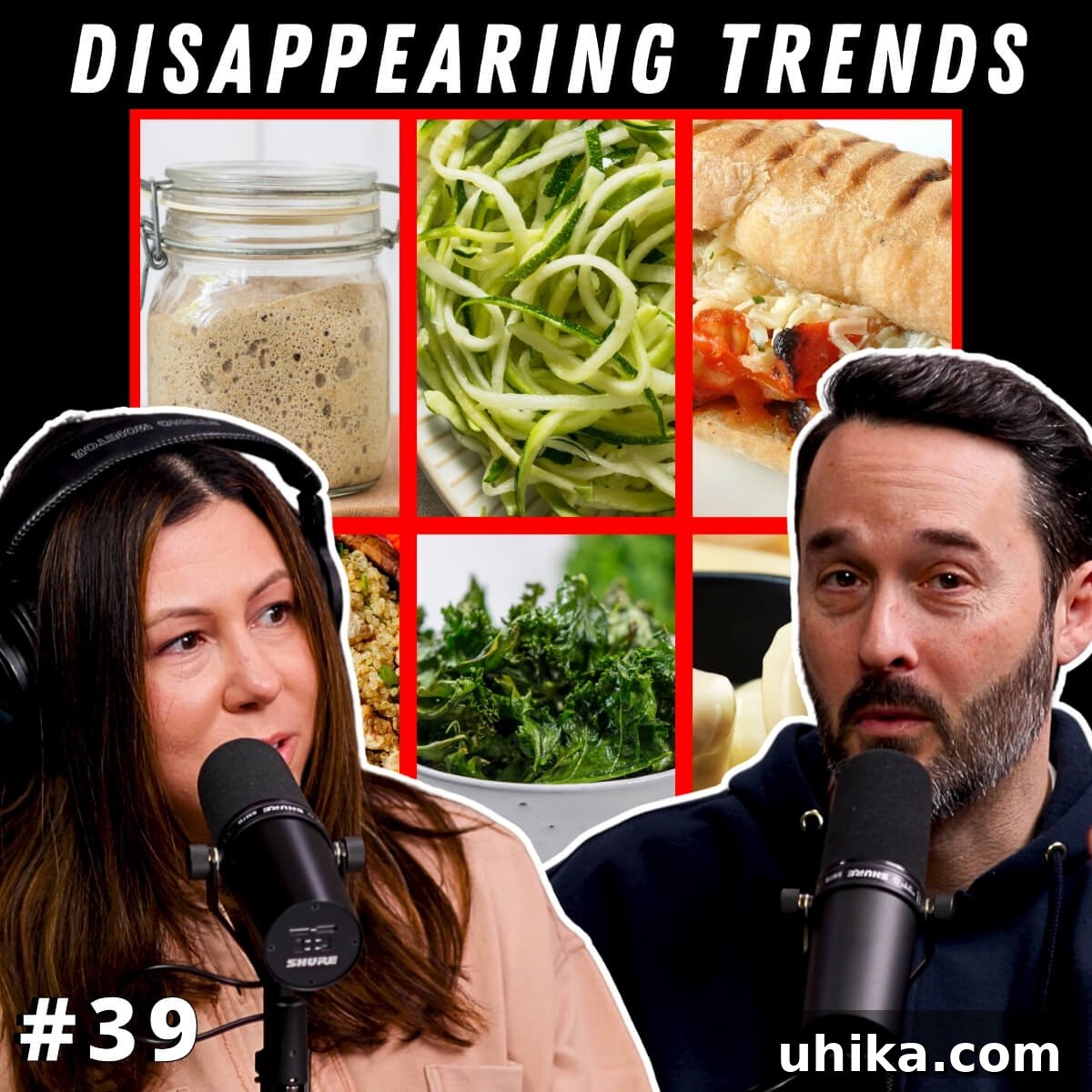
Podcast: Play in new window | Download (Duration: 1:02:43 — 94.7MB)
Subscribe or Follow Apple Podcasts | Spotify | Amazon Music | RSS | More
The culinary world is a fascinating landscape, constantly evolving with new flavors, techniques, and ingredients. While some foods and cooking methods achieve timeless status, becoming staples in kitchens worldwide, others emerge as fleeting fads, burning bright before gently fading into memory. In this episode, we embark on a delicious journey through time to explore some of the most influential food and cooking trends that captivated our palates, only to eventually disappear from mainstream popularity. Join us as we reflect on these once-loved culinary sensations, questioning what made them popular and why they ultimately fizzled out.
Watch Our Culinary Journey on YouTube
Table of Contents
- Watch Our Culinary Journey on YouTube
- A Nostalgic Look at 70s and 80s Food Fads
- The 90s and Early 2000s: Era of Culinary Experimentation
- The Modern Culinary Landscape: Rapid Trends and Quick Disappearances
- The Science of Trends: Why Do Food Fads Fade?
- Which Culinary Trends Deserve a Comeback?
- Related Recipes and Further Reading
- Join the Conversation
- Support Our Passion for Food
Having witnessed the culinary scene evolve since the 70s, I’ve had a front-row seat to countless cooking trends appearing and then gracefully bowing out. From childhood favorites that still bring a smile to my face to peculiar creations I’m glad to see have vanished, the journey through food fads is a testament to our ever-changing tastes and lifestyles.
Some trends, like the versatile and flavorful sun-dried tomatoes or the delightfully pressed panini, have managed to carve out a permanent niche in my kitchen. Their enduring appeal lies in their ability to enhance dishes with intense flavor or provide a simple, satisfying meal. Others, however, felt more like a fleeting infatuation, exciting for a moment but lacking the staying power to become true classics.
In this comprehensive exploration, we delve deep into the annals of gastronomic history to uncover the stories behind these celebrated and forgotten food trends. We’ll discuss everything from the communal delight of 1970s fondue parties to the rise of convenient Instant Pot meals, and from the health-conscious zoodles to the vibrant shishito peppers. We’ll even ponder the powerful influence of “superfoods” and dissect the factors that contribute to the fleeting nature of some trends, while others manage to embed themselves into our culinary consciousness for decades.
A Nostalgic Look at 70s and 80s Food Fads
The 1970s and 1980s were decades defined by distinct culinary identities, often characterized by convenience, communal dining, and sometimes, rather unusual concoctions. Fondue, for instance, became the epitome of chic dinner parties. This Swiss tradition of dipping bread and other morsels into a shared pot of melted cheese or chocolate perfectly embodied the era’s desire for interactive dining experiences. While cheese and chocolate fondue still make occasional appearances, the widespread “fondue craze” that saw dedicated fondue sets in almost every home has certainly waned.
Another iconic, albeit often polarizing, trend was the Jell-O mold. These colorful, shimmering creations, often studded with fruits, vegetables, or even savory ingredients suspended within gelatin, were a fixture at potlucks and holiday gatherings. Reflecting a mid-century fascination with molded foods and visual presentation, the Jell-O mold has largely faded from contemporary tables, replaced by desserts that prioritize fresh textures and natural flavors over artificial colors and gelatinous jiggles.
The 80s brought with it an increasing awareness of health, albeit sometimes misguided. Lean cuisine and diet foods began to emerge, promising convenience without the calories. However, many of these early diet-focused products sacrificed flavor for the sake of “lightness,” contributing to their eventual decline as consumers sought more wholesome and genuinely delicious healthy options. Despite their short-lived peak, these trends paved the way for future healthy eating movements.
The 90s and Early 2000s: Era of Culinary Experimentation
The 1990s and early 2000s marked a shift towards more global flavors and a burgeoning interest in healthier alternatives, sometimes leading to unique and unforgettable food trends. Sun-dried tomatoes, which I still appreciate, became an indispensable ingredient during this period, adding a burst of concentrated sweetness and umami to pastas, salads, and sandwiches. While no longer a novel ingredient, their initial explosive popularity showcased a growing desire for Mediterranean influences in American cuisine.
Another beloved item from this era was the panini. This simple grilled sandwich, often filled with gourmet ingredients and pressed until golden and crispy, offered a sophisticated alternative to traditional sandwiches. Its rise symbolized a demand for cafe-style dining and quality ingredients, making it a fast casual staple that, like sun-dried tomatoes, has maintained a steady presence rather than completely disappearing.
The dawn of the low-carb craze also introduced us to “zoodles” – spiralized zucchini noodles. Presented as a healthier, gluten-free, and low-carb alternative to traditional pasta, zoodles experienced a significant surge in popularity. While they remain a viable option for those adhering to specific diets, their mainstream omnipresence has diminished. Many found that while zoodles are enjoyable, they don’t fully replicate the texture and richness of wheat pasta, relegating them to a niche rather than a universal swap.
The Modern Culinary Landscape: Rapid Trends and Quick Disappearances
The 21st century has accelerated the pace of food trends, often fueled by social media and a globalized culinary scene. The Instant Pot, a multi-functional pressure cooker, quickly became a household name, promising quick and easy meals for busy individuals. Its rise highlighted a sustained demand for convenience and efficiency in the kitchen. While still popular, the initial feverish hype has settled, and it has found its place as a reliable kitchen appliance rather than a revolutionary gadget dictating every meal.
Frozen yogurt also experienced a significant revival, positioning itself as a healthier, customizable dessert alternative to ice cream. With its array of toppings and flavors, frozen yogurt shops popped up everywhere, appealing to those looking for a guilt-free treat. However, the initial explosion eventually led to oversaturation, and while it remains a beloved option, its ubiquitous presence has certainly shrunk.
Specific ingredients also take center stage, becoming “the next big thing.” Shishito peppers, with their mild heat and occasional spicy surprise, captivated food enthusiasts. Often blistered and served with a sprinkle of salt, they became a popular appetizer in restaurants and an easy side dish at home. While still enjoyed, the novelty factor has somewhat worn off, proving that even delicious ingredients can become a “trend” before settling into a more routine culinary role.
The concept of “superfoods” has also consistently influenced modern eating habits. From acai bowls and kale to quinoa and chia seeds, certain foods are championed for their exceptional nutritional benefits. While the health benefits of many “superfoods” are undeniable, the constant rotation of new “superfood” darlings means that some fall out of the spotlight as newer, trendier options emerge. This cycle reflects our ongoing quest for optimal health and wellness through diet.
The Science of Trends: Why Do Food Fads Fade?
Understanding why food trends eventually disappear is as intriguing as examining their initial rise. Several factors contribute to the fleeting nature of culinary fads. One significant driver is the pursuit of novelty. Consumers are constantly looking for new and exciting experiences, and once a trend becomes commonplace, its allure diminishes. This “novelty fatigue” encourages the search for the next big thing, ensuring a continuous cycle of culinary innovation and decline.
Health consciousness also plays a pivotal role. Diet trends, often driven by scientific discoveries (or misinterpretations), can quickly elevate certain foods and demonize others. The low-fat craze of the 90s is a prime example; once it was challenged by newer nutritional science, many of the products associated with it became obsolete. Similarly, as understanding of ingredients evolves, what was once considered healthy might be re-evaluated, leading to a trend’s downfall.
Convenience and lifestyle changes are another major factor. Products like the Instant Pot thrived due to their promise of simplifying cooking for busy households. However, as lifestyles shift, or as other, even more convenient solutions emerge (like meal kits or advanced delivery services), the relative convenience of older trends can diminish. Furthermore, the cost and accessibility of ingredients also dictate a trend’s longevity; if an ingredient becomes too expensive or difficult to source, its widespread adoption will naturally be limited.
Finally, social media and media coverage act as both catalysts and accelerants for food trends. A dish or ingredient can go viral overnight, but this rapid rise can also lead to an equally rapid burnout. Overexposure and the pressure to constantly innovate mean that what’s hot today might be forgotten tomorrow, as influencers and food bloggers move on to new culinary sensations.
Which Culinary Trends Deserve a Comeback?
While many disappeared food trends are best left in the past, some possess an enduring charm or practical utility that might warrant a revival. For instance, while elaborate Jell-O molds might not return, the concept of using gelatin in more sophisticated, perhaps naturally flavored and less artificially colored, desserts or savory aspics could find a new audience seeking interesting textures and presentations.
Another trend that perhaps deserves a second look is the emphasis on communal dining experiences, such as the original fondue parties, but re-imagined for modern tastes. In an increasingly digital world, creating opportunities for shared culinary moments, where food is not just consumed but interacted with and discussed, could foster stronger connections and more memorable meals. Imagine a modern take on fondue, featuring artisanal cheeses, exotic dipping sauces, and a wider array of dippables.
Perhaps even some forgotten regional American dishes, once popular before national consolidation of food production, could see a resurgence. This would align with the current interest in local sourcing, farm-to-table movements, and celebrating unique culinary heritage. The potential for rediscovering and reinventing these lost flavors is vast, offering both novelty and a connection to culinary roots. As food enthusiasts, we can always hope for the return of genuinely good food, regardless of its previous trend status.
Related Recipes and Further Reading
- Classic Italian Beef Braciole Recipe
- Creamy Sun Dried Tomato Chicken (Marry Me Chicken) Recipe
- Blackened Chicken Sandwich with Shishito Peppers Recipe
Join the Conversation!
If you enjoyed our deep dive into the Major Food Trends That Have Disappeared, we’d love to hear your thoughts! What were your favorite food fads? Which trends do you miss, and which are you glad to see gone? Share your culinary memories and leave us a comment below!
We eagerly await your questions and insights. Please send them to [email protected]. No question is too big or too small when it comes to the fascinating world of food.
Support Our Passion for Food
If you appreciate our weekly podcast and the culinary explorations we share, consider supporting us on Patreon. Your support helps us create more content, and you’ll gain access to 2 exclusive bonus episodes each month, diving even deeper into the world of food and drink!
Thank you for tuning in and being a part of the Sip and Feast community!
For a complete archive of all our podcast episodes, be sure to visit our dedicated podcast episode page.