
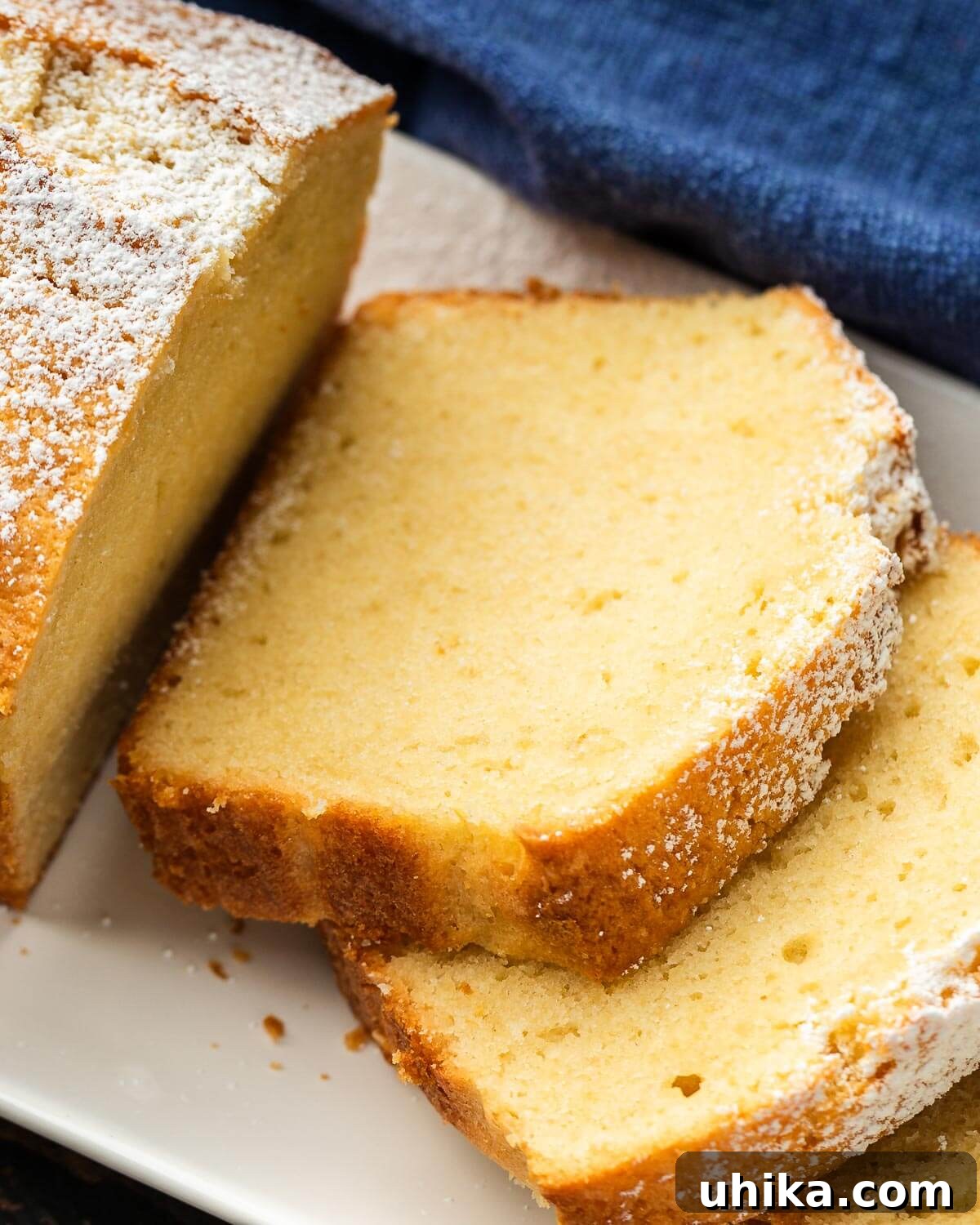
Classic Pound Cake: A Timeless Recipe for Every Occasion
Discover the art of baking a truly classic Pound Cake – a recipe cherished for its rich, buttery flavor and wonderfully moist texture. This isn’t just any cake; it’s a culinary cornerstone, perfect for elevating any moment, from a simple family dessert to an elegant brunch offering. Imagine a slice, golden and tender, perfectly paired with a scoop of fresh berries and a cloud of whipped cream, or enjoyed with your morning coffee as a delightful breakfast treat. Our tried-and-true recipe promises a flawlessly dense yet tender crumb that will leave you reaching for another slice, time and time again. Its simplicity and universal appeal make it an indispensable addition to any home baker’s repertoire, ensuring you’ll create lasting memories with every fragrant loaf that emerges from your oven.
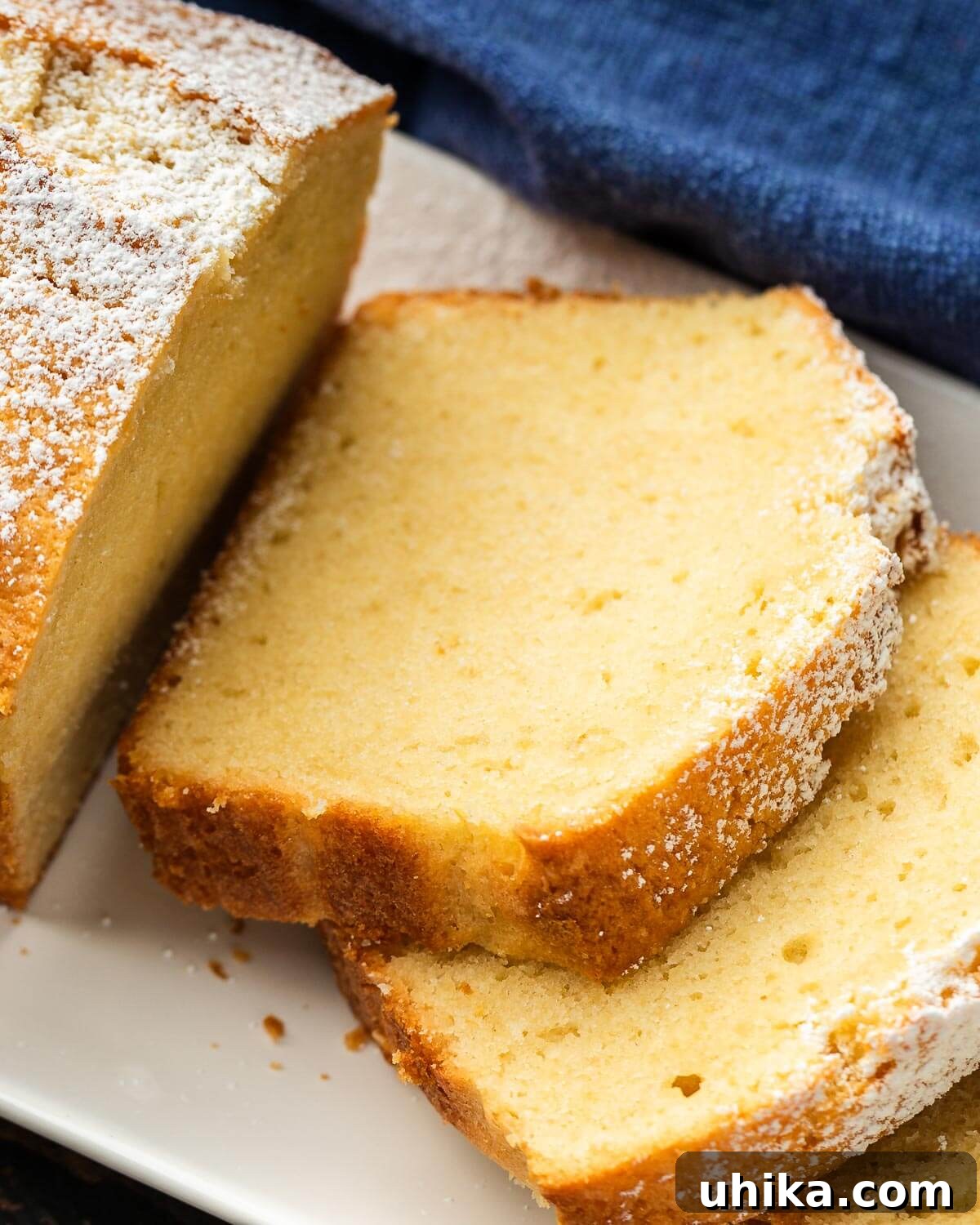

A Taste of Home and Nostalgia
Growing up, there was an unspoken rule in our house: if guests were expected, pound cake or crumb cake would magically appear. This wasn’t just a dessert; it was a symbol of welcome, a warm invitation, and a promise of good times ahead. Whether it was a familiar store-bought favorite or a lovingly homemade creation, the rich, buttery aroma filled the kitchen and beckoned everyone closer. It was utterly irresistible; just one slice was never enough!
As I ventured into the world of baking, I quickly discovered the sheer joy and surprising ease of crafting a homemade pound cake. This realization transformed my baking habits. Why opt for store-bought when something so deeply satisfying could be whipped up with basic pantry staples? The beauty of pound cake lies in its accessible ingredients and straightforward process. Now, the craving doesn’t have to wait for company. Whether it’s a quiet afternoon craving or a spontaneous gathering, a delicious, moist pound cake is always within reach. It’s a timeless recipe that brings comfort, joy, and a touch of nostalgic warmth to any day, proving that sometimes, the simplest things are truly the best.
Essential Ingredients for the Perfect Pound Cake
Creating an exceptional pound cake starts with understanding the role of each ingredient. Below, you’ll find a visual guide to the components, followed by special notes to help you achieve the best possible results. Quality ingredients, used correctly, are the secret to that coveted buttery flavor and moist crumb.
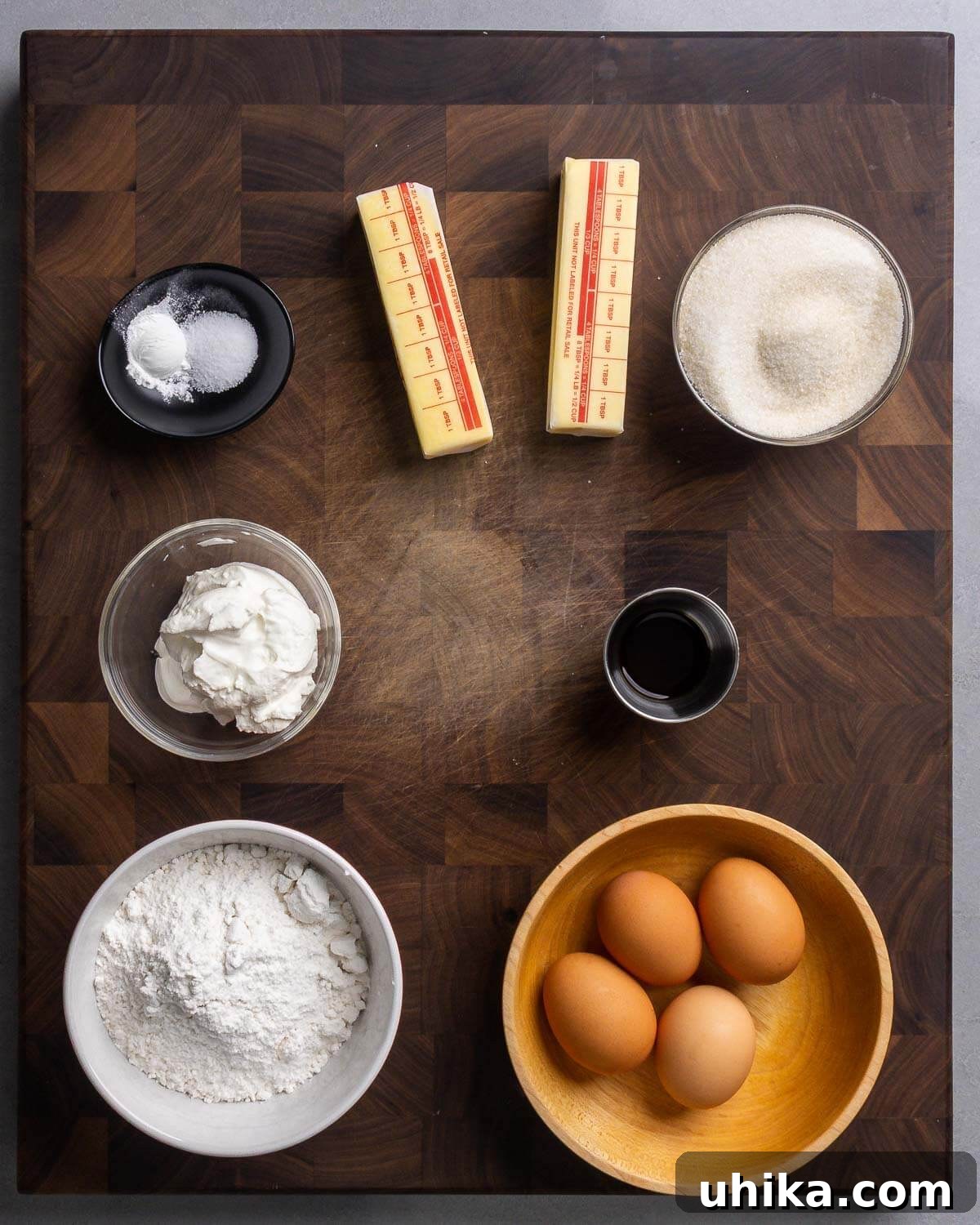
- Flour: For an exceptionally light and fluffy pound cake, cake flour is highly recommended. Its lower protein content results in a more tender crumb. However, if cake flour isn’t available, all-purpose flour can be used as a suitable alternative. Make sure to spoon and level your flour, rather than scooping directly from the bag, to avoid over-measuring, which can lead to a dry cake.
- Butter: Unsalted butter is preferred, as it gives you complete control over the saltiness of your cake. The most crucial tip for butter is to ensure it’s at true room temperature. This means it should be soft enough to indent with your finger but not melted or greasy. Room temperature butter creams beautifully with sugar, creating a light, airy base essential for the pound cake’s signature texture.
- Sour Cream: This ingredient is a game-changer for moisture. Using full-fat sour cream adds richness and helps keep the cake incredibly moist and tender. Its acidity also reacts with the baking powder, contributing to a slight lift and a finer crumb. Ensure your sour cream is also at room temperature to blend seamlessly with the other ingredients, preventing a curdled batter.
- Granulated Sugar: Beyond sweetness, sugar plays a vital role in texture, working with the butter to create air pockets during the creaming process, which lightens the cake.
- Eggs and Egg White: Large eggs provide structure and richness. The addition of an extra egg white contributes to a slightly lighter texture without adding too much richness that might weigh down the cake. Like butter and sour cream, eggs should be at room temperature to emulsify properly with the batter.
- Vanilla Extract: A tablespoon of pure vanilla extract enhances all the other flavors, adding a warm, aromatic depth to the cake. Use good quality vanilla for the best taste.
- Baking Powder & Fine Sea Salt: Baking powder is our leavening agent, providing lift. Fine sea salt balances the sweetness and brings out the full spectrum of flavors in the cake.
Each ingredient, when prepared and combined thoughtfully, contributes to the timeless perfection of this classic pound cake. Taking a moment to ensure your ingredients are at the correct temperature and measured accurately will make all the difference in achieving a truly show-stopping dessert.
Baking the Perfect Pound Cake: A Step-by-Step Guide
Crafting this classic pound cake is a rewarding experience, and following these detailed steps will ensure a delicious outcome. Each instruction is designed to guide you through the process, from preparing your pan to achieving that perfect golden-brown crust and moist interior.
- Prepare Your Pan and Oven: Begin by preheating your oven to 335°F (168°C) and positioning the oven rack in the middle. This moderate temperature ensures an even bake. Next, generously grease a 9×5-inch loaf pan with butter or a neutral oil, ensuring every crevice is covered. Then, lightly dust the greased pan with a thin layer of flour, tapping out any excess. This dual method (greasing and flouring) creates a non-stick surface, guaranteeing your pound cake will release cleanly from the pan. For an extra layer of security, you can also line the pan with parchment paper, leaving an overhang on the sides for easy lifting.
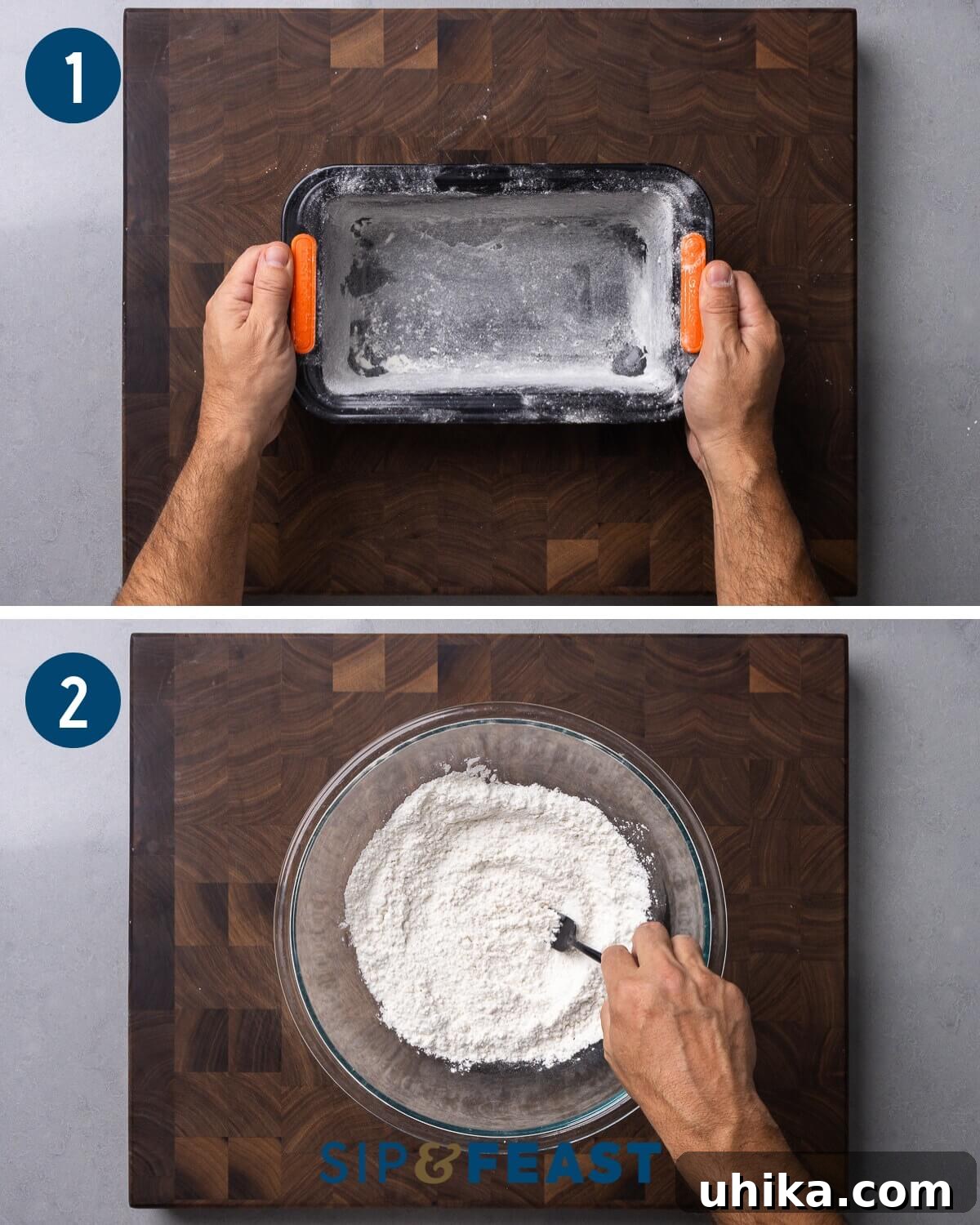
- Combine Dry Ingredients: In a large mixing bowl, whisk together the cake flour (or all-purpose flour), baking powder, and fine sea salt. Whisking ensures these dry ingredients are thoroughly combined and evenly distributed throughout the mixture, which is crucial for uniform leavening. Set this bowl aside while you work on the wet ingredients.
- Cream Butter and Sugar: In a separate large bowl, or the bowl of a stand mixer fitted with a paddle attachment, cream together the softened, room-temperature butter and granulated sugar. Beat on medium speed until the mixture is light in color, fluffy, and significantly increased in volume. This creaming process incorporates air into the butter and sugar, creating the foundational structure and lightness of your pound cake.
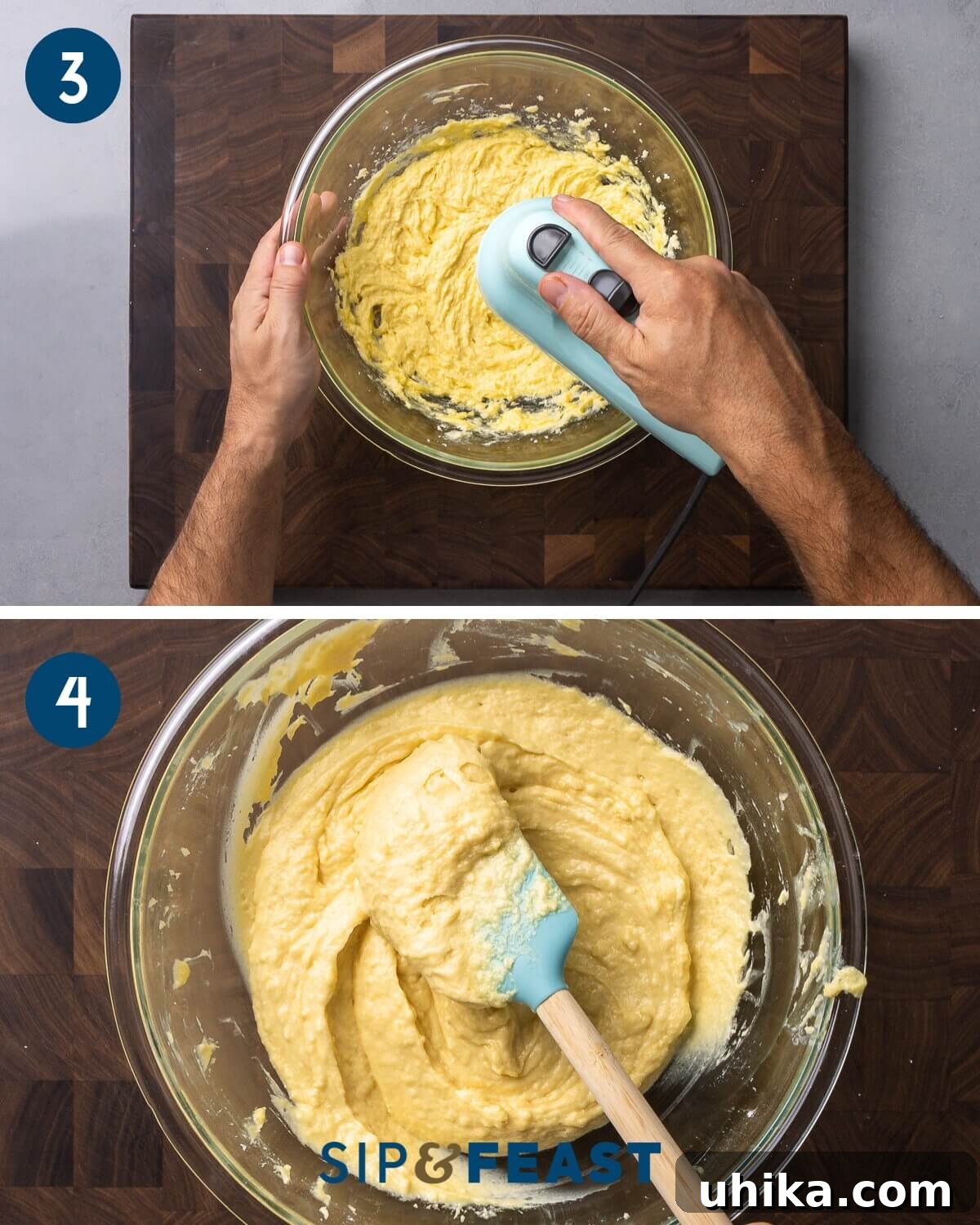
- Incorporate Wet Ingredients: With the mixer on low speed, add the eggs and the additional egg white one at a time, beating well after each addition until fully incorporated. Scrape down the sides of the bowl as needed to ensure everything is mixed evenly. Then, add the room-temperature sour cream and vanilla extract, mixing until the batter is smooth and well combined. Finally, gradually add the dry flour mixture to the wet ingredients, mixing only until just combined, about 30 seconds. Overmixing the flour can develop the gluten too much, resulting in a tough, dense cake. Stop mixing as soon as no streaks of flour remain, scraping down the bowl one last time with a spatula.
- Prepare for Baking: Gently pour the pound cake batter into your prepared loaf pan. Use a spatula to spread the batter evenly, ensuring it fills the pan from corner to corner. If you desire a classic crack down the center of your pound cake, you can use a knife dipped in a little oil to carefully cut a shallow slit lengthwise across the top of the batter. While the cake often cracks naturally during baking, this technique encourages a clean, pronounced split.
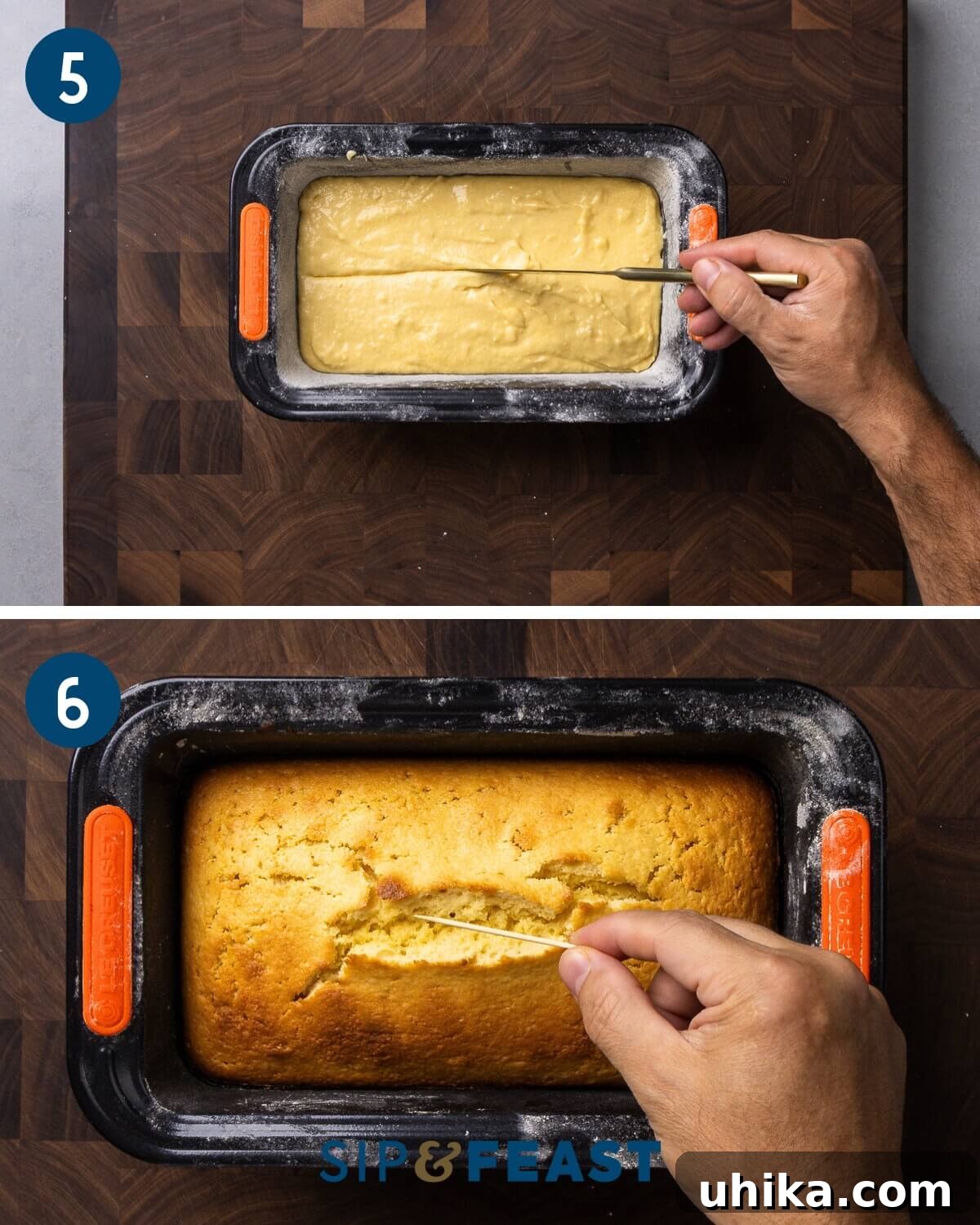
- Bake and Cool: Transfer the loaf pan to the preheated oven and bake for 45-60 minutes. Baking times can vary depending on your oven, so begin checking for doneness around the 45-minute mark. To test, insert a long wooden toothpick, skewer, or thin knife into the center of the cake. It should come out completely clean, with no wet batter attached. If it’s not done, continue baking in 5-10 minute increments. Once baked, remove the cake from the oven and allow it to cool in the loaf pan for 10 minutes. This crucial resting period allows the cake to firm up before you attempt to move it. After 10 minutes, carefully invert the cake onto a wire rack to finish cooling completely. Serving a pound cake slightly warm is wonderful, but allowing it to cool fully will give it the best sliceable texture and allow the flavors to meld beautifully. Slice, serve, and savor!
Expert Tips for the Best Pound Cake
Achieving the perfect pound cake is a delightful pursuit. Here are some pro tips to ensure your cake turns out exceptionally moist, tender, and delicious every time.
- Preparing the Pan for Success: Thoroughly greasing and flouring your loaf pan is essential to prevent sticking. For an extra layer of assurance, especially if you’ve had cakes stick in the past, consider lining the pan with parchment paper. This simple step makes removal effortless and preserves the beautiful shape of your cake.
- The Importance of Room Temperature Butter: This cannot be stressed enough! Butter that is too cold won’t cream properly with sugar, leading to a dense cake. Butter that’s too warm or melted will result in a greasy texture. Aim for butter that is soft enough to leave an indentation when gently pressed but still holds its shape. This allows for optimal aeration, creating a light and airy batter.
- Perfect Serving Suggestions: While pound cake is undeniably delicious on its own, a simple dusting of powdered sugar adds a touch of elegance. For a more decadent experience, serve it alongside fresh berries (strawberries, blueberries, raspberries are all excellent choices) and a generous dollop of homemade whipped cream. It’s also fantastic with a scoop of vanilla bean ice cream or a drizzle of fruit compote. Don’t underestimate its potential as a base for trifles or French toast either!
- Don’t Overmix the Batter: Once you add the flour mixture, mix only until just combined. Overmixing develops the gluten in the flour, which can lead to a tough and rubbery cake. A few streaks of flour are better than an overmixed batter.
- Temperature Consistency: Ensure all cold ingredients like eggs and sour cream are also at room temperature. This allows them to emulsify smoothly with the butter and sugar, creating a more uniform and stable batter.
- Testing for Doneness Accurately: Ovens can vary. Always rely on the toothpick test inserted into the thickest part of the cake. If it comes out clean, your cake is done. If there’s wet batter, continue baking.
- Cooling Gracefully: Allowing the cake to cool in the pan for the initial 10-15 minutes is crucial. This helps the cake set and prevents it from crumbling when transferred. Then, move it to a wire rack for complete cooling to prevent a soggy bottom.
- Storage Solutions: Pound cake stores beautifully. Once completely cooled, wrap it tightly in plastic wrap or aluminum foil and store at room temperature for up to 3-4 days, or in the refrigerator for up to a week. For longer storage, slices can be individually wrapped and frozen for up to 3 months. Thaw at room temperature for a quick treat.
With these tips in mind, you’re well on your way to baking a pound cake that will impress and delight everyone who takes a bite!
More Classic Recipes You’ll Love
If you’ve fallen in love with the comforting simplicity of pound cake, we’re sure you’ll enjoy these other delightful classic baked goods and desserts. They offer similar warmth and homemade goodness!
- Moist Zucchini Bread
- Classic Carrot Cake
- Decadent Chocolate Chip Banana Bread
- Creamy Homemade Rice Pudding
If you’ve enjoyed this Classic Pound Cake recipe, please consider giving it a 5-star rating below. Your feedback helps us share more delicious recipes!
Don’t forget to connect with us! Watch our latest cooking adventures on YouTube, follow along on our Facebook Page for daily inspiration, and become a Patreon member to receive access to exclusive full-meal videos and behind-the-scenes content.
The Best Pound Cake Recipe
James Delmage
20 minutes
1 hour
1 hour
20 minutes
10
slices
Pin
Ingredients
-
2
cups (260g)
cake flour
spooned & leveled, can sub all-purpose flour -
1 1/2
teaspoons
baking powder -
1/2
teaspoon
fine sea salt -
1 1/4
cups (250g)
granulated sugar -
1
cup (226g)
unsalted butter
room temperature -
3
large
eggs -
1
egg white -
1/2
cup (120g)
sour cream
room temperature -
1
tablespoon (15g)
vanilla extract
Instructions
-
Preheat your oven to 335°F (168°C) and set the rack to the middle level. Generously grease a 9×5-inch loaf pan with butter or oil, then dust it lightly with flour, tapping out any excess.
-
In a large bowl, whisk together the cake flour, salt, and baking powder until well combined. Set aside.
-
In a separate large bowl, or the bowl of a stand mixer fitted with a paddle attachment, beat the room-temperature butter and granulated sugar together until the mixture is light, fluffy, and smooth. This creaming process should take about 3-5 minutes on medium speed.
-
Add the eggs and the extra egg white one at a time to the butter mixture, beating well after each addition until fully incorporated. Scrape down the sides of the bowl as needed.
-
Next, add the room-temperature sour cream and vanilla extract to the wet ingredients. Mix until the batter is smooth and well combined.
-
Gradually add the reserved flour mixture to the wet ingredients, mixing on low speed for only about 30 seconds, or until just combined. Be careful not to overmix; stop as soon as no dry streaks of flour are visible. Scrape down the sides of the bowl with a spatula to ensure everything is incorporated.
-
Pour the prepared pound cake batter into your greased and floured loaf pan. Spread it evenly with a spatula. If desired, use a knife dipped in a little oil to score a shallow slit lengthwise across the top of the batter; this can encourage a neat crack during baking.
-
Bake for 45-60 minutes, or until a long wooden toothpick or thin knife inserted into the center of the cake comes out completely clean. Start checking for doneness around the 45-minute mark.
-
Once baked, remove the loaf pan from the oven and allow the pound cake to cool in the pan for 10-15 minutes. This resting period helps the cake to set before being handled.
-
After cooling in the pan, carefully invert the cake onto a wire rack to finish cooling completely. Slice, serve, and enjoy your perfectly baked pound cake!
Notes
- Servings: This recipe yields approximately 10 generous slices. However, you can easily cut thinner slices if you prefer smaller portions or wish to serve more guests.
- Preventing Sticking: For the best release, a combination of buttering and flouring the loaf pan is effective. For ultimate assurance, lining your pan with parchment paper, leaving an overhang, will guarantee easy removal.
- Flour Type: While cake flour is recommended for its ability to create a lighter and fluffier texture due to its lower protein content, all-purpose flour can certainly be used, and will still produce a delicious, moist cake.
- Oven Calibration: This recipe has been developed for a conventional oven. If you are using a convection oven, it’s generally advisable to reduce the baking temperature by 25°F (about 15°C) and begin checking for doneness around the 75% mark of the total baking time.
- Storing Leftovers: Properly stored, pound cake remains fresh and moist. Once completely cooled, wrap it tightly in plastic wrap or aluminum foil. It can be kept at room temperature for up to 3 days, or in the refrigerator for up to 5 days. For longer storage, pound cake freezes exceptionally well; wrap individual slices and freeze for up to 3 months.
- Enhancing Flavor: For an even deeper vanilla flavor, consider using vanilla bean paste instead of extract, or scraping the seeds from half a vanilla bean into the batter. A touch of almond extract can also complement the vanilla beautifully.
- Altitude Adjustments: If you live at a high altitude, you may need to make slight adjustments to baking time, temperature, and ingredients. High-altitude baking often requires less leavening, slightly more liquid, and a higher baking temperature for shorter periods.
Nutrition
Calories:
390
kcal
|
Carbohydrates:
45.9
g
|
Protein:
5.3
g
|
Fat:
21.1
g
|
Saturated Fat:
12.8
g
|
Cholesterol:
107
mg
|
Sodium:
70
mg
|
Fiber:
0.7
g
|
Sugar:
25.4
g
|
Calcium:
56
mg
|
Iron:
2
mg
Nutrition information is automatically calculated and should only be used as an approximation. Actual values may vary based on specific ingredients and preparation methods.
Enjoyed this recipe? Leave a comment below!
Connect with us on Instagram at @sipandfeast and share your creations using #sipandfeast!