
Effortless Elegance: Mastering Simplified Duck a l’Orange at Home
Imagine an entrée that embodies sophistication, yet is surprisingly simple to prepare. Our streamlined take on the classic French Duck a l’Orange offers exactly that. Perfect for special occasions or when you simply crave an elevated dining experience, this recipe transforms what many consider a complex dish into an achievable culinary triumph for home cooks.
Duck a l’Orange has long been a staple of fine dining, gaining significant popularity in American restaurants during the 1960s. Traditionally, this iconic dish involves roasting an entire duck, meticulously preparing a rich stock from its trimmings (such as the neck, gizzard, and heart), and then combining this savory foundation with fresh orange and an array of other ingredients to create its signature sweet and tangy sauce. While undeniably delicious, this traditional method can be time-consuming and somewhat intimidating for the average home chef.
We’ve reimagined this gourmet classic, making it far more accessible without compromising its exquisite flavor profile. By focusing on boneless duck breasts instead of a whole duck, we’ve drastically reduced preparation time and simplified the cooking process, allowing you to achieve restaurant-quality results in your own kitchen with remarkable ease.
Unlocking the Secrets to Perfect Duck a l’Orange at Home
The key to a truly memorable Duck a l’Orange lies in two crucial elements: a perfectly cooked duck breast that is both tender and juicy, and an orange sauce that strikes an exquisite balance between sweet, tart, and subtly bitter notes. Our innovative sauce recipe is exceptionally straightforward, achieving this delicate equilibrium through the thoughtful addition of a splash of sherry vinegar and a few dashes of aromatic cocktail bitters. This simple yet effective approach elevates the sauce, adding depth and complexity that beautifully complements the rich duck. Beyond the sauce, mastering the art of cooking duck breast is essential. Read on for our comprehensive, step-by-step guide to pan-searing boneless duck breasts to perfection.
The Art of Pan-Searing Boneless Duck Breasts: A Step-by-Step Guide
Achieving a perfectly pan-seared duck breast means creating a dish that boasts tender, succulent meat beneath a irresistibly crispy, golden-brown skin. This culinary technique, often associated with professional kitchens, is entirely achievable at home with a few simple steps and a bit of attention to detail. Follow these guidelines to transform your duck breasts into a gourmet masterpiece:
- Temper the Duck Breasts: Before you even think about placing them in a pan, allow your duck breasts to come to room temperature. This crucial step, typically taking about 20-30 minutes, ensures even cooking and prevents the muscle fibers from seizing up when introduced to heat, resulting in a more tender final product.
- Score the Skin: Using a sharp knife, carefully score the fatty skin of each duck breast in a crosshatch pattern. Make sure to cut only through the skin and fat, stopping just before you reach the meat. This scoring allows the fat to render more efficiently during cooking, creating a wonderfully crisp skin and preventing the breast from curling.
- Season Generously: Liberally season the scored skin side of the duck breasts with coarse sea salt and freshly ground black pepper. Don’t be shy with the salt; it helps to draw out moisture from the skin, further enhancing its crispness and seasoning the rendered fat.
- Start Cold, Cook Low: Place the duck breasts, skin side down, into a cold, heavy-bottomed pan, such as a cast-iron skillet. Then, place the pan over medium-low heat, aiming for a temperature between 250 to 275°F. Starting with a cold pan and low heat is paramount for rendering the fat slowly and effectively without burning the skin. This gradual rendering process is what ultimately gives you that coveted crispy skin.
- Render the Fat to Perfection: Allow the duck breasts to cook undisturbed, skin side down, for an extended period. This step is where the magic happens; the fat will slowly melt and render out, collecting in the pan, while the skin gradually transforms into a beautiful, crisp, golden-brown layer. This process typically takes between 10 to 15 minutes, and sometimes even longer, depending on the thickness of the fat. Patience is key here.
- Sear and Finish: Once the skin is perfectly crisp and golden, carefully pour off most of the rendered duck fat from the pan (reserve it for other delicious cooking endeavors!). Then, increase the heat slightly, flip the duck breasts over, and cook them on the flesh side for another 3 to 6 minutes. Use an instant-read thermometer inserted into the thickest part of the breast to ensure perfect doneness: 130°F for medium-rare or 140°F for medium. Remember that the temperature will rise slightly as the duck rests.
- Rest for Juiciness: After cooking, transfer the duck breasts to a cutting board and let them rest for at least 8 to 10 minutes. This resting period is critical; it allows the muscle fibers to relax and the internal juices to redistribute throughout the meat, resulting in an incredibly tender and moist duck breast. If you skip this step, the juices will run out when you slice, leaving you with dry meat.
Once you’ve mastered the technique of pan-searing duck breasts, a world of culinary possibilities opens up. You might be inspired to try our delightful recipe for Thai Mango Curry Duck, where the rich duck provides a fantastic contrast to vibrant Thai flavors. And for those occasions when a whole duck is on the menu, our recipe for Roast Duck with Orange-Rosemary Sauce offers another elegant option.
Crafting the Exquisite Orange Sauce: A Symphony of Flavors
The orange sauce is the crowning glory of Duck a l’Orange, providing the vibrant counterpoint to the rich duck. Our simplified sauce recipe is designed for maximum flavor with minimal fuss, achieving a perfect harmony of sweet, tangy, and subtly bitter notes.
At its heart, the sauce leverages the bright, citrusy essence of fresh oranges. We use both the zest, which contains concentrated oils for intense aroma, and freshly squeezed juice for its pure, vibrant flavor. A touch of sugar helps to balance the natural acidity of the orange, creating a pleasing sweetness that is never cloying.
The unique depth in our sauce comes from two key ingredients: sherry vinegar and orange bitters. Sherry vinegar adds a sophisticated tang and a slight nutty complexity, elevating the sauce beyond simple sweetness. Orange bitters, often found in cocktail bars, introduce a subtle, aromatic bitterness that mimics the complexity traditionally derived from cooking with whole duck bones and trimmings, providing an authentic layer of flavor that ties the dish together beautifully.
Finally, a roux made with butter and a thickening agent like cornstarch (slurried with chicken broth) gives the sauce its luxurious, syrupy consistency, allowing it to coat the duck slices elegantly. Minced shallots are sautéed in butter to provide an aromatic base, adding a delicate oniony sweetness without overpowering the citrus. This combination of fresh, tangy, sweet, and subtly bitter elements results in a truly unforgettable sauce that defines the essence of Duck a l’Orange.
Exploring Duck Breasts: Varieties and Characteristics
Before you embark on your Duck a l’Orange adventure, it’s helpful to understand the different types of boneless duck breasts available, as their weight and characteristics can vary significantly depending on the breed. Individual duck breast halves typically range from 8 ounces to a full pound, each offering a slightly different culinary experience.
- Pekin (or Long Island) Duck Breasts: Arguably the most common variety found in North American markets, Pekin duck breasts are celebrated for their mild flavor and ease of preparation. Each breast half typically weighs around 8 to 9 ounces, making them a versatile choice for many recipes. Their accessible flavor profile makes them an excellent starting point for those new to cooking duck.
- Muscovy Duck Breasts: For those seeking a leaner option, Muscovy duck breasts are an ideal choice. Known for having less fat and thinner skin compared to Pekin ducks, Muscovy breasts usually weigh about 8 ounces each. While they might have a slightly higher price per pound, they render less fat during cooking, which means you’re left with a higher percentage of delicious, edible meat. Their flavor is often described as richer and more gamey than Pekin, appealing to connoisseurs.
- Magret Duck Breasts: Considered a premium option, Magret duck breasts come from the Moulard duck, a crossbreed of Pekin and Muscovy ducks that are raised specifically for foie gras. These breasts are substantially larger than their Pekin and Muscovy counterparts, with each half weighing an impressive 14 to 16 ounces. Despite their size, Magret breasts are incredibly tender, intensely flavorful, and just as easy to prepare. Their robust flavor and generous size make them a truly luxurious choice for a special meal.
Sourcing High-Quality Duck for Your Culinary Creations
Finding boneless duck breasts at your local supermarket can sometimes be a challenge, as they are not as universally stocked as chicken or beef. For the best selection and quality, you may need to explore specialty meat markets, high-end grocery stores, or consider shopping online. These sources often provide access to a wider variety of duck breeds and ensure you’re getting a product raised with care and attention.
Many online purveyors specialize in high-quality meats, including various types of duck. Companies like D’Artagnan, for example, are renowned for their commitment to providing humanely raised poultry and game from family farms that adhere to strict standards, free from hormones and antibiotics. These types of suppliers typically offer all the duck breast varieties mentioned above, ensuring you can find the perfect cut for your Duck a l’Orange or any other duck recipe you wish to explore. Investing in quality duck meat pays dividends in flavor and texture, transforming your home-cooked meal into a truly exceptional dining experience.
Elevating Your Meal: Perfect Pairings for Duck a l’Orange
Completing your Duck a l’Orange experience involves thoughtful selections for side dishes and wine pairings. The rich, savory duck and its bright, complex orange sauce demand accompaniments that complement rather than overpower.
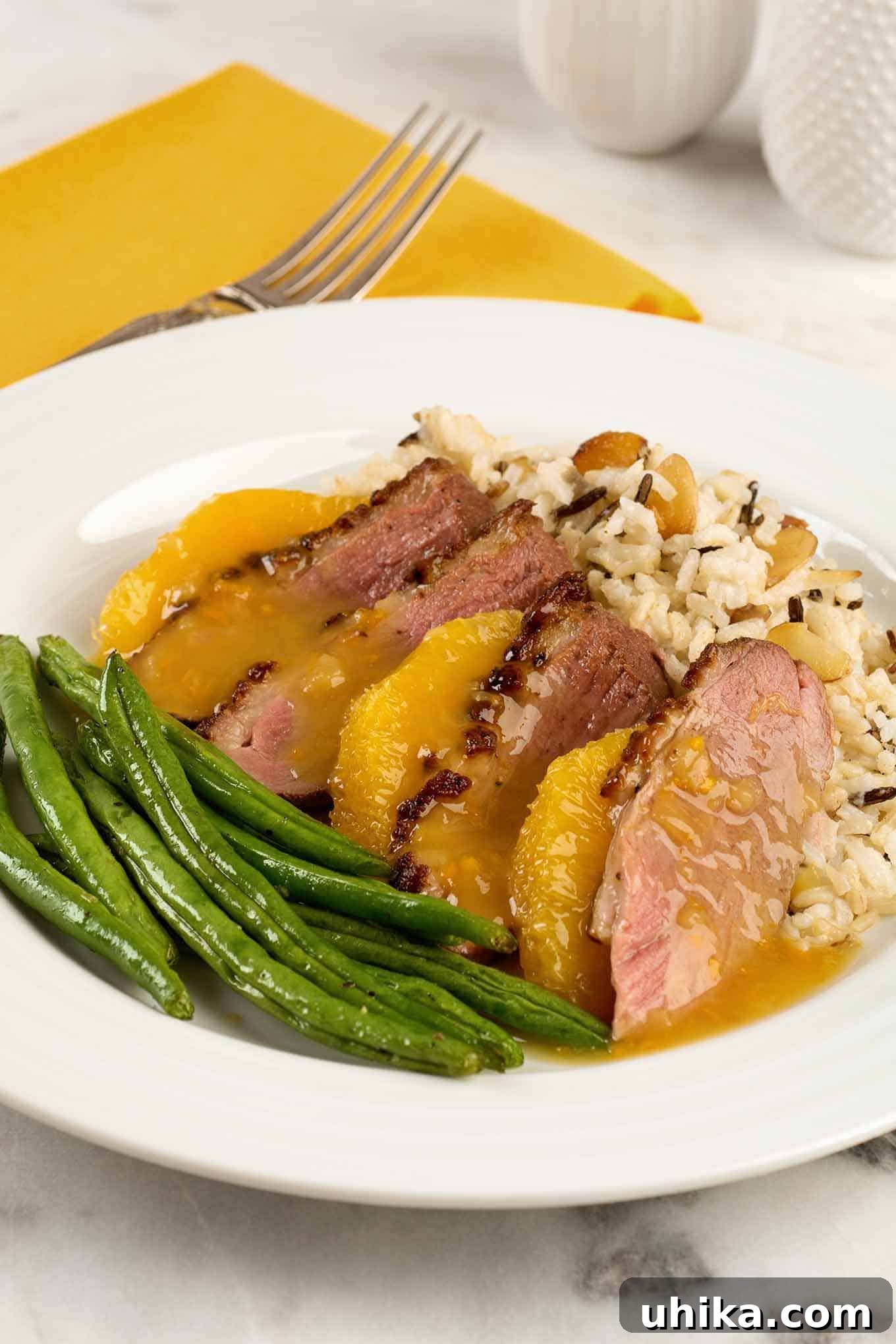
For side dishes, we highly recommend keeping it simple and elegant. A classic choice is a medley of white and wild rice, perhaps tossed with toasted slivered almonds for a subtle crunch and nutty aroma. This provides a neutral base that soaks up the delicious duck sauce beautifully. Oven-roasted green beans, lightly seasoned, offer a vibrant green color and a fresh, crisp texture that contrasts wonderfully with the richness of the duck.
When it comes to wine, the goal is to find a bottle that can stand up to the duck’s richness while harmonizing with the sweet and tangy orange sauce. For white wine enthusiasts, a Gewürztraminer is our top recommendation. Its aromatic profile, often featuring notes of lychee, rose, and a hint of spice, pairs exquisitely with the orange. A semi-sweet German Riesling (such as an Auslese) is another excellent choice; its vibrant acidity and luscious fruit notes create a delightful balance with the sauce. If you prefer red wine, a light-bodied and fruit-forward Pinot Noir is an outstanding pairing. Its subtle earthy notes and bright red fruit characteristics complement the duck without overwhelming it, making for a truly harmonious meal.

Duck Breast a l’Orange
Rate Recipe
Print Recipe
Ingredients
- 4 boneless duck breasts
- Salt and freshly ground black pepper
- 1 large navel orange, preferably organic
- 1 tablespoon cornstarch
- 1/2 cup low-sodium chicken broth, divided
- 2 tablespoons unsalted butter
- 1 tablespoon minced shallot
- 2 tablespoons sugar
- 1-1/2 tablespoons sherry vinegar
- 1 cup orange juice, fresh squeezed is best
- 6 or 7 dashes orange bitters
Instructions
- Remove the duck breasts from the refrigerator 30 minutes ahead to allow them to come to room temperature.
- Being careful not to cut into the meat, score the skin on each duck breast in a crosshatch pattern at 1/4-inch intervals. Season both sides with salt and pepper.
- Zest the orange into a small bowl, then trim away both ends. Following the curve of the orange, carefully cut away the remaining peel down to the flesh, then trim any stray bits of the white pith.
- Using a sharp knife, carefully slice along both sides of each membrane toward the center of the orange to remove the segments (these are called orange supremes). Set aside.
- Place the duck breasts, skin side down in a heavy frying pan over medium heat (about 275°F) to render the fat. You should see the fat begin to melt and hear a slight sizzle. If your duck breast is cooking harder than that, lower the heat.
- Without turning, continue cooking the duck until the majority of the fat has rendered from the breast and the skin is golden brown and crisp. This usually takes 10 to 15 minutes.
- While the duck fat renders, make the sauce.
- Whisk the cornstarch together with 1/4 cup of the chicken broth in a small bowl and set it aside.
- In a small saucepan, melt the butter over medium heat. Add the shallot and sauté until soft and fragrant, 2 minutes. Stir in the sugar and cook until dissolved.
- Add the sherry vinegar, orange zest, orange juice and remaining chicken broth. Raise the heat and bring the mixture to a boil.
- Give the cornstarch mixture a quick stir, then add it to the saucepan and cook for 30 seconds.
- Reduce the heat and simmer, whisking constantly, until the sauce has thickened to a syrupy consistency, 2 to 3 minutes.
- Season the sauce to taste with salt and pepper, remove from the heat and add the bitters. Cover to keep warm.
- Once the duck skin is crisp, turn the breasts over, raise the heat slightly and continue cooking until an instant read thermometer inserted into the thickest part of the breast registers 130°F for medium-rare (or 140°F for medium), 3 to 6 minutes.
- Allow the duck breasts to rest for 8 to 10 minutes before slicing.
- To serve, arrange slices of duck and several orange supremes on each plate, then drizzle the sauce over the top.
Nutrition
Nutrition information is automatically calculated, so should only be used as an approximation.
In conclusion, preparing Duck a l’Orange at home doesn’t have to be a daunting task reserved for professional chefs. By embracing the simplified method of using boneless duck breasts and following our detailed guide for pan-searing and sauce preparation, you can confidently create an elegant, flavorful meal that will impress any guest or simply treat yourself to a luxurious dinner. This dish stands as a testament to how classic French cuisine can be adapted for the modern kitchen, bringing gourmet experiences within reach.