
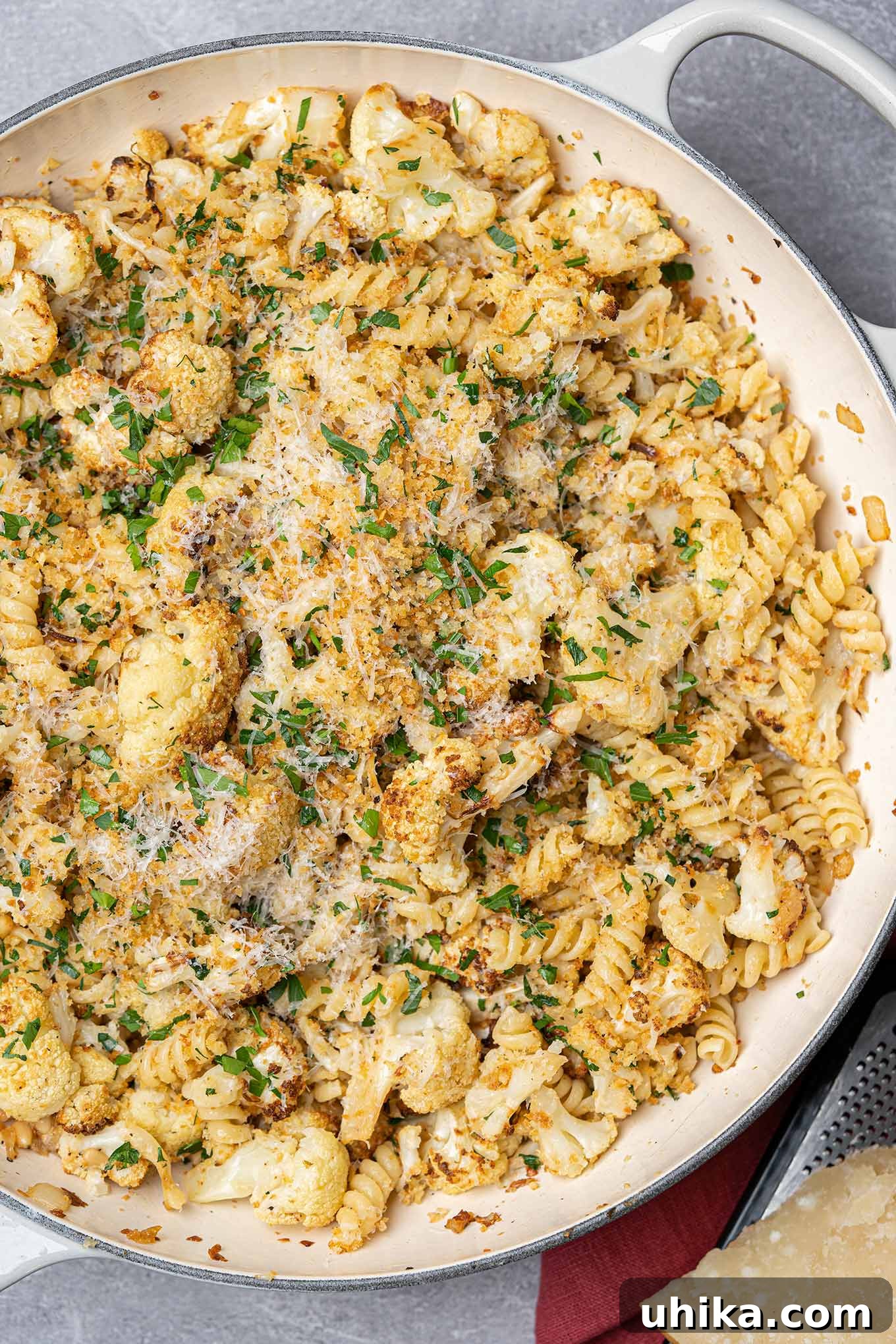
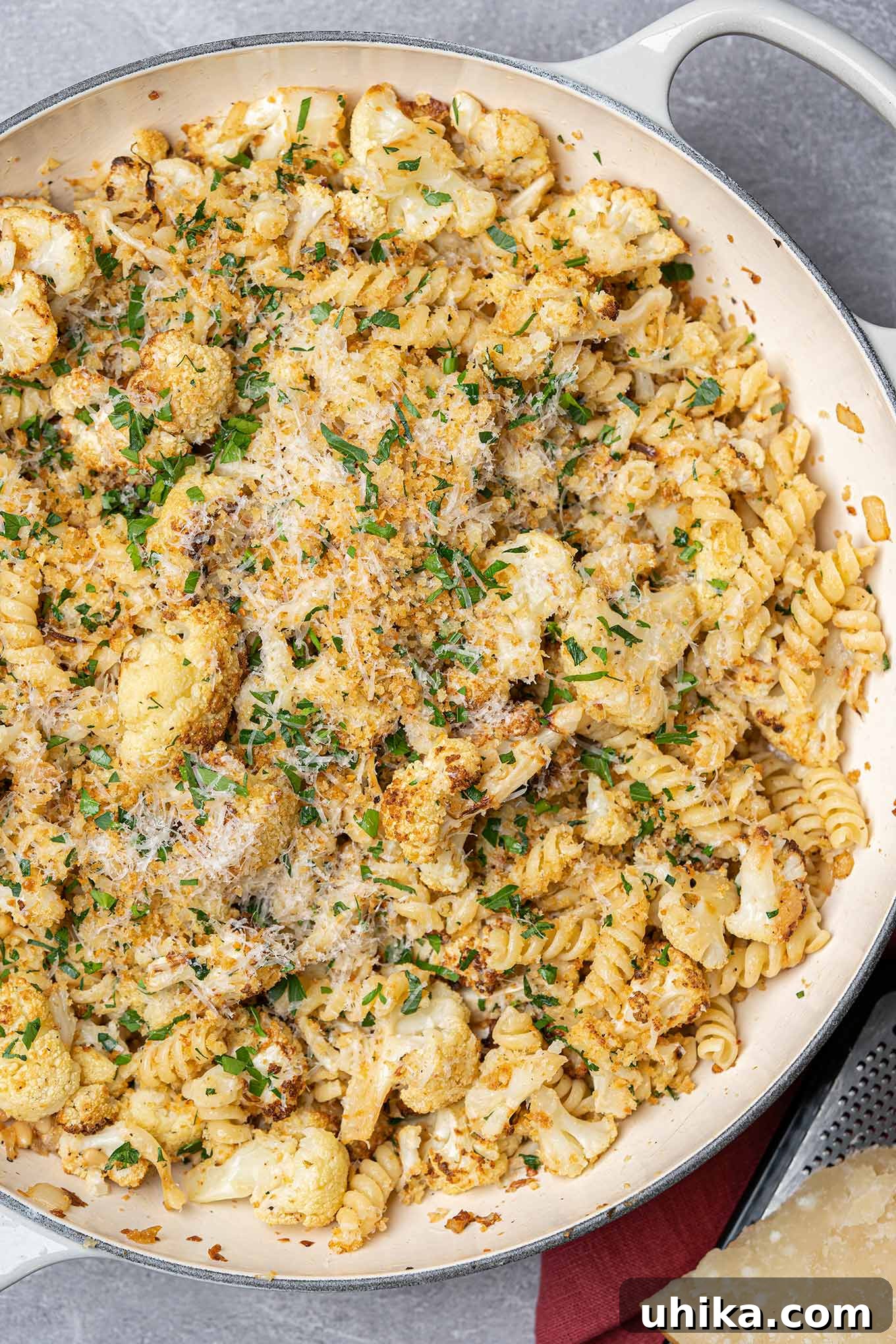
Delightful Roasted Cauliflower Pasta with Parmesan and Pine Nuts: Your Ultimate Weeknight Vegetarian Dish
In the quest for satisfying and wholesome weeknight meals, this recipe for roasted cauliflower pasta with rich Parmesan cheese and crunchy pine nuts (also known as pignoli) has earned a permanent spot in our regular dinner rotation. With an increasing desire to incorporate meatless meals into our weekly schedule at least twice, this dish, alongside our beloved Baked Eggplant Parmigiana, consistently stands out as a top contender. It’s a testament to how vegetables, when prepared thoughtfully, can truly shine as the centerpiece of a meal, offering both incredible flavor and satisfying substance.
What sets this roasted cauliflower pasta recipe apart is the transformative power of the oven. When fresh cauliflower florets are subjected to high heat, their natural sugars caramelize, intensifying their inherent sweetness and developing a delightful nutty essence. This unique flavor profile from the roasted cauliflower harmonizes exquisitely with the other carefully selected ingredients in this recipe, most notably the savory, toasted panko breadcrumbs and the buttery pine nuts. The resulting dish is a symphony of textures and tastes that feels both comforting and surprisingly elegant. Furthermore, its inherent versatility allows for easy customization, providing endless opportunities to subtly alter the flavor profile with just one or two additional ingredients – a feature we absolutely adore.
Why This Roasted Cauliflower Pasta Will Become Your New Go-To Meal
Beyond its delicious taste, this vegetarian pasta offers several advantages, making it an ideal choice for busy individuals and families:
- Healthy and Satisfying: Cauliflower is a powerhouse of nutrients, rich in fiber, vitamins C and K, and antioxidants. When combined with pasta, it creates a balanced meal that keeps you feeling full and energized.
- Carb-Conscious Option: For those mindful of their carbohydrate intake, the generous ratio of roasted cauliflower to pasta in this dish helps manage carbs without compromising on flavor or the feeling of a complete, satisfying meal. It’s a clever way to enjoy pasta while boosting your vegetable consumption.
- Quick and Easy: Despite its gourmet appeal, this dish comes together remarkably quickly, making it perfect for a busy weeknight. Most of the cooking time is hands-off, allowing you to multitask while the oven works its magic.
- Incredibly Versatile: As you’ll discover, this recipe provides a fantastic base for experimentation. Feel free to add your favorite herbs, spices, or even a touch of heat to make it uniquely yours.
- Crowd-Pleaser: Even those who claim not to be fond of vegetables often find themselves falling in love with the caramelized flavor of roasted cauliflower, especially when paired with pasta, cheese, and crunchy toppings. It’s a dish that appeals to a wide range of palates.
Key Ingredients for Flavorful Cauliflower Pasta: Building Blocks of Taste
Understanding the role of each ingredient is key to mastering this recipe. Below, we delve into the essential components and offer helpful substitution suggestions. The comprehensive list, including precise quantities, can be found in the printable recipe card at the end of this article.
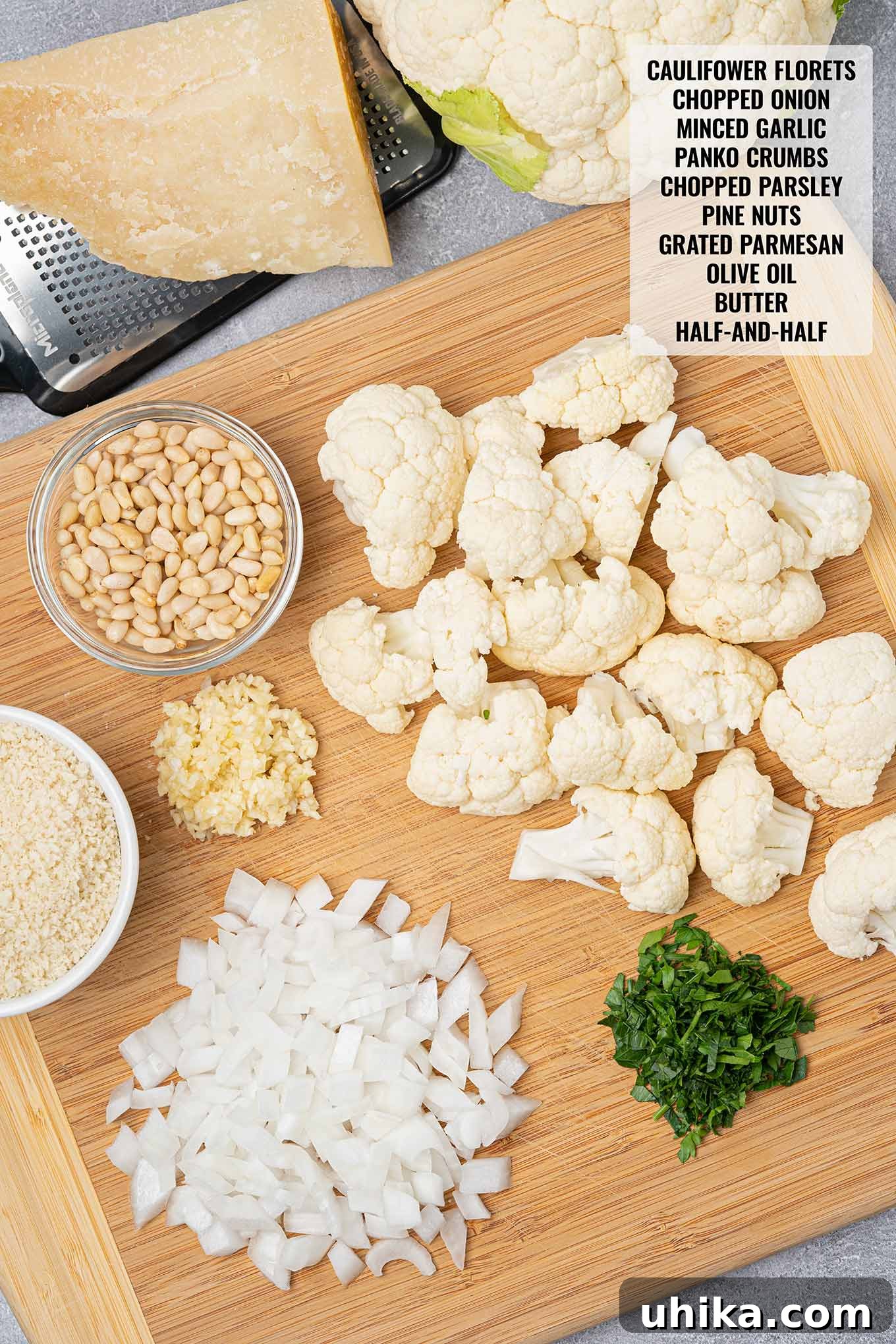
Fresh Cauliflower: The Heart of the Dish
The foundation of this incredible pasta is, of course, fresh cauliflower. When selecting your cauliflower at the market, look for heads that feel substantial and heavy for their size, possess vibrant green leaves, and are completely free from any brown spots or blemishes. These indicators suggest freshness and optimal flavor. Once home, store your cauliflower in a loosely closed plastic bag in the refrigerator, where it will maintain its quality for up to five days. While fresh is always preferred for its firm texture and vibrant taste, you can also successfully roast frozen cauliflower for this dish. For detailed tips on achieving perfectly tender and caramelized florets, whether fresh or frozen, you can refer to our dedicated guide on perfect oven-roasted cauliflower.
Choosing the Right Pasta: Shape Matters for Flavor
The choice of pasta might seem minor, but it plays a crucial role in the overall enjoyment of this dish. We highly recommend using a spiral pasta cut, such as rotini. The intricate nooks, crannies, and ridges of rotini are perfect for capturing and holding onto the savory buttery bits of sautéed garlic, onion, and especially the toasted breadcrumbs. This ensures that every forkful delivers a burst of flavor and texture. Other excellent options that boast similar sauce-clinging capabilities include corkscrew pasta (cavatappi), medium shells (conchiglie), or even a classic penne. If you’re looking for gluten-free alternatives, many excellent brands offer spiral or short-cut gluten-free pasta varieties that work wonderfully here.
Pine Nuts (Pignoli): Adding a Delicate Nutty Crunch
Pine nuts, also known as pignoli nuts, are a truly unique ingredient. Their tender texture and subtly sweet, buttery flavor are significantly amplified and deepened through toasting. In this cauliflower pasta, they contribute a wonderful nutty essence and a delightful textural contrast that complements the soft roasted cauliflower and the al dente pasta. Pine nuts pair exceptionally well with the sharp, salty notes of Parmesan cheese, creating a harmonious flavor profile. While pine nuts are our top preference for their distinctive qualities, if you need a substitution, chopped walnuts offer a good alternative, providing a similar earthy flavor and crunch.
Panko Breadcrumbs: For Irresistible Golden Crispness
Panko breadcrumbs are a secret weapon in many kitchens, and they truly shine in this recipe. Their unique coarse and flaky texture makes them superior to traditional breadcrumbs for toasting, resulting in an exceptionally crisp and airy crunch. This texture holds up beautifully even after being combined with the other ingredients in the finished dish, preventing any sogginess. They are also incredibly convenient to use. If you don’t have panko, regular breadcrumbs can work, but toast them carefully and be aware that the texture will be denser. For an extra layer of flavor, you can even make your own seasoned breadcrumbs by combining stale bread processed into crumbs with herbs and spices, then toasting.
Parmesan Cheese: The Indispensable Savory Touch
A generous amount of freshly grated Parmesan cheese is not merely an addition but an indispensable flavor enhancer for this pasta dish. We typically use Parmigiano Reggiano for its superior quality, complex salty, nutty, and slightly fruity notes, and crumbly texture. Its robust flavor is crucial for tying all the elements of the dish together. Other excellent hard Italian cheese options include Pecorino Romano, which offers a sharper, saltier, and more pungent flavor, or Grana Padano, a milder alternative to Parmigiano Reggiano. For the best results, always opt for a block of cheese and grate it fresh yourself; pre-grated cheeses often contain anti-caking agents that can affect both flavor and melting quality.
Aromatic Allies: Onion and Garlic
These two humble ingredients form the aromatic backbone of this dish. Sautéed onion provides a sweet, foundational flavor, while minced garlic adds a pungent, savory depth that is essential to Italian-inspired cooking. Together, they create a rich and inviting aroma that sets the stage for the rest of the ingredients.
The Perfect Blend of Fats: Olive Oil and Butter
Using both olive oil and butter in this recipe offers a superior flavor profile. Olive oil contributes its distinct fruity, slightly peppery notes and helps with roasting the cauliflower and sautéing the aromatics. Butter adds a rich, creamy mouthfeel and a delicate sweetness, especially when toasting the pine nuts and panko, enhancing their golden perfection.
Simplified Preparation for a Delicious Meal
How to Craft Your Roasted Cauliflower Pasta: Step-by-Step Guide
This section provides an overview of the cooking process for this delightful roasted cauliflower pasta. For comprehensive, detailed instructions, a complete list of ingredients, precise quantities, and helpful notes, please refer to the printable version of the recipe card located below.
Step 1: Roasting the Cauliflower to Golden Perfection
Your culinary journey begins by preheating your oven to a high temperature, ensuring optimal caramelization of the cauliflower. Line a sturdy sheet pan with parchment paper – this not only prevents sticking but also makes for incredibly easy cleanup. In a spacious mixing bowl, gently toss the fresh cauliflower florets with a generous drizzle of good quality olive oil, ensuring each piece is lightly coated. Season them liberally with salt and freshly ground black pepper to enhance their natural flavors. Spread the seasoned florets evenly across the prepared sheet pan in a single layer. Overcrowding the pan can lead to steaming rather than roasting, so give them ample space. Roast them for an initial 15 minutes, then carefully turn each floret, rotate the pan for even cooking, and continue roasting until they are beautifully caramelized, deeply tender when pierced with a knife, and slightly browned at the edges, typically another 10 to 15 minutes. This roasting process is crucial for developing the sweet, nutty flavors of the cauliflower that define this dish.
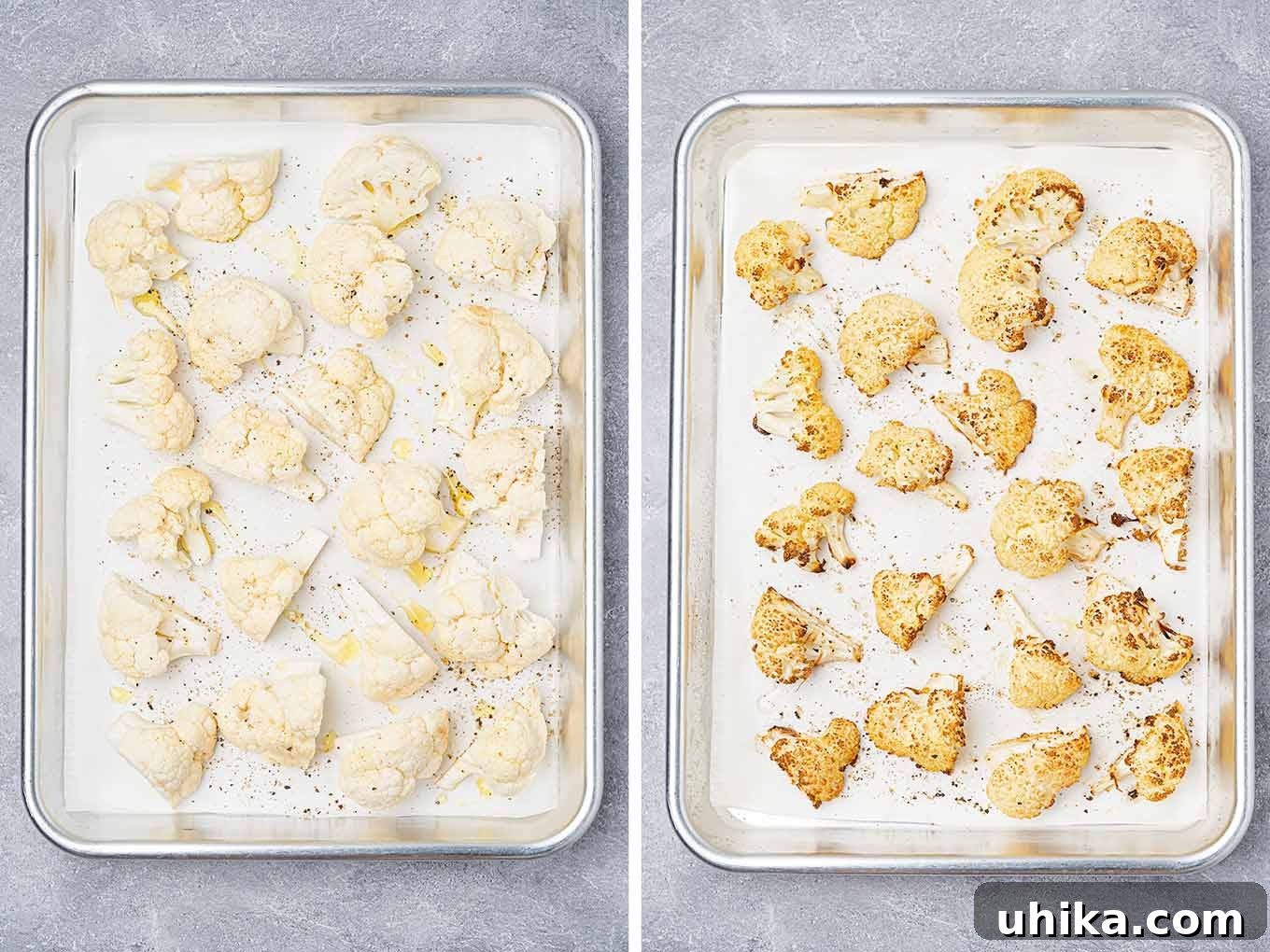
Step 2: Preparing the Toasted Crumb and Pine Nut Mixture Simultaneously
Efficiency is key in weeknight cooking! While your cauliflower is roasting, immediately set a large pot of heavily salted water on the stove to boil for your pasta. Concurrently, begin crafting the aromatic crumb mixture. In a spacious frying pan, melt the butter with a tablespoon of olive oil over medium heat. Add the finely chopped onion and sauté gently until it becomes soft and translucent, just beginning to acquire a hint of color, usually around 3 to 4 minutes. Incorporate the minced garlic and continue sautéing for only about 30 seconds, just until its fragrant aroma fills your kitchen – be very careful not to let the garlic brown, as it can quickly turn bitter. Next, stir in the pine nuts and panko crumbs. Continue cooking this mixture, stirring frequently to ensure even toasting, until it achieves a beautiful golden-brown color and a wonderfully crisp texture. Season with a pinch of salt and pepper, then remove the pan from the heat. As soon as the roasted cauliflower emerges from the oven, add it directly to this delightful crumb mixture and set it aside, allowing the flavors to meld, until the pasta is perfectly cooked and ready to be combined.
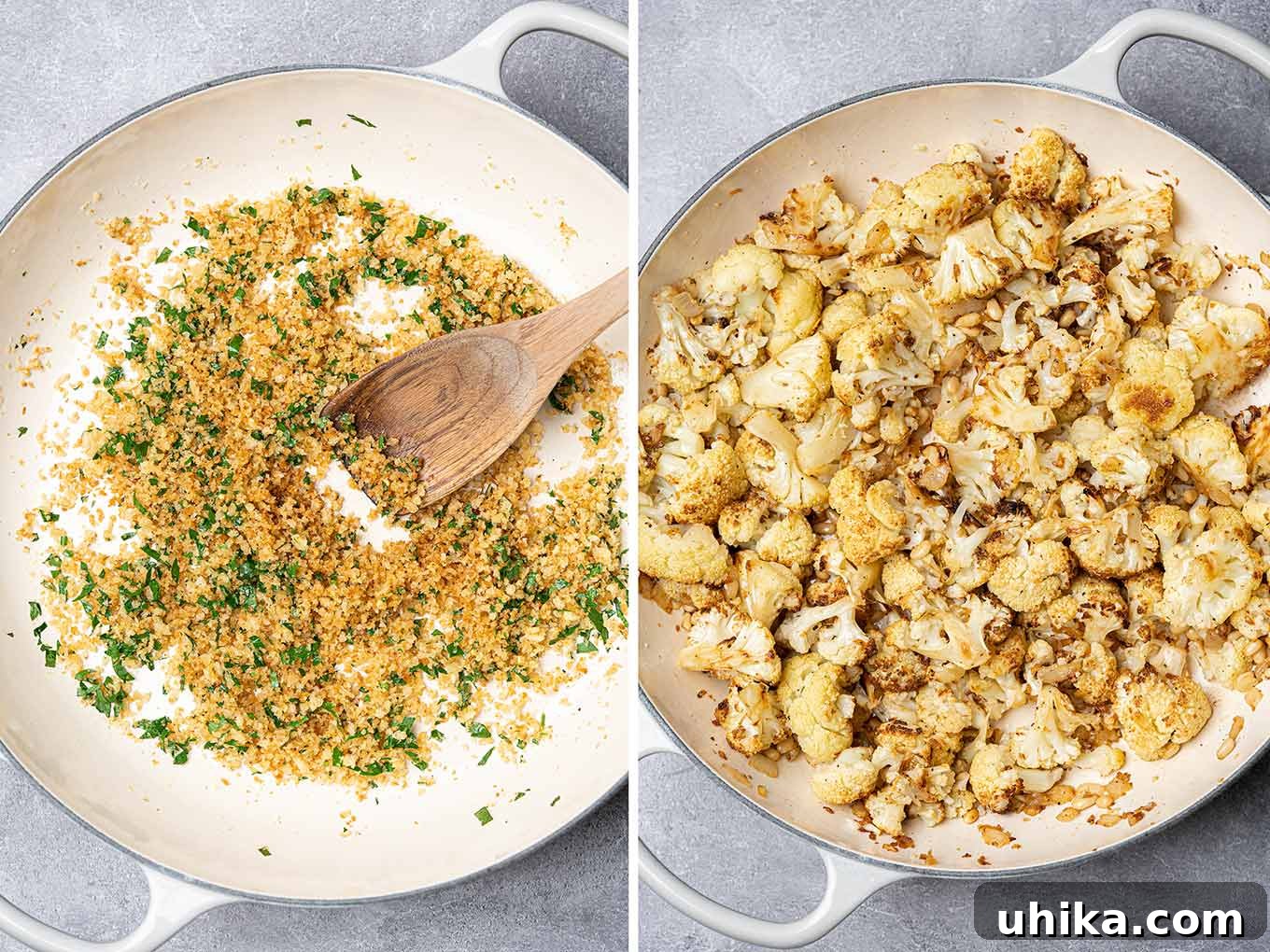
Step 3: Cooking the Pasta and Building the Creamy Base
With the water boiling, cook your chosen pasta according to the package directions, aiming for an al dente texture – firm to the bite. This is crucial for pasta dishes, as it will continue to cook slightly when combined with the other hot ingredients. Before you drain the pasta, make sure to reserve about 1/4 cup of the starchy pasta cooking water. This starchy liquid is a chef’s secret weapon; it acts as a fantastic emulsifier, helping to create a luscious, silky sauce that clings beautifully to the pasta. Drain the cooked pasta and return it to the empty pot. Add the vibrant chopped parsley, the creamy half-and-half, and a generous portion of grated Parmesan cheese. Toss all these ingredients together vigorously, ensuring every strand or piece of pasta is thoroughly coated. If, at this point, the mixture appears a little too dry or thick for your liking, gradually add the reserved pasta cooking water, a tablespoon at a time, until you achieve your desired smooth and creamy consistency.
Step 4: Bringing it All Together for Serving
The final step is where all the wonderful flavors unite. Gently combine the creamy pasta with the roasted cauliflower and the toasted crumb mixture in the frying pan, or transfer everything back into the pasta pot if it’s large enough. Toss carefully to ensure an even distribution of all components, making sure the caramelized cauliflower and crunchy pine nut crumbs are dispersed throughout the pasta. For an extra flourish and burst of savory flavor, finish the dish with a final generous grating of fresh Parmesan cheese and a light sprinkling of fresh parsley. Serve this delightful cauliflower and pine nut pasta family-style, allowing everyone to enjoy its enticing aromas and appealing presentation. Pair it with a simple green salad and some crusty bread for a complete and utterly satisfying meal.
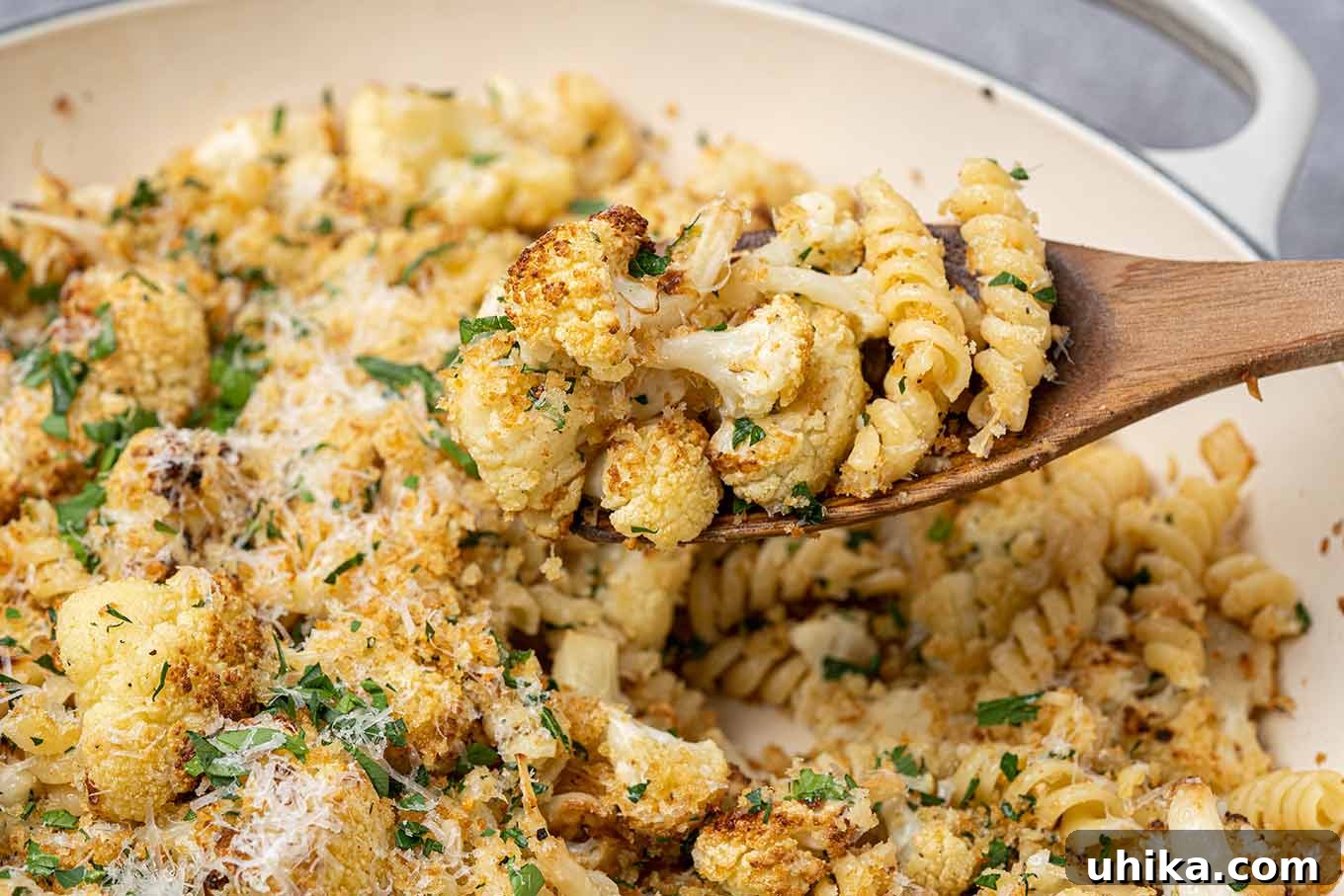
Roasted Cauliflower Pasta with Parmesan and Pine Nuts
Lynne Webb
10 mins
30 mins
40 mins
2 servings
Print Recipe
Ingredients
For the Roasted Cauliflower:
- 5 to 6 cups cauliflower florets, one average head
- 1 tablespoon olive oil
- Salt and pepper, to taste
For the Pasta:
- 4 ounces pasta (rotini, penne, or similar short-cut pasta)
- 1 tablespoon olive oil
- 1 tablespoon unsalted butter
- 3/4 cup chopped yellow onion
- 3 to 4 cloves garlic, minced
- 1/4 cup pine nuts
- 1/2 cup panko crumbs
- 1/4 cup fresh chopped parsley, plus more for garnish
- 3 tablespoons half-and-half, or light cream
- 1/3 cup grated Parmesan cheese, plus more for serving
Instructions
-
Preheat your oven to 425°F (220°C). Line a large baking sheet with parchment paper for easy cleanup.
-
Place the cauliflower florets in a large mixing bowl. Drizzle with 1 tablespoon of olive oil and toss to coat evenly. Season generously with salt and freshly ground black pepper, then toss again.
-
Spread the seasoned cauliflower in a single, even layer on the prepared baking sheet. Roast for 15 minutes. Carefully turn the florets, rotate the pan, and continue roasting for another 10 to 15 minutes, or until the cauliflower is beautifully caramelized, fork-tender, and slightly browned at the edges.
-
While the cauliflower roasts, bring a large pot of heavily salted water to a rolling boil for the pasta.
-
In a large frying pan, melt the butter with 1 tablespoon of olive oil over medium heat. Add the chopped onion and sauté until softened and translucent, about 3-4 minutes. Stir in the minced garlic and cook for an additional 30 seconds until fragrant, taking care not to let it brown.
-
Add the pine nuts and panko crumbs to the frying pan. Continue to cook, stirring constantly, until the mixture is lightly toasted and golden brown. Season with a pinch of salt and pepper. Remove the pan from the heat immediately.
Important note: Ensure you keep the crumb mixture moving in the pan as it cooks to prevent any ingredient from becoming overly browned or burnt.
-
Once the roasted cauliflower is ready, transfer it directly into the frying pan with the toasted crumb mixture. Toss gently to combine and set aside until the pasta is cooked.
-
Cook the pasta according to package directions until al dente. Before draining, reserve about 1/4 cup of the starchy pasta cooking water. Drain the pasta and return it to its pot.
-
Add the chopped parsley, half-and-half, and grated Parmesan cheese to the cooked pasta. Toss vigorously to coat the pasta evenly. If the mixture appears too dry, gradually add a tablespoon of the reserved pasta water at a time until your desired consistency is reached.
-
Finally, gently fold the pasta mixture into the pan containing the roasted cauliflower and toasted crumbs. Serve immediately, garnished with an extra sprinkle of grated Parmesan and fresh parsley.
Recipe Notes & Variations: Customize Your Cauliflower Pasta
Switch Up the Flavors: Tasty Additions for a Personalized Touch
- Pancetta or Bacon for Extra Savory Depth: To add a delicious, salty, and savory dimension, dice and sauté pancetta (Italian cured pork belly) or bacon before you add the onion. You can leave a little of the rendered fat in the pan for extra flavor and slightly reduce the initial olive oil to compensate. Bear in mind that bacon’s smokiness is more pronounced than pancetta’s and may slightly alter the subtle flavor profile.
- A Hint of Heat: Crushed Red Pepper Flakes: If you enjoy a gentle warmth in your dishes, a pinch or two of crushed red pepper flakes stirred in with the onions during sautéing is a wonderful addition. It provides a subtle kick without overpowering the other ingredients.
- Umami Powerhouse: Anchovies: For a surprisingly deep and rich umami flavor (without tasting “fishy”), try “melting” two or three anchovy fillets along with the onions as they sauté. They break down in the hot oil, releasing a complex savory essence that significantly enhances the dish.
- Sweet and Textural Contrast: Golden Raisins: Tossing in a handful of plump golden raisins adds a delightful pop of sweetness and an interesting chewy texture. For the best results, soak them in hot water for about 15 minutes before adding them to the final dish to soften and plump them up.
- Fresh Herb Alternatives and Additions: Basil & Beyond: While fresh parsley provides a clean, herbaceous finish, fresh basil offers a wonderfully aromatic and slightly peppery note. You could use basil in addition to parsley, or experiment with other fresh herbs like chives or a sprig of thyme for different aromatic profiles.
- Brightening with Citrus: Lemon Zest and Juice: A squeeze of fresh lemon juice and a bit of finely grated lemon zest over the finished pasta will infuse it with a bright, zesty acidity. This citrusy note pairs particularly well if you’ve decided to incorporate fresh basil into your dish.
- Boost the Protein: For those looking to increase protein content or make it a non-vegetarian meal, cooked shredded chicken, sautéed shrimp, or hearty chickpeas can be stirred in at the end.
- Make it Vegan: Easily adapt this recipe by omitting the Parmesan and half-and-half. Use unsweetened plant-based milk (like almond or oat milk) or vegetable broth, and nutritional yeast for a cheesy flavor. Ensure your chosen pasta is egg-free.
- Gluten-Free Friendly: This recipe is simple to make gluten-free. Just substitute conventional pasta with your favorite gluten-free pasta variety. The cooking methods for the cauliflower and crumb mixture remain naturally gluten-free.
Nutrition Information
Total Fat: 34g,
Cholesterol: 37mg,
Sodium: 546mg,
Carbohydrates: 78g,
Fiber: 9g,
Sugar: 11g,
Protein: 23g
Nutrition information is automatically calculated and should be used as an approximation. It may vary based on specific ingredients, portion sizes, and preparation methods.
Enjoyed this recipe? Share your thoughts and tell us how it turned out in the comments below!