
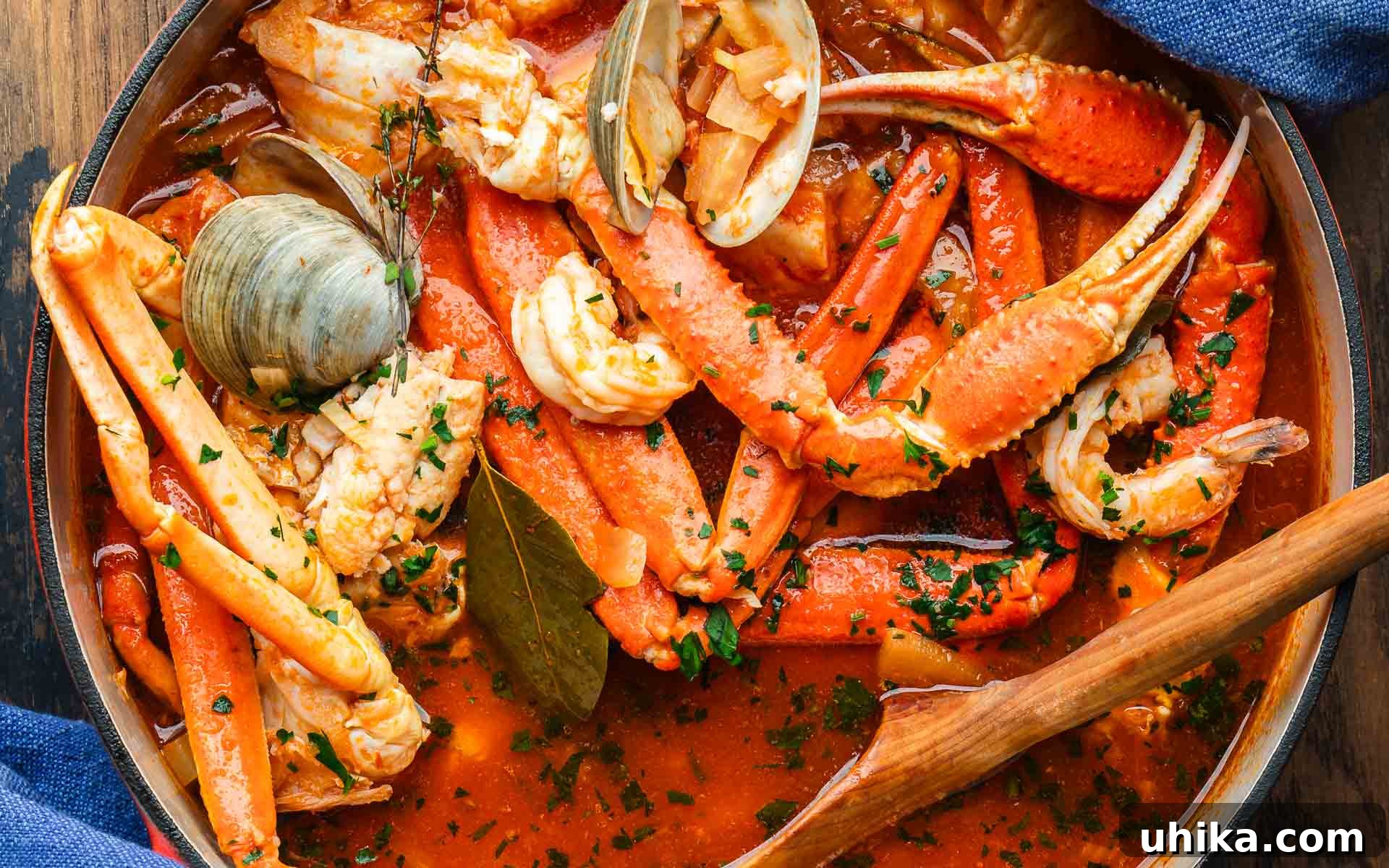
Authentic San Francisco Cioppino: A Hearty Seafood Stew Recipe
Dive into a bowl of pure culinary delight with this authentic San Francisco Cioppino recipe. Hailing from the vibrant shores of San Francisco, this hearty seafood stew is a symphony of flavors – rich, brothy, deeply nourishing, and utterly delicious. It’s a versatile dish, perfect for cozy winter evenings or bright summer gatherings, and truly requires nothing more than a generous serving of crusty bread to transform into a complete, unforgettable meal. Prepare to embark on a culinary journey that celebrates the bounty of the sea in the most exquisite way.
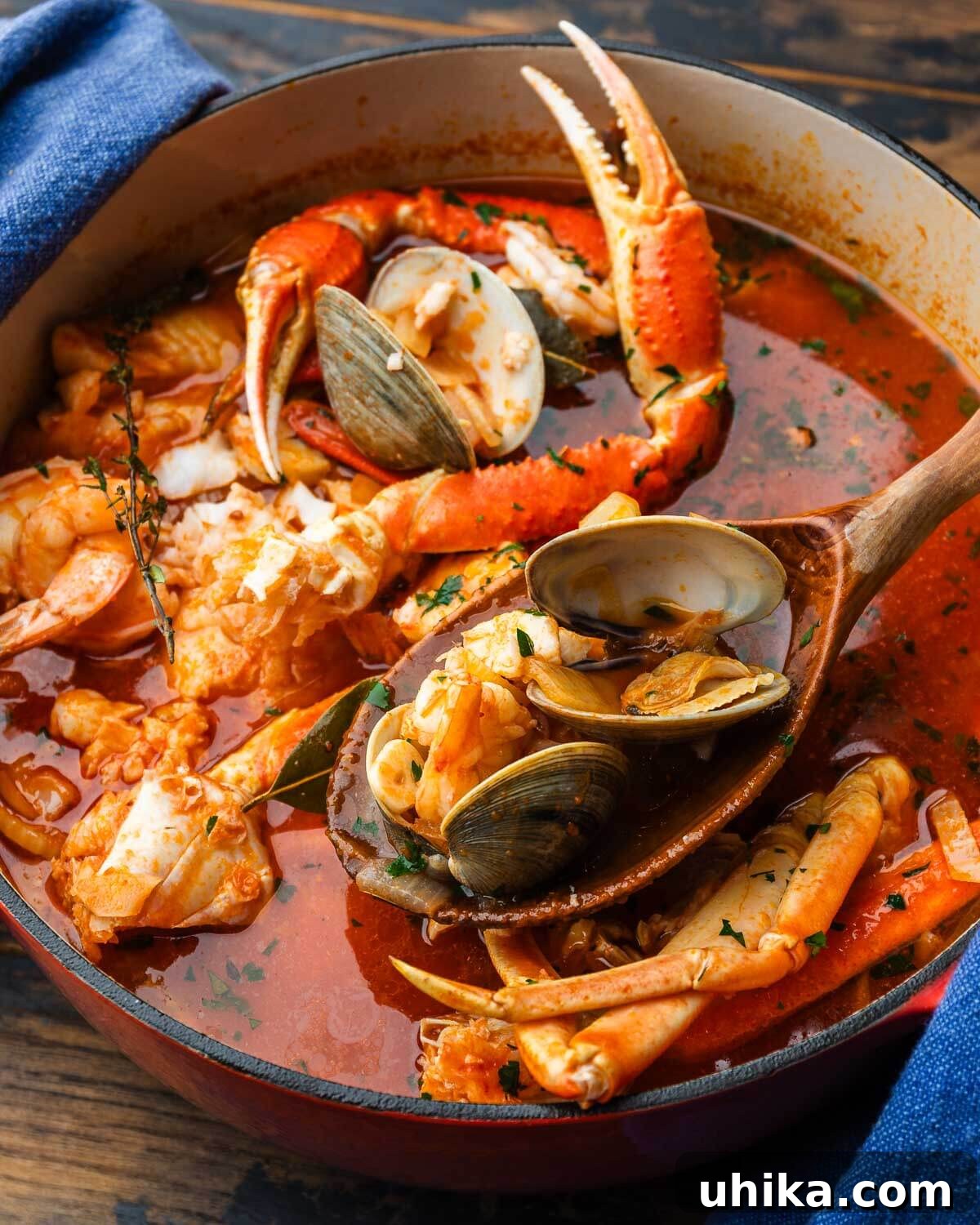

The West Coast’s Signature Seafood Stew: Straight Out of San Francisco
Growing up, my kitchen was often filled with the aroma of simmering seafood. I remember my dad enthusiastically talking about Zuppa di Pesce and watching Julia Child effortlessly whip up a bouillabaisse on television. Yet, it wasn’t until I was a bit older that I truly discovered Cioppino – the West Coast’s magnificent answer to a comforting, flavor-packed seafood stew. It quickly became a personal favorite, a dish that embodies the spirit of coastal dining.
While all these stews celebrate the ocean’s harvest, there are distinct characteristics that set Cioppino apart. Zuppa di Pesce, for instance, is frequently enjoyed over a bed of pasta, while Cioppino is typically served as a robust, standalone soup. The most significant differentiator, however, lies in one star ingredient: crab. Authentic Cioppino proudly features Dungeness crab, a species abundant in the waters of the San Francisco Bay and across the entire Pacific Northwest. Its sweet, tender meat adds an unparalleled depth to the stew. For this particular recipe, I’ve opted for snow crab, which was readily available and equally delicious here on Long Island, proving that adapting with fresh, quality ingredients is always the best approach.
I genuinely hope you take the opportunity to make this Cioppino. This isn’t just another recipe; it’s a truly delicious and deeply satisfying meal that will impress both your family and guests. It’s wonderfully light yet incredibly flavorful, brimming with the freshest tastes of the sea, all enveloped in a perfectly balanced, savory broth. Every spoonful is an absolute delight for the taste buds. And please, do not forget the crusty bread – it’s essential for soaking up every last drop of that incredible broth!
Chef’s Recommendation: Cioppino is an exceptional and elegant choice for any celebration, particularly for the traditional Feast of the 7 Fishes, offering a luxurious centerpiece that will undoubtedly be a crowd-pleaser.
Essential Cioppino Ingredients: What You’ll Need
Crafting an outstanding Cioppino begins with selecting the finest ingredients. Below, you’ll find a visual guide to all the components needed for this recipe, followed by detailed notes designed to help you make the best choices at the market and understand their role in creating this iconic stew.
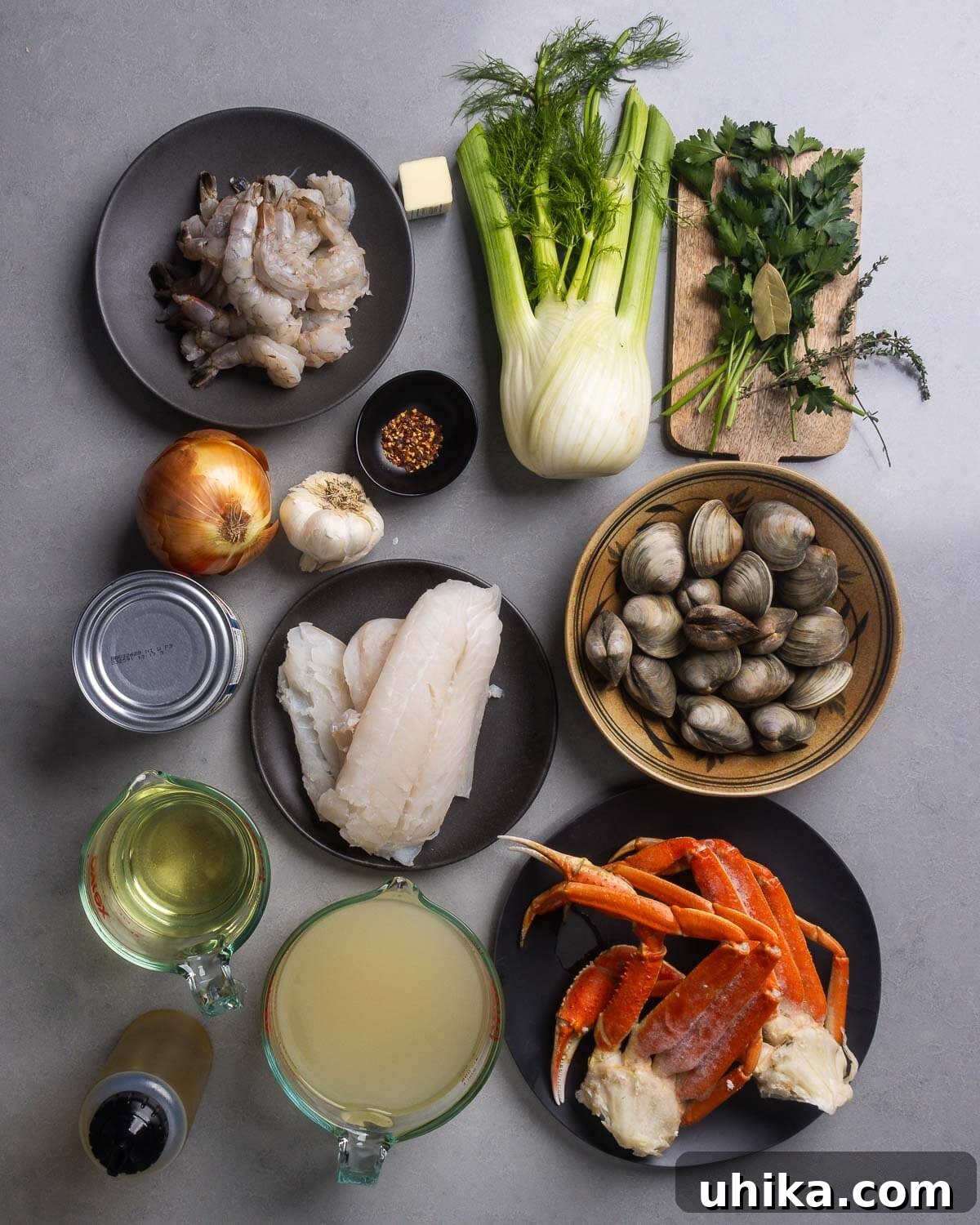
- White Fish. For a robust stew, I prefer cod due to its firm, flaky texture that holds up well during simmering. However, feel free to substitute with other meaty white fish varieties such as monkfish, striped bass, or red snapper. The key is to choose a fish that won’t fall apart easily and offers a mild, sweet flavor that complements the other seafood.
- Crab. Traditionally, Dungeness crab is the star of Cioppino, celebrated for its sweet and succulent meat. While ideal, it can sometimes be challenging to source depending on your location and seasonality. As an excellent alternative, I’ve used precooked snow crab legs in this recipe, which provide fantastic flavor and are generally more accessible. Alaskan king crab is another luxurious option if available.
- Clams & Mussels. Freshness is paramount here. I opted for beautiful little neck clams during my shopping trip, but the beauty of Cioppino lies in its adaptability. Use whatever type of clam, mussel, or cockle looks freshest and most appealing at your seafood counter. Ensure they are tightly closed before cooking.
- Shrimp. Extra-large shrimp (often labeled U26-sized, meaning under 26 shrimp per pound) are perfect for this stew, offering a substantial bite. You can certainly use larger or slightly smaller shrimp, just be mindful of their cooking time to prevent overcooking. Always aim for fresh, firm shrimp that are properly cleaned and deveined.
- Flavorful Broth Base. The foundation of Cioppino’s exquisite broth is built upon high-quality canned tomatoes (preferably San Marzano-style, hand-crushed or lightly pulsed), rich clam juice for an intense seafood essence, and a dry white wine like Sauvignon Blanc or Pinot Grigio. The wine adds a crucial layer of acidity and complexity, deglazing the pot and enhancing all the flavors. If you prefer to omit alcohol, simply replace the wine with an equal amount of additional clam juice or a good quality fish stock.
- Aromatics: Fennel, Onion, Garlic. A small fennel bulb is indispensable, contributing a subtle, sweet anise flavor that beautifully complements the seafood. Alongside diced onion and sliced garlic, these aromatics are sautéed to create a fragrant, sweet base for the broth, essential for building deep flavors.
- Fresh Herbs & Spice. The aromatic trio of fresh parsley, a bay leaf, and sprigs of thyme infuses the stew with a wonderfully earthy and herbaceous character. A touch of crushed red pepper flakes adds a gentle warmth and subtle kick, which can be adjusted to your preference for spice.
For a comprehensive list of all ingredients, including precise measurements and quantities, please refer to the detailed recipe card provided further below. This will ensure you have everything needed to create a perfect batch of Cioppino.
Want To Save This Recipe?
Enter your email and we’ll send it to you. Plus, get great new recipes from us every week!
Crafting Your Cioppino: A Step-by-Step Guide
Follow these detailed steps to create a show-stopping Cioppino. Each number corresponds to the numbered written instructions below, guiding you through the process for a perfectly balanced and incredibly flavorful seafood stew. Pay close attention to timing, especially when adding the delicate seafood, to ensure everything cooks to perfection.
- Sauté Aromatics: Begin by heating a large Dutch oven or a heavy-bottomed pot over medium heat. Add the olive oil and butter, allowing the butter to melt and combine. Once shimmering, add the diced onion and fennel. Season with a generous pinch of salt. Sauté gently, stirring occasionally, until the vegetables become very soft, translucent, and fragrant, typically for 8-10 minutes. This slow cooking process extracts their natural sweetness, forming the foundational flavor of your stew. Next, add the sliced garlic and sauté for an additional 2 minutes until it becomes fragrant but not browned, which can make it bitter. Stir in the crushed red pepper flakes and cook for about 30 seconds to release their aroma.
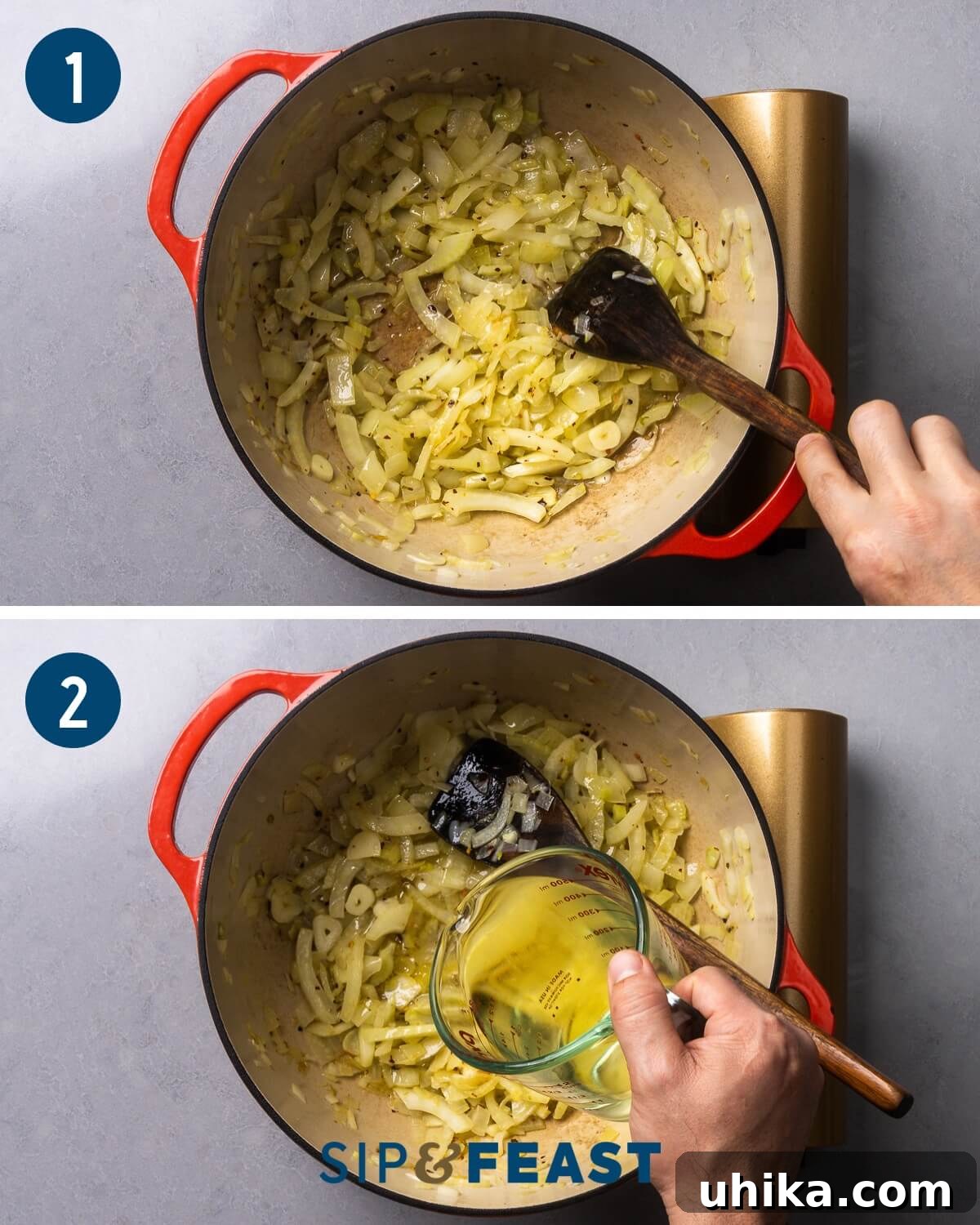
- Deglaze and Build the Broth: Pour in the dry white wine and immediately increase the heat to high. As the wine bubbles, use a wooden spoon to vigorously scrape the bottom of the pot, dislodging any browned bits (fond) that have accumulated. This deglazing step adds incredible depth and complexity to the broth. Cook the wine for about 90 seconds to allow the alcohol to evaporate. Then, add the canned plum tomatoes (hand-crushed or blender-pulsed), clam juice, fresh thyme sprigs, and the bay leaf. Stir everything together, bring the mixture to a rolling boil, then reduce the heat to low and let it gently simmer for at least 20 minutes. This simmering time is crucial for the flavors to meld and deepen, creating a rich base for your seafood.
- Add Clams and Fish: After the broth has simmered, lower the heat to a very gentle simmer. Carefully add the scrubbed clams and the pieces of cod (or your chosen white fish) to the pot. Cover the Dutch oven with a lid and cook for 6-8 minutes. During this time, the clams will begin to open, and the fish will start to cook through, becoming tender and flaky.
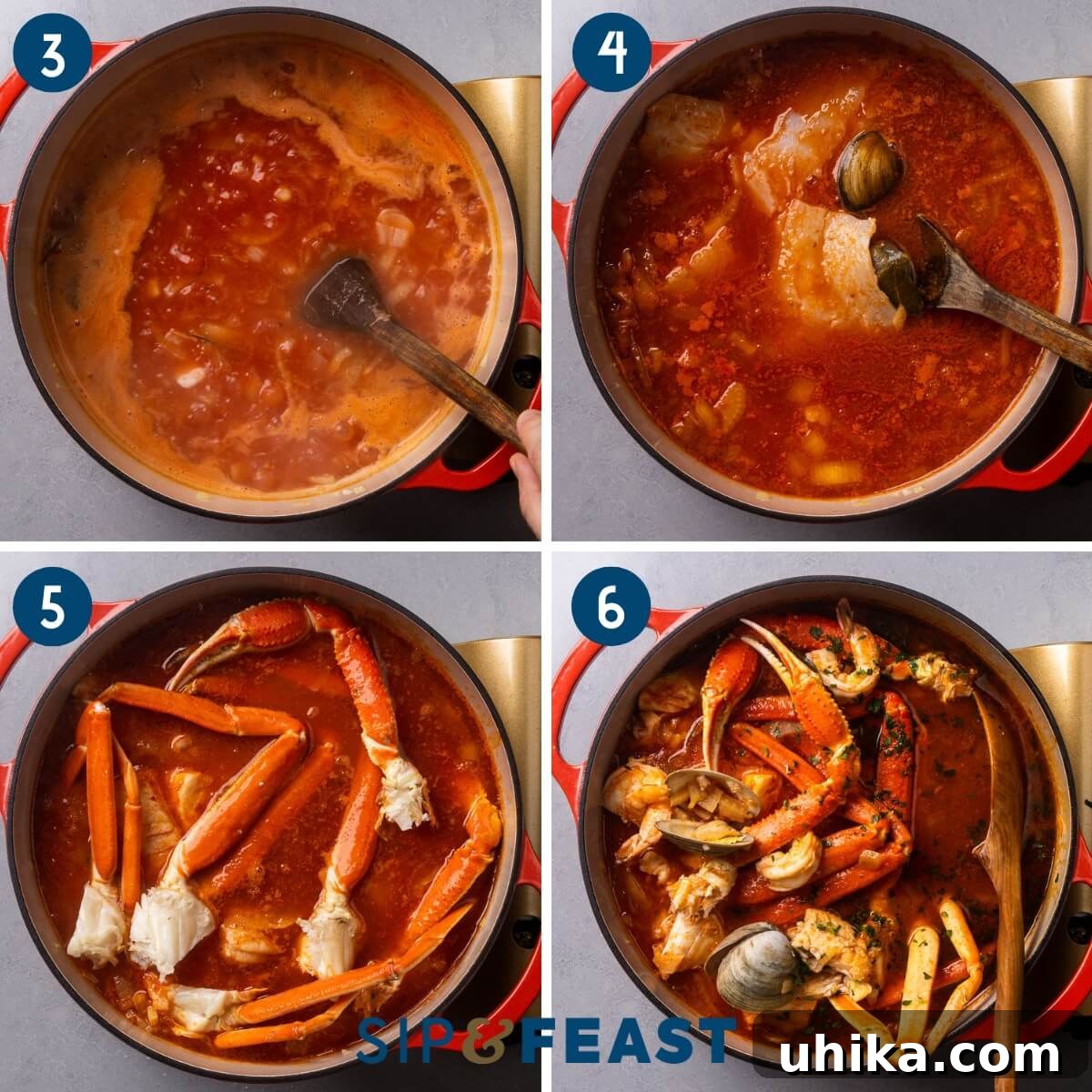
- Incorporate Shrimp and Crab: Gently add the shrimp and crab legs to the stew. Be careful not to aggressively stir or disturb the delicate fish, which could cause it to break apart. Cover the pot once more and cook for an additional 3 minutes. The shrimp will turn pink and opaque, and the crab will heat through. This short cooking time prevents the seafood from becoming tough or rubbery.
- Final Touches and Serving: Remove the pot from the heat. Carefully inspect the clams and discard any that have not opened; these were likely dead before cooking and are not safe to eat. Taste the stew and adjust the seasoning with salt and freshly ground black pepper as needed. Remember, clam juice can be quite salty, so season gradually. Finally, stir in the fresh minced parsley gently. Ladle the piping hot Cioppino into large, deep bowls. Serve immediately with plenty of crusty bread on the side for dipping. For an extra touch of elegance and flavor, drizzle each serving with a good quality extra virgin olive oil and garnish with a fresh sprig of thyme. Enjoy this magnificent feast!
Expert Tips for the Perfect Cioppino
- Prioritize Freshness: The success of your Cioppino hinges significantly on the quality of your seafood. Always choose the freshest ingredients available at your local market, even if it means deviating slightly from the exact list provided. If mussels are looking plump and vibrant, use them instead of clams. If smaller shrimp are of higher quality than the extra-large ones, opt for those. Living in an area with abundant blue crab? Go for it! The fundamental principle is that the best Cioppino is made with the best, freshest seafood you can find. Trust your instincts and your fishmonger.
- Optimal Cooking Vessel: A large Dutch oven or a heavy-bottomed stockpot is ideal for making Cioppino. These pots distribute heat evenly and retain it well, which is crucial for the slow simmering of the broth and gentle cooking of the seafood. Its depth also ensures all the ingredients are fully submerged in the flavorful liquid.
- Prepping Your Seafood: Before you begin cooking, ensure all your seafood is properly prepared. Scrub clams and mussels thoroughly under cold running water, removing any grit or “beards” from mussels. If using fresh shrimp, peel and devein them. If your fish has bones, fillet it carefully. This prep work ensures a clean, enjoyable eating experience.
- Serve Promptly for Peak Flavor: While Cioppino leftovers are still tasty, this is truly a dish meant to be savored fresh and hot, right off the stove. Like most seafood dishes, the textures and vibrant flavors are at their absolute peak immediately after cooking. The delicate seafood can become rubbery if overcooked or reheated excessively, so gather your diners and enjoy it without delay.
- Pairing with Wine: The dry white wine used in the broth (like Sauvignon Blanc or Pinot Grigio) also makes an excellent accompaniment for serving. Its crisp acidity beautifully cuts through the richness of the seafood and complements the tomato-based broth. For a non-alcoholic option, sparkling cider can be a refreshing choice.
- Customizing Your Seafood Selection: Don’t feel limited to the seafood listed. Feel free to incorporate other favorites such as scallops, squid rings, chunks of firm white fish like halibut or mahi-mahi, or even a few lobster tails for a truly decadent stew. Just be mindful of the cooking times for each type of seafood and add them accordingly to prevent overcooking.
- Making Ahead and Storage: While best fresh, the broth for Cioppino can be made a day in advance. Prepare the broth through step 2, allow it to cool completely, then refrigerate. When ready to serve, reheat the broth to a simmer and proceed with adding the seafood. Leftover Cioppino can be stored in an airtight container in the refrigerator for up to 2-3 days. Reheat gently on the stovetop over low heat, being careful not to overcook the seafood.
- Achieving Balanced Seasoning: Seafood and clam juice naturally contribute saltiness to the stew. It’s always best to go easy on adding salt until the very end of the cooking process. Taste the broth after all the seafood has been added and cooked, then adjust with salt and pepper to your preference. This ensures a perfectly balanced flavor without being overly salty.
Explore More Delicious Seafood Recipes
If you’ve fallen in love with the flavors of this hearty Cioppino, you’ll definitely want to give these other fantastic seafood recipes a try! Each one is crafted to highlight the incredible versatility and taste of fresh seafood.
- Creamy New England Clam Chowder
- Delectable Clam and Baby Shrimp Pasta
- Classic Mussels in White Wine Sauce
If you’ve enjoyed preparing and tasting this authentic Cioppino recipe, please consider leaving a 5-star rating below. Your feedback is greatly appreciated!
Stay connected with us for more culinary inspiration! Watch our cooking demonstrations on YouTube, follow along with our daily updates on our Facebook Page, and become a Patreon member to gain exclusive access to full-meal videos, behind-the-scenes content, and much more.
Cioppino (Hearty Seafood Stew)

Pin
Ingredients
- 1/4 cup extra virgin olive oil
- 2 tablespoons unsalted butter
- 1 large onion diced
- 1 small fennel bulb core removed and diced
- 5 cloves garlic sliced
- 1/2 teaspoon crushed hot red pepper flakes
- 1 1/4 cups dry white wine such as sauvignon blanc, pinot grigio, or chardonnay
- 1 28-ounce can plum tomatoes blender pulsed or hand crushed
- 4 cups clam juice
- 2 sprigs thyme
- 1 large bay leaf
- 16 little neck clams scrubbed, see notes below
- 3/4 pound cod cut into 4 large pieces, can sub other meaty white fish like monkfish, striped bass, red snapper, etc.
- 1 pound extra large shrimp approximately u26 size, cleaned and deveined
- 1 pound precooked snow crab legs can leave whole or break apart into smaller pieces at joints
- salt and pepper to taste
- 1/4 cup minced flat-leaf Italian parsley
Want To Save This Recipe?
Enter your email and we’ll send it to you. Plus, get great new recipes from us every week!
Instructions
-
Heat a large Dutch oven or heavy pot to medium-low with the olive oil and butter. Add the onion, fennel, and a pinch of salt and sauté until very soft and translucent. Add in the garlic and cook for 2 minutes more until fragrant.
-
Next, add the crushed red pepper flakes, cook for 30 seconds, then add the wine and turn heat to high. Scrape the bottom of the pot with a wooden spoon to dislodge the brown bits. Cook the wine for 90 seconds then and add the tomatoes, clam juice, thyme, and bay leaf. Bring to a boil then lower heat and simmer for 20 minutes before adding any seafood.
-
Turn the heat down to a gentle simmer. Add the clams and cod and cover. Cook for 6-8 minutes or until the clams just start to open.
-
Gently add the shrimp and crab legs, careful not to disturb and break the fish, and cover with the lid for 3 minutes. Uncover and remove the pot from the heat. Any clams that do not open should be discarded because they were most likely dead prior to cooking.
-
Taste test and adjust salt and pepper levels then add the parsley and stir gently. Serve in bowls with crusty bread on the side. Garnish with a drizzle of extra virgin olive oil and a thyme sprig. Enjoy!
Notes
- Servings. This recipe yields 4 generous main course servings or 6 smaller appetizer-sized portions. One pound of snow crab typically provides approximately 8 legs, averaging 2 legs per person for a substantial meal.
- Salt levels. Exercise caution when adding salt. Given the natural salinity from clam juice and seafood, it’s best to season with salt and pepper to taste right at the very end of cooking. This allows you to achieve the perfect flavor balance.
- Seafood Substitutions. Feel free to experiment with other types of fresh clams and firm white fish based on availability and preference. Mussels are also a wonderful addition and can be used in place of, or in addition to, clams. The freshest seafood will always yield the best results.
- Leftovers. While Cioppino is truly at its peak when enjoyed immediately, any leftovers can be safely stored in an airtight container in the refrigerator for up to 3 days. Reheat gently over low heat on the stovetop to avoid overcooking the delicate seafood.
Nutrition
Nutrition information is automatically calculated, so should only be used as an approximation.
Like this? Leave a comment below!Check us out on Instagram at @sipandfeast or tag #sipandfeast!