
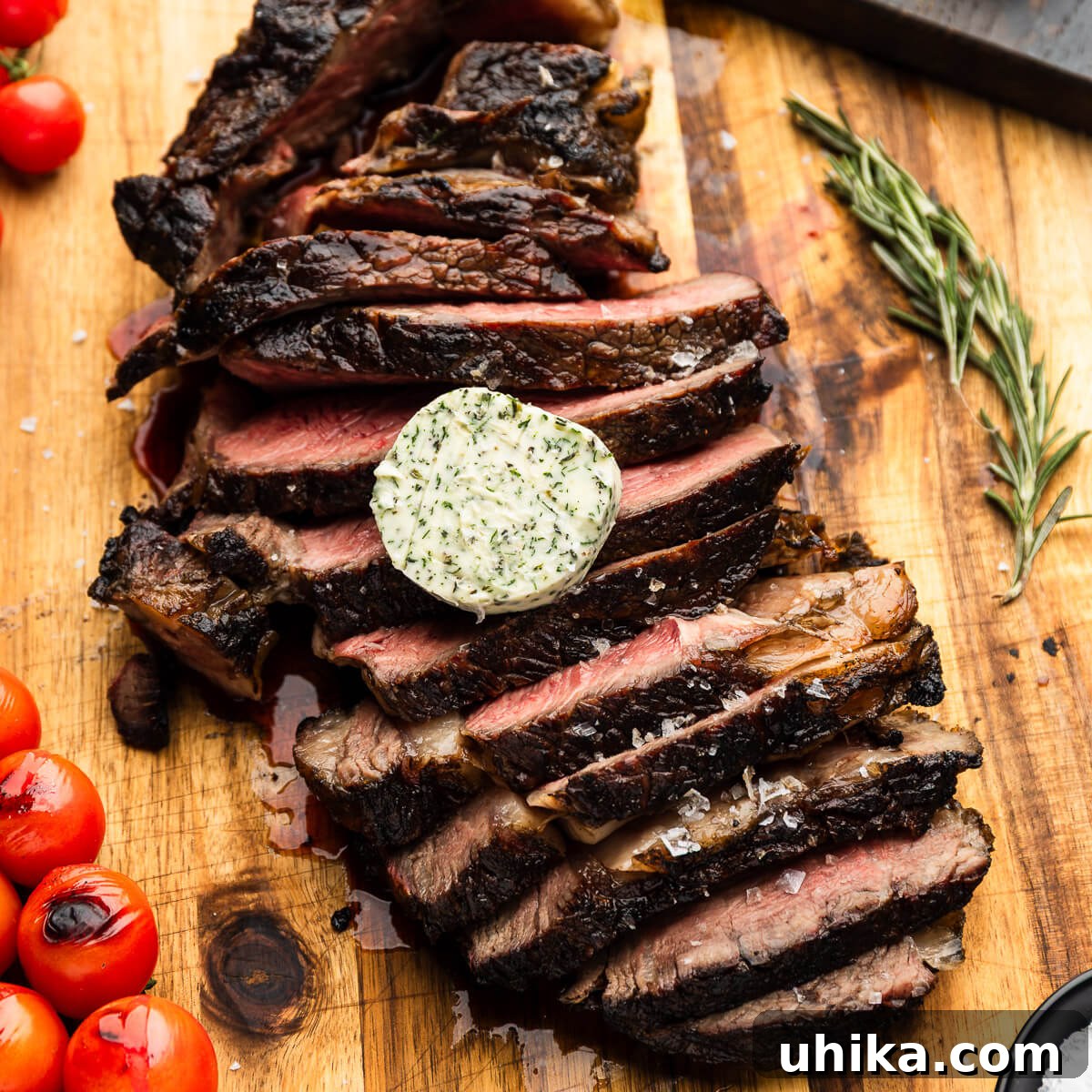
Mastering the Art of Grilling Tomahawk Steak: A Steakhouse Experience at Home
Imagine a perfectly grilled, incredibly juicy, and impossibly tender Tomahawk steak, rivaling the finest steakhouses, all crafted in your own backyard. This impressive cut of beef, known for its dramatic appearance and exceptional flavor, can be yours for a fraction of the restaurant price. With this comprehensive guide, you’ll learn the secrets to achieving steakhouse-quality results at home, complete with a luscious herbed compound butter that elevates every bite.
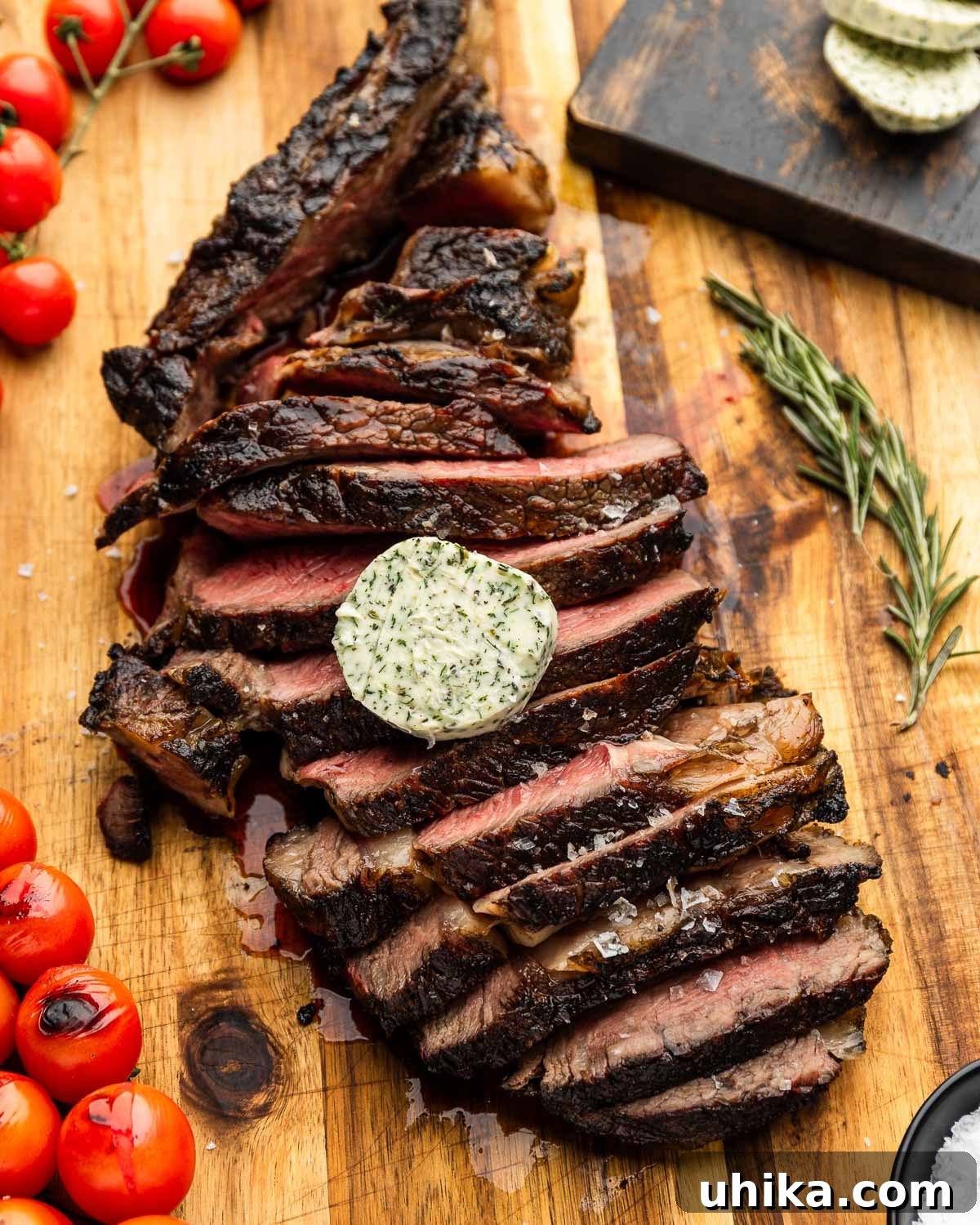

Unlock Steakhouse Quality at Home for Less
It’s no secret that dining out, especially at high-end steakhouses, has become an increasingly expensive luxury. A single Tomahawk steak at a fine restaurant can easily cost upwards of $100, and that’s before appetizers, sides, drinks, and tip. For many of us, enjoying such an exquisite meal regularly isn’t feasible. That’s why I’ve dedicated myself to perfecting a recipe for a grilled Tomahawk steak that delivers all the flavor, tenderness, and impressive presentation of a five-star restaurant, right in your own kitchen or backyard.
This recipe not only offers incredible value but also puts you in complete control of the ingredients and cooking process. The result is an extraordinary steak dinner that will undoubtedly impress your family and friends. The star of the show, beyond the steak itself, is the simple yet incredibly flavorful herbed compound butter. It melts over the hot steak, infusing it with aromatic herbs and richness, taking the experience to another level. If you’re looking for alternative steak toppings, consider a vibrant chimichurri sauce, a luxurious red wine reduction for ribeye, or a creamy Gorgonzola sauce for NY strip steak.
A grilled Tomahawk steak is the perfect centerpiece for special occasions. Imagine serving this culinary masterpiece for Mother’s Day, Father’s Day, birthdays, anniversaries, or intimate gatherings. Pair it with classic steakhouse sides to complete the experience. Some of my favorite accompaniments include crispy steakhouse homefries, rich and creamy creamed spinach, savory cauliflower au gratin, or light and fresh grilled zucchini. These sides complement the robust flavor of the steak without overpowering it, ensuring a truly memorable meal.
Essential Ingredients for Your Perfect Tomahawk Steak
Crafting a phenomenal grilled Tomahawk steak begins with selecting the right ingredients. Below, you’ll find a detailed look at everything you need, along with special notes to ensure your success.
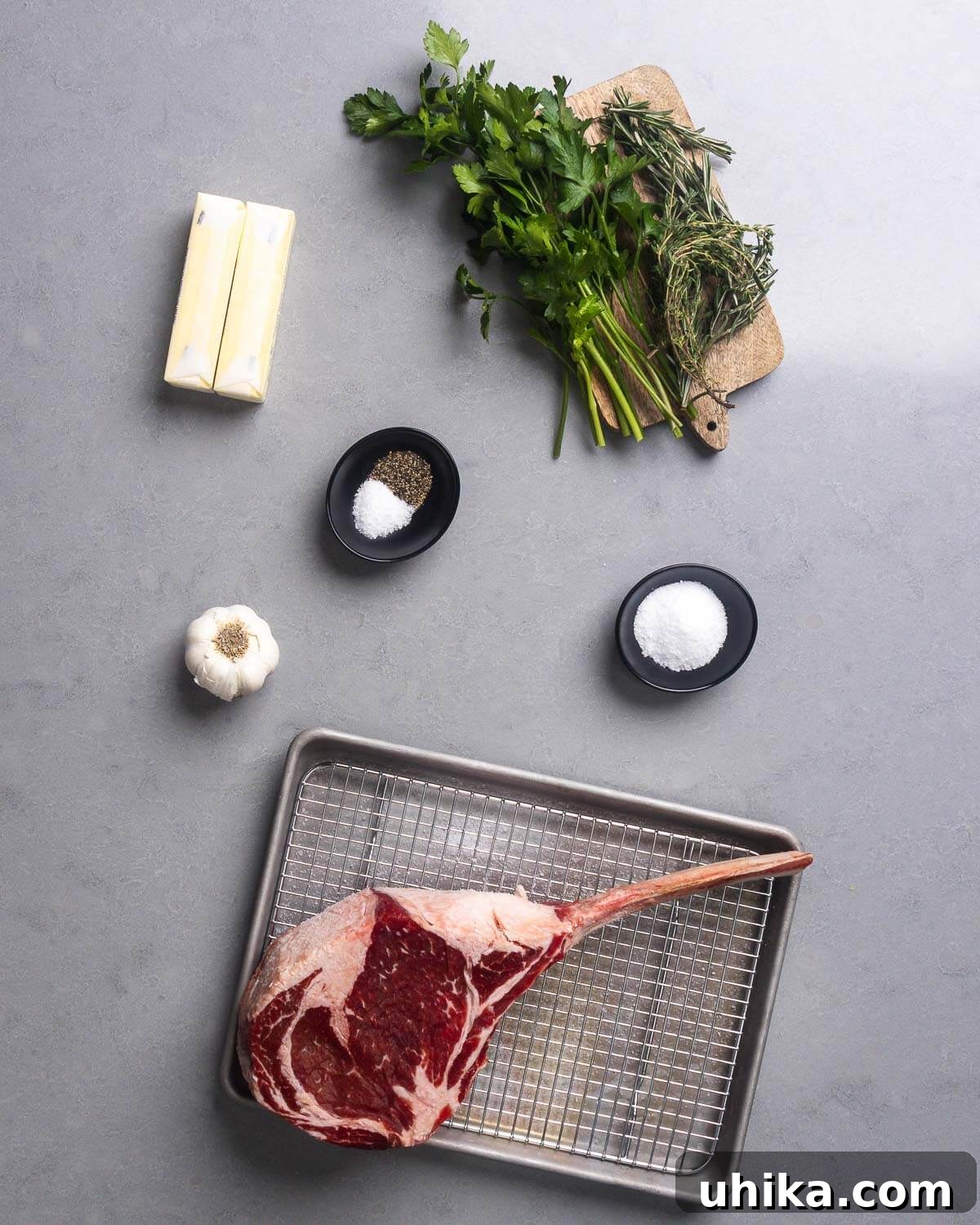
- The Steak: For this recipe, I recommend a 2-3 pound Tomahawk steak. This is essentially a bone-in ribeye, with the long, frenched bone extending dramatically, resembling a tomahawk axe. This bone not only makes for an impressive presentation but also imparts additional flavor and moisture to the meat during cooking. You can certainly adapt this recipe for other thick cuts like a standard bone-in ribeye or a porterhouse. Ribeyes are naturally rich in marbling and often have a generous fat cap, both of which contribute immensely to their incredible flavor and tenderness. While some fat is desirable for taste and moisture, feel free to trim any excessive fat from the sides if you prefer. Always aim for a steak at least 1.5 to 2 inches thick for optimal grilling results.
- Herbs for Compound Butter: The compound butter is a game-changer for this steak. I use a fragrant blend of fresh parsley, rosemary, and thyme. These herbs, combined with minced garlic, a touch of salt, and black pepper, create an aromatic and savory topping that melts beautifully over the hot steak. Using fresh herbs is key here, as their vibrant flavors are far superior to dried varieties.
- Salt – The Crucial Seasoning: Proper salting is paramount for a truly exceptional steak. I rely on Diamond Crystal Kosher salt for its ideal flake size and consistent salinity, which allows for precise seasoning without over-salting. For a 2-3 pound (approximately 1000-1300 gram) Tomahawk steak, I recommend salting at 1-1.25% of the steak’s weight. This translates to roughly 10-16 grams, or about 1 1/4 to 1 1/2 tablespoons, of Diamond Crystal Kosher salt. It’s crucial to note that Diamond Crystal Kosher salt is lighter by volume than table salt. If you’re using table salt, you’ll need to adjust significantly, using only about 1 1/2 to 1 3/4 teaspoons for the same effect to avoid over-salting. Salting by weight offers the most consistent and professional results, ensuring a perfectly seasoned steak every time.
- Butter: Unsalted butter, softened to room temperature, is the base for our flavorful compound butter. Using unsalted butter allows you to control the overall salt content of your dish.
- Garlic & Black Pepper: Freshly grated garlic cloves and freshly ground black pepper are essential for both the compound butter and seasoning the steak. They provide a foundational savory and pungent flavor that complements the beef and herbs beautifully.
For a complete breakdown of all ingredients and precise quantities, please refer to the recipe card below.
Crafting Your Grilled Tomahawk Steak with Herbed Compound Butter
Follow these detailed steps to prepare an unforgettable grilled Tomahawk steak, enhanced by homemade herbed compound butter. Each instruction is designed to guide you through the process, ensuring a perfect result.
- Prepare the Steak for Optimal Flavor (Dry Brine): Begin by patting your Tomahawk steak thoroughly dry with paper towels. This crucial step removes surface moisture, which is essential for achieving a perfect sear. Liberally season both sides of the steak with your pre-measured Diamond Crystal Kosher salt (refer to the ingredient notes for precise salting by weight) and freshly ground black pepper. Place the seasoned steak on a wire rack set over a baking sheet, leaving it uncovered, and refrigerate overnight. This overnight dry brining process allows the salt to penetrate deeply into the meat, tenderizing it and enhancing its flavor from within. If you’re short on time, salting the steak and letting it sit at room temperature for at least 1 hour before grilling will still yield good results, but the overnight method is highly recommended for superior tenderness and flavor.
- Whip Up the Herbed Compound Butter: While your steak is brining (or resting at room temperature), prepare the aromatic compound butter. In a medium bowl, combine the softened unsalted butter with the minced fresh parsley, rosemary, thyme, grated garlic, and a pinch of salt and pepper. Mix all ingredients thoroughly with a spoon or spatula until they are well incorporated and the butter is evenly flavored.
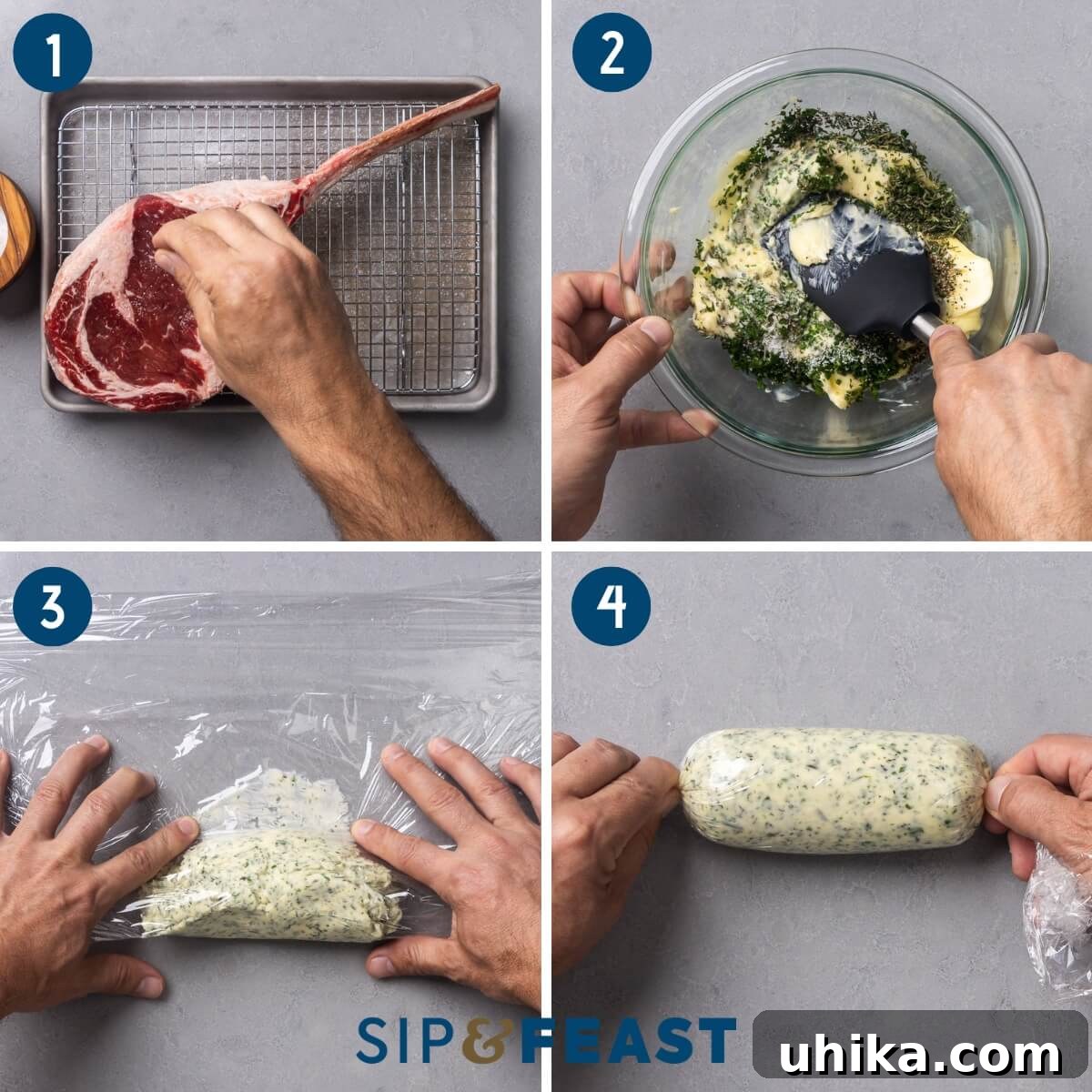
- Form and Chill the Compound Butter: Transfer the herbed butter mixture to the center of a large piece of plastic wrap. Using the plastic wrap, begin to roll the butter into a tight log or cylinder shape. Once rolled, grasp the opposite ends of the plastic wrap and twist them firmly to tighten the butter log, ensuring it is compact and uniform. Place the wrapped compound butter in the refrigerator for at least 30 minutes, or until it has stiffened considerably. This chilling step makes it easier to slice and prevents it from melting too quickly when placed on the hot steak.
- Bring Steak to Room Temperature and Prepare the Grill: About 1 hour before you plan to grill, remove the Tomahawk steak from the refrigerator. Allowing it to come closer to room temperature promotes more even cooking. Meanwhile, prepare your grill for a two-zone cooking method: heat one side of your grill to high heat (direct heat zone) and leave the other side unheated (indirect heat zone). This setup is crucial for achieving both a beautiful sear and a perfectly cooked interior.
- Sear the Tomahawk Steak: Once your grill is hot, carefully oil the grates to prevent sticking. Place the Tomahawk steak directly over the heated side of the grill. Sear the steak for 1 minute per side, flipping frequently. Continue searing, flipping every minute, for a total of 8-10 minutes. This method ensures a gorgeous, even char on the exterior without burning. The goal is to develop a rich, dark crust.
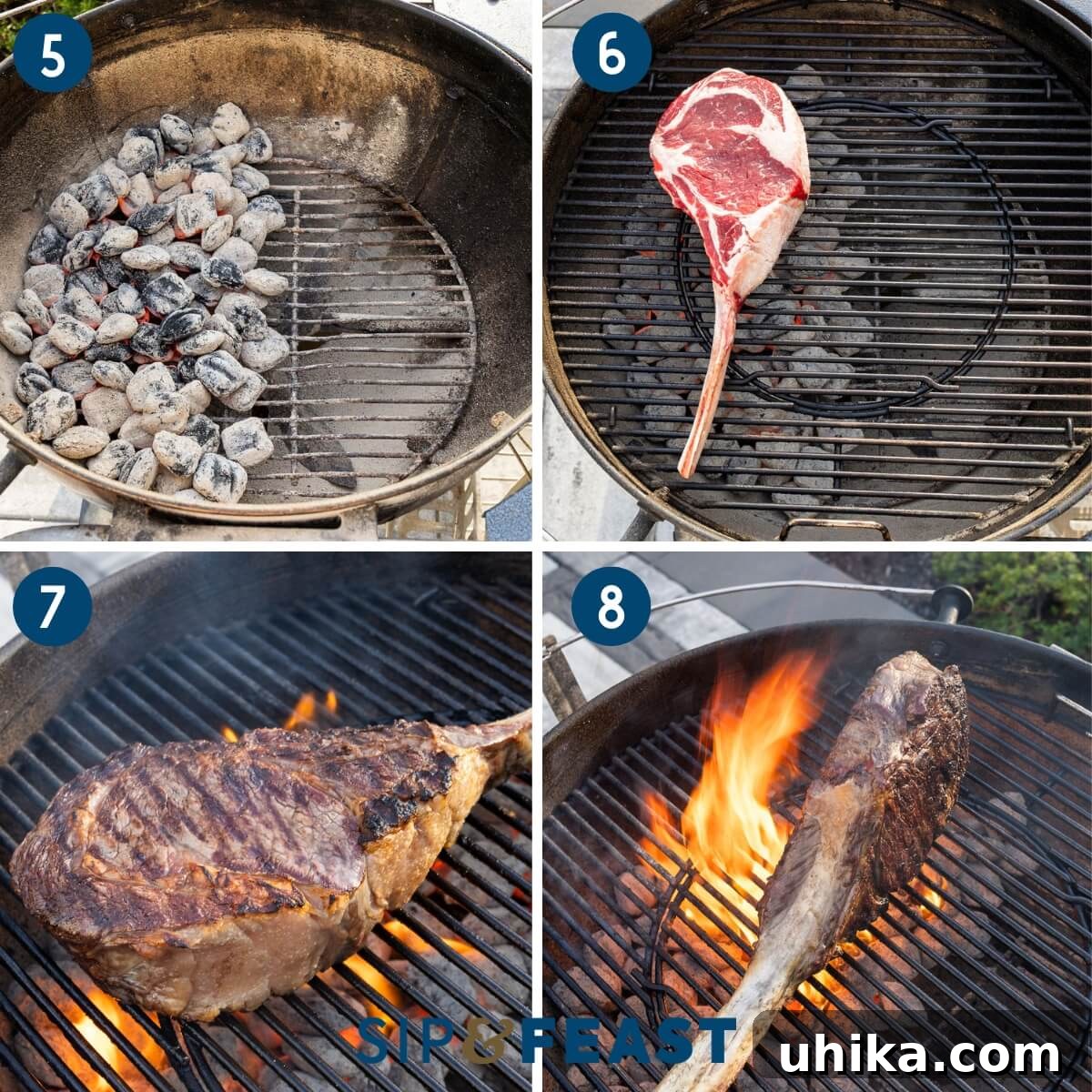
- Sear the Edges (Fat Rendering): Using heatproof gloves or long tongs, carefully hold the Tomahawk steak on its narrow sides, searing the edges where the fat cap is prominent. This step renders the fat, making it crispy and flavorful, and contributes to the overall deliciousness. Be aware that the rendered fat may cause flare-ups; if this happens, simply move the steak to the cool side of the grill for a few seconds until the flames subside, then resume searing the edges. At this point, your steak should have a beautiful char, but the interior will still be significantly undercooked.
- Move to Indirect Heat for Finishing: Transfer the well-charred steak to the unheated, cool side of the grill. If using a gas grill, reduce the heat on the active side to medium (aim for an ambient temperature of 350-400°F). If using a charcoal grill, nearly close the bottom damper to reduce airflow and lower the heat. Insert an oven-safe digital thermometer into the thickest part of the steak, ensuring the probe is directly in the center and not touching the bone.
- Indirect Cooking to Desired Doneness: Close the grill lid, leaving the top vents (if applicable) open for proper airflow. Cook the steak until the internal temperature reaches 115°F for a perfect medium-rare doneness (which will rise to 125-130°F after resting). For medium, aim for 125°F (resting to 135-140°F). While not strictly necessary, you can flip the steak every 3 minutes during this indirect cooking phase for slightly more even heating. Remember that cooking times will vary depending on the thickness of your steak and your grill’s heat, so monitoring with a reliable thermometer is essential.
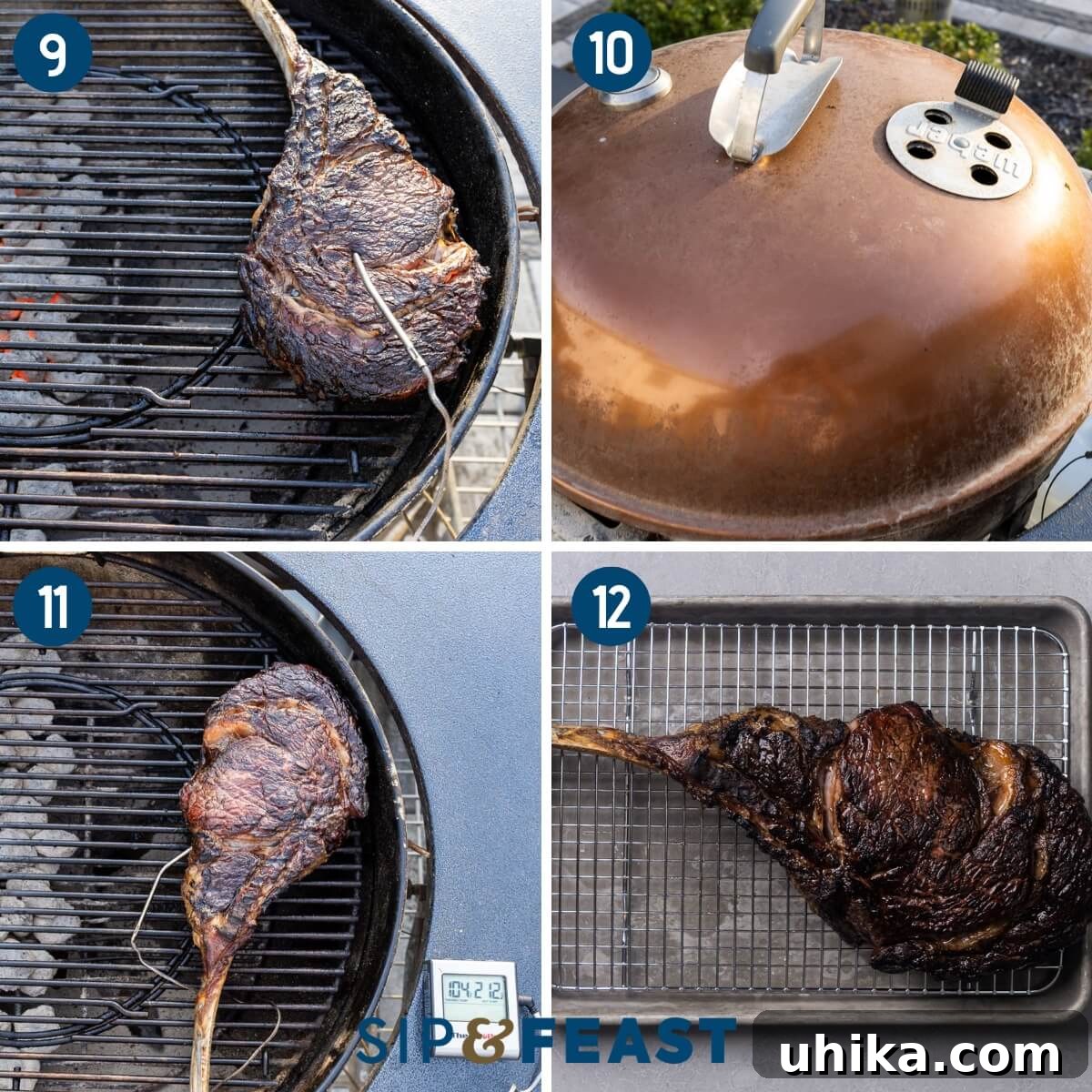
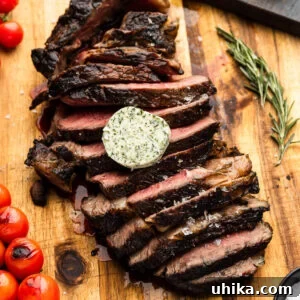
- Rest, Slice, and Serve: Once your steak reaches the desired internal temperature, remove it from the grill and place it on a clean cutting board. It is absolutely crucial to let the steak rest for 7-10 minutes before carving. This resting period allows the juices to redistribute throughout the meat, ensuring a tender, moist, and flavorful final product. Skipping this step will result in juices running out, leaving you with a dry steak. After resting, carefully cut the steak away from the bone. Slice the meat against the grain into 1/4 to 1/2-inch thick pieces. Arrange the sliced steak on a platter, placing the impressive bone alongside. Finish by topping the warm slices with a few generous tablespoons of your room-temperature herbed compound butter. The butter will gently melt, coating the steak in a rich, aromatic glaze. Serve immediately and savor! Any remaining compound butter can be served at the table, stored in the refrigerator for up to 1 week, or frozen for up to 3 months for future use.
Expert Tips for Grilling Your Tomahawk Steak
- The Power of One-Minute Flips: Flipping your Tomahawk steak every minute during the searing phase might seem excessive, but it’s a technique championed by professional chefs for a reason. This frequent flipping ensures that both sides of the steak are exposed to consistent high heat, building a superior crust more rapidly and evenly. This method helps to minimize the grey band that can often form just beneath the crust when searing for longer periods on one side, resulting in a perfectly pink or red interior from edge to edge. It’s a key factor in achieving that coveted “steakhouse quality” doneness.
- Invest in an Oven-Safe Digital Thermometer: Without a doubt, an oven-safe digital thermometer is your most valuable tool for grilling large, thick cuts of meat like a Tomahawk steak. Relying solely on visual cues or touch can lead to overcooked or undercooked results, wasting a precious piece of beef. An oven-safe probe thermometer allows you to continuously monitor the internal temperature without lifting the grill lid, ensuring pinpoint accuracy. This precision guarantees your steak reaches your desired doneness level every single time, eliminating guesswork and stress.
- Charcoal vs. Gas Grills: Choose Your Weapon: Both charcoal and gas grills can produce fantastic results, and your choice often comes down to personal preference and convenience. I’ve personally cooked with charcoal for over three decades and adore the distinct, smoky flavor it imparts to meat. Charcoal grilling, while requiring a bit more management to control heat, offers an unmatched depth of flavor. Gas grills, on the other hand, provide unparalleled ease of use and temperature control, making it simpler to set up a two-zone cooking system and maintain consistent heat. Ultimately, the best grill is the one you are most comfortable and confident using to achieve the direct and indirect heat zones required for this recipe.
Explore More Delicious Steak Recipes
If you’ve enjoyed mastering the Tomahawk, give these other fantastic steak recipes a try to expand your culinary repertoire!
- Steak Tagliata
- Marinated London Broil
- Reverse-Seared Ribeye
If you’ve enjoyed this Grilled Tomahawk Steak with Compound Butter recipe, we’d love to hear from you! Please consider sharing your experience.
Watch us on YouTube for step-by-step video guides, follow along on our Facebook Page for daily inspiration, and consider becoming a Patreon member to receive exclusive access to full-meal videos and premium content.
Grilled Tomahawk Steak with Compound Butter Recipe
Pin
Equipment
-
Wireless Meat Thermometer
Ingredients
For the Compound Butter
- 1 cup unsalted butter softened
- 1 tablespoon minced fresh rosemary leaves
- 1 tablespoon minced fresh thyme leaves
- 2 tablespoons minced flat-leaf Italian parsley
- 2 cloves grated garlic
- 1 teaspoon Diamond Crystal Kosher salt
- 1/2 teaspoon black pepper
For the Tomahawk Steak
- 1 large tomahawk steak 2-3 pound steak
- 1 1/2 tablespoons Diamond Crystal Kosher salt (see notes on salting by weight below)
- black pepper to taste
Instructions
For the Compound Butter
-
Combine softened butter, minced rosemary, thyme, parsley, grated garlic, 1 teaspoon of Diamond Crystal Kosher salt, and 1/2 teaspoon black pepper in a bowl. Mix until thoroughly combined.
-
Place the herbed butter in the center of a large piece of plastic wrap. Roll it into a tight log or cylinder, then twist the ends of the plastic wrap to further tighten the log.
-
Refrigerate for at least 30 minutes, or until the butter firms up. Remove from the fridge about 30 minutes before serving.
For the Tomahawk Steak
-
Pat the 2-3 pound Tomahawk steak dry. Season generously with 1 1/2 tablespoons of Diamond Crystal Kosher salt and black pepper on both sides. Place on a wire rack on a baking sheet, uncovered, and refrigerate overnight (dry brine). If in a rush, salt the steak and let it sit at room temperature for 1 hour before grilling.
-
Remove the steak from the fridge 1 hour prior to grilling. Prepare your grill for two-zone cooking: heat one side to high (direct heat) and leave the other side unheated (indirect heat). Oil the grates.
-
Sear the steak on the direct high-heat side for 1 minute per side, flipping frequently, for a total of 8-10 minutes, or until a deep, even char forms. Use heatproof gloves or tongs to sear the fatty edges of the steak until rendered and crispy. Move to the cool side momentarily if flare-ups occur.
-
Transfer the seared steak to the indirect side of the grill. Reduce gas grill heat to medium (350-400°F) or almost close the bottom damper on a charcoal grill. Insert an oven-safe digital thermometer into the thickest part of the steak. Close the lid (leaving top vents open) and cook until the steak reaches 115°F for medium-rare (final temp 125-130°F). Flip every 3 minutes if desired.
-
Remove the steak from the grill and let it rest for 7-10 minutes on a cutting board. Cut the steak off the bone, then slice into 1/4-1/2-inch thick pieces. Arrange on a platter with the bone and top with a few tablespoons of room-temperature compound butter. Serve immediately.
Notes
- Grill Type Preference: While I prefer the smoky flavor imparted by a charcoal grill for outdoor cooking, a gas grill offers fantastic convenience. Its precise heat control makes setting up direct and indirect zones incredibly easy, simplifying the searing and slow-cooking process. Simply sear at high heat, then reduce the flame to medium and move the steak to the cool zone, covering it while monitoring the internal temperature with a probe for the remainder of the indirect cooking time.
- Steak Size and Variations: This recipe is versatile and works beautifully with any thick cut of steak. If a Tomahawk isn’t available, a thick-cut bone-in ribeye, a majestic porterhouse, or even a robust bone-in New York strip steak would be excellent substitutes, yielding similarly delicious results when following the same grilling methodology.
- Precise Salting by Weight: Achieving the perfect seasoning requires attention to detail. For best results, salt your Tomahawk at 1-1.25% of its total weight. For example, if your steak weighs 1000 grams (approximately 2.2 pounds), you would use 10-12.5 grams of salt. Using Diamond Crystal Kosher salt, this equates to roughly 1 1/4 to 1 1/2 tablespoons. Remember that Diamond Crystal Kosher salt has a larger flake and less density than standard table salt. If using table salt, which is much denser, you would only need about 1 1/2 to 1 3/4 teaspoons for the same salinity level to prevent over-salting.
- Internal Temperature Guidelines: Knowing when to pull your steak off the grill is crucial for achieving your preferred doneness, as the internal temperature will continue to rise during resting. For a luscious medium-rare, remove the steak at 115°F, expecting a final resting temperature of 125-130°F. For a perfectly cooked medium steak, pull it at 125°F, which will rest up to 135-140°F. Always use a reliable digital meat thermometer to ensure accuracy.
- Handling Leftovers: Grilled steak is best enjoyed immediately after resting to appreciate its optimal texture and doneness. Reheating steak, especially large pieces, often results in it becoming more well-done. If you do have leftovers, the best way to gently reheat individual slices without overcooking them is to pan-fry them briefly in a little butter over medium heat until just warmed through. The compound butter, however, stores exceptionally well; it can be kept in an airtight container in the refrigerator for up to a week or frozen for up to 3 months, ready to elevate your next meal.
Nutrition
Nutrition information is automatically calculated and should be used as an approximation.