
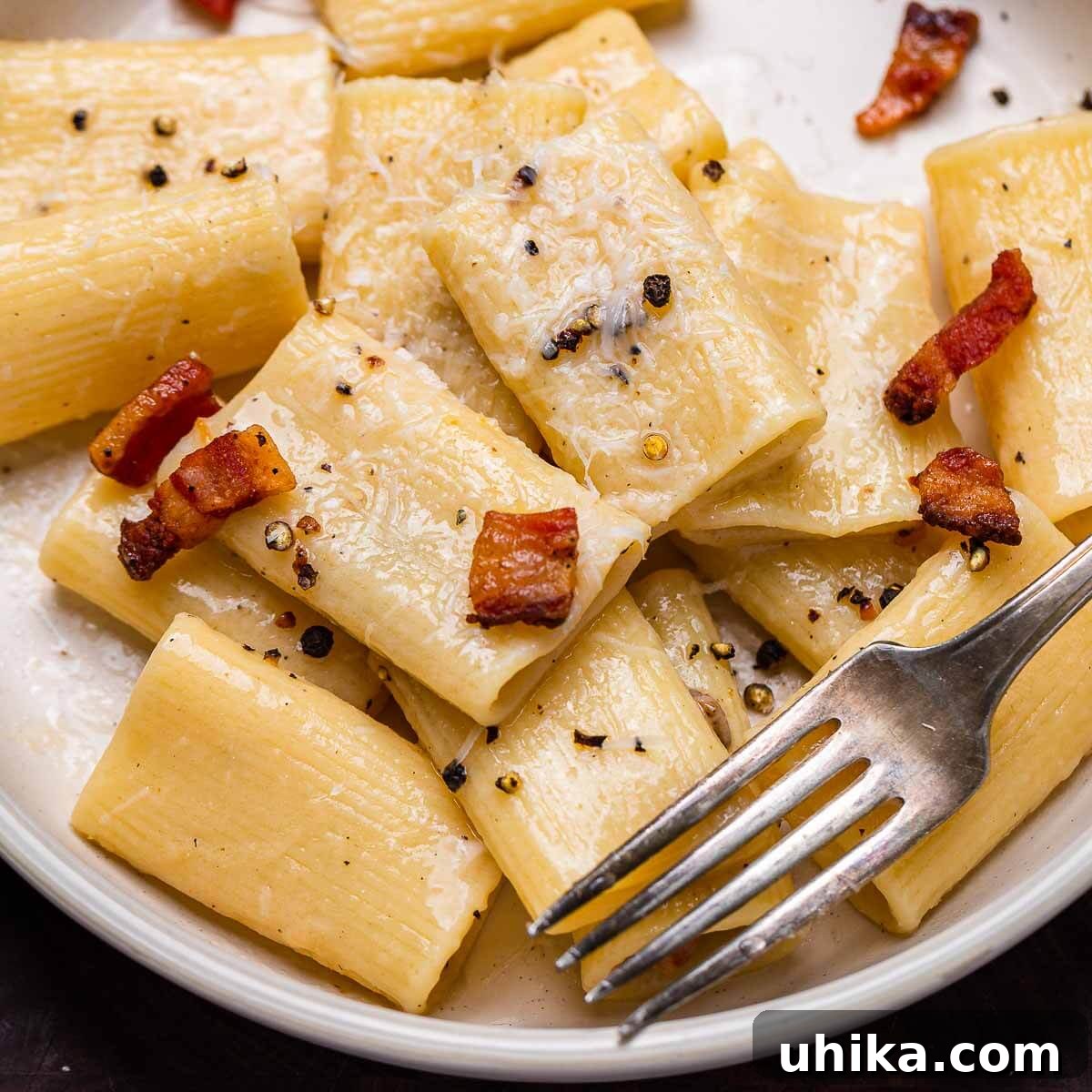
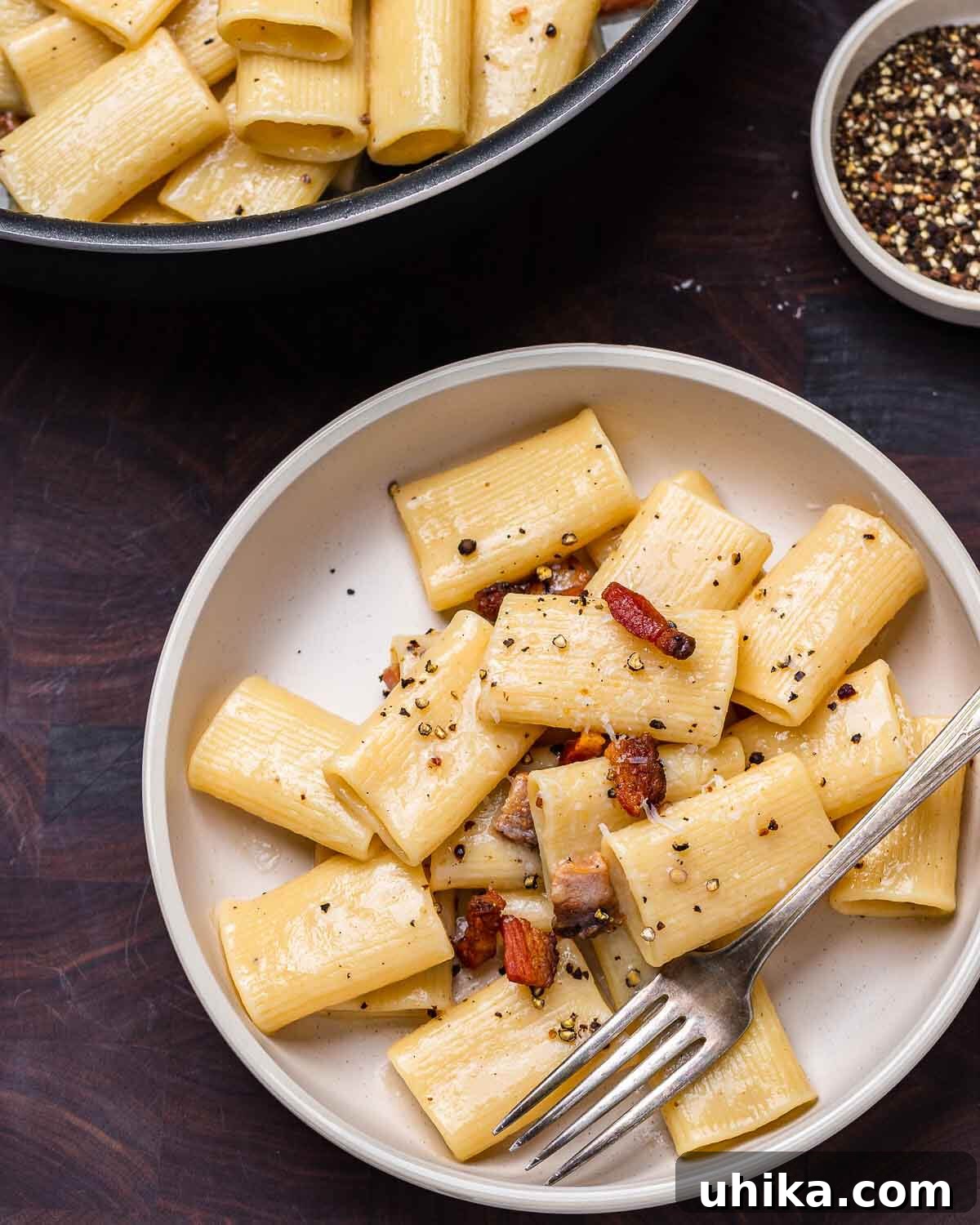
Embark on a culinary journey to the heart of Rome with Rigatoni alla Gricia, a foundational pasta dish that celebrates simplicity and robust flavors. Often referred to as “Amatriciana’s white cousin,” Gricia is a testament to the power of a few high-quality ingredients harmoniously combined. This authentic Roman pasta is crafted with crispy guanciale, freshly cracked black pepper, sharp Pecorino Romano cheese, and the magic of starchy pasta water, creating a rich and velvety sauce that clings perfectly to al dente rigatoni.
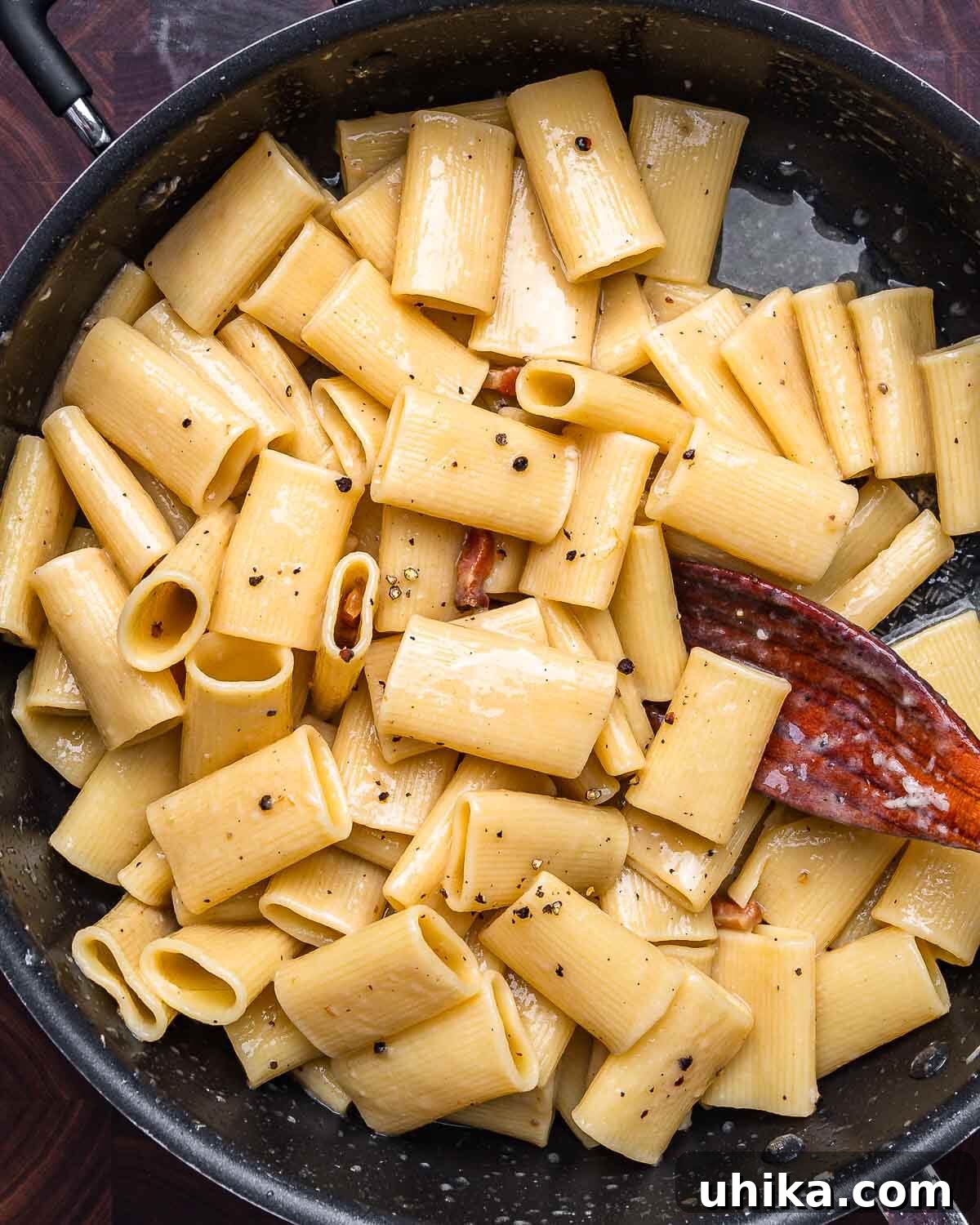
The first time you prepare Rigatoni alla Gricia, you’ll likely be astonished by its straightforward preparation and the incredible depth of flavor it achieves. With a mere four core ingredients (five if you count the essential pasta water), it eloquently proves that culinary excellence often resides in simplicity. Each component of this traditional Roman dish shines through, delivering distinct and memorable tastes in every mouthful.
The savory saltiness of Pecorino Romano, the rich, rendered fat of guanciale, the pungent kick of coarse black pepper, and the perfect bite of al dente pasta intertwine to create an utterly satisfying experience. Much like its famous Roman counterparts—Spaghetti Carbonara, Bucatini Cacio e Pepe, and Bucatini all’Amatriciana—Rigatoni alla Gricia is best savored immediately after cooking. Ensure your guests are ready at the table as soon as it’s tossed to experience it at its peak perfection.
The Heritage of Gricia: Rome’s Original Pasta
Rigatoni alla Gricia holds a significant place in Roman culinary history, often considered the precursor to Amatriciana. Before tomatoes became a staple in Italian cuisine, Gricia was the hearty pasta dish enjoyed by shepherds and workers in the Lazio region, particularly around the town of Amatrice (from which Amatriciana gets its name). The dish’s name itself is believed to originate from “Grici,” a term for bread sellers or, more likely, from Grisciano, a small village near Amatrice. This simple yet robust meal provided the sustenance needed for demanding days, relying on readily available, shelf-stable ingredients like cured pork, aged cheese, and dried pasta. Its enduring popularity speaks volumes about its timeless appeal and comforting character.
Mastering the Ingredients: The Soul of Rigatoni alla Gricia
The beauty of Rigatoni alla Gricia lies in its limited ingredient list, which means the quality of each component is paramount. There’s no room for shortcuts or inferior substitutes if you truly want to capture the authentic Roman taste.
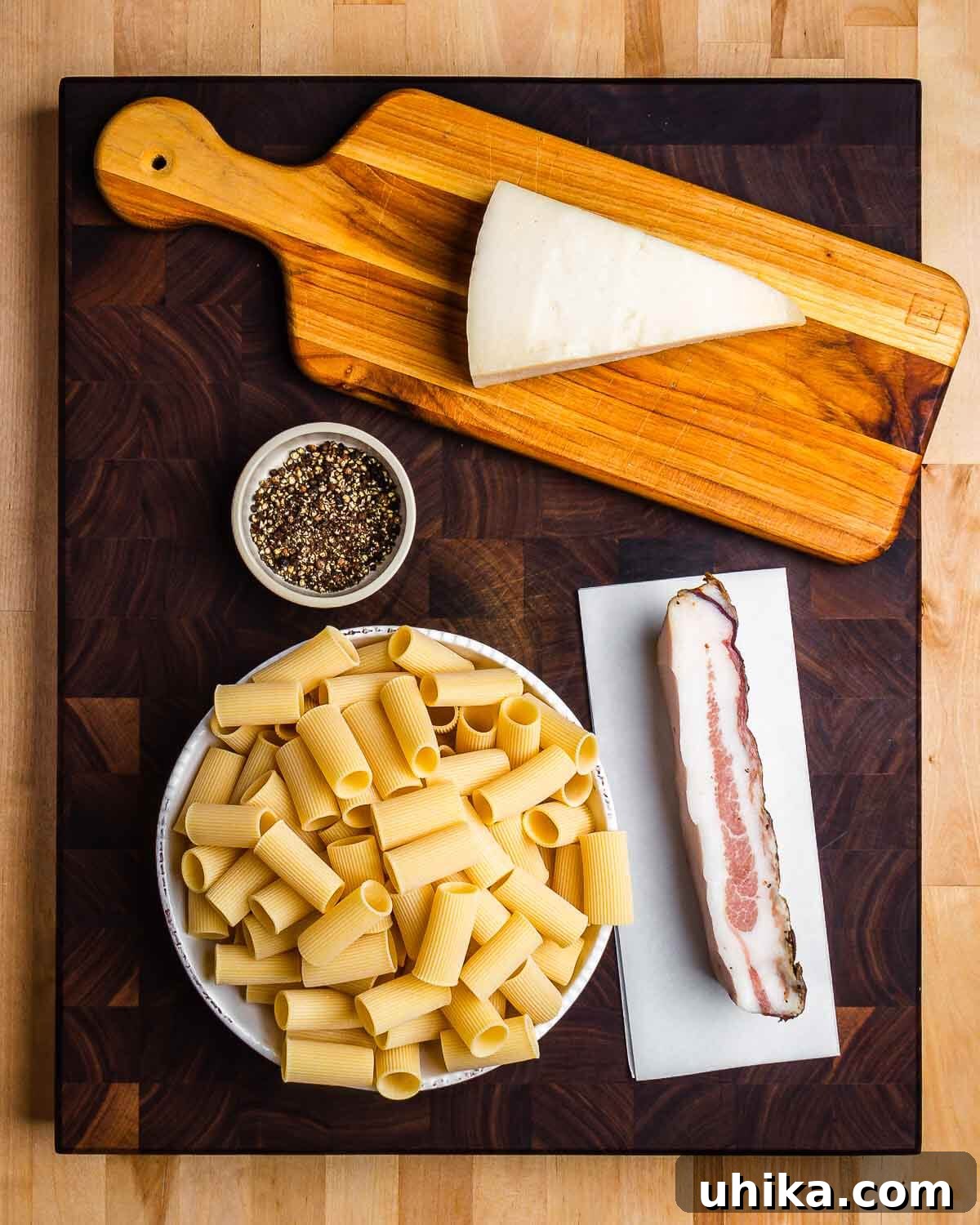
- Guanciale: This cured pork jowl is the undisputed star of Gricia. Unlike pancetta or bacon, guanciale boasts a higher fat content and a distinct, rich, and slightly nutty flavor profile that renders into an exquisite base for the sauce. Its delicate texture and unique curing process are irreplaceable for an authentic taste. When rendered slowly, it yields both incredibly flavorful crispy bits and a luxurious fat that forms the foundation of the sauce. If guanciale is absolutely unavailable, a high-quality, unsmoked pancetta can be used as a last resort, but it won’t offer the same depth.
- Pecorino Romano: Hailing from Lazio, this hard, salty sheep’s milk cheese is non-negotiable. Its sharp, tangy, and robust flavor is crucial for balancing the richness of the guanciale. Always buy a block and grate it fresh for the best texture and flavor, ensuring it melts smoothly into the sauce without clumping.
- Black Pepper: Freshly ground, coarse black pepper is vital. Its vibrant, pungent notes cut through the richness of the guanciale and Pecorino, adding a layer of complexity and warmth. Avoid pre-ground pepper, which often lacks the intense aroma and flavor.
- Rigatoni: The choice of pasta is not incidental. Rigatoni, with its large, ridged, tubular shape, is perfect for trapping and holding the rich, emulsified sauce. The ridges provide an ideal surface for the cheese and guanciale fat to cling to, ensuring every bite is bursting with flavor. Other sturdy pasta shapes like bucatini or mezze maniche can also work, but rigatoni remains the classic choice for a reason.
- Pasta Water: The unsung hero! This starchy liquid, reserved from cooking the pasta, is essential for creating the creamy, emulsified sauce. The starch released from the pasta helps to bind the guanciale fat and Pecorino Romano into a smooth, luscious coating. Using less water than usual for cooking the pasta intensifies its starch content, making it even more effective.
Crafting Authentic Rigatoni alla Gricia: Step-by-Step Guide
Follow these detailed steps to create a perfect Rigatoni alla Gricia at home. Each step is designed to ensure maximum flavor and optimal sauce consistency.
- Begin by preparing your guanciale. Remove any tough outer rind, then slice the guanciale into small, uniform lardons (approximately 1/4 inch by 1/4 inch strips). Uniformity ensures even rendering.
- In a large pot, bring 8 cups of water to a rolling boil. Add 1 1/2 teaspoons of kosher salt. This reduced amount of water and salt is deliberate: less water concentrates the pasta’s starch, creating super-starchy pasta water vital for the sauce, and less salt is needed due to the inherent saltiness of guanciale and Pecorino.
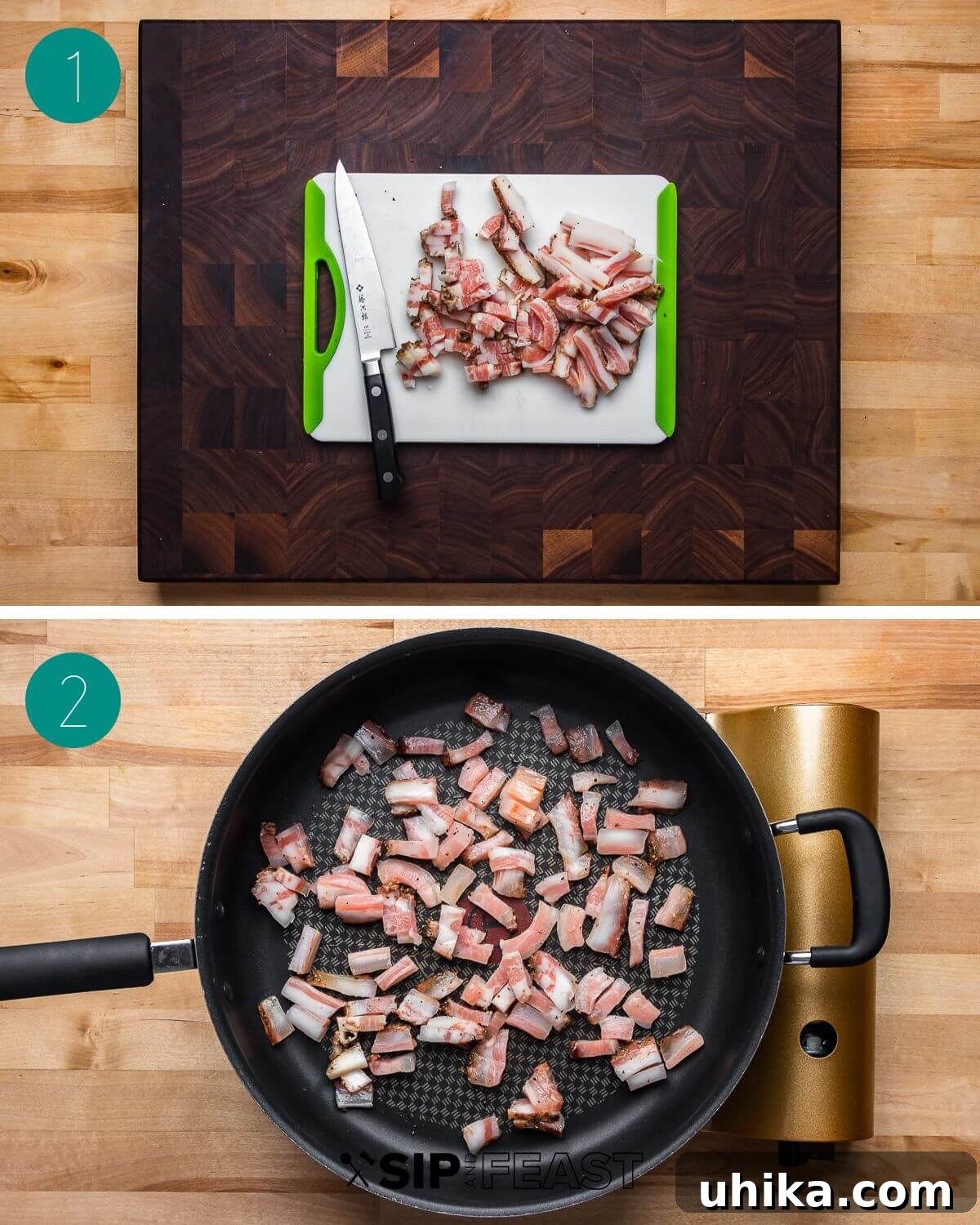
- While the water heats, place a large, heavy-bottomed pan over medium heat. Add the guanciale lardons and slowly render the fat, stirring occasionally. This process should take about 10-12 minutes. The goal is to achieve deeply golden and crispy guanciale while extracting most of its flavorful fat. Do not rush this step; slow rendering yields the best flavor.
- Once the guanciale is wonderfully crisp and much of its fat has rendered, use a slotted spoon to remove half of the crispy guanciale pieces from the pan. Transfer them to a paper towel-lined plate to drain excess fat, and set them aside. These will be used for garnish, adding a delightful textural contrast when serving.
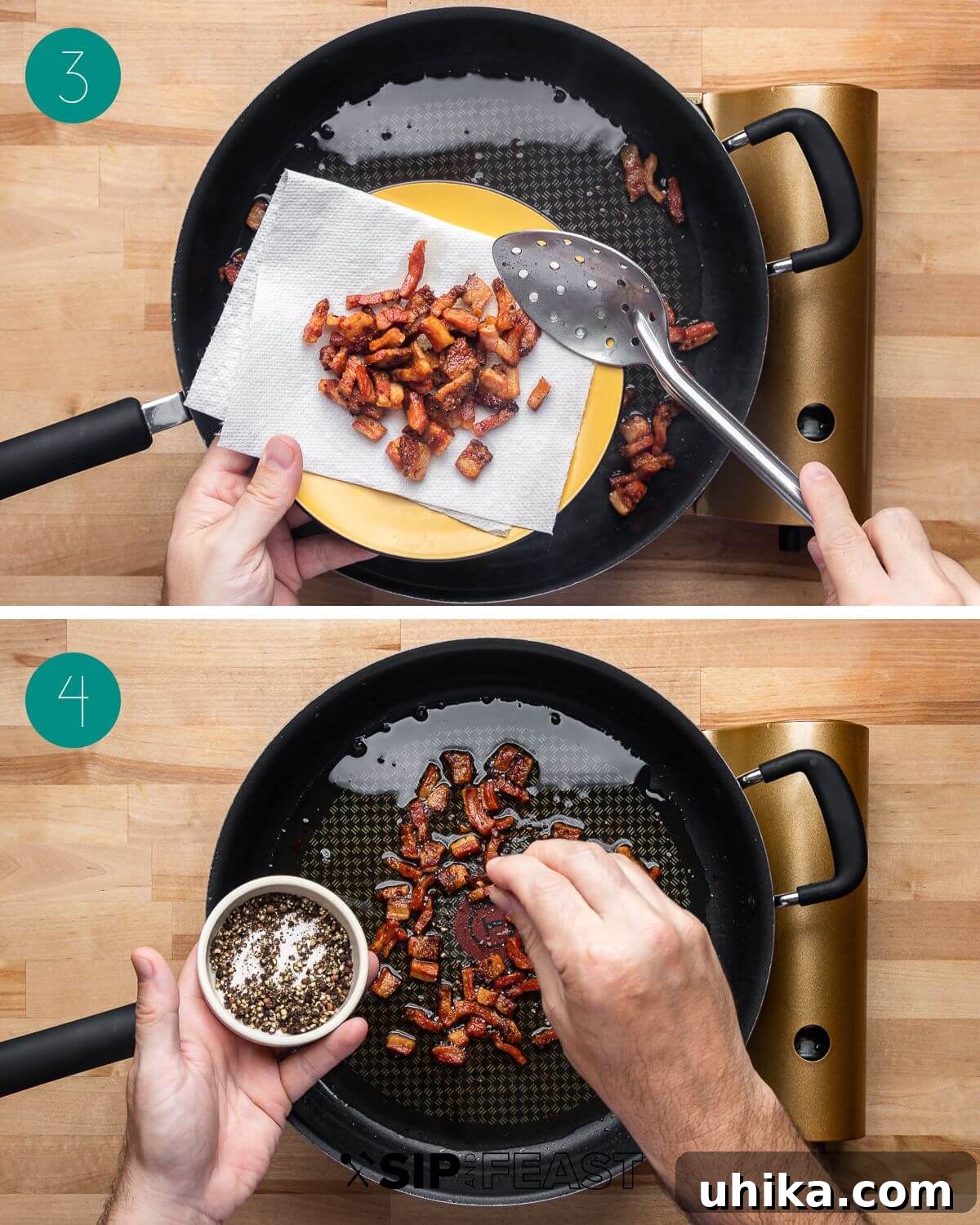
- Add the rigatoni to the boiling salted water. Cook until it is about 3 minutes short of al dente according to package directions. Because you are using less water, you will need to stir the pasta more frequently to prevent it from sticking to the bottom of the pot. At this stage, add about 1/2 teaspoon of very coarse black pepper to the pan with the rendered guanciale fat. The heat will toast the pepper, intensifying its aroma and flavor.
- Using tongs or a spider, transfer the partially cooked rigatoni directly from the pot into the pan with the guanciale fat and pepper. Add 1 cup of the reserved starchy pasta water to the pan. Continue cooking the pasta in the pan, stirring constantly, until it reaches a perfect al dente texture. The pasta will finish cooking in the flavorful sauce, absorbing its essence.
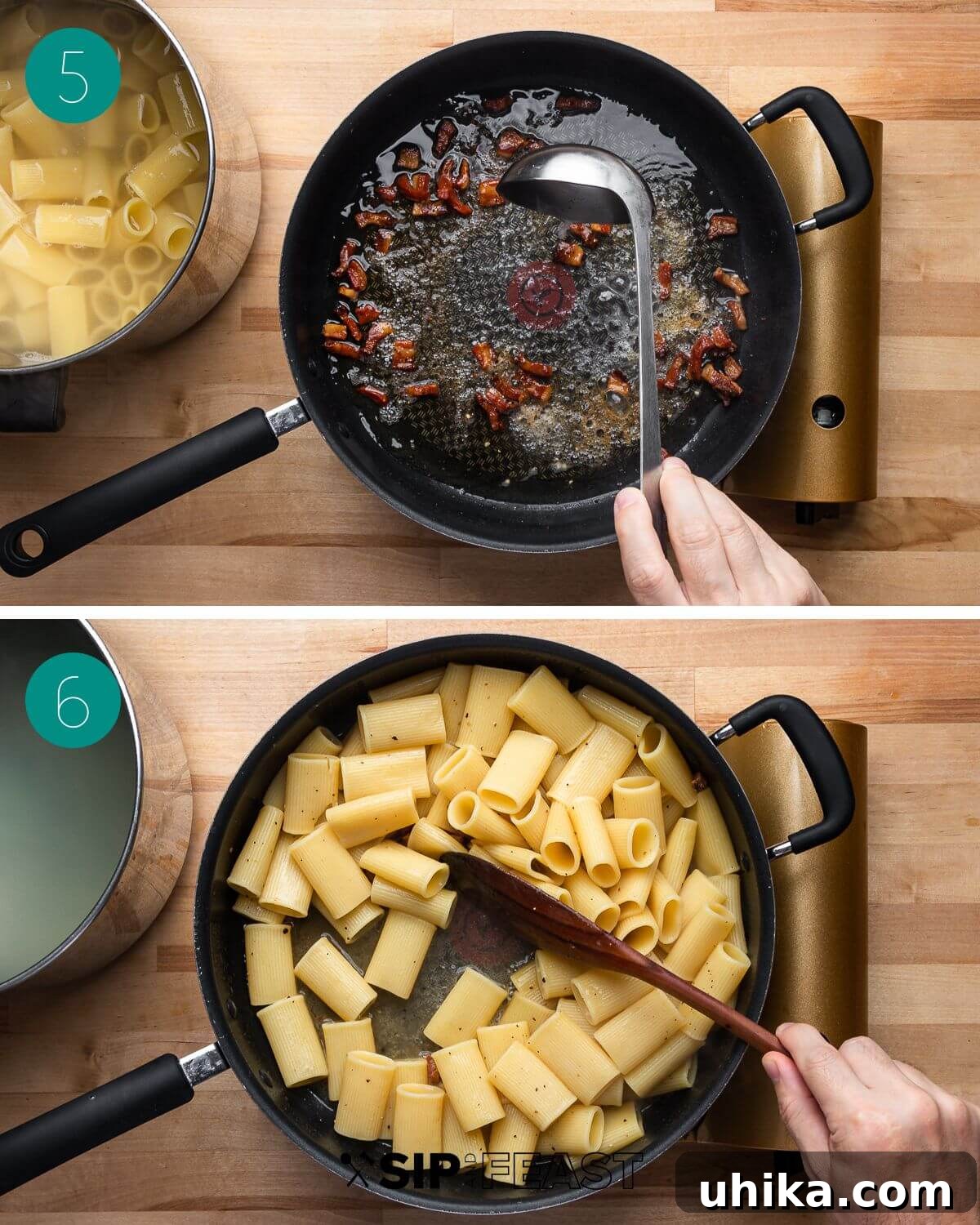
- As the pasta cooks in the pan, it will continue to absorb the liquid. Add more pasta water, a splash at a time, as needed to keep the sauce moist and ensure the pasta cooks evenly. The goal is a creamy, not watery, consistency.
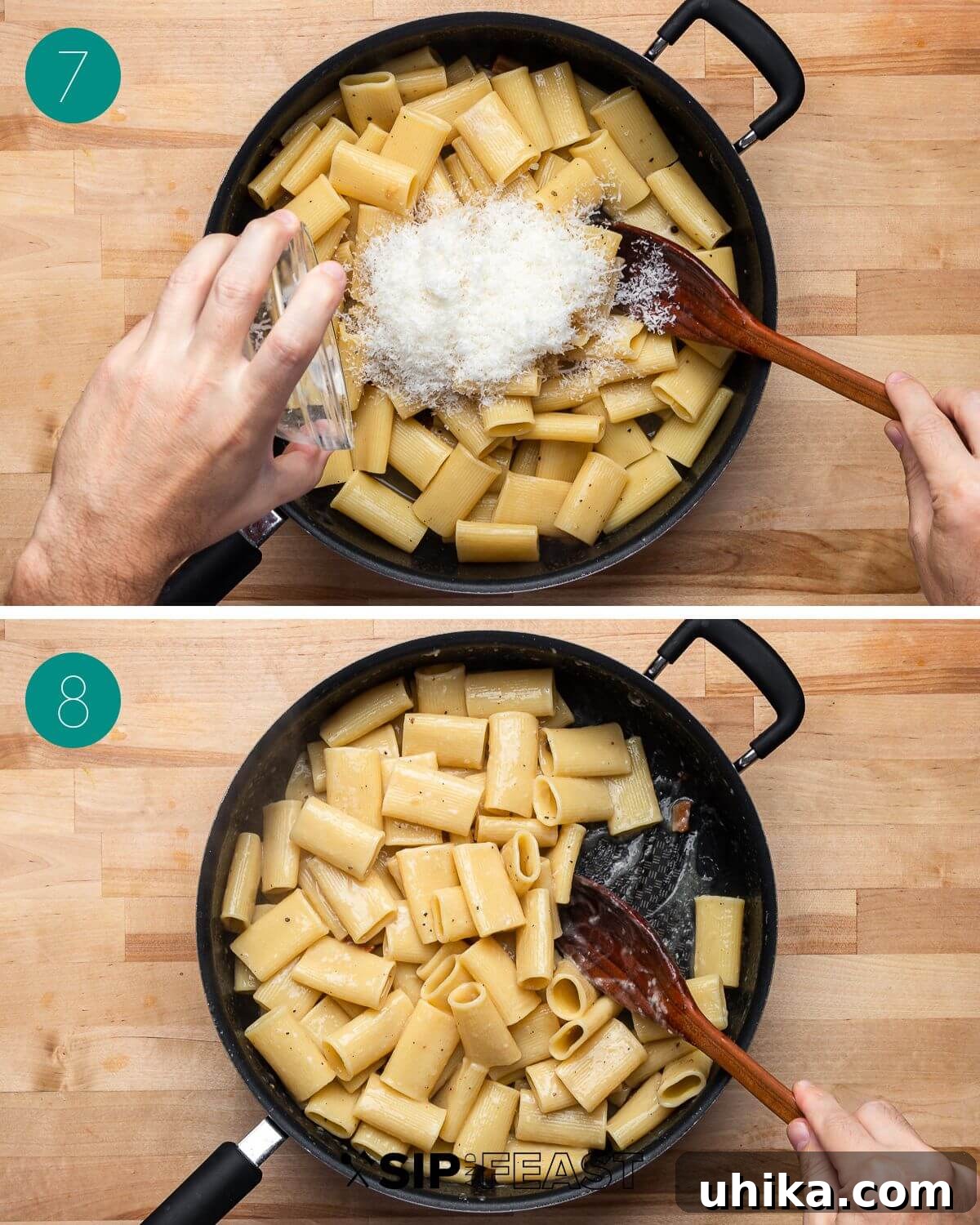
- Once the pasta is al dente, remove the pan from the heat. Immediately add 3/4 cup of grated Pecorino Romano cheese to the pasta. Vigorously mix and/or toss the pasta to emulsify the sauce. The hot pasta, guanciale fat, and Pecorino, combined with the starchy pasta water, will transform into a rich, creamy, and cohesive sauce. If the sauce appears too thick, add another tablespoon or two of pasta water to loosen it to your desired consistency.
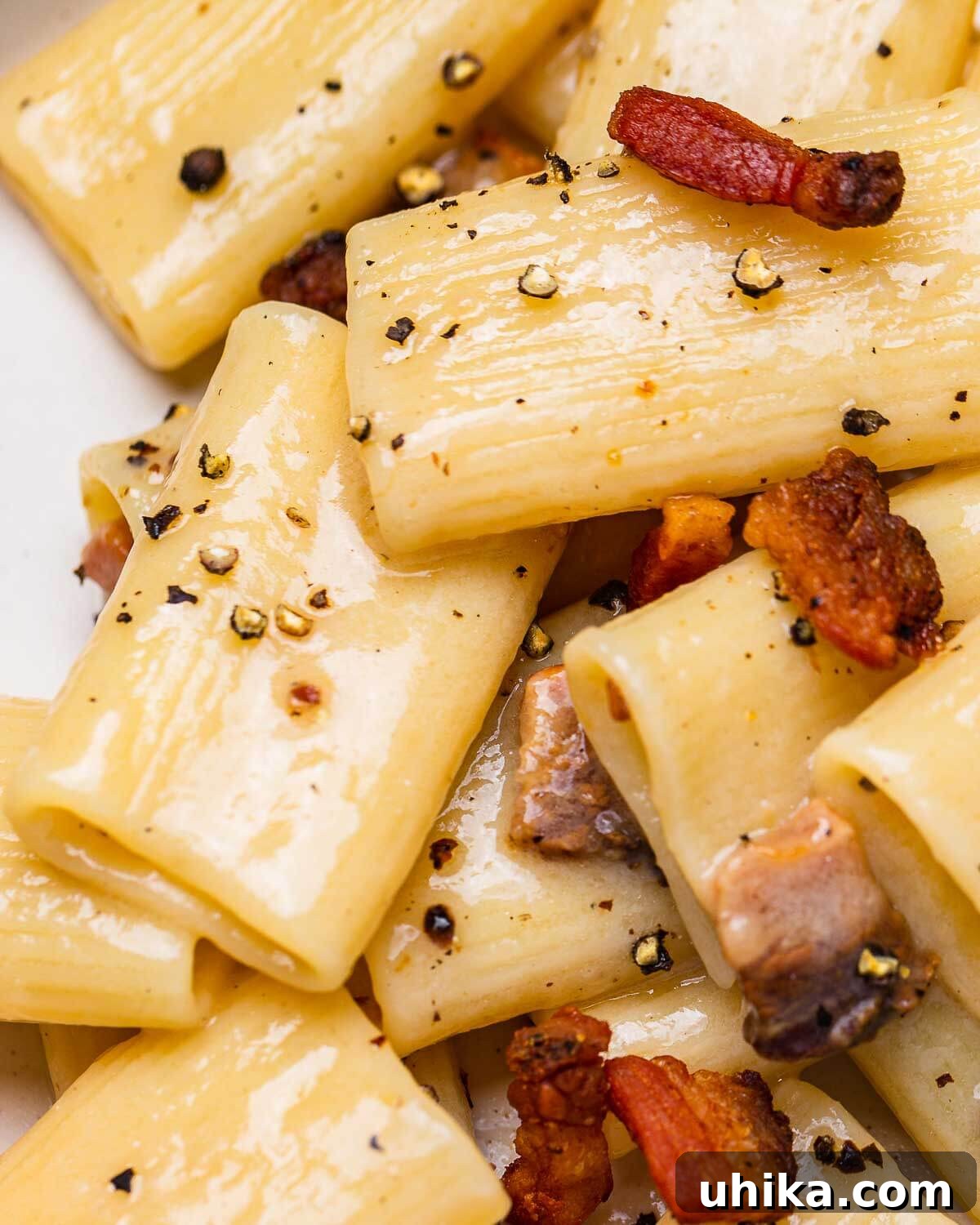
- Taste the pasta and adjust the seasoning. Given the saltiness of guanciale and Pecorino, you will likely not need additional salt, but a generous grinding of fresh black pepper is highly recommended to finish the dish. Serve immediately in warm bowls, topped with a final coarse grind of black pepper, more grated Pecorino Romano, and a sprinkle of the reserved crispy guanciale. Enjoy this authentic taste of Rome!
Expert Tips for a Perfect Gricia
- Optimize the Pasta Water: The starchiness of your pasta water is paramount for a luscious, emulsified sauce. To achieve ideal starch levels, follow the recipe’s recommendation of using only 8 cups of water (or even slightly less) for cooking 1 pound of pasta. This concentration of starch is crucial for binding the guanciale fat and Pecorino into a cohesive sauce. Additionally, reduce the salt in the pasta water to 1 1/2 teaspoons of kosher salt, as both guanciale and Pecorino Romano contribute significant saltiness to the final dish.
- The Guanciale Factor: For an authentically flavored pasta alla Gricia, guanciale is the only true choice. Derived from pork jowls, it offers a distinctive salty, slightly “funky” flavor and a uniquely rich fat that is characteristic of traditional Roman pasta dishes. While guanciale can sometimes be challenging to source outside of Italian specialty stores, it’s worth the effort. If absolutely necessary, high-quality, unsmoked pancetta can serve as a substitute, but be aware that it will impart a slightly different flavor profile.
- Serve Immediately: Gricia, like many Roman pastas, is best enjoyed the moment it’s finished cooking. The sauce is designed to be creamy and perfectly cling to the pasta when hot. As it cools, the cheese and fat can stiffen, losing some of its desirable texture. Have your serving bowls ready and your diners at the table!
- Garnish for Perfection: Don’t skip reserving half of the crispy guanciale. Sprinkling these savory, crunchy bits on top of each serving adds a fantastic textural contrast and an extra burst of flavor that elevates the dish. A final flourish of coarse ground black pepper and additional grated Pecorino Romano further enhances the experience.
Explore More Easy Pasta Recipes
If you’re looking to expand your pasta repertoire with more delightful and easy-to-make dishes, consider these fantastic options:
- Fettuccine Alfredo: A classic, creamy pasta dish perfect for a quick and satisfying meal.
- Pasta alla Norcina: A flavorful pasta from Umbria featuring sausage and a rich cream sauce.
- Linguine al Limone: A bright and zesty lemon pasta, ideal for a light and refreshing experience.
If you’ve enjoyed this Rigatoni alla Gricia Recipe, we’d love for you to give it a 5-star rating!
Connect with us and discover more culinary inspiration: Watch us on YouTube, follow along on our Facebook Page, and explore exclusive content by becoming a Patreon member.
Rigatoni Alla Gricia
Authored by: James Delmage
Average Rating: 4.84 out of 5 stars from 6 votes
Prep: 5 mins | Cook: 25 mins | Total: 30 mins
Servings: 4
Pin Recipe
Rigatoni alla Gricia is a classic Roman pasta made with simple yet high-quality ingredients: guanciale, Pecorino Romano cheese, coarsely ground black pepper, pasta, and the essential starchy pasta water.
Ingredients
Instructions
- Bring 8 cups of water to a boil in a large pot with 1 1/2 teaspoons of kosher salt.
- Remove the outer hard edge of the guanciale, then slice it into lardons (1/4 inch by 1/4 inch strips).
- Heat a large pan to medium and sauté the guanciale until most of the fat has rendered and it is crispy (about 10-12 minutes). Remove half of the crispy guanciale pieces to a plate and set aside for garnish.
- Meanwhile, cook the rigatoni in the boiling water until it is about 3 minutes short of al dente. It will still be quite firm. Stir frequently to prevent sticking due to the lower water volume.
- Add a generous amount of coarsely ground black pepper to the pan with the remaining guanciale and rendered fat. Transfer the partially cooked pasta to the pan along with 1 cup of pasta water. Continue cooking until the pasta reaches al dente, adding more pasta water as needed (it will absorb liquid).
- Once the pasta is al dente, remove the pan from the heat. Add the 3/4 cup of grated Pecorino Romano. Mix vigorously and/or toss the pasta to emulsify the sauce. If needed, add a touch more pasta water, one tablespoon at a time, to achieve the perfect creamy consistency.
- Taste test and adjust salt and pepper levels. You’ll likely find no additional salt is needed due to the guanciale and Pecorino, but a good coarse grinding of black pepper is always recommended.
- Serve immediately in bowls with more grated Pecorino and top each plate with some of the reserved crispy guanciale. Enjoy your authentic Rigatoni alla Gricia!
Notes
- The reduced amount of salt and water is crucial for creating extra starchy pasta water, which is key for emulsifying the sauce. Remember to stir the pasta frequently to prevent it from sticking to the bottom of the pot.
- While guanciale is highly recommended for authentic flavor, high-quality unsmoked pancetta can be substituted with excellent results if guanciale is unavailable.
- Leftovers can be stored for up to 3 days and reheated in the microwave, though Rigatoni alla Gricia is truly best when eaten fresh immediately after preparation.
Nutrition
Calories: 766kcal | Carbohydrates: 85.3g | Protein: 41g | Fat: 29.8g | Saturated Fat: 10.5g | Cholesterol: 76mg | Sodium: 1330mg | Potassium: 320mg | Fiber: 4g | Sugar: 4g | Calcium: 174mg | Iron: 4mg
Nutrition information is automatically calculated and should be used as an approximation.
Did you enjoy this recipe? Leave a comment below!
Check us out on Instagram at @sipandfeast or tag #sipandfeast!