
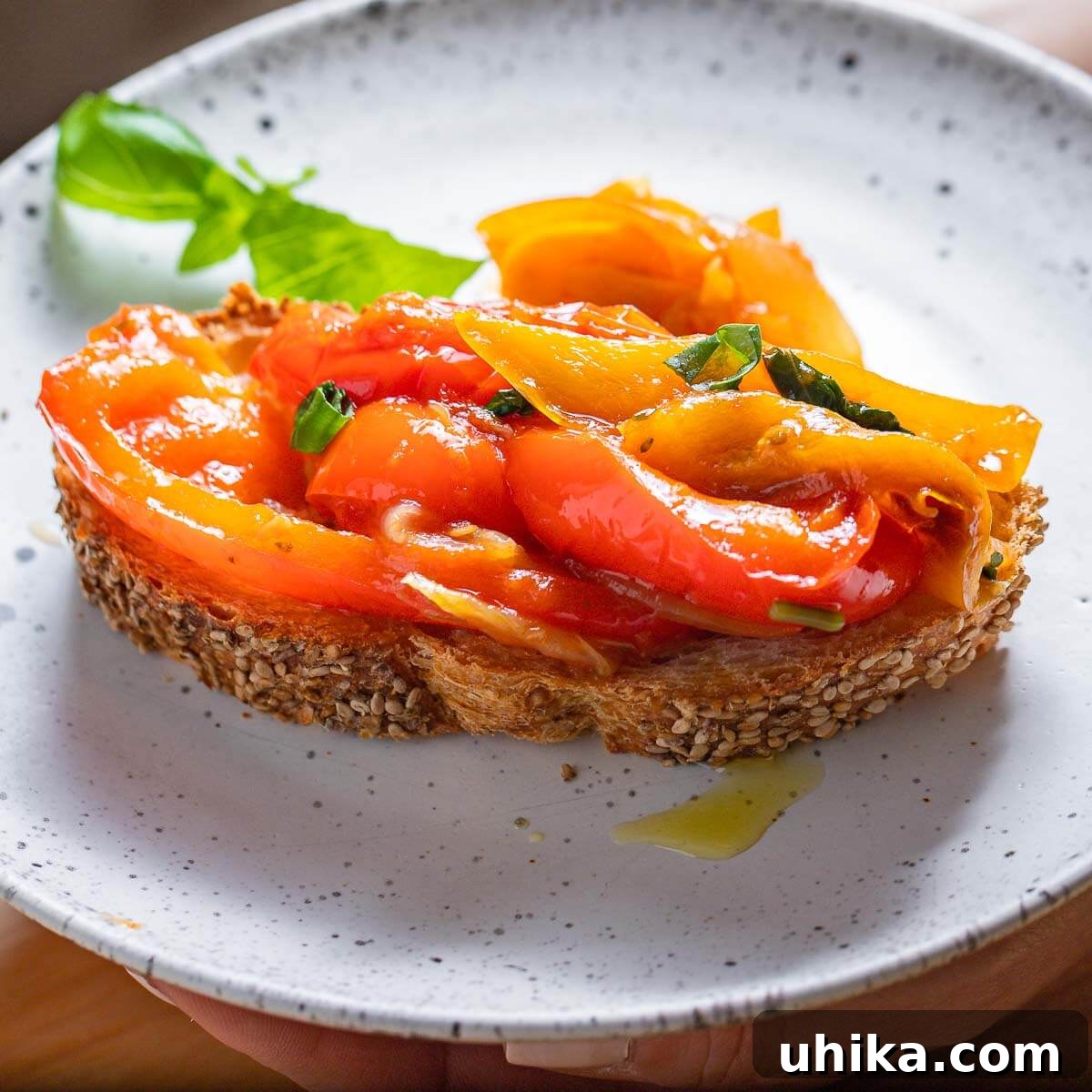
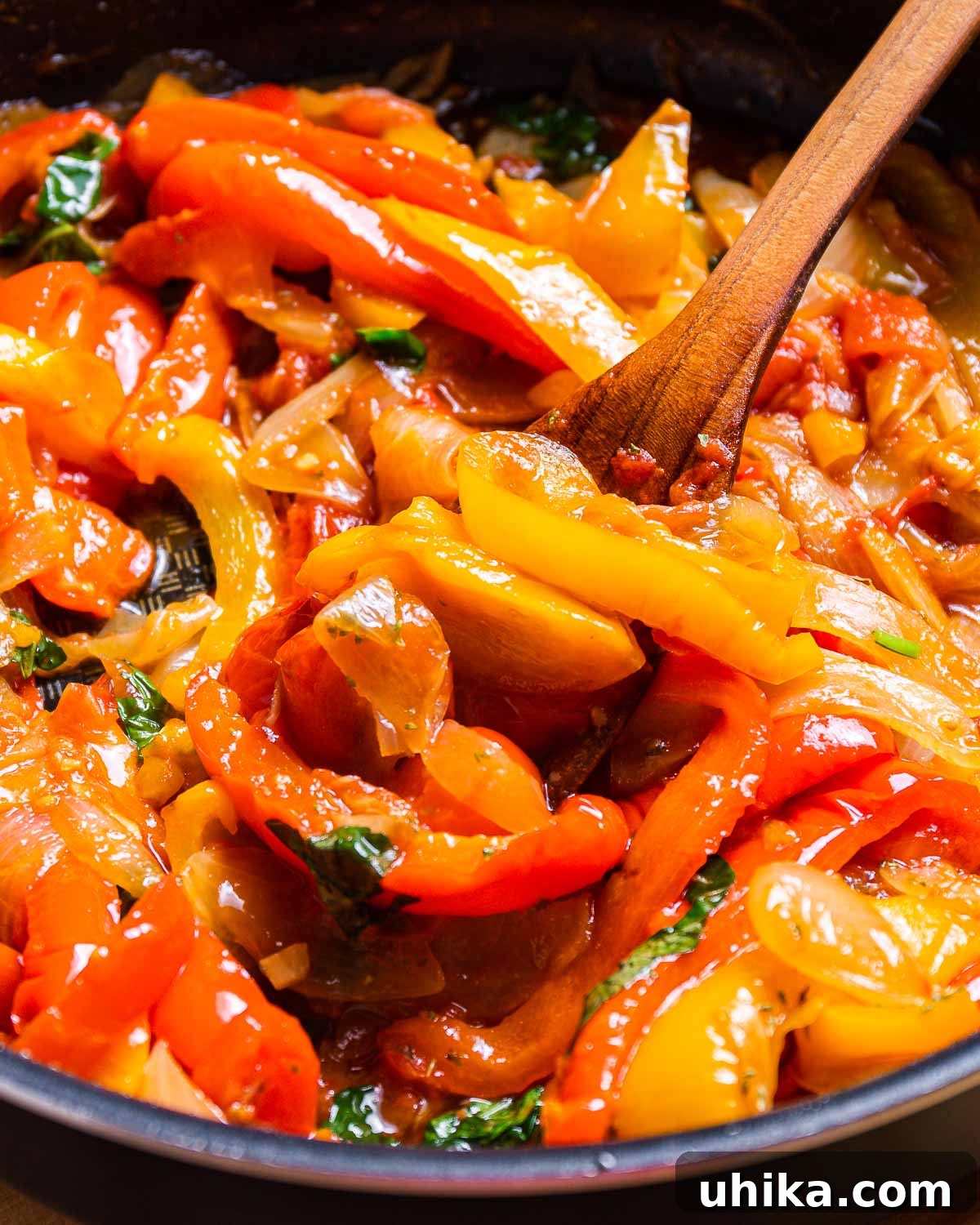
Welcome to the delightful world of Peperonata, an Italian culinary gem that promises to bring the vibrant flavors of a sun-drenched summer garden straight to your table. This exquisite dish, celebrated for its versatility and rich taste, is far more than just a simple condiment. It’s a symphony of sweet bell peppers, fragrant onions, ripe plum tomatoes, and aromatic garlic, all lovingly stewed until they reach a state of tender perfection, allowing their individual essences to harmoniously intermingle. A final flourish of fresh basil elevates this humble stew into a truly unforgettable experience.
The Irresistible Charm of Peperonata: A First Taste
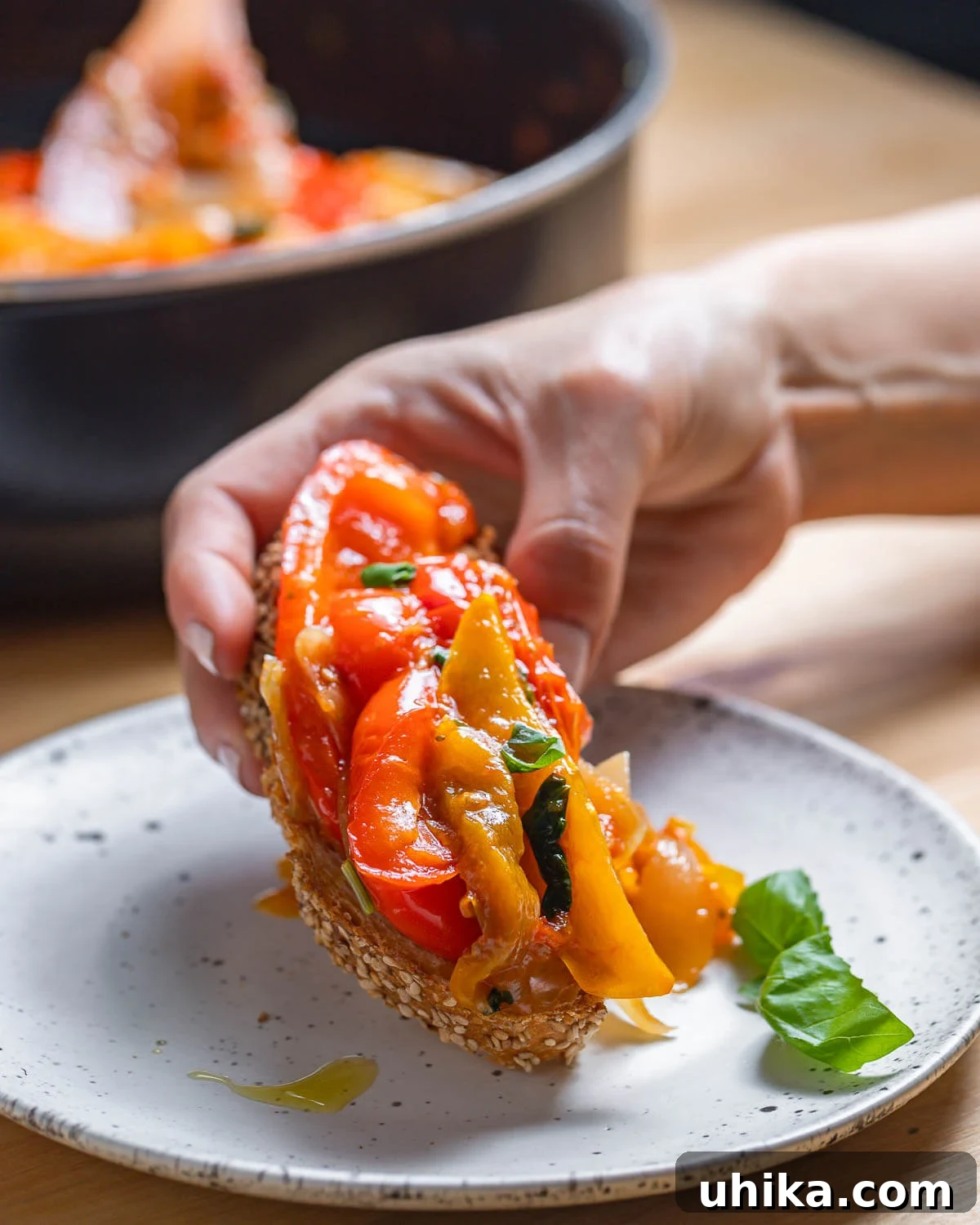
My first encounter with peperonata was precisely as depicted above: a generous spoonful layered atop a slice of perfectly toasted, seeded Italian bread. That initial bite was nothing short of revelatory. It was an instant love affair with a dish that, despite its blended flavors, allowed each ingredient to shine through distinctly. The sweetness of the peppers, the tang of the tomatoes, the subtle bite of garlic, and the fresh burst of basil all spoke for themselves, yet created a cohesive and comforting profile.
This taste transported me straight to a warm summer day, evoking memories of robust Italian-American gardens brimming with ripe produce. It’s a flavor that embodies tradition and simplicity, showcasing how a few quality ingredients can combine to create something truly magical. Peperonata is not just food; it’s an experience, a celebration of fresh, seasonal produce, and the rustic charm of Italian cooking.
What is Peperonata? A Classic Italian Vegetable Stew
At its heart, peperonata is a traditional Italian vegetable stew, primarily made from bell peppers, onions, and tomatoes, slow-cooked with garlic and herbs. Originating from Southern Italy, particularly Sicily and Calabria, it’s a staple in many Italian households, cherished for its intense flavor and incredible versatility. While often enjoyed as a side dish or condiment, its robust character allows it to stand proudly as a light meal on its own. The beauty of peperonata lies in its simplicity and the way the long, slow cooking process coaxes out the natural sweetness of the vegetables, transforming them into a deeply flavorful and comforting dish.
The Many Lives of Peperonata: Serving Suggestions
One of peperonata’s most appealing qualities is its remarkable adaptability. While a classic choice for bruschetta or spread generously on crusty bread, its uses extend far beyond. Imagine it tossed through a bowl of al dente pasta for a quick and satisfying vegetarian meal, or as a vibrant topping for grilled chicken thighs, tender chicken cutlets, or flaky grilled fish. It’s also superb spooned over scrambled eggs or an omelet for a Mediterranean-inspired breakfast, folded into a frittata, or even as a flavorful filling for sandwiches. Its rich, savory-sweet profile makes it an excellent accompaniment to a wide range of dishes, adding a touch of Italian sunshine wherever it goes.
Selecting the Perfect Peppers for Peperonata
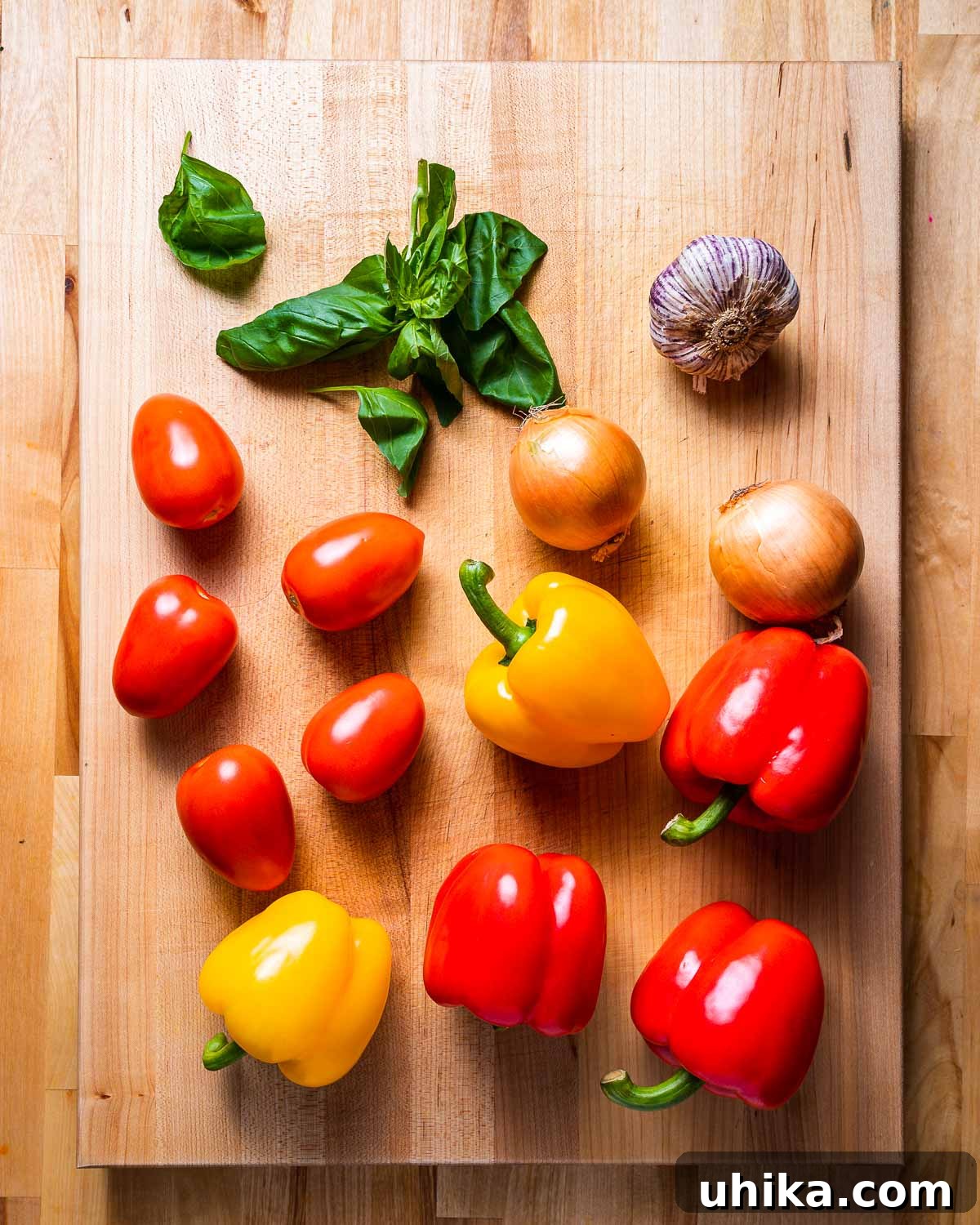
The choice of bell peppers is crucial to the authentic flavor profile of peperonata. We strongly recommend using a vibrant mix of yellow and red bell peppers. These varieties are inherently sweeter than their green counterparts, contributing significantly to the dish’s characteristic mellow and slightly sweet taste. If available, orange bell peppers are also an excellent addition, further enhancing the color and sweetness.
The goal is to source the sweetest bell peppers you can find. While green peppers have their place in other beloved dishes, such as savory pepper and egg sandwiches, their slightly more bitter and less sweet flavor isn’t ideal for traditional peperonata. Their robust taste can overpower the delicate balance of the stew.
Adding a Spicy Twist: Peperonata with a Kick
For those who enjoy a bit of heat, peperonata can be easily customized. Consider incorporating a few finely chopped cherry peppers into the stew, or even a teaspoon of potent Calabrian chili paste for a truly authentic Southern Italian kick. These additions will introduce a delightful warmth that complements the sweetness of the bell peppers beautifully.
If you’re particularly fond of spicy spreads, you might also enjoy exploring a cherry pepper spread, which, like peperonata, is fantastic served with crusty bread and offers a similar flavor profile with an added fiery punch.
Crafting Authentic Peperonata: A Step-by-Step Guide
Making peperonata is a rewarding culinary journey that emphasizes slow cooking to unlock deep, complex flavors. While the process is straightforward, paying attention to a few key details will ensure a truly exceptional result. Below, we’ll walk you through each step, ensuring you achieve that perfect balance of sweetness, tang, and herbaceous freshness.
Choosing Your Tomatoes: Fresh vs. Canned
For this recipe, we’ve demonstrated the process using fresh Roma plum tomatoes. These instructions include how to properly blanch and peel them for the best texture. However, for convenience, a 14-ounce can of high-quality whole plum tomatoes (such as San Marzano) can be used as an excellent alternative. Simply drain and crush them by hand or roughly chop before adding to the stew. Choose the option that best suits your schedule and preference.
- Prepare the Fresh Tomatoes (if using): If opting for fresh tomatoes, gently score an ‘X’ at the bottom of each tomato. This small cut will make peeling significantly easier after blanching.
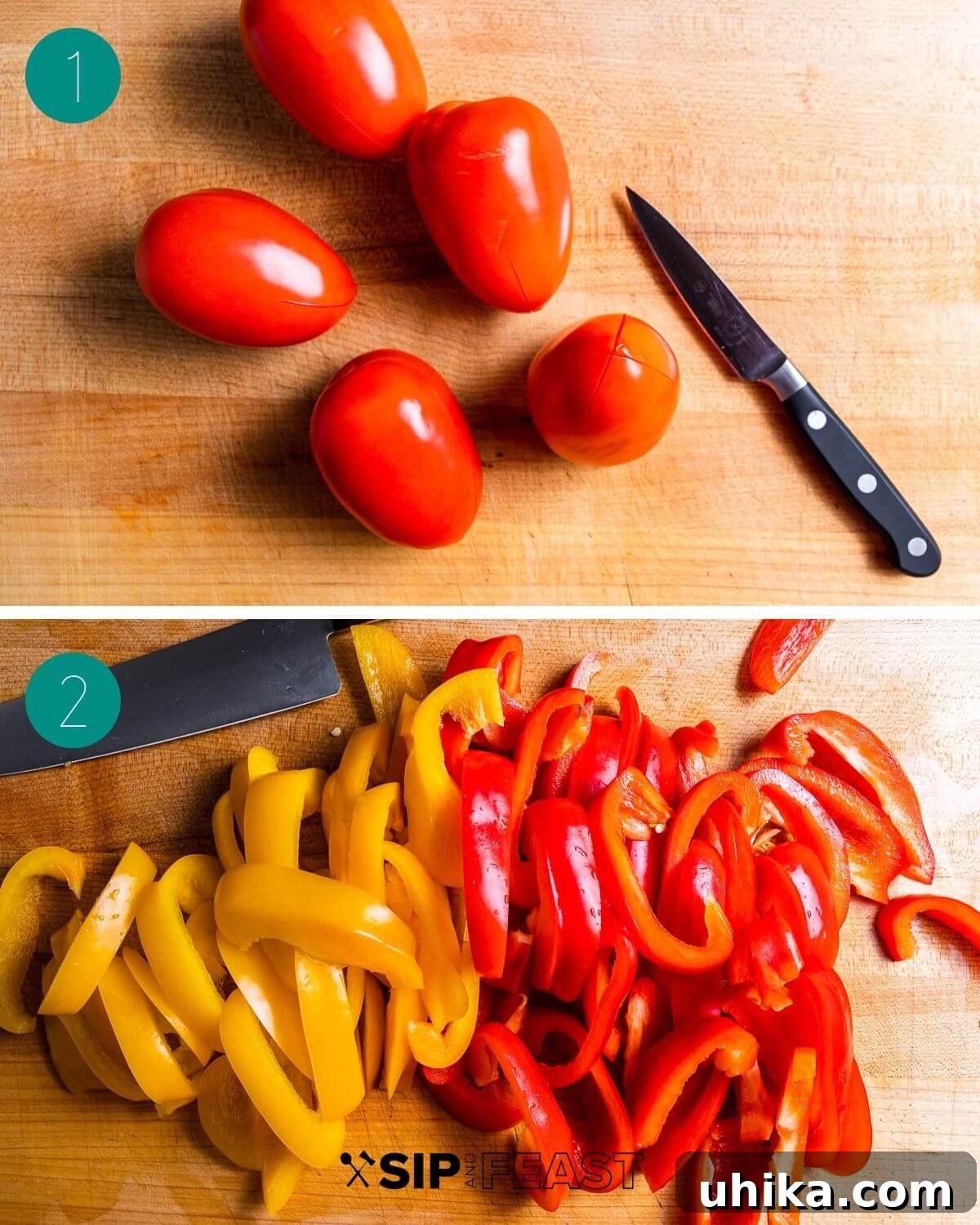
- Chop the Aromatics: Slice the onions and bell peppers into uniform 3/4-inch slices. Thinly slice the garlic cloves and roughly chop the fresh basil. Keep these prepared ingredients separate and set them aside, ready for cooking.
- Blanch the Tomatoes: Bring a medium saucepan of water to a rolling boil. Carefully add the scored tomatoes to the boiling water. Cook for approximately 1 minute, or until you observe the tomato skins beginning to loosen and peel away.
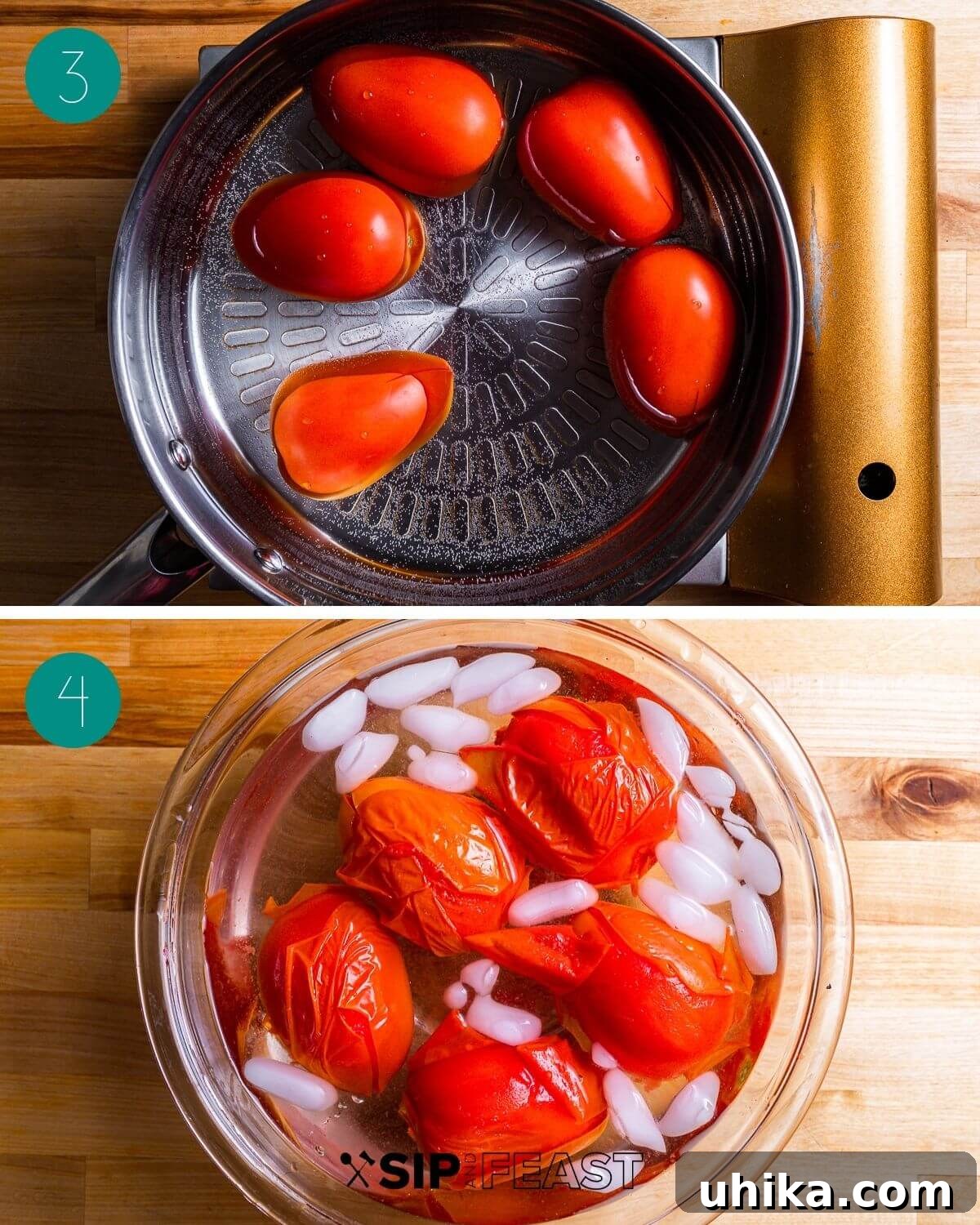
- Peel and Seed the Tomatoes: Immediately remove the blanched tomatoes from the boiling water using a slotted spoon and plunge them into a bowl of ice water. This “shocking” process halts the cooking and makes them easy to handle. Once cool, effortlessly peel off the loosened skins. Slice each tomato in half, remove the tough core, and gently squeeze out the seeds. Discard the skins, cores, and seeds.
- Sauté Onions and Peppers: Heat a large, heavy-bottomed pan or Dutch oven over medium-low heat. Add 1/4 cup of high-quality extra virgin olive oil to coat the bottom of the pan. Add the sliced onions and bell peppers. Cook them gently for 15-20 minutes, stirring occasionally, until they have significantly softened and become translucent. This slow sautéing is key to developing their natural sweetness.
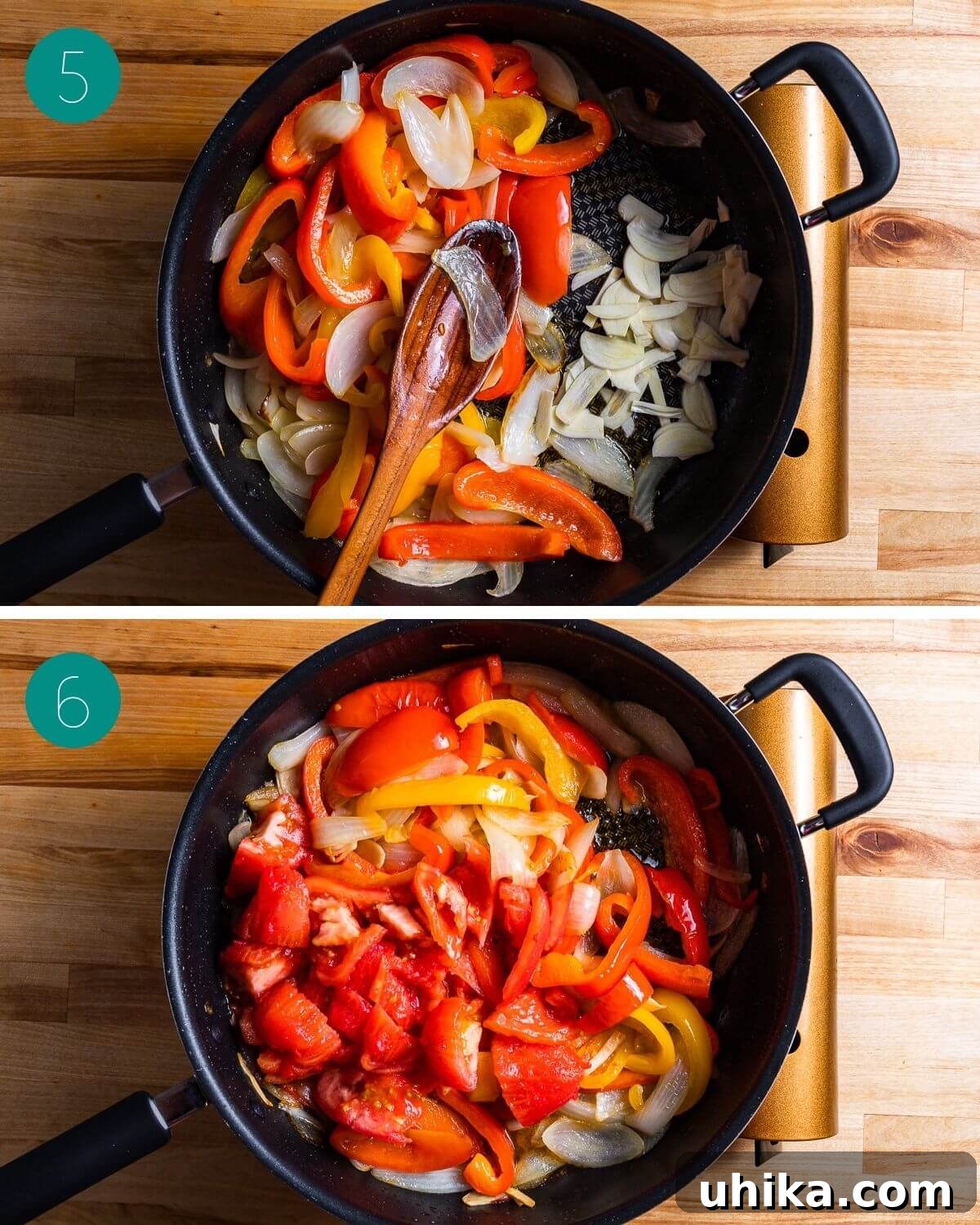
- Infuse with Garlic and Simmer: Once the peppers and onions are tender, push them to one side of the pan to create a space in the center. Add the sliced garlic to this cleared area and cook for about 3 minutes, until it turns fragrant and a light golden color. Be careful not to burn it. Then, add the prepared tomatoes (either fresh or canned) to the pan. Stir everything together and bring the mixture to a gentle simmer. Reduce the heat to low, maintaining a very low simmer, and allow the peperonata to cook for another 45-60 minutes. This extended simmering time is crucial for the vegetables to soften further and for all the flavors to deeply merge and intensify. If the pan appears to be getting too dry at any point, add a couple of ounces of water or chicken broth, and you can partially cover the pot with a lid, leaving it slightly ajar to allow steam to escape.
- Season and Balance: A few minutes before the end of the cooking time, stir in the red wine vinegar and dried oregano. Season generously with salt and freshly ground black pepper to taste. Taste the peperonata; if you find it’s not quite sweet enough or needs its flavors rounded out, you may add a small pinch of sugar. Do this gradually, tasting after each addition. Often, the natural sweetness of the bell peppers is sufficient to balance the acidity of the vinegar, making added sugar unnecessary.
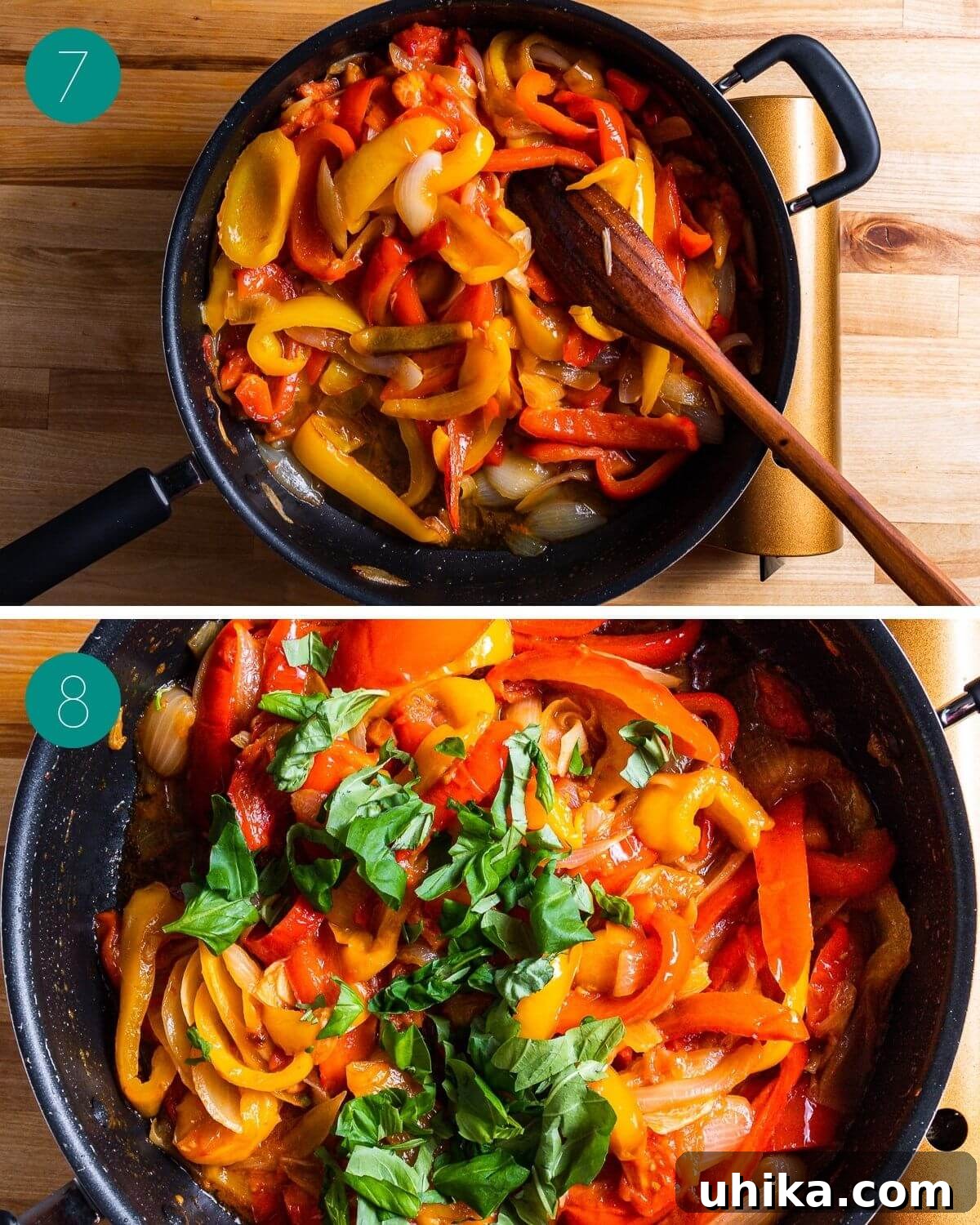
- Finish with Basil and Olive Oil: Remove the pan from the heat. Stir in the chopped fresh basil and drizzle with an additional 1/4 cup or more of good quality extra virgin olive oil. The extra olive oil adds a beautiful richness and silkiness to the finished dish. While you can serve peperonata immediately, its flavors truly deepen and meld beautifully if allowed to rest, making it even more delicious the next day. It can be served cold, at room temperature, or gently warmed through. Enjoy this taste of Italy!
Tips for Peperonata Perfection
- Quality Ingredients: Since peperonata relies on a few core ingredients, using the freshest and highest quality bell peppers, ripe tomatoes, fragrant garlic, and good extra virgin olive oil will make a significant difference in the final taste.
- Slow and Low: Resist the urge to rush the cooking process. The long, slow simmer is what allows the vegetables to caramelize slightly and their flavors to deepen and marry.
- Taste and Adjust: Always taste your peperonata throughout the cooking process, especially before the final seasoning. Adjust salt, pepper, and vinegar as needed. A tiny pinch of sugar can balance any excessive acidity if your tomatoes are particularly tart, but often isn’t necessary with sweet peppers.
- Make Ahead: Peperonata is one of those dishes that undeniably tastes better the next day. The resting time allows the flavors to truly meld and deepen, making it a fantastic make-ahead option for entertaining or meal prep.
Storage and Make-Ahead Brilliance
Peperonata is a fantastic dish for meal prepping as its flavors improve with time. Once cooled, store it in an airtight container in the refrigerator for up to a week. For longer storage, peperonata freezes exceptionally well. Simply transfer it to freezer-safe containers or bags, leaving a little headspace. It can be frozen for up to 3-4 months. Thaw overnight in the refrigerator and gently reheat on the stovetop or serve at room temperature.
More Mediterranean-Inspired Recipes You’ll Love
If you’re a fan of the rich, comforting flavors of peperonata, you’re sure to enjoy these other vibrant vegetable-centric recipes from Italian and Mediterranean cuisines. Each offers a unique blend of fresh ingredients and traditional cooking methods:
- Ratatouille: A classic French Provençal stew featuring eggplant, zucchini, bell peppers, and tomatoes, slow-cooked to perfection.
- Ciambotta: An Italian vegetable stew, often considered Italy’s answer to ratatouille, with regional variations often including potatoes, zucchini, and string beans.
- Italian Pickled Eggplant: Tender eggplant marinated in a tangy, aromatic brine, perfect as an antipasto or side dish.
- Roasted Red Peppers: Sweet red bell peppers roasted until tender and smoky, a versatile ingredient or simple side.
Peperonata
James Delmage
15
1
1 15
8

Pin
Ingredients
- 1/2 cup extra virgin olive oil divided
- 5 cloves garlic sliced
- 2 medium onions sliced
- 6 large red and yellow bell peppers sliced
- 1 pound peeled and deseeded plum tomatoes alternatively, use 14 ounces of canned tomatoes
- 1 teaspoon dried oregano
- 1/4 cup basil chopped
- 2 tablespoons red wine vinegar
- salt and pepper to taste
- sugar to taste, see notes below
Instructions
-
Heat a large pan to medium-low heat and add in a 1/4 cup of extra virgin olive oil. Cook the onions and peppers for 15-20 minutes until softened, stirring occasionally.
-
Make a little room in the pan and add the garlic in. Cook until golden (about 3 minutes), then add in the tomatoes.
-
Bring to a simmer then cook on low heat for another 45 minutes to further soften the peppers and onions and bring all the flavors together. If at any time the pan dries out, add a few ounces of water and/or partially cover with a lid.
-
A few minutes before turning off the heat, add in the vinegar, oregano, and season with salt and pepper to taste.
-
When satisfied with the taste, turn off the heat and add in the basil, and a ¼ cup of extra virgin olive oil. Peperonata is best served the next day (the flavors will come together far more) either cold or warmed through. Serve with crusty Italian bread or by itself. Enjoy!
Notes
- Peperonata will taste better the next day as the flavors have more time to meld.
- A pinch of sugar can be used to balance out the vinegar if needed. Go slow when adding. Normally, the sweetness of the bell peppers is enough to balance the vinegar, so sugar isn’t always necessary.
- Store in an airtight container in the fridge for up to a week. It also freezes well for up to 3-4 months.
Nutrition
Carbohydrates: 9.2g |
Protein: 1.8g |
Fat: 12.9g |
Saturated Fat: 1.8g |
Sodium: 12mg |
Potassium: 280mg |
Fiber: 1.9g |
Sugar: 5.3g |
Calcium: 26mg |
Iron: 1mg
Nutrition information is automatically calculated, so should only be used as an approximation.
Like this? Leave a comment below!
Check us out on Instagram at @sipandfeast or tag #sipandfeast!
We hope this comprehensive guide inspires you to create your own batch of delicious homemade peperonata. Whether you’re serving it on toasted bread, tossing it with pasta, or pairing it with your favorite grilled dishes, this Italian classic is sure to become a beloved staple in your kitchen. Enjoy the rich, vibrant tastes of summer, anytime!