
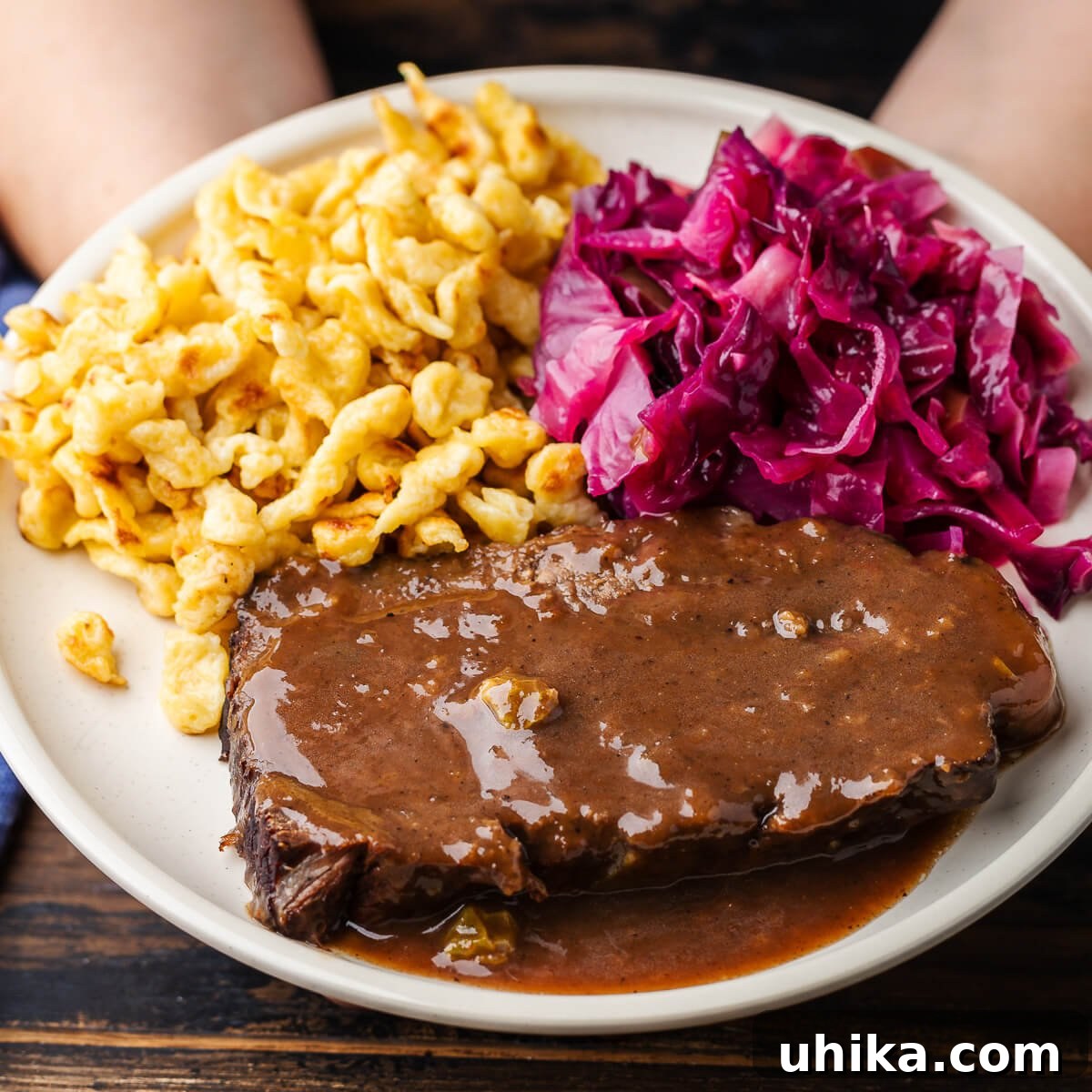
The Ultimate Guide to Traditional German Sauerbraten: A Hearty Feast for Fall & Oktoberfest
There’s nothing quite like a classic German Sauerbraten to warm the soul and satisfy the appetite. This magnificent dish, featuring marinated beef slow-cooked to perfection, offers an incredible balance of sweet and sour flavors, resulting in a roast that is exceptionally tender and deeply satisfying. It’s truly a celebratory meal, especially cherished during Oktoberfest festivities and throughout the cozy autumn months.
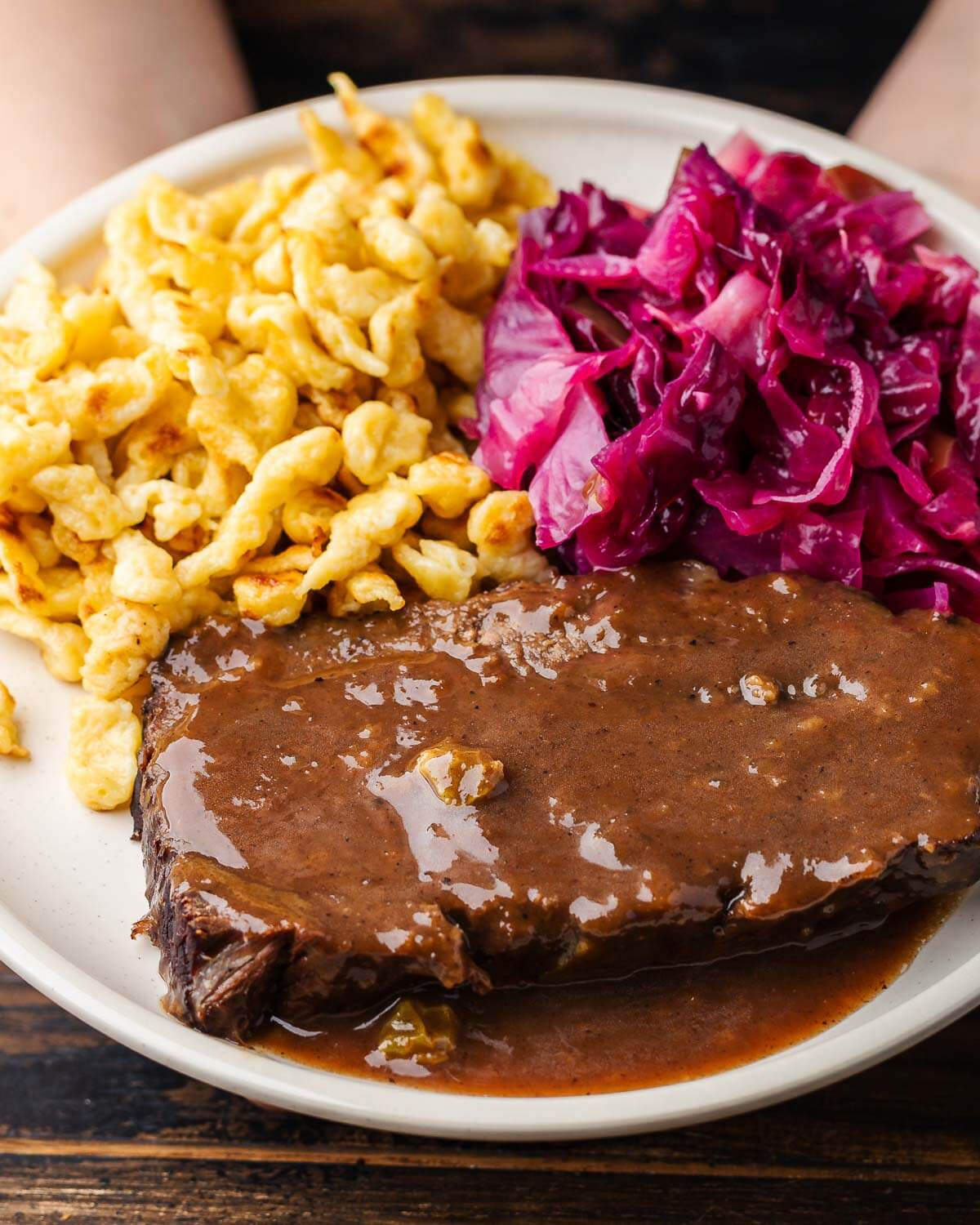
What is Sauerbraten? A Culinary Journey Through German Tradition
Sauerbraten, literally translating to “sour roast,” is one of Germany’s most renowned national dishes. While often associated with celebratory occasions, its humble origins trace back centuries, a clever method to preserve meat before refrigeration was common. The technique involves marinating a cut of beef (or sometimes venison or pork) in a mixture of vinegar, wine, water, and an array of spices for several days. This prolonged marination not only infuses the meat with its characteristic tangy flavor but also tenderizes tougher cuts, making them incredibly succulent after slow braising. Each region in Germany boasts its unique variations of Sauerbraten, with distinct spice blends and gravy additions, making it a diverse and cherished culinary heritage.
The Art of Marination: Unlocking Flavor and Tenderness
While the thought of marinating meat for several days might seem daunting, it’s truly the heart and soul of an authentic Sauerbraten. This crucial step is what transforms a simple beef roast into a masterpiece of tender, sweet-and-sour flavor. In Germany, it’s common for Sauerbraten to marinate for up to 7, or even 10 days, allowing the acids in the marinade to thoroughly tenderize the meat and the spices to penetrate deeply. However, through careful testing, I’ve found that a 4-day marination period yields equally phenomenal results, making this traditional dish more accessible for home cooks without compromising on its signature taste and texture.
The acidic components of the marinade, primarily red wine vinegar and dry red wine, work to break down the beef’s connective tissues, ensuring a melt-in-your-mouth tenderness once braised. Simultaneously, ingredients like juniper berries, bay leaves, and cloves impart a complex aromatic profile, creating the unmistakable German flavor. This slow infusion of flavors is what sets Sauerbraten apart, making the waiting period entirely worthwhile for the incredible culinary reward.
Choosing the Right Cut of Beef for Your Sauerbraten
The choice of beef cut is essential for achieving the perfect Sauerbraten. Traditionally, a rump roast is the preferred cut. Its lean yet flavorful nature, combined with the long marination and slow braising, results in a robust roast that holds its shape beautifully and slices cleanly against the grain. This makes it ideal for serving in elegant portions, showcasing the meat’s tender texture.
Alternatively, a chuck roast is an excellent option for those seeking an even more fall-apart tender experience. While a chuck roast will become incredibly soft and succulent, it tends to shred rather than slice cleanly due to its higher fat and connective tissue content. If you prefer a Sauerbraten that effortlessly pulls apart with a fork, chuck roast is a superb choice. Both cuts will absorb the rich marinade flavors wonderfully, but consider your desired serving presentation when making your selection.
Sauerbraten Serving Suggestions: Perfect Pairings
Sauerbraten is a meal best enjoyed with classic German accompaniments that complement its rich, tangy gravy. My personal favorite combination includes tangy German red cabbage and tender, chewy spaetzle. The vibrant acidity of the red cabbage cuts through the richness of the beef, while spaetzle noodles are perfect for soaking up every last drop of the delectable gravy.
Other fantastic options include creamy mashed potatoes, hearty potato dumplings (Knödel), or simple egg noodles. Each of these sides provides a comforting base for the flavorful roast and gravy. For a complete German feast, consider adding a crisp cucumber salad or a traditional German beer alongside your Sauerbraten. And if your palate craves more German delights, don’t miss out on my irresistible recipe for Jagerschnitzel!
Essential Ingredients for an Authentic Sauerbraten
Crafting an authentic Sauerbraten begins with selecting quality ingredients. Below, you’ll find a detailed list of what you’ll need, along with insights into their role in creating this iconic dish.
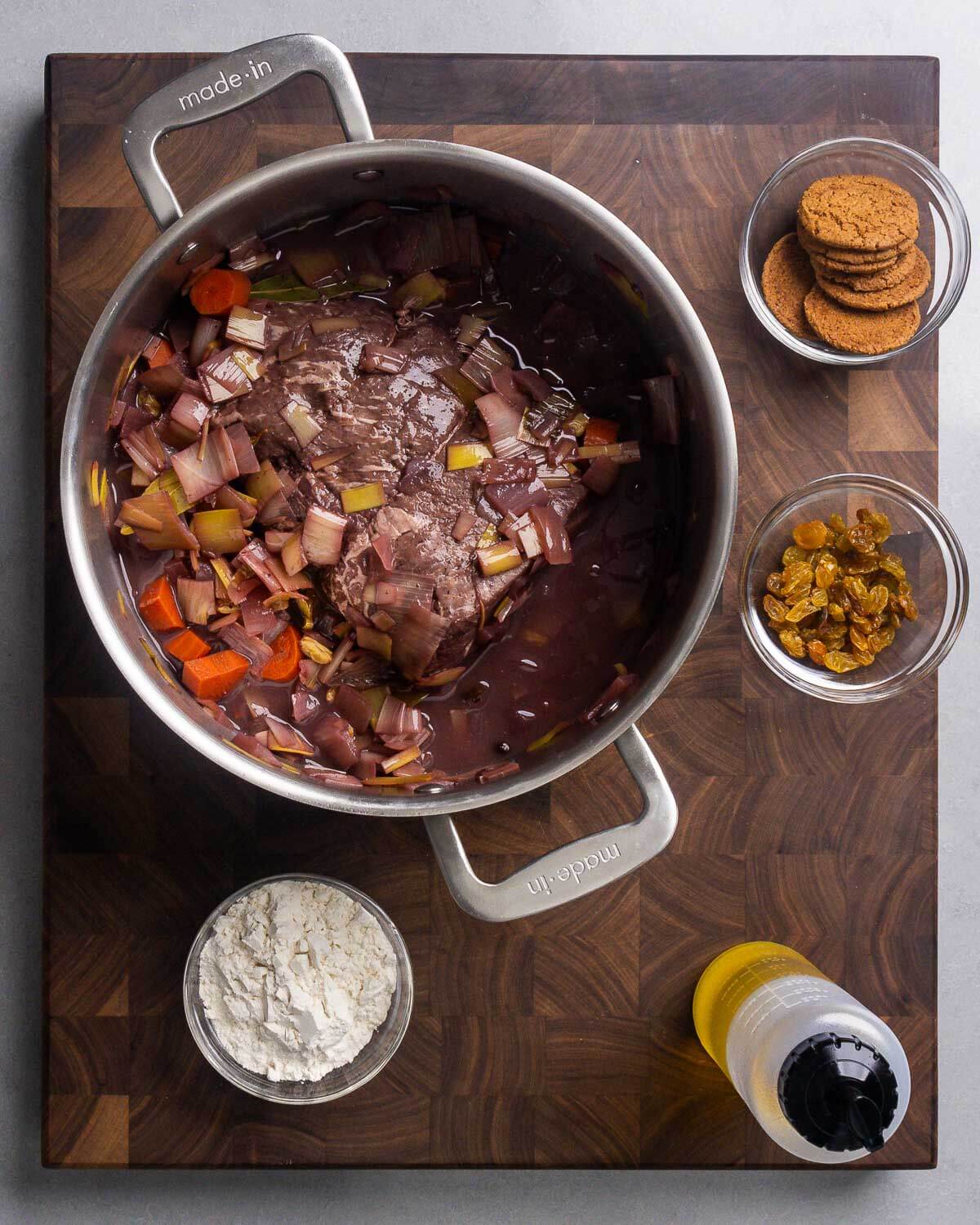
- Beef: As discussed, a 3 1/2-pound rump roast is the traditional choice for a sliceable roast. A chuck roast can be used for a more shreddable, fall-apart texture. (Note: The image above shows a rump roast after it has completed its 4-day marination.)
- Marinade Base: The liquid components of the marinade are crucial for both flavor and tenderization.
- Red Wine Vinegar: Provides the essential “sour” element, which tenderizes the meat and adds a tangy depth.
- Dry Red Wine: A full-bodied dry red wine, such as Cabernet Sauvignon or Merlot, adds richness and complexity to the marinade.
- Beef Stock: Use a high-quality low-sodium beef stock. For the best flavor, consider using homemade beef stock, or a concentrated beef base like Better Than Bouillon to create a quick, flavorful stock.
- Aromatics and Spices: These infuse the marinade with characteristic German flavors.
- Onion, Carrots, and Leek: These vegetables form a flavorful aromatic base for the marinade and eventually the gravy.
- Bay Leaves: Add a subtle, herbaceous note.
- Whole Juniper Berries: These are a hallmark spice in many German dishes, providing a distinctive piney, slightly citrusy flavor that is essential for authentic Sauerbraten.
- Whole Cloves: Offer a warm, pungent aroma that complements the other spices.
- Granulated Sugar: Balances the acidity of the vinegar and wine, contributing to the dish’s sweet-and-sour profile.
- Diamond Crystal Kosher Salt and Black Pepper: Fundamental seasonings to enhance all the flavors.
- Sweet and Thickening Agents:
- Golden Raisins: These add a burst of natural sweetness and a subtle fruitiness, which rounds out the tangy flavors of the marinade and gravy.
- Gingersnap Cookies: A traditional and somewhat surprising ingredient! Crushed gingersnaps not only thicken the sauce but also contribute a unique sweet-spicy warmth, further enhancing the complex flavor profile of the gravy.
- For the Roast and Gravy:
- All-Purpose Flour: Used for dredging the roast before searing, creating a flavorful crust and helping to thicken the gravy.
- Lard or Vegetable Oil: For searing the beef, building a rich fond at the bottom of the pot.
- Cornstarch (optional): For a cornstarch slurry, if you desire an even thicker gravy.
Refer to the full recipe card below for precise measurements and quantities.
Step-by-Step: Crafting Your Perfect Sauerbraten
Making Sauerbraten is a labor of love that is incredibly rewarding. Follow these detailed steps to create a truly unforgettable German feast.
Marination Process
- Prepare the Marinade: Begin by finely chopping 1 large onion, 2 medium carrots, and 1 large leek. Place these chopped vegetables into a large, non-reactive pot. Add 1 1/2 cups of red wine vinegar, 1 (750ml) bottle of dry red wine, 1 cup of low-sodium beef stock, 2 tablespoons of granulated sugar, 1/4 cup of golden raisins, 3 large bay leaves, 10 whole juniper berries, 8 whole cloves, 1 tablespoon of Diamond Crystal Kosher salt, and 1 teaspoon of black pepper. Bring this mixture to a boil over medium-high heat. Once boiling, reduce the heat to low and let it simmer gently for 10 minutes to allow the flavors to meld.
- Cool and Marinate the Roast: After simmering, remove the pot from the heat and allow the marinade to cool completely to room temperature. This is crucial to prevent partially cooking the beef. Once cool, carefully place a 3 1/2-pound rump roast into the pot, ensuring it is fully submerged and coated with the marinade and vegetables. Cover the pot tightly and refrigerate for at least 4 days. To ensure even marination, flip the rump roast every 12 hours. This long marination is key to both tenderizing the beef and infusing it with its signature sweet and sour flavor.
Braising the Roast
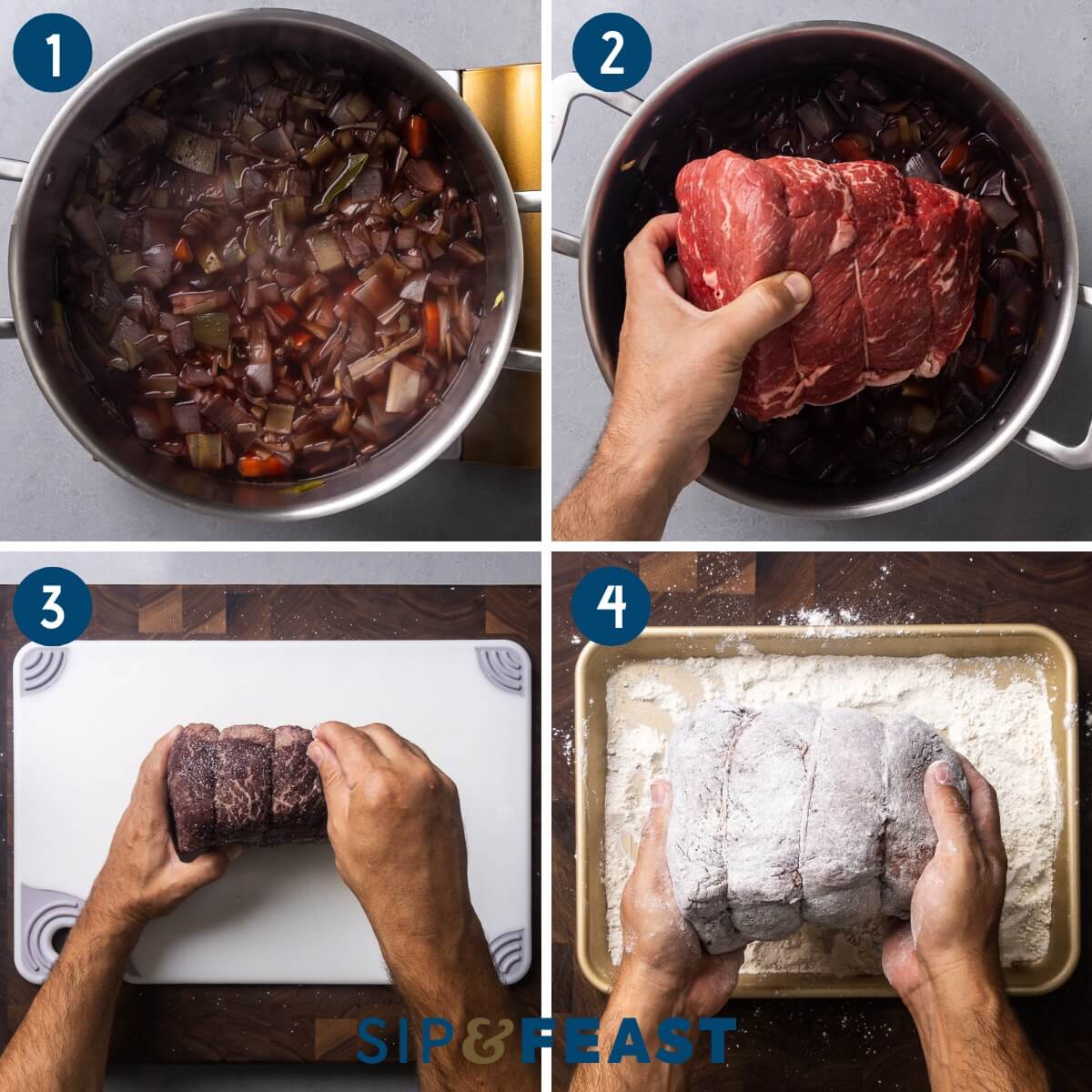
- Prepare the Roast for Searing: After the marination period, remove the rump roast from the pot. Place it on a platter and pat it very dry with paper towels. A dry surface is essential for achieving a good sear. Carefully pour the marinade into a separate bowl, making sure to reserve all the liquid and solids – you’ll need them later. Season the roast generously on all sides with salt and freshly ground black pepper to taste. Preheat your oven to 300°F (150°C) and ensure there is enough space to accommodate a Dutch oven with its lid.
- Dredge the Beef: On a plate or baking sheet, spread 1/2 cup of all-purpose flour. Lightly dredge the seasoned roast in the flour, coating all sides evenly. Gently shake off any excess flour. You won’t need all the flour, so discard any remaining after dredging.
- Sear the Roast: Heat a large Dutch oven over medium heat. Add 3 tablespoons of lard or vegetable oil to the pot. Once hot, carefully place the dredged roast into the Dutch oven and sear it on all sides until beautifully browned, which should take approximately 10-15 minutes in total. This searing step locks in flavor and creates a delicious crust. Once seared, remove the roast and set it aside on a clean plate.
- Deglaze and Prepare for Braising: Return the reserved marinade (liquid and solids) to the Dutch oven. Bring it to a simmer, using a wooden spoon to scrape up all the flavorful browned bits (fond) from the bottom of the pot. These bits will add immense depth to your gravy. Once the marinade is simmering, turn off the heat.
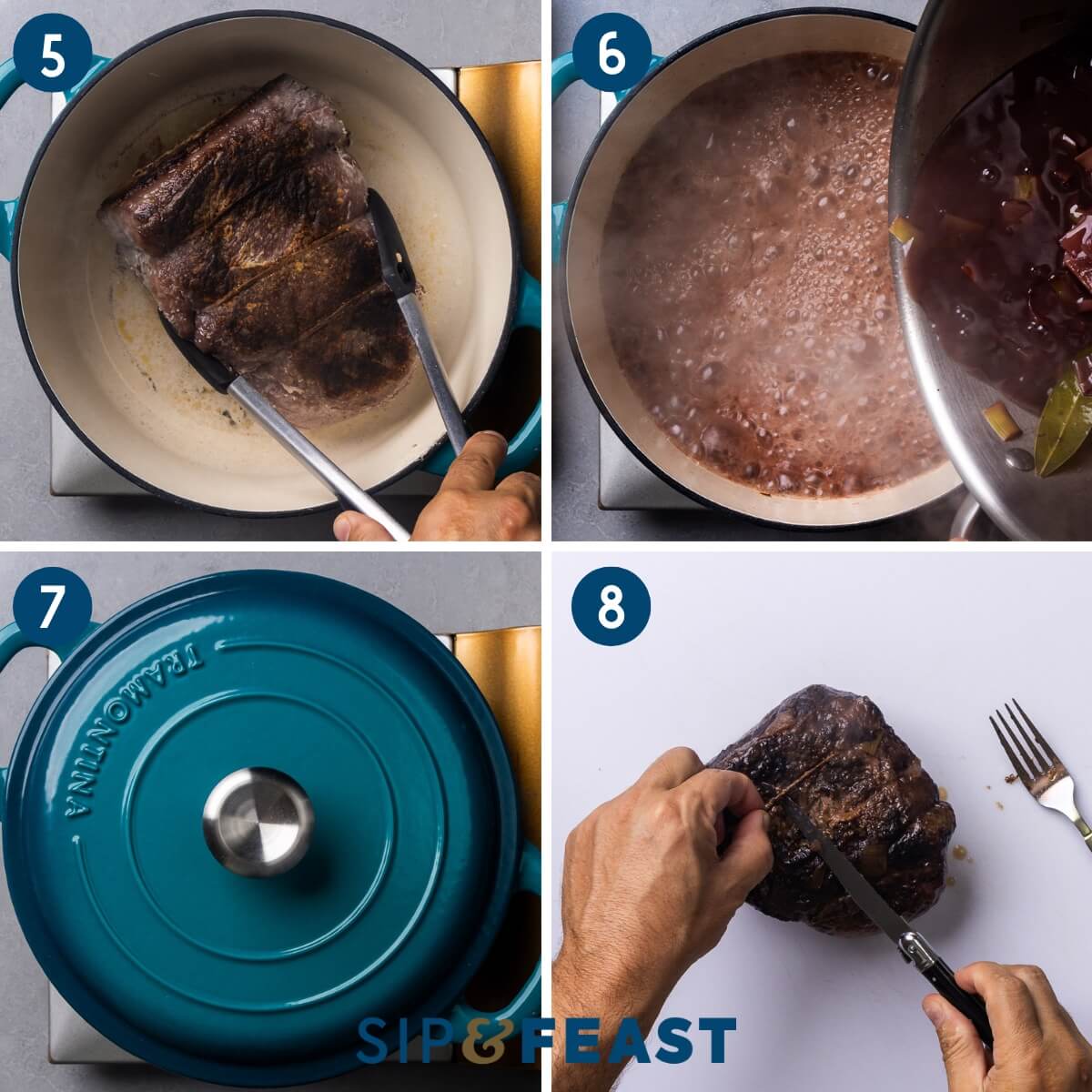
- Braise Until Tender: Carefully return the seared roast to the Dutch oven, nestling it into the simmering marinade. Cover the pot with a tight-fitting lid and transfer it to the preheated oven. Braise for 3 hours.
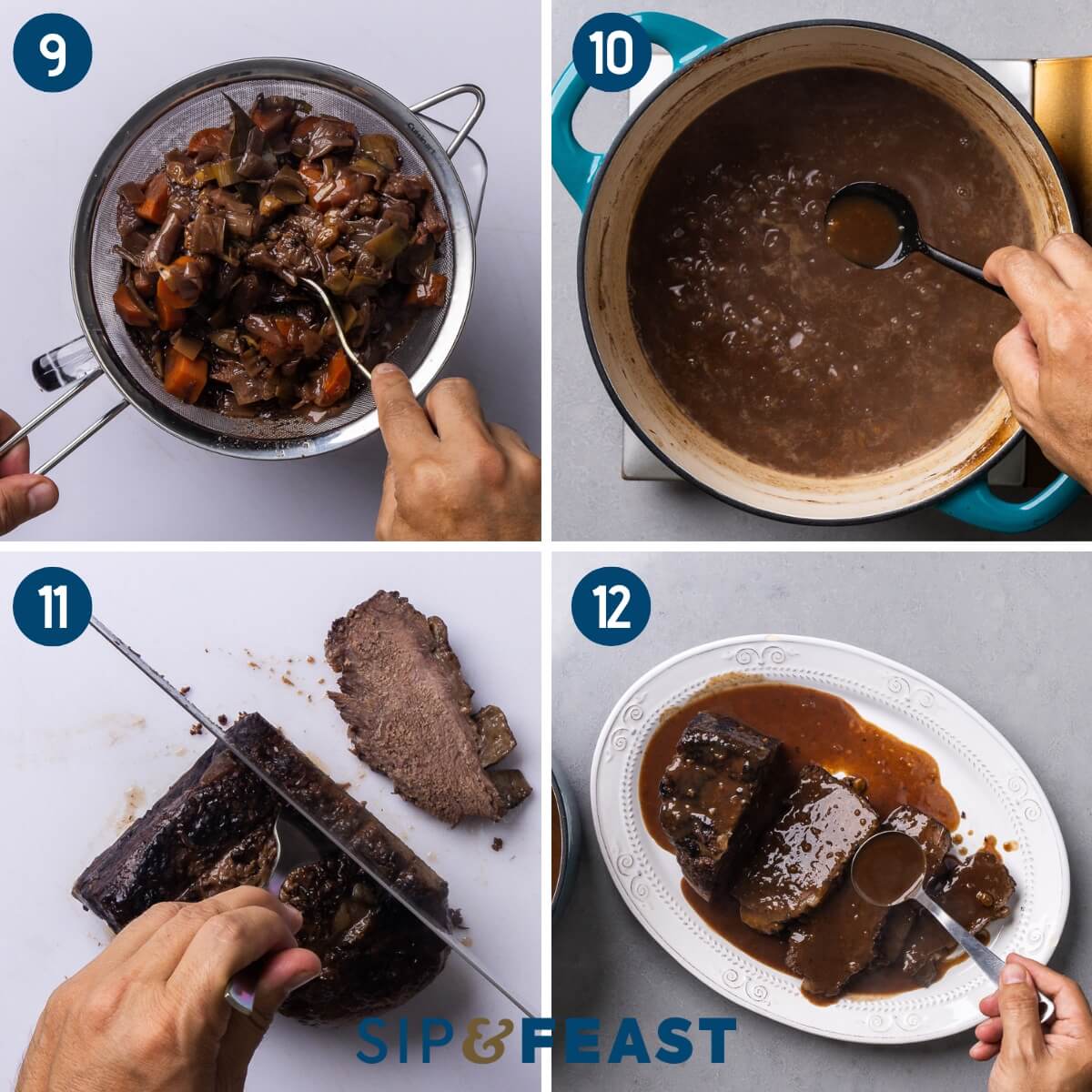
- Check for Tenderness: After 3 hours, use a knife to gently probe the roast for tenderness. If there’s any resistance, re-cover the pot and continue cooking for another 45 minutes, then check again. The beef is ready when it is fork-tender and yields easily to a knife. Once tender, remove the roast from the pot and place it on a serving platter. Tent it loosely with foil to keep it warm and allow it to rest while you finish the gravy. (If your roast was tied, you may cut away the strings now or just before carving.)
Creating the Rich Gravy
- Strain the Sauce: Carefully strain all the solids (vegetables, bay leaves, juniper berries, cloves) from the braising liquid, pressing down to extract as much flavor as possible. Discard the solids. Return the smooth, flavorful sauce to the Dutch oven over a burner.
- Thicken the Gravy: Turn the heat to medium. Whisk in 8 crushed gingersnap cookies. If you enjoy a sweeter gravy and the texture, add 1/3 cup of golden raisins at this stage. Simmer the sauce for about 10 minutes, allowing it to thicken slightly and the flavors to deepen. If the gravy is not thick enough for your preference, you can prepare a cornstarch slurry (1 tablespoon cornstarch mixed with 2 tablespoons cold water) and whisk it into the simmering gravy until your desired consistency is achieved. Taste the gravy and adjust seasoning with salt and pepper as needed. (Note: The raisins will naturally increase the sweetness of the sauce, so if you prefer a less sweet gravy or don’t enjoy raisins, feel free to omit them.)
Slicing and Serving
- Slice the Sauerbraten: Once the roast has rested, use a sharp slicing knife to cut the sauerbraten against the grain into thick, even slices. Slicing against the grain ensures maximum tenderness.
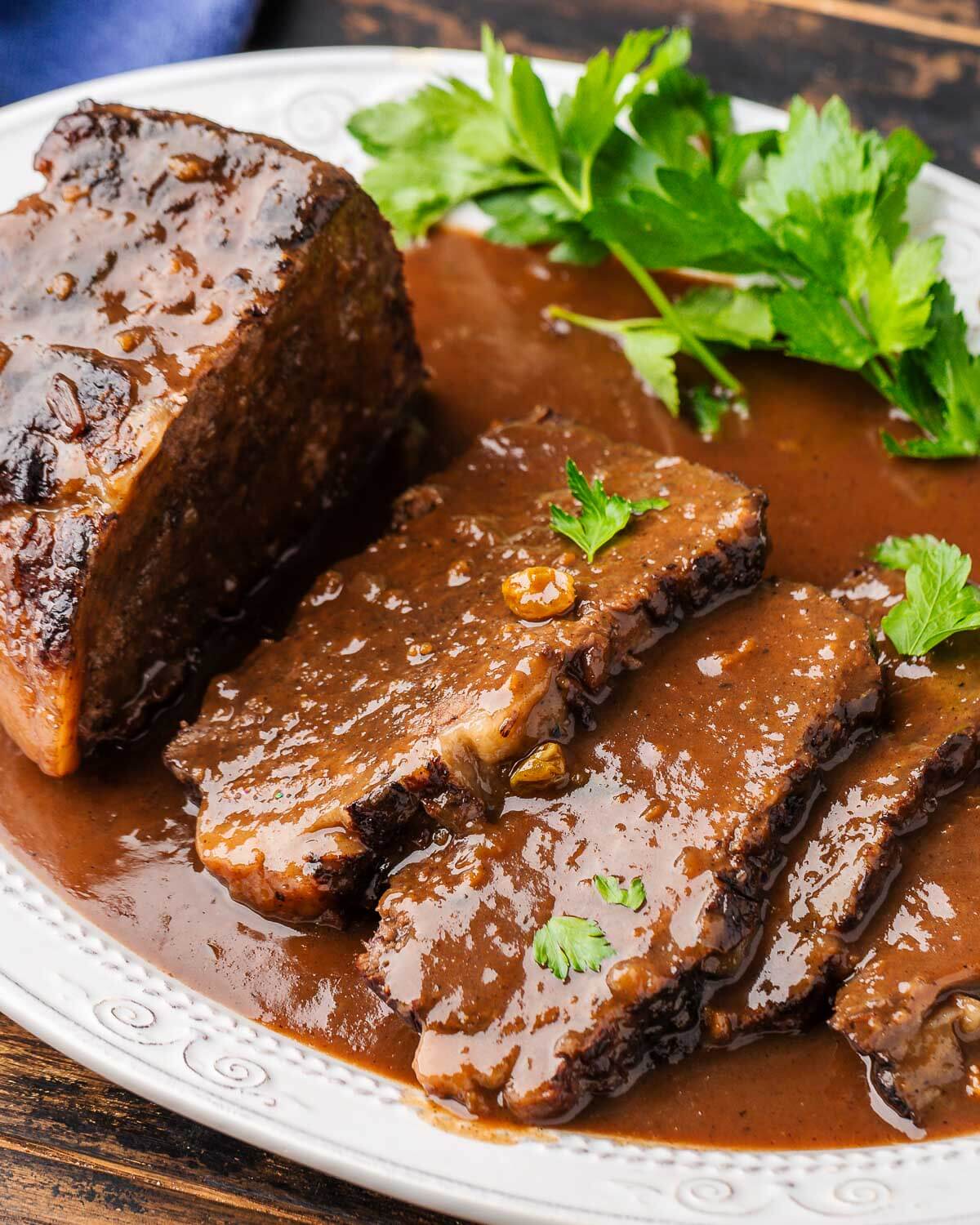
- Serve and Enjoy: Arrange the sliced sauerbraten on your platter. Generously spoon the rich, sweet-and-sour gravy over the meat. Any additional reserved sauce can be served on the side for guests to add as they wish. Serve immediately with your favorite traditional German sides and savor every bite!
Top Tips for Sauerbraten Success
Achieving a truly remarkable Sauerbraten is within reach with these expert tips.
- Mastering the Marinade Duration: While some traditional recipes call for 7-10 days of marination, my extensive testing has shown that 4 days provides exceptional results in terms of both flavor penetration and meat tenderization. Marinating for at least this long is highly recommended to unlock the full potential of this dish. Don’t rush this step – it’s crucial for the authentic Sauerbraten experience!
- Perfecting the Gravy Consistency: Gingersnap cookies are a traditional and effective thickening agent for Sauerbraten gravy, adding a unique sweet-spicy depth. However, if after simmering with the crushed gingersnaps, you find the gravy isn’t quite as thick as you prefer, don’t hesitate to use a simple cornstarch slurry. Mix 1 tablespoon of cornstarch with 2 tablespoons of cold water until smooth, then slowly whisk it into the simmering gravy, allowing it to cook for a minute or two until your desired consistency is achieved. Always taste and adjust seasonings after thickening.
- Invest in a Quality Slicing Knife: For perfectly presented slices of tender Sauerbraten, a sharp slicing knife (also known as a carving knife) makes a significant difference. Its long, thin blade allows for clean, precise cuts against the grain, ensuring each serving is uniformly tender and appealing. This tool is invaluable for this and many other braised beef recipes.
- Testing for Doneness: Braised meats like Sauerbraten are done when they are “fork-tender.” This means a fork or knife should slide into and out of the meat with very little resistance. Resist the urge to overcook, but also ensure it’s cooked long enough to be succulent and tender, not tough.
Frequently Asked Questions (FAQ)
Can I marinate the Sauerbraten for less than 4 days?
While 4 days is recommended for optimal flavor and tenderness, you could technically marinate for 2-3 days if you’re short on time. However, be aware that the flavor will be less developed and the meat might not be as tender as with a longer marination.
Can I use a slow cooker or Instant Pot for Sauerbraten?
Yes, you can adapt this recipe for a slow cooker or Instant Pot after the searing step. For a slow cooker, cook on low for 6-8 hours or on high for 3-4 hours, until tender. For an Instant Pot, cook on high pressure for 60-75 minutes (depending on roast size) with natural release, ensuring liquid levels are adjusted to Instant Pot requirements.
How do I store leftover Sauerbraten?
Leftover Sauerbraten, including the gravy, can be stored in an airtight container in the refrigerator for up to 3-4 days. It reheats beautifully in the oven (covered) or gently on the stovetop.
Can Sauerbraten be frozen?
Absolutely! Sauerbraten freezes very well. Once cooled, transfer the sliced meat and plenty of gravy into freezer-safe containers or bags. It can be frozen for up to 3 months. Thaw overnight in the refrigerator before reheating.
What if I don’t want to use raisins or gingersnaps?
While raisins and gingersnaps are traditional and contribute significantly to the unique sweet-sour and spiced flavor of Sauerbraten, you can omit them if you prefer. For thickening without gingersnaps, simply rely on a cornstarch slurry. For sweetness, you might add a touch more sugar or a spoonful of apple butter to the gravy.
Explore More Braised Beef Delights
There’s a special comfort in slow-braised beef dishes, and my family simply adores them. If you’ve enjoyed the richness of Sauerbraten, you’ll love exploring these other comforting recipes:
- Beef Rouladen
- Brasato al Barolo (Italian Braised Brisket)
- Classic Pot Roast
If you’ve enjoyed this Sauerbraten Recipe or any recipe on this site, please consider giving it a 5-star rating and sharing your feedback in the comments section below. We love hearing from you!
For those who prefer visual guidance, many of our recipes are available on our YouTube channel and our Facebook Page.
For exclusive, never-before-seen FULL MEAL RECIPE VIDEOS, consider becoming a Patreon member today!
Sauerbraten Recipe
By: James Delmage
Rating: 5 out of 5 stars (based on 16 reviews)

Sauerbraten is a hearty traditional German dish made with a marinated beef roast that’s braised until tender, served with a deliciously rich brown gravy. This recipe guides you through creating an authentic and unforgettable version.
- Prep time: 20 minutes
- Marinating time: 4 days
- Cook time: 3 hours 45 minutes to 4 hours 30 minutes (braising)
- Total time: Approximately 4 days, 4 hours 5 minutes
- Yields: 6 servings
Ingredients
For the Marinade
- 1 large onion, chopped
- 2 medium carrots, chopped
- 1 large leek, chopped
- 1 1/2 cups red wine vinegar
- 1 (750ml) bottle dry red wine (e.g., Cabernet or Merlot)
- 1 cup low-sodium beef stock
- 2 tablespoons granulated sugar
- 1/4 cup golden raisins
- 3 large bay leaves
- 10 whole juniper berries
- 8 whole cloves
- 1 tablespoon Diamond Crystal Kosher salt
- 1 teaspoon black pepper
Remaining Ingredients
- 3 1/2 pounds rump roast
- 1/2 cup all-purpose flour (for dredging)
- Salt and pepper, to taste
- 1/4 cup lard or vegetable oil
- 8 gingersnap cookies, crushed
- 1/4 cup golden raisins (optional, for gravy)
- Cornstarch slurry (optional, for thickening gravy)
Instructions
Marinating
- Add all marinade ingredients (chopped onion, carrots, leek, red wine vinegar, red wine, beef stock, granulated sugar, golden raisins, bay leaves, juniper berries, cloves, Kosher salt, and black pepper) to a large pot. Bring the mixture to a boil.
- Once boiling, reduce the heat to low and simmer for 10 minutes. Turn off the heat and allow the marinade to cool completely.
- Once cool, add the rump roast to the pot, ensuring it is fully coated by the marinade. Cover the pot tightly and refrigerate for at least 4 days. Flip the rump roast every 12 hours to ensure even marination.
Making the Sauerbraten
- Preheat your oven to 300°F (150°C). Make sure you have enough room in the oven for a Dutch oven with its lid.
- Remove the rump roast from the marinade and pat it very dry with paper towels. Pour the marinade (liquid and solids) into a bowl and set aside. Wipe down the pot.
- Place the all-purpose flour on a plate. Season the dried roast on all sides with salt and pepper, then dredge it thoroughly in the flour, shaking off any excess.
- Heat the cleaned Dutch oven over medium heat with 1/4 cup of lard or vegetable oil. Add the floured roast to the pot and brown it on all sides for about 10-15 minutes in total. Once seared, remove the roast and set it aside on a plate.
- Pour the reserved marinade back into the Dutch oven. Bring it to a simmer, scraping the bottom of the pot with a wooden spoon to loosen any browned bits. Once simmering, turn off the heat.
- Return the seared roast to the pot, cover with a tight-fitting lid, and transfer to the preheated oven. Braise until tender, checking after 3 hours with a knife. If there’s resistance, cover and cook for another 45 minutes, then check again.
- Once the beef is tender, remove the roast to a platter and tent with foil to keep warm.
- Strain all the solids from the sauce, discarding them. Return the smooth sauce to the pot over medium heat. Whisk in the 8 crushed gingersnap cookies. If using, add the optional 1/4 cup golden raisins and simmer for 10 minutes. If the gravy is still too thin, whisk in a cornstarch slurry (1 tbsp cornstarch + 2 tbsp cold water) until desired thickness is reached. Taste and season with salt and pepper as needed.
- Using a sharp slicing knife, slice the meat against the grain and arrange on your platter. Pour the gravy over the sliced sauerbraten. Any additional reserved gravy can be served on the side. Enjoy!
Notes
- Marination for at least 4 days is recommended for optimal flavor and tenderness, though traditionally it can be done for 7 days or more.
- Rump roast is the traditional cut, yielding sliceable meat. Chuck roast also works wonderfully for a more tender, shreddable result.
- The gravy’s thickness is a matter of personal preference. Many enjoy it as is after the gingersnaps, but a cornstarch slurry can be used for a thicker consistency.
- Leftovers can be kept in the refrigerator for up to 3-4 days and reheated gently in the oven or microwave. Sauerbraten also freezes well for up to 3 months.
Nutrition
Nutrition information is an approximation only.
- Calories: 590 kcal
- Carbohydrates: 29.6g
- Protein: 60.9g
- Fat: 20.1g
- Saturated Fat: 5.9g
- Cholesterol: 175mg
- Sodium: 954mg
- Potassium: 367mg
- Fiber: 1.9g
- Sugar: 14.5g
- Calcium: 86mg
- Iron: 8mg
Check us out on Instagram at @sipandfeast or tag #sipandfeast!