
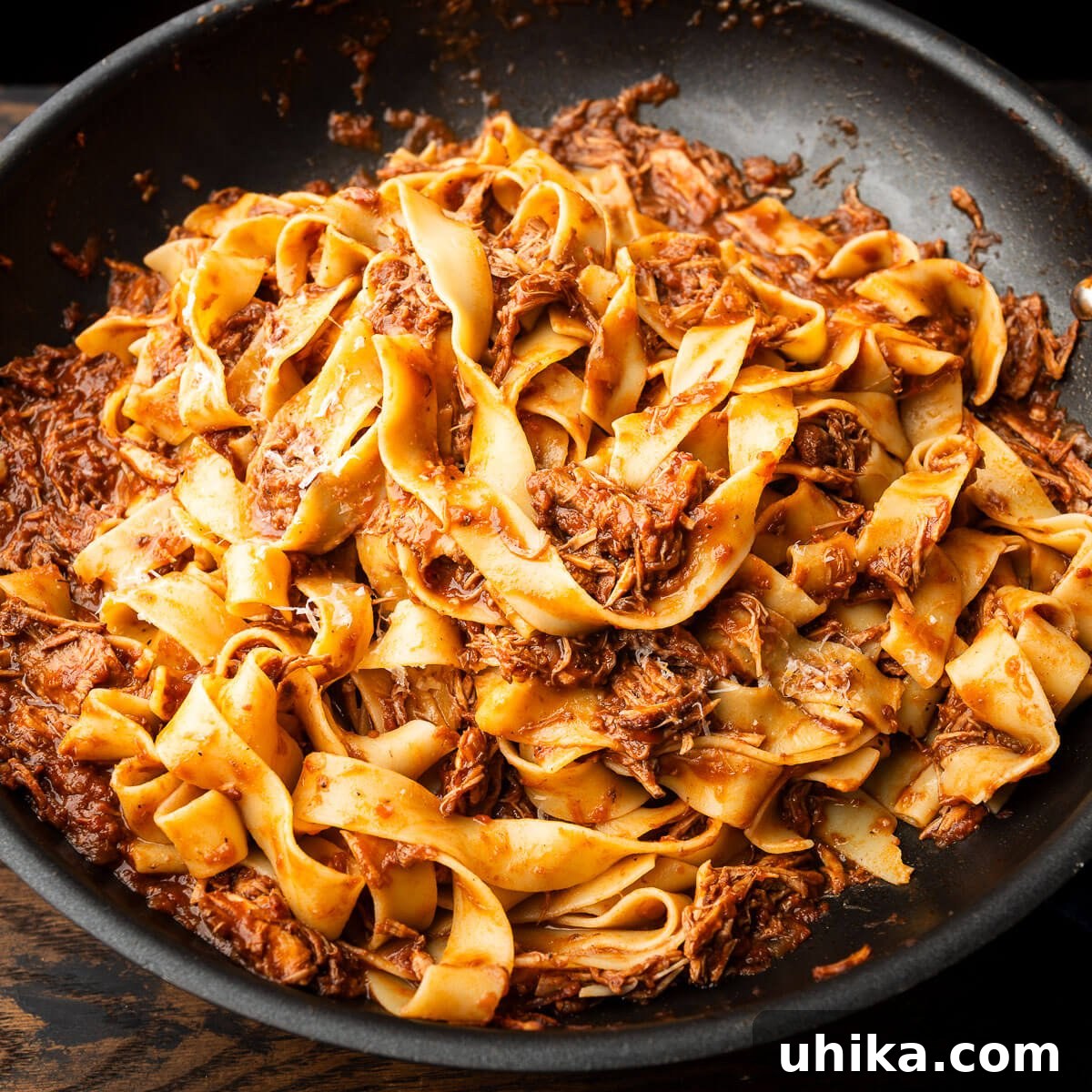
Pappardelle with Sicilian Pork Ragu (Sciabbó): A Taste of Mediterranean Comfort
Prepare to embark on a culinary journey to the heart of Sicily with Pappardelle with Sicilian Pork Ragu, affectionately known as Sciabbó or Sicilian Christmas pasta. This isn’t just a meal; it’s an experience of tender pork, slow-braised to perfection in a rich red wine and tomato sauce, infused with the unexpected warmth of cinnamon and the subtle depth of cocoa. Each luxurious strand of pappardelle becomes a canvas for this incredibly cozy and complex ragu, promising a dish that will enchant your senses and become a treasured addition to your recipe repertoire.
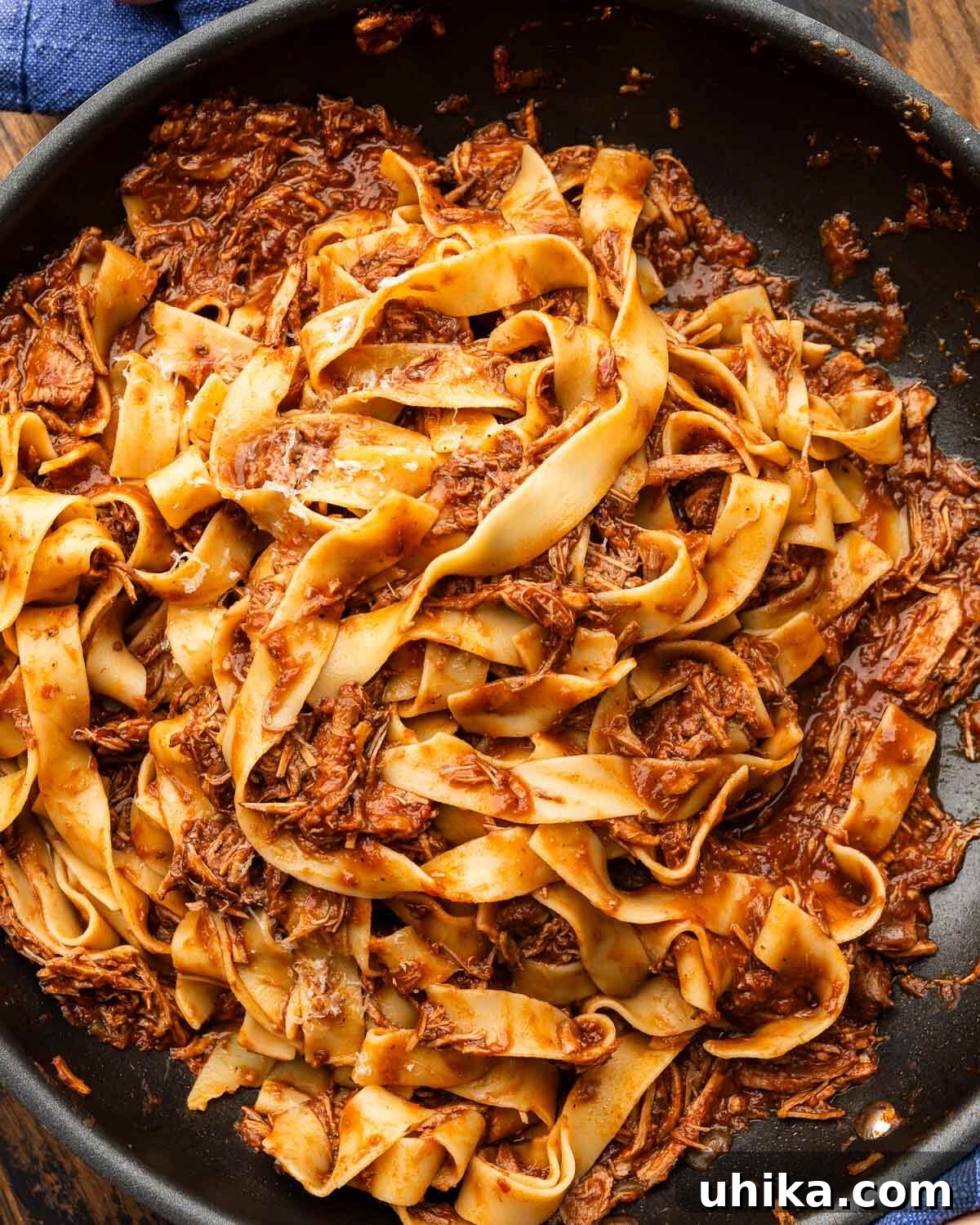

Sciabbó: A Year-Round Sicilian Treasure
The first time I created Sciabbó, or Sicilian pork ragu, I was genuinely astonished by its incredible depth of flavor. The unique blend of cinnamon, cocoa, and succulent shredded pork transcended my expectations, making it one of the most remarkable ragus I have ever tasted. While it holds a special place in Sicilian culinary traditions, often dubbed “Sicilian Christmas pasta,” I wholeheartedly believe this dish is far too exquisite to be confined to a single holiday celebration.
Sciabbó’s rich, aromatic profile makes it an ideal choice for any season, though it truly shines when the cooler weather calls for comforting, hearty meals. Its complex layers of taste provide a soul-satisfying experience that is perfect for gathering friends and family around the table, regardless of the time of year. I particularly enjoy serving this exceptional pasta alongside a vibrant side of roasted broccoli or tender broccolini, followed by a crisp, refreshing green salad to balance the richness.
This recipe is more than just a set of instructions; it’s an invitation to explore the nuanced flavors of Sicilian cooking. The addition of cinnamon and cocoa, while unconventional to some, is a testament to the island’s diverse culinary history, influenced by centuries of trade and cultural exchange. These spices don’t overpower but rather enhance the savory pork and sweet tomatoes, creating a harmonious and utterly addictive sauce that you’ll want to make again and again.
Unveiling the Key Ingredients for Authentic Sciabbó
Crafting an exceptional Sicilian Pork Ragu begins with selecting the right ingredients. Each component plays a crucial role in building the layered flavors that define this extraordinary dish. Below, you’ll find a detailed look at the core ingredients, along with special notes to guide your preparation. The visual guide below showcases these essential items, but specific quantities for each ingredient are listed in the full recipe section.
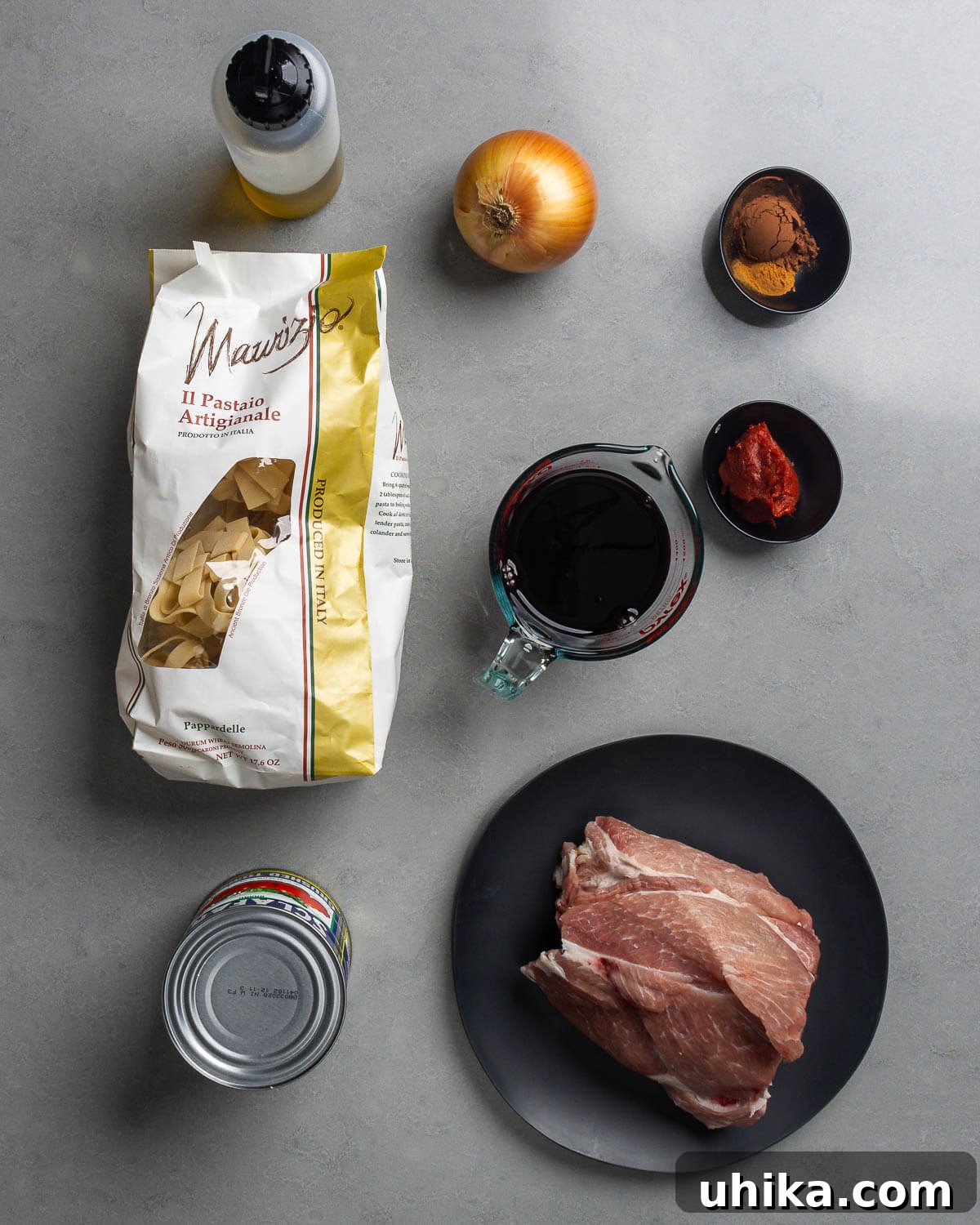
- Pork: The Heart of the Ragu. For this recipe, I highly recommend using a boneless pork shoulder, also known as pork butt. This cut is exceptionally rich in collagen, which slowly breaks down during the braising process, transforming into gelatin. This results in incredibly tender, fall-apart pork that shreds effortlessly and imparts a luxurious, silky texture to the ragu. While slow-braising yields the best results, if you’re short on time and desire a quicker version of Sciabbó, ground pork can be a suitable alternative. When using ground pork, reduce the red wine to ½ cup and simmer the ragu on the stovetop for 30-45 minutes until cooked through and flavorful.
- Red Wine: Aromatic Foundation. The choice of red wine is paramount for a deeply flavored ragu. Opt for a dry red wine such as Cabernet Sauvignon, Chianti, or Merlot. The wine serves multiple purposes: it deglazes the pan, lifting all the delicious browned bits from searing the pork, and its tannins and fruit notes add significant depth and complexity to the tomato sauce as it reduces and concentrates.
- Cinnamon: The Warming Secret. This seemingly unusual addition is a hallmark of traditional Sicilian cooking, reflecting historical North African and Middle Eastern influences. Ground cinnamon introduces a subtle, warming spice that beautifully complements the richness of the pork and the acidity of the tomatoes. It’s not meant to make the dish taste sweet, but rather to add an intriguing layer of aromatic complexity that elevates the entire ragu.
- Cocoa Powder: Depth and Balance. Similar to cinnamon, unsweetened cocoa powder might surprise some, but it’s a brilliant ingredient in savory dishes, particularly in slow-cooked stews and ragus (think Mexican mole or some Tuscan wild boar ragus). It doesn’t make the ragu taste like chocolate; instead, it deepens the color of the sauce, adds a subtle bitterness that balances the sweetness of the tomatoes and the richness of the pork, and contributes an umami depth that is hard to achieve otherwise.
- Tomatoes: The Sauce’s Soul. For the best results, choose high-quality canned plum tomatoes (San Marzano if possible). These tomatoes have a naturally sweet and balanced flavor profile. Crushing them by hand or pulsing them briefly in a blender ensures a rustic yet smooth consistency in the ragu, allowing the tomatoes to break down beautifully during the long braise.
- Pasta: The Perfect Partner. Hearty ragus like Sciabbó demand a pasta with sufficient surface area and texture to cling to the rich sauce. Pappardelle, with its wide, flat ribbons, and tagliatelle are ideal choices. Their broad shape perfectly cradles the shredded pork and thick sauce. Alternatively, tubular or ridged pasta shapes like rigatoni or penne also work wonderfully, trapping bits of ragu within their nooks and crannies.
- Olive Oil and Aromatics: A good quality extra virgin olive oil provides the base for sautéing, while a diced medium onion offers essential sweetness and aromatic foundation. Ensure your onion is cooked until soft and translucent to avoid any raw bite in the final sauce.
For the complete list of ingredients and precise quantities, please refer to the detailed recipe card at the end of this article.
Crafting Sciabbó: A Step-by-Step Guide to Sicilian Pork Ragu
Making this incredible Sicilian Pork Ragu is a labor of love, but each step contributes to the unparalleled flavor and tender texture of the final dish. Follow these detailed instructions to create a truly unforgettable meal. The numbered steps correspond to the process images shown below, guiding you visually through each stage.
- Prepare and Sear the Pork: Begin by preheating your oven to 300°F (150°C) and arranging the oven racks to comfortably fit a large Dutch oven in the center. Pat the pork shoulder chunks thoroughly dry with paper towels; this is crucial for achieving a deep, golden-brown sear. Season the pork generously on all sides with salt and freshly ground black pepper. Heat 3 tablespoons of olive oil in a large, heavy-bottomed Dutch oven over medium-high heat. Once the oil shimmers, carefully place the pork chunks in the pot, ensuring not to overcrowd it (cook in batches if necessary). Sear the pork until beautifully browned on all sides, typically 3-4 minutes per side. Browning the meat deeply develops rich flavor through the Maillard reaction. Once seared, transfer the pork to a plate and tent it loosely with foil to keep warm, reserving any juices.
- Sauté Aromatics and Tomato Paste: Lower the heat to medium. Add the diced onion to the same Dutch oven, along with a pinch of salt. Sauté the onion, stirring occasionally, until it softens and becomes translucent, about 5-7 minutes. This gentle cooking extracts the onion’s natural sweetness. Next, add the tomato paste to the pot. Cook the tomato paste for about 5 minutes, stirring constantly. This step is vital as it caramelizes the paste, intensifying its flavor and deepening its color. If the paste begins to stick or burn, slightly reduce the heat and add a splash of water or red wine to loosen it.
- Deglaze and Build the Sauce Base: Pour the dry red wine into the pot with the onions and tomato paste. Increase the heat to high and bring the wine to a vigorous simmer, scraping the bottom of the pot with a wooden spoon to loosen any browned bits (this is called deglazing, and it adds immense flavor). Allow the wine to reduce by half, which will concentrate its flavor. Then, add the hand-crushed or blender-pulsed canned plum tomatoes to the pot, stir well, and bring the sauce to a gentle boil.
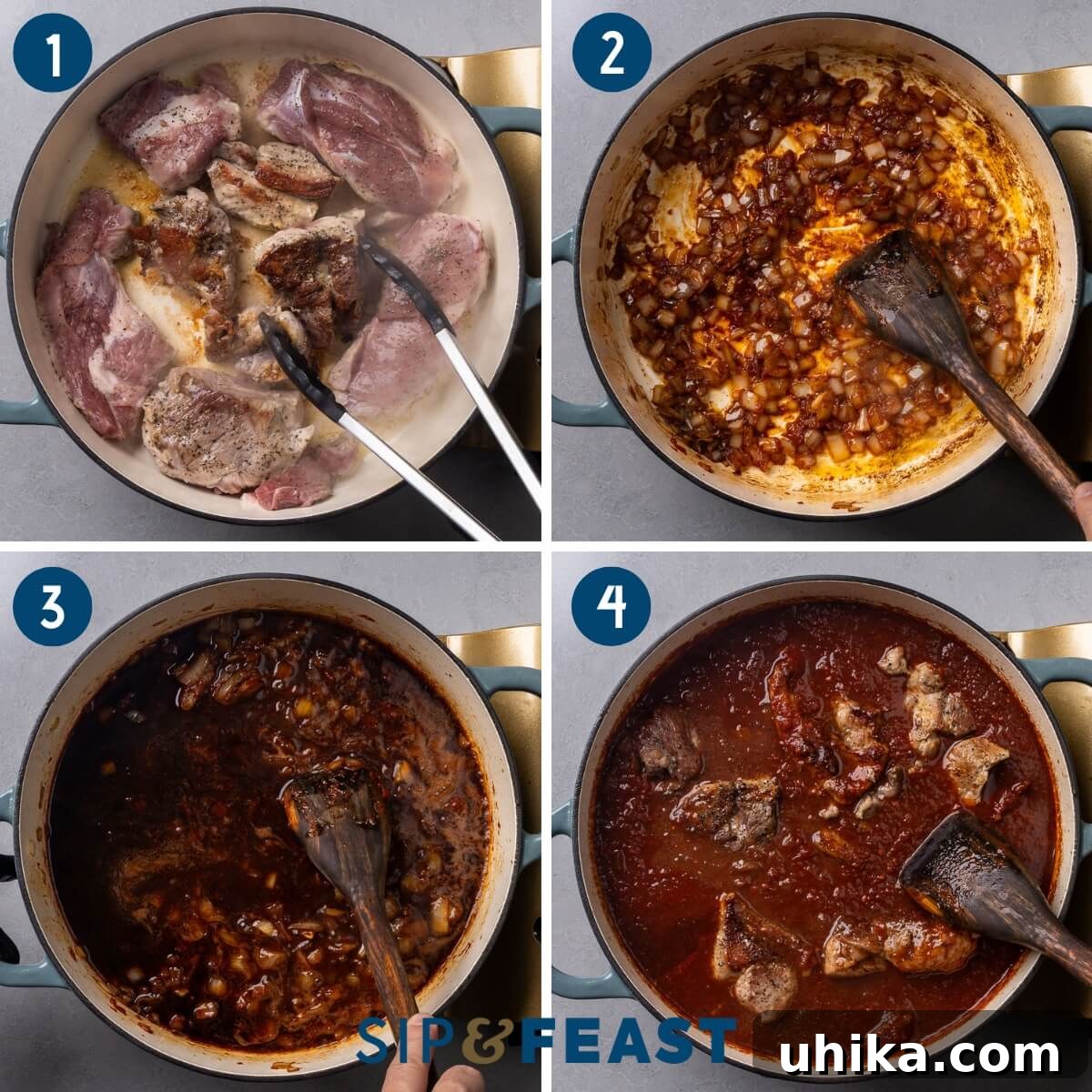
- Begin the Braising Process: Turn off the heat on the stovetop. Carefully return the seared pork chunks and any accumulated juices from the plate back into the Dutch oven, nestling them into the tomato sauce. Ensure the pork is mostly submerged in the liquid.
- Slow-Braise for Tenderness: Cover the Dutch oven tightly with its lid. Transfer the pot to the preheated 300°F (150°C) oven and braise for 2 hours. After this initial period, check the pork for tenderness. It should be very tender but might not be fall-apart yet. If it’s not as tender as desired, return the pot to the oven for an additional 30 minutes, or continue braising, checking every 30 minutes, until the pork is incredibly fork-tender and easily shreds. The total braising time can vary depending on your oven and the pork cut, so rely on tenderness rather than strict timing.
- Prepare Pasta and Finish the Ragu: While the pork is finishing its braise or immediately after, bring a large pot of heavily salted water to a rolling boil for the pasta. Once the ragu is removed from the oven, inspect the surface of the sauce. If an excessive amount of fat has risen to the top, use a large spoon or ladle to carefully skim off and discard the excess fat. This step helps to achieve a cleaner, more balanced sauce.
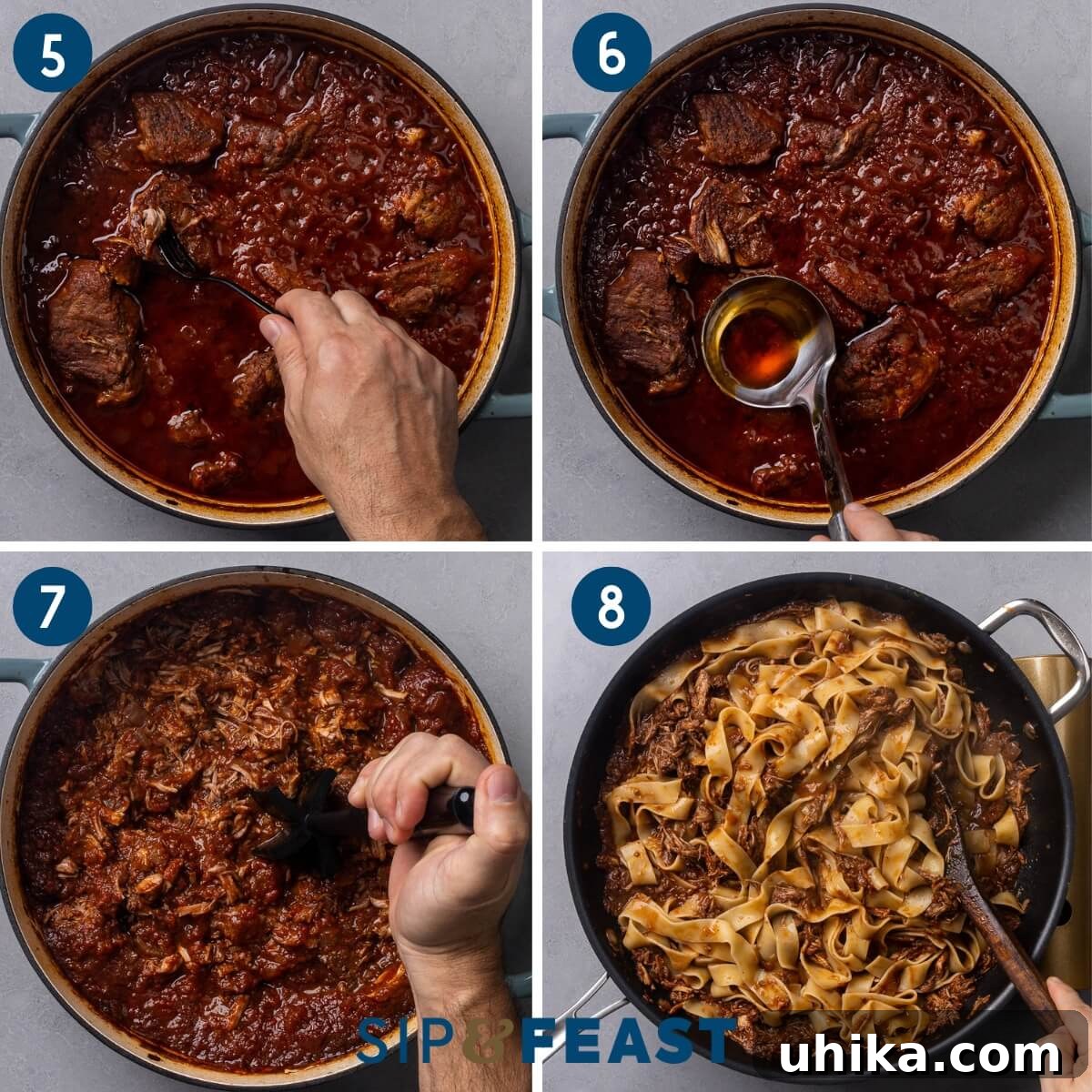
- Shred Pork and Final Seasoning: With the pork in the Dutch oven, use a meat masher or the back of a sturdy wooden spoon to break the tender pork into small, succulent pieces directly in the sauce. Stir in the ground cinnamon and unsweetened cocoa powder. Taste the ragu and adjust seasoning as needed with more salt and pepper. If the sauce tastes a bit too acidic or needs a touch of balance, add a small pinch of sugar, tasting after each addition until the flavor profile is perfect.
- Combine Pasta and Ragu: Cook the pappardelle in the boiling salted water until it is about 1 minute shy of al dente (it will finish cooking in the sauce). While the pasta cooks, place about 4 cups of the prepared pork ragu into a large, wide pan (like a sauté pan or a separate Dutch oven) and heat it over medium heat. Using tongs, transfer the slightly undercooked pasta directly from the boiling water into the pan with the warm ragu. Add a splash or two of reserved pasta water (the starchy water helps bind the sauce to the pasta). Mix well, tossing the pasta with the ragu until every strand is beautifully coated and the pasta reaches a perfect al dente texture. If the pasta seems too dry, add a touch more ragu or pasta water until it reaches your desired consistency. Once the pasta is perfectly coated and al dente, turn off the heat and serve immediately. Garnish generously with extra ragu on the side and a dusting of freshly grated Pecorino Romano or Parmesan cheese. Enjoy this masterpiece!
Expert Tips for a Perfect Sicilian Pork Ragu
Achieving the most flavorful and tender Sicilian Pork Ragu involves a few key techniques and considerations. These tips, gleaned from years of cooking hearty Italian dishes, will help you elevate your Sciabbó to culinary perfection.
- The Magic of Making Ahead: Like many braised dishes, including my beloved red wine braised short rib ragu, Sicilian pork ragu truly benefits from being made in advance. Preparing it a day before serving allows the complex flavors to meld and intensify, resulting in a deeper, more harmonious taste. The overnight refrigeration also offers a practical advantage: any excess fat will solidify on the surface, making it incredibly easy to skim off before reheating, yielding a cleaner, richer sauce.
- Embrace the Dutch Oven: A high-quality, heavy-bottomed Dutch oven or braiser with a tight-fitting lid is an indispensable tool for this recipe. Its exceptional heat retention and even heat distribution are ideal for searing the pork to a beautiful crust and then gently braising it for hours in the oven. The ability to seamlessly transfer from stovetop to oven makes it the optimal vessel for achieving perfectly tender, fall-off-the-bone results every time.
- Serving Suggestions and Creative Pairings: While this ragu is magnificent on its own, there are several ways to enhance the dining experience. A shower of freshly grated hard cheese, such as Pecorino Romano or Parmesan, is a classic accompaniment, adding a salty, umami kick. For an adventurous twist that truly complements the cocoa notes, try grating a small amount of high-quality dark chocolate (70% cocoa or higher) over the top just before serving. A sprinkle of fresh parsley or basil can also add a vibrant pop of color and freshness. Consider serving it with a robust red wine, perhaps the same variety you used in the ragu, and a crusty loaf of bread to soak up every last drop of the exquisite sauce.
- Storage and Freezing: Cooked Sicilian pork ragu can be stored in an airtight container in the refrigerator for up to 3-4 days. It reheats beautifully on the stovetop over low heat, or in the microwave. For longer storage, the ragu freezes exceptionally well for up to 3 months. Thaw overnight in the refrigerator before reheating. Note that the pasta is best cooked fresh, so store any leftover ragu separately from the pasta if possible.
Explore More Hearty Italian Pasta Recipes
If you’ve savored every bite of this Sciabbó recipe and are craving more comforting Italian pasta dishes, be sure to try these other delightful creations from my kitchen:
- Classic Pappardelle Bolognese
- Rustic Pasta alla Boscaiola
- Creamy Italian Sausage Pasta
If you enjoyed this Sicilian Pork Ragu recipe, please consider leaving a 5-star rating!
Connect with us and discover more culinary inspiration. Watch our cooking demonstrations on YouTube, follow our daily adventures on our Facebook Page, and become a Patreon member for exclusive access to full-meal videos and behind-the-scenes content.
Sicilian Pork Ragu (Sciabbó)
by James Delmage
Rating: 4.60 out of 5 stars from 10 votes
Prep Time: 20 mins
Cook Time: 3 hrs 30 mins
Total Time: 3 hrs 50 mins
Servings: 6
Pin Recipe
Sicilian Pork Ragu, also known as Sciabbó, is an incredibly simple yet profoundly comforting pasta dish. It features tender shreds of pork, slow-braised in a rich tomato and red wine sauce, harmoniously finished with a hint of cocoa powder and cinnamon. Tossed with wide pappardelle noodles, this dish is a true culinary delight that you’ll want to savor again and again!
Ingredients
- 1 pound pappardelle
- 3 tablespoons olive oil
- 2 pounds boneless pork shoulder, trimmed of exterior skin and cut into large chunks
- 1 medium onion, diced
- 3 tablespoons tomato paste
- 1 ½ cups dry red wine (e.g., Chianti, Cabernet)
- 1 28-ounce can plum tomatoes, hand-crushed or blender pulsed
- ½ teaspoon ground cinnamon
- 1 tablespoon unsweetened cocoa powder
- Sugar (optional, to taste)
- 2 cups reserved pasta water (will most likely not need all of it)
Unit System: US Customary
Instructions
- Preheat oven to 300°F (150°C) and move racks to make enough room to accommodate a large Dutch oven pot in the middle of the oven.
- Heat a heavy pot or Dutch oven to medium heat with the olive oil. Pat the pork dry and season well with salt and pepper on all sides. Sear the pork until brown on all sides, then remove the pork to a plate and tent with foil to keep warm.
- Add the onion to the pot along with a pinch of salt and sauté until soft. Add the tomato paste and cook for 5 minutes, stirring constantly. Turn down the heat or add a splash of water if the paste starts to burn. Add the wine and turn the heat to high. Reduce by half then add the tomatoes to the pot and bring the sauce to a boil.
- Turn off the heat and add the pork back to the pot. Cover the pot and place in the oven for 2 hours. After 2 hours, check for tenderness. If the pork is not yet fall-apart tender, return the pot back to the oven for another 30 minutes or continue to braise until tender.
- Bring a large pot of salted water to boil for the pasta.
- Remove the ragu from the oven. Degrease the sauce if an excess amount of fat has risen to the top. Using a meat masher or wooden spoon, break the pork into smaller pieces. Mix in the cinnamon and cocoa powder. Taste test and season with more salt and pepper as required. Add a bit of sugar, if needed, to balance out the flavor.
- Cook the pasta to 1 minute less than al dente.
- Place 4 cups of the ragu into a large pan and turn the heat to medium. Add the pasta to the pan and mix well to coat. If the ragu is too dry, add more of the ragu and a bit of reserved pasta water to loosen it up. Once the pasta reaches al dente, remove the pan from the heat. Serve with extra ragu on the side and with grated Pecorino Romano or Parmesan cheese. Enjoy!
Notes
- Servings: This recipe yields 6 moderate servings or 4 large, generous portions.
- Pork Variation: For a quicker preparation, use ground pork instead of pork shoulder. In this case, reduce the wine to only ½ cup, and the ragu will only need to simmer on the stovetop for 30-45 minutes until cooked through.
- Cinnamon and Cocoa Powder: These are powerful spices. It’s best to start with the stated amounts and then add more to your personal taste preference during the final seasoning step.
- Sugar: A small amount of sugar might be needed to balance the acidity of the tomatoes and the richness of the flavors. Add a touch at a time and taste until you are satisfied, or omit it completely if not needed.
- Make Ahead: Preparing the pork ragu 24 hours in advance and refrigerating it overnight allows the flavors to deepen and meld beautifully. This also makes it easier to remove any solidified fat from the top with a spoon before reheating.
- Leftovers: Sicilian pork ragu can be stored in an airtight container in the refrigerator for up to 3 days. It can be reheated on the stovetop or in the microwave. The leftover ragu also freezes well for up to 3 months in a freezer-safe container.
Nutrition
Calories: 872 kcal | Carbohydrates: 80.1g | Protein: 41.1g | Fat: 41.6g | Saturated Fat: 13.3g | Cholesterol: 107mg | Sodium: 296mg | Fiber: 10.6g | Sugar: 4.5g | Calcium: 91mg | Iron: 9mg
Nutrition information is automatically calculated and should be used as an approximation.
Like this recipe? Leave a comment below!
Check us out on Instagram at @sipandfeast or tag #sipandfeast!