
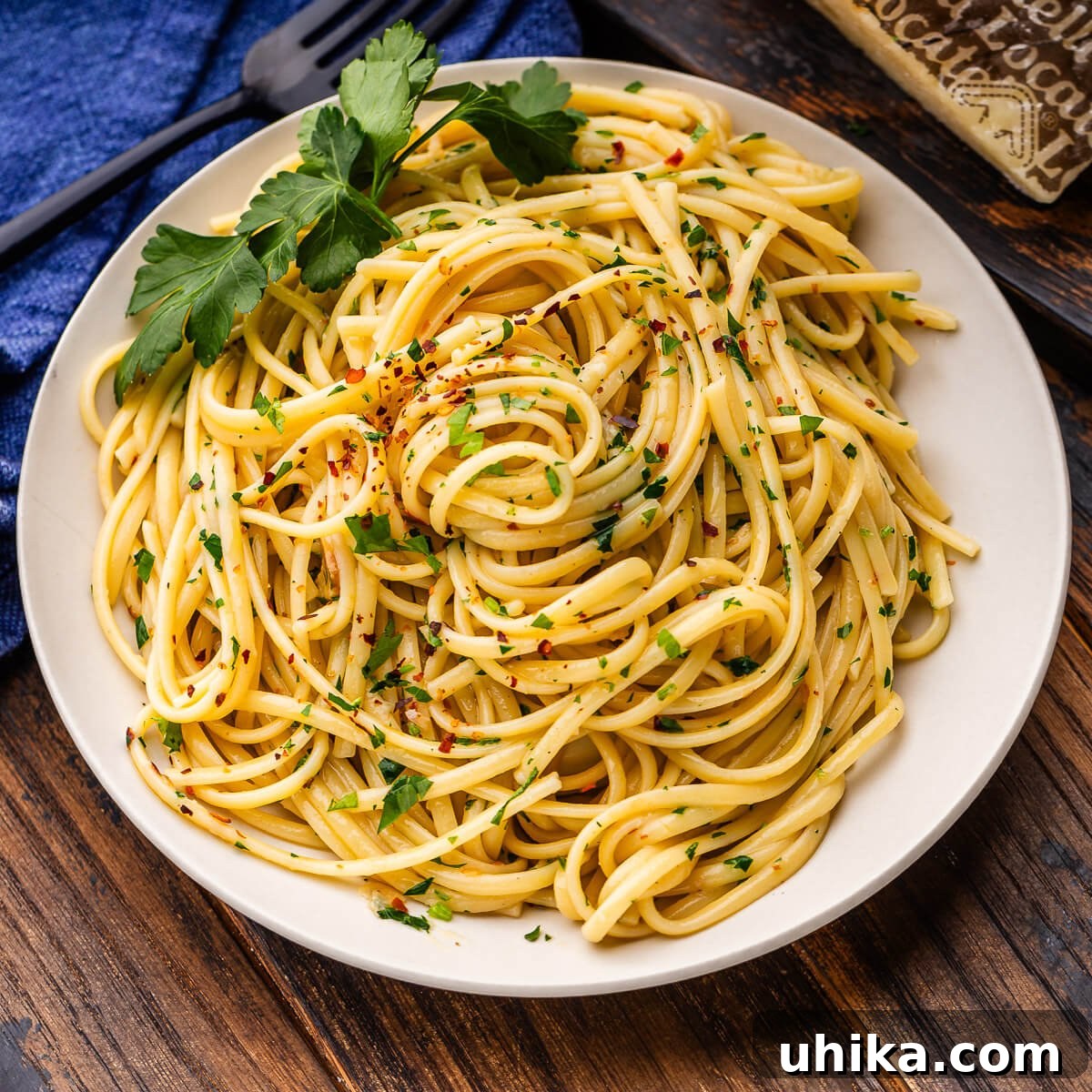
Linguine Aglio e Olio: The Ultimate Quick & Flavorful Pasta
With just a handful of humble ingredients, Linguine Aglio e Olio, also known as linguine with garlic and oil, stands as one of the most exquisitely simple yet profoundly flavorful pasta dishes you can master. Don’t let its minimalist nature deceive you – this classic Italian staple is bursting with incredible taste and the best part? It’s ready to serve in almost the same time it takes for your pasta to boil. Whether you’re a seasoned chef or a culinary novice, this recipe is your ticket to a delicious, authentic Italian meal without the fuss.
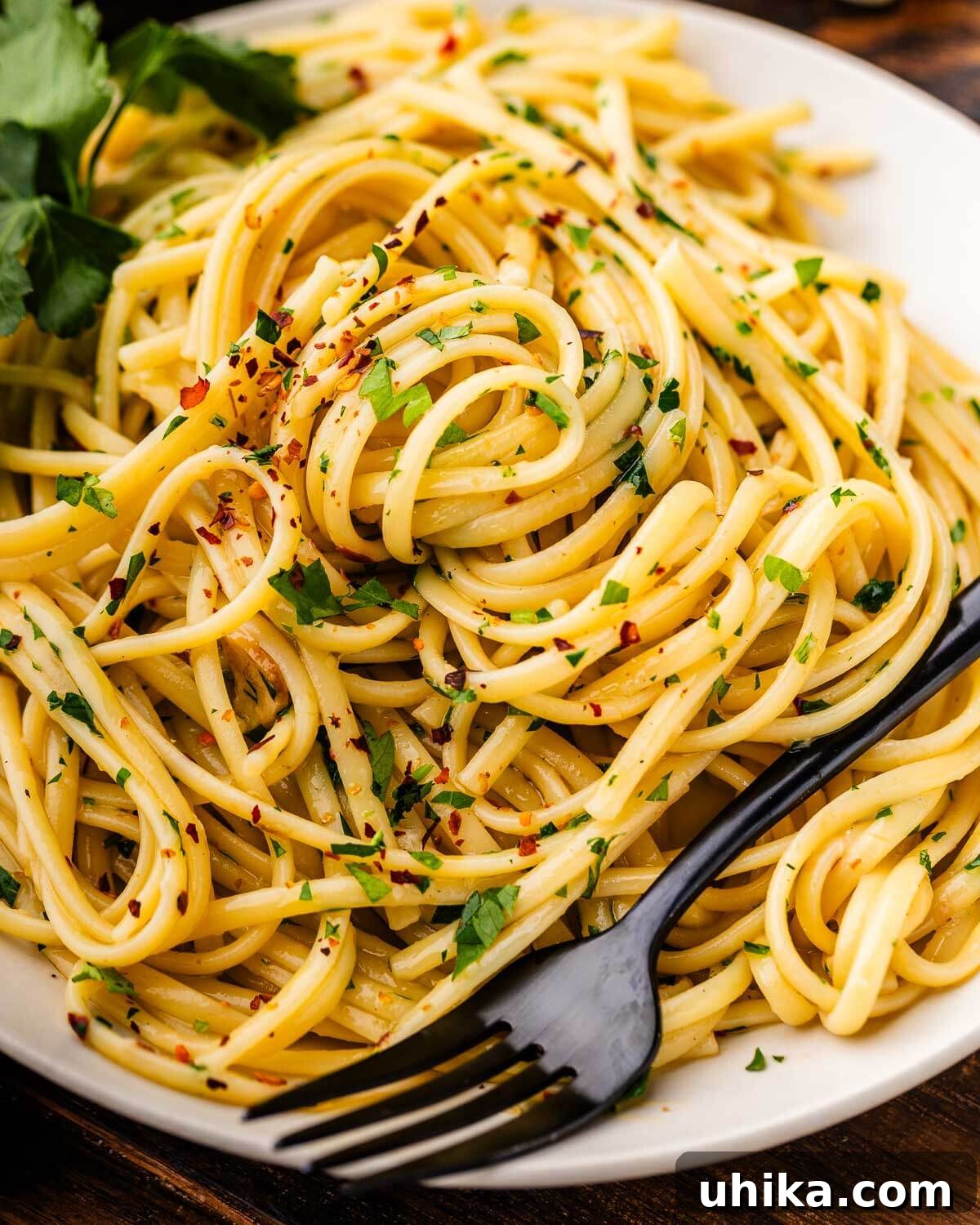
When it comes to effortlessly delicious pasta dishes, Linguine Aglio e Olio undoubtedly claims a top spot, sharing the spotlight with other easy favorites like pasta marinara, pasta con broccoli, and fettuccine Alfredo. This is the pasta dish I instinctively turn to when I need a quick, satisfying, and undeniably delicious meal that never disappoints. Its universal appeal lies in its straightforward preparation and the incredible depth of flavor extracted from just a few key components.
While this guide outlines the foundational recipe, the beauty of Aglio e Olio lies in its versatility. Feel empowered to customize it with additional ingredients such as briny anchovies, Kalamata olives, or even a sprinkle of toasted breadcrumbs for added texture. This dish is not only a go-to for busy weeknights but also an ideal starting point for aspiring home cooks, as it’s truly challenging to “screw up” and promises a rewarding culinary experience every time.
The Story Behind Aglio e Olio: A Roman Classic
Pasta Aglio e Olio, translating simply to “pasta with garlic and oil,” is a quintessential dish from the region of Campania, though it has found popularity across all of Italy, especially in Rome. Its origins are deeply rooted in Italian peasant cooking, where ingenuity and flavor were drawn from readily available, inexpensive ingredients. It’s a testament to the fact that you don’t need a pantry full of exotic items to create something truly extraordinary. This dish embodies the “cucina povera” philosophy – humble ingredients, magnificent results. It’s celebrated for its intense garlic aroma, the silky richness of olive oil, and the subtle kick from chili flakes, all coming together in a harmonious dance of flavors that perfectly coat each strand of pasta.
Essential Ingredients for Perfect Aglio e Olio
The magic of Linguine Aglio e Olio lies in the quality and freshness of its few ingredients. Each component plays a crucial role in creating the dish’s signature robust flavor. Below, you’ll find a detailed look at what you’ll need, along with tips for selecting the best of each.
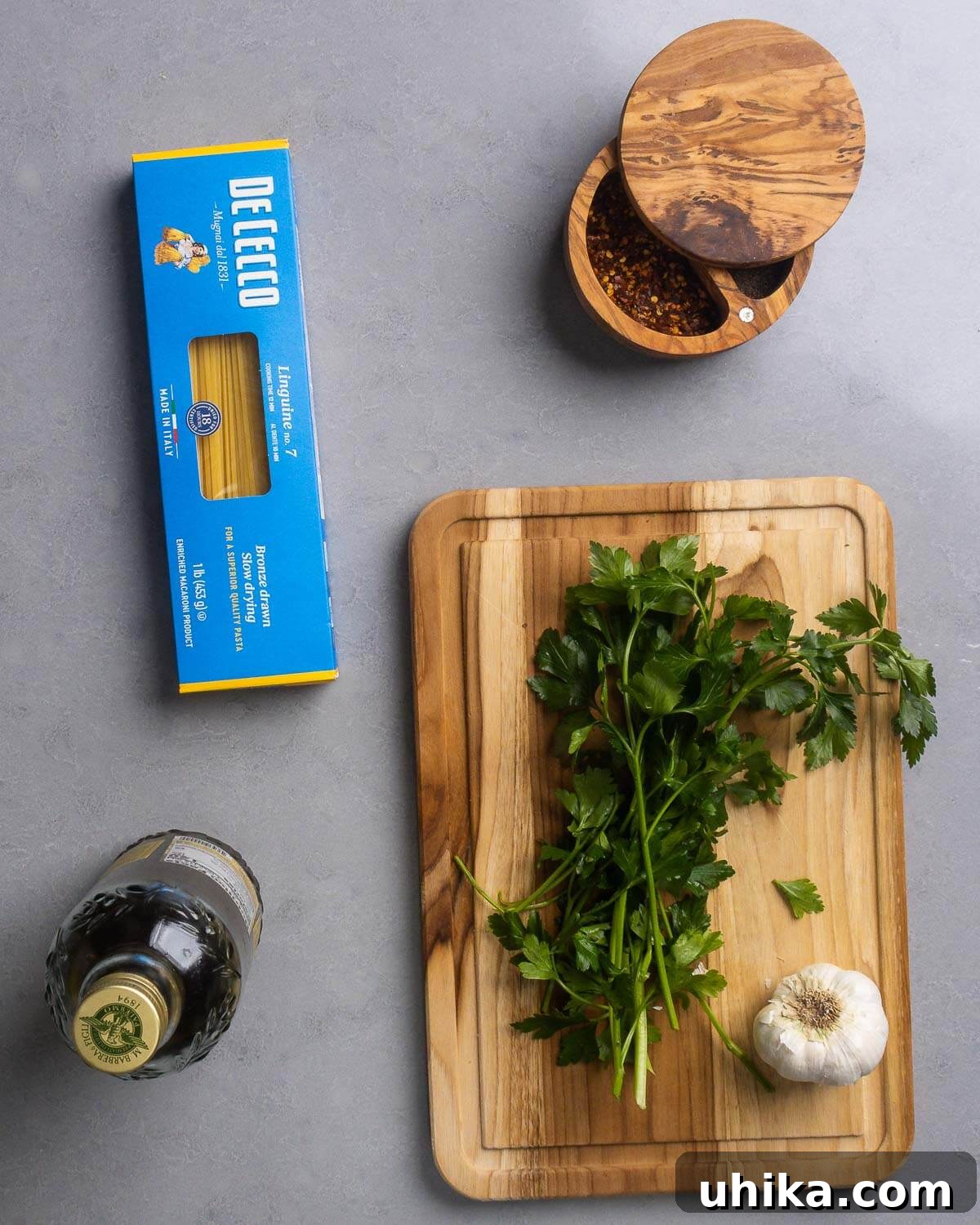
- Pasta: Linguine is Our Star. While spaghetti aglio e olio is a common choice, we firmly believe linguine is the superior pasta for this particular dish. Its slightly flatter, broader shape provides a better surface area for the garlic slivers and chopped parsley to cling to, ensuring every bite is infused with flavor. The texture of linguine also offers a more substantial mouthfeel, beautifully complementing the rich oil-based sauce. However, if linguine isn’t available, high-quality spaghetti or even bucatini (for an extra chewy experience) can be excellent alternatives.
- Olive Oil: The Golden Elixir. Given the minimal ingredient list, the quality of your extra virgin olive oil (EVOO) is paramount. Don’t hold back – use your finest. A high-quality EVOO will impart a fruity, peppery, and truly exquisite flavor that forms the very backbone of this sauce. It’s used both to gently sauté the garlic, infusing the oil with its essence, and as a finishing drizzle, adding a fresh, vibrant note just before serving.
- Garlic: The Heart of the Dish. Fresh garlic is non-negotiable for pasta aglio e olio! This is not the moment for garlic powder, jarred minced garlic, or any substitutes. We recommend slicing the garlic thinly rather than mincing it, as slicing allows for a more controlled browning and releases its aromatic compounds more gradually, preventing it from burning too quickly and turning bitter. The goal is golden, fragrant garlic, not burnt.
- Parsley: A Fresh Finish. Fresh flat-leaf Italian parsley adds a burst of herbaceous freshness and a beautiful green contrast to the dish. The quantity is entirely up to personal preference. While some traditionalists argue against too much parsley, we encourage you to use as much or as little as you desire. Remember, you’re the cook!
- Crushed Hot Red Pepper Flakes: For a Kick. These little flakes provide a wonderful warmth and subtle heat that beautifully complements the garlic. Adjust the amount to your spice preference. A little goes a long way, but if you love heat, feel free to be generous.
- Salt: Essential Seasoning. Proper seasoning is key. You’ll need salt for the pasta water and to adjust the final taste of the sauce. Remember, the pasta water should be salty like the sea to properly season the pasta from within.
- Pasta Water: The Secret Ingredient. Always reserve at least two cups of starchy pasta water! This magical liquid is essential for emulsifying the sauce, creating a glossy, cohesive coating that clings perfectly to the pasta. It binds the oil, garlic, and other flavors together, transforming them into a silky, luscious sauce.
For precise measurements and quantities, please refer to the complete recipe card below.
Mastering Linguine Aglio e Olio: Step-by-Step Guide
Creating this iconic Italian dish is incredibly simple, but a few key techniques ensure a truly spectacular result. Follow these steps to achieve a perfectly balanced and flavorful Linguine Aglio e Olio.
- Cook the Pasta & Reserve Water: Bring a large pot of heavily salted water to a rolling boil. Add the linguine and cook it to about 1 minute less than al dente, as it will finish cooking in the pan with the sauce. This undercooking ensures your pasta won’t become mushy. Crucially, before draining, reserve at least 2 cups of that starchy pasta water. This liquid gold is vital for the sauce.
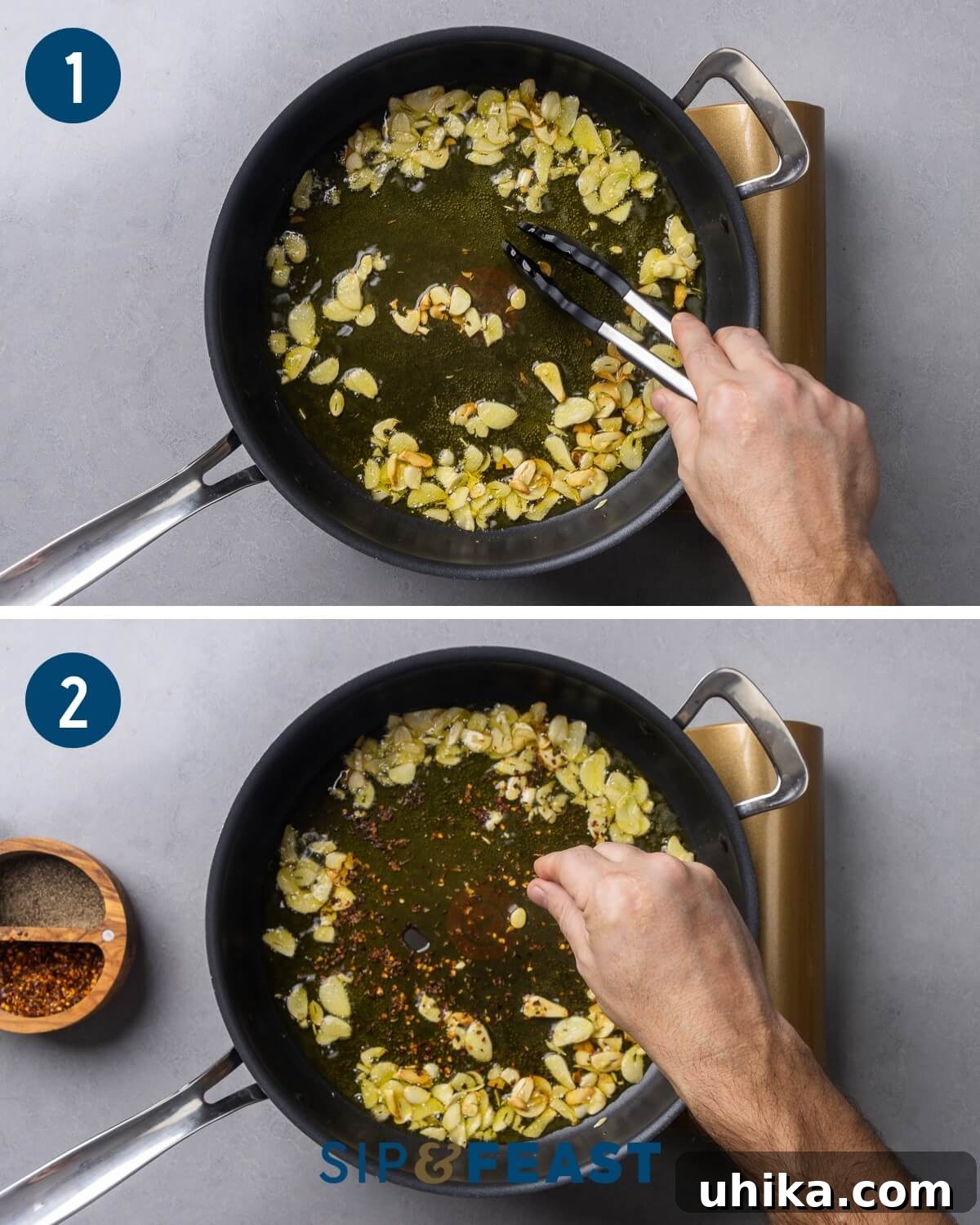
- Infuse the Oil with Garlic and Chili: While the pasta cooks, heat a large sauté pan over medium-low heat with the extra virgin olive oil. Add the thinly sliced garlic and gently sauté, stirring occasionally. The key here is low and slow: you want the garlic to turn a beautiful golden color, becoming fragrant and sweet, not brown or bitter. This should take about 3-4 minutes. Once golden, stir in the crushed red pepper flakes and cook for just 30 seconds more to release their aromatic heat. Be careful not to burn the garlic or chili.
- Build the Sauce Base: Add one ladleful of the reserved pasta water to the garlic and oil mixture in the pan. Turn the heat up to medium. The starchy water will begin to emulsify with the olive oil, creating a silky, slightly thickened sauce base that will lovingly coat your pasta.
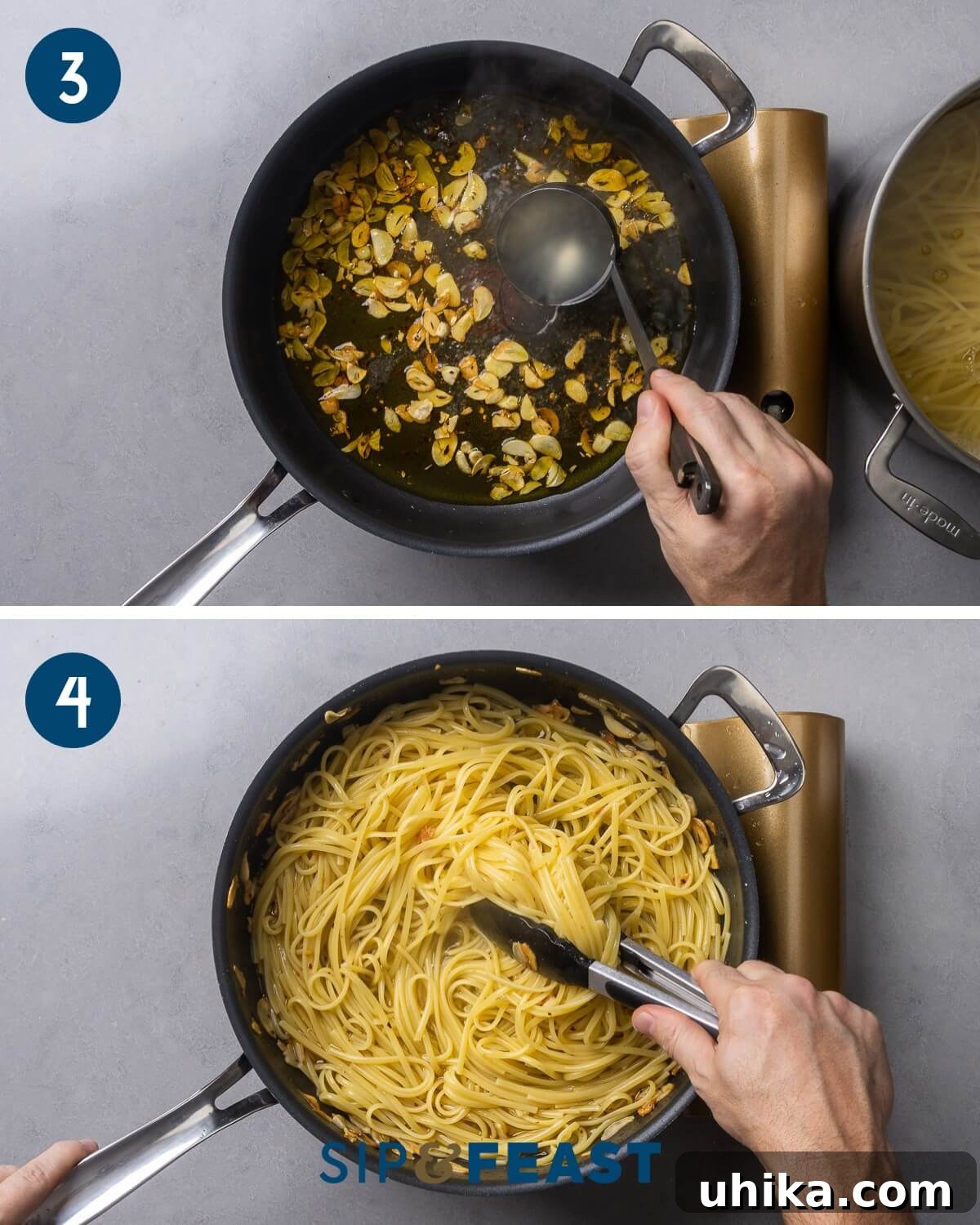
- Combine Pasta and Sauce: Using tongs, transfer the al dente linguine directly from the pot into the sauté pan with the sauce. This helps carry over more starch, further aiding emulsification. Toss or mix vigorously to ensure every strand of pasta is thoroughly coated with the garlic and oil sauce. Continue cooking for about 1 minute, or until the pasta reaches a perfect al dente texture. If the sauce looks too dry or thick, add a splash more pasta water, a little at a time, until it reaches your desired consistency. Remove the pan from the heat immediately once the pasta is done.
- Season to Perfection: Taste the pasta and season generously with salt, to your preference. Remember that the pasta water was salted, so adjust accordingly. This is where you bring all the flavors into balance.
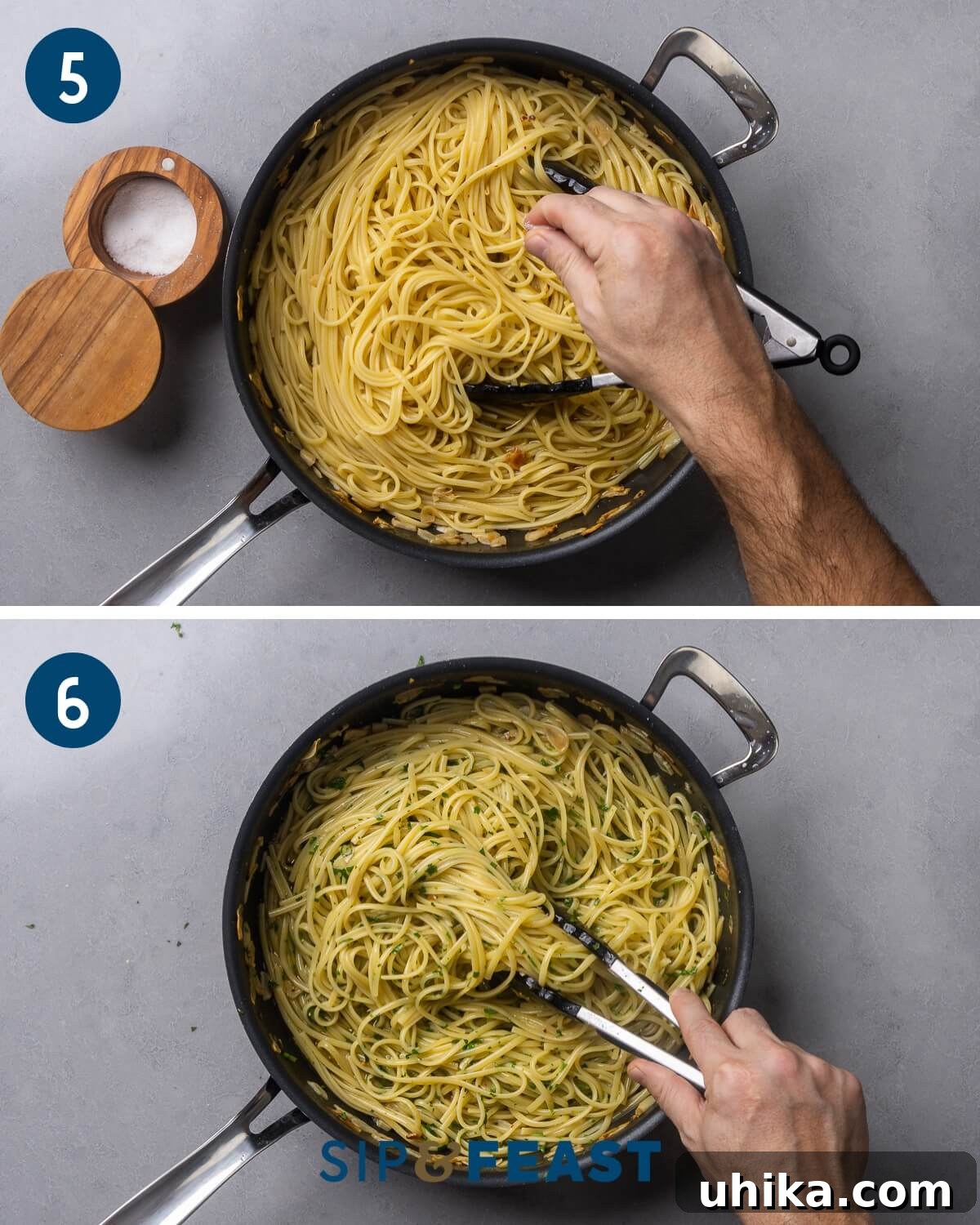
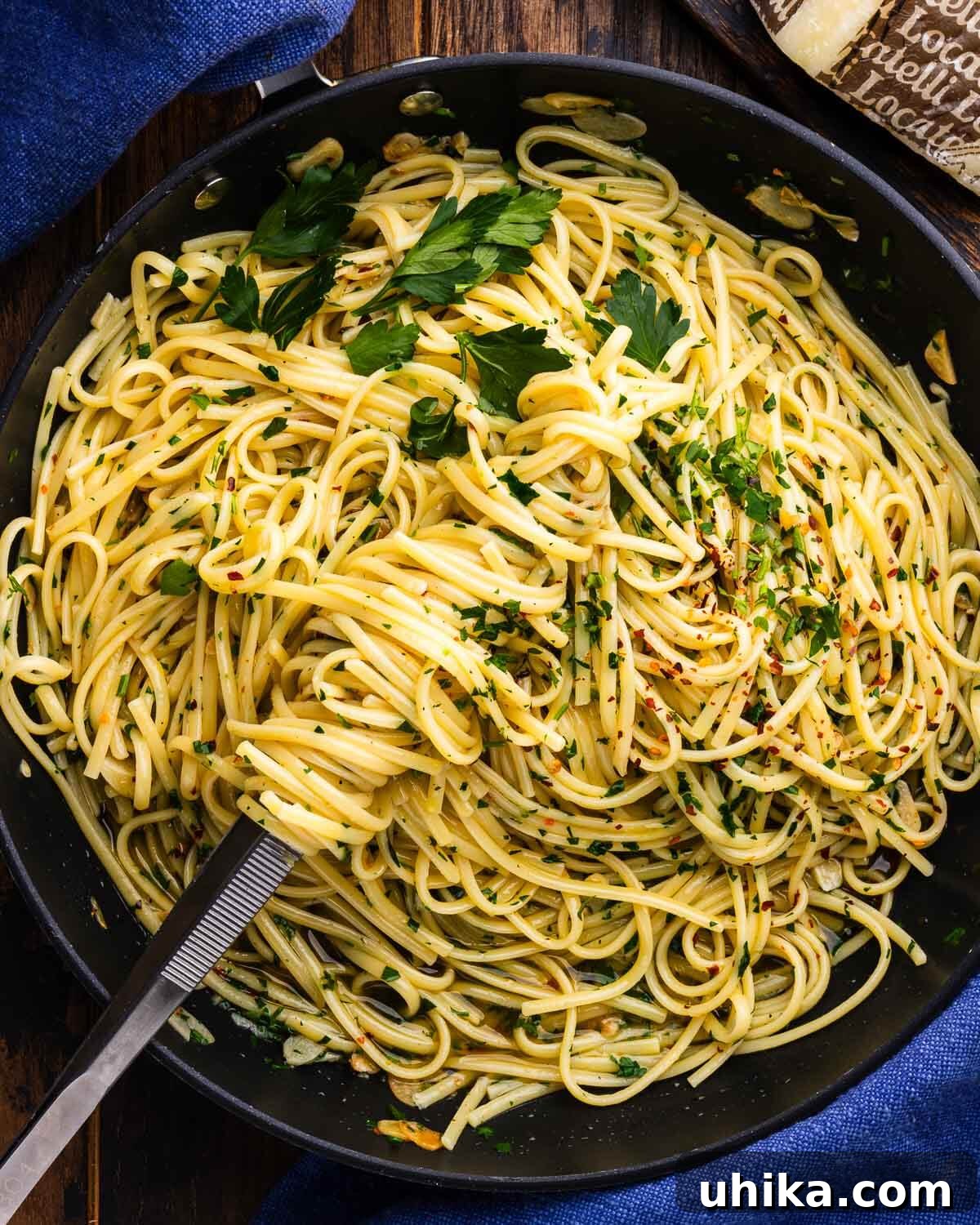
- Finish and Serve: Add a generous drizzle of fresh extra virgin olive oil and the minced parsley to the pan. Toss everything once more. If the pasta has absorbed too much liquid and appears dry, add a few more ounces of reserved pasta water, a little at a time, until the sauce is glossy and coats the pasta beautifully. Serve immediately, perhaps with a sprinkle of grated Pecorino Romano or Parmesan cheese, if desired (though traditionally, Aglio e Olio is often served without cheese to let the garlic and oil shine). Enjoy your flavorful masterpiece!
Expert Tips for the Best Aglio e Olio
- Don’t Rush the Garlic: The most common mistake is burning the garlic. Keep the heat low and cook it gently until it’s golden, not dark brown. Burnt garlic will make your dish bitter.
- Embrace the Pasta Water: It’s truly the secret ingredient. The starch in the water helps create a luscious, emulsified sauce that perfectly binds to the pasta. Don’t be shy about adding more if your sauce seems too dry.
- Taste, Taste, Taste: Always taste the pasta and sauce before serving, and adjust the salt and pepper as needed. A perfectly seasoned dish elevates all the flavors.
- Quality Olive Oil is Key: Since olive oil is such a prominent flavor, invest in a good quality extra virgin olive oil. It makes a significant difference.
- Fresh Herbs are Best: Fresh parsley adds a vibrant, clean flavor that dried parsley simply cannot replicate.
- Serve Immediately: Aglio e Olio is best enjoyed fresh off the stove when the pasta is hot and the sauce is perfectly emulsified. It can dry out quickly if left to sit.
Delicious Variations & Add-ins
While the classic Aglio e Olio is perfect as is, it’s also a fantastic canvas for experimentation. Here are a few ideas to get you started:
- Spicy Shrimp Aglio e Olio: Add cooked shrimp to the pan with the pasta during the last minute of cooking. The flavors meld beautifully.
- Anchovy Enhancement: For an extra layer of savory umami, melt 2-3 anchovy fillets in the olive oil with the garlic. They dissolve into the oil, leaving behind a rich, briny depth without a fishy taste.
- Cherry Tomato Burst: Halve some cherry tomatoes and add them to the pan with the garlic, allowing them to blister and release their sweet juices.
- Lemon Zest Brightness: A final sprinkle of fresh lemon zest can add a wonderful, bright counterpoint to the rich garlic and oil.
- Toasted Breadcrumbs (Pangrattato): For added texture, sauté some breadcrumbs in a separate pan with a little olive oil until golden and crispy. Sprinkle over the finished dish.
Explore More Easy Pasta Recipes
If you’re continually seeking out truly easy and incredibly satisfying pasta dishes, be sure to give these other favorites a try from our collection!
- Lemon Garlic Shrimp Pasta
- Rigatoni alla Vodka
- Pasta al Tonno
If you’ve enjoyed preparing and tasting this Linguine Aglio e Olio Recipe, we would love for you to share your experience!
You can also watch us on YouTube, follow along on our Facebook Page, and become a Patreon member to receive access to exclusive full-meal videos and additional content.
Linguine Aglio e Olio (Garlic and Oil)
by James Delmage
Prep Time: 5 mins
Cook Time: 20 mins
Total Time: 25 mins
Servings: 4
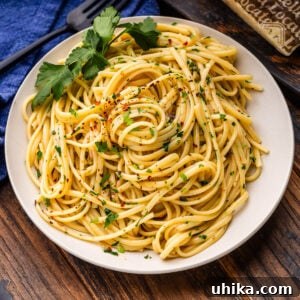
With just a few simple ingredients, linguine aglio e olio is truly the best pasta dish to make when you’re pressed for time but still craving an amazing and flavorful meal!
Ingredients
- 6 cloves garlic, thinly sliced
- 1/2 cup extra virgin olive oil
- 1/2 teaspoon crushed hot red pepper flakes (or to taste)
- 1 pound (454g) linguine pasta
- Salt, to taste
- 1/4 cup minced fresh flat-leaf Italian parsley
- 2 cups (480ml) pasta water (reserve generously)
Instructions
- Bring a large pot of salted water to a boil and cook the linguine to 1 minute less than al dente.
- Heat a large pan over medium-low heat with the extra virgin olive oil and add the sliced garlic. Once the garlic turns golden (about 3-4 minutes), add the red pepper flakes and cook for 30 seconds more, being careful not to burn the garlic.
- Add 1 ladle of reserved pasta water to the garlic and oil mixture, and turn the heat to medium.
- Add the linguine to the pan and toss or mix vigorously to coat. Add more pasta water if the sauce starts to dry out. Cook until the pasta is just al dente (around 1 minute more), then remove the pan from the heat.
- Taste the pasta and season with salt to taste. Add a big drizzle of fresh extra virgin olive oil and all the minced parsley to the pan. Toss once more. If the pasta is at all dry, add a couple of ounces at a time of the reserved pasta water to achieve the perfect consistency.
- Serve immediately with grated Pecorino Romano or Parmesan cheese, if desired. Enjoy your delicious Aglio e Olio!
Notes
- Linguine is often preferred over spaghetti for this dish, though either can be used.
- Make sure to add plenty of salt to taste right before serving, as this greatly enhances the flavors.
- Always use high-quality extra virgin olive oil, especially for finishing, but preferably also for sautéing the garlic.
- Always reserve plenty of pasta water. If the pasta dries out before serving, just add a few ounces of the reserved pasta water to bring the consistency back to perfect and keep the sauce silky.
- Leftovers can be stored in an airtight container in the refrigerator for up to 3 days.
Nutrition Facts (Approximation per Serving)
Calories: 549 kcal | Carbohydrates: 63.6g | Protein: 13.1g | Fat: 27.8g | Saturated Fat: 4g | Cholesterol: 83mg | Sodium: 300mg | Potassium: 221mg | Fiber: 0.1g | Sugar: 0.1g | Calcium: 25mg | Iron: 4mg
Nutrition information is automatically calculated and should only be used as an approximation. Actual values may vary.
Like this recipe? Leave a comment below!
Check us out on Instagram at @sipandfeast or tag #sipandfeast to share your creations!
This recipe was originally published on March 3, 2021. It was completely updated on February 22, 2025, with enhanced details and improved instructions.