
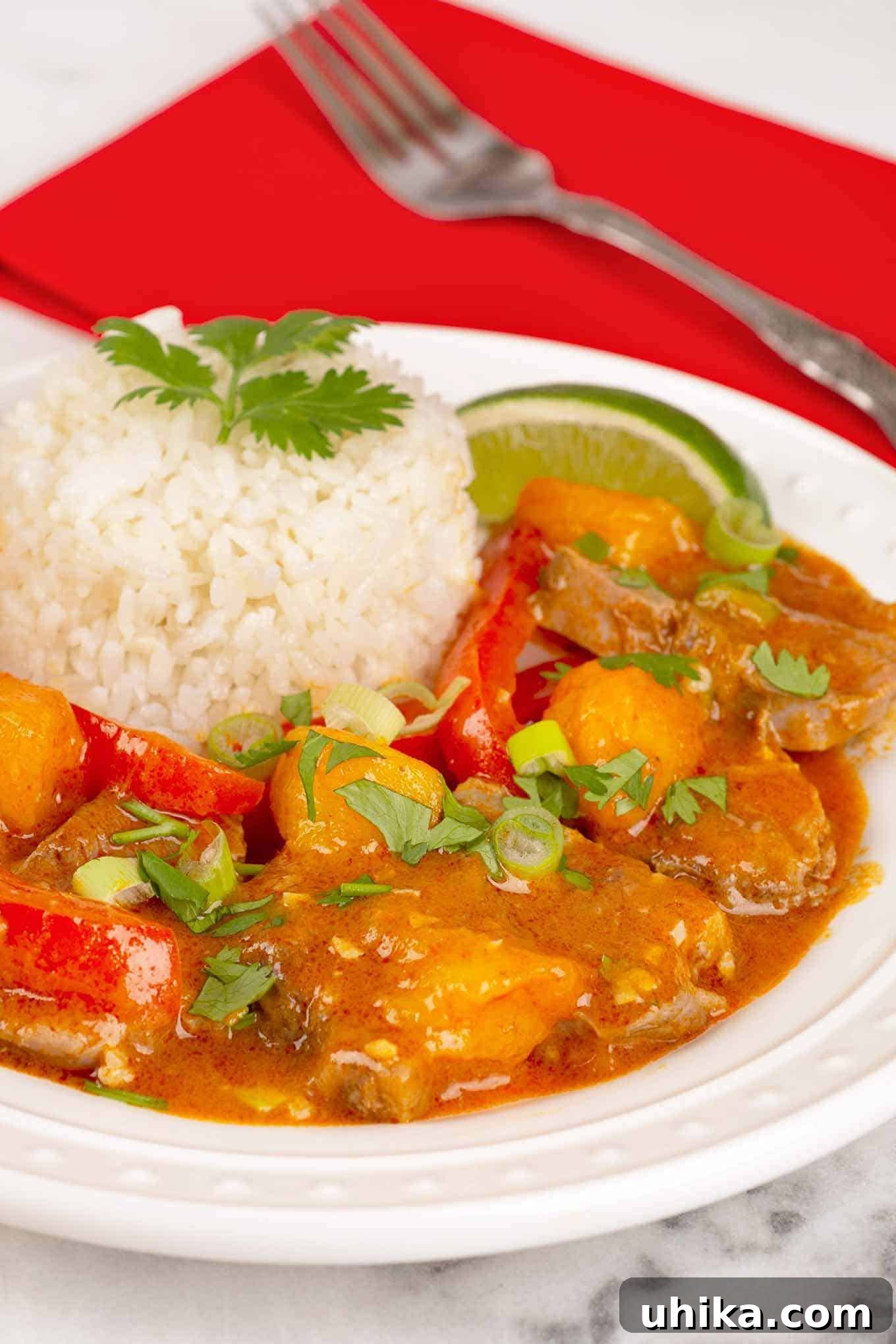

Embark on a culinary journey to Thailand from the comfort of your kitchen with this extraordinary Thai Mango Red Curry Duck. This restaurant-quality dish, featuring succulent duck breast bathed in a rich, fragrant coconut curry sauce and brightened with sweet mango, is surprisingly simple to prepare at home. Served elegantly with perfectly steamed jasmine rice and garnished with fresh lime and aromatic cilantro, it promises an unforgettable dining experience.
Thai cuisine is renowned for its harmonious blend of sweet, sour, salty, and spicy flavors, and this duck curry exemplifies that balance beautifully. Many authentic Thai establishments proudly feature a variety of duck dishes on their menus, and for good reason. Duck possesses a distinctive, robust flavor profile that stands up exceptionally well to the bold and complex spices characteristic of Thai cooking, creating a depth of taste that is both exotic and deeply satisfying.
While duck is the star of this recipe, we understand that preferences vary or that duck may not always be readily available. For those who prefer an alternative, stir-fried chunks of pork tenderloin make an excellent substitute, offering a milder yet equally delicious experience. Detailed instructions for this variation are provided in the recipe notes below, ensuring flexibility without compromising on flavor.
Unlocking Authentic Thai Flavors at Home: Why This Recipe is a Must-Try
There’s a certain magic in replicating beloved restaurant dishes in your own kitchen, and this Thai Mango Red Curry Duck is no exception. Beyond its incredible taste, this recipe offers a unique blend of experiences:
- Exotic Yet Approachable: While the ingredient list might seem specialized, each component plays a vital role in building the layered flavors of classic Thai curry. With readily available ingredients and straightforward steps, even novice cooks can achieve remarkable results.
- A Symphony of Textures: From the crispy skin and tender meat of the duck to the creamy, velvety curry sauce and the soft chunks of mango, this dish offers a delightful interplay of textures in every spoonful.
- Vibrant and Visually Stunning: The rich red hue of the curry, the golden-brown duck, the bright yellow mango, and the fresh green garnishes create a visually appealing dish that is perfect for entertaining guests or simply brightening up your weeknight meal.
- Healthful Indulgence: Packed with fresh vegetables, lean protein, and the healthful benefits of coconut milk and spices, this curry is a wholesome choice that doesn’t skimp on indulgence.
Essential Tips for Crafting Your Perfect Thai Mango Red Curry Duck
While this recipe is designed for simplicity, a few expert tips can elevate your homemade Thai curry from good to truly exceptional. Paying attention to these details will ensure a flavorful and authentic outcome that rivals your favorite Thai restaurant.
- The Foundation of Flavor: Choosing a Quality Red Curry Paste: The red curry paste is the heart and soul of this dish, providing its signature spicy and aromatic base. Investing in a good quality paste is paramount for achieving authentic Thai flavors. Our top recommendation is Aroy-D, celebrated for its rich, balanced profile. Maesri is another excellent option, offering robust flavor. Both brands are widely available at most Asian grocery stores and can also be conveniently purchased online through retailers like Amazon and ImportFood.com, which we consider a superior source for high-quality Thai ingredients. Remember that curry pastes vary in heat and intensity, so adjust the quantity to your personal preference, starting with a smaller amount and adding more if desired.
- Creaminess is Key: Opt for Full-Fat Coconut Milk: For that luxurious, silky-smooth texture and rich flavor that defines a truly great coconut curry, full-fat coconut milk is non-negotiable. Low-fat or “light” versions simply won’t deliver the desired creaminess and depth, often resulting in a thinner, less satisfying sauce. The fat in full-fat coconut milk is essential for carrying the complex flavors of the curry paste and creating that wonderfully indulgent mouthfeel.
- Mastering Your Protein: Prevent Overcooking: Whether you’re using duck breast or pork tenderloin, achieving the correct doneness is crucial for tenderness and flavor. Duck breasts are best served medium-rare to medium, ensuring they remain juicy and tender. Since this recipe involves cooking the meat separately before adding it back to the sauce, it’s vital to cook it just right in the initial step. Overcooking in the pan before it even enters the curry will result in dry, tough meat, diminishing the overall enjoyment of the dish. Use a meat thermometer for precision if you’re unsure.
- Fresh vs. Frozen Mango: A Sweet Decision: Whenever possible, we strongly recommend using fresh, ripe mangoes. Their vibrant flavor and firm yet yielding texture are superior. However, if fresh mangoes are out of season or unavailable, frozen mango chunks can be used. If opting for frozen, ensure you defrost them thoroughly in a colander first. Frozen mangoes often release a significant amount of liquid as they thaw, which could potentially dilute and thin out your curry sauce, impacting its consistency and flavor balance.
- The Bright Finish: Don’t Skimp on Fresh Lime and Cilantro: The final touches of fresh lime juice and chopped cilantro are more than just garnishes; they are integral flavor components that elevate this curry. The bright acidity of fresh lime juice beautifully cuts through the richness of the coconut milk and the savory duck, preventing the dish from becoming too heavy. Meanwhile, a generous sprinkling of fresh cilantro adds a fragrant, cooling herbaceousness that provides a refreshing contrast to the warmth and mild heat of the curry spices. These fresh elements awaken the palate and complete the authentic Thai experience.
If you have a fondness for duck, we invite you to explore our recipe for Duck Breast a l’Orange. This recipe offers an approachable take on the classic French dish, complete with valuable insights into selecting high-quality duck breasts and mastering various cooking techniques for perfect results.
Thai Mango Curry Duck
10 mins
25 mins
35 mins
4 servings
Loaded with the fragrant flavors of Thai cuisine, this savory coconut curry recipe is made with chunks of tender duck breast and fresh mango, offering a delightful culinary journey.
Ingredients
- 4 boneless duck breasts (Pekin/Long Island), or 1 pork tenderloin – see notes
- 1 tablespoon coconut or vegetable oil
- 4 cloves garlic, minced
- 1 red bell pepper, seeded and sliced into thin strips
- 1-1/3 cups coconut milk (full-fat recommended)
- 1-1/2 to 2 tablespoons red curry paste – see notes
- 1-1/2 tablespoons fish sauce
- 1 tablespoon sugar
- 2 tablespoons freshly squeezed lime juice
- 2 mangoes, peeled, pitted, and cut into chunks
- 2 scallions, chopped
- 2 tablespoons chopped fresh cilantro
- 4 servings cooked Jasmine rice, for serving
Instructions
- Carefully score the skin on each duck breast in a crosshatch pattern at 1/4-inch intervals, taking care not to cut into the meat. Season both sides generously with salt and pepper.
- Place the seasoned duck breasts, skin side down, in a heavy frying pan over medium heat (approximately 275°F). This initial step is to render the fat slowly. You should observe the fat beginning to melt and sizzle gently, but avoid a quick sear at this stage.
- Continue cooking the duck without turning for 6 to 10 minutes, or until the majority of the fat has rendered from the breast, and the skin achieves a beautiful golden-brown color and crisp texture.
- Once the duck skin is perfectly crisp, carefully pour off any accumulated fat from the pan. Turn the breasts over, increase the heat slightly, and continue cooking until an instant-read thermometer inserted into the thickest part of the breast registers 125°F (for a medium-rare finish), which typically takes 3 to 6 minutes.
- Transfer the cooked duck breasts to a clean cutting board and allow them to rest for 10 minutes. Resting is essential for the juices to redistribute, ensuring tender and flavorful meat. After resting, slice the duck into 1/4-inch thick pieces.
- While the duck is cooking and resting, prepare your curry sauce. In a medium bowl, combine the coconut milk, red curry paste, fish sauce, sugar, and lime juice. Whisk vigorously until the mixture is smooth and all ingredients are well blended. Taste the sauce and adjust with more curry paste if a spicier or more intense flavor is desired. Set this mixture aside.
- Return the same pan used for the duck to the stove over medium-high heat.
- Add the minced garlic and red bell pepper strips to the hot pan. Stir-fry briefly, just until the garlic becomes fragrant and the bell pepper begins to soften slightly, about 1 minute. Be careful not to burn the garlic.
- Pour in the prepared coconut milk mixture and bring it to a gentle simmer, stirring frequently. Allow the sauce to cook for 5 minutes, allowing the flavors to meld and deepen. Then, add the mango chunks and chopped scallions to the simmering sauce.
- Return the sliced duck to the pan, ensuring each piece is thoroughly coated in the rich curry sauce. Simmer just long enough to heat the duck through, typically 1-2 minutes, to avoid overcooking.
- To serve, plate individual portions of steamed jasmine rice. Arrange slices of duck, mango chunks, and bell pepper alongside the rice. Spoon a generous amount of the fragrant curry sauce over each serving and garnish with freshly chopped cilantro.
- Transfer any remaining curry sauce to a separate serving bowl to be passed at the table, allowing everyone to add more as desired.
Notes
Pork Tenderloin Variation:
Pork tenderloin serves as an excellent alternative to duck in this recipe. Here’s how to prepare it for your curry:
- Begin by trimming any silverskin from the pork tenderloin. Quarter it lengthwise, then cut it into uniform, bite-sized chunks.
- Lightly season the pork pieces with freshly ground black pepper and a pinch of salt.
- Heat a small amount of oil in a frying pan over medium-high heat until shimmering.
- Add the pork chunks to the pan and stir-fry until they are lightly browned on the outside and still rosy pink and tender on the inside. It’s crucial not to overcook the pork, as it can become tough quickly.
- Remove the cooked pork from the pan and set it aside. Proceed with the remainder of the recipe instructions as written, adding the pork back in step 9.
Understanding Thai Red Curry Paste:
The quantity of red curry paste you incorporate into this dish is a matter of personal taste and largely depends on the brand and inherent spiciness of the paste you’re using. Some brands are significantly hotter than others, so it’s always wise to start with a smaller amount and add more to achieve your desired spice level.
There are numerous brands of pre-made Thai curry paste available in the market. As mentioned, our preferred brand is Aroy-D, a product authentically made in Thailand. This high-quality paste can be purchased at most well-stocked Asian grocery stores or conveniently ordered online from Amazon or ImportFood.com, which consistently offers a wide selection of authentic Thai culinary products.
Nutrition
Calories: 443, Total Fat: 20g, Cholesterol: 56mg, Sodium: 673mg, Carbohydrates: 48g, Fiber: 4g, Sugar: 28g, Protein: 19g
Nutrition information provided is an approximation, automatically calculated, and should be used as a general guide.
Frequently Asked Questions About Thai Mango Red Curry Duck
Making a flavorful Thai curry at home can sometimes bring up a few questions. Here are some common queries and their answers to help you perfect your dish:
Q: Can I use chicken or beef instead of duck or pork?
A: Absolutely! While duck and pork offer unique flavors that pair wonderfully with this curry, chicken or beef can certainly be substituted. For chicken, we recommend using boneless, skinless chicken thighs or breasts cut into bite-sized pieces. Cook them until lightly browned and cooked through before adding to the sauce. For beef, opt for tender cuts like sirloin or tenderloin, thinly sliced against the grain and stir-fried until seared on the outside but still tender. Adjust cooking times accordingly to ensure the meat remains juicy.
Q: How can I adjust the spice level of the curry?
A: The spice level of your curry primarily comes from the red curry paste. To control the heat, start with the lower end of the recommended curry paste amount (1.5 tablespoons in this recipe). After simmering the sauce for a few minutes, taste it and gradually add more curry paste, a teaspoon at a time, until you reach your desired level of spiciness. You can also add a pinch of chili flakes or a finely minced bird’s eye chili for an extra kick if you enjoy intense heat. To temper the heat, you can add a touch more coconut milk or sugar.
Q: What if I can’t find fresh mangoes?
A: As mentioned in our tips, fresh mangoes offer the best flavor and texture. However, if they are unavailable, frozen mango chunks are a suitable alternative. Make sure to thaw them completely in a colander before adding them to the curry. This prevents excess water from diluting the sauce. Alternatively, you could omit the mango and substitute with other sweet, fleshy fruits like pineapple, though the flavor profile will change slightly.
Q: Can this curry be made ahead of time?
A: Thai curries often taste even better the next day as the flavors have more time to meld and deepen. You can prepare the entire dish, store it in an airtight container in the refrigerator for up to 2-3 days. When reheating, do so gently over low heat on the stovetop, adding a splash of water or coconut milk if the sauce has thickened too much. It’s best to add fresh cilantro and a squeeze of lime juice just before serving for optimal freshness and vibrancy.
Q: What are the best side dishes to serve with Thai Mango Red Curry Duck?
A: Steamed jasmine rice is the classic accompaniment, perfectly soaking up the rich curry sauce. Beyond rice, you could serve this curry with a simple green salad dressed with a light vinaigrette to provide a fresh contrast. Steamed or lightly stir-fried green vegetables like broccoli, green beans, or bok choy also make excellent additions, adding texture and nutrients to your meal. For a complete Thai feast, consider a side of crispy spring rolls or a refreshing cucumber salad.