
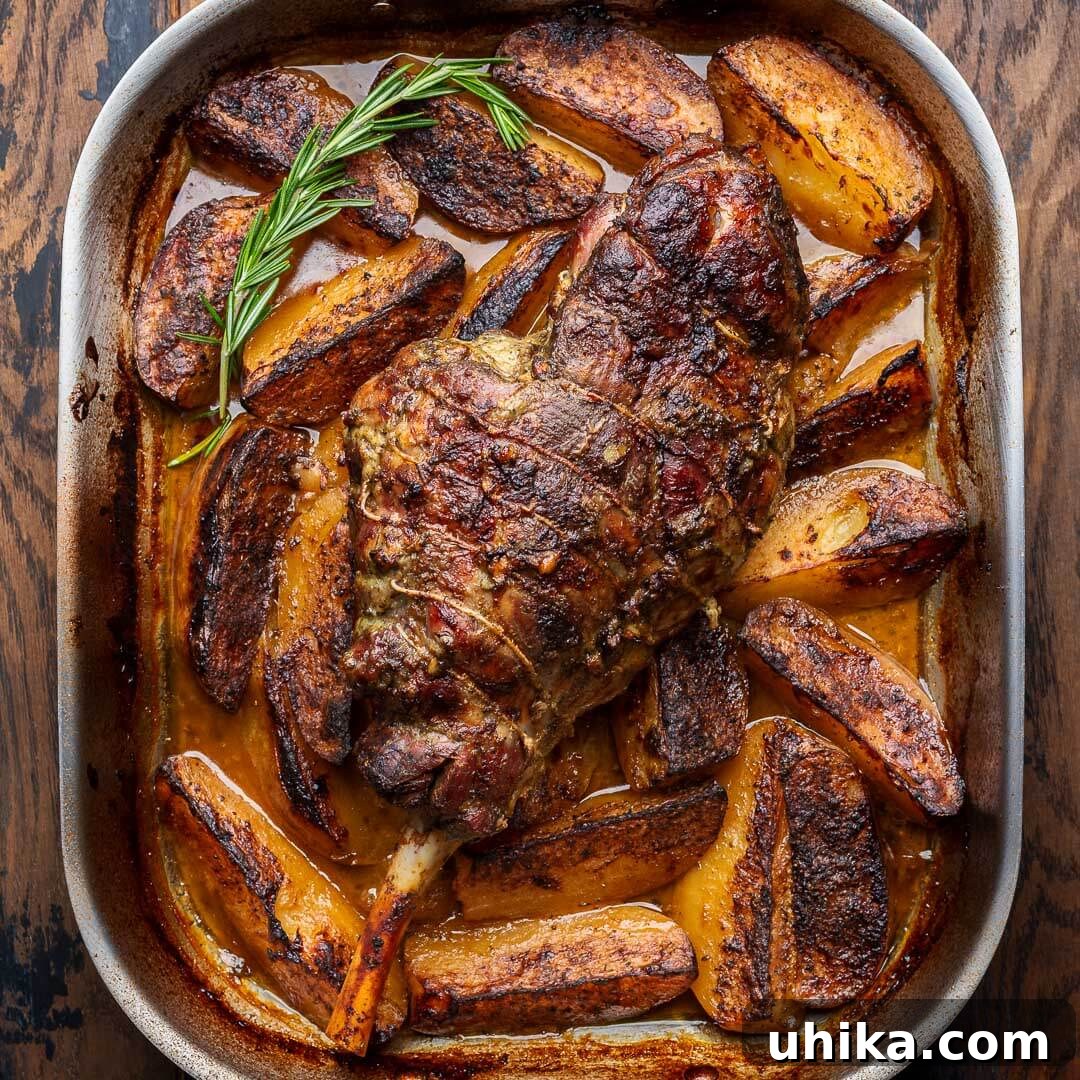
Authentic Greek Slow-Roasted Leg of Lamb with Lemon Potatoes: A Culinary Masterpiece
Few dishes evoke the warmth and richness of Mediterranean cuisine quite like a perfectly slow-roasted Greek-style leg of lamb. This recipe delivers an unforgettable experience, featuring succulent, fall-off-the-bone tender lamb infused with vibrant lemon, aromatic rosemary, and the most flavorful potato wedges you’ll ever encounter. It’s an ideal center-piece for Easter celebrations or any special occasion, offering incredible flavor with surprisingly low maintenance.
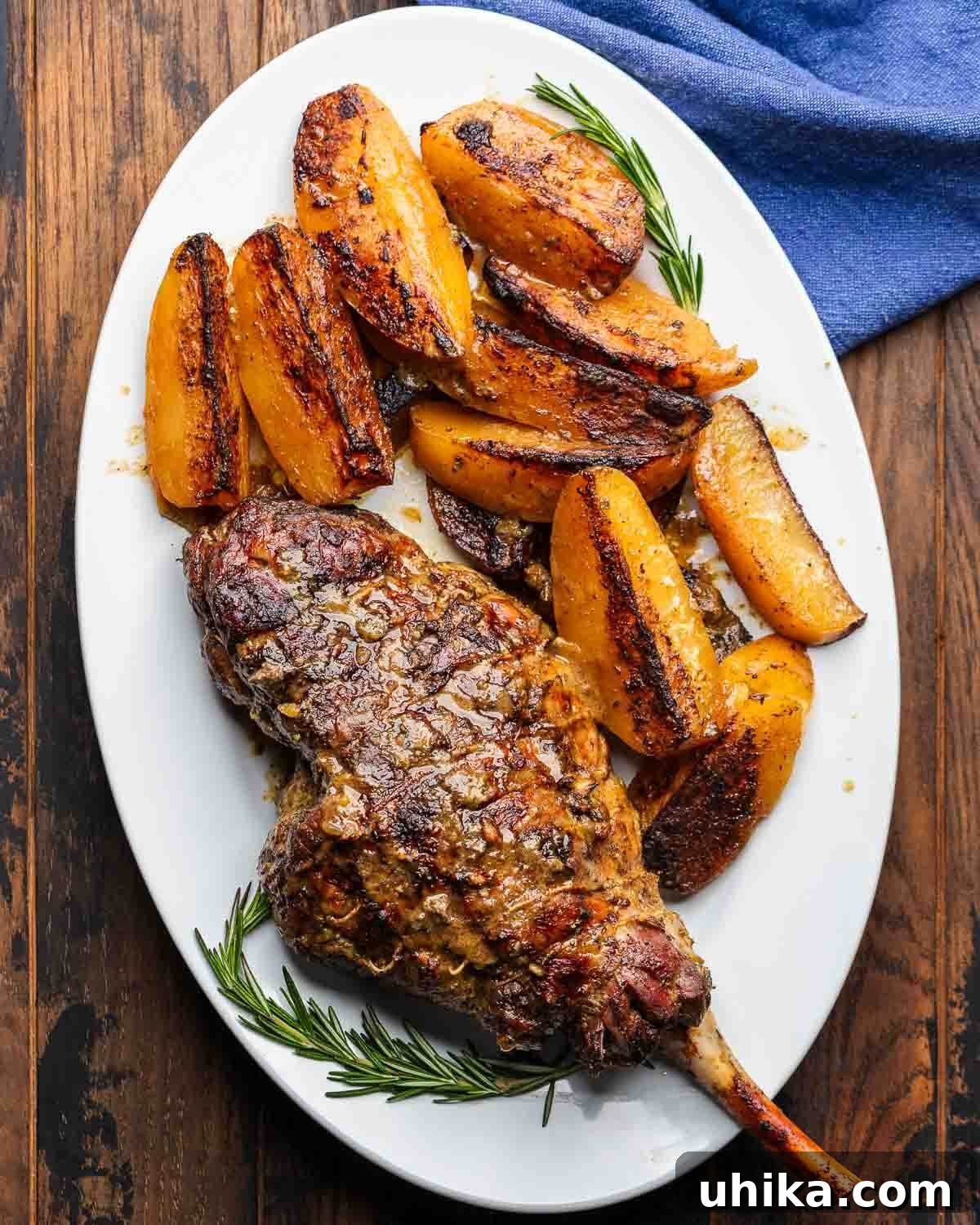
When preparing lamb, there are generally two favored approaches: cooking it to a medium or medium-rare doneness, or opting for a long, slow roast until it achieves a melt-in-your-mouth, fall-apart texture. This particular recipe embraces the latter, showcasing a bone-in leg of lamb cooked to tender perfection alongside potatoes, all bathed in a delectable lemon and herb-infused sauce.
The beauty of this slow-roasting method lies in its simplicity and minimal active cooking time, making it a stellar choice for busy holidays and large family gatherings. The potatoes, roasted in the same pan as the lamb, generously absorb all the rich juices and the bright, herbaceous flavors of the lemon, rosemary, and oregano marinade. This ensures every bite of potato is packed with savory goodness, reminiscent of classic Greek lemon chicken and potatoes.
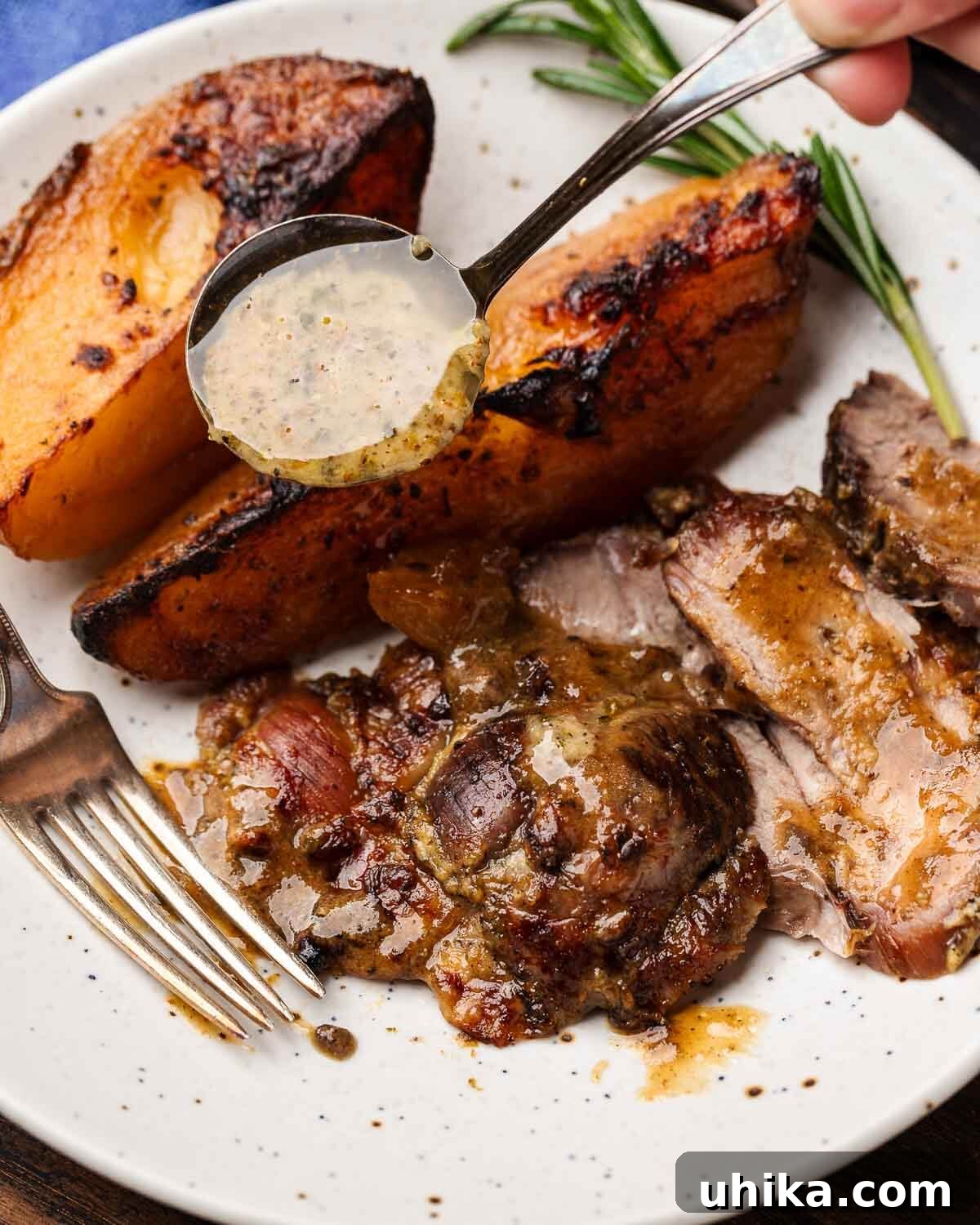
To elevate this magnificent meal even further, it’s served with a simple yet incredibly flavorful ladolemono sauce. This emulsified lemon and olive oil dressing acts as the perfect finishing touch, tying all the flavors together and adding an extra layer of zesty freshness that truly defines authentic Greek cuisine.
This exquisite Greek-style leg of lamb and potatoes pairs wonderfully with a variety of traditional side dishes. Consider serving it with crispy roasted broccoli, comforting green beans in tomato sauce, a refreshing classic Greek salad, or savory baked asparagus with cheese and breadcrumbs. For those who adore robust Greek flavors, you might also enjoy exploring our recipes for Greek Beans and Sausage and the popular Shrimp Saganaki.
Essential Ingredients for Your Greek Lamb Feast
Crafting this incredible dish begins with selecting high-quality ingredients. Below is a visual guide to all the components you’ll need, followed by important notes to help you achieve the best results.
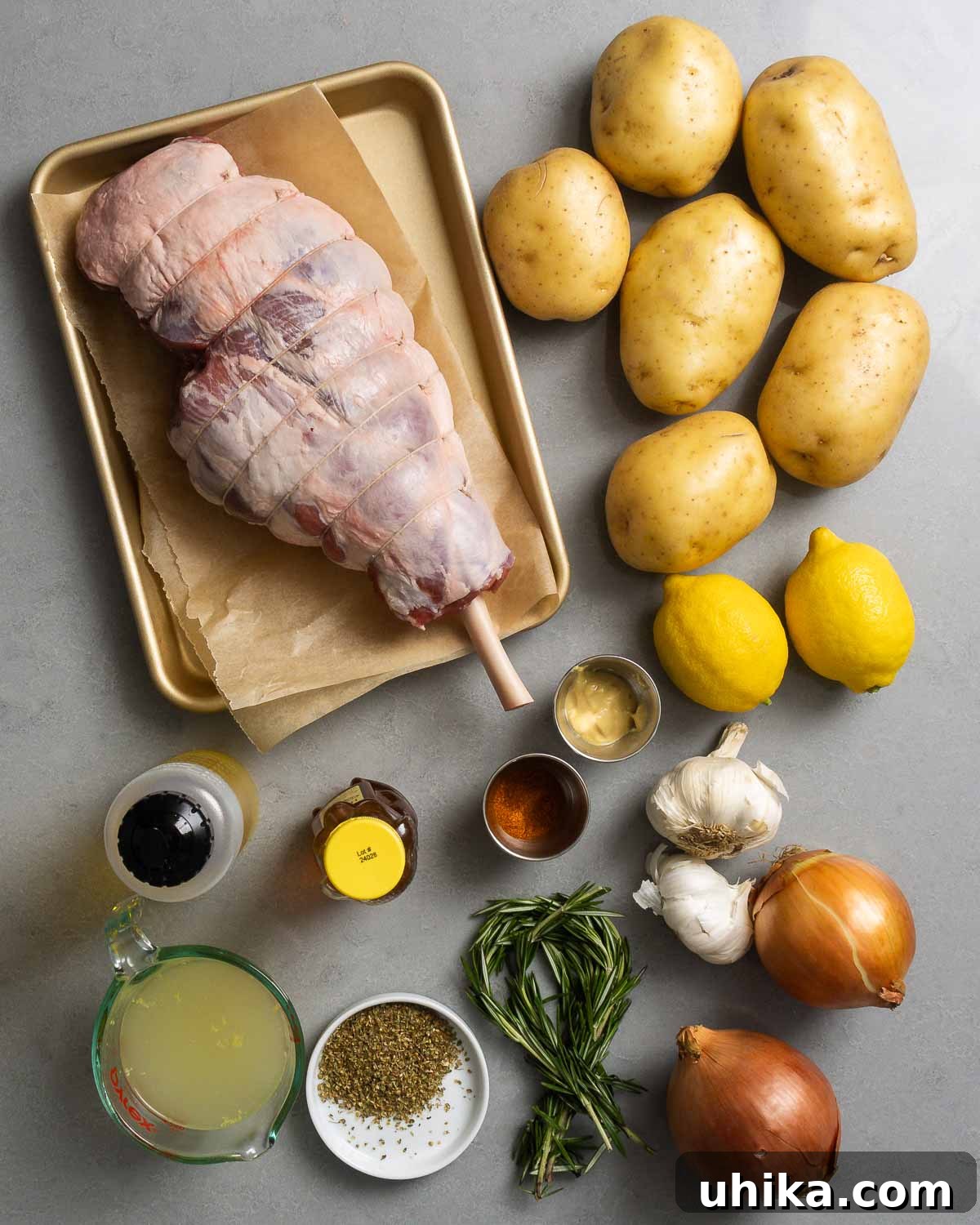
- Leg of Lamb: This recipe is designed for a 4 1/2 to 5-pound bone-in leg of lamb. The bone adds significant flavor and helps keep the meat moist during the long roasting process. We also incorporate a dry brine using salt and pepper. Instructions for scaling the brine for different lamb weights are provided in the detailed recipe notes below. While a lamb shoulder would also be fantastic for slow roasting, it can sometimes be harder to source a full shoulder in many regions.
- Potatoes: For the best results, we highly recommend using Yukon Gold potatoes. Their creamy texture and ability to hold their shape make them perfect for roasting. When purchasing, try to select the largest individual potatoes available to create those beautiful, long wedges seen in the photographs.
- Chicken Stock: Using a good quality chicken stock is key, as it forms the flavorful liquid base for the potatoes. If possible, opt for homemade chicken stock, which allows you better control over the sodium levels and often offers a richer flavor profile. Alternatively, a stock made from a low-sodium chicken base is an excellent substitute.
- Herbs: Fresh rosemary is central to the roasting process, imparting its distinct piney aroma to the lamb. Dried Greek oregano is utilized for both seasoning the roasted potatoes and as a crucial component in the finishing lemon sauce. If authentic Greek oregano is unavailable, standard dried oregano will still provide a delicious flavor.
- Onions (Optional): For an extra layer of savory depth, consider adding onions to your roasting pan. While not included in the main printable recipe, roughly chopping 1-2 medium onions and tossing them with the potatoes before roasting will add a delightful sweetness and complexity.
Refer to the full recipe card further down for precise measurements of all ingredients and quantities.
Step-by-Step Guide to Crafting Slow-Roasted Greek Lamb
Follow these detailed steps to prepare your succulent Greek leg of lamb and potatoes. Each step corresponds to the process photos for easy guidance.
- Prepare the Lamb for Brining: Begin by inspecting your leg of lamb. Most butcher-bought lamb will be pre-trimmed, but if there’s a very thick layer of excess fat, trim some of it away, leaving a moderate amount for flavor and moisture. (See photo #1 for ideal fat level). Season the lamb generously with a dry brine of 2 tablespoons of Diamond Crystal Kosher salt and 1 teaspoon of black pepper. Place the seasoned lamb on a wire rack set over a baking sheet and refrigerate, uncovered, overnight. This crucial step helps tenderize the meat and locks in moisture, resulting in a juicier roast.
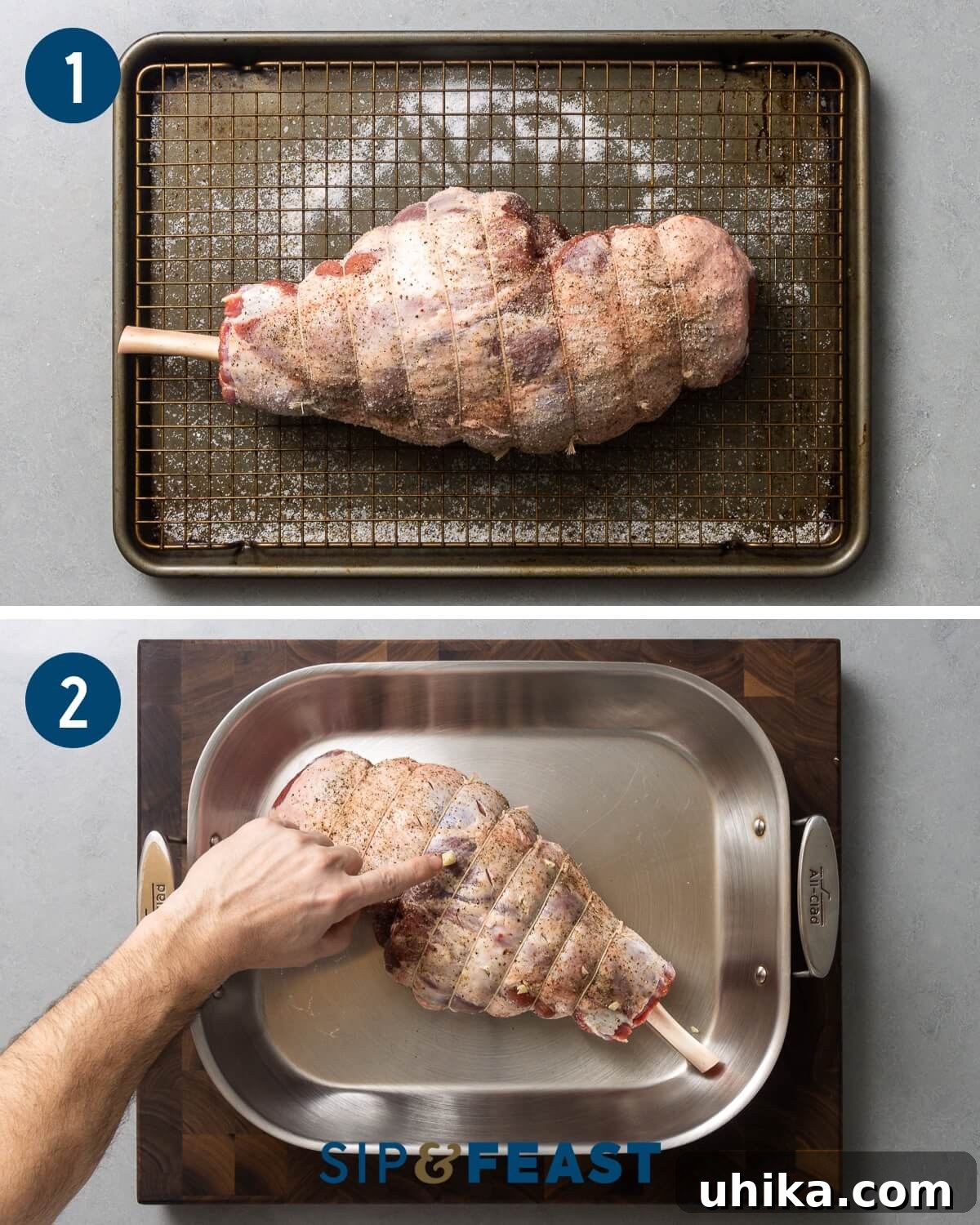
- Preheat Oven and Prepare Garlic: One hour before you plan to roast, remove the lamb from the refrigerator to allow it to come closer to room temperature, ensuring more even cooking. Preheat your oven to 325°F (160°C) and position an oven rack in the middle. Cut 5 cloves of garlic into thin, pointed slivers. Using a small sharp knife, make several small slits all over the surface of the lamb and firmly press a garlic sliver into each opening. This infuses the lamb with deep garlic flavor from within. (See photo #2).
- Craft the Marinade: In a blender, combine 2 tablespoons of fresh rosemary leaves, 2 tablespoons of honey, 1 tablespoon of Dijon mustard, 1/3 cup of fresh lemon juice, the remaining 10 cloves of garlic, and 3/4 cup of olive oil. Blend these ingredients until the mixture is completely smooth and emulsified. Pour half of this vibrant marinade over the lamb, using your hands to thoroughly rub it all over the surface, ensuring it coats every crevice. Allow the lamb to rest and absorb the marinade for at least 30 minutes before proceeding to roast. (See photo #3).
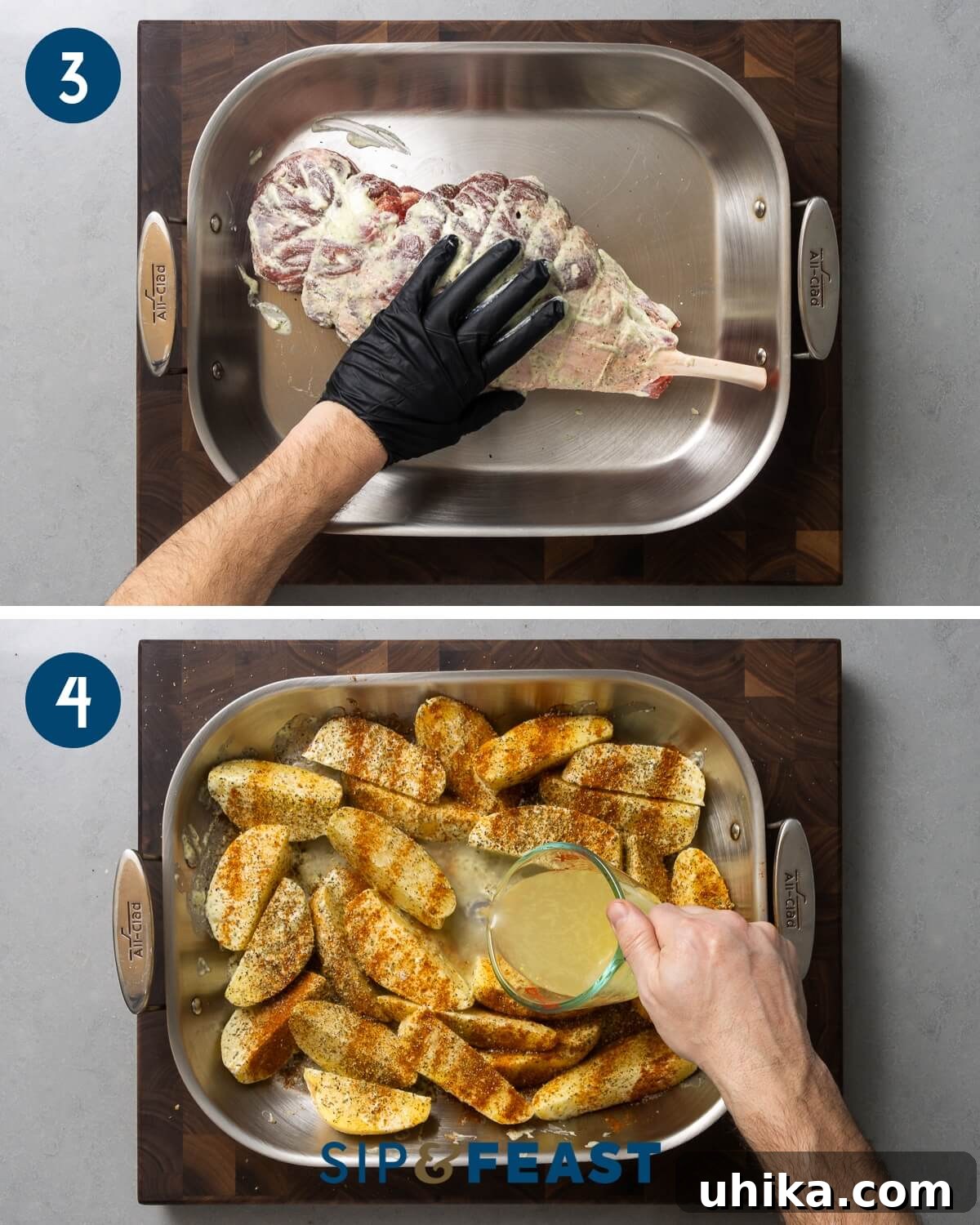
- Prepare the Potatoes: Cut 3 1/2 pounds of large Yukon Gold potatoes into substantial wedges. Place these wedges in a roasting pan that is large enough to comfortably hold both the potatoes and the leg of lamb without overcrowding. Pour the remaining half of the marinade over the potatoes and mix thoroughly to ensure every wedge is coated. Add 1/2 cup of low-sodium chicken stock to the bottom of the pan. Season the potatoes with salt and pepper to taste, 1 teaspoon of paprika, and 1 tablespoon of dried Greek oregano. (See photo #4).
- Assemble for Roasting: Carefully place the marinated leg of lamb on top of the seasoned potatoes in the roasting pan, ensuring the fat side of the lamb is facing upwards. If you wish, you can insert a digital oven-safe thermometer into the thickest part of the lamb, avoiding the bone. However, for this slow-roasted Greek style, achieving the correct fall-apart texture is often more critical than hitting an exact internal temperature. We will elaborate more on this below. (See photo #5).
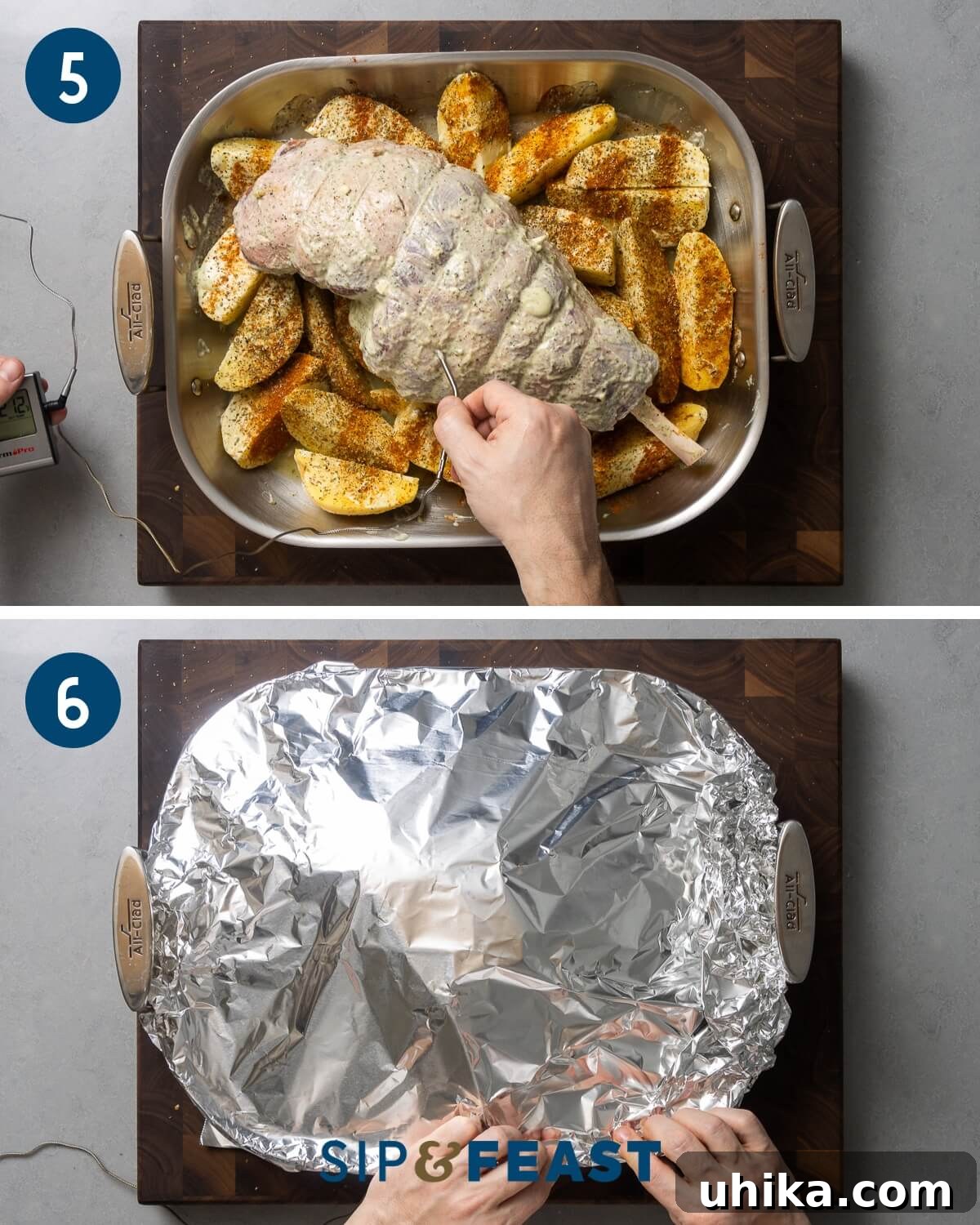
- Initial Slow Roasting: Cover the roasting pan very tightly with aluminum foil. Place the covered pan into the preheated oven and roast for 3 to 4 hours. The goal is for the meat to become incredibly tender, easily pulling away from the bone and shredding with minimal effort. At the 3-hour mark, test the lamb with a fork. If it still feels tough, re-cover the pan tightly and continue roasting for another 1 hour. During this prolonged roasting period, the internal temperature of the lamb may reach between 180°F to 190°F (82°C to 88°C), which is ideal for a shreddable consistency. (See photo #6).
- Browning the Lamb and Potatoes: Once the lamb is fork-tender, remove the foil from the roasting pan. Increase the oven temperature to a high 450°F (232°C). Return the uncovered pan to the oven and roast for an additional 10 to 12 minutes, or until the top of the lamb develops a beautiful, light golden-brown crust and the potatoes begin to caramelize. This step adds a wonderful textural contrast. (See photo #7).
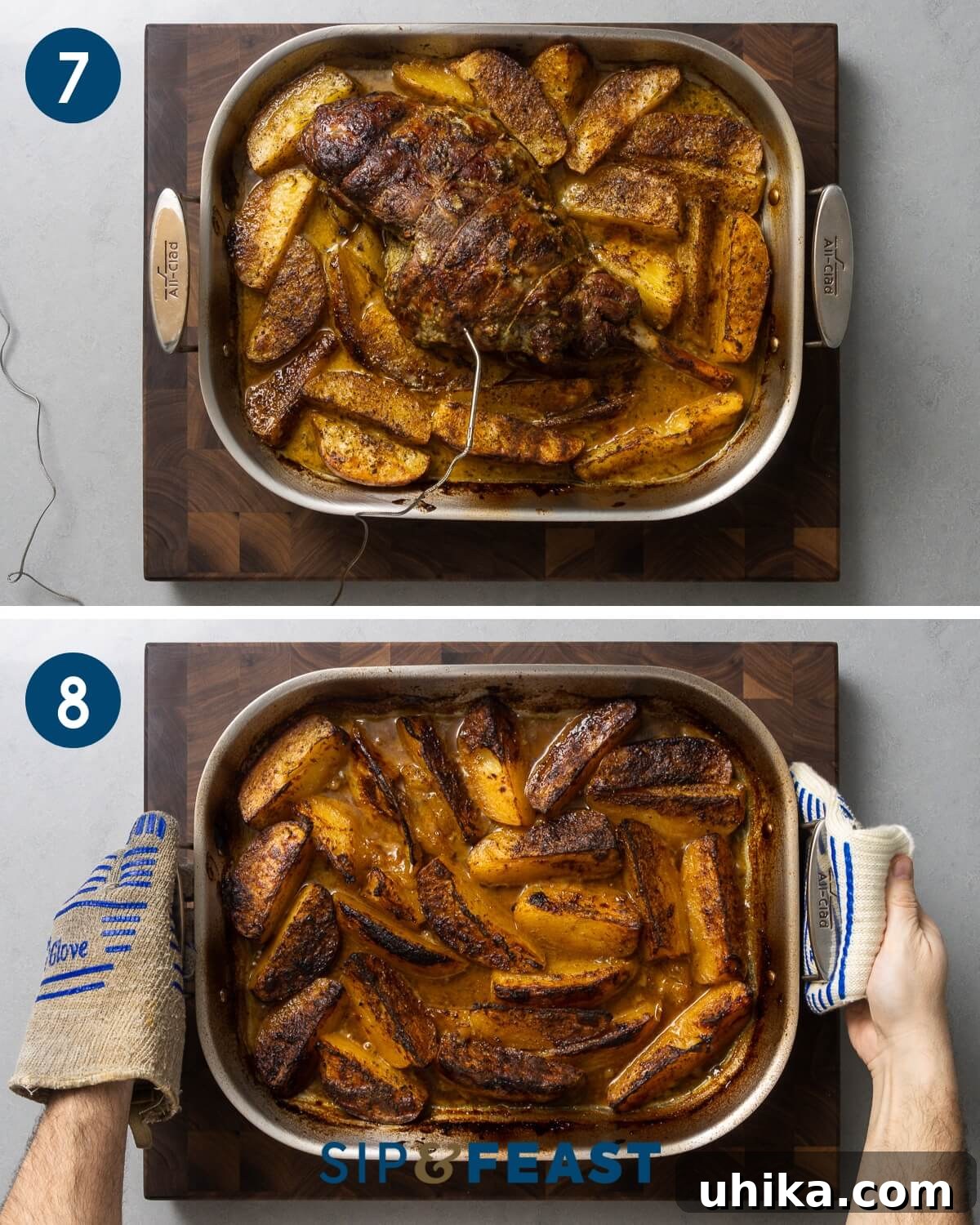
- Rest Lamb and Finish Potatoes, Make Ladolemono: Carefully remove the lamb from the roasting pan and transfer it to a large serving platter. Tent it loosely with foil to keep it warm and allow it to rest. Return the potatoes to the hot oven and continue roasting them uncovered for another 20 to 30 minutes, or until most of the pan liquid has evaporated, and the potatoes are deeply golden and slightly crispy. While the potatoes finish, prepare the exquisite ladolemono sauce: In a bowl, combine 1/4 cup of fresh lemon juice, 1 teaspoon of lemon zest, 2 teaspoons of Dijon mustard, 1 cup of extra virgin olive oil, 2 cloves of garlic (pounded into a paste), 2 teaspoons of dried Greek oregano, 1 teaspoon of salt, and 1/2 teaspoon of black pepper. Whisk all ingredients vigorously or blend until well combined and emulsified. Taste and adjust salt as needed. (See photo #8).
- Degrease Pan Sauce: Once the potatoes are ready, remove them from the oven and arrange them on the platter alongside the rested lamb. Using a ladle or a fat separator, carefully degrease the delicious pan juices remaining in the roasting pan. This step ensures a cleaner, richer sauce. (See photo #9).
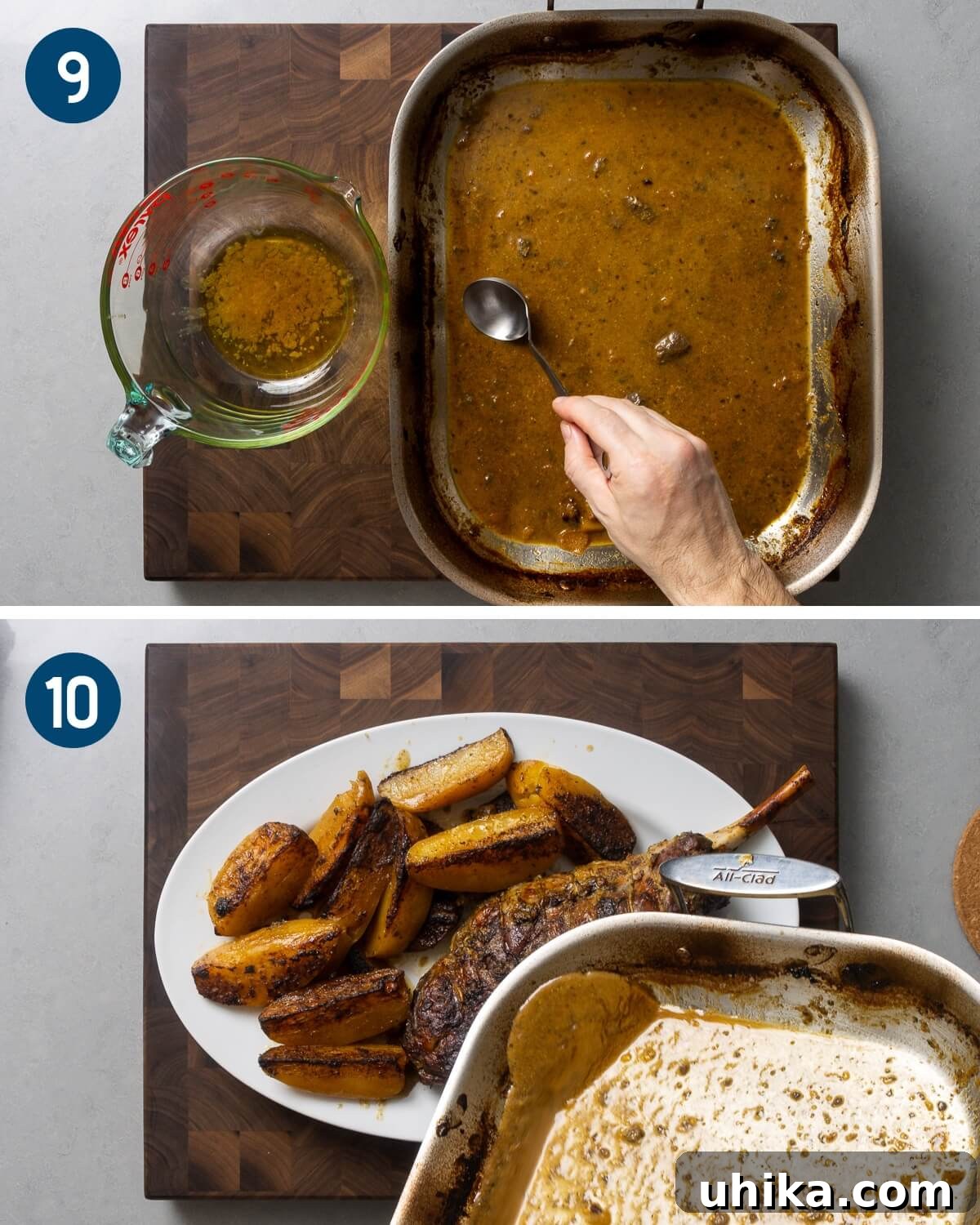
- Serve and Enjoy: Pour the degreased pan sauce directly over the lamb and potatoes on the platter. Serve immediately with the prepared Greek ladolemono sauce on the side for guests to drizzle generously. The lamb, especially in its thickest sections, can be easily sliced. Near the bone, the tender meat will naturally pull and shred apart. Enjoy this magnificent Greek feast! (See photo #10).
Expert Tips for the Perfect Greek Leg of Lamb
- The Magic of Dry Brining: We cannot emphasize enough the importance of dry brining the leg of lamb the night before roasting. This simple step significantly enhances the lamb’s juiciness and flavor, leading to a far superior roast. If time is a constraint, you can omit this step, but for truly exceptional results, plan ahead for the dry brine.
- Cooking for Texture, Not Just Temperature: For this slow-roasted Greek style, the goal is “fall-off-the-bone” tenderness, not a specific internal temperature often associated with medium-rare roasts. A good guideline is to roast the lamb, tightly covered, at 325°F (160°C) for approximately 3-4 hours (roughly 37-45 minutes per pound). At the 3-hour mark, gently insert a fork into the thickest part of the meat and twist. If the meat easily shreds and pulls away with little resistance, it’s done. If it still feels tough, re-cover and continue roasting for another 30-60 minutes. While you can use an oven-safe thermometer as a guide (it might reach 185-200°F/85-93°C for optimal shredding), prioritize the fork test for tenderness. If you prefer your lamb cooked to a medium doneness, aim for an internal temperature of 130-135°F (54-57°C) and let it rest until it reaches 140°F (60°C). For medium-rare, remove it from the oven when it hits 125-130°F (52-54°C).
- Fat Side Up: Always place the leg of lamb with its fat cap facing upwards during roasting. As the lamb cooks, the fat will slowly render and baste the meat below, dripping down over the potatoes. This continuous self-basting action ensures both the lamb and the potatoes are imbued with incredible flavor and remain wonderfully moist.
- Resting the Meat: After removing the lamb from the oven, it’s crucial to tent it loosely with foil and let it rest for at least 15-20 minutes before carving or shredding. This allows the juices to redistribute throughout the meat, ensuring a more tender and flavorful final product.
- Carving and Serving: For a bone-in leg of lamb cooked to such tenderness, you’ll find that the meat near the bone can be gently pulled or shredded. For the larger, boneless sections, slices can be made against the grain.
More Beloved Roast Recipes to Explore
Whether you’re orchestrating an elaborate holiday feast or simply planning a special dinner at home, these tried-and-true roast recipes are always a crowd-pleaser. We’re confident you’ll adore them as much as we do!
- Perfect Prime Rib Au Jus
- Pistachio and Herb-Crusted Rack of Lamb
- Savory Italian Stuffed Pork Loin
If you’ve savored this Slow-Roasted Greek Leg of Lamb with Potatoes Recipe or any other recipe on our site, we’d love for you to give it a 5-star rating and share your experience in the comments below.
We believe in catering to various learning preferences. If you are someone who prefers to learn by watching, you can discover most of our recipes on our YouTube channel and our Facebook Page.
Greek Slow-Roasted Leg of Lamb with Potatoes
by James Delmage
Prep Time: 15 mins
Cook Time: 3 hrs 15 mins
Overnight Salting (Dry Brining): 12 hrs
Total Time: 3 hrs 30 mins (excluding overnight salting)
Servings: 8
This Greek-style slow-roasted leg of lamb with potatoes and ladolemono sauce offers an explosion of flavor, yet it’s incredibly low-maintenance to prepare! It’s the perfect dish for Easter and other holiday gatherings, but so delicious, you’ll want to make it year-round.
For a visual guide, check out our recipe video!
Ingredients
For the Dry Brine
- 1 (4 1/2-5 pound) leg of lamb, trimmed of excess fat
- 2 tablespoons Diamond Crystal Kosher salt
- 1 teaspoon black pepper
Remaining Ingredients
- 3 1/2 pounds Yukon Gold potatoes, cut into large wedges
- 15 cloves garlic, divided (5 for slivers, 10 for marinade)
- 2 tablespoons fresh Rosemary leaves
- 2 tablespoons honey
- 1 tablespoon Dijon mustard
- 1/3 cup fresh lemon juice
- 3/4 cup olive oil
- 1 tablespoon dried Greek oregano
- 1 teaspoon paprika
- 1/2 cup low-sodium chicken stock
For the Ladolemono Sauce
- 1/4 cup lemon juice
- 1 teaspoon lemon zest
- 2 teaspoons Dijon mustard
- 1 cup extra virgin olive oil
- 2 cloves garlic, made into a paste
- 2 teaspoons Greek dried oregano
- 1 teaspoon salt, plus more to taste
- 1/2 teaspoon black pepper
Instructions
Salt (Dry Brine) Overnight
- Season the lamb thoroughly with salt and pepper. Place the lamb on a wire rack-lined baking sheet and refrigerate, uncovered, overnight.
Marinate and Roast
- Remove the lamb roast from the fridge 1 hour before roasting. Preheat your oven to 325°F (160°C) and ensure the rack is set to the middle level.
- Cut 5 garlic cloves into pointed slivers. Make small slits all over the lamb and press a garlic sliver into each slit.
- In a blender, combine the fresh rosemary, honey, Dijon mustard, fresh lemon juice, the remaining 10 cloves of garlic, and olive oil. Blend until completely smooth. Pour half of this marinade over the lamb and rub it all over the meat. Allow the lamb to absorb the marinade for at least 30 minutes before roasting.
- Place the potato wedges into a large roasting pan. Pour the remaining marinade over the potatoes and mix them well to ensure they are evenly coated. Pour the chicken stock into the roasting pan. Season the potatoes with salt and pepper to taste, and sprinkle the paprika and oregano generously over them.
- Place the lamb, fat side up, on top of the potatoes in the roasting pan. Cover the pan tightly with aluminum foil and roast in the preheated oven for 3 hours. After 3 hours, check the lamb with a fork; the meat should easily pull away from the bone and be tender throughout. If it’s still tough, re-cover and roast for another 30-60 minutes, checking again until tender.
- Once the lamb is tender, increase the oven temperature to 450°F (232°C) and remove the foil. Continue to roast for another 10-12 minutes, or until the lamb develops a light brown, crispy exterior. The final internal temperature of the lamb may reach 190-200°F (88-93°C); remember, achieving a tender, shreddable texture is more important than an exact internal temperature for this recipe!
- Remove the lamb to a platter and tent it loosely with foil to rest. Continue to roast the potatoes in the oven until most of the liquid in the pan has evaporated (this usually takes about 20-30 minutes), and they are nicely browned.
- Arrange the finished potatoes on the platter with the lamb. Carefully degrease the remaining pan sauce (remove excess fat) and pour the rich sauce on top of the lamb and potatoes. Serve the lamb with the prepared ladolemono sauce on the side. Enjoy this incredible meal!
For the Ladolemono Sauce
- Combine all ingredients for the ladolemono sauce (lemon juice, lemon zest, Dijon, olive oil, garlic paste, Greek oregano, salt, pepper) in a bowl. Whisk vigorously or blend until well combined and emulsified. Taste and adjust salt as needed.
Notes
- Salting (dry brining) the lamb overnight is highly recommended for optimal flavor and moisture.
- For accurate brining, aim for a 1% ratio of salt to the total weight of the leg of lamb. For example, a 5-pound leg of lamb weighs approximately 2270 grams, requiring about 22 grams of salt. Note that different types of salt have different densities:
- 1 Tablespoon of Table salt = ~19 grams
- 1 Tablespoon Morton Kosher salt = ~15 grams
- 1 Tablespoon Diamond Crystal Kosher salt = ~10 grams
Adjust tablespoon quantities based on the type of salt you use to achieve the 1% weight ratio.
- A note on doneness: This Greek-style lamb is intended to be well-done and easily shreddable. If you prefer medium-rare lamb, aim for an internal temperature of 130°F (54°C), which typically takes about 20 minutes per pound. Use an oven-safe thermometer for precise monitoring.
- Leftovers can be stored in the refrigerator for up to 3 days. To reheat, wrap the lamb tightly in foil and warm in an oven preheated to 350°F (175°C) until heated through.
Nutrition
Approximate nutritional values per serving:
- Calories: 706 kcal
- Carbohydrates: 27.5g
- Protein: 55.8g
- Fat: 41.3g
- Saturated Fat: 16.3g
- Cholesterol: 188mg
- Sodium: 1135mg
- Potassium: 191mg
- Fiber: 1.1g
- Sugar: 21g
- Calcium: 6mg
- Iron: 5mg
Nutrition information is automatically calculated and should be used as an approximation only.