
The Ultimate Guide to Garlic and Herb Roasted Cabbage: A Flavorful Side Dish
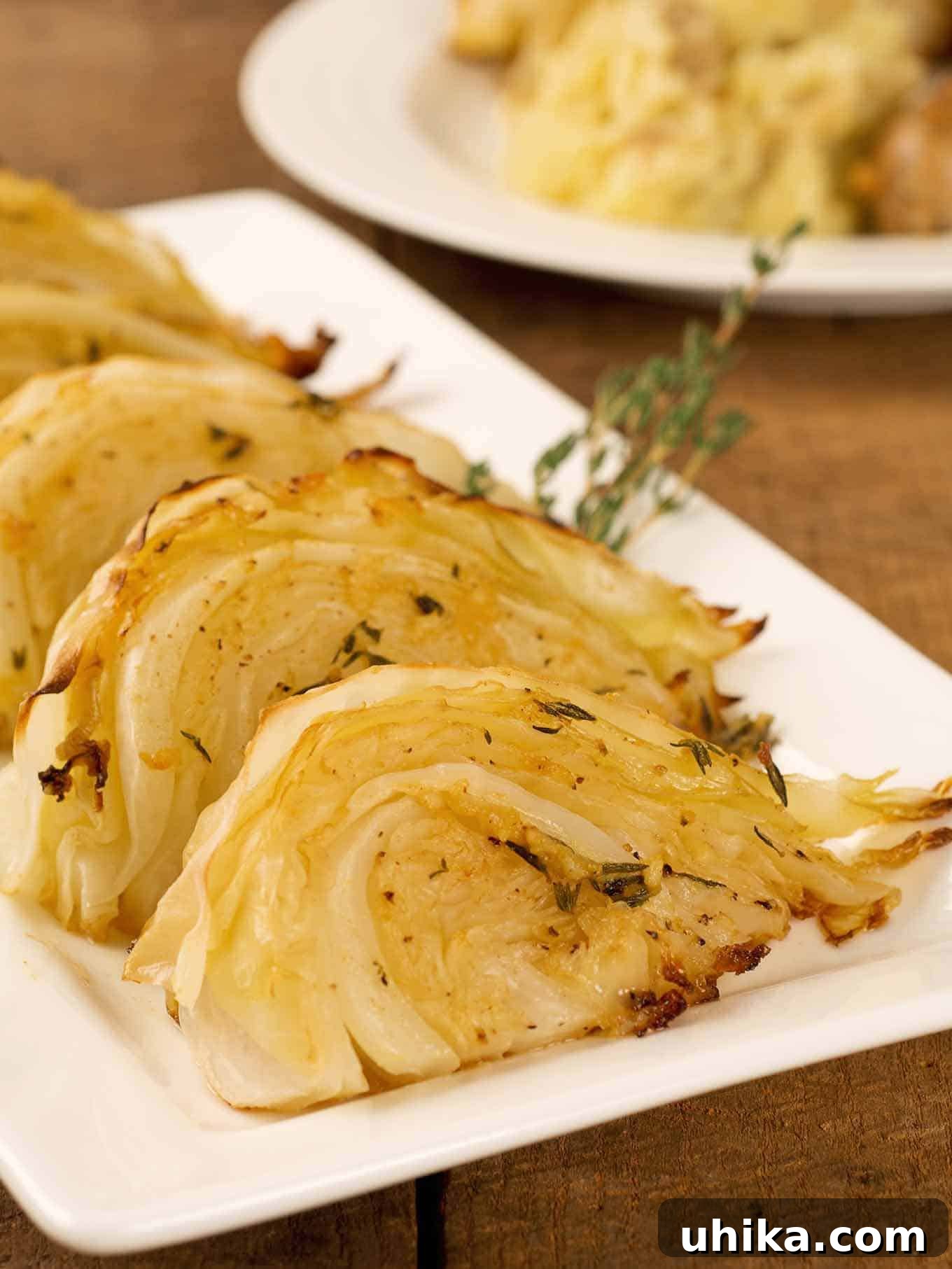
Oven-roasting is an incredibly simple yet transformative cooking method for cabbage, elevating this humble vegetable to new culinary heights. The dry heat of the oven caramelizes its natural sugars, bringing out an inherent sweetness and a slightly nutty flavor that you won’t achieve with boiling or steaming. This technique yields tender, flavorful cabbage wedges with delightfully crispy edges, making them an unexpected star on any dinner plate.
Our recipe features tender cabbage wedges generously brushed with a savory blend of melted butter, rich olive oil, pungent garlic, and aromatic fresh herbs, such as thyme. This combination creates a harmonious flavor profile that is both comforting and sophisticated. Roasted cabbage makes an exceptionally tasty and versatile side dish, pairing beautifully with a wide array of main courses, from succulent roasted chicken to juicy pork loin, hearty beef, or even flaky fish. It’s a fantastic way to introduce a nutritious and delicious vegetable into your weekly meal rotation.
Garlic and Herb Roasted Cabbage
Rate Recipe
Print Recipe
Ingredients
- 1 medium head cabbage, about 2 lbs
- 3 tablespoons butter
- 2 tablespoons olive oil
- 2 cloves garlic, very finely chopped
- 2 teaspoons Dijon-style mustard
- 1 tablespoon fresh thyme (or parsley, or dill), finely chopped
- Salt and freshly ground black pepper, to taste
Instructions
- Preheat your oven to 400°F (200°C). Prepare a shallow baking pan by lightly coating it with nonstick cooking spray or lining it with parchment paper for easy cleanup.
- Carefully quarter the cabbage lengthwise, cutting straight through the core. From each quarter, meticulously cut away the tough, fibrous core. Then, slice each quarter in half again, resulting in a total of 8 evenly sized wedges. Arrange these cabbage wedges in a single layer on your prepared baking sheet, ensuring they have enough space to roast without overcrowding. Set aside.
- In a small saucepan, melt the butter and olive oil together over medium heat. Once melted, add the finely chopped garlic and sauté gently for about 1 minute, until it becomes wonderfully fragrant and lightly golden, being careful not to burn it. Remove the saucepan from the heat and whisk in the Dijon-style mustard and your chosen fresh herbs until well combined.
- Using a pastry brush, generously brush half of the aromatic butter mixture over the exposed surfaces of the cabbage wedges. Season them liberally with salt and freshly ground black pepper. Place the baking sheet in the preheated oven and roast for 10 to 12 minutes. After this initial roasting period, carefully remove the cabbage from the oven and, using tongs or a spatula, gently turn each wedge over to ensure even cooking and browning.
- Brush the remaining butter mixture onto the other side of the cabbage wedges, and season again with a sprinkle of salt and pepper. Return the baking sheet to the oven and continue roasting for an additional 15 to 20 minutes, or until the cabbage is beautifully tender when pierced with a fork, and the edges are slightly caramelized and crisp. Serve immediately and enjoy!
Why You’ll Love This Roasted Cabbage Recipe
There are countless reasons to add this simple roasted cabbage recipe to your culinary repertoire. First and foremost, it’s incredibly healthy. Cabbage is packed with vitamins C and K, fiber, and antioxidants, making it a powerful addition to any diet. Roasting not only makes it delicious but also helps retain many of these beneficial nutrients. Secondly, it’s remarkably easy to prepare. With minimal chopping and straightforward steps, even novice cooks can achieve fantastic results. The hands-on time is very low, allowing you to focus on your main course while the oven does most of the work.
Beyond its health benefits and ease, the flavor transformation is truly the star. Boiling or steaming cabbage can often lead to a watery, sometimes sulfurous taste. Roasting, however, transforms the texture from crisp to tender-crisp with sweet, caramelized notes. The garlic and herb butter penetrates the layers, infusing every bite with savory goodness, and the Dijon mustard adds a subtle tang that brightens the whole dish. It’s a perfect way to convert even the most skeptical eaters into cabbage lovers!
Ingredient Spotlight and Tips for Success
While this recipe boasts a short ingredient list, the quality and preparation of each component significantly impact the final dish.
Choosing Your Cabbage
- Green Cabbage: The most common and versatile choice, green cabbage has a firm texture and a mild, slightly peppery flavor that sweetens beautifully when roasted. Look for a head that feels heavy for its size, with tightly packed leaves and no visible blemishes.
- Red Cabbage: While visually stunning, red cabbage tends to be a bit tougher and takes longer to soften. If using red cabbage, you might want to roast it for an extra 5-10 minutes. Keep in mind it can bleed its color into other ingredients if mixed.
- Savoy Cabbage: With its crinkly, softer leaves, Savoy cabbage roasts up wonderfully and has a slightly milder flavor. It might cook a little faster than green cabbage.
The Flavorful Coating
- Butter and Olive Oil: The combination of butter and olive oil is key. Butter provides richness and helps with browning, while olive oil ensures a higher smoke point and a desirable savory depth. You can adjust the ratio, but a balance works best. For a dairy-free option, use all olive oil or a plant-based butter alternative.
- Fresh Garlic: Freshly minced garlic is non-negotiable here. It infuses the oil with a vibrant, pungent flavor that is quintessential to this recipe. Avoid garlic powder; it won’t yield the same robust taste.
- Dijon Mustard: This often-overlooked ingredient adds a crucial layer of flavor. Dijon mustard provides a sharp, tangy counterpoint to the sweetness of the roasted cabbage and helps emulsify the butter and oil, ensuring it adheres well to the wedges. Don’t skip it!
- Fresh Herbs: Fresh thyme is our top recommendation for its earthy, peppery notes that complement cabbage exceptionally well. However, fresh parsley or dill are excellent alternatives, each offering a slightly different aromatic profile. Always opt for fresh over dried herbs for the best flavor and fragrance in roasted dishes.
- Salt and Pepper: Season generously! Roasting vegetables brings out their flavors, and adequate seasoning is essential to enhance them. Use freshly ground black pepper for a better aroma and taste.
Step-by-Step Preparation Tips for Perfectly Roasted Cabbage
- Preheating the Oven: A hot oven (400°F/200°C) is crucial for achieving that desirable tender-crisp texture and caramelized edges. Don’t put the cabbage in a cold or lukewarm oven; wait for it to reach the correct temperature.
- Cutting the Cabbage: Quartering the cabbage lengthwise and then cutting out the core ensures that the wedges stay intact during roasting. Further halving each quarter into 8 wedges creates ideal portion sizes that cook evenly and have more surface area for caramelization.
- Arrangement on Baking Sheet: Do not overcrowd your baking sheet. Cabbage needs space to roast, not steam. If the pan is too full, the cabbage will release moisture and steam instead of caramelizing, resulting in soggy wedges. Use two baking sheets if necessary.
- The Flavorful Brush-On: Melting the butter and oil first, then infusing it with garlic and herbs, creates a potent flavor base. Whisking in the Dijon mustard helps bind everything together. Brushing, rather than pouring, ensures even distribution of the flavorful mixture on each wedge.
- Roasting in Stages: Roasting for an initial 10-12 minutes, then flipping and basting again, promotes even cooking and browning on both sides. This two-stage process ensures every part of the cabbage gets a chance to caramelize and become tender.
- Achieving Tenderness: The final roasting time (15-20 minutes) may vary depending on the thickness of your cabbage wedges and your oven. The cabbage should be tender but still have a slight bite – not mushy. Look for golden-brown edges and a softened texture when pierced with a fork.
Serving Suggestions and Perfect Pairings
Garlic and Herb Roasted Cabbage is a versatile side dish that complements a wide variety of meals. Here are some ideas to inspire you:
- Proteins: It’s a natural match for roasted chicken, pork chops, grilled salmon, or even a simple pan-seared steak. The richness of the meat is beautifully balanced by the savory, slightly sweet cabbage.
- Other Vegetables: Serve alongside other roasted root vegetables like carrots, potatoes, or sweet potatoes for a hearty and colorful vegetable medley.
- Comfort Food: Pair it with classic comfort dishes such as meatloaf, pot roast, or shepherd’s pie for a wholesome meal.
- Garnishes: A sprinkle of fresh parsley, chives, or a dash of red pepper flakes can add an extra layer of flavor and visual appeal just before serving. A squeeze of fresh lemon juice at the end can also brighten the flavors.
Exciting Variations and Customization Ideas
Feel free to get creative with this roasted cabbage recipe! It’s a fantastic canvas for various flavors:
- Spicy Kick: Add a pinch of red pepper flakes to the butter mixture, or drizzle with sriracha or hot sauce before serving for a spicy twist.
- Cheesy Delight: Sprinkle some grated Parmesan cheese during the last 5-10 minutes of roasting for a golden, cheesy crust. Gruyere or sharp cheddar would also be delicious.
- Lemon Zest: Add the zest of half a lemon to the butter mixture for a bright, citrusy note that cuts through the richness. A squeeze of fresh lemon juice after roasting is also wonderful.
- Smoky Flavor: A dash of smoked paprika in the butter mixture can add a lovely smoky depth.
- Balsamic Glaze: Drizzle a balsamic glaze over the roasted cabbage just before serving for a sweet and tangy finish.
- Different Herbs: Experiment with other fresh herbs like rosemary, sage, or oregano, depending on what you’re serving it with.
- Add Bacon: For an indulgent version, cook some chopped bacon until crispy, then toss the rendered fat with the cabbage before roasting and sprinkle the crispy bacon bits over the cooked cabbage.
Storage and Reheating
Leftover roasted cabbage can be stored in an airtight container in the refrigerator for up to 3-4 days. To reheat, spread the cabbage on a baking sheet and warm in a 350°F (175°C) oven for about 10-15 minutes, or until heated through and slightly re-crisped. You can also reheat it quickly in a microwave, though the edges might not be as crispy.
Frequently Asked Questions (FAQs)
- Can I use pre-cut bagged cabbage?
- While you can, it’s generally best to use a whole head of cabbage. Pre-cut cabbage often dries out faster and may not roast as evenly. If you do use it, ensure it’s fresh and adjust roasting time as it may cook faster.
- How do I make the cabbage extra crispy?
- For crispier cabbage, ensure your oven is hot, the pan isn’t overcrowded, and the cabbage wedges are cut to a consistent thickness. You can also increase the roasting time slightly and even turn on the broiler for the last 1-2 minutes (watch carefully to prevent burning).
- Is this recipe keto-friendly?
- Yes, cabbage is a low-carb vegetable, and this recipe uses butter, olive oil, and herbs, making it suitable for a ketogenic diet. It’s a fantastic, flavorful option for those following keto.
- Can I add other vegetables to the pan?
- Absolutely! Root vegetables like carrots, potatoes, or parsnips can be roasted alongside the cabbage. Just make sure to cut them into similar-sized pieces to ensure even cooking, or add them to the pan a bit earlier if they require more time.
- What’s the best way to clean cabbage?
- Remove any loose or damaged outer leaves. Then, rinse the head of cabbage under cold running water and pat it dry before cutting.
Conclusion
This Garlic and Herb Roasted Cabbage recipe is a testament to how simple ingredients, when prepared with the right technique, can yield truly extraordinary flavors. It’s a delicious, healthy, and versatile side dish that is sure to become a cherished part of your meal rotation. Give it a try, and prepare to be amazed by the sweet, savory transformation of this humble vegetable. Don’t forget to share your experience and any creative variations you discover in the comments below!
Like this recipe? Rate and comment below!
Your feedback helps us create more delicious recipes for you.