
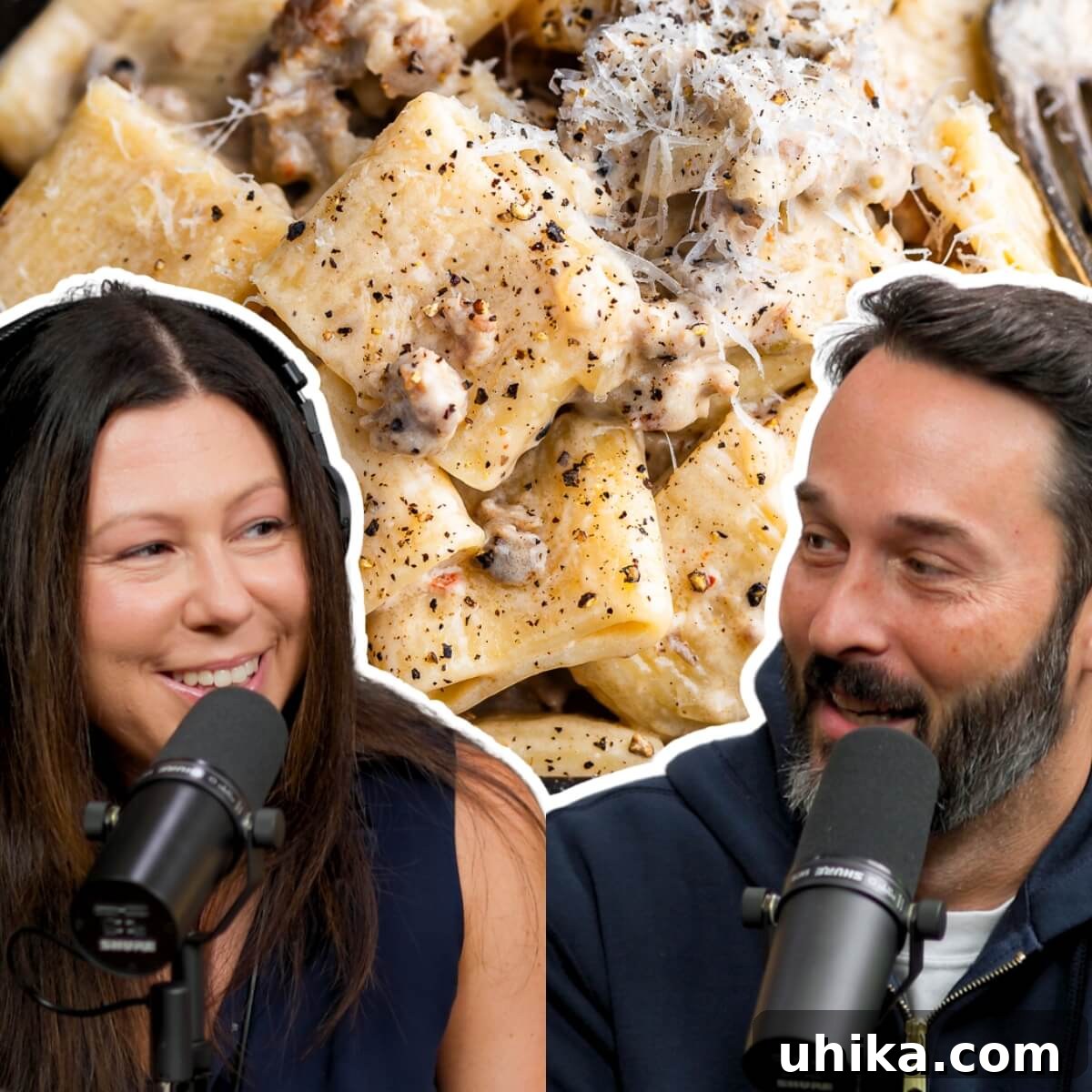
Podcast: Play in new window | Download (Duration: 40:22 — 56.2MB)
Subscribe or Follow Apple Podcasts | Spotify | Amazon Music | RSS | More
Discovering Pasta alla Norcina: Balancing Authentic Italian Flavors with Home Cook Practicality
In the culinary landscape of Italian cuisine, certain dishes stand out for their regional authenticity and distinct flavor profiles. One such gem is Pasta alla Norcina. While it might be relatively unknown in many parts of the world, particularly in areas accustomed to tomato-rich Italian-American fare, its unique character captivated us. Its deviation from the familiar red sauce dishes prevalent in most local restaurants underscored the need to introduce this exceptional recipe to a wider audience, even if it meant navigating significant challenges in recreating its true essence.
The journey to bring Pasta alla Norcina into the spotlight through an instructional video and recipe was not without its hurdles. These challenges primarily revolved around the scarcity of genuinely authentic ingredients outside of its birthplace, prompting a fascinating exploration into the art of culinary adaptation.
Watch Our Pasta alla Norcina Recipe on YouTube
The Umbrian Heart of Pasta alla Norcina
Pasta alla Norcina traces its origins to the picturesque town of Norcia, nestled in the southeastern reaches of Umbria, Italy’s verdant “green heart.” This central Italian region, bordered by Lazio, Tuscany, Marche, and Abruzzo, is renowned for its culinary traditions, and Norcia, in particular, holds a special place for its exceptional pork products.
The town’s fame stems from its long-standing tradition of pork butchery, and it is the birthplace of *salsiccia di Norcia*, a distinctive sausage that forms the very soul of Pasta alla Norcina. Unlike the fennel-laden or spicy sausages commonly found in the US, *salsiccia di Norcia* is characterized by a unique blend of pork, garlic, white wine, and a delicate touch of nutmeg. This specific flavor profile is paramount to the dish’s identity.
Adding another layer of regional charm, black truffles, when in season, are a revered component of this dish. The Norcia area is famous for these subterranean treasures, which impart an earthy, aromatic richness that elevates the pasta to gourmet status.
The Authenticity Dilemma: Bridging Italy and the American Kitchen
The true challenge in preparing an “authentic” Pasta alla Norcina for the average home cook lies in the scarcity and cost of these specialized ingredients. Obtaining genuine *salsiccia di Norcia* or fresh black truffles outside of Umbria can be next to impossible, or prohibitively expensive. This reality often forces culinary enthusiasts to improvise, adapting recipes to available resources – a practice deeply embedded in the history of Italian-American cooking.
The question then becomes: how much can a dish be modified before it loses its identity? Our exploration of Pasta alla Norcina, and other regional Italian dishes, often grapples with this very question. We believe that deliciousness and accessibility are paramount, encouraging home cooks to embrace thoughtful adaptations that still honor the spirit of the original recipe.
This episode of the Sip and Feast podcast dives deep into why Pasta alla Norcina remains relatively unknown in the United States and offers practical solutions to the ingredient challenges it presents. We guide you through the best ways to recreate as authentic a dish as possible, ensuring a delightful experience for any home chef.
Decoding Key Ingredients and Smart Substitutions for Home Cooks
Crafting Pasta alla Norcina outside of its native Umbria necessitates a keen understanding of its core components and clever strategies for substitution. Based on the Umbria Tourist Board’s recipe, the authentic version calls for specific quantities of short or long pasta, *salsiccia di Norcia*, *Panna da Cucina* (or, for an ancient touch, sheep’s milk ricotta), onion, grated Pecorino, dry white wine, Umbrian Extra Virgin Olive Oil, salt, pepper, and fresh black truffles or truffle-flavored oil. Let’s break down these critical ingredients and offer practical advice for your kitchen.
The Unique Salsiccia di Norcia: Finding the Right Sausage
As discussed, *salsiccia di Norcia* is distinct for its lack of fennel and inclusion of garlic, white wine, and nutmeg. This makes finding a direct equivalent in American supermarkets difficult. However, home cooks have excellent options:
- Plain Bulk Sausage: If you can find a high-quality plain pork sausage without fennel, this is an excellent starting point. You can then infuse it with the characteristic flavors by adding a dash of white wine and a pinch of nutmeg during cooking.
- Ground Pork from Scratch: For the most control, start with ground pork. Using a lean cut like pork shoulder (with some fat trimmed) and mixing it aggressively by hand will help achieve the slightly tacky, sticky consistency of traditional sausage. Then, simply mix in fresh minced garlic, a splash of dry white wine, and a touch of nutmeg. This method yields a very close approximation of the authentic Norcia flavor.
- Embracing Fennel Sausage: While it deviates from tradition, don’t shy away from using regular Italian sausage with fennel if that’s what’s readily available. The dish’s inherent deliciousness means it will still be incredibly flavorful, albeit with a slightly different character. In a pinch, even spicy sausage or other regional pork sausages could work, offering a unique twist while maintaining the hearty, decadent nature of the meal. The essence of Italian-American cooking is adaptation, and that principle applies beautifully here.
The Elusive Black Truffle: A Touch of Earthy Luxury
Fresh black truffles are undeniably the pinnacle of flavor for Pasta alla Norcina, but their exorbitant cost, seasonal availability, and difficulty in sourcing (often requiring specialized truffle dogs or pigs) make them impractical for most. Traditionally, if truffles were out of season, Italians would simply omit them rather than seek a lesser substitute.
- Truffle Oil Debate: While some recipes suggest truffle oil, many connoisseurs (including us) find it lacks the nuanced aroma of fresh truffles, often tasting artificial or even unpleasant. It’s typically made with synthetic compounds rather than actual truffle essence.
- A Fungi Alternative: To introduce an earthy, umami depth without breaking the bank, consider adding sautéed mushrooms to your dish. While not a direct substitute for truffles, they offer a complementary “fungi flavor” that enhances the overall experience and was well-received in our recipe development.
Italian Cream vs. American Cream: The Heart of the Sauce
The creamy texture of Pasta alla Norcina is crucial, and the choice of dairy sparks much discussion. The authentic recipe often specifies *Panna da Cucina*, a type of cooking cream prevalent in Italy.
- Panna da Cucina: This Italian cream typically has a lower fat content (around 20%) than American heavy cream but is thicker due to the use of emulsifiers and thickeners like sunflower or safflower oil, or cornstarch. This composition allows it to emulsify smoothly into sauces without breaking.
- American Heavy Cream: American heavy cream, with its higher milk fat content (35-37%), is a suitable and stable substitute. It will provide the desired richness and won’t break when heated.
- Sheep’s Milk Ricotta (Ancient Version): The “ancient version” of Norcina uses sheep’s milk ricotta, which imparts a distinct tanginess and rustic texture. However, genuine sheep’s milk ricotta is extremely difficult to find in the US, and substituting with regular cow’s milk ricotta can lead to a grainy, clumpy sauce that lacks the desired smoothness. For practicality and texture, American heavy cream is often the more reliable choice for home cooks.
Dry White Wines: Enhancing Flavor
A half-glass of dry white wine is a key component, adding depth and complexity to the sauce. The wine’s compounds, not just the alcohol, contribute significantly to the flavor profile.
- Recommended Choices: For general cooking needs, we recommend readily available and affordable dry white wines like Sauvignon Blanc or Pinot Grigio. A $10-12 bottle will serve you well for this and many other recipes. Avoid “cooking wines,” which often contain added salt and preservatives, and might not offer the best flavor.
Ideal Pasta Shapes
Traditionally, Pasta alla Norcina is served with a short, tubular pasta shape that effectively captures the creamy, rich sauce. Excellent choices include:
- Penne
- Ziti
- Rigatoni
- Mezzi Rigatoni
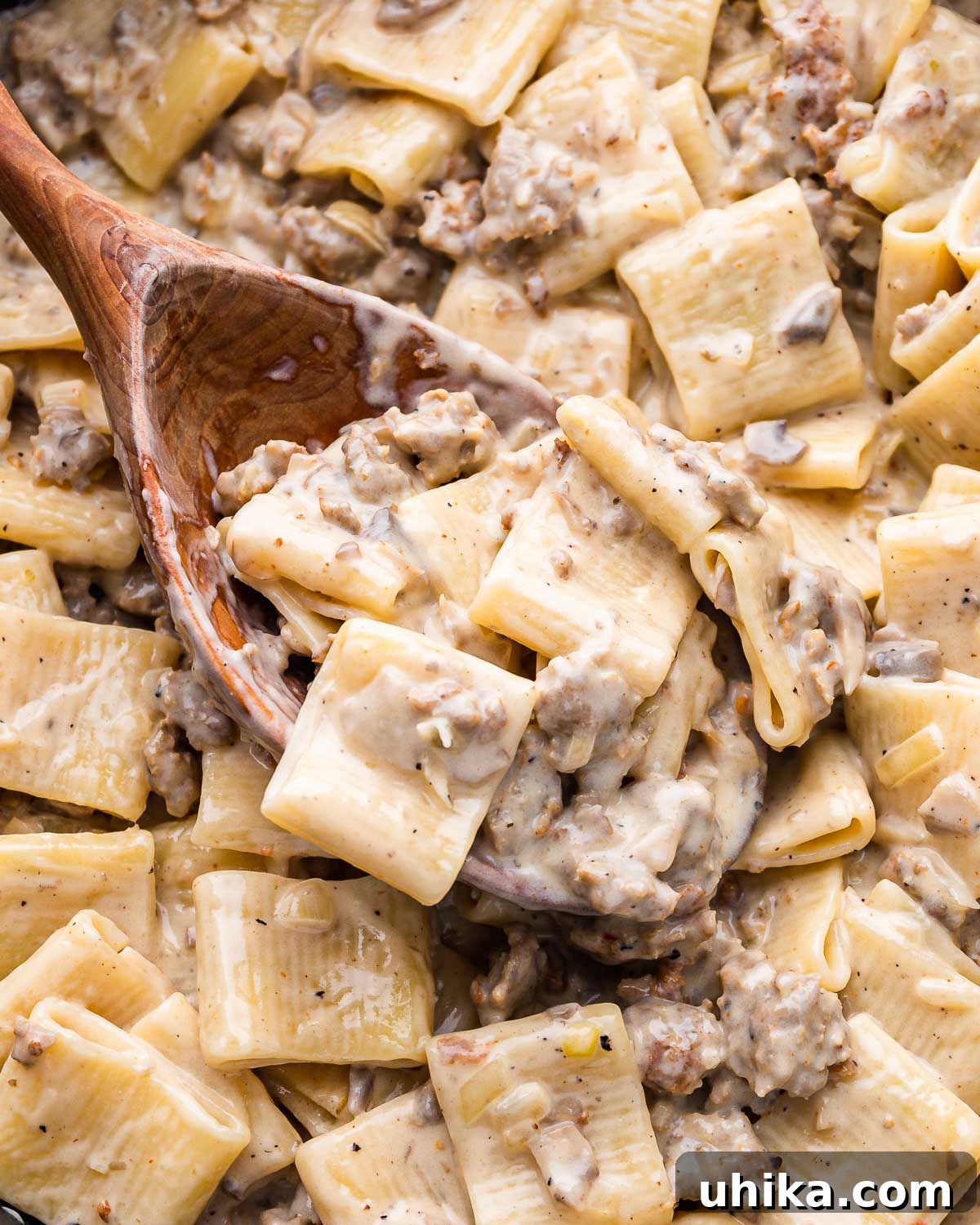
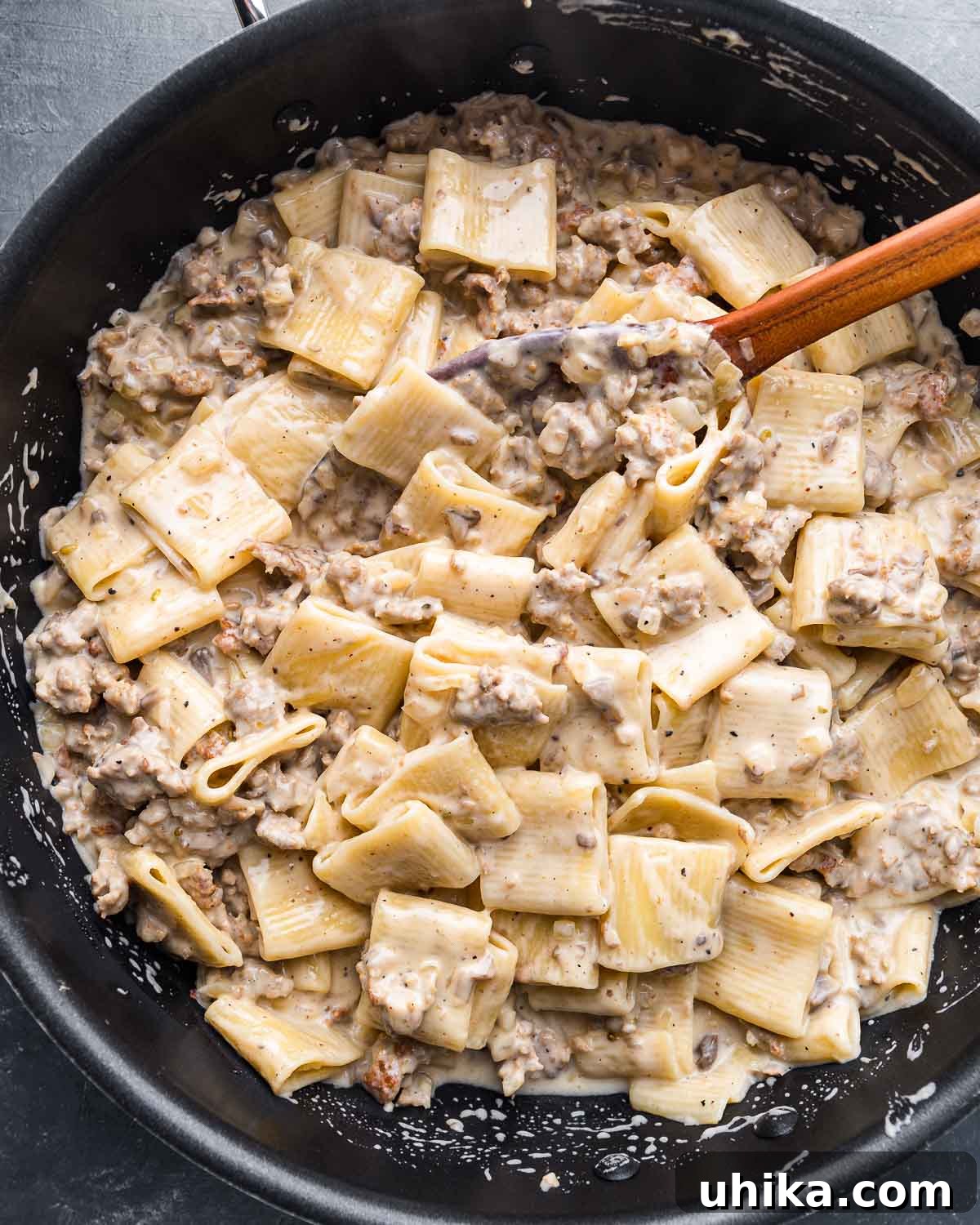
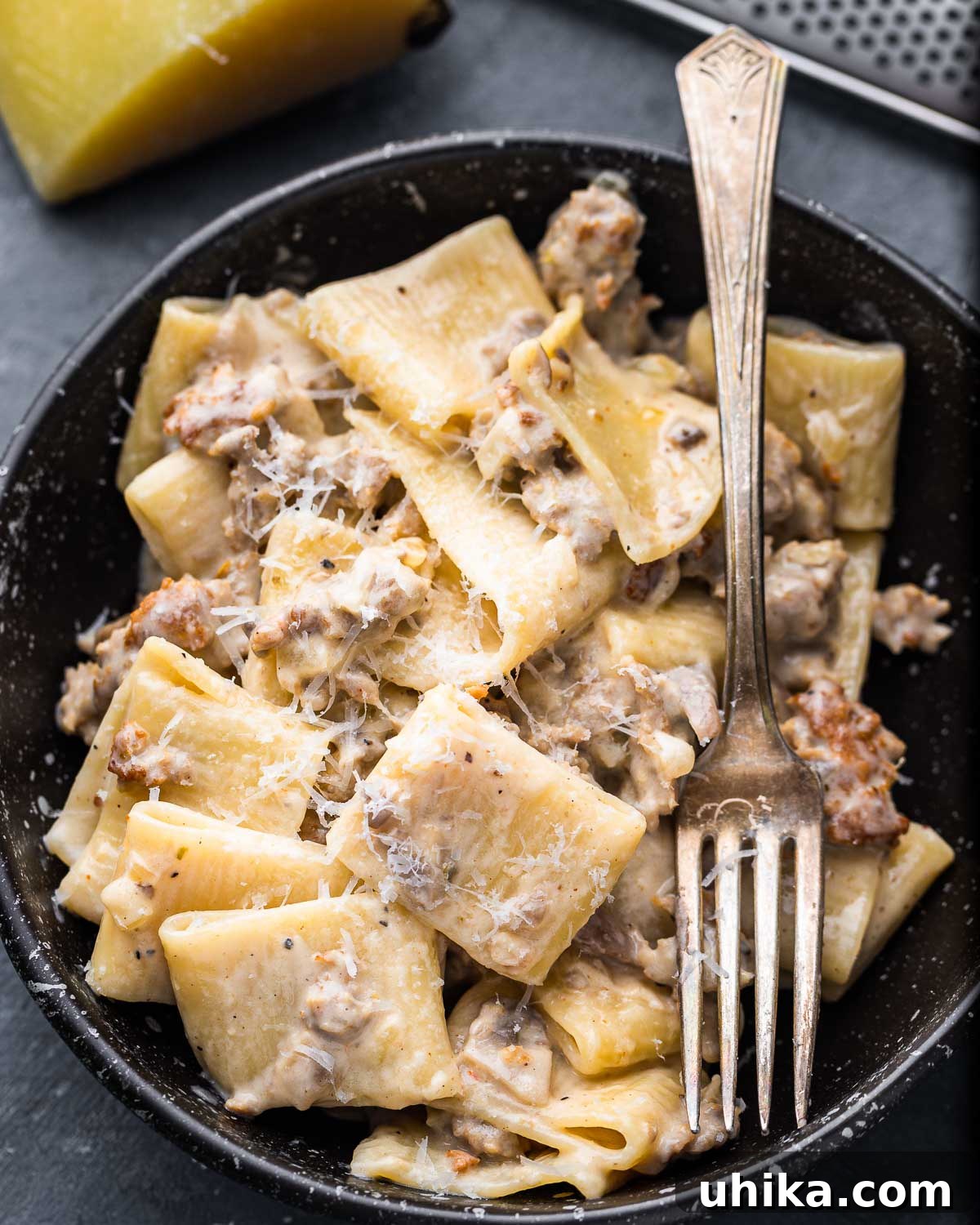
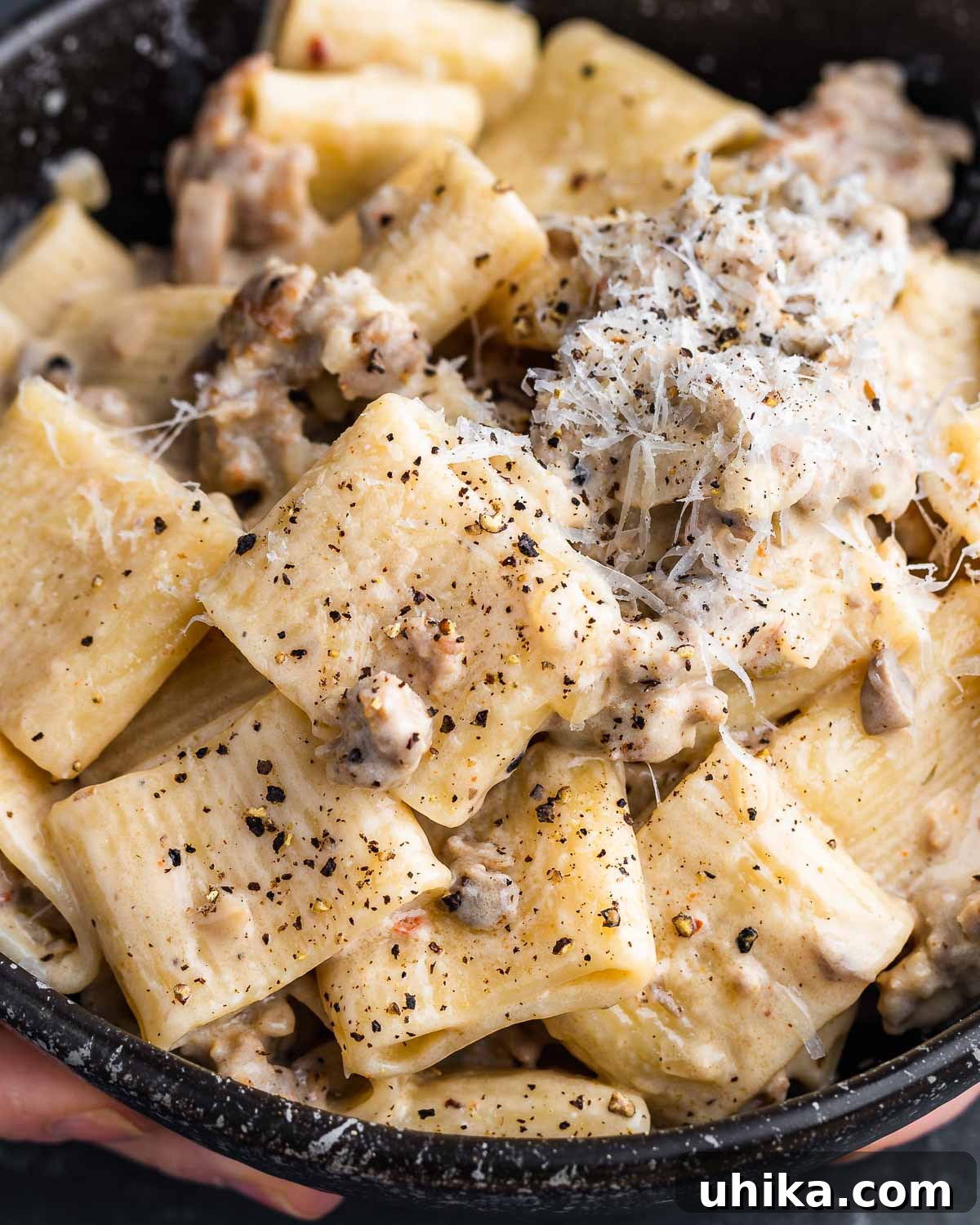
- Paccheri (as seen in our video and pictures)
The Spirit of Italian-American Cuisine: Adaptation and Innovation
Our approach to Pasta alla Norcina mirrors the historical trajectory of Italian-American cuisine itself. When millions of Italian immigrants arrived in America, primarily from Southern Italy, they brought their cherished recipes and culinary traditions. However, they soon encountered a new reality: ingredients were different, or entirely unavailable. What ensued was a brilliant process of adaptation and innovation, where recipes were modified to utilize local produce, different cuts of meat, and available dairy products. This gave birth to many beloved “Italian-American” dishes that, while inspired by Italy, are unique creations of the diaspora. Our goal is to empower home cooks with the knowledge to make delicious food, even if it means bending some traditional rules – a testament to the resilient and evolving nature of food culture.
It’s this blend of tradition and practicality that makes dishes like Pasta alla Norcina so rewarding to explore. It’s decadent, hearty, and intensely creamy, with the subtle warmth of nutmeg complementing the rich sausage. Even without expensive truffles, it’s a full meal that will satisfy and impress.
Addressing Common Concerns: Authenticity in the Modern Kitchen
The quest for culinary authenticity often sparks passionate debate, particularly in the digital age. We’ve received numerous questions and comments regarding how faithful one must remain to a “cannon recipe” before it transforms into something else entirely. This is a crucial conversation for any home cook looking to explore international cuisines.
How Faithful Should a Recipe Be? The Carbonara Conundrum
A perfect illustration of this debate is the revered Roman dish, Carbonara. Purists vehemently insist on the use of guanciale (cured pork jowl) and condemn any inclusion of cream, peas, or even pancetta. However, the history of Carbonara is not as ancient as many believe; it’s thought to be a relatively modern invention, possibly influenced by American soldiers’ love for bacon and eggs during World War II. Older Roman dishes like Pasta alla Gricia, which also uses guanciale, predate Carbonara by centuries.
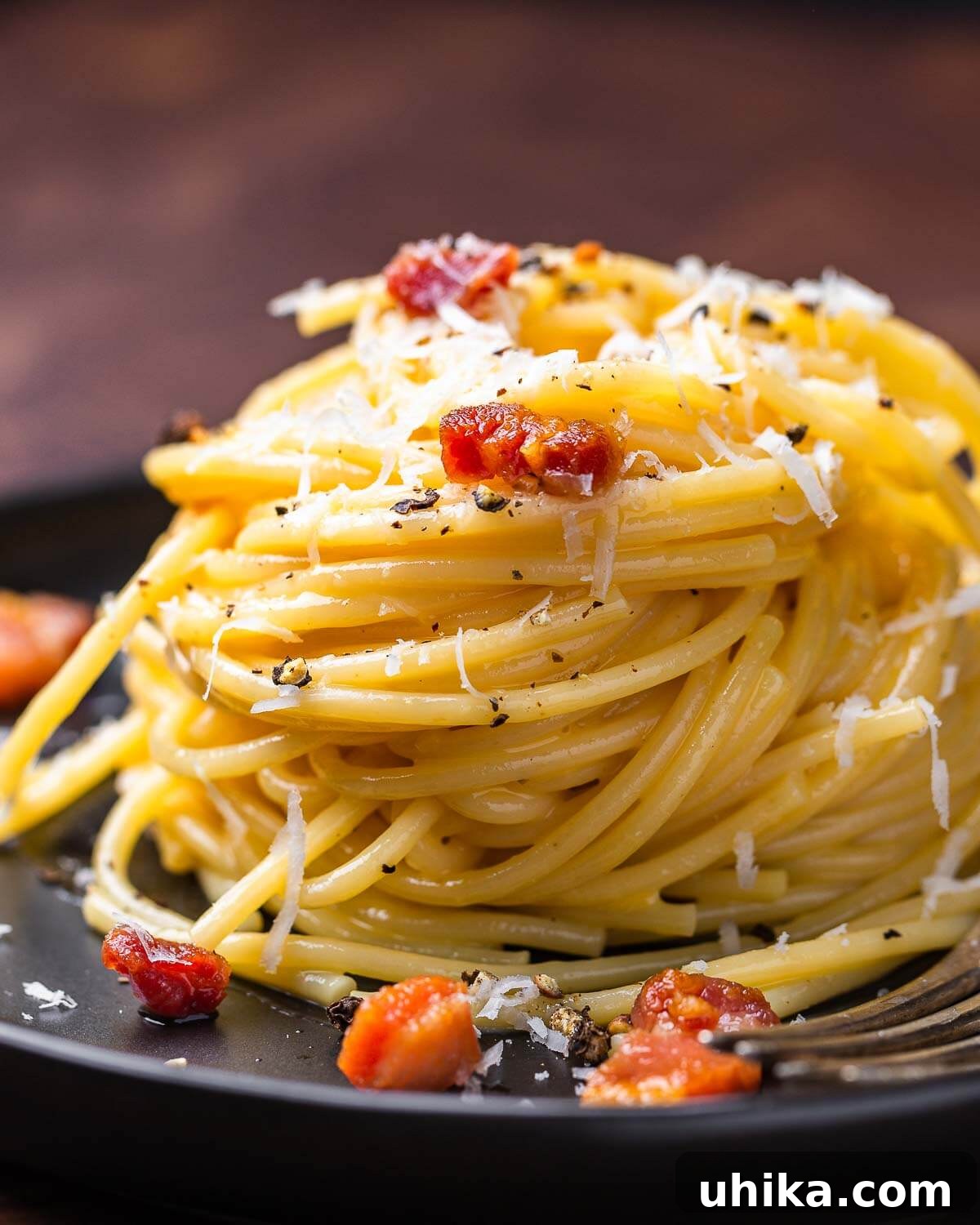
So we used guanciale in our spaghetti carbonara recipe pictured above, but do feel free to use pancetta or bacon if you can’t source it. It will still be delicious.
When ingredients like guanciale are hard to source, using high-quality pancetta or even bacon still yields a delicious and recognizable Carbonara. The goal for a home cook should be to achieve a fantastic meal with available ingredients, while understanding the traditional components. As for cream, while not classic Carbonara, its inclusion in some culinary schools’ teachings (like Gordon Ramsey’s approach) reflects a period in the 1980s when cream was more commonly used in Italian cooking.
Ultimately, the line between “authentic” and “inspired” is fluid. If significant changes are made, it’s always good practice to acknowledge the inspiration. However, for dishes like Pasta alla Norcina, where key ingredients are simply unavailable, sensible substitutions allow the spirit and flavor profile of the dish to shine through, making it accessible to a broader audience without losing its essence.
Clarifying Chicken Marsala: Cream or No Cream? Sweet or Dry Marsala?
Another common query revolves around the popular Italian-American dish, Chicken Marsala. Specifically, whether it traditionally includes heavy cream and the type of Marsala wine to use.
- Cream: Traditionally, Chicken Marsala does *not* contain heavy cream. Its richness comes from the Marsala wine and pan drippings. While a touch of cream might be added in some adapted versions for extra lusciousness (or in a pasta dish inspired by Marsala), it’s not part of the classic preparation.
- Marsala Wine: Always use *dry* Marsala wine for traditional Chicken Marsala. Sweet Marsala is typically reserved for desserts. While using sweet Marsala won’t ruin the dish, it will significantly alter its flavor profile, making it sweeter than intended.
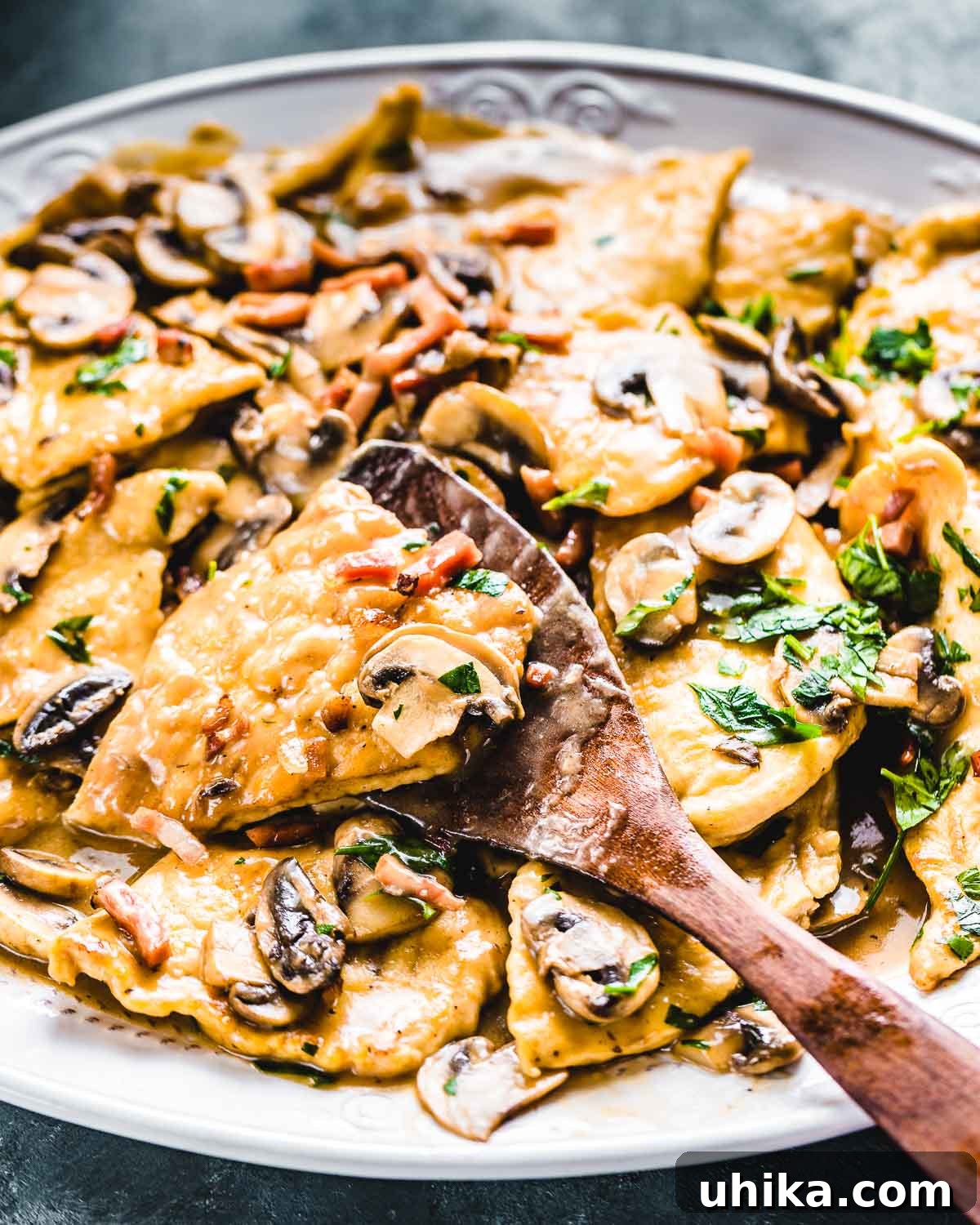
Chicken Marsala pictured above.
For thickening the sauce in Chicken Marsala, a slurry of cornstarch or a light dusting of flour is often preferred over cream, allowing the wine’s flavor to remain prominent. Always prioritize the written recipe on our website as the most accurate and up-to-date guide, as videos, especially older ones, may reflect earlier iterations or experimental approaches.
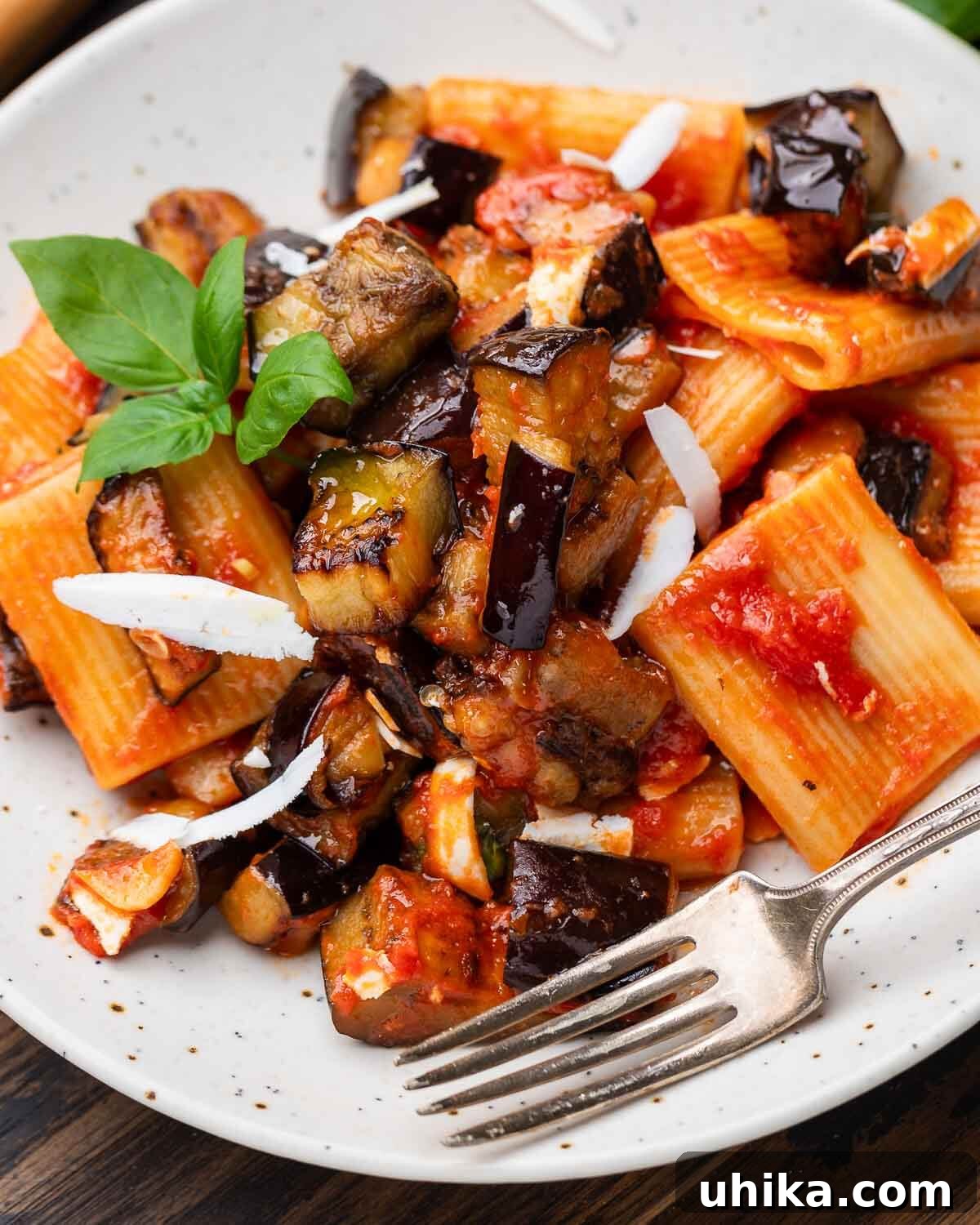
Pic above is Pasta alla Norma made with mezzi paccheri pasta.
Explore More Italian Recipes
- Classic Pasta Bolognese Recipe
- Authentic-Inspired Pasta alla Norcina Recipe
- Rich Chicken Marsala Recipe
We hope this deep dive into Pasta alla Norcina – Balancing Authenticity with Practicality inspires you to try this magnificent dish and explore the rich tapestry of Italian and Italian-American cuisine. If you enjoyed this discussion or have your own insights, leave us a comment below!
We love your questions. Please send them to [email protected]. There’s no question not worth asking.
If you enjoy our weekly podcast, consider supporting us on Patreon to receive 2 bonus episodes each month!
Thanks for listening!
For a complete list of all podcast episodes and culinary discussions, visit our podcast episode page.