
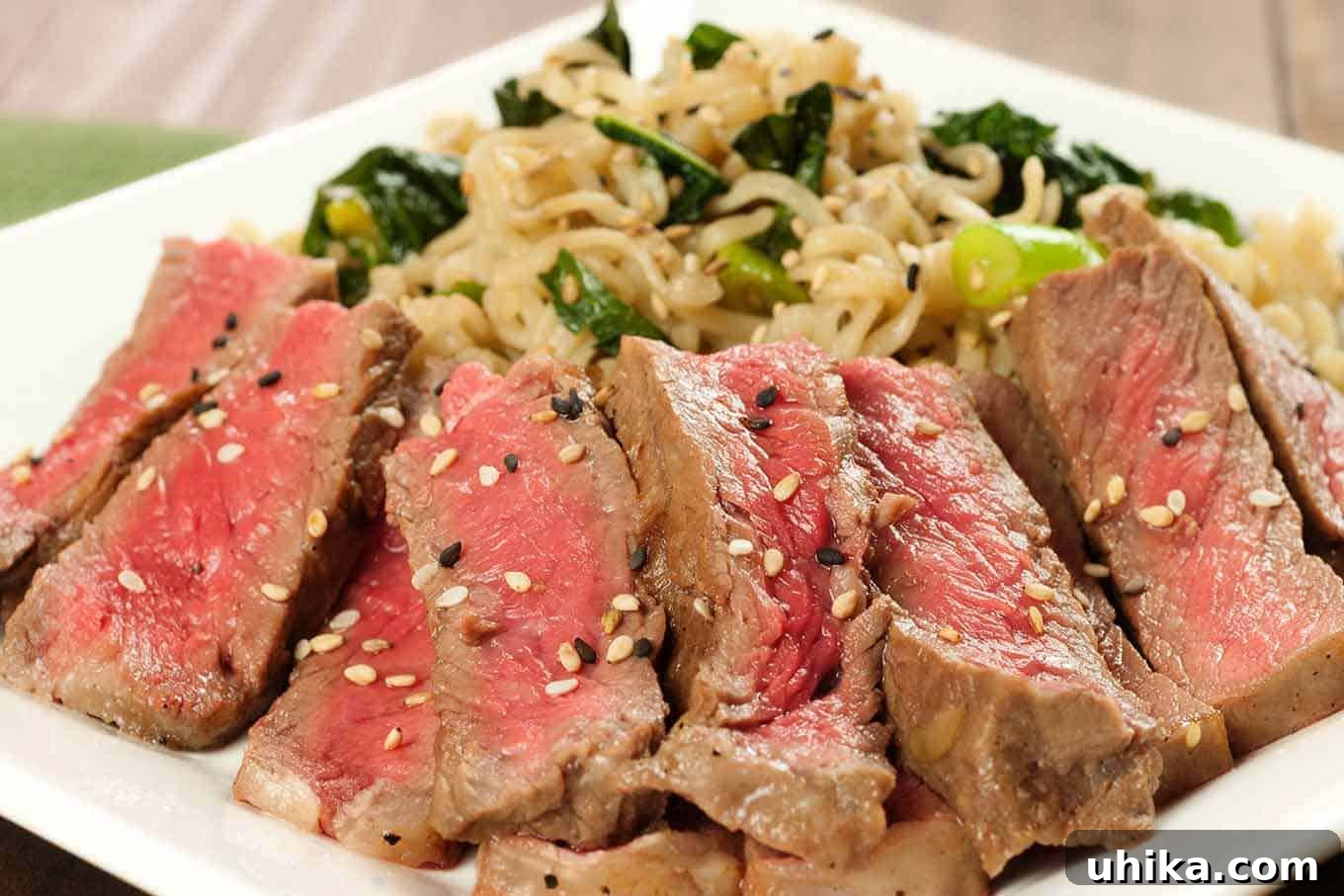
Exquisite Mirin-Marinated Strip Steaks with Savory Scallion-Kale Ramen
Embark on a culinary adventure that brings the authentic flavors of Japan right to your dining table. This recipe for Mirin-Marinated Strip Steaks, flawlessly paired with a vibrant Scallion-Kale Ramen, offers a sophisticated yet accessible meal experience. It’s an ideal choice for a special occasion or simply to elevate your weeknight dinner routine. We’ll guide you through each step, from crafting the perfect umami-rich marinade to grilling the steak to juicy perfection and preparing a remarkably flavorful ramen side dish. Prepare to impress with this harmonious blend of sweet, savory, and aromatic notes.
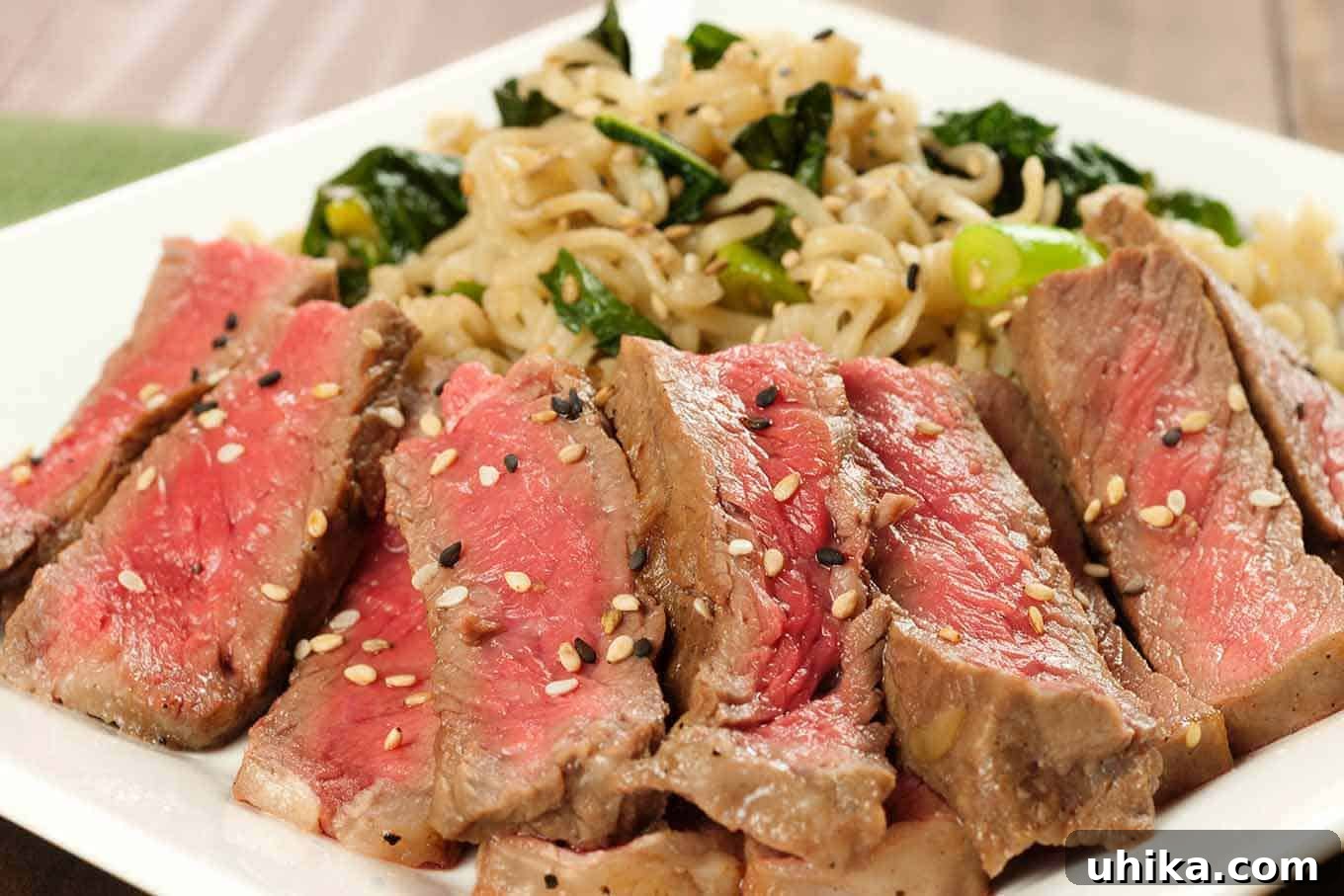
At the heart of many beloved Japanese dishes lies mirin, a unique sweet rice wine celebrated for its ability to impart a delicate sweetness and a captivating glaze. In this recipe, mirin takes center stage, forming the foundation of an incredible marinade alongside robust soy sauce, pungent garlic, and savory onion. This powerful combination tenderizes the New York strip steaks while infusing them with an irresistible depth of flavor. The resulting grilled steaks are then served with a fresh, wholesome Scallion-Kale Ramen, transforming what could be a simple side into a balanced, flavorful component of a complete meal. Get ready to explore the nuances of Japanese cooking and create a dinner that is both simple in its preparation and extraordinary in its taste.
Mirin-Marinated Strip Steaks with Scallion-Kale Ramen
By Lynne Webb
Savor the exquisite taste of New York strip steaks, perfectly marinated in an authentic blend of mirin, garlic, and soy sauce, then expertly grilled. This delightful main course is served with a vibrant and wholesome ramen noodle dish, generously tossed with sautéed kale and fresh scallions, creating a truly balanced and flavorful Japanese-inspired meal.
Cook: 30 mins
Marinating: 4 hrs
Total: 4 hrs 50 mins
Servings: 4 servings
View Instructions
Pin Recipe
Rate Recipe
Print Recipe
Ingredients
- 4 New York strip steaks, approximately 3/4-inch thick, 7 to 8 ounces each
- 3 packages instant ramen noodles (discard flavor packets or save for other uses)
- 2 tablespoons vegetable oil, plus additional as needed for sautéing
- 1 clove garlic, finely chopped (for the ramen)
- 1 large bunch kale, about 3/4 lb, tough stems removed and leaves torn into bite-sized pieces
- 5 or 6 scallions (green onions), thinly sliced (some reserved for garnish)
- 1 tablespoon soy sauce (for the ramen)
- Salt and freshly ground black pepper, to taste
- A drizzle of sesame oil (toasted, for serving)
- Sesame seeds (for garnish)
For the Marinade:
- 1/4 cup vegetable oil
- 1 teaspoon toasted sesame oil
- 2 tablespoons mirin (sweet rice wine)
- 3 tablespoons soy sauce
- 1/4 cup onion, finely chopped
- 3 cloves garlic, very finely chopped
Instructions
- **Prepare Steaks for Marinating:** At least 4 hours before serving (or up to 24 hours for deeper flavor), prepare the New York strip steaks. Carefully trim and discard any excess fat or silverskin to ensure optimal marinade absorption and a more tender eating experience.
- **Craft the Flavorful Marinade:** In a shallow dish large enough to hold the steaks comfortably in a single layer, or in a sturdy resealable plastic bag, whisk together the marinade ingredients: 1/4 cup vegetable oil, toasted sesame oil, mirin, 3 tablespoons soy sauce, finely chopped onion, very finely chopped garlic, and a generous amount of freshly ground black pepper.
- **Marinate the Steaks:** Add the trimmed steaks to the prepared marinade. Turn them several times to ensure they are thoroughly coated. Cover the dish or seal the bag tightly and refrigerate for a minimum of 4 hours. For even flavoring, remember to turn the steaks at least once during the marinating process.
- **Prepare the Kale:** While the steaks marinate, prepare the kale. Remove the tough, fibrous stems and tear the kale leaves into manageable, bite-sized pieces. Wash the kale thoroughly under cold water and then dry it very well using a salad spinner or by patting it dry with paper towels. Set aside.
- **Prepare Ramen Noodles:** Bring a large pot of lightly salted water to a rolling boil. Take the instant ramen noodle packages and discard the flavor sachets (they are not needed for this recipe, but can be saved for other uses). Break each block of dried noodles in half to facilitate easier cooking and tossing later. Set these aside until ready to cook.
- **Bring Steaks to Room Temperature & Preheat Grill:** Approximately 30 minutes before you intend to cook, remove the marinated steaks from the refrigerator. Allowing them to come closer to room temperature promotes more even cooking. Simultaneously, preheat your outdoor grill to a medium-high heat setting, or preheat your oven broiler.
- **Sauté Garlic and Kale:** Heat 2 tablespoons of vegetable oil in a large, heavy skillet over medium heat. Add the finely chopped garlic (1 clove) and sauté for about 1 minute, stirring constantly, until it becomes wonderfully fragrant but does not brown. Introduce the prepared kale into the skillet and continue to sauté, stirring frequently, until the kale begins to wilt, which typically takes about 2 minutes.
- **Finish Kale & Scallions:** Season the sautéed kale to your taste with salt and pepper. Add the sliced scallions to the skillet and cook for an additional 2 to 3 minutes, until both the scallions and kale are tender yet still retain their vibrant green color and a slight crispness. Remove the skillet from the heat and set this flavorful vegetable mixture aside.
- **Grill the Steaks to Perfection:** Place the marinated strip steaks on the preheated grill or under the broiler. Cook for 2-1/2 to 4 minutes per side, or until they reach your desired level of doneness (e.g., medium-rare to medium). For optimal tenderness and juiciness, transfer the cooked steaks to a clean platter, cover loosely with foil, and allow them to rest for at least 5 minutes while you prepare the noodles. This resting period is crucial for the internal juices to redistribute.
- **Cook and Combine Ramen:** During the steak’s resting period, cook the ramen noodles in the boiling salted water according to the package instructions, usually around 3 minutes, until they are tender but still have a slight bite. Drain the cooked noodles thoroughly. Add the drained ramen noodles and the remaining 1 tablespoon of soy sauce to the skillet containing the kale and scallion mixture. Toss everything vigorously to combine all the ingredients evenly. Taste the mixture and adjust the seasoning with additional salt, pepper, or soy sauce if needed. If the noodles appear a bit dry, drizzle in a little extra vegetable oil or toasted sesame oil.
- **Slice the Steaks:** Using a sharp knife, slice each rested steak across the grain into 1/4-inch thick pieces. Slicing against the grain ensures maximum tenderness and an enjoyable texture.
- **Assemble and Serve:** To serve this delightful Japanese-inspired meal, plate a generous portion of the Scallion-Kale Ramen. Artfully arrange the sliced mirin-marinated steak around or on top of the noodles. Finish each serving with a light drizzle of toasted sesame oil and a sprinkle of sesame seeds for an extra layer of flavor and a beautiful presentation. Serve immediately and enjoy!
The Indispensable Role of Mirin in Japanese Cuisine
Mirin, often described as a sweet Japanese rice wine, is far more than just an alcoholic beverage; it’s a foundational cooking condiment that lends a distinctive character to countless dishes. Its sweet, syrupy consistency and subtle umami notes are crucial for achieving the authentic flavors in Japanese cooking. Unlike sake, which is drier and higher in alcohol, mirin is specifically brewed for culinary use, featuring a lower alcohol content (especially in modern variations) and a higher sugar content derived from its fermentation process.
The magic of mirin lies in several key contributions to a dish:
- **Sweetness and Balance:** It provides a mellow sweetness that beautifully balances savory and salty flavors, preventing dishes from becoming overly sharp or one-dimensional.
- **Gloss and Luster:** Mirin imparts a beautiful, appetizing gloss or “teriyaki glaze” to foods, particularly when used in marinades or sauces for grilled meats and fish. This visual appeal is a hallmark of many Japanese preparations.
- **Flavor Infusion and Tenderization:** Its mild acidity and sweetness help to tenderize proteins, allowing marinades to penetrate deeper and infuse meats like our strip steaks with richer flavor. It also helps to mask stronger odors in ingredients like fish or game.
- **Umami Enhancement:** Beyond sweetness, mirin contains amino acids that contribute to the coveted umami flavor, adding depth and complexity to the overall taste profile.
When selecting mirin, be aware of the different types: Hon Mirin (true mirin) is the premium choice, with a higher alcohol content (around 14%) and a rich, complex flavor from extended fermentation. Aji Mirin (mirin-like seasoning) or Mirin-fu Chomiryo (mirin-type seasoning) are more common and accessible, often containing less alcohol, more sugar, and sometimes added salt. While convenient, they may not offer the same depth. For the best, most authentic flavor in your Mirin-Marinated Strip Steaks, opt for hon mirin if possible.
Achieving Perfection: Tips for Grilling New York Strip Steaks
The New York strip steak is a perennial favorite among steak enthusiasts for its ideal balance of robust beefy flavor and satisfying tenderness. When properly cooked, it yields a juicy, mouth-watering experience. To ensure your mirin-marinated strip steaks are nothing short of spectacular, consider these expert grilling techniques:
- **Quality Cut Matters:** Begin with high-quality New York strip steaks, ideally 3/4 to 1 inch thick. Uniform thickness is key for even cooking. Look for good marbling – small flecks of fat distributed throughout the muscle – which contributes to flavor and juiciness.
- **The Importance of Room Temperature:** Never grill a steak straight from the refrigerator. Allowing the steaks to come to room temperature for at least 30 minutes before grilling helps them cook more evenly from edge to center. A cold center will struggle to reach desired doneness without overcooking the exterior.
- **Pat Dry for a Superior Sear:** After marinating, gently pat the steaks dry with paper towels. Excess moisture on the surface of the meat will steam rather than sear, preventing that coveted crispy, flavorful crust from forming.
- **High Heat for Searing:** A screaming hot grill is essential for developing a beautiful crust (Maillard reaction). Place the steaks on the hottest part of the grill for 1-2 minutes per side to achieve a deep sear, then move them to a slightly cooler part of the grill to finish cooking to your desired internal temperature.
- **Doneness by Temperature:** The most reliable way to ensure perfect doneness is with an instant-read meat thermometer. Aim for:
- Rare: 120-125°F (49-52°C)
- Medium-Rare: 130-135°F (54-57°C) – often preferred for strip steaks
- Medium: 135-140°F (57-60°C)
- Medium-Well: 140-145°F (60-63°C)
Remember that the internal temperature will rise by 5-10 degrees Fahrenheit during the resting period.
- **The Critical Resting Period:** Once the steaks are cooked, transfer them to a cutting board or platter, cover loosely with foil, and let them rest for at least 5-10 minutes. This allows the muscle fibers to relax and reabsorb the flavorful juices, resulting in a much juicier and more tender steak. Skipping this step will cause the juices to run out onto your plate when sliced.
- **Slice Against the Grain:** When ready to serve, always slice the steak against the grain. This shortens the muscle fibers, making each bite incredibly tender and easy to chew.
Beyond the Packet: Elevating Ramen Noodles with Fresh Ingredients
Often perceived as a humble, quick meal, instant ramen noodles possess an incredible versatility that allows them to be transformed into a sophisticated and wholesome component of any dinner. In this recipe, we ditch the traditional seasoning packets in favor of fresh vegetables and a simple soy sauce dressing, creating a vibrant accompaniment that perfectly complements the rich Mirin-Marinated Strip Steaks.
- **Texture is Paramount:** The key to delicious ramen noodles lies in their texture. Cook them just until al dente – tender but still with a slight chew. This typically takes around 2-3 minutes for most instant ramen varieties. Overcooking will result in mushy noodles that lack appeal.
- **Flavorful Additions:** The combination of sautéed garlic, wilted kale, and fresh scallions elevates these simple noodles into a dish brimming with flavor and nutrition. Kale provides a pleasant earthy bitterness and a boost of vitamins, while scallions add a mild, fresh oniony bite that brightens the entire dish. Don’t hesitate to experiment with other quick-cooking greens like spinach, bok choy, or even thinly sliced cabbage.
- **The Power of Sesame Oil:** A final drizzle of toasted sesame oil is a game-changer for the ramen. Its distinctive nutty aroma and rich flavor tie all the elements together, providing an authentic Asian culinary finish. This subtle addition makes a profound difference in the overall depth of flavor.
- **Adjusting Seasoning:** Taste as you go! While the recipe provides a base, personal preferences for saltiness can vary. Don’t be afraid to add a little more soy sauce, a pinch of salt, or a grind of pepper to perfectly balance the flavors of your ramen mixture. A dash of rice vinegar could also add a touch of acidity if desired.
- **Broth vs. Dry:** For this recipe, we’re preparing a “dry” ramen dish, focusing on the noodles tossed with vegetables and a light sauce. This allows the steak to remain the star, but if you prefer a soupier ramen, you could easily prepare a simple dashi or chicken broth and serve the noodles and steak slices in it, adjusting the seasoning for the broth.
Creative Serving Suggestions and Flavorful Variations
This Mirin-Marinated Strip Steaks with Scallion-Kale Ramen recipe is designed to be a complete and satisfying meal, offering a perfect harmony of protein, carbohydrates, and fresh vegetables. However, its versatility allows for numerous creative tweaks and additions to suit individual tastes, dietary needs, or special occasions:
- **Amplify the Heat:** For those who appreciate a fiery kick, incorporate a pinch of red pepper flakes into the steak marinade or stir them into the ramen during the sautéing process. A drizzle of chili oil, sriracha, or a dollop of gochujang (Korean chili paste) on the side can also provide a customizable level of spice upon serving.
- **Introduce More Vegetables:** Expand the nutritional profile and texture by adding more colorful vegetables to your ramen. Consider thinly sliced carrots, julienned bell peppers, snap peas, edamame, or thinly sliced mushrooms. Add them to the skillet with the kale, adjusting cooking times to ensure they remain crisp-tender.
- **Garnish for Impact:** Beyond sesame seeds, elevate the presentation and add extra layers of flavor with diverse garnishes. Freshly chopped cilantro or parsley can add a herbaceous note. A sprinkle of furikake (Japanese rice seasoning) brings a mix of nori, sesame, and dried fish flakes. A wedge of lime or lemon offers a bright, acidic counterpoint that can cut through the richness of the steak.
- **Boost with Additional Protein:** While the steak is the star, a classic soft-boiled or fried egg (ramen egg or ajitama) sliced in half makes a delightful and traditional addition to the ramen, enriching the dish with its creamy yolk.
- **Explore Alternative Beef Cuts:** If New York strip is unavailable, other cuts of beef like flank steak, skirt steak, or even sirloin steak can be substituted. Remember to adjust marinating times (thinner cuts might need less time) and grilling durations accordingly, as cooking times will vary with thickness and cut.
- **Gluten-Free or Low-Carb Options:** To accommodate dietary preferences, consider swapping traditional ramen noodles for gluten-free sweet potato noodles (japchae noodles) or spiralized zucchini noodles. Adjust their cooking methods to achieve the desired tenderness.
- **Sweetness Adjustment:** If you find the mirin adds too much sweetness for your palate, you can slightly reduce the mirin in the marinade or add a splash of rice vinegar to the finished ramen for a touch of acidity to balance.
This recipe is a flexible framework for a delicious meal. Feel free to experiment with these suggestions to make it uniquely your own. Whether you stick to the original or get creative, this Japanese-inspired steak and ramen combination is guaranteed to be a hit!
Loved this Authentic Japanese Steak & Ramen?
Your feedback is invaluable! Please take a moment to rate this Mirin-Marinated Strip Steaks with Scallion-Kale Ramen recipe and share your comments below. We’d love to hear about your experience and any delicious twists you added!