
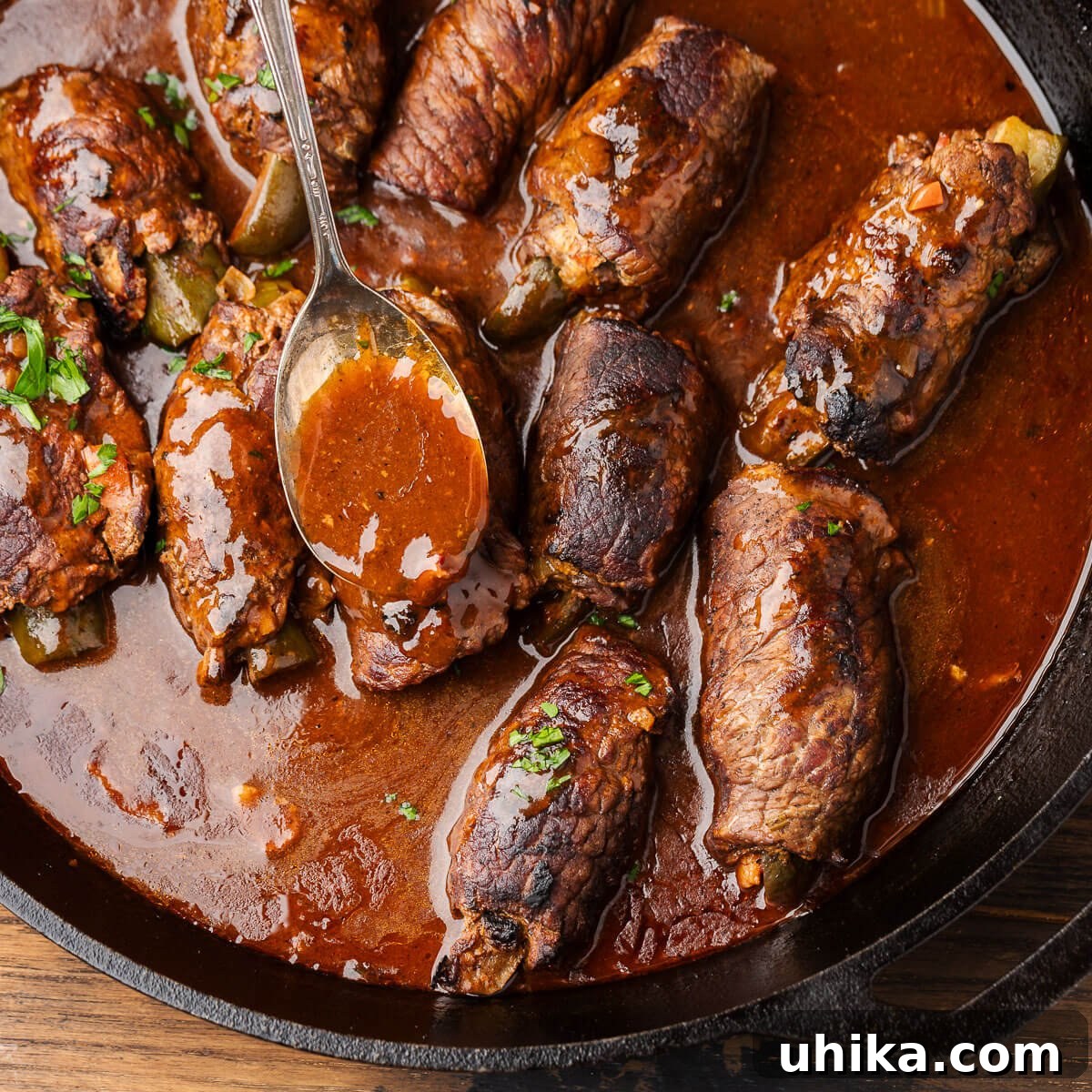
German Beef Rouladen is a cherished culinary tradition, a hearty and flavorful dish that brings warmth and comfort to any table. This classic German comfort food features thinly sliced beef, meticulously rolled around a tantalizing combination of savory bacon, tangy mustard, crisp pickles, and finely diced vegetables. Braised slowly in a rich, deeply flavored brown gravy, the beef becomes incredibly tender, melting in your mouth with every bite. It’s an ideal choice for special gatherings, festive Oktoberfest celebrations, or simply when you’re yearning for a profoundly satisfying homemade meal.
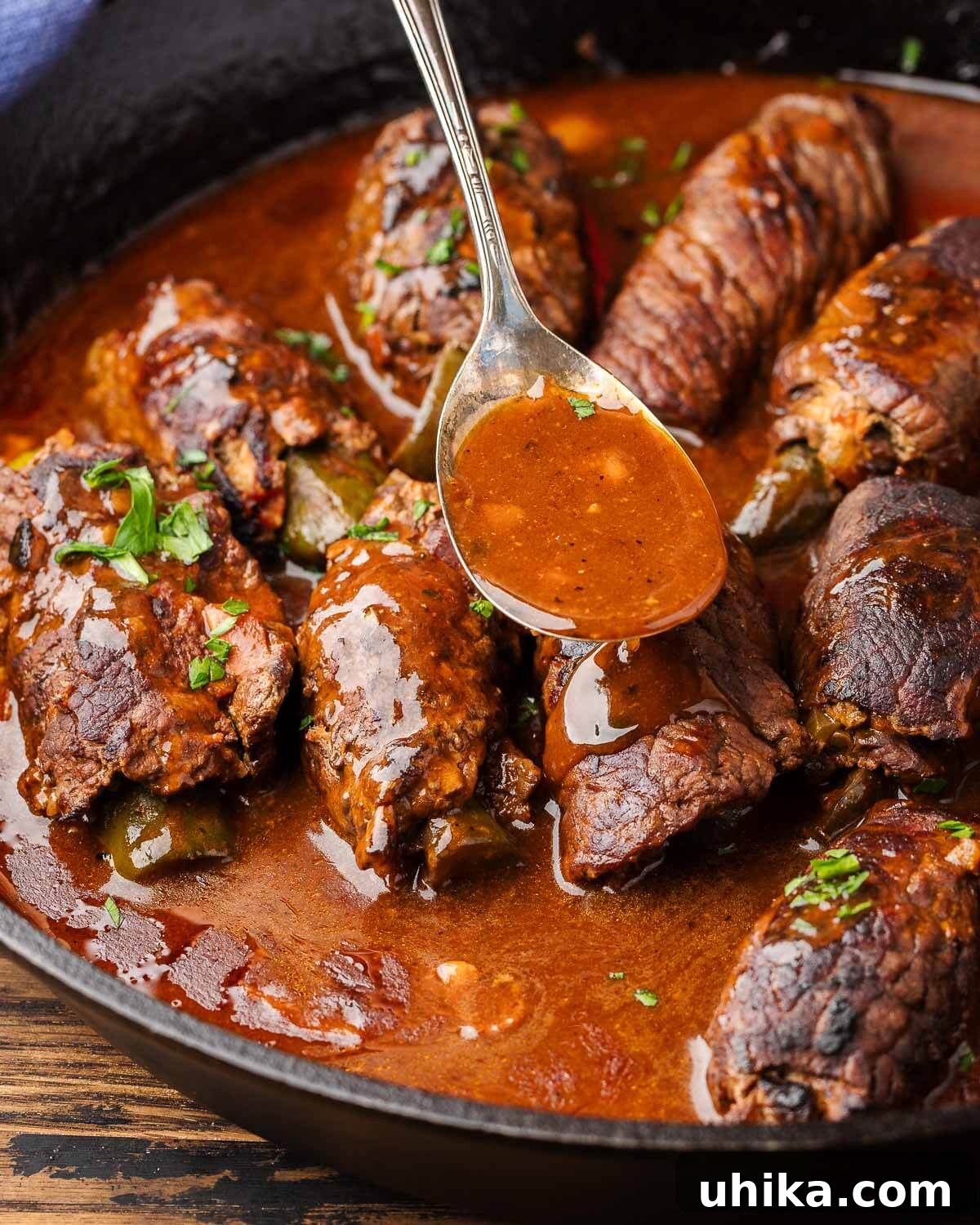
As the vibrant days of summer fade and the crisp autumn air settles in, my cravings naturally shift towards more substantial, warming meals. Among my absolute favorites during this transition are these delightful beef rouladen, also affectionately known as German beef rolls, beef birds, or even steak rolls in various regions. This dish isn’t just food; it’s an experience, a taste of German heritage, and a culinary journey into true comfort. Each bite evokes the cozy kitchens of Germany, where this dish has been perfected over generations.
While beef rouladen shares a superficial resemblance to Italian beef braciole, both involving thinly sliced top round rolled with a savory stuffing, their similarities diverge sharply at the choice of filling and the resulting flavor profile. Braciole often leans into Mediterranean herbs and cheeses, whereas rouladen embraces a distinctly German character with ingredients like pungent mustard and briny pickles, creating a unique and unforgettable taste.
The Heart of German Cuisine: Regional Variations of Rouladen
One of the most fascinating aspects of rouladen is its incredible versatility and the regional variations found across Germany. The specific ingredients used to fill the beef rolls can differ significantly from one region to another, and even from family to family, passed down through generations. Some might prefer a sweeter pickle, while others insist on the sharp tang of dill. Bacon is a common thread, but sometimes smoked ham, Black Forest ham, or even finely minced sausage finds its way into the filling. The choice of vegetables can also vary, incorporating ingredients like bell peppers or different root vegetables depending on local availability and tradition. The beauty of this dish lies in its adaptability, allowing you the freedom to adjust the components to suit your personal taste or to honor a particular family heritage.
This culinary flexibility ensures that every rouladen dish, while adhering to the core concept of rolled, braised beef, offers a unique culinary narrative. Whether you’re exploring different types of mustard – from a fiery German variety to a milder Dijon – or experimenting with various pickle flavors, you’re engaging with a tradition that values both authenticity and individual expression. It’s a testament to German culinary ingenuity, transforming simple ingredients into a dish of profound depth and satisfaction.
Traditional Pairings and Serving Suggestions
Traditionally, German Rouladen is served alongside classic accompaniments that perfectly complement its rich flavors and hearty nature. The most iconic pairings include fluffy potato dumplings (Kartoffelklöße), which are excellent for soaking up every drop of the delectable gravy, and vibrant German red cabbage (Rotkohl). The red cabbage, often prepared with apples and vinegar, offers a delightful balance of sweetness and acidity that cuts through the richness of the beef and bacon.
However, the versatility of rouladen means it pairs wonderfully with other popular German sides. Consider serving it with tender spaetzle, a soft egg noodle that provides a comforting texture, or classic creamy mashed potatoes. For a simpler approach, plain boiled potatoes or even roasted root vegetables can also provide an excellent foundation for the rich gravy. Beyond the starch, a fresh green salad with a light vinaigrette can offer a refreshing contrast. Don’t forget a good German beer or a robust red wine to complete the authentic dining experience, enhancing the flavors and making it a truly memorable meal.
Essential Ingredients for Authentic German Beef Rouladen
Crafting the perfect German Beef Rouladen begins with selecting high-quality ingredients. Below is a comprehensive list of what you’ll need, along with special notes to help you achieve the best results and understand the role each component plays in this classic dish.
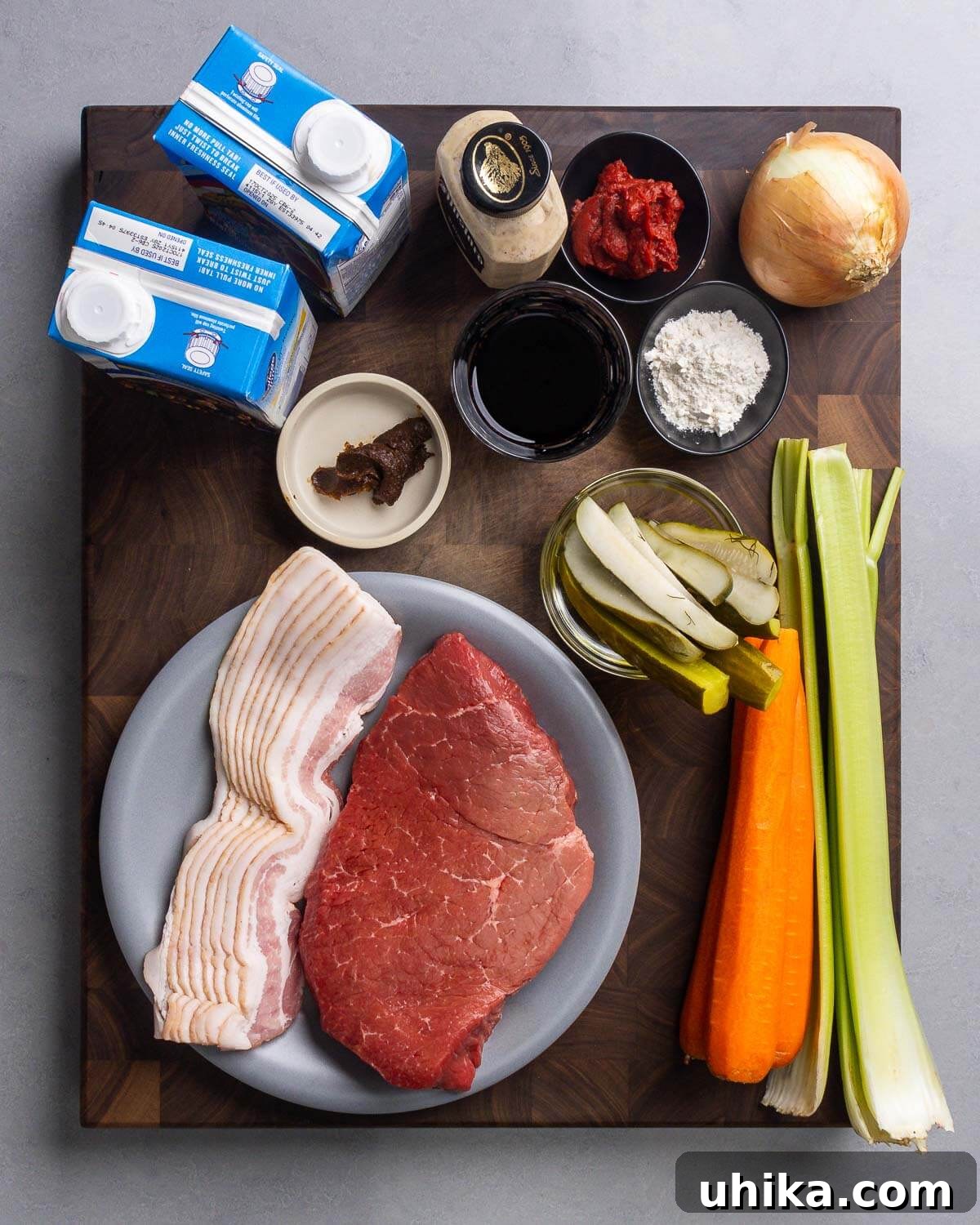
- Beef: For this authentic Beef Rouladen recipe, we highly recommend using top round, often sold as London Broil. This cut is lean yet becomes incredibly tender when slow-braised. Ideally, you want thinly sliced pieces, about 1/2-inch thick, that can be easily pounded to an even 1/4-inch thickness. In some specialty supermarkets, especially those with a strong European influence, you might find beef already thinly sliced specifically for braciole or rouladen, which can save considerable prep time. If not, a sharp knife and a bit of patience will do the trick. Other suitable cuts include bottom round, eye of round, flank steak, or sirloin, all of which must be pounded flat to ensure even cooking and easy rolling.
- Bacon: Crispy bacon strips are a fundamental and non-negotiable part of the traditional rouladen stuffing, adding a smoky, salty depth that is irresistible and complements the beef beautifully. We suggest frying the bacon until it’s about halfway cooked before adding it to the rolls; this renders some fat for searing while keeping the bacon flavorful within the rouladen. If bacon isn’t your preference for dietary or taste reasons, a slice of savory Black Forest ham makes an excellent substitute, offering a similar cured meat flavor profile.
- Pickles: The choice of pickle can dramatically influence the final taste and is a key element that defines rouladen’s distinctive flavor. I personally love the sharp tang of dill pickles in my rouladen, as their briny flavor cuts through the richness of the beef and bacon, providing a wonderful contrast. However, my partner, Tara, often prefers the sweeter gherkins, which add a subtle sweetness and different dimension to the filling. Feel free to use your favorite variety – whether it’s dill, sweet, or bread and butter pickles – to customize the flavor to your liking.
- Beef Stock: A truly exceptional rouladen relies on a rich, flavorful gravy that forms the heart of the dish. Homemade beef stock is highly recommended for its unparalleled depth and authenticity. If using store-bought stock, opt for a high-quality, low-sodium or no-sodium beef stock to control the overall saltiness. For an even more concentrated and robust flavor, reduce 8 cups of no-sodium boxed stock down to 4 cups by simmering it gently on the stovetop. This intensifies the beefy notes without adding excessive salt or artificial flavors.
- Mustard: German mustard is the traditional choice, lending a distinct, pungent, and slightly spicy flavor that beautifully complements the other filling ingredients. Its sharp acidity helps tenderize the beef and provides a crucial flavor component. If you can source an authentic German mustard, it will greatly enhance the dish’s traditional character. However, any good quality Dijon mustard or even a hearty brown mustard will work effectively, providing that essential tangy kick.
- Aromatics and Vegetables: Finely diced onions, carrots, and celery form the foundational base of the aromatic filling, sautéed until soft to build a layer of fundamental flavor that will permeate the entire dish. These simple vegetables add sweetness, earthiness, and texture to the filling.
- Red Wine and Tomato Paste: These ingredients are crucial for developing the rich color and complex flavor profile of the braising gravy. A dry red wine adds acidity, tannic structure, and a deep fruitiness, helping to deglaze the pan and incorporate all the delicious browned bits. Tomato paste provides umami, a subtle sweetness, and a lovely reddish-brown hue to the sauce, deepening its overall character.
- Flour: All-purpose flour is used both to create a light coating on the beef before searing (helping with browning) and, more importantly, to thicken the gravy. When cooked with fat (like bacon fat or olive oil), it forms a roux, giving the sauce a beautiful body, glossy consistency, and velvety mouthfeel.
Detailed Recipe: How to Master German Beef Rouladen
Preparation Steps for the Rouladen
- Prepare the Beef: Begin with 2 to 2 1/2 pounds of top round. If your butcher hasn’t already done so, slice the beef into pieces approximately 1/2-inch thick, then cut these into uniform 3×4 inch rectangles. The goal is to have 8-12 consistent slices. Using a sturdy meat mallet, pound each beef slice until it is approximately 1/4-inch thick. This not only tenderizes the meat but also expands its surface area, making it easier to roll. Finely dice 1 large onion, 2 ribs of celery, and 3 medium carrots, setting them aside for the filling.
- Cook the Bacon: Slice 1/2 pound of bacon into 2-3 inch pieces (or simply cut them in half for larger strips, depending on your preference). In a large, oven-safe pan or Dutch oven, sauté the bacon over medium heat until it is about halfway cooked and has rendered some of its fat but is not yet fully crisp. Remove the bacon pieces from the pan and place them on a paper towel-lined plate to drain. Preserve a few tablespoons of the rendered bacon fat in the pan; this flavorful fat will be used for sautéing the vegetables and searing the rouladen.
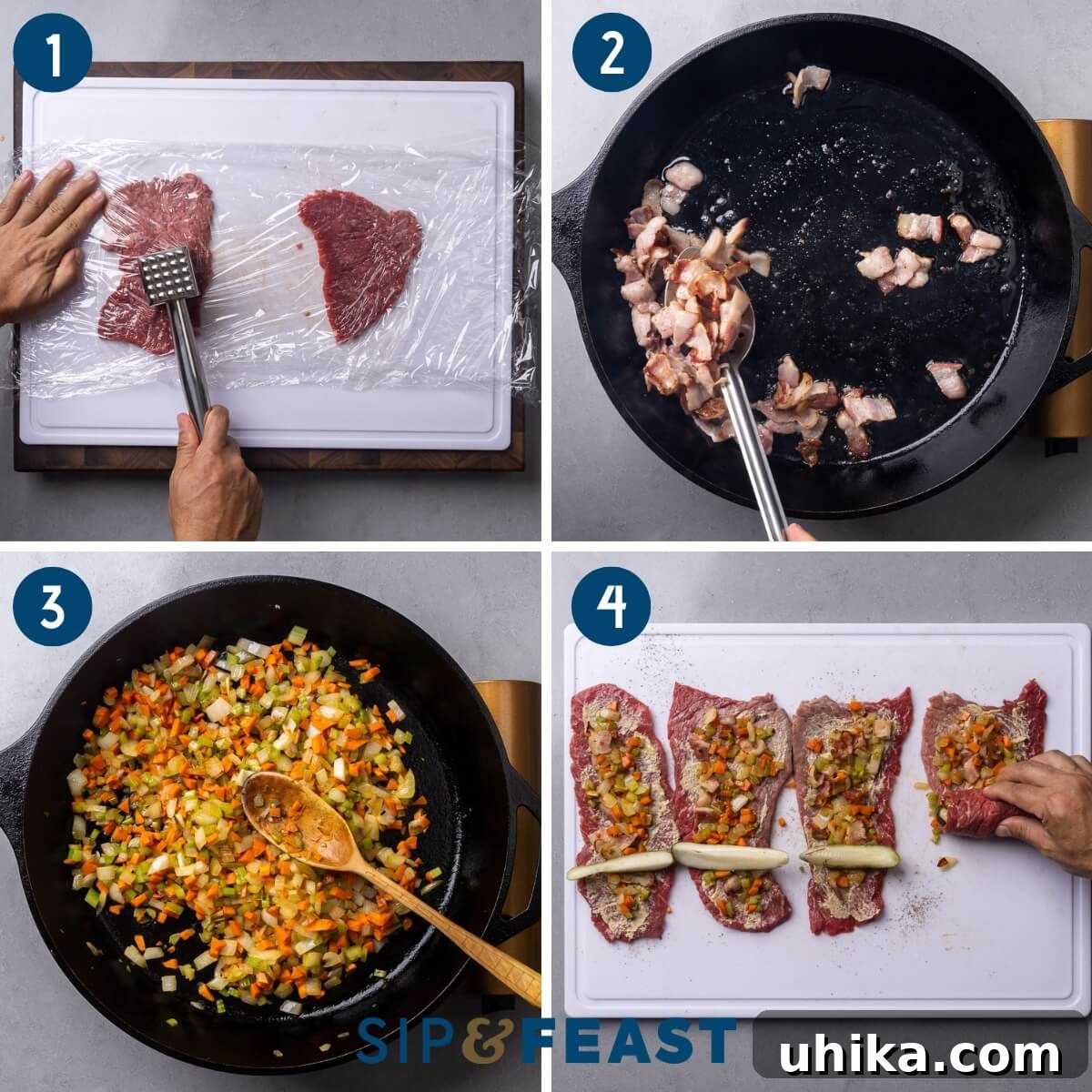
- Sauté the Vegetables: Using the same pan with the remaining bacon fat, add the finely diced onion, carrot, and celery. Sauté over medium heat for about 10 minutes, or until the vegetables are softened and translucent, releasing their aromatic compounds. Once cooked, transfer the vegetables to a bowl and set them aside to cool slightly before handling.
- Assemble the Rouladen: Lay the pounded beef slices flat on a clean cutting board or work surface. Season each slice generously with salt and freshly ground black pepper on both sides. Spread a thin, even layer of German mustard (or your preferred mustard, ensuring full coverage for maximum flavor) over the entire surface of each beef slice. Evenly divide the sautéed vegetable mixture and the partially cooked bacon amongst the slices, spreading them across the beef. Finally, place one slice of pickle on top of the filling for each piece of beef, positioned to be rolled within.
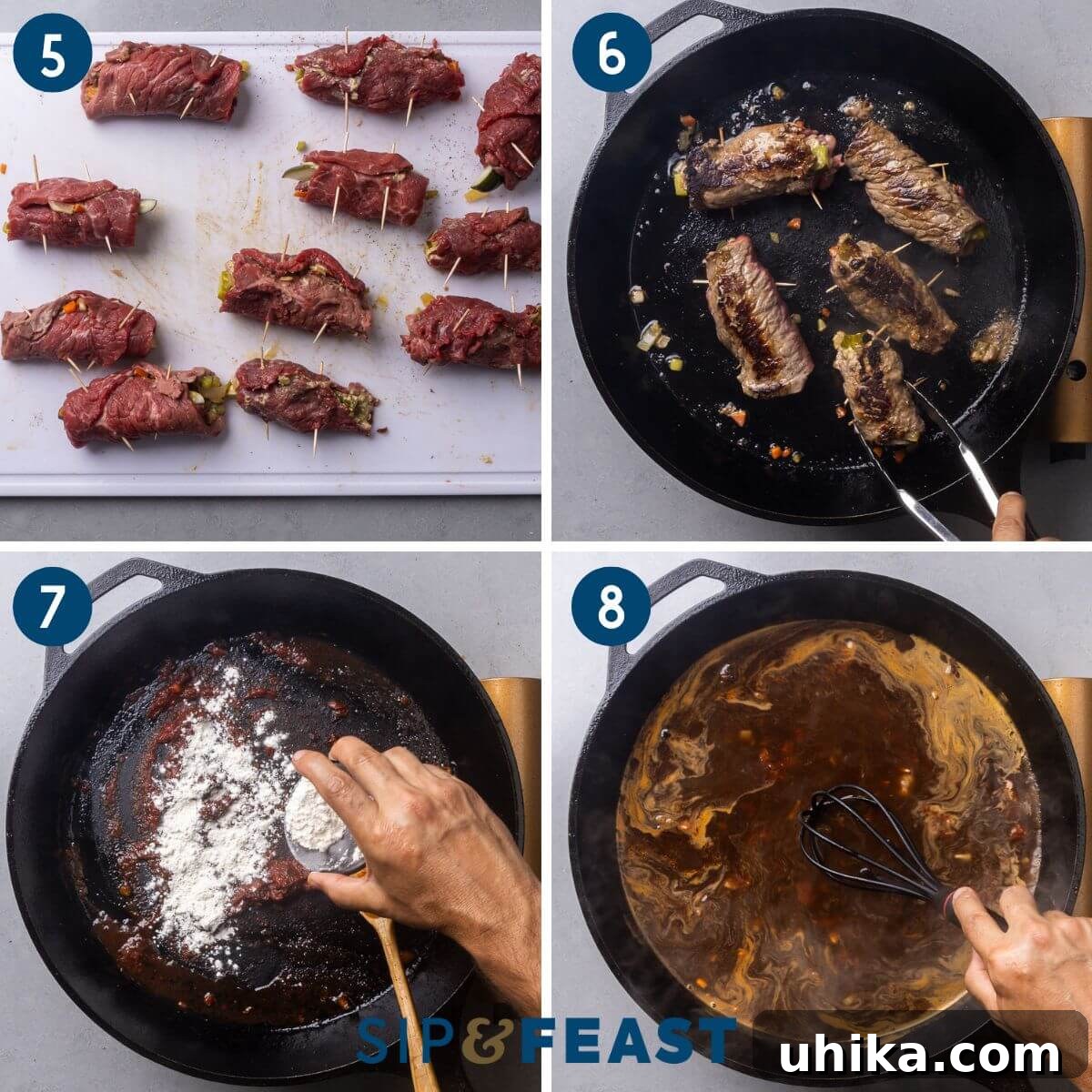
- Roll and Secure: Carefully and tightly roll each filled beef slice, starting from one end and ensuring the filling is completely enclosed within the beef. The tighter the roll, the better it will hold together during cooking. Secure each rouladen firmly with 2 wooden toothpicks or by tying it tightly with kitchen twine. This is a crucial step to prevent the filling from escaping during the long braising process.
- Sear the Rouladen: Return the same pan to medium heat and add the reserved bacon fat, or a little olive oil if more is needed. Once hot, carefully place the beef rolls into the pan, seam-side down first. Sear the beef rolls on all sides until they are beautifully browned and caramelized. This step develops deep, rich flavors. Work in batches if necessary to avoid overcrowding the pan, which can lead to steaming rather than searing, hindering proper browning. Once seared, remove the rouladen from the pan and set them aside.
Braising the Rouladen in Rich Gravy
- Prepare the Oven and Sauce Base: Preheat your oven to 325°F (160°C) and position an oven rack to the middle level. In the same pan used for searing, add a few tablespoons of olive oil or lard over medium heat. Stir in 3 tablespoons of tomato paste and sauté for a few minutes until it darkens slightly and caramelizes, being careful not to burn it (add a splash of water or stock if needed to prevent scorching). This step intensifies the tomato flavor. Add 1/4 cup of all-purpose flour and cook for about 1 minute, stirring constantly, until no white specks of flour remain and a smooth roux has formed. This will create the foundational thickening agent for your rich gravy.
- Deglaze and Build the Gravy: Pour in 1 cup of dry red wine, immediately scraping the bottom of the pan with a wooden spoon or whisk to dislodge any browned bits (fond) that have accumulated during searing and sautéing. These bits are packed with flavor and will significantly enrich your gravy. Next, add 4 cups of homemade beef stock or power-reduced low-sodium beef stock (as per the note in the ingredients section). Turn the heat to high and bring the mixture to a simmer, whisking occasionally until smooth and slightly thickened. If using boxed stock, remember to reduce 8 cups to 4 cups beforehand to concentrate the flavor. Taste the stock and if it lacks a deep beefy flavor, stir in 1-2 teaspoons of low-sodium beef base for added richness.
- Braise the Rouladen: Once the sauce is simmering beautifully and has a smooth consistency, carefully return the seared beef rolls to the pot. Arrange them snugly within the pan, ensuring they are mostly submerged in the savory gravy.
- Slow Cook to Perfection: Cover the pan with a tight-fitting lid or securely seal it with aluminum foil. Transfer the pan to the preheated oven and braise for 60 to 90 minutes, or until the beef rouladen are incredibly fork-tender and yield easily when pierced. Alternatively, you can simmer them gently over very low heat on the stovetop, ensuring consistent low heat to prevent scorching and allowing the flavors to meld slowly.
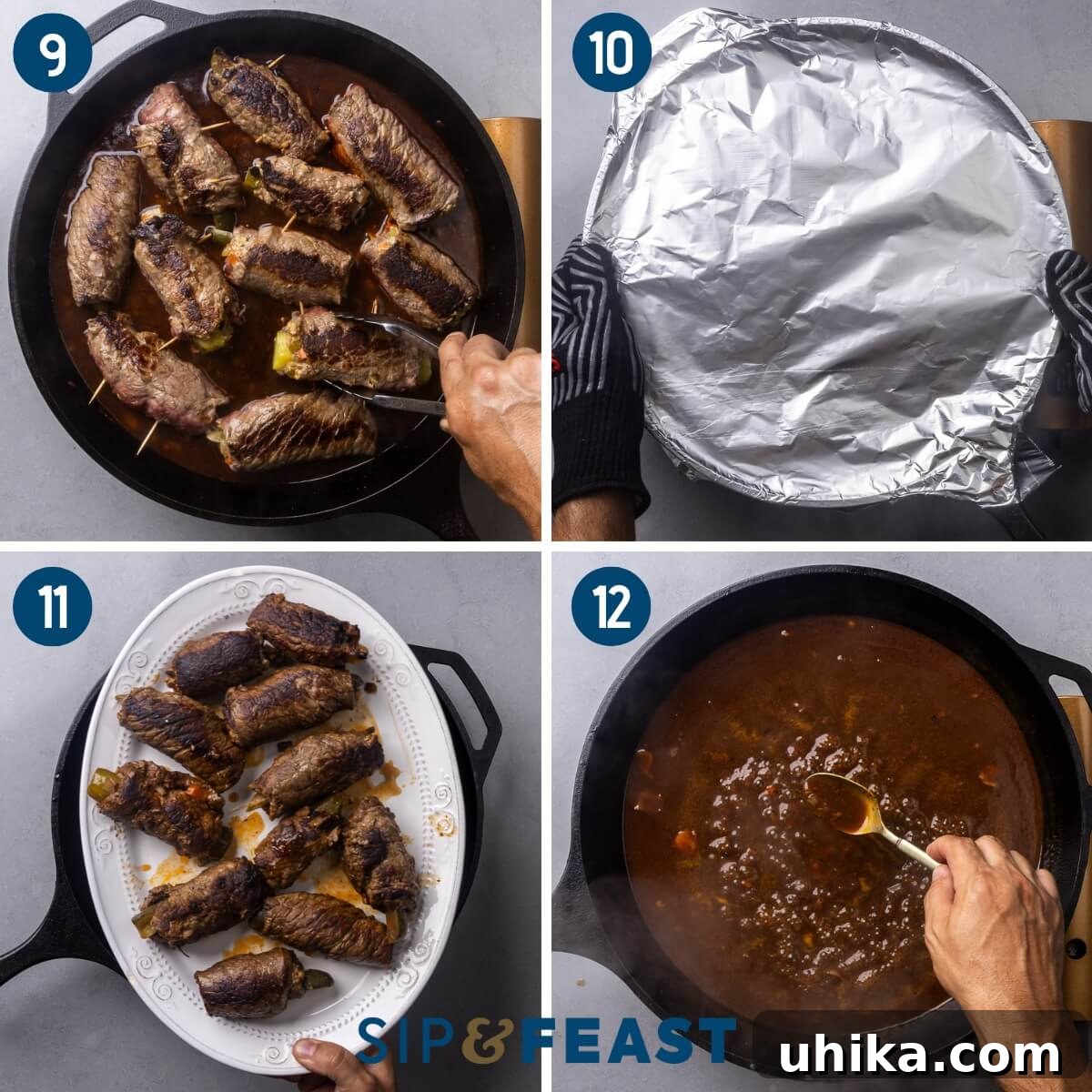
- Rest and Prepare for Serving: Once the rouladen are tender, carefully remove them from the rich gravy and place them on a clean serving platter. Gently remove any wooden toothpicks or kitchen twine that were used to secure them. Allow the rouladen to rest for a few minutes while you finalize the gravy.
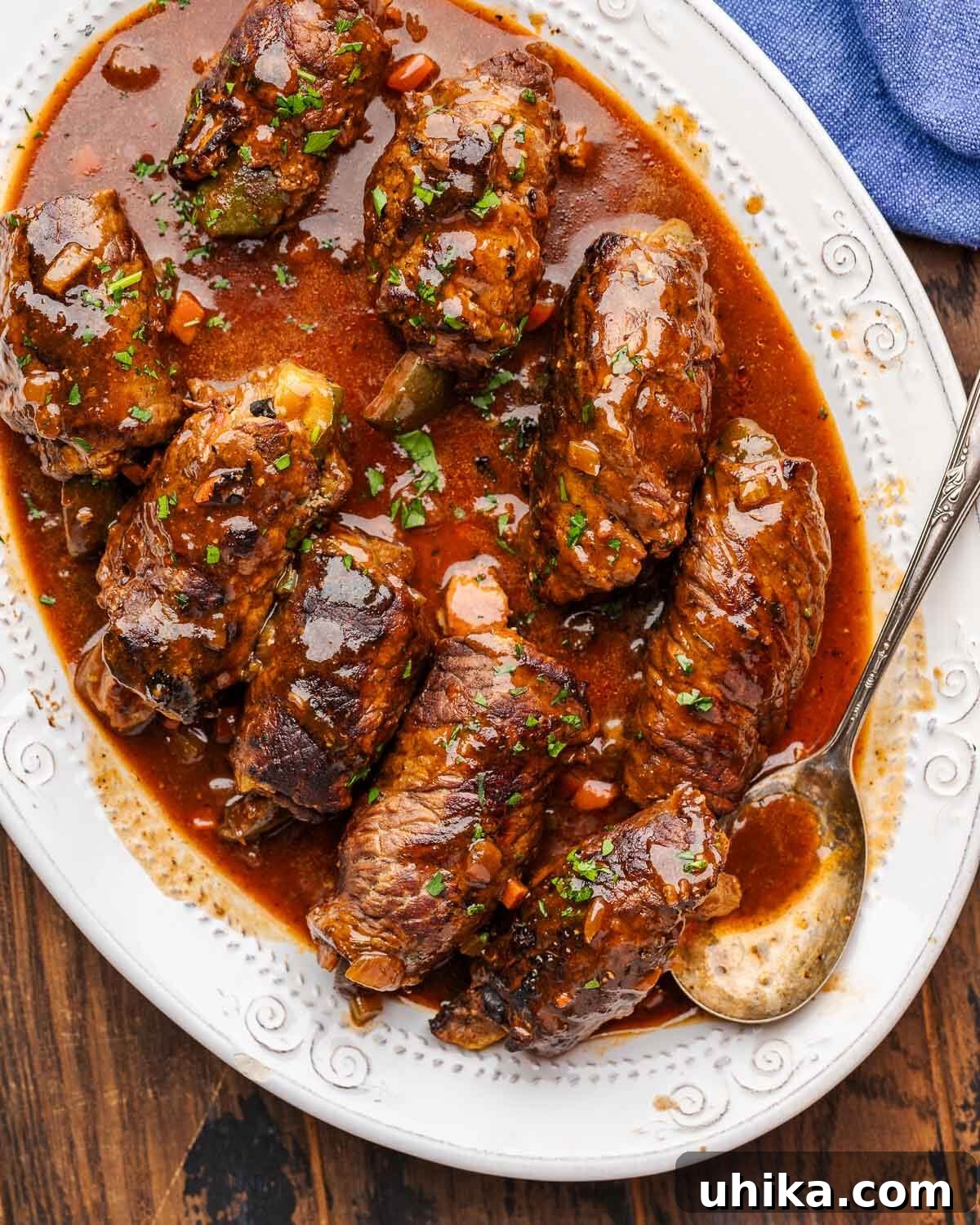
- Finish the Gravy and Serve: Taste the gravy and adjust the seasoning with salt and pepper as needed. If the sauce isn’t as thick as you prefer to coat a spoon beautifully, return the pan to the stovetop over medium-high heat. Whisk in a cornstarch slurry (a simple mixture of 1-2 teaspoons cornstarch with an equal amount of cold water) until the gravy reaches your desired consistency. Be sure to whisk continuously to prevent lumps. Spoon the exquisite gravy generously over the rouladen, garnish with freshly minced parsley for a touch of freshness and vibrant color, and serve immediately with traditional accompaniments like potato dumplings, spaetzle, mashed potatoes, or German red cabbage. Enjoy your authentic, deeply satisfying German feast!
Expert Tips for Perfect Rouladen Every Time
- The Power of Homemade Stock: A truly rich and flavorful homemade beef stock is the secret weapon for exceptional German Rouladen. Its deep, complex notes elevate the entire dish, creating a gravy that is unparalleled. If homemade isn’t an option, begin with 8 cups of high-quality, no-sodium store-bought beef stock and reduce it to 4 cups by simmering it on the stove. This concentrates the flavor significantly. Always taste-test after reducing and, if desired, enhance the beefiness further with 1-2 teaspoons of low-sodium beef base.
- Securing Your Rolls: While wooden toothpicks are convenient and easy to remove before serving, kitchen twine often provides a more secure hold, ensuring your beef rolls stay perfectly intact and the delicious filling remains safely inside during the long braising process. Choose whichever method you are most comfortable with; just be sure to remove them all before serving!
- Thickening the Gravy: After braising, if your delicious gravy is not quite thick enough to coat a spoon beautifully, a simple cornstarch slurry is your best solution. Mix 1-2 teaspoons of cornstarch with an equal amount of cold water until smooth. Remove the rouladen to a platter, then whisk this slurry gradually into the simmering gravy over medium-high heat. Continue stirring until it reaches your desired consistency. Be careful not to add too much at once, as it thickens quickly, and you can always add more if needed.
- Choosing the Right Beef Cut: While top round is an excellent choice for its lean quality and ability to tenderize, other cuts like bottom round, eye of round, flank steak, or sirloin can also be used effectively. The absolute key, regardless of the cut, is to ensure they are all pounded uniformly flat to about 1/4 inch thick. This thinness allows for easy rolling, ensures the beef becomes wonderfully tender during braising, and helps the flavors of the filling meld throughout the meat.
- Storage and Reheating: One of the best qualities of Rouladen is that it tastes even better the next day as the flavors meld and deepen. Store any leftover rouladen and gravy in an airtight container in the refrigerator for up to 3 days. To reheat, gently warm portions on the stovetop over low heat, adding a splash of beef broth or water if the gravy has thickened too much. For longer storage, cooked rouladen can be frozen for up to 3 months. Thaw overnight in the refrigerator before reheating for best results.
More Comforting European Recipes to Explore
If you’re a fan of the rich, slow-cooked comfort found in braised dishes like German Beef Rouladen, you’ll love exploring these other incredible European recipes that offer similar warmth and depth of flavor. These dishes are perfect for cozy evenings or when you’re entertaining guests who appreciate hearty, traditional cuisine:
- Jägerschnitzel: A classic German schnitzel served with a rich mushroom gravy.
- Swiss Steak: Tenderized beef steak slow-cooked in a savory tomato-based sauce.
- Braised Stuffed Cabbage Rolls: Cabbage leaves filled with meat and rice, simmered in a tangy sauce.
- Sauerbraten: A traditional German pot roast, marinated for days and braised until incredibly tender.
Recipe Summary: German Beef Rouladen
Beef Rouladen is a traditional German dish that showcases thinly sliced beef rolled around a delicious and savory filling of bacon, mustard, pickles, and finely chopped vegetables. The rolls are then slow-braised to perfection in a rich brown gravy, resulting in incredibly tender meat and an explosion of robust flavors. This recipe is perfect for creating a memorable meal, whether you’re celebrating Oktoberfest, a special family occasion, or simply indulging in the ultimate comfort food.
Quick Details:
- Author: James Delmage
- Prep Time: 30 minutes
- Cook Time: 2 hours
- Total Time: 2 hours 30 minutes
- Servings: 4
Ingredients:
For the Rouladen:
- 2 1/2 pounds top round, sliced and pounded into (8-10) 1/4-inch thick pieces
- Salt and freshly ground black pepper, to taste
- German mustard (or other preferred mustard)
- 4 large Dill pickles, sliced lengthwise
- 1/2 pound bacon, cut into 2-3 inch pieces
- 1 large onion, finely diced
- 2 ribs celery, finely diced
- 2 medium carrots, finely diced
- 3 tablespoons minced flat-leaf Italian parsley, for garnish
For the Sauce:
- 4 cups low-sodium beef stock (can reduce 8 cups of no-sodium boxed beef stock to 4 cups for richer flavor)
- 2 teaspoons low-sodium beef base (optional, for enhanced beefy flavor)
- 3 tablespoons tomato paste
- 1 cup dry red wine
- 1/4 cup all-purpose flour
Nutritional Information (Approximate per serving):
Below is an approximate nutritional breakdown for one serving of German Beef Rouladen. Please note that these values are automatically calculated and can vary based on specific ingredient brands and preparation methods, so they should be used as a general guide.
- Calories: 827 kcal
- Carbohydrates: 28.1g
- Protein: 100.3g
- Fat: 30.9g
- Saturated Fat: 10.3g
- Cholesterol: 246mg
- Sodium: 1350mg
- Potassium: 1250mg
- Fiber: 6g
- Sugar: 13.1g
- Calcium: 73mg
- Iron: 11mg
Nutrition information is automatically calculated and should be used as an approximation.
Enjoy Your Authentic German Beef Rouladen!
We hope you thoroughly enjoy preparing and savoring this authentic German Beef Rouladen recipe. This dish is a true celebration of hearty European cooking, perfect for gathering loved ones around the table. If you’ve prepared this classic dish or any other recipe from our site, we’d love to hear your feedback! Please consider leaving a review and sharing your experience in the comments section below – your insights are invaluable to our community.
For those who prefer a visual guide, many of our recipes, including this one, are available on our YouTube channel and Facebook Page. Don’t forget to follow us on Instagram @sipandfeast or tag your culinary creations with #sipandfeast! We love seeing your delicious results.
For more exclusive, full-meal recipe videos and behind-the-scenes content, consider becoming a Patreon member today!