
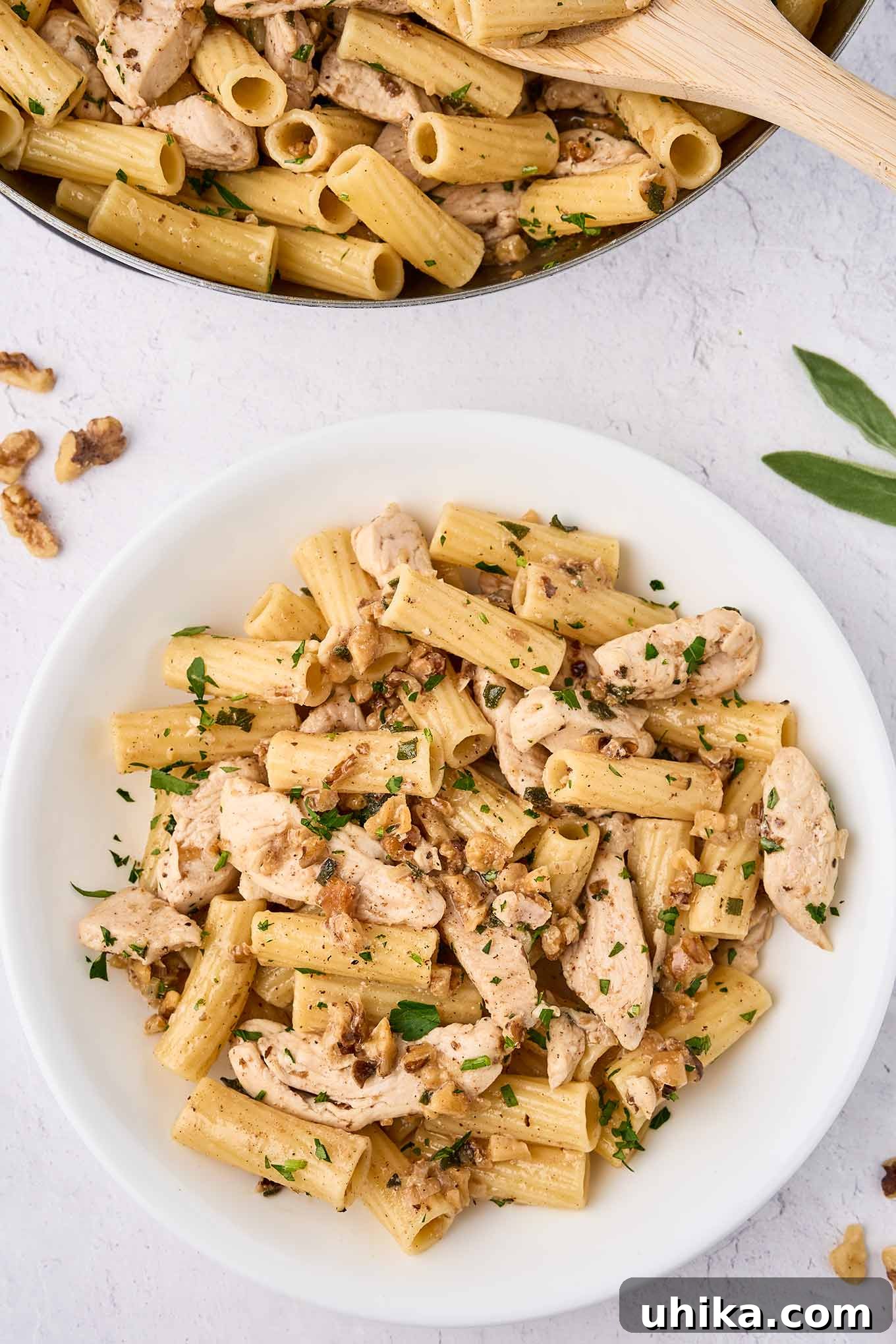
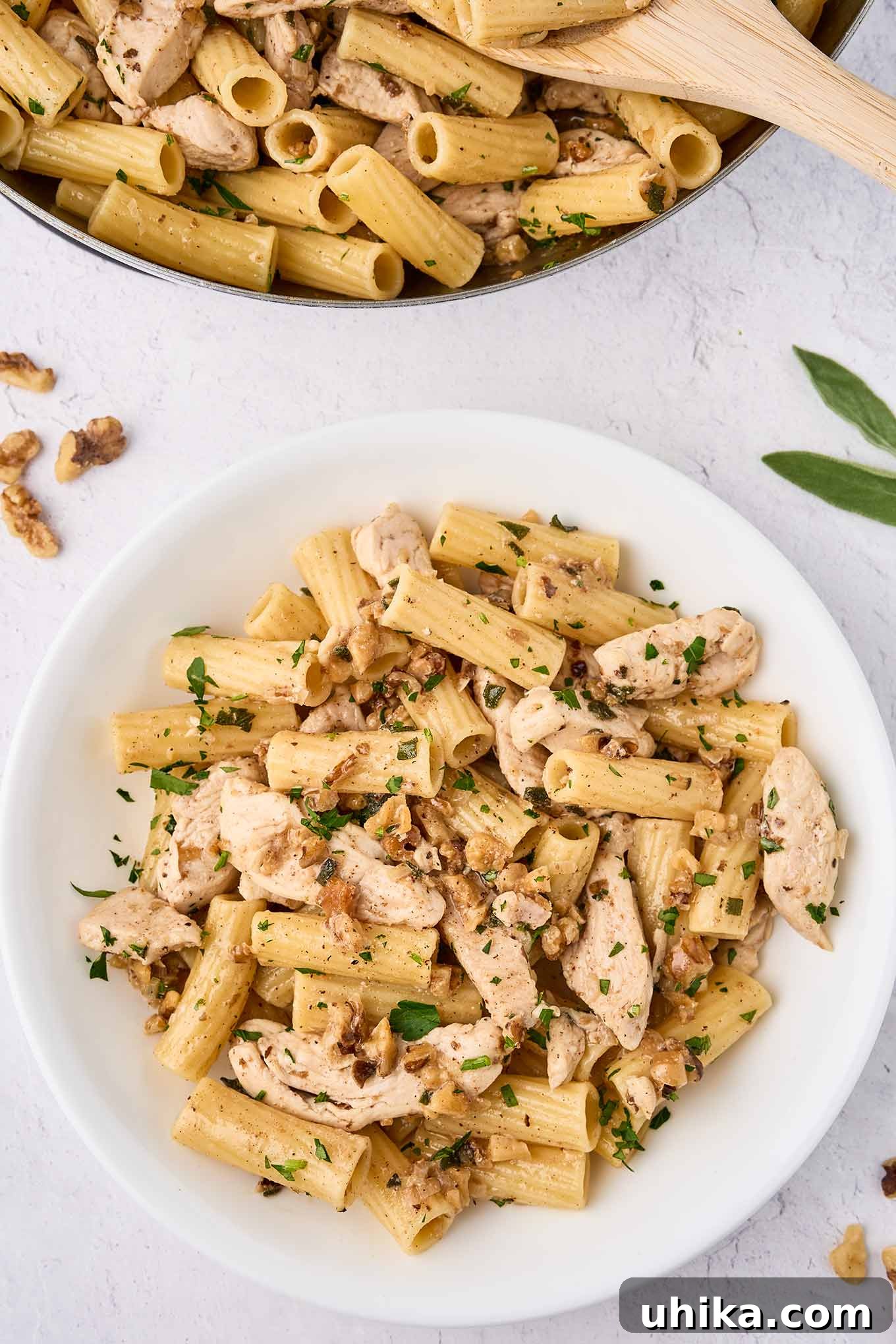
Indulge in Elegance: The Ultimate Brown Butter Chicken Pasta with Sage and Walnuts
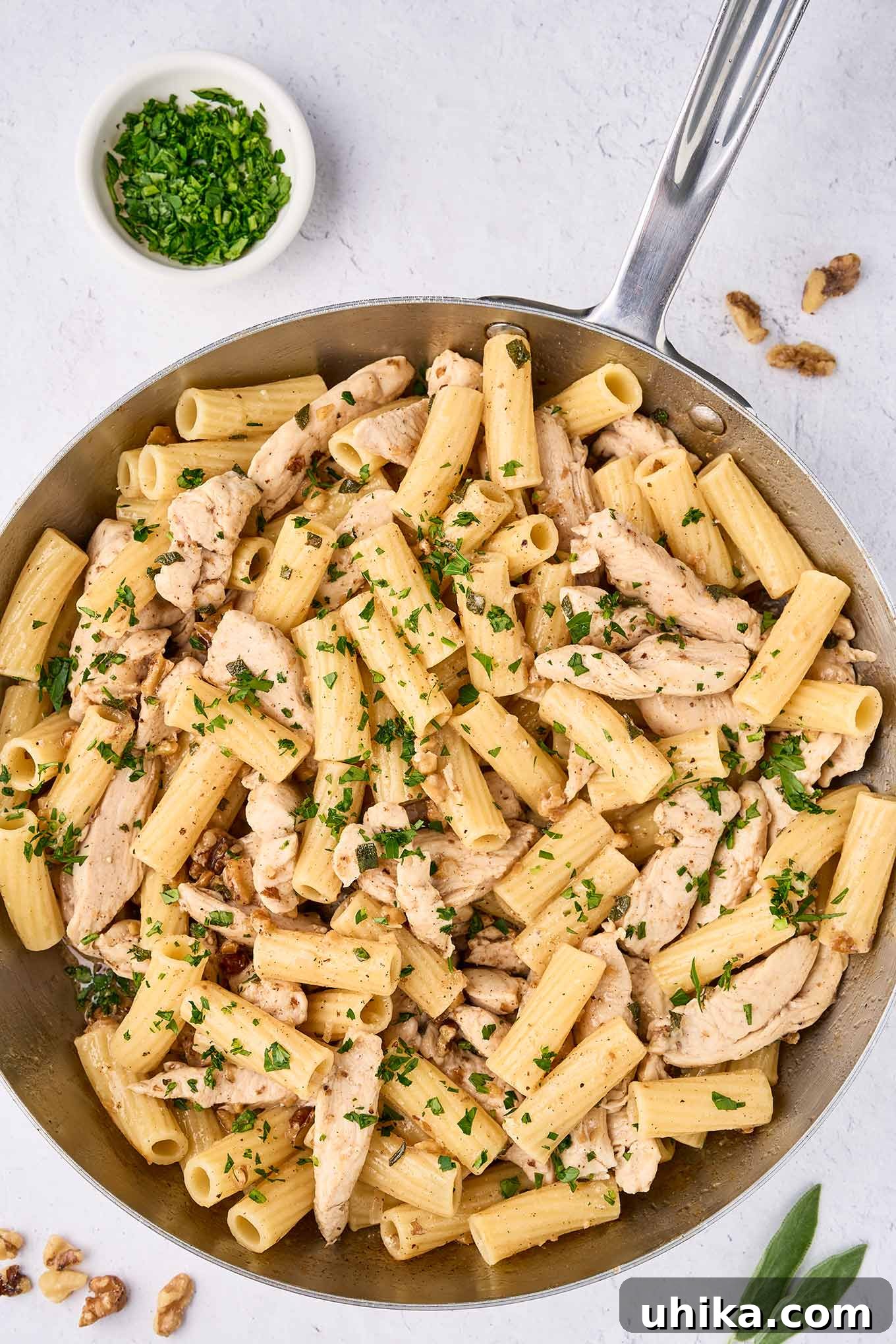
Discover the rich, complex flavors of Brown Butter Chicken Pasta – a dish that effortlessly marries gourmet taste with weeknight convenience. This recipe, featuring tender chicken, aromatic sage, and crunchy walnuts, all coated in a luxurious brown butter sauce, is designed to impress without demanding hours in the kitchen. Learning the simple technique of browning butter unlocks a world of culinary possibilities, transforming ordinary ingredients into an extraordinary meal.
The secret to this dish’s irresistible charm lies in the delicate process of browning butter. As unsalted butter gently cooks, its milk solids caramelize, developing a profound nutty aroma and a warm, golden-amber hue. This transformation alone elevates the flavor profile, adding depth and sophistication that a simple melted butter can’t achieve. Paired with the earthy, peppery notes of fresh sage and the rich, toasted crunch of walnuts, the brown butter creates a harmonious sauce that clings perfectly to every strand or ridge of pasta.
What truly makes this brown butter pasta a standout is the natural synergy of its key ingredients. The toasted walnuts not only contribute a delightful texture but also amplify the inherent nuttiness of the browned butter, creating a cohesive flavor experience. Fresh sage, with its distinct herbaceous character, provides an aromatic counterpoint, cutting through the richness of the butter and preventing the dish from feeling heavy. A final, subtle dusting of freshly grated nutmeg weaves all these elements together, imparting a warm, aromatic finish that makes each bite incredibly satisfying and memorable. This dish isn’t just a meal; it’s an experience, promising the kind of rich, balanced flavor you’d expect from a fine dining establishment, right in your own home.
Ingredient Notes and Substitutions for Brown Butter Chicken Pasta
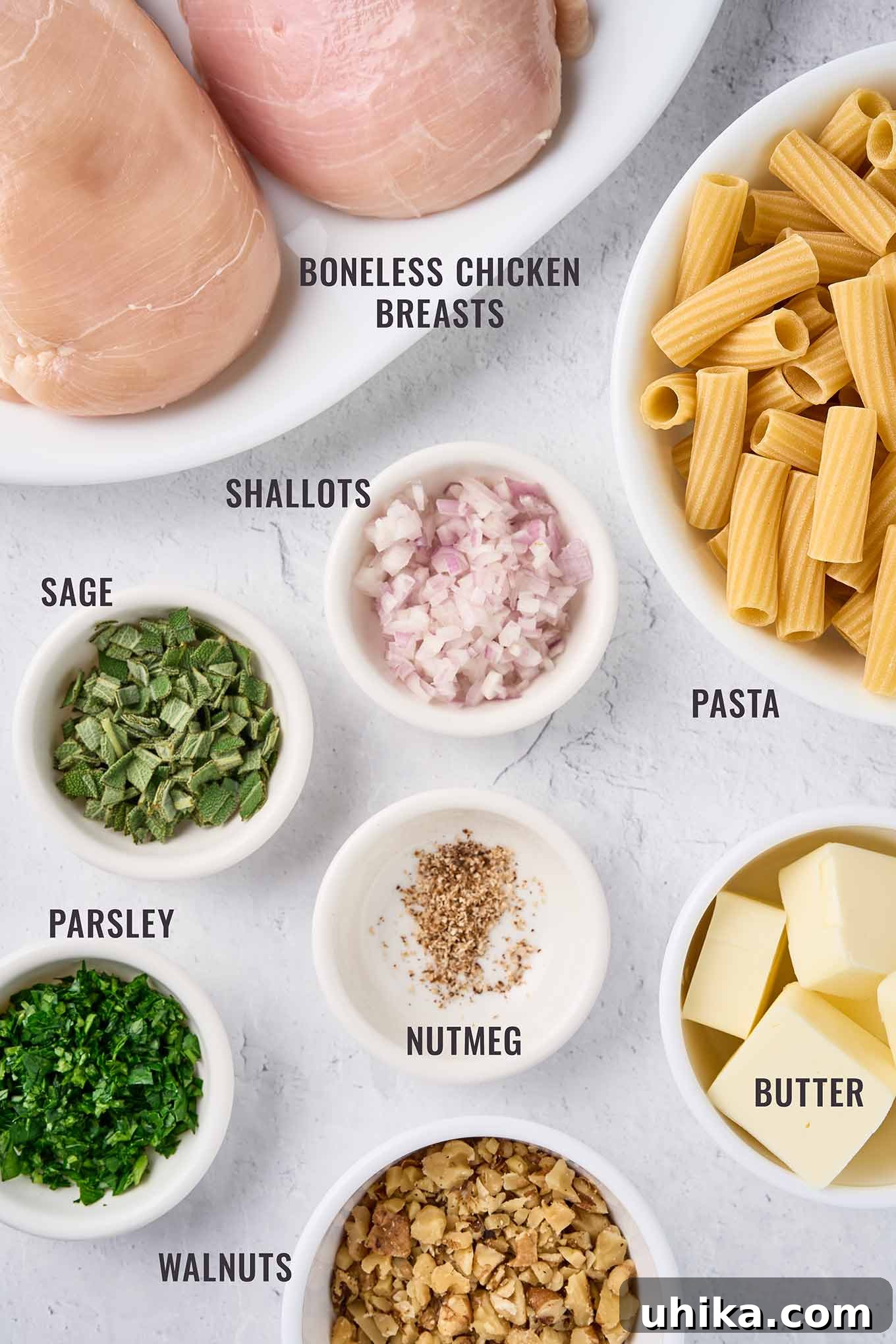
Here’s what you need to know about the key ingredients in this recipe. The complete list, including quantities, is in the printable recipe card below.
Chicken: Achieving Tenderness and Flavor
For this recipe, thinly sliced boneless, skinless chicken breasts are ideal. Their slender profile ensures rapid and even cooking, keeping the chicken wonderfully tender and preventing it from drying out. You can also opt for chicken tenders, slicing them crosswise into three or four pieces to match the cooking time and texture. If using chicken thighs, remember they require a slightly longer cooking time but will offer a richer flavor profile due to their higher fat content. Pounding the chicken breasts to an even thickness is a crucial step for uniform cooking and a perfectly succulent result.
Pasta: The Perfect Vessel for Sauce
The choice of pasta is more important than you might think for a dish where the sauce is key. Any short cut of ridged pasta will work beautifully, as its textured surface is designed to capture and hold the rich brown butter sauce. Rigatoni, penne, rotini, and cavatappi are excellent selections, ensuring that every bite is bursting with flavor. The ridges act like tiny pockets, cradling the sauce, walnuts, and sage, delivering a delightful texture and taste sensation. For those seeking gluten-free options, most ridged pasta shapes are available in gluten-free varieties, often made from rice, corn, or lentil flour, which perform similarly to traditional pasta.
Butter: The Heart of the Sauce
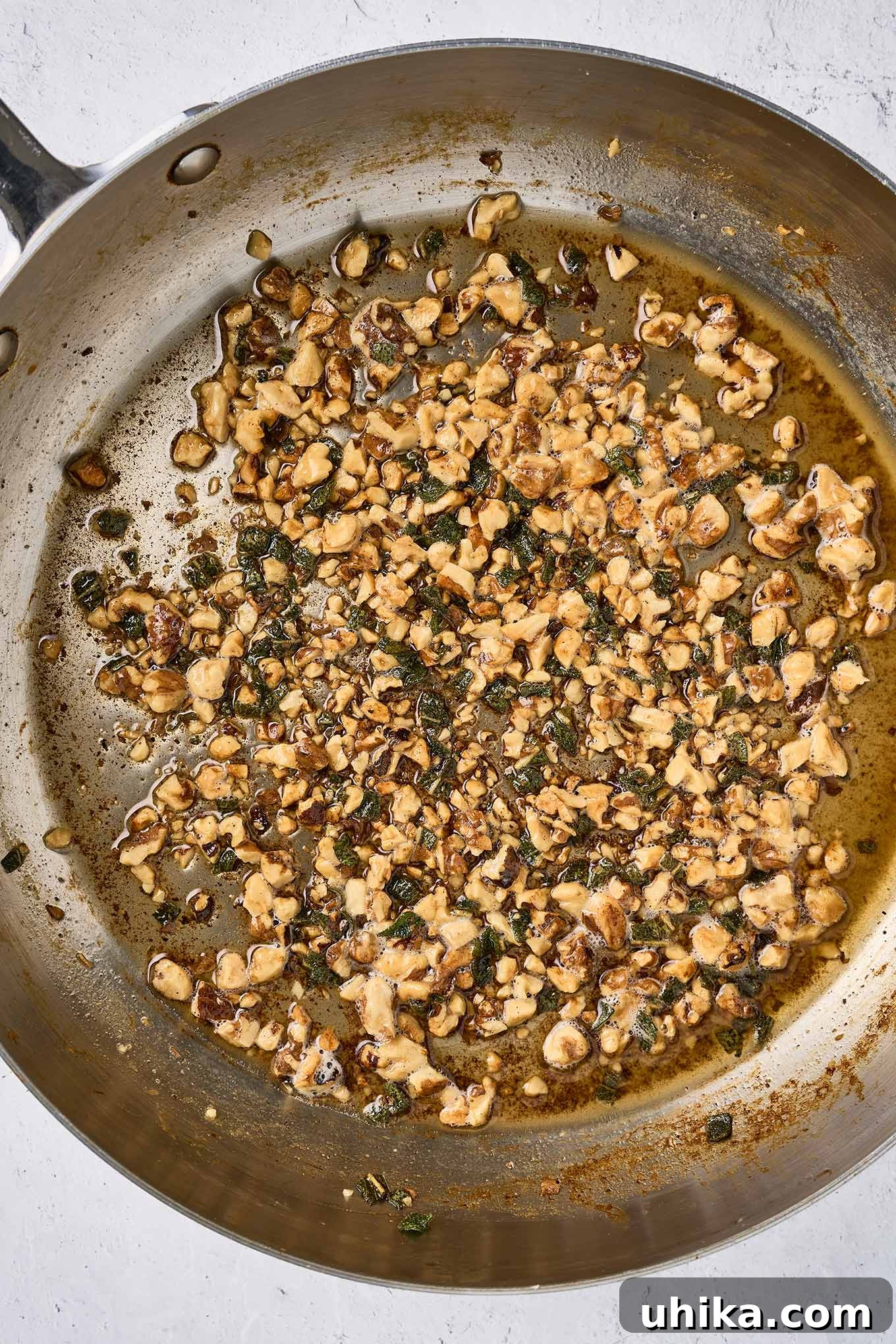
Unsalted butter is paramount for making exceptional brown butter. Using unsalted butter gives you precise control over the seasoning of your dish, allowing you to add salt to taste rather than relying on the varying salt content of salted butter. Furthermore, unsalted butter tends to foam less aggressively during the browning process, making it easier to monitor the color change and prevent burning. As the butter browns, it transitions from a pale yellow to a warm golden, then a rich amber, emitting a distinct nutty aroma reminiscent of toasted hazelnuts. Vigilance is key here, as butter can go from perfectly browned to burnt in mere seconds.
Walnuts: Adding Texture and Depth
Toasted walnuts are a non-negotiable component of this dish, providing a delightful textural contrast and significantly enhancing the nutty quality of the brown butter. Toasting the walnuts briefly in the pan brings out their natural oils and intensifies their flavor, adding a layer of sophisticated depth. If walnuts are unavailable or not to your preference, pecans can serve as a suitable alternative, offering a slightly different but equally pleasant nutty flavor. For an unexpected twist, toasted pine nuts could also be considered, offering a buttery, delicate crunch.
Sage: The Earthy Aromatic Star
Fresh sage leaves are absolutely essential to the character of this dish. Their earthy, slightly peppery, and subtly bitter aroma provides a beautiful contrast to the sweet nuttiness of the browned butter and walnuts. Using fresh sage allows its volatile oils to infuse directly into the butter as it browns, creating an unparalleled depth of flavor. While dried sage can be used in a pinch, it lacks the vibrant freshness and complexity of its fresh counterpart and should be used sparingly as its flavor is more concentrated. There’s truly no substitute for fresh sage in this recipe’s flavor profile.
Nutmeg: The Unsung Hero
A tiny pinch of nutmeg, preferably freshly grated, acts as an unsung hero in this recipe. Its subtle warmth and sweet, woody aroma seamlessly tie together the various flavors of the dish – the richness of the butter, the earthiness of the sage, and the nuttiness of the walnuts. It provides a delicate aromatic finish without overpowering the other ingredients. While optional, its inclusion is highly recommended for that extra touch of gourmet sophistication. A small microplane grater makes quick work of grating fresh nutmeg, and the difference in aroma compared to pre-ground is remarkable.
Shallots: A Sweet Foundation
Minced shallots provide a delicate, sweet, and aromatic base for the chicken. Milder than onions, they caramelize beautifully, adding a nuanced depth without overwhelming the more delicate flavors of the brown butter and sage.
Salt and Freshly Ground Black Pepper: Seasoning to Perfection
These fundamental seasonings are crucial for bringing out the best in every ingredient. Season the chicken lightly as it cooks and adjust the final seasoning of the pasta dish to your taste. Freshly ground black pepper offers a more vibrant and aromatic kick than pre-ground.
Prep Overview
How to Make Brown Butter Chicken Pasta: A Step-by-Step Guide
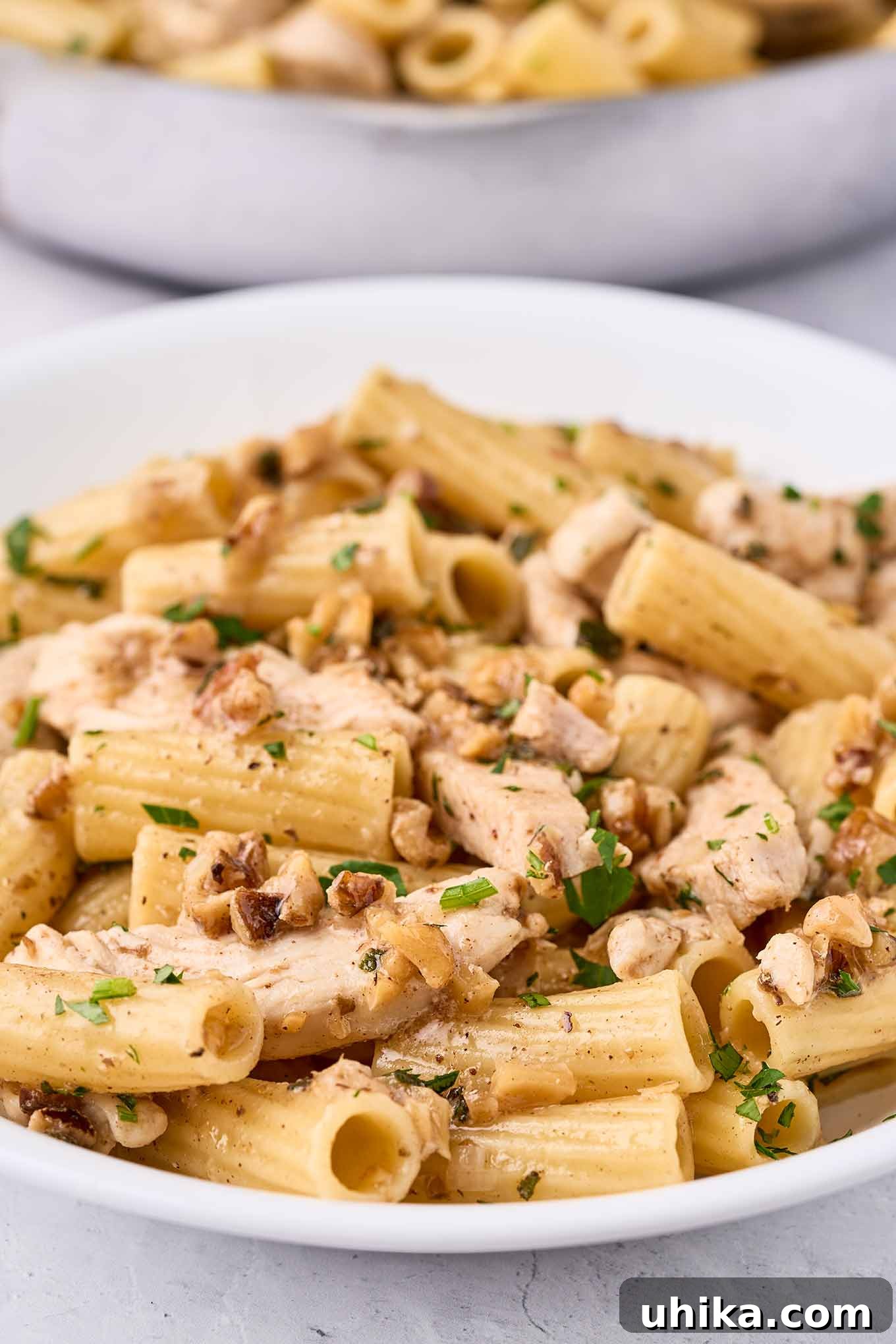
Planning to make this recipe? Here’s a quick overview of how it’s done. Detailed, step-by-step instructions are in the printable recipe card below.
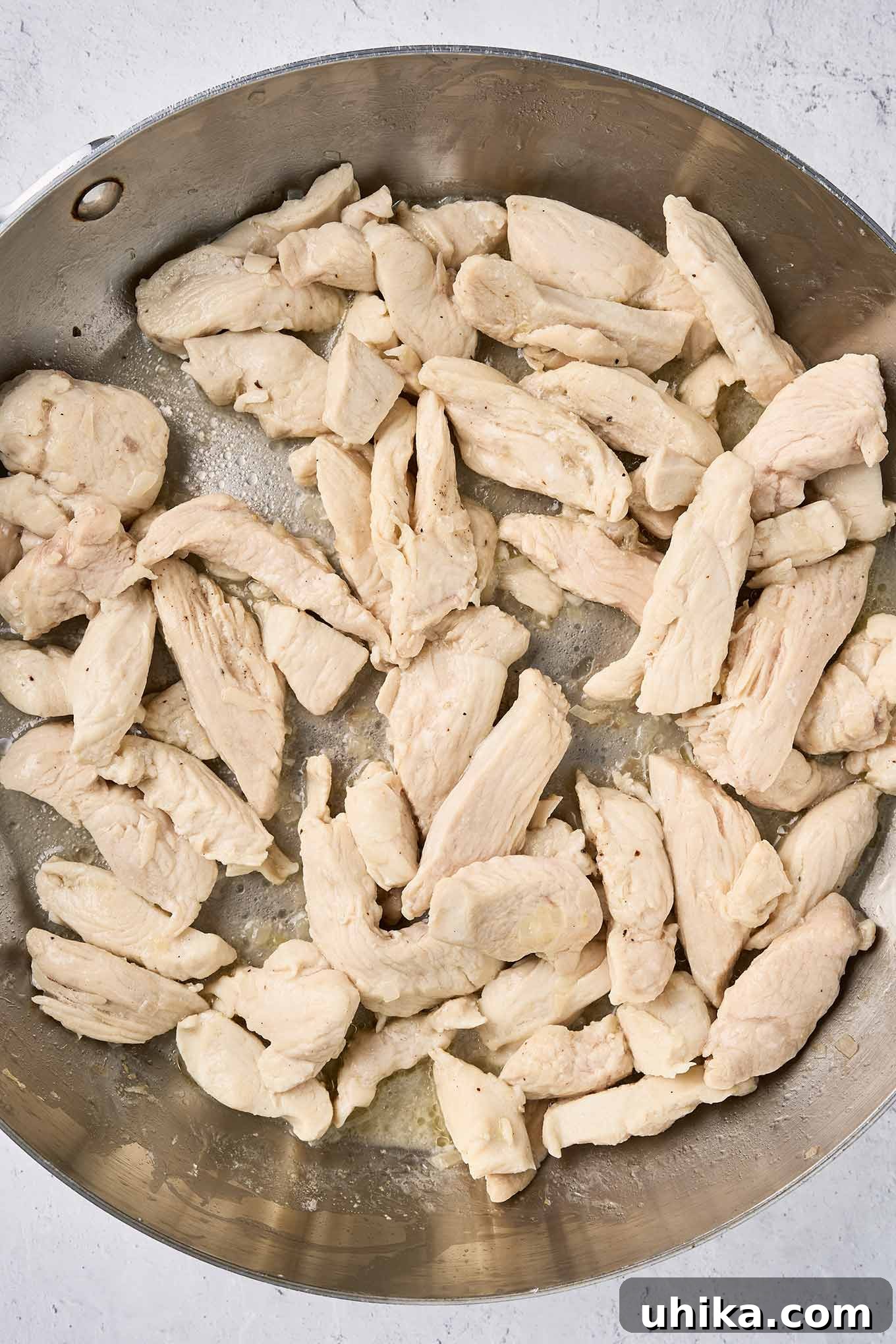
Before you begin, ensure all your ingredients are prepped and ready (mise en place). Start by bringing a large pot of generously salted water to a rolling boil for your pasta. While the water heats, prepare your chicken. Place the boneless, skinless chicken breasts between two sheets of plastic wrap and gently pound them to an even 1/2-inch thickness. This ensures they cook uniformly and remain tender. Once pounded, slice them crosswise into thin, bite-sized strips.
Next, in a large, light-colored skillet (stainless steel or enameled cast iron is best for observing the butter’s color), melt two tablespoons of unsalted butter over medium heat. Add the minced shallots and sauté them gently until they soften and become translucent, typically for 2 to 3 minutes, releasing their sweet aroma. Introduce the chicken strips to the skillet, season them lightly with salt and freshly ground black pepper, and cook for 3 to 4 minutes, or until they are no longer pink and just cooked through. Be careful not to overcook, as this can lead to dry chicken. Once cooked, transfer the chicken and any accumulated pan juices to a bowl and set aside. These precious juices will add extra depth of flavor to your sauce later.
Now, it’s time to create the star of the dish: the brown butter. Wipe out the same skillet and melt the remaining four tablespoons of unsalted butter over medium heat. As the butter melts, add the roughly chopped walnuts and fresh sage leaves. The walnuts will toast and the sage will release its fragrant oils, infusing the butter with their distinct flavors. Continue cooking, swirling the pan occasionally, and observe the butter carefully. It will foam, then the milk solids at the bottom of the pan will begin to turn a light golden, deepening to a rich amber-brown. Simultaneously, a wonderful nutty aroma will fill your kitchen. This entire process typically takes about 5 minutes. Watch vigilantly, as the butter can quickly go from perfectly browned to burnt in a blink.
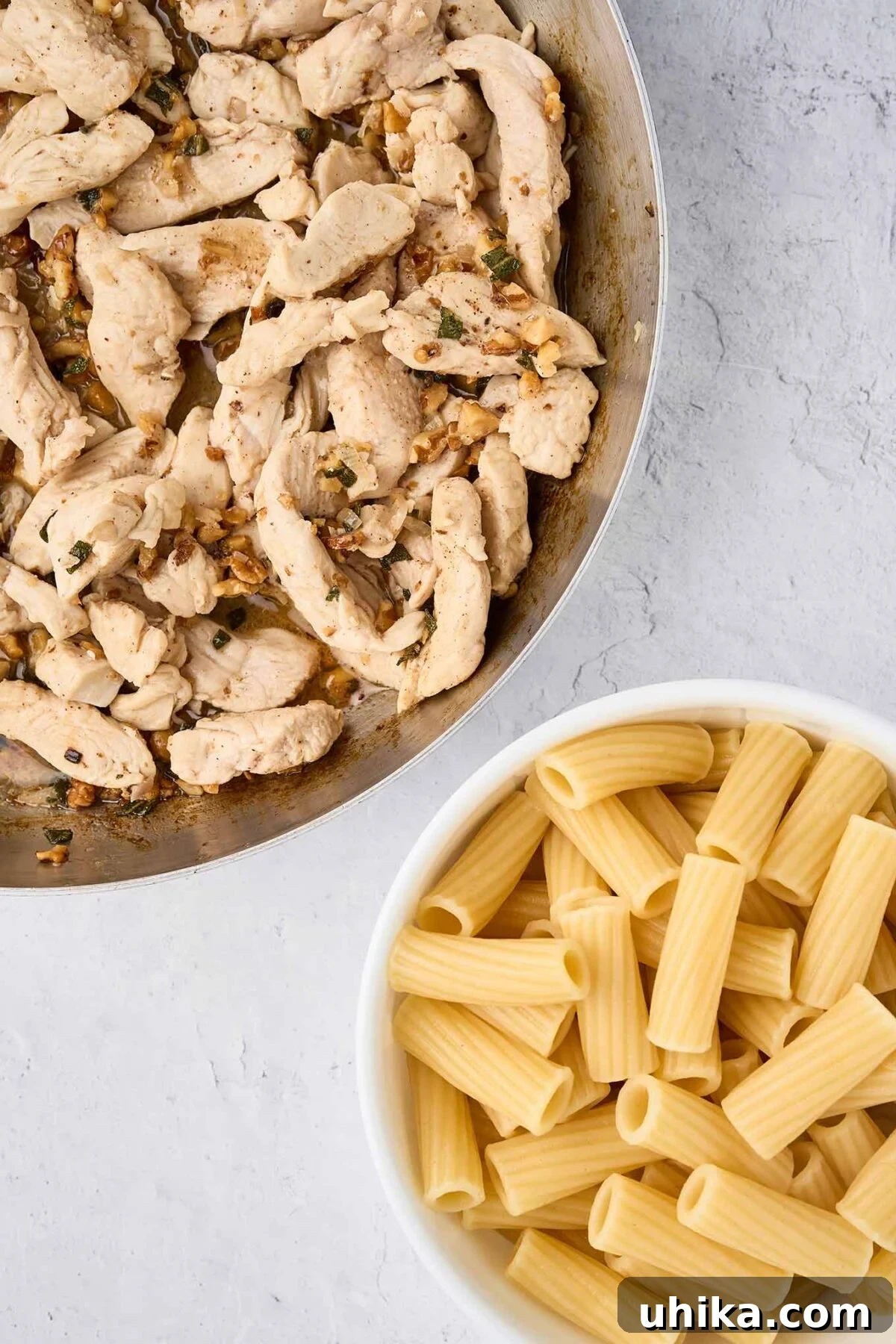
Once your brown butter is perfectly golden and fragrant, remove the pan from the heat immediately. Return the cooked chicken strips and any accumulated juices to the pan, stirring gently to coat them thoroughly with the aromatic brown butter sauce. Cover the pan loosely to keep everything warm while your pasta finishes cooking.
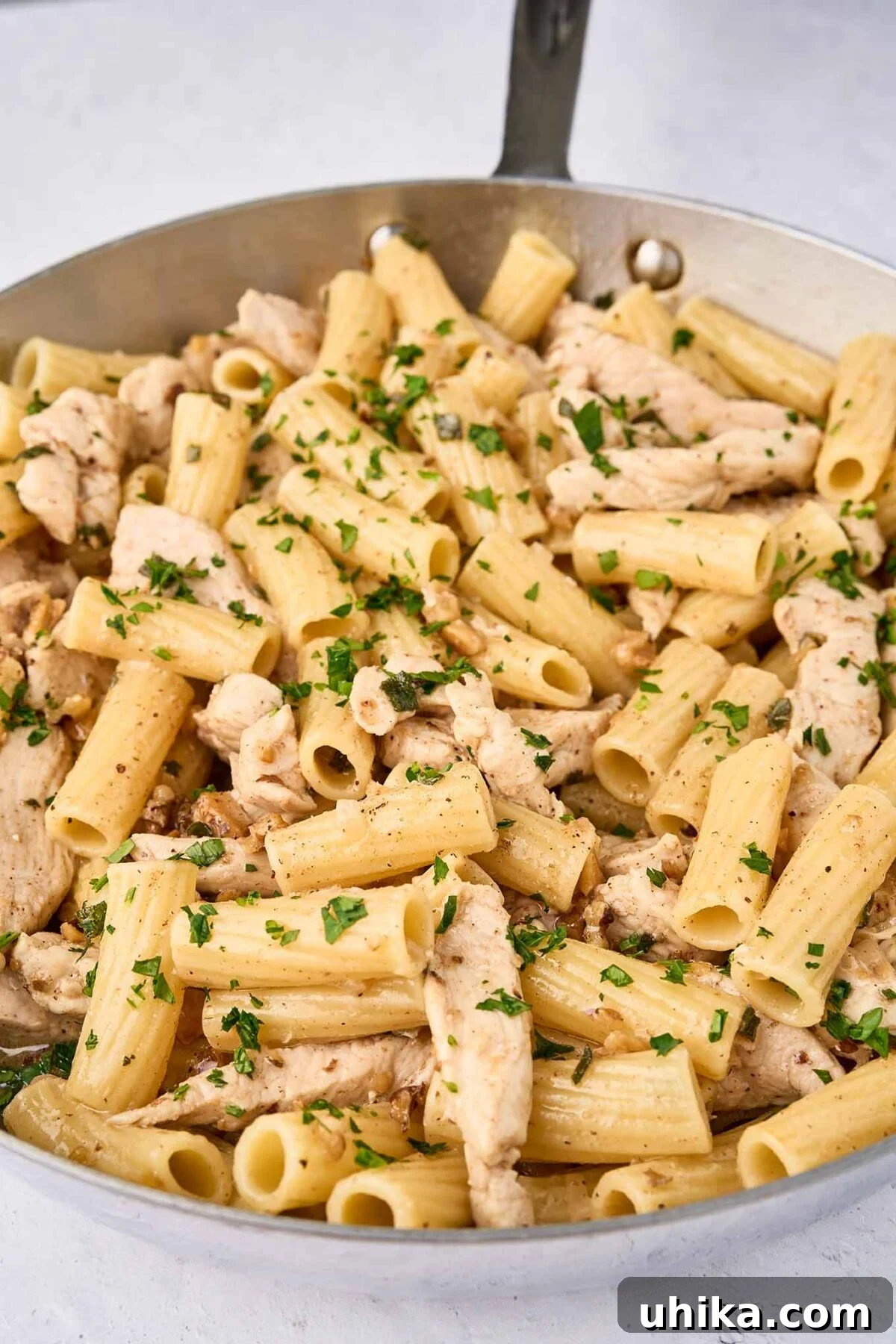
Cook your chosen pasta according to package directions until it reaches a perfect al dente texture – firm to the bite. Before draining, remember to reserve about 1/4 cup of the starchy pasta cooking liquid. This liquid is a chef’s secret weapon, helping to emulsify the sauce and create a luscious coating for your pasta. Add the drained pasta directly to the skillet with the chicken and brown butter sauce. Toss everything together vigorously, adding a splash of the reserved cooking liquid as needed. This helps to loosen the sauce, ensuring every piece of pasta, every strip of chicken, and every walnut and sage leaf is beautifully coated.
To serve this exquisite dish, divide the pasta among warm bowls. Garnish generously with freshly chopped parsley for a vibrant color and fresh taste, and finish with a light dusting of freshly ground nutmeg, if desired. The nutmeg adds a subtle, warm, and aromatic flourish that completes this simple yet elegant meal. Consider adding a sprinkle of grated Parmesan or Pecorino Romano cheese for an extra layer of savory depth.
Tips For Making Perfect Brown Butter Every Time
Mastering brown butter is a game-changer for any home cook, and with these tips, you’ll achieve perfection consistently:
- Use the Right Pan: This is crucial. A stainless steel or enameled cast-iron skillet with a light-colored interior is your best friend. The light surface allows you to clearly monitor the subtle color changes in the butter as it browns. Avoid dark nonstick pans at all costs, as they make it virtually impossible to gauge when the butter is perfectly browned, often leading to a burnt batch.
- Stay Close to the Stove: Brown butter can be deceptive. It will melt, then foam, and then suddenly transition from golden to burnt in a matter of seconds. Never walk away from the stove during this process. Swirl the pan occasionally to ensure even browning and keep a close eye for that distinct deep amber color and irresistible nutty aroma.
- Listen and Smell: Beyond visual cues, use your other senses. As the butter browns, the foaming will subside, and the sizzling sound will quiet down. Most importantly, trust your nose – once you catch that unmistakable nutty, toasty scent, it’s a strong indicator that the butter is nearing perfection.
- Control the Heat: Maintain a consistent medium heat. Too low, and it will take too long to brown, potentially drying out the butter. Too high, and it will burn before you have a chance to react. Patience and a moderate flame are key.
- Immediate Removal from Heat: As soon as the butter reaches your desired golden-brown color and nutty aroma, remove the pan from the heat immediately. Even off the burner, the residual heat can continue to cook the butter and cause it to burn. If you’re particularly worried, you can pour the hot brown butter into a cool bowl to stop the cooking process entirely.
- Unsalted is Best: Always opt for unsalted butter. Salted butter tends to foam more, which obscures your view of the browning milk solids and makes it harder to judge the exact color.
More Quick Chicken Dinner Recipes You’ll Love
If you enjoyed this brown butter pasta with chicken, you’re in for a treat with a few of our other flavorful weeknight favorites. These recipes are designed for maximum flavor with minimal effort:
- Mushroom Chicken with Spinach and Cheese: A comforting one-pan dinner featuring tender chicken, savory mushrooms, and gooey melted cheese, all simmered together to perfection.
- Chicken Marsala Pasta with Fresh Tomatoes: A delightful and lighter, tangy twist on the classic Italian-American favorite, elevated with the freshness of ripe tomatoes.
- Lemon Pepper Chicken Tenders: Golden sautéed chicken tenders bursting with bright, zesty lemon and a kick of black pepper, all finished in a vibrant pan sauce.
Explore these recipes to keep your weeknight meals exciting and delicious, proving that gourmet flavors are always within reach, even on your busiest days.
Brown Butter Pasta with Chicken
Lynne Webb
10 minutes
25 minutes
35 minutes
4
servings
Pin Recipe
Rate Recipe
Print Recipe
Ingredients
-
8
ounces
pasta,
(rigatoni, penne, rotini, or similar short, ridged pasta) -
1-1/4
lbs
boneless, skinless chicken breasts -
6
tablespoons
unsalted butter,
divided -
2
tablespoons
minced shallot -
Salt and freshly ground black pepper,
to taste -
1/2
cup
walnuts,
roughly chopped -
8
fresh sage leaves,
coarsely chopped -
1
tablespoon
chopped fresh parsley,
for garnish -
Freshly ground nutmeg,
(optional, for aromatic finish)
Enjoying this recipe? Sign up for our newsletter to receive more delicious recipes straight to your inbox weekly!
Instructions
-
Bring a large pot of generously salted water to a rolling boil for the pasta.
-
Place the chicken breasts between two sheets of plastic wrap or parchment paper. Gently pound them to an even 1/2-inch thickness. This ensures quick and uniform cooking. Slice crosswise into thin strips.
-
Melt 2 tablespoons of the unsalted butter in a large, light-colored skillet (stainless steel or enameled cast iron is recommended) over medium heat. Add the minced shallots and sauté until softened and fragrant, about 2 to 3 minutes. Add the prepared chicken strips, season lightly with salt and freshly ground black pepper, and cook until no longer pink and just cooked through, typically 3 to 4 minutes. Be careful not to overcook. Transfer the cooked chicken and any accumulated pan juices to a clean bowl and set aside.
-
Wipe out the skillet to remove any leftover bits. Melt the remaining 4 tablespoons of unsalted butter over medium heat. Add the roughly chopped walnuts and coarsely chopped fresh sage leaves. Cook, swirling the pan occasionally, and watch carefully as the butter transitions from foaming to a rich golden brown, developing a distinct nutty aroma. This usually takes about 5 minutes. The milk solids at the bottom of the pan will turn a deep amber. Be vigilant, as brown butter can go from perfectly toasted to burnt very quickly.
-
Immediately remove the pan from the heat once the butter is perfectly browned. Return the cooked chicken and its reserved juices to the pan with the brown butter mixture. Stir gently to ensure the chicken is well-coated. Cover the pan to keep the chicken and sauce warm.
-
Cook the pasta according to package directions until it is al dente. Before draining the pasta, reserve about 1/4 cup of the starchy cooking liquid. This liquid will help emulsify and loosen the sauce. Drain the pasta thoroughly and add it directly to the skillet with the chicken and brown butter sauce. Toss everything together vigorously, adding a splash or two of the reserved cooking liquid if needed to achieve a smooth, cohesive sauce that thoroughly coats the pasta.
-
To serve, divide the pasta generously among warm bowls. Garnish with freshly chopped parsley and a light dusting of freshly ground nutmeg, if desired, for an aromatic finish. Serve immediately and enjoy!
Notes
ABOUT THE PAN: Use a stainless steel or enameled cast iron pan with a light-colored interior. This allows you to easily observe the color changes of the butter as it browns, crucial for preventing burning. Dark nonstick pans are not recommended for this technique.
KEEP AN EYE ON THE BUTTER: Pay close attention when the butter begins to foam. Once the foam subsides, the milk solids will quickly start to brown. The color can shift from a beautiful golden to burnt very rapidly, so remove the pan from the heat as soon as you see that rich, toasty amber hue and smell the distinct nutty aroma.
Nutrition
Calories: 444
,
Total Fat: 28g
,
Cholesterol: 46mg
,
Sodium: 447mg
,
Carbohydrates: 39g
,
Fiber: 5g
,
Sugar: 2g
,
Protein: 10g
Nutrition information is automatically calculated, so should only be used as an approximation.
Like this recipe? Rate and comment below!