
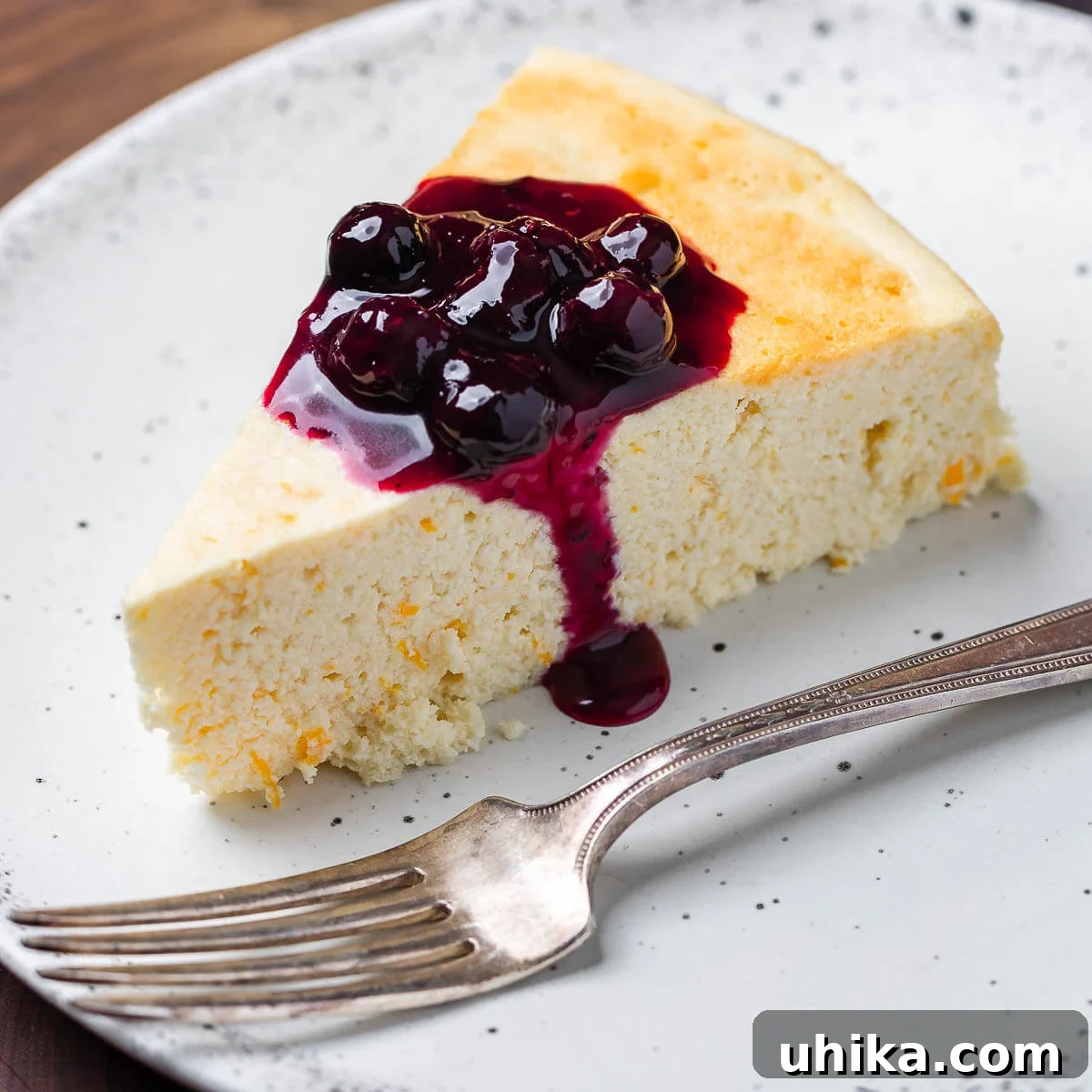
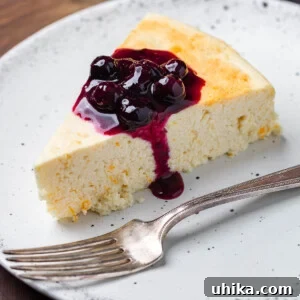
Embark on a culinary journey to Italy with this authentic Italian Cheesecake recipe, a dessert celebrated for its uniquely light, creamy, and irresistibly airy texture. Unlike its denser New York counterpart, our ricotta cheesecake delights with a refreshing brightness, elevated by the aromatic zest of fresh oranges. Perfectly complementing this citrusy indulgence is a vibrant lemon blueberry sauce, adding a delightful tang and burst of fruitiness that makes every bite a memorable experience. Whether you’re planning a festive holiday gathering, a special birthday celebration, or simply craving an elegant, decadent treat, this homemade Italian cheesecake promises to be the crowning glory of your dessert table.
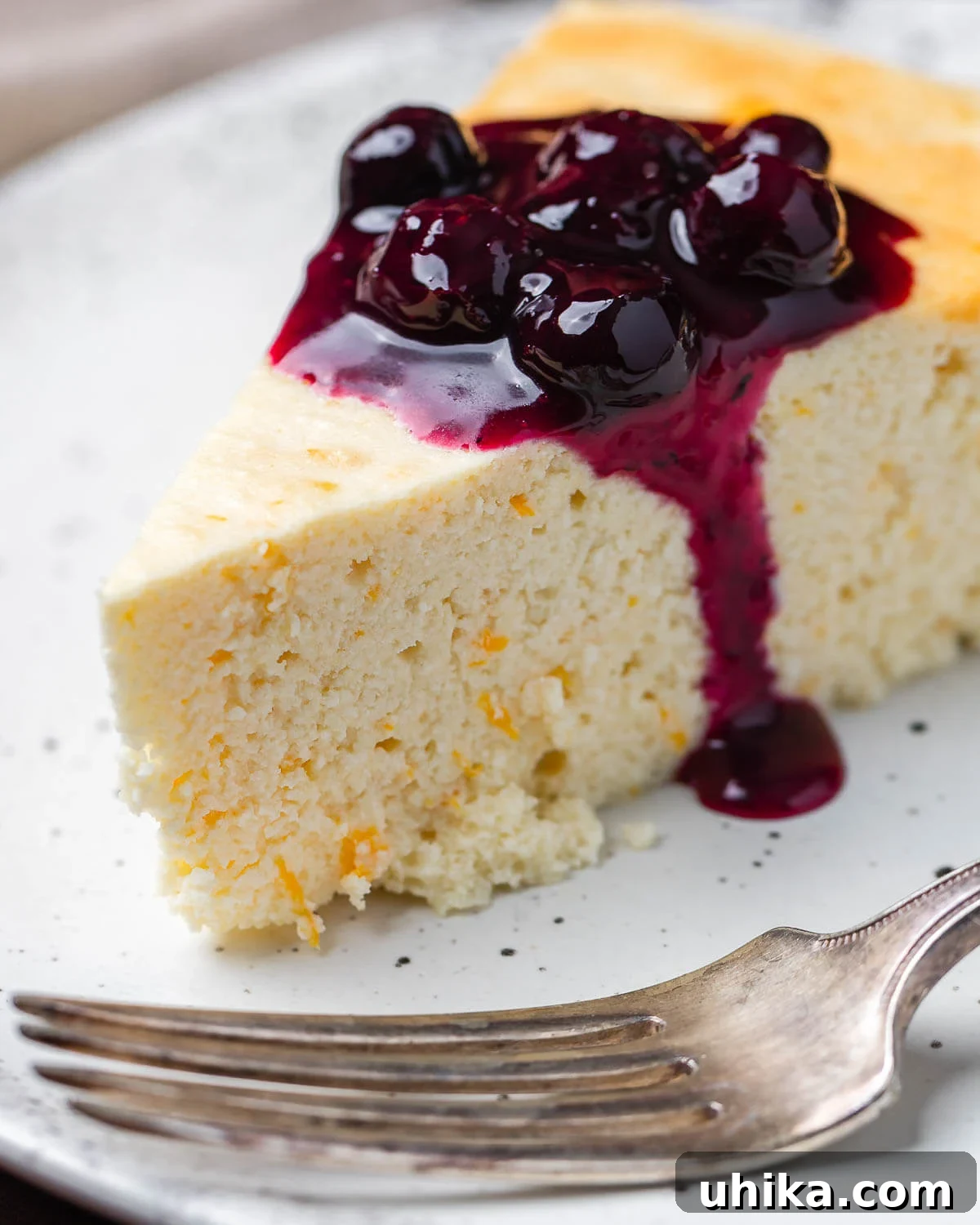
Italian cheesecake holds a special place in the hearts of dessert lovers worldwide, and for good reason. Its signature characteristic lies in the use of high-quality ricotta cheese, which is the secret behind its remarkably light and fluffy consistency. This is a delightful contrast to the typically rich and heavy texture of cheesecakes made with cream cheese, making the Italian version feel wonderfully ethereal.
Beyond its texture, the flavor profile of this particular cheesecake is truly exceptional. The subtle yet distinct notes of fresh orange zest infuse the ricotta mixture with a fragrant, sweet citrus aroma that is absolutely intoxicating. This bright, zesty essence elevates the cheesecake, creating a harmonious balance that is both comforting and sophisticated. In many ways, its flavor echoes that of the cherished Easter delicacy, Pastiera Napoletana, sharing a similar soul-warming quality but without the added elements of crust, candied citron, or grano cotto, allowing the pure essence of the ricotta and orange to shine through.
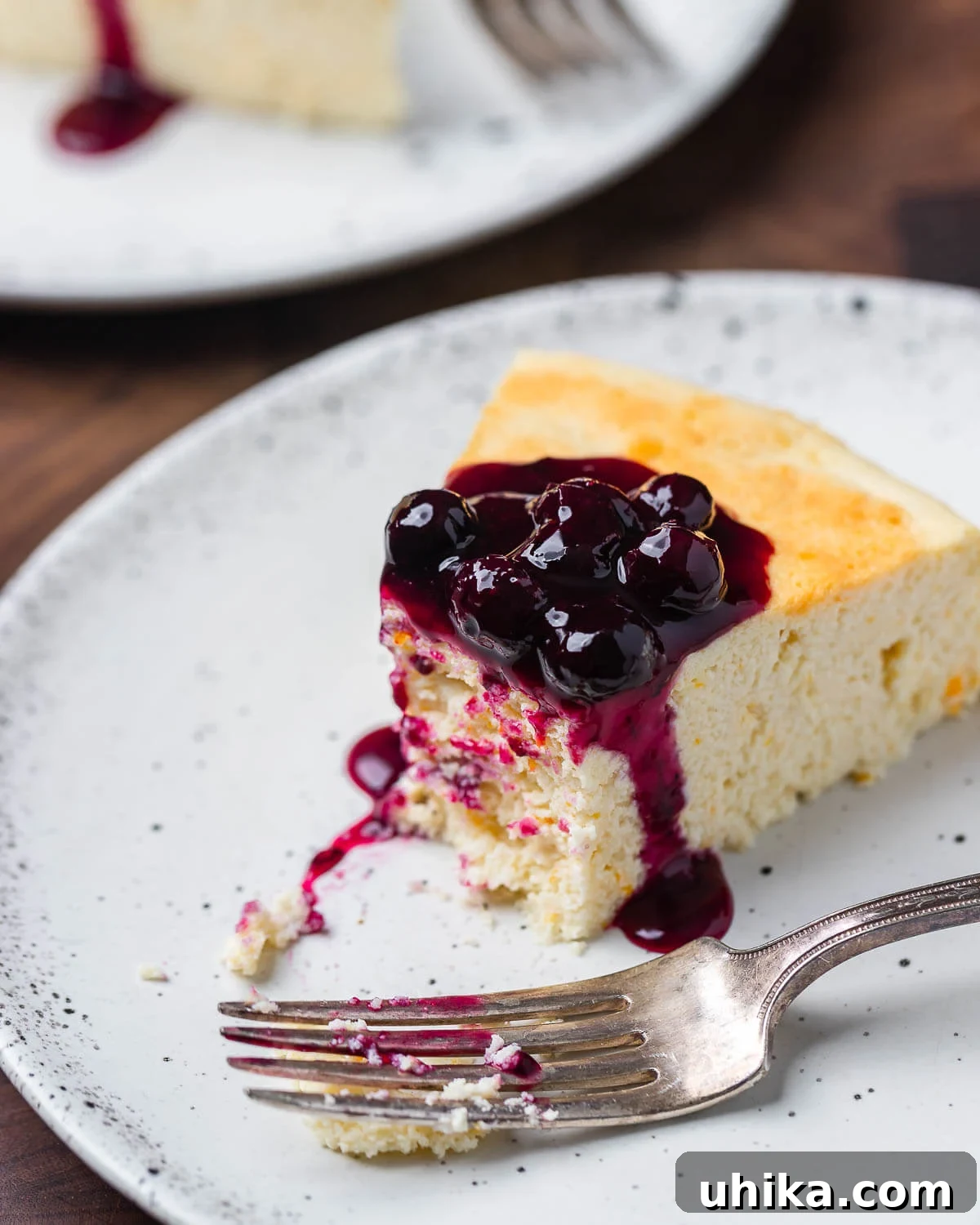
Serving this exquisite Italian cheesecake with its homemade lemon blueberry sauce transforms it into a show-stopping centerpiece for any occasion. The tartness of the blueberries and the sharp citrus kick from the lemon in the sauce cut through the cheesecake’s richness beautifully, creating an exciting interplay of flavors. This dessert is not just a treat for the palate but also a feast for the eyes, with the vibrant purple-blue sauce cascading over the golden-brown cheesecake. It pairs wonderfully with a strong, aromatic espresso for a classic Italian finish, or for those seeking a more spirited indulgence, an espresso martini provides an unexpected yet perfect companion.
Mastering the Art of Italian Cheesecake: A Step-by-Step Guide
Creating an authentic Italian cheesecake is a rewarding process that requires attention to detail and a touch of patience. Follow these comprehensive steps to ensure a perfectly smooth, airy, and flavorful dessert that will impress everyone.
Preparation is Key: Draining the Ricotta
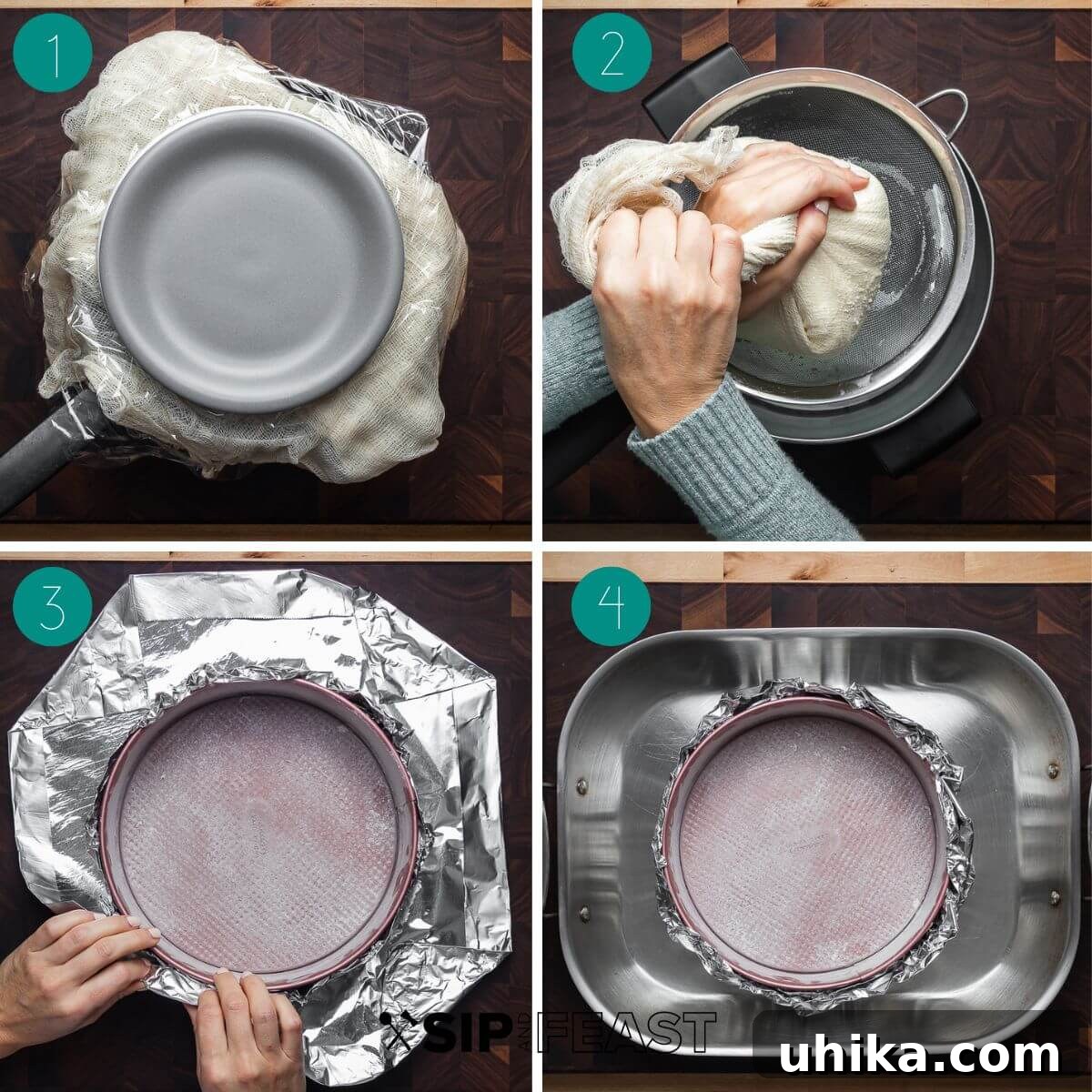
- The crucial first step, often overlooked, begins the night before you plan to bake. Take 2 pounds of high-quality whole-milk ricotta cheese and place it into a cheesecloth-lined sieve or a very fine mesh colander. Position this setup over a small pot or bowl to diligently collect the moisture that drains out. To expedite and enhance the draining process, gently weigh down the ricotta by placing one or two plates directly on top. This crucial step ensures that your ricotta is as dry as possible, preventing a watery or poorly set cheesecake.
- The following day, after several hours or overnight draining, you’ll be amazed by the amount of liquid collected. Carefully gather the edges of the cheesecloth and gently twist and squeeze any remaining moisture from the ricotta. The drier your ricotta, the superior the texture of your final cheesecake will be. This careful attention to detail is what gives Italian cheesecake its characteristic airy lightness.
Baking Essentials: Oven and Pan Preparation
- Preheat your oven to 400°F (200°C). Prepare a 9-inch springform pan by generously greasing its bottom and sides with butter and then lightly dusting it with flour. This creates a non-stick surface, ensuring easy removal of your finished cheesecake. Next, wrap the entire exterior of the springform pan with two layers of heavy-duty aluminum foil. This step is essential to prevent any water from seeping into the pan during the water bath (bain-marie) baking process.
- Carefully place the foil-wrapped springform pan into a larger roasting pan. Choose a roasting pan that is spacious enough to accommodate the springform pan comfortably, allowing for water to be added halfway up the sides of the springform pan. Set this assembly aside for now.
Crafting the Silky Cheesecake Batter
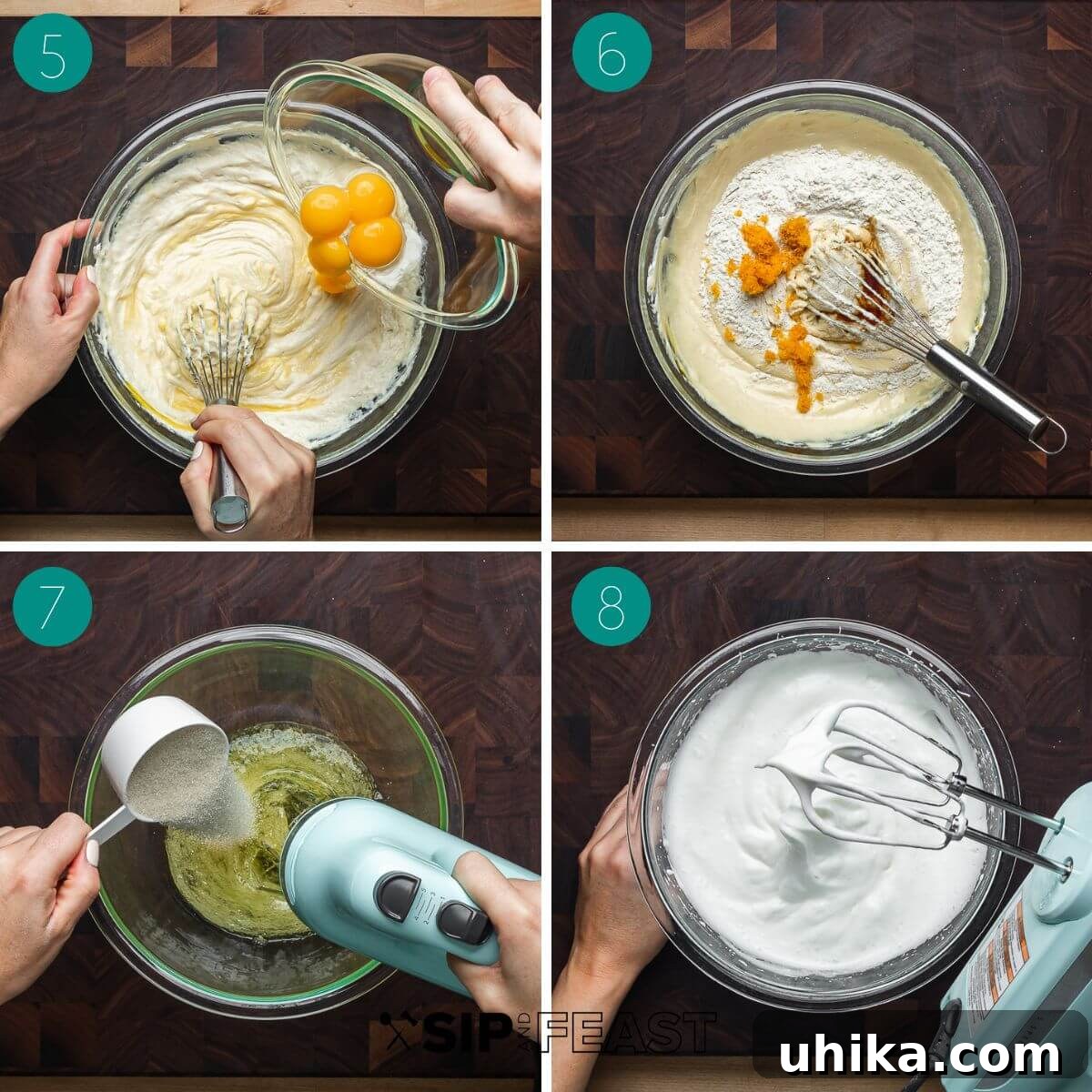
- Separate 5 large room-temperature eggs. This separation is critical; ensure no trace of yolk mixes with the whites, as any fat can prevent the whites from whipping properly. In a large mixing bowl or the bowl of a stand mixer equipped with a paddle attachment, beat the thoroughly drained ricotta cheese until it becomes incredibly smooth and creamy, a process that typically takes about 15 seconds. Gradually begin to add 2/3 cup of granulated sugar along with the egg yolks, whisking thoroughly after each addition for approximately 1 minute to ensure full incorporation and a silky texture.
- Next, incorporate 1/4 cup of sifted all-purpose flour, the aromatic zest of 2 large oranges (which provides that signature bright flavor), and 1 teaspoon of pure vanilla extract. Continue to whisk until all the ingredients are just combined, being careful not to overmix, which can develop the flour’s gluten and lead to a tougher texture. This step should take about 30 seconds.
Folding in the Airy Meringue
- In a completely separate, impeccably clean bowl (free from any grease or residue) or the bowl of a stand mixer fitted with a whisk attachment, begin to beat the 5 egg whites on medium speed for about 30 seconds until they become foamy. Gradually add the remaining 1/3 cup of granulated sugar, sprinkling it in slowly as the whites continue to beat.
- Once all the sugar has been added, increase the mixer speed to high and continue to beat the egg whites until medium-soft peaks form. These peaks should hold their shape but still have a slight curl at the tip (as demonstrated in visual aid 8, if applicable). This light and airy meringue is essential for the cheesecake’s delicate texture.
- Using a wide, flexible spatula, gently incorporate the whipped egg whites into the prepared ricotta mixture. This step requires a delicate touch to maintain the airiness of the whites.
- Continue folding until the egg whites are just incorporated into the ricotta batter, ensuring no streaks of white remain. Be extremely careful not to overmix, as this will deflate the egg whites and compromise the cheesecake’s light texture.
Baking and Chilling to Perfection
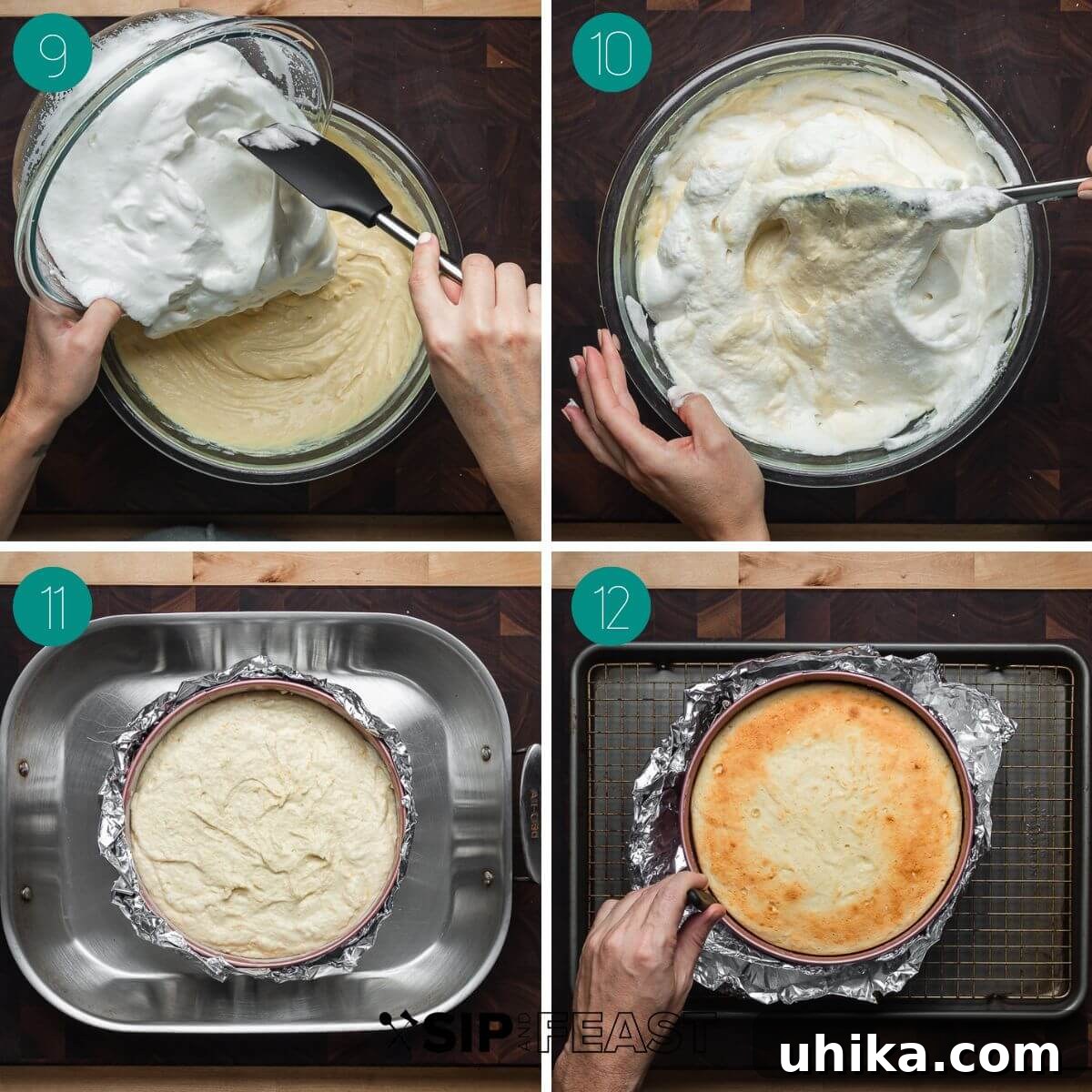
- Pour the delicately prepared batter into your foil-wrapped springform pan, which is already nested in the roasting pan. Now, create your water bath (bain-marie) by carefully pouring enough hot water into the roasting pan to reach approximately halfway up the sides of the springform pan. This water bath provides gentle, even heat, preventing cracks and ensuring a smooth, custard-like texture.
- Carefully transfer the roasting pan with the cheesecake into the preheated 400°F (200°C) oven. Bake for an initial 10 minutes. After this time, reduce the oven temperature to 325°F (160°C) and continue baking for another 45 minutes, or until the top of the cheesecake is beautifully golden brown and the center still exhibits a slight jiggle when gently shaken. This slight jiggle indicates perfect doneness; it will set fully as it cools. Turn off the oven, but leave the cheesecake inside with the oven door slightly ajar (just 1-2 inches open) for 30 minutes. This gradual cooling prevents sudden temperature changes that can lead to cracks or deflation. Remove the cheesecake from the oven and carefully run a thin-bladed knife around the inner edge of the pan to ensure it hasn’t stuck. Allow the cake to cool completely to room temperature on a wire rack. Once cooled, cover the cheesecake with plastic wrap and transfer it to the refrigerator for a minimum of 6 hours, or preferably overnight. Chilling is crucial for the flavors to meld and the texture to fully set. After chilling, carefully remove the cake from the springform pan, slice into generous portions, and serve with the vibrant lemon blueberry sauce on the side. Enjoy this exquisite taste of Italy!
Crafting the Perfect Lemon Blueberry Sauce
This bright and zesty lemon blueberry sauce is the ideal accompaniment to the creamy Italian cheesecake, adding a burst of complementary flavor and a beautiful visual appeal. It’s simple to make and can be prepared in advance.
- In a small saucepan, combine 10 ounces of frozen blueberries, 1/2 cup of water, 1/2 cup of granulated sugar, and 1 teaspoon of vanilla extract. Place the saucepan over medium heat and cook the mixture until it comes to a gentle boil, stirring occasionally. While this is heating, create a cornstarch slurry by whisking together 1 1/2 tablespoons of cornstarch with 1 1/2 tablespoons of cold water until smooth. Once the blueberry mixture reaches a boil, pour in the cornstarch slurry and stir continuously. Allow the mixture to return to a rolling boil, then reduce the heat to a low simmer.
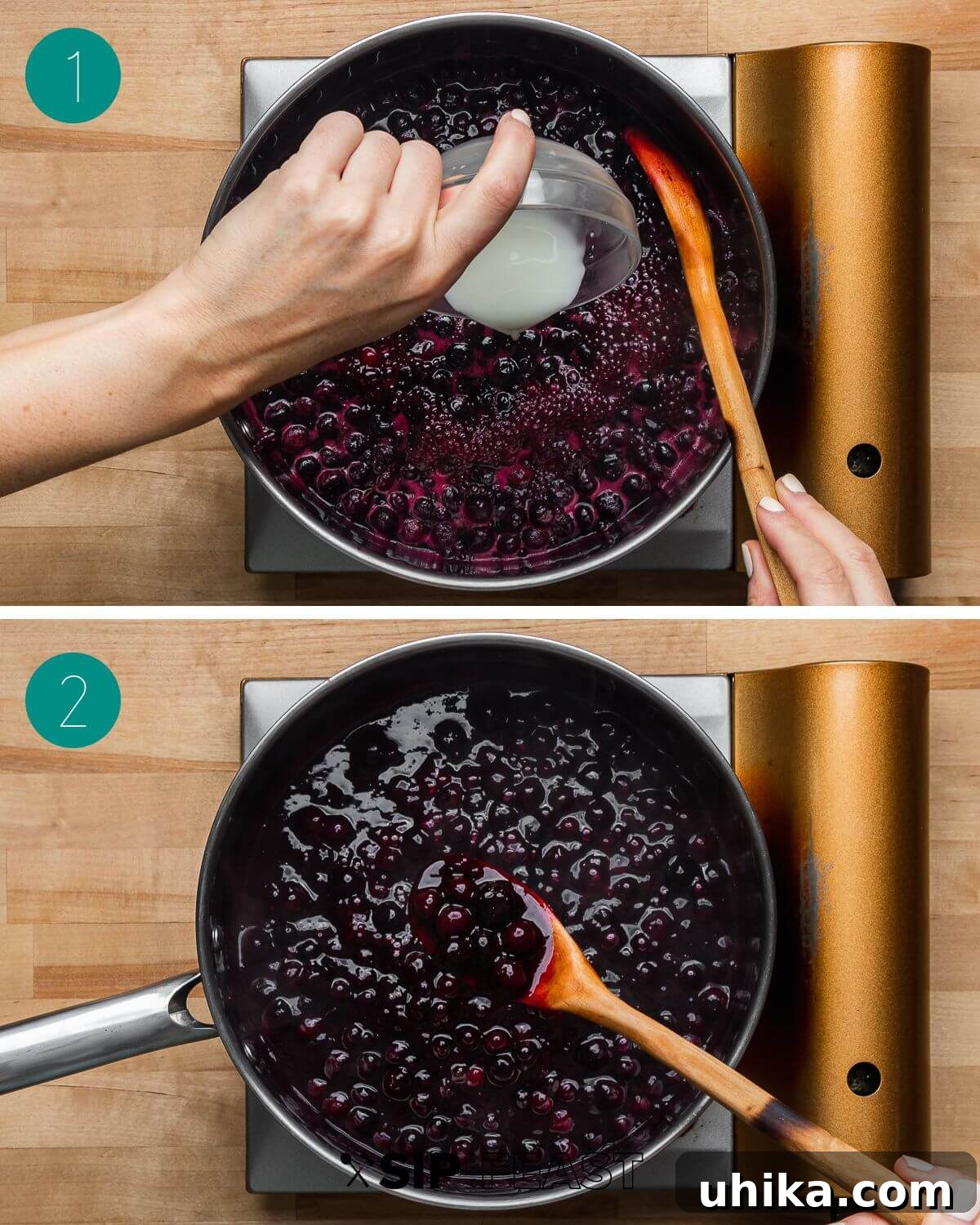
- Continue to simmer the sauce for 1 to 2 minutes, or until it reaches your desired thickness. For a thinner sauce, simmer for less time; for a thicker, more spoonable sauce, simmer a little longer. Remove the saucepan from the heat and gently stir in the zest of one large lemon. Take care to stir gently to avoid crushing the blueberries, preserving their shape and texture. Transfer the sauce to a clean container and refrigerate it until thoroughly chilled and ready to serve. Drizzle generously over each slice of ricotta cheesecake just before serving for an unforgettable dessert experience.
Expert Tips for a Flawless Italian Ricotta Cheesecake
Achieving the perfect Italian cheesecake is easier with these insider tips, ensuring a dessert that’s not only delicious but also beautifully presented.
- Embrace Patience: Your Secret Ingredient. An authentic Italian cheesecake is a labor of love that cannot be rushed. It demands thoughtful planning and careful preparation, but every moment invested pays off exponentially in the final outcome. From draining the ricotta overnight to slow baking and gradual cooling, patience is key to its delicate texture and rich flavor.
- The Ricotta Revelation: Quality and Dryness Matter. The quality and moisture content of your ricotta cheese are paramount. Opt for a brand known for its drier consistency, such as Galbani, if available. While other brands like Polly-O are delicious in their own right, they often contain higher moisture levels, making them better suited for savory dishes like baked ziti rather than delicate desserts. Regardless of the brand, thoroughly draining the ricotta through a cheesecloth or fine mesh sieve for at least several hours—ideally overnight—is absolutely essential. Skipping this step will result in a cheesecake that is runny, lacks proper structure, and fails to set correctly.
- Mastering Egg Whites: The Foundation of Airiness. When whipping egg whites, absolute cleanliness is non-negotiable. Any trace of egg yolk (which contains fat) or other grease in the bowl or on your utensils will prevent the egg whites from aerating and reaching their full volume. The whites must be beaten in a completely clean, dry bowl to achieve the desired medium-soft peaks that contribute to the cheesecake’s signature airy texture.
- Gentle Cooking: The Art of the Water Bath. The water bath, also known as a bain-marie, is an indispensable technique for baking cheesecakes. It provides a moist, even cooking environment that gently bakes the custard, preventing the cheesecake from cracking, drying out, or deflating due to sudden temperature changes. We highly recommend adhering to our precise cooking and cooling protocol: starting with a bain-marie, reducing the oven temperature after the initial baking phase, and allowing the cheesecake to cool gradually in the oven with the door slightly ajar for 30 minutes. Furthermore, avoid any sudden, jarring movements near or around the oven while your cheesecake is baking or cooling, as vibrations can also lead to cracks.
- Water Bath Wisdom: A Practical Approach. To simplify the process of creating the water bath, a helpful tip is to first place the roasting pan containing the foiled springform pan onto the oven rack. Pull the rack out just enough to allow you to carefully pour hot water from a kettle directly into the roasting pan. This method minimizes the risk of spills and makes it easier to transfer the heavy, water-filled pan safely into the oven.
- Serve Chilled for Optimal Flavor. The flavors and textures of Italian cheesecake truly develop and meld after a period of chilling. For the best experience, allow your cheesecake to chill in the refrigerator for a minimum of 6 hours, though overnight is even better. It is designed to be served cold, and while it’s undeniably delicious on its own, its full potential is unleashed when paired with our bright and tangy lemon blueberry sauce.
- Springform Strategies: Easy Removal. Unlike many cheesecakes, the Italian version typically doesn’t have a sturdy bottom crust, which can make it challenging to transfer cleanly from the springform pan’s base plate. To facilitate easy removal, we suggest lining the bottom of your springform pan with a circle of parchment paper before adding the batter. If you don’t have parchment paper, it’s perfectly acceptable, and often preferable, to simply leave the cheesecake on the springform’s bottom plate for serving, especially if you plan to enjoy it directly from the pan.
Explore More Irresistible Italian Sweet Treats
If you’ve fallen in love with the flavors of this Italian cheesecake, you’ll be delighted to discover other fantastic Italian-inspired desserts that are sure to satisfy your sweet tooth. We hope you enjoy these as much as we do!
- Homemade Cannoli: Indulge in crispy fried pastry shells filled with a sweet, creamy ricotta filling, often studded with chocolate chips or candied fruit. A true Italian classic!
- Blueberry Ricotta Cake: A moist and tender cake featuring the delicate flavor of ricotta, bursting with fresh blueberries and a hint of lemon. Perfect for breakfast, brunch, or dessert.
- Lemon Ricotta Cookies: Soft, pillowy cookies infused with the bright zest of lemon and the subtle richness of ricotta, topped with a sweet glaze. A delightful treat for any occasion.
If you’ve enjoyed creating this Italian Cheesecake Recipe or any other recipe from our collection, we’d be thrilled if you could share your experience with a 5-star rating and leave your comments below. Your feedback helps us grow and inspires other home cooks!
We believe in sharing culinary knowledge in various ways. If you are someone who prefers to learn by watching, many of our recipes are available with detailed video instructions on our YouTube channel and our Facebook Page. Follow us for visual guides and behind-the-scenes culinary adventures.
For exclusive access to never-before-seen FULL MEAL RECIPE VIDEOS and to support our culinary endeavors, we invite you to become a Patreon member today!
Authentic Italian Cheesecake
James Delmage
20 minutes
55 minutes
6 hours
30 minutes
15 hours
45 minutes
8
slices
Pin
Equipment
-
1 9-inch Springform Pan
-
Large roasting pan (for water bath)
-
Cheesecloth or fine mesh sieve
-
Stand mixer with paddle and whisk attachments (or hand mixer)
-
Small saucepan (for sauce)
-
Flexible spatula
Ingredients
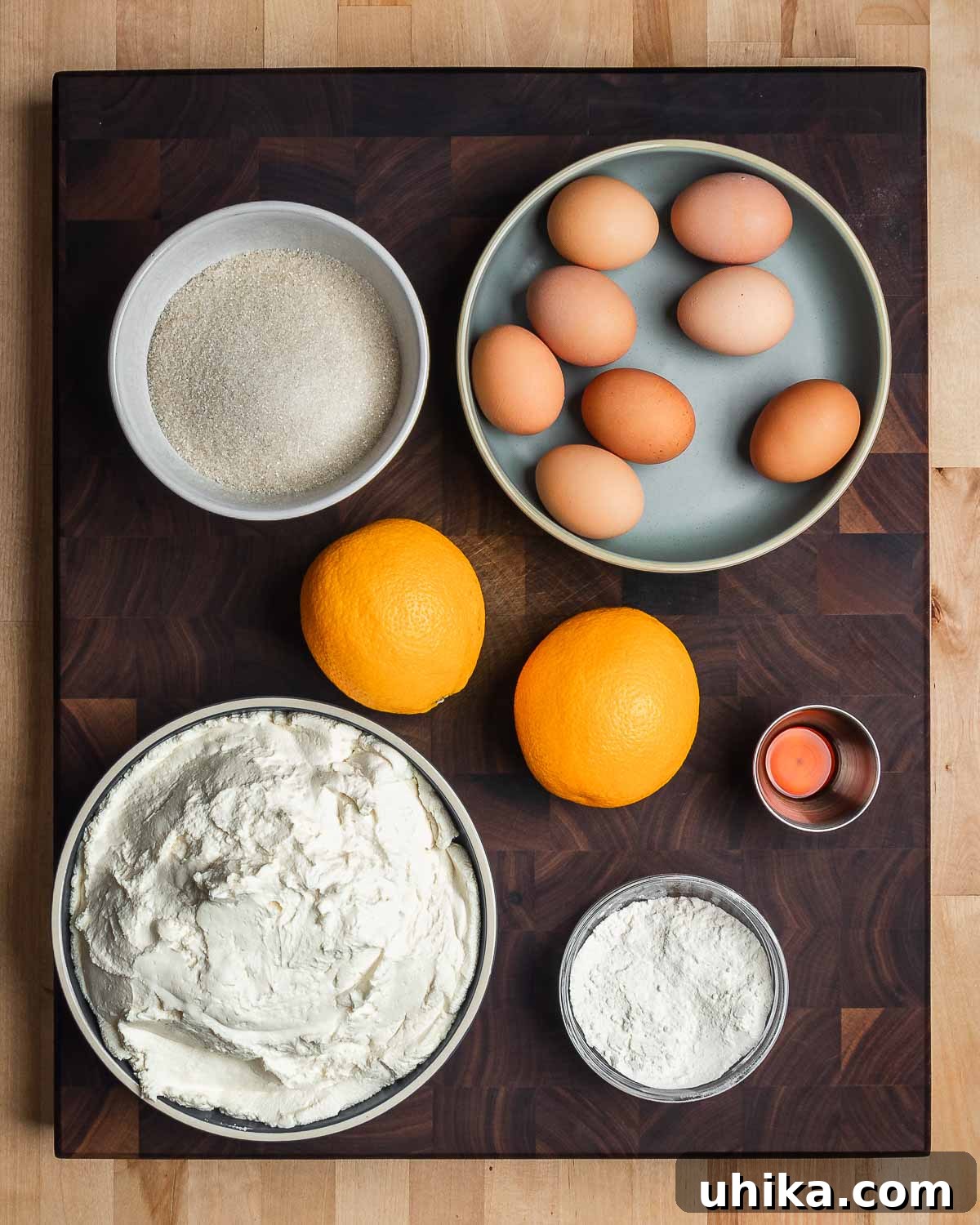
For the Cheesecake
-
2
pounds (908g)
whole milk ricotta cheese
thoroughly strained (see notes below) -
5
large
egg yolks
at room temperature -
5
large
egg whites
at room temperature -
1
cup (200g)
granulated sugar
divided (2/3 cup for ricotta mixture, 1/3 cup for egg whites) -
1/4
cup (35g)
all-purpose flour
sifted, plus more for dusting pan -
1
teaspoon
vanilla extract -
2
large
navel oranges
zested -
2
tablespoons (28g)
unsalted butter
softened, to coat the pan
For the Blueberry Lemon Sauce
-
10
ounces (290g)
frozen blueberries -
1/2
cup (120ml)
water -
1/2
cup (100g)
granulated sugar -
1 1/2
tablespoons
cornstarch
dissolved in 1 1/2 tablespoons cold water (for slurry) -
1
teaspoon
vanilla extract -
1
large
lemon
zested
Instructions
For the Cheesecake
-
1. The night before, drain 2 pounds of whole-milk ricotta through a cheesecloth-lined sieve over a bowl, weighing it down with plates. The next day, gently wring out any remaining moisture from the ricotta using the cheesecloth.
-
2. Preheat your oven to 400°F (200°C). Grease the bottom and sides of a 9-inch springform pan with softened butter, then lightly dust with flour.
-
3. Wrap the exterior of the springform pan with two layers of heavy-duty aluminum foil to prevent water from entering during baking. Place the wrapped springform pan into a larger roasting pan.
-
4. Separate 5 large room-temperature eggs. In a large mixing bowl, or the bowl of a stand mixer with a paddle attachment, beat the drained ricotta until smooth (about 15 seconds). Gradually add 2/3 cup of the granulated sugar and the egg yolks, beating well after each addition (about 1 minute) until fully incorporated and creamy.
-
5. Add the 1/4 cup of sifted flour, the zest of 2 large oranges, and 1 teaspoon of vanilla extract to the ricotta mixture. Whisk until just combined, about 30 seconds, being careful not to overmix.
-
6. In a separate, impeccably clean bowl (or the stand mixer bowl with a whisk attachment), beat the 5 egg whites on medium speed for 30 seconds until foamy. Gradually add the remaining 1/3 cup of granulated sugar while continuing to beat on medium speed. Once all the sugar is added, increase speed to high and beat until medium-soft peaks form.
-
7. Using a flexible spatula, gently fold the whipped egg whites into the ricotta mixture. Continue to fold until the whites are just incorporated, taking care not to deflate the mixture by overmixing.
-
8. Pour the cheesecake batter into the prepared springform pan. Place the roasting pan (with the springform inside) onto the oven rack. Carefully pour enough hot water into the roasting pan to reach halfway up the sides of the springform pan, creating a water bath.
-
9. Bake the cheesecake at 400°F (200°C) for 10 minutes. Then, reduce the oven temperature to 325°F (160°C) and continue baking for another 45 minutes, or until the top is golden brown and the center is slightly jiggly.
-
10. Turn off the oven, but leave the cheesecake inside with the oven door slightly ajar (1-2 inches) for 30 minutes to cool gradually.
-
11. Remove the cheesecake from the oven. Run a thin-bladed knife around the edge of the cake to ensure it’s not sticking. Allow the cake to cool completely to room temperature on a wire rack.
-
12. Once cooled, cover the cheesecake and refrigerate for a minimum of 6 hours, or ideally overnight, for best flavor and texture. After chilling, carefully remove from the springform pan, slice, and serve with the lemon blueberry sauce. Enjoy!
For the Blueberry Lemon Sauce
-
1. In a small saucepan, combine 10 ounces of frozen blueberries, 1/2 cup of water, 1/2 cup of granulated sugar, and 1 teaspoon of vanilla extract. Cook over medium heat, stirring occasionally, until the mixture comes to a gentle boil.
-
2. In a separate small bowl, whisk together 1 1/2 tablespoons of cornstarch with 1 1/2 tablespoons of cold water to create a smooth slurry. Pour this slurry into the simmering blueberry mixture and stir continuously. Bring the mixture to a rolling boil, then reduce the heat to a low simmer.
-
3. Allow the sauce to simmer for 1-2 minutes, or until it reaches your desired consistency. Remove from heat and gently stir in the zest of one large lemon, taking care not to crush the blueberries.
-
4. Transfer the sauce to a container and refrigerate until chilled. Serve drizzled generously over slices of Italian cheesecake. Enjoy!
Notes
- **Ricotta Draining is Crucial:** Draining the ricotta overnight through a cheesecloth or fine mesh sieve is absolutely required. This ensures excess moisture is removed, preventing your cheesecake from being runny or failing to set properly during baking.
- **Preventing Cracks:** Adhering strictly to the slow-cooking and gradual cooling steps (using a water bath, reducing oven temperature, and cooling in the turned-off oven with the door ajar) is vital to avoid cracks on the cheesecake surface and prevent it from deflating.
- **Storage:** Leftover Italian cheesecake can be stored, covered, in the refrigerator for up to 4 days. The lemon blueberry sauce can also be stored separately in the fridge for up to a week.
- **Convection Oven Adjustment:** This recipe’s temperatures and times are optimized for a conventional oven. If using a convection oven, reduce the baking temperature by 25°F (approximately 15°C) and begin checking for doneness at about 75% of the recommended baking time.
- **Parchment Paper for Easy Serving:** To make removing the cheesecake from the springform pan’s bottom plate easier, consider lining the base with a circle of parchment paper before adding the batter. If not using parchment, it is often best to serve the cheesecake directly from the springform’s base.
Nutrition
Serving:
8
slices
|
Calories:
396
kcal
|
Carbohydrates:
50.8
g
|
Protein:
17.2
g
|
Fat:
15.1
g
|
Saturated Fat:
8.4
g
|
Cholesterol:
159
mg
|
Sodium:
206
mg
|
Potassium:
212
mg
|
Fiber:
0.9
g
|
Sugar:
41.6
g
|
Calcium:
326
mg
|
Iron:
2
mg
Nutrition information is automatically calculated and provided for informational purposes only. It should be used as an approximation.
Did you enjoy this recipe? We’d love to hear from you!
Connect with us on Instagram at @sipandfeast or tag your delicious creations with #sipandfeast!