
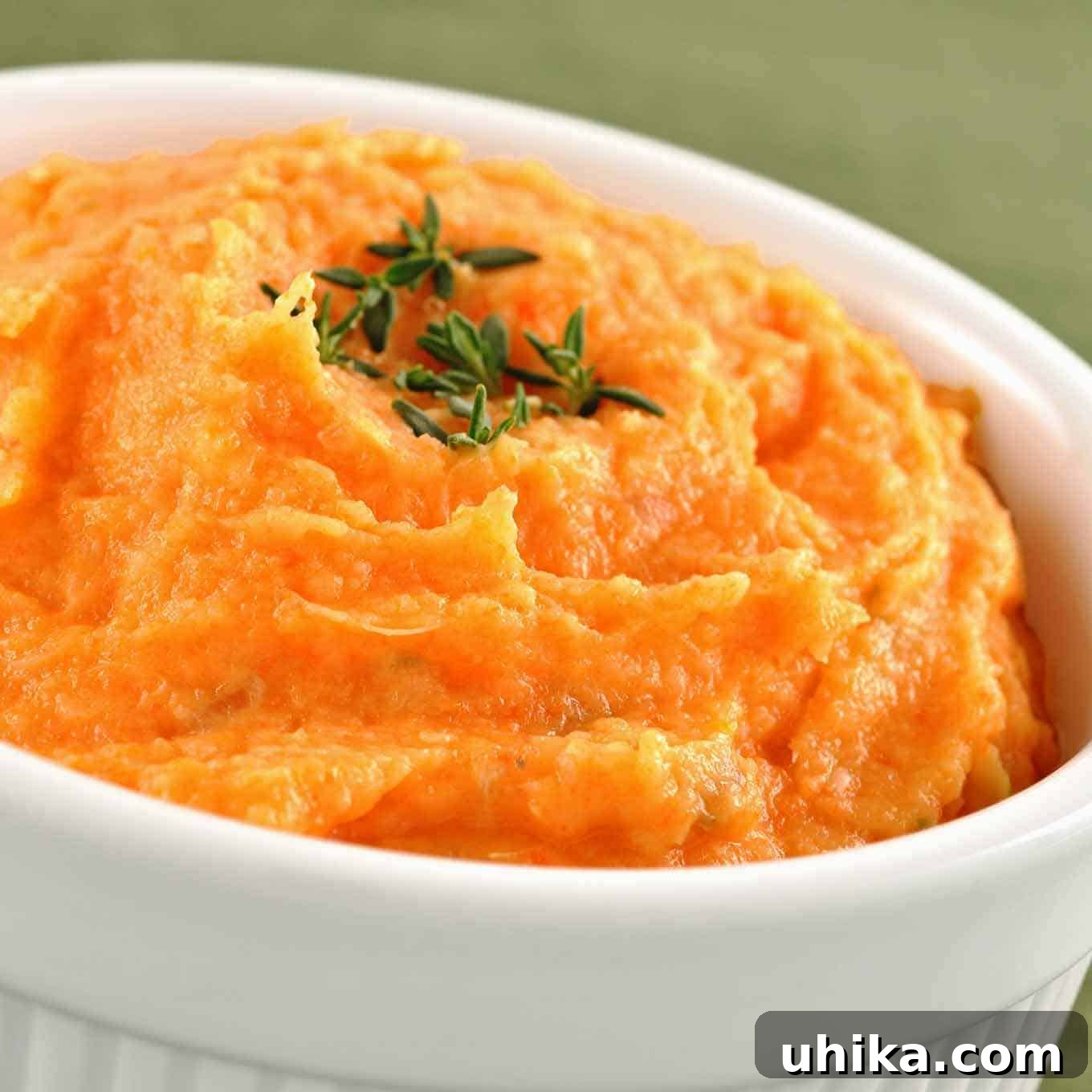
The Ultimate Root Vegetable Puree with Caramelized Shallots and Thyme

Elevate your dinner table with a truly exquisite side dish: a velvety root vegetable puree infused with the sweet, savory notes of caramelized shallots and the fresh aroma of thyme. This delightful medley of turnips, parsnips, and carrots transcends the ordinary, offering a sophisticated alternative to traditional mashed potatoes. It’s a harmonious blend of earthy flavors and creamy texture, making it an ideal accompaniment for a wide array of main courses, from succulent roast turkey and tender chicken to savory pork loin.
What makes this root vegetable puree truly special is its adaptability and ease of preparation. Whether you’re hosting an elaborate holiday feast or preparing a simple weeknight meal, this dish fits seamlessly into your plans. It can be made in advance, allowing you to focus on other aspects of your meal, and reheats beautifully without compromising its luxurious texture or rich flavor. This makes it a fantastic choice for entertaining, ensuring a stress-free culinary experience for both the cook and the guests.
Why This Root Vegetable Puree is a Must-Try
While mashed potatoes hold a beloved place in many hearts, sometimes it’s refreshing to explore new flavors and textures. This root vegetable puree offers a captivating blend that’s both comforting and elegant. The combination of turnips, parsnips, and carrots creates a naturally sweet and earthy profile, which is then amplified by careful preparation. Unlike boiling, steaming the vegetables helps retain their natural sweetness and vital nutrients, contributing to a more vibrant and flavorful puree.
The addition of caramelized shallots is a game-changer, transforming the puree from simply delicious to utterly unforgettable. Shallots, with their delicate onion-garlic flavor, become incredibly sweet and complex when slowly caramelized. This process deepens their natural sugars, imparting a rich, umami-packed sweetness that perfectly complements the earthiness of the root vegetables. Fresh thyme adds a layer of aromatic freshness, tying all the flavors together with its herbaceous notes. The final touch of butter and cream creates an impossibly silky texture that melts in your mouth, making every spoonful a luxurious experience.
Key Ingredients Spotlight: The Foundation of Flavor
Understanding the role of each ingredient is key to appreciating the depth of this root vegetable puree. Each component plays a crucial part in building its unique flavor profile and irresistible texture.
- Turnips: Often overlooked, purple-top turnips bring a slightly peppery, earthy flavor that mellows beautifully when cooked. They contribute a subtle bitterness that balances the sweetness of the parsnips and carrots, adding complexity to the puree. Turnips are also packed with vitamin C and fiber, making this dish a nutritious choice.
- Parsnips: These pale, carrot-like root vegetables are celebrated for their distinctive sweet, nutty, and slightly spicy flavor. When cooked, their natural sugars intensify, lending a delightful sweetness that is a hallmark of this puree. Parsnips are an excellent source of dietary fiber, vitamin K, and vitamin C.
- Carrots: Vibrant and naturally sweet, carrots add a beautiful hue and an essential layer of sweetness to the puree. Their earthy notes complement the other root vegetables, and their high beta-carotene content provides a healthy boost of antioxidants.
- Shallots: The unsung heroes of this dish, shallots are smaller, sweeter, and milder than onions, with a hint of garlic. When slowly cooked until caramelized, they transform into intensely sweet and savory morsels. This deep caramelization extracts their rich, complex sugars, creating a flavor base that elevates the entire puree.
- Fresh Thyme: A classic culinary herb, fresh thyme provides a warm, slightly minty, and earthy aroma. Its delicate leaves are infused into the puree, adding a fragrant herbaceousness that brightens the overall flavor and pairs perfectly with the caramelized shallots.
- Butter and Cream (or Half-and-Half): These rich dairy components are essential for achieving the puree’s signature silky, smooth texture. Butter adds a luscious richness and depth of flavor, while cream contributes to the velvety mouthfeel. For a lighter version, half-and-half can be used, or vegetable broth for a dairy-free option.
- Sugar: A small pinch of sugar helps to coax out the natural sweetness of the shallots during caramelization, enhancing their flavor and ensuring a rich, golden-brown color.
- Nutmeg, Salt, and Pepper: These seasoning staples are critical for balancing and enhancing all the flavors. Nutmeg adds a warm, subtly spicy note that complements root vegetables beautifully, while salt and freshly ground pepper are essential for seasoning to perfection.
Mastering the Art of Caramelized Shallots
Caramelizing shallots is not merely a cooking step; it’s an art that unlocks a profound depth of flavor crucial to this puree. The key is patience and low heat. Start by melting two tablespoons of butter in a pan over medium-low heat. This gentle heat prevents burning and allows the shallots to soften gradually, releasing their moisture and preparing them for the caramelization process. Add the chopped shallots and cook them slowly for about four minutes until they become translucent and aromatic. You’ll notice their distinct, mild oniony scent filling your kitchen.
Next, sprinkle in the half teaspoon of sugar and season generously with salt and pepper. The sugar assists in the caramelization process, helping the shallots achieve that beautiful golden-brown hue and intensifying their inherent sweetness. Continue cooking, stirring occasionally, for another six minutes or until the shallots are deeply golden brown and exquisitely tender. They should be soft, sticky, and incredibly fragrant. Avoid rushing this step; true caramelization requires time to develop its rich, complex flavors. Once perfectly caramelized, set them aside, as they will be folded into the puree at the end, imparting their sweet and savory essence throughout the dish.
The Perfect Puree: Steaming vs. Boiling Your Root Vegetables
When preparing root vegetables for a puree, the cooking method significantly impacts the final texture and flavor. While boiling is a common approach, steaming is highly recommended for this recipe, and here’s why:
Steaming cooks vegetables with moist heat, allowing them to retain more of their natural nutrients, vibrant color, and, most importantly, their inherent sweetness. When root vegetables are boiled, some of their water-soluble vitamins and sugars can leach into the cooking water, resulting in a less flavorful and sometimes watery puree. Steaming, on the other hand, ensures that the vegetables cook evenly and tenderly without becoming waterlogged. This method preserves their concentrated flavors, leading to a richer and more aromatic puree that truly highlights the individual characteristics of the turnips, parsnips, and carrots.
To properly steam your vegetables, add about an inch of water to a large pot fitted with a steamer rack. Bring the water to a boil, then add the carrots first, followed by the turnips. Carrots and turnips are denser and require a slightly longer cooking time. Cover the pot and steam for four minutes. After this initial steaming, add the parsnips, which cook more quickly. Continue steaming for another four to six minutes, or until all the vegetables are fork-tender. They should be soft enough to easily pierce with a knife but not mushy. This staggered addition ensures all vegetables are perfectly cooked at the same time, preventing some from becoming overdone while others are still firm.
Rated 4.75 out of 5 stars by 4 users
Root Vegetable Puree with Shallots and Thyme
By Lynne Webb
A silky purée of turnips, parsnips and carrots flavored with caramelized shallots and fresh thyme makes a nice side dish for roast turkey, chicken or pork.
Prep: 10 mins
Cook: 20 mins
Total: 30 mins
Servings: 6 servings
Rate Recipe
Print Recipe
Ingredients
- 6 large shallots, chopped
- 4 tablespoons butter, divided
- 1/2 teaspoon sugar
- 1 lb purple-top turnips, peeled and cut into 1-inch pieces
- 1 lb parsnips, peeled and cut into 1-inch pieces
- 1/2 lb carrots, peeled and cut into 1-inch pieces
- 1/4 cup cream or half-and-half
- 2 tablespoons fresh thyme leaves
- Pinch of nutmeg
- Salt and freshly ground pepper to taste
Instructions
- Heat 2 tablespoons of butter in a pan over medium-low heat. Add the shallots and cook until soft and aromatic, about 4 minutes.
- Add the sugar, season with salt and pepper and continue cooking until the shallots are golden brown, about 6 minutes more. Set aside.
- Add about 1 inch of water to a large pot fitted with a steamer rack. Bring to a boil, add the carrots first, then the turnips.
- Cover and steam for 4 minutes, then add the parsnips. Continue cooking until all the veggies are tender when pierced with a knife, about 4 to 6 minutes more.
- Transfer the vegetables to a large bowl. Add the remaining 2 tablespoons of butter and the cream. Mash slightly with a large fork.
- Using an electric hand blender, purée until smooth and silky (you can also use a food processor or blender).
- Stir in the shallot-butter mixture, thyme, nutmeg, salt and pepper. Taste and adjust the seasoning.
- Transfer to a serving dish and garnish with a sprig of fresh thyme.
- To make ahead: Prepare the recipe completely and transfer to a buttered casserole. Refrigerate up to 2 days. Cover tightly and reheat in a 325°F oven until heated through, about 30 to 45 minutes.
Notes
Parsnips take less time to cook than carrots or turnips, so be sure to add them after those other veggies have steamed for a few minutes. You can also substitute rutabaga for the turnips, but it will need longer cooking time than either the carrots or the parsnips. Adjust accordingly. For an even richer flavor, consider using a splash of chicken or vegetable broth instead of some of the cream. Ensure your vegetables are cut into uniform pieces for even cooking.
Variations and Customizations for Your Puree
While the classic Root Vegetable Puree with Caramelized Shallots and Thyme is undeniably delicious, it also serves as an excellent canvas for creative customization. Don’t hesitate to experiment with different root vegetables, herbs, and spices to tailor the dish to your taste or what you have on hand.
- Other Root Vegetables: Explore additions or substitutions like celeriac (celery root) for a nutty, celery-like flavor, sweet potatoes or butternut squash for increased sweetness and a creamier texture, or even a touch of potato for extra body. Just be mindful of cooking times, as some vegetables like celeriac may take longer to soften.
- Herbs: While thyme is fantastic, fresh rosemary or sage would also beautifully complement the earthy flavors of root vegetables. A blend of herbs can also create a more complex aromatic profile. Finely chopped chives or parsley can be stirred in at the end for a fresh, bright finish.
- Spices: A hint of cinnamon or ground ginger can add warmth and an intriguing complexity, especially if you lean towards sweeter variations. A tiny pinch of cayenne pepper or red chili flakes can introduce a subtle heat that awakens the palate.
- Dairy Alternatives: For a dairy-free or vegan version, substitute the butter with olive oil or a plant-based butter alternative. Replace the cream or half-and-half with a rich unsweetened plant-based milk (like cashew or oat milk) or, for a more savory approach, vegetable broth. Ensure your plant-based milk is unflavored to avoid altering the savory profile.
- Garlic Infusion: Roast a few cloves of garlic alongside your shallots or add finely minced garlic during the initial shallot caramelization for an extra layer of pungent flavor.
- Cheese: For a decadent touch, stir in a handful of grated Parmesan, Gruyère, or a sharp cheddar cheese just before serving. The cheese will melt into the warm puree, adding a savory, tangy richness.
Serving Suggestions: Perfect Pairings
This Root Vegetable Puree with Caramelized Shallots and Thyme is incredibly versatile and makes a stellar side dish for numerous main courses. Its rich flavor and silky texture provide a comforting yet elegant counterpoint to a variety of proteins and other vegetables.
- Classic Roasts: As mentioned, it’s a quintessential partner for roast turkey, chicken, or pork. The savory notes of the puree complement the richness of these meats perfectly, making it an ideal choice for holiday dinners or Sunday roasts.
- Beef and Lamb: The earthy sweetness of the puree also pairs beautifully with hearty cuts of beef, such as pot roast, beef Wellington, or grilled steaks. For lamb, think roasted leg of lamb or lamb chops – the thyme in the puree harmonizes wonderfully with lamb’s distinct flavor.
- Fish: Surprisingly, this puree can also accompany pan-seared or baked white fish like cod or halibut, offering a comforting contrast to the delicate fish.
- Vegetarian Mains: Don’t limit this to meat dishes! Serve it alongside a hearty mushroom wellington, a lentil loaf, or roasted root vegetable medley for a satisfying vegetarian meal. It can also be a delicious base for a bowl of roasted vegetables and a poached egg.
- Everyday Meals: Beyond special occasions, this puree can elevate simple weeknight meals. Pair it with baked chicken breasts, pan-fried sausages, or even as a flavorful component in a deconstructed shepherd’s pie.
Storage and Reheating Tips
One of the best attributes of this Root Vegetable Puree is its make-ahead potential, making it a dream for meal prep or entertaining. Properly stored and reheated, it tastes just as good, if not better, the next day.
- To Make Ahead: Prepare the recipe completely as directed. Once finished, transfer the warm puree to a buttered casserole dish or an airtight container. Allow it to cool slightly before refrigerating. It can be stored in the refrigerator for up to 2 days.
- Reheating in the Oven: For reheating, cover the casserole dish tightly with foil to prevent drying. Reheat in a preheated 325°F (160°C) oven for 30 to 45 minutes, or until thoroughly heated through. You may want to stir it halfway through reheating.
- Reheating on the Stovetop: For smaller portions or a quicker reheat, transfer the puree to a saucepan over low to medium-low heat. Add a splash of milk, cream, or broth to loosen it up if it’s too thick. Stir frequently until heated through, being careful not to scorch the bottom.
- Freezing: While possible, freezing root vegetable purees can sometimes alter the texture, making it slightly grainier. If you choose to freeze, allow the puree to cool completely. Transfer it to freezer-safe bags or airtight containers, leaving some headspace. It can be frozen for up to 2-3 months. Thaw in the refrigerator overnight and reheat using the stovetop or oven method, adjusting liquid as needed.
Frequently Asked Questions (FAQs)
1. Can I use other root vegetables in this puree?
Absolutely! This recipe is highly adaptable. You can substitute turnips with rutabaga (though it will require a slightly longer cooking time), or add other root vegetables like celeriac (celery root), sweet potatoes, or even a small amount of Yukon Gold potatoes for a creamier texture. Just remember to adjust cooking times as needed, ensuring all vegetables are tender before pureeing.
2. Can I make this puree vegan or dairy-free?
Yes, easily! Replace the butter with olive oil or a plant-based butter alternative. For the cream or half-and-half, use an unsweetened plant-based milk (such as cashew, oat, or almond milk) or a rich vegetable broth. These substitutions will still yield a delicious and silky puree.
3. How long does this root vegetable puree last in the refrigerator?
When stored in an airtight container, the puree will stay fresh in the refrigerator for up to 3-4 days. It’s an excellent make-ahead dish for busy weeknights or entertaining.
4. Can I freeze the root vegetable puree?
While you can freeze this puree, the texture might change slightly upon thawing, potentially becoming a bit grainier due to the water content of the vegetables. If you choose to freeze, ensure it’s in an airtight, freezer-safe container for up to 2-3 months. Thaw in the refrigerator overnight and reheat gently on the stovetop, adding a splash of liquid if needed to restore consistency.
5. What’s the best way to achieve a smooth and silky puree texture?
For the smoothest and silkiest texture, an electric hand blender (immersion blender) is ideal, as it processes the vegetables directly in the bowl, minimizing air incorporation. A food processor also works very well. If using a regular blender, process in batches and be careful not to overmix, as this can sometimes make starchy vegetables (if included) gluey. Ensure your vegetables are cooked until very tender before pureeing.
This Root Vegetable Puree with Caramelized Shallots and Thyme is more than just a side dish; it’s a testament to how simple ingredients, handled with care, can create something truly extraordinary. Its velvety texture, combined with the savory sweetness of caramelized shallots and the fragrant notes of fresh thyme, makes it an unforgettable addition to any meal. Whether you’re hosting a grand celebration or simply looking to elevate your everyday dining, this puree promises a delightful culinary experience that will impress and satisfy. Give it a try, and let its rich flavors transform your table.
Like this recipe? Rate and comment below!