
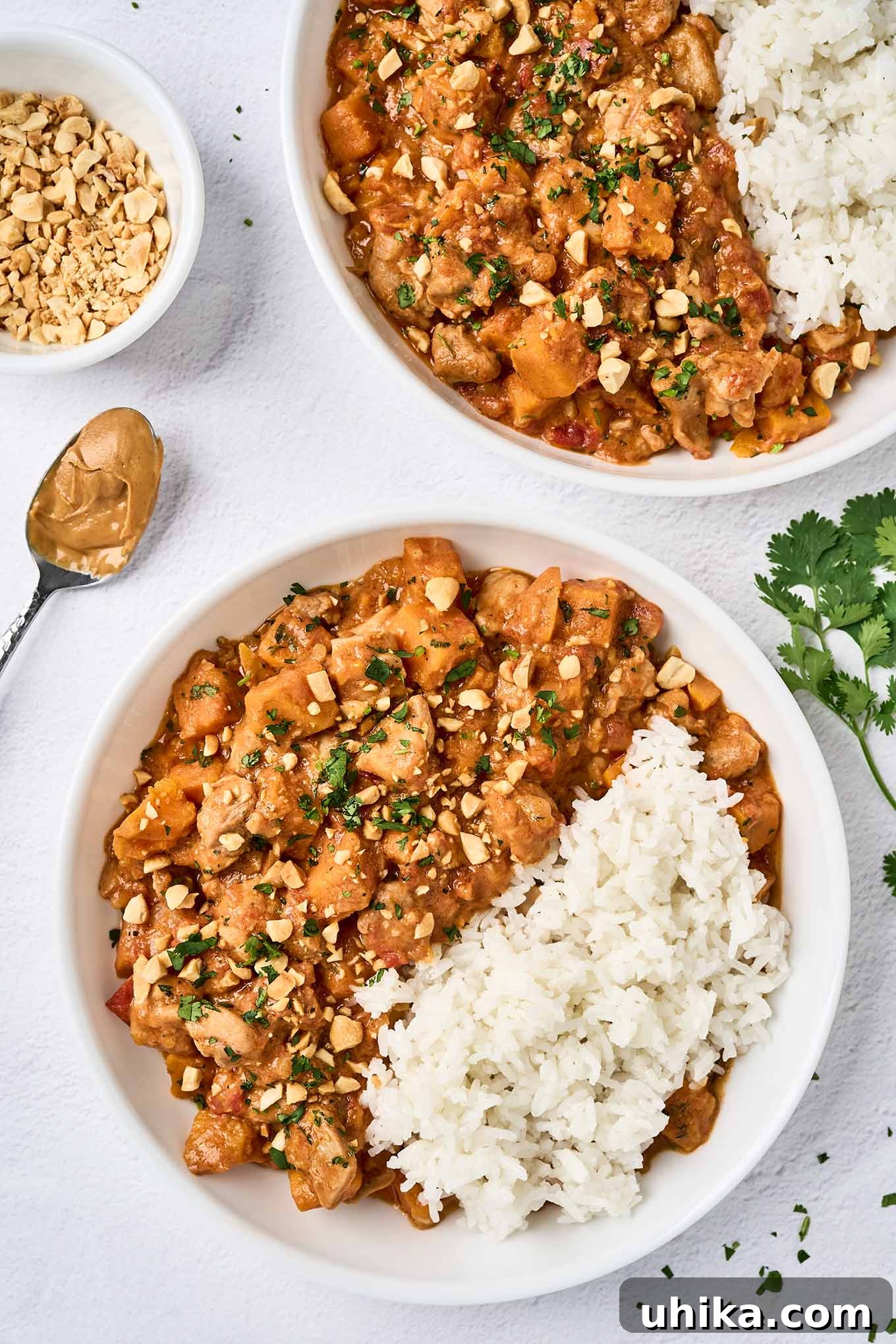
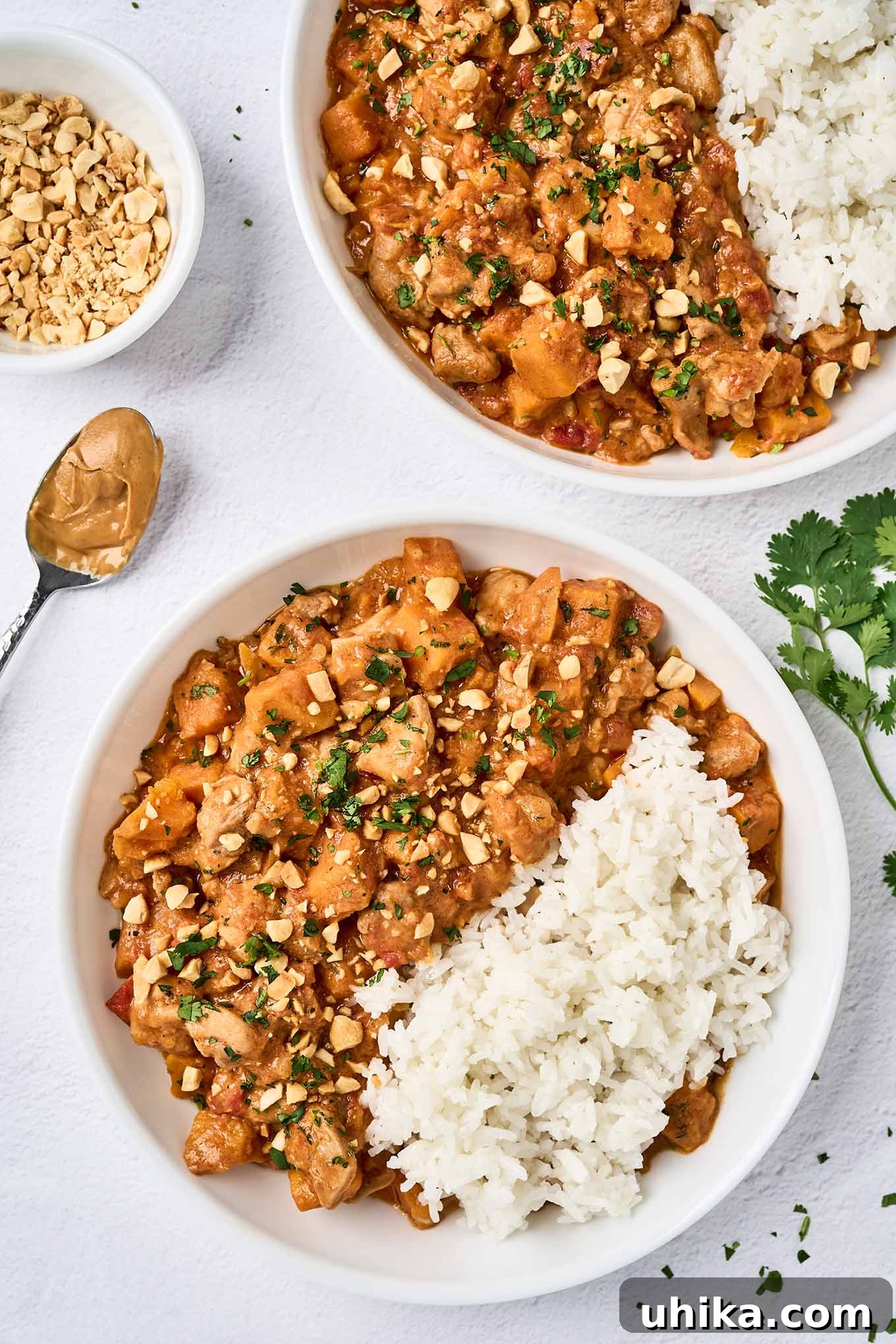
Experience the Rich Flavors of West Africa: Authentic Chicken Peanut Stew (Maafe)
Embark on a culinary journey to the heart of West Africa with our exquisite recipe for Chicken Peanut Stew, universally celebrated as Maafe. This deeply comforting and vibrantly flavored dish is a cherished staple across countries like Mali, Senegal, and Gambia, renowned for its luxurious peanut-based sauce. Maafe masterfully blends savory, sweet, and tangy notes, creating a symphony of tastes that is both profoundly exotic and wonderfully familiar. It stands as a brilliant example of how a few simple, wholesome ingredients can transform into a truly extraordinary meal that nourishes both the body and the spirit.
The true magic of Maafe lies in its harmonious combination of succulent chicken, tender sweet potatoes, and a velvety sauce infused with the bright zest of fresh ginger, aromatic garlic, earthy coriander, and ripe, juicy tomatoes. This stew transcends mere sustenance; it’s an immersive experience, offering a delightful glimpse into the rich tapestry of West African culinary traditions. Whether you are an adventurous home cook eager to broaden your global palate or simply seeking an exciting and wholesome addition to your weekly meal plan, this chicken and peanut stew promises an unforgettable taste sensation with remarkable ease of preparation.
One of the most appealing aspects of Maafe is its straightforward, one-pot preparation. This magnificent dish comes together beautifully in a single pot, minimizing cleanup and maximizing enjoyment, without requiring any exotic or hard-to-find ingredients. Despite its humble components, the resulting stew boasts a complexity and depth of flavor that belies its simple origins. Traditionally served with fluffy steamed rice, light couscous, or even dense fufu, the accompanying starch acts as the perfect canvas to absorb every drop of the exquisite, aromatic sauce, ensuring no flavor is left behind. Prepare to discover your new favorite comfort food, bursting with the authentic spirit and vibrant tastes of West Africa!
Why You’ll Adore This Maafe Recipe
Our West African Chicken Peanut Stew recipe offers compelling reasons why it will quickly become a cherished favorite in your kitchen:
- Unforgettable Flavor Profile: A unique and addictive blend of nutty richness, subtle sweetness, savory depth, and a hint of spice that will captivate your taste buds.
- Deeply Comforting & Wholesome: A hearty, warming dish packed with nutritious ingredients such as lean chicken, vitamin-rich sweet potatoes, and creamy, protein-packed peanut butter.
- Effortless One-Pot Preparation: Designed for convenience, this entire recipe cooks in a single pot, making it ideal for busy weeknights and significantly reducing cleanup.
- Authentic Global Experience: An excellent way to introduce genuine West African flavors into your home cooking, expanding your culinary repertoire and impressing your guests.
- Highly Customizable: Easily adaptable to various dietary needs and preferences, including options for vegetarian or vegan versions, and adjustable spice levels to suit every palate.
- Family-Friendly Appeal: A satisfying and delicious meal that appeals to a wide range of tastes, making it perfect for family dinners or entertaining friends.
Essential Ingredients for an Authentic African Peanut Stew
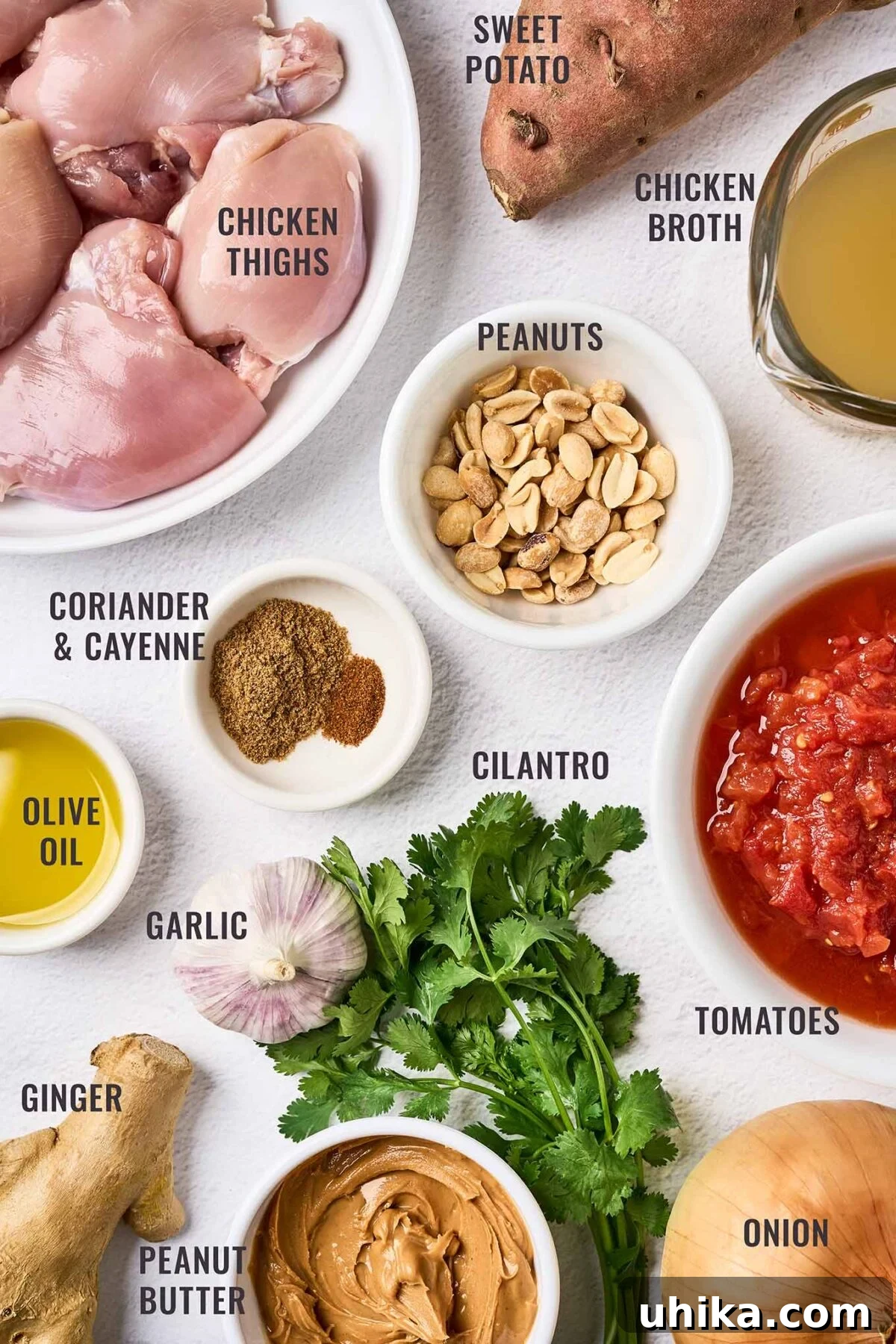
Understanding the unique contribution of each component is vital for crafting a Maafe with perfectly balanced flavors and textures. Here’s a detailed guide to the core ingredients, including tips for selection, preparation, and potential substitutions. The comprehensive list with precise quantities can be found in the printable recipe card further down.
Natural Peanut Butter: The Signature Element
The foundation of this stew’s rich character is, without a doubt, the peanut butter. It imparts a distinctive creamy texture and a profound, earthy nuttiness that defines Maafe. To achieve the most authentic flavor and ideal consistency, it is crucial to select **all-natural, unsweetened peanut butter**. Look for varieties where the ingredient list is minimal—ideally just peanuts, and perhaps a touch of salt. Avoid brands that include added sugars, hydrogenated oils, or excessive emulsifiers, as these can drastically alter the stew’s flavor profile, making it overly sweet or unpleasantly greasy. Remember to stir natural peanut butter thoroughly before use, as the natural oils tend to separate.
Boneless, Skinless Chicken Thighs: The Optimal Protein Choice
For this Maafe recipe, we strongly advocate for **boneless, skinless chicken thighs**. Their higher fat content is key to ensuring they remain incredibly moist and tender throughout the simmering process, absorbing all the aromatic flavors of the stew beautifully. Chicken thighs also contribute a deeper, more savory flavor compared to leaner cuts. While chicken breast can be used as an alternative, be aware that it tends to dry out more easily. If you opt for breast, consider cutting it into slightly larger chunks and adding it a bit later in the cooking process to prevent overcooking. For those seeking even more depth, bone-in, skin-on thighs can be used, with the skin removed after initial browning for a healthier stew.
Sweet Potato: Balancing Sweetness and Texture
A quintessential component in many African peanut stews, **sweet potato** offers a delightful natural sweetness that perfectly complements the savory richness of the peanut butter. Beyond its flavor contribution, it also adds body to the stew, thickening the sauce as it softens and subtly breaks down during cooking. Choose firm, unblemished sweet potatoes for the best results. If sweet potatoes are unavailable, butternut squash or even regular potatoes can serve as suitable substitutes. However, if using a less sweet alternative, you might wish to add a small pinch of brown sugar to replicate the earthy sweetness characteristic of traditional Maafe.
Fresh Ginger & Garlic: The Aromatic Power Duo
**Fresh ginger** is indispensable, providing a distinctive warmth, subtle spice, and bright aromatic notes that invigorate the entire dish. Its pungent, zesty character cannot be replicated by ground ginger. Take the time to mince it finely for uniform flavor distribution. If time is a constraint, ginger paste is an acceptable substitute, but for the most vibrant and authentic taste, fresh is always superior. Similarly, **fresh garlic and onion** form the essential aromatic base. Sautéing them until fragrant and translucent creates a foundational layer of savory depth. Use fresh garlic cloves, finely minced, and a medium yellow or white onion, chopped. These humble ingredients are pivotal in building the complex and inviting flavor profile of the stew.
Diced Tomatoes: The Tangy Brightener
One can of **diced tomatoes**, used undrained, provides crucial acidity and a hint of natural sweetness. This brightens the stew and elegantly cuts through the richness of the peanut butter and sweet potato. The juices from the can also contribute significantly to the stew’s liquid base and overall consistency. There is no need to drain them; simply add the entire contents of the can. If fresh tomatoes are in season and ripe, chopped fresh tomatoes can also be used for an even fresher flavor dimension.
Coriander & Cayenne: The Harmonious Spice Blend
**Ground coriander** introduces a warm, citrusy, and subtly sweet note, which is a hallmark of many West African culinary creations. **Cayenne pepper** provides a gentle, customizable heat. We recommend starting with a quarter teaspoon and adjusting according to your preference for spice. For those who prefer no heat, it can be omitted entirely. Other options for introducing heat include crushed red pepper flakes, or for a more complex spice profile, a halved and seeded Scotch bonnet, habanero, or serrano chili can be simmered in the sauce and removed before serving to control the intensity.
Low-Sodium Chicken Broth: The Flavorful Liquid Base
**Low-sodium chicken broth** serves as the vital liquid component, forming the sauce and allowing you to precisely control the overall saltiness of your dish. It also significantly enhances the savory undertones of the chicken. For a vegetarian or vegan version, a good quality vegetable broth is an excellent and equally flavorful substitute.
Fresh Cilantro: The Zesty Finishing Touch
A generous handful of freshly chopped **cilantro**, stirred in just before serving, provides a burst of bright, herbaceous flavor and a vibrant green visual appeal. It introduces a crucial fresh element that beautifully balances the richness of the stew. If you are not a fan of cilantro, flat-leaf parsley offers a milder yet still fresh substitute. While omitting it entirely is an option, the final dish might lack a bit of its characteristic vibrancy and lift.
Chopped Peanuts: For Crunch and Garnish
Roughly **chopped unsalted peanuts** are more than just a garnish; they provide a delightful textural contrast and intensify the nutty essence of the stew when sprinkled generously on top just before serving. Their crunch adds an exciting dimension to each spoonful, making the experience even more engaging.
Mastering the Art of African Chicken Peanut Stew (Maafe)
Crafting this rich and flavorful Maafe is a wonderfully straightforward process, designed to be accessible and enjoyable for cooks of all experience levels. Here’s a comprehensive overview of the key steps to guide you through making this incredible dish. For detailed, step-by-step instructions with exact measurements, please refer to the complete recipe card provided below.
Step 1: Prepare Your Ingredients for Seamless Cooking
Start by ensuring all your ingredients are meticulously prepped before you begin cooking. This foundational step, known as ‘mise en place,’ guarantees a smooth and stress-free process. Trim any excess fat from your boneless, skinless chicken thighs, then cut them into uniform, bite-sized pieces, roughly 1-inch cubes. Uniformity ensures even cooking. Peel and finely chop your onion, mince the fresh ginger, and crush or mince the garlic cloves. Finally, peel your sweet potato and cut it into similarly sized 1-inch cubes. Having everything ready will allow you to move through the recipe fluidly.
Step 2: Build the Foundation of Aromatic Flavors
In a large, sturdy skillet or Dutch oven, heat the olive oil over medium heat until it shimmers gently. Add the chopped onion and sauté, stirring occasionally, until it becomes soft, translucent, and just beginning to turn golden, which typically takes about 4 to 5 minutes. Next, stir in the minced fresh ginger and continue to sauté for another minute, allowing its distinctive, fragrant aroma to develop. Finally, add the minced garlic and cook for just about 30 seconds until it becomes fragrant; be vigilant to prevent burning the garlic, as it can quickly turn bitter.
Step 3: Sear the Chicken and Infuse with Spices
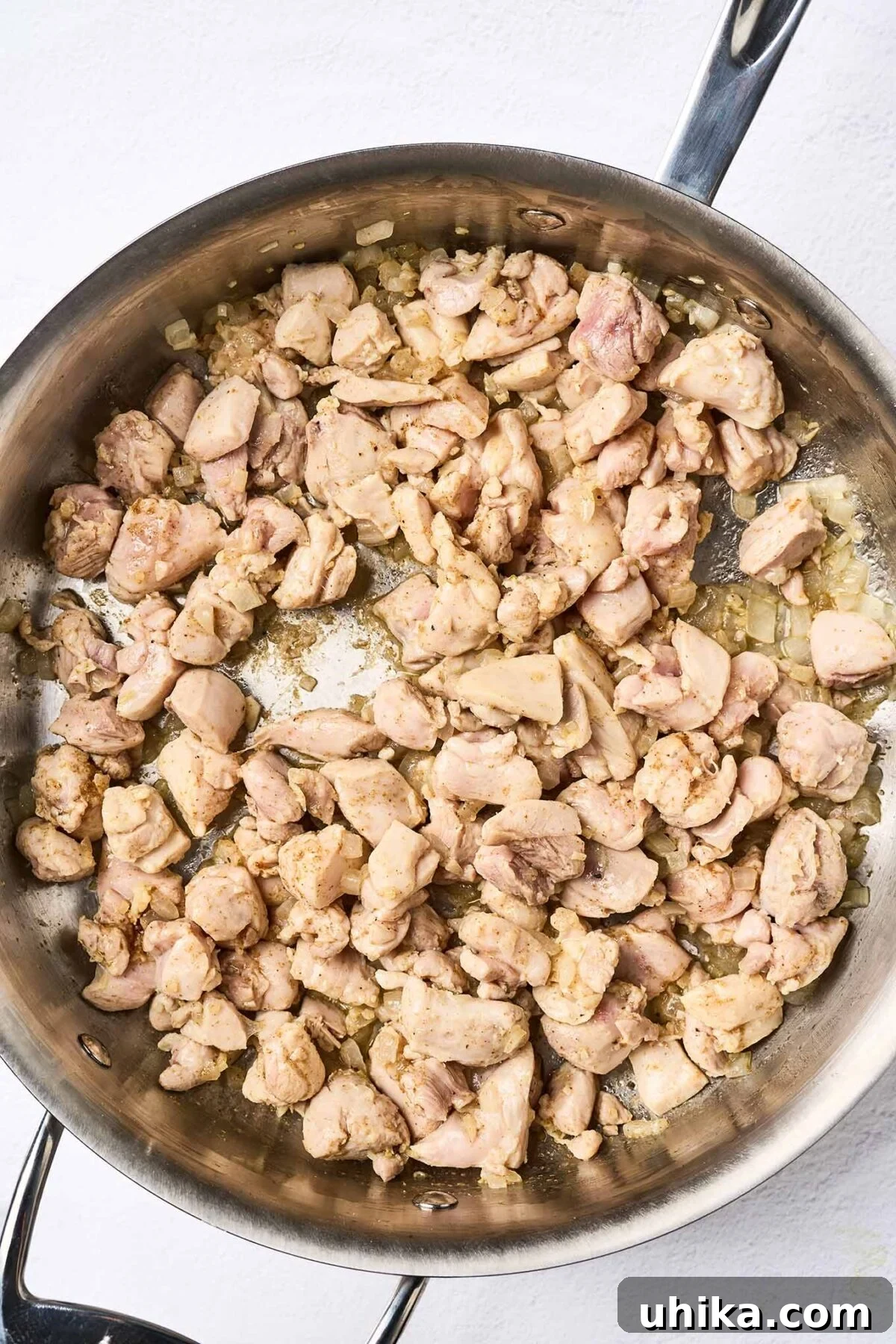
Increase the heat to medium-high. Add the bite-sized chicken pieces to the skillet. Cook, stirring frequently, for approximately 2 to 2-1/2 minutes, or until the chicken is lightly browned on the outside and no longer pink. It does not need to be cooked through at this stage. Now, it’s time to layer in the essential spices: sprinkle in the ground coriander and cayenne pepper. Season generously with salt and a few turns of freshly ground black pepper. Stir everything thoroughly to coat the chicken and aromatics with the spices, allowing them to bloom in the heat for about 30 seconds, intensifying their flavor.
Step 4: Introduce Tomatoes and Sweet Potatoes to the Pot
Reduce the heat back to medium. Carefully pour in the entire can of undrained diced tomatoes, along with the uniformly cubed sweet potato. Stir all the ingredients together thoroughly, ensuring that the chicken, vegetables, and aromatic spices are well combined. The moisture from the tomatoes will not only contribute to the stew’s liquid base but also help prevent any ingredients from sticking to the bottom of the pan, while adding a crucial tangy element.
Step 5: Craft the Velvety Peanut Butter Sauce
In a separate, small bowl, combine the creamy, all-natural peanut butter with the low-sodium chicken broth. Whisk them together vigorously until the mixture is completely smooth, lump-free, and beautifully emulsified. This crucial step is key to ensuring that the peanut butter incorporates seamlessly into the stew without clumping, resulting in a perfectly smooth, rich, and velvety sauce that is the hallmark of Maafe.
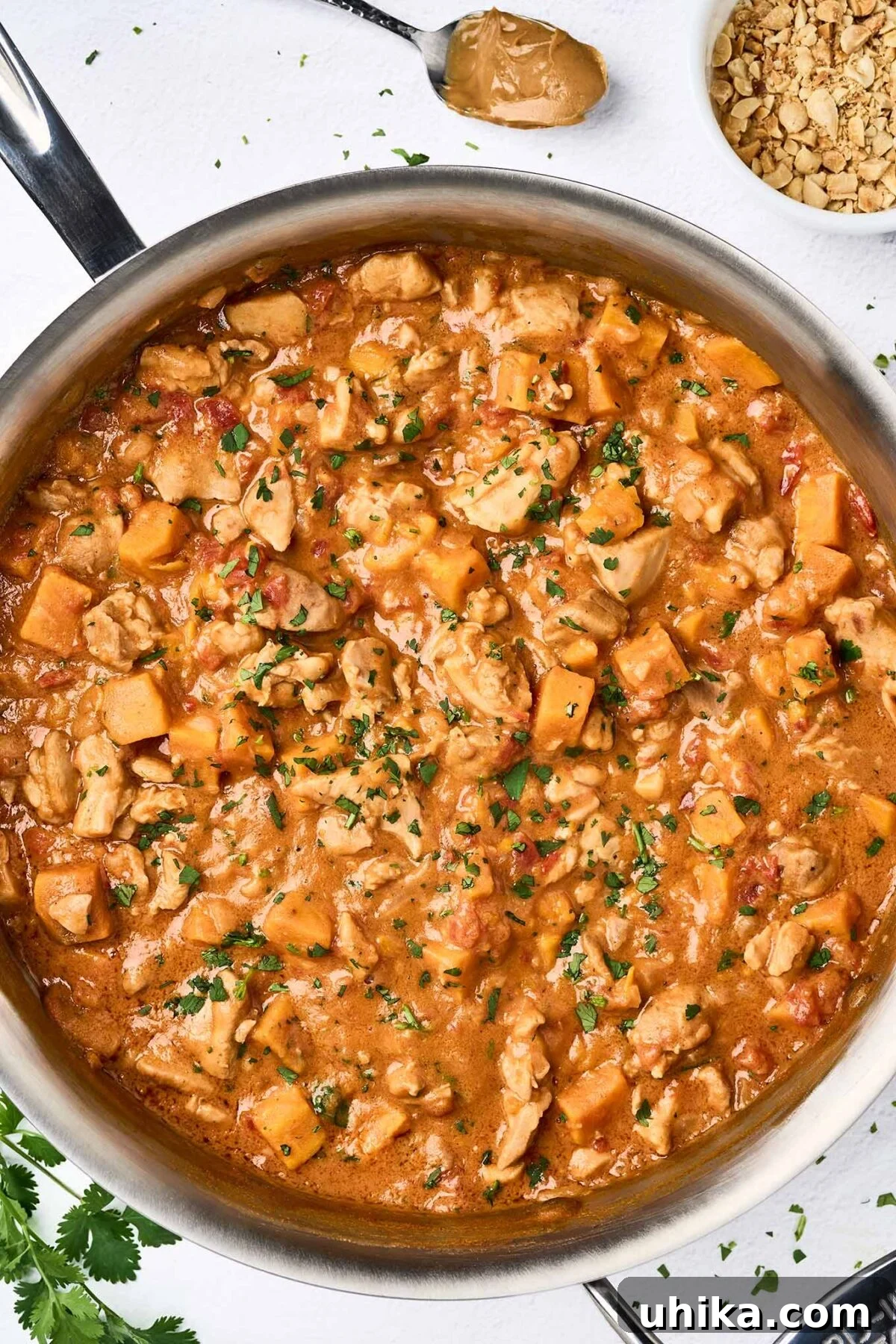
Step 6: Simmer Gently to Achieve Perfect Tenderness and Melded Flavors
Pour the whisked peanut butter and broth mixture into the skillet with the chicken and vegetables. Stir everything gently but thoroughly to combine. Bring the stew to a soft, gentle simmer, then reduce the heat to low, cover the skillet with a lid, and allow it to cook. Continue simmering, stirring occasionally to prevent any sticking and to ensure even cooking, for approximately 12 to 15 minutes. The stew is perfectly cooked when the sweet potatoes are fork-tender and the sauce has thickened to a luxurious, rich consistency. During this simmering period, all the distinct flavors will have ample time to meld beautifully, creating a cohesive and deeply satisfying dish.
Step 7: Final Adjustments, Garnish, and Serving Presentation
Before serving, take a moment to taste the stew and adjust the seasonings as needed. You might find it benefits from a touch more salt, a grind of black pepper, or even a tiny splash of lime juice for an added bright finish. Once you are completely satisfied with the flavor profile, remove the pan from the heat and gently stir in the freshly chopped cilantro. This final addition provides a burst of fresh herbaceousness that beautifully cuts through and brightens the stew’s rich character. Ladle the hot stew into individual serving bowls, ideally over a bed of fluffy steamed rice or light couscous. Garnish generously with the roughly chopped unsalted peanuts for a delightful textural crunch and an extra sprinkle of fresh cilantro for both visual appeal and an added fresh note. Serve immediately and savor the authentic, soul-warming taste of West Africa!
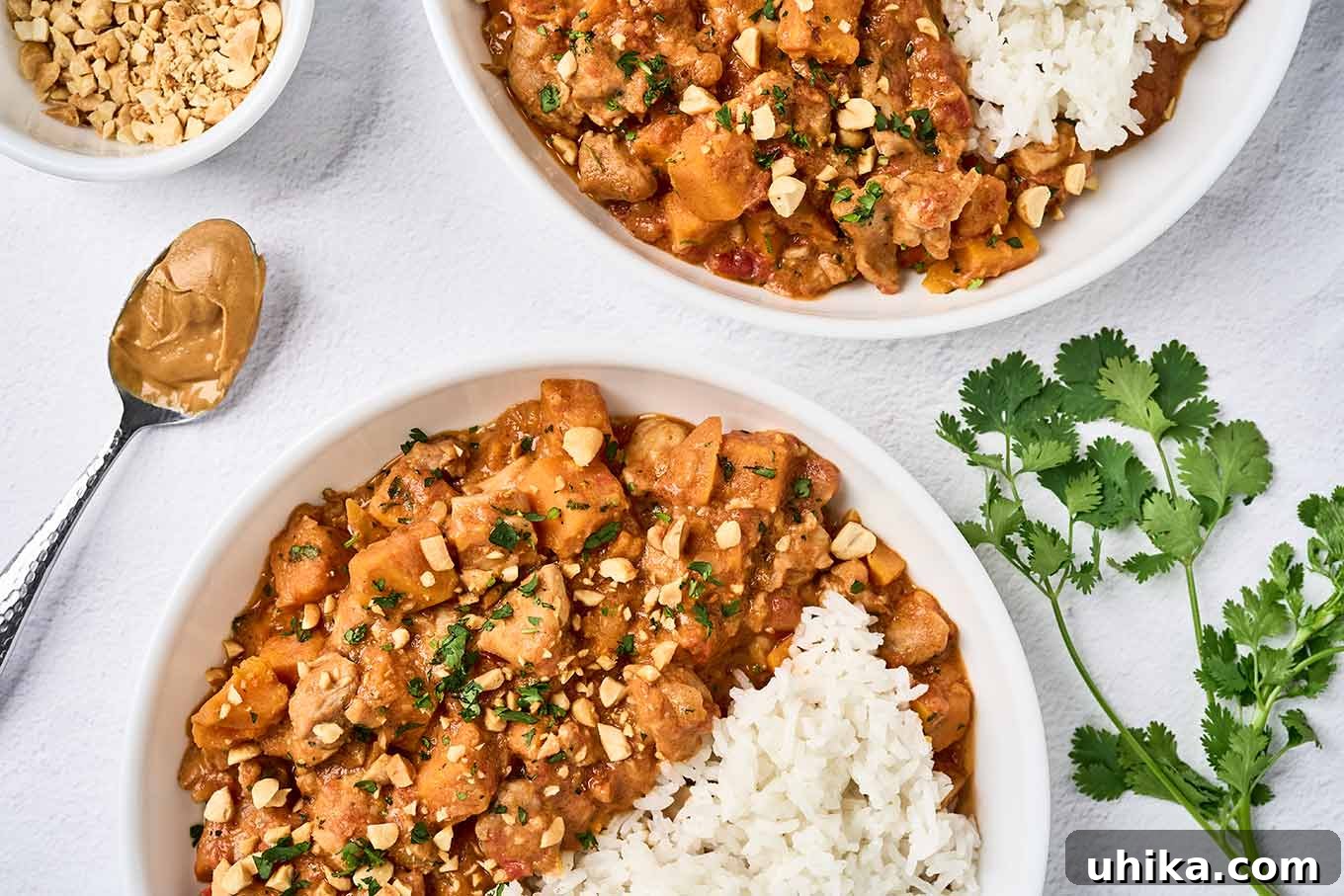
Elevate Your Maafe: Perfect Serving Suggestions
Maafe is a wonderfully versatile dish that pairs harmoniously with a variety of accompaniments, each offering a unique way to enjoy its rich flavors. Traditionally, it is most often served with:
- Fluffy Steamed Rice: Whether white or brown, rice is the quintessential choice, acting as the perfect absorbent base for soaking up every last drop of the rich, creamy peanut sauce.
- Light and Airy Couscous: A delightful and lighter alternative that still provides an excellent foundation for the hearty stew.
- Traditional Fufu: A staple in many West African cuisines, this starchy dough (made from cassava, plantains, or yams) is ideal for scooping up the stew, offering an authentic textural experience.
- Crusty Bread or Warm Flatbread: For those who enjoy mopping up every delectable bit of the flavorful sauce, a good piece of crusty bread or warm flatbread is simply divine.
For an extra flourish, consider garnishing your Maafe with a squeeze of fresh lime juice to brighten the flavors, a sprinkle of red pepper flakes for an additional kick of heat, or even a dollop of plain yogurt or sour cream to provide a cooling contrast. Freshly chopped scallions also make a vibrant and flavorful garnish, adding a mild oniony bite.
Creative Variations and Customizations for Your Maafe
One of the true beauties of Maafe lies in its incredible adaptability, allowing you to easily customize it to suit different dietary preferences and taste profiles:
- Vegetarian/Vegan Maafe: To create a plant-based version, simply omit the chicken and use vegetable broth instead of chicken broth. You can substitute the chicken with robust and hearty ingredients like chickpeas, firm tofu (pressed and cubed), brown or green lentils, or a generous medley of vegetables such as bell peppers, carrots, zucchini, and spinach. Increase the quantity of sweet potato or add butternut squash for extra substance and sweetness.
- Alternative Proteins: While chicken is traditional, this stew shines with other proteins too. Experiment with beef or lamb cut into stewing pieces (note that these will require a longer simmering time to become tender). For a lighter option, firm white fish or shrimp can be added during the last 5-10 minutes of cooking.
- Boost Your Vegetables: Feel free to significantly enhance the vegetable content. Leafy greens like spinach, kale, or collard greens are excellent additions; stir them in during the final 5-10 minutes of simmering. Firmer vegetables such as carrots, celery, or okra can be added alongside the sweet potatoes for thorough cooking.
- Adjusting Spice Levels: The cayenne pepper can be precisely tailored to your heat preference. For a smoky depth, a pinch of smoked paprika can be a wonderful addition. If you crave serious heat, a whole, halved Scotch bonnet or habanero chili can be simmered in the stew (and removed before serving) to infuse a potent, fiery kick.
- Sweetness Enhancement: If you find your sweet potatoes are less sweet than desired, or if you simply prefer a slightly sweeter stew, a teaspoon of brown sugar, a dash of maple syrup, or even a spoonful of apricot jam can be stirred into the sauce to balance the flavors.
- Citrus Brightness: A squeeze of fresh lime or lemon juice stirred in at the very end of cooking can dramatically brighten the entire stew, cutting through the richness of the peanut butter and adding a refreshing zest.
Practical Storage and Reheating Tips
- Refrigeration: African Chicken Peanut Stew is fantastic for meal prepping and tastes even better the next day as the flavors continue to meld. Allow the stew to cool completely to room temperature, then transfer it to an airtight container. It will keep fresh and delicious in the refrigerator for up to 3-4 days.
- Freezing: Maafe is an excellent candidate for freezing, making it perfect for preparing in larger batches. Portion the cooled stew into freezer-safe containers or heavy-duty freezer bags. It can be safely frozen for up to 2-3 months without significant loss of quality. For best results, thaw overnight in the refrigerator before reheating.
- Reheating: To reheat the stew, gently warm it in a saucepan over medium-low heat on the stovetop, stirring occasionally, until it is thoroughly heated through. If the stew appears too thick after refrigeration or freezing, you can add a splash of chicken or vegetable broth, or even a little water, to achieve your desired consistency. Avoid reheating on high heat, as this can cause the sauce to separate or scorch.
Explore Global Dishes Featuring Peanuts
If you’ve been captivated by the bold, nutty depth of West African peanut stew, then you’re undoubtedly ready for more peanut-infused culinary adventures! Peanuts are a globally celebrated ingredient, revered in countless cuisines for their remarkable versatility and rich flavor. Discover even more innovative ways to enjoy this incredible legume with these globally inspired recipes that showcase the peanut in all its glory:
- Our Thai Peanut Curry Chicken presents a delightful fusion of creamy coconut milk, fragrant curry spices, and luscious peanut butter, creating a harmonious and deeply satisfying dish that will transport your taste buds directly to Thailand.
- For a quick, flavorful, and incredibly satisfying meal or appetizer, delve into our Thai Chicken Flatbread. This innovative fusion favorite combines a zesty peanut sauce with tender marinated chicken and crisp, fresh vegetables, all atop a perfectly crunchy flatbread base.
- Alternatively, keep things light and refreshingly vibrant with our Vietnamese Summer Rolls with Shrimp. These delicate, fresh rolls are traditionally served with a classic, utterly irresistible peanut dipping sauce that provides the perfect complement to the subtle flavors of fresh shrimp and crisp vegetables.
These diverse recipes underscore the incredible range and adaptability of peanuts in various culinary traditions, proving their status as a pantry essential capable of transforming everyday ingredients into truly extraordinary dishes.
African Chicken Peanut Stew
By Lynne Webb
This comforting African chicken peanut stew, inspired by the West African classic Maafe, combines tender chicken thighs with sweet potatoes, tomatoes, ginger, garlic, and creamy peanut butter for a rich and satisfying dish. Its balanced flavors and convenient one-pot preparation make it an ideal choice for a wholesome and flavorful meal any night of the week.
Prep Time: 15 mins
Cook Time: 30 mins
Total Time: 45 mins
Servings: 4 servings
Ingredients
- 1 lb boneless, skinless chicken thighs, cut into bite-sized pieces
- 2 tablespoons olive oil
- 1 cup chopped onion
- 1 tablespoon minced fresh ginger
- 2 cloves garlic, minced
- 1-1/2 teaspoons ground coriander
- 1/4 teaspoon cayenne (adjust to taste)
- Salt and freshly ground black pepper, to taste
- 1 can diced tomatoes (15.5 ounces), undrained
- 1 medium sweet potato, peeled and cut into 1-inch cubes
- 1/2 cup creamy peanut butter (all natural, no added sugar)
- 3/4 cup low-sodium chicken broth
- 1/4 cup chopped fresh cilantro, plus more for garnish
- 2 tablespoons unsalted peanuts, roughly chopped, for garnish
Instructions
- Trim any excess fat from the chicken thighs and cut them into uniform bite-sized pieces. Set aside.
- Heat the olive oil in a large, heavy skillet or Dutch oven over medium heat. Add the chopped onion and sauté until it becomes soft and translucent, about 4 to 5 minutes.
- Add the minced fresh ginger to the skillet and sauté for an additional minute until fragrant. Then, stir in the minced garlic and cook for about 30 seconds until aromatic, taking care not to burn it.
- Increase the heat to medium-high. Add the prepared chicken pieces to the skillet and cook, stirring constantly, for 2 to 2-1/2 minutes, or until the chicken is lightly browned on the outside.
- Sprinkle in the ground coriander and cayenne pepper. Season the mixture lightly with salt and a few grinds of fresh black pepper. Stir well to combine all the flavors.
- Reduce the heat back to medium. Stir in the undrained diced tomatoes and the cubed sweet potato. Mix thoroughly to ensure all ingredients are well incorporated.
- In a separate small bowl, whisk together the creamy peanut butter and the low-sodium chicken broth until the mixture is smooth and well blended.
- Pour the peanut butter mixture into the skillet with the chicken and vegetables. Stir gently to combine. Bring the stew to a gentle simmer, then reduce the heat slightly, cover the skillet, and continue to cook.
- Simmer the stew for 12 to 15 minutes, stirring occasionally, until the sweet potatoes are tender when pierced with the tip of a knife and the sauce has thickened to a rich consistency.
- Taste the stew and adjust the seasonings as needed (salt, pepper, or a touch more cayenne). Remove the pan from the heat and stir in the freshly chopped cilantro.
- Transfer the hot stew to serving bowls. Garnish generously with the roughly chopped unsalted peanuts and extra fresh cilantro. Serve immediately with steamed rice or couscous for a complete and satisfying meal.
Notes
Cayenne Pepper: The amount of cayenne pepper can be adjusted to your personal preference. For a milder stew, use less or omit it entirely. For a spicier kick, feel free to add more. Alternatively, you could use a pinch of crushed red pepper flakes, or for a more nuanced heat, simmer a halved and seeded Scotch bonnet, habanero, or serrano chili in the sauce and remove it before serving.
Peanut Butter: Always opt for natural peanut butter with no added sugar or hydrogenated oils for the best flavor and texture in this stew.
Nutrition
Nutrition information is an approximation. Each serving (based on 4 servings) contains:
- Calories: 528
- Total Fat: 32g
- Cholesterol: 108mg
- Sodium: 584mg
- Carbohydrates: 30g
- Fiber: 6g
- Sugar: 10g
- Protein: 34g
This information is automatically calculated and should be used as an approximation only.