
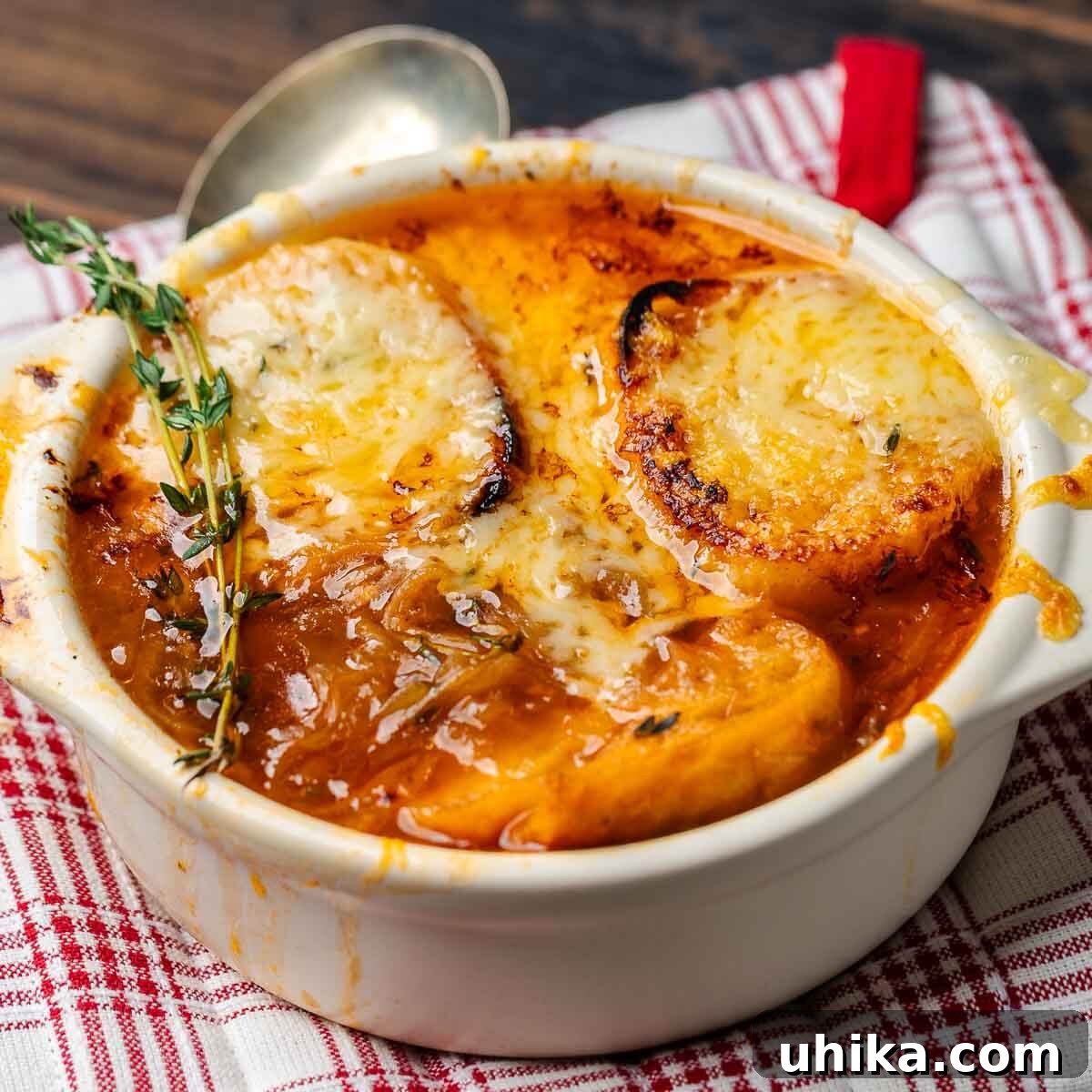
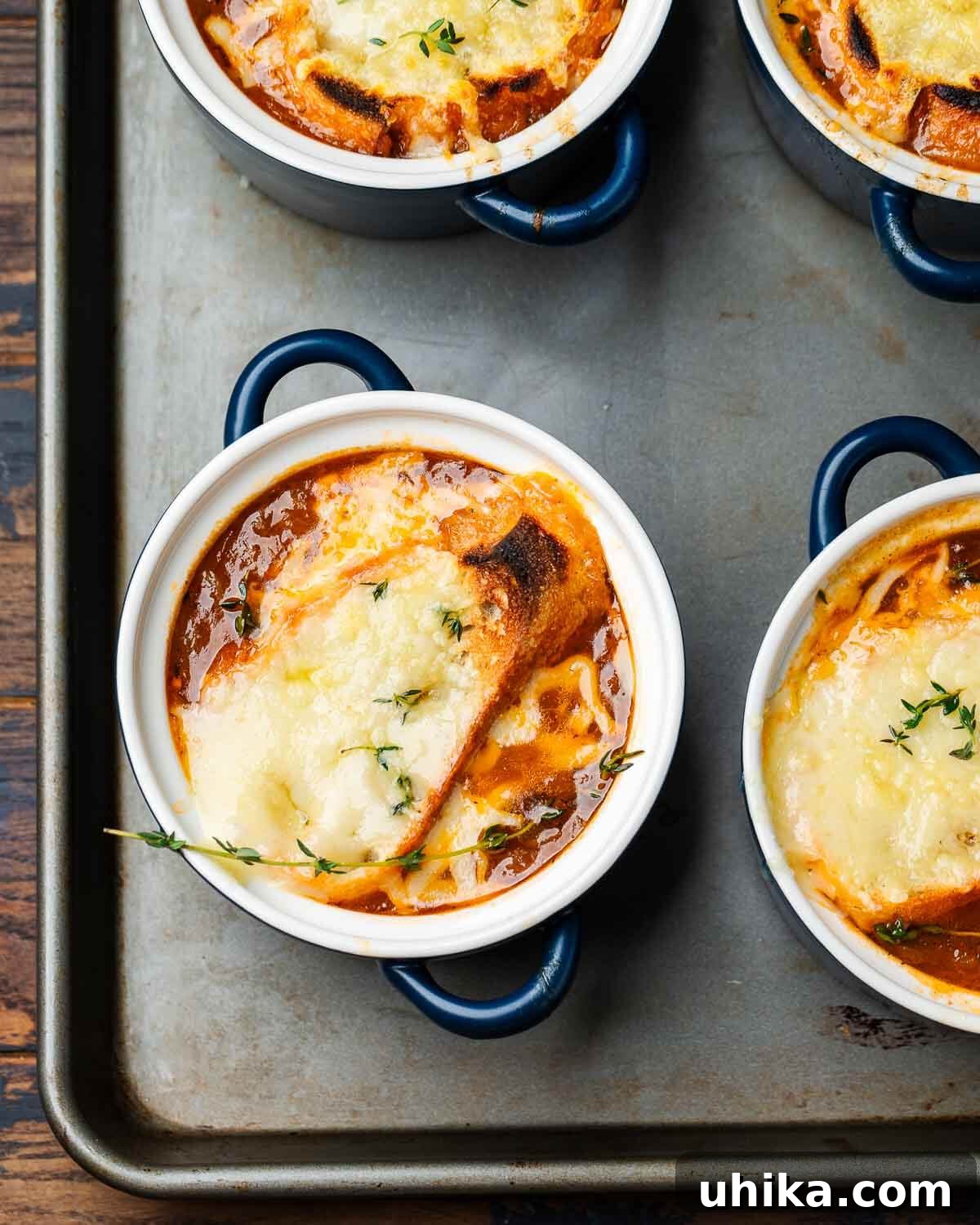
Indulge in the heartwarming embrace of classic French Onion Soup, a culinary masterpiece that marries deeply caramelized onions with a robust, savory beef broth, elegantly infused with vermouth and fragrant thyme. Crowned with crusty baguette slices and a generous layer of melted, bubbly Gruyère cheese, this iconic soup promises complex flavors and a stunning presentation, making it an exquisite choice for sophisticated dinner parties or a comforting meal on a chilly evening.
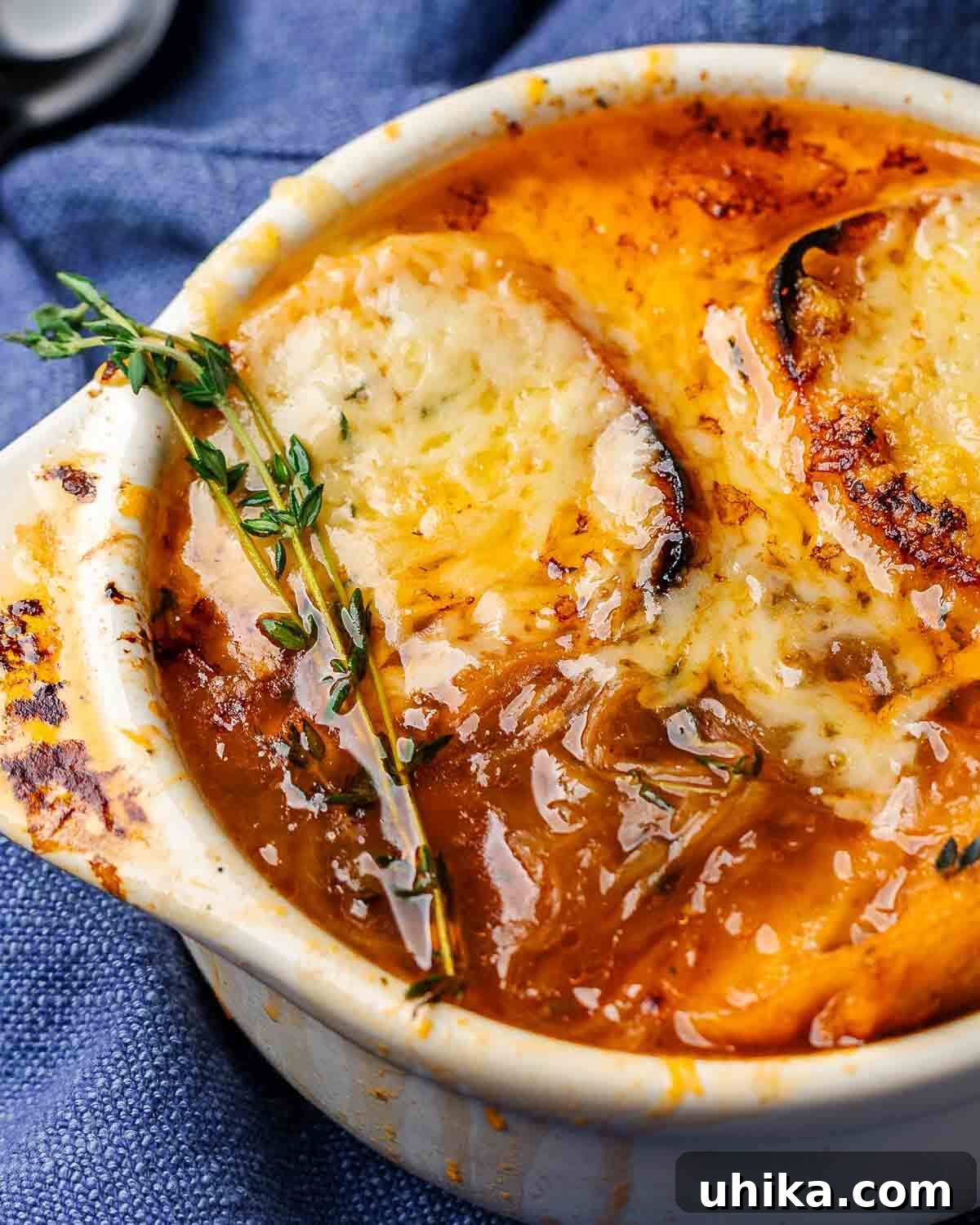
Few dishes evoke the feeling of comfort and elegance quite like a meticulously prepared French Onion Soup. With its humble origins rooted in French peasant cuisine, this soup has ascended to gourmet status, renowned for its incredible depth of flavor. The magic lies in the slow transformation of ordinary onions into sweet, golden treasures, forming the soul of a rich, umami-packed broth that sings with notes of vermouth and savory beef.
While many restaurants feature French Onion Soup on their menus, the homemade version stands unparalleled. Crafting this classic in your own kitchen allows for complete control over the quality of ingredients and the all-important caramelization process, resulting in a soup that far surpasses any store-bought or restaurant offering. The effort is truly rewarding, culminating in a dish that is both impressive and deeply satisfying.
One of the many advantages of making French Onion Soup from scratch is its excellent make-ahead potential. In fact, the flavors of this magnificent soup deepen and meld beautifully when allowed to rest overnight in the refrigerator. This makes it an ideal candidate for entertaining; prepare the base a day or two in advance, then simply ladle into oven-safe crocks, add the baguette and cheese, broil until golden, and garnish with fresh thyme just before serving. It’s a stress-free way to serve a show-stopping appetizer or main course that will surely delight your guests.
Do you adore the delightful harmony of onions and beef? Explore more of our delectable recipes like French Onion Meatballs, the rustic Pasta alla Genovese, and our indulgent Roast Beef Sandwiches with Onion Jam for more onion-infused inspiration.
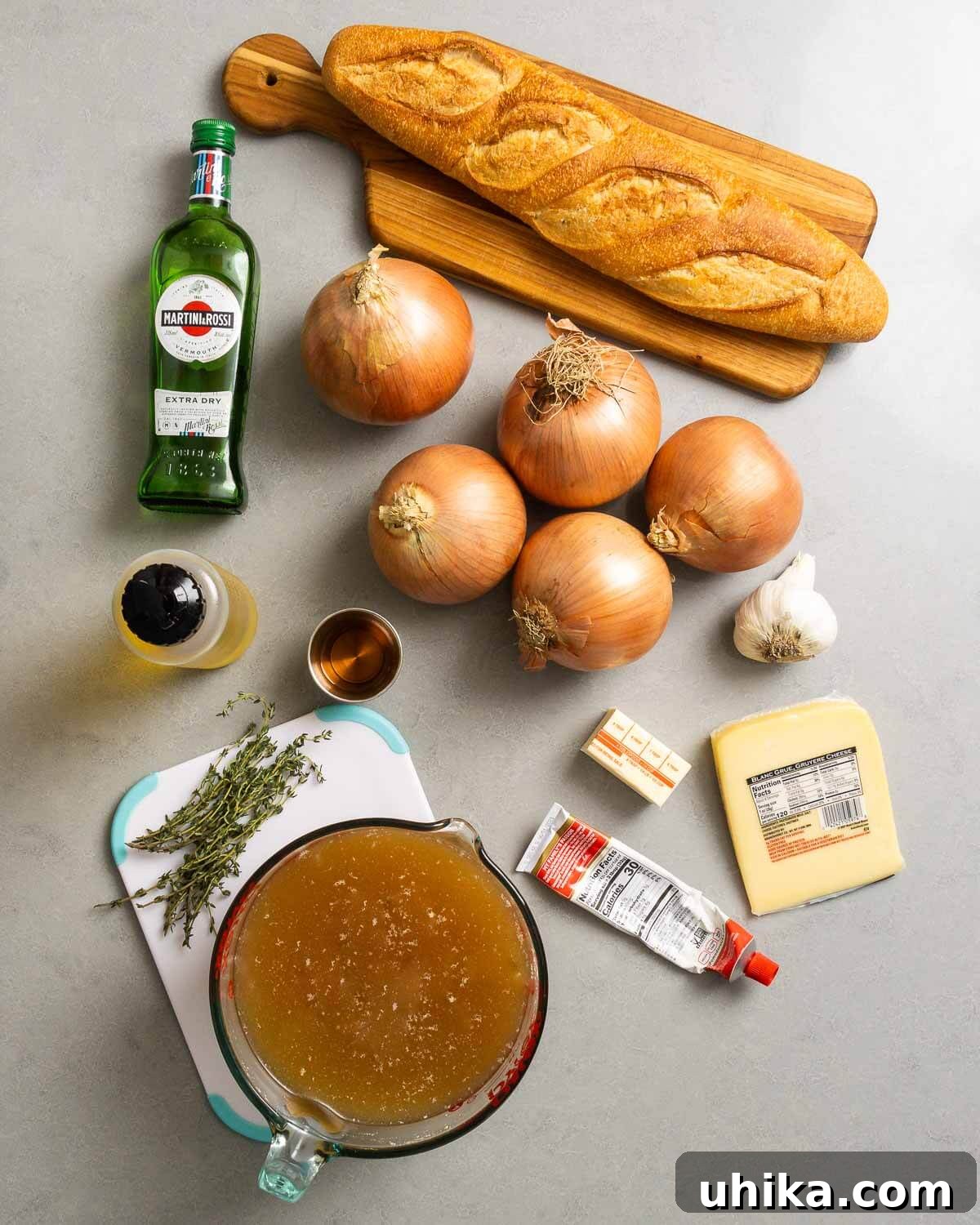
Mastering French Onion Soup: A Step-by-Step Guide
Crafting authentic French Onion Soup is a labor of love that is incredibly rewarding. Follow these detailed steps to achieve a perfectly balanced and richly flavored soup.
The Art of Caramelized Onions: The Foundation of Flavor
The secret to an outstanding French Onion Soup lies almost entirely in the caramelization of the onions. This process, while requiring patience, develops an unparalleled depth of sweetness and savory notes that cannot be rushed. Resist the urge to turn up the heat, as burnt onions will introduce bitterness that can spoil the entire batch. Low and slow is the mantra here, transforming simple onions into golden, luscious gems that form the very soul of this classic soup.
- Begin by preparing your onions. Thinly slice 4 pounds of yellow onions from root to stem. Uniform slicing is key for even cooking and consistent caramelization. Mince 4 cloves of fresh garlic, setting them aside for later as they cook much faster than the onions.
- In a large Dutch oven or a heavy-bottomed pot, heat 2 tablespoons of olive oil over medium heat. Add the thinly sliced onions, 3 ounces of water, and 1 teaspoon of salt. Stir well to ensure all the onions are coated. The initial water helps to steam the onions gently, breaking them down and releasing their moisture before the browning truly begins.
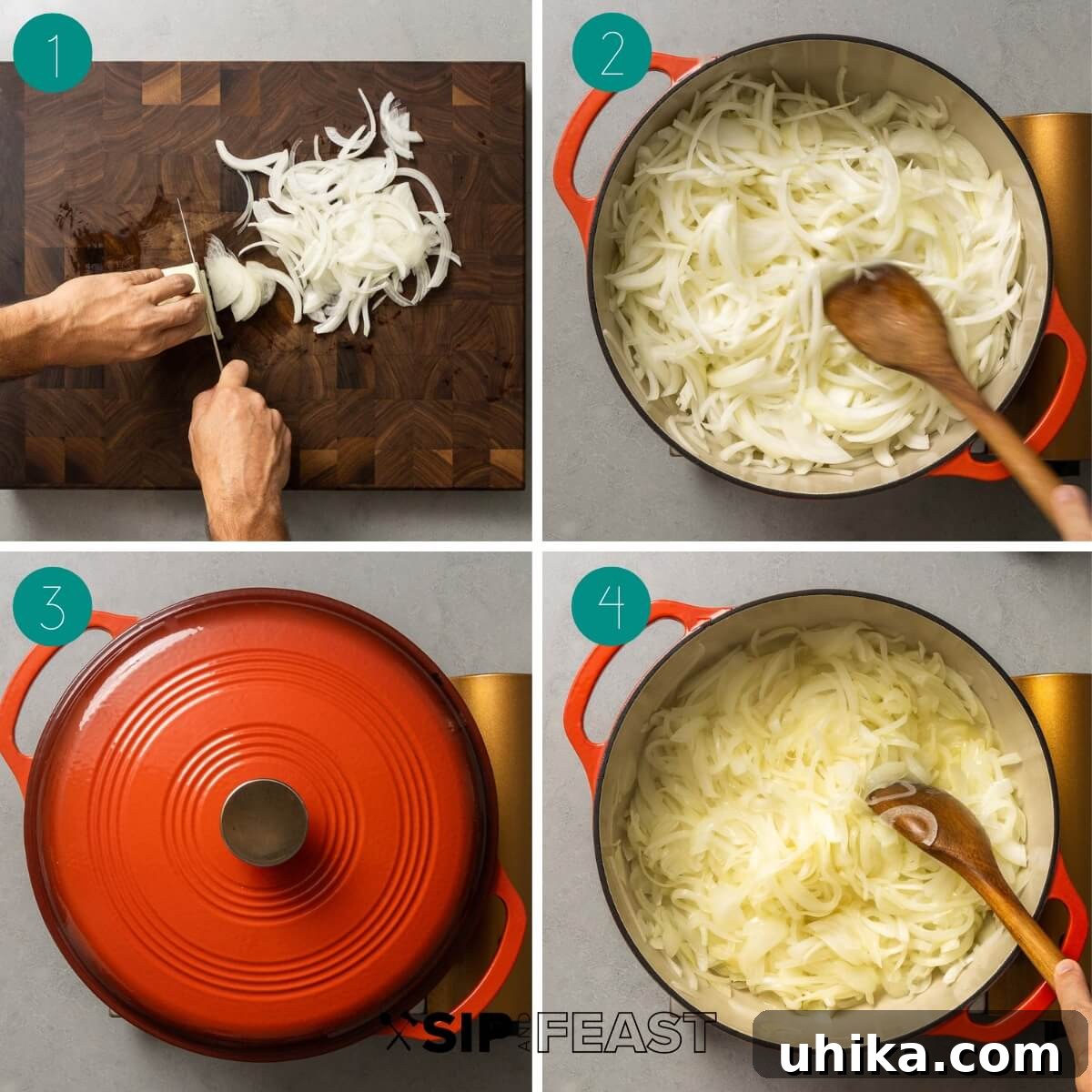
- Cover the pot with a lid and allow the onions to cook for 15 minutes. This steaming period softens the onions significantly and helps them release their natural juices, preparing them for the intense caramelization ahead.
- Remove the lid and add 4 tablespoons of butter to the pot. Continue cooking, stirring frequently to ensure even browning and to prevent any sticking. This is where the magic of caramelization truly begins. You will need to actively manage your burner temperature to prevent burning; if the onions start to brown too quickly or stick excessively to the bottom, don’t hesitate to add a small splash of water (about a tablespoon or two). This will cool the pot slightly and help deglaze any flavorful brown bits (fond) from the bottom, while allowing the caramelization to continue evenly.
- After approximately 30 minutes of uncovered cooking, the onions should have significantly reduced in volume and begin to take on a light golden-brown hue. Continue to cook them over medium heat, stirring and watching carefully. Adjust the heat as necessary and add small touches of water when you notice any dark spots forming too rapidly, ensuring a slow, even caramelization.
- After another 15 minutes, the onions will continue to deepen in color and reduce further. Maintain constant vigilance, adjusting the heat and adding small splashes of water when needed to prevent scorching. This stage is critical; patience and consistent attention are paramount to avoid bitterness from burnt onions and to achieve that deep, sweet caramelization that is the hallmark of French Onion Soup.
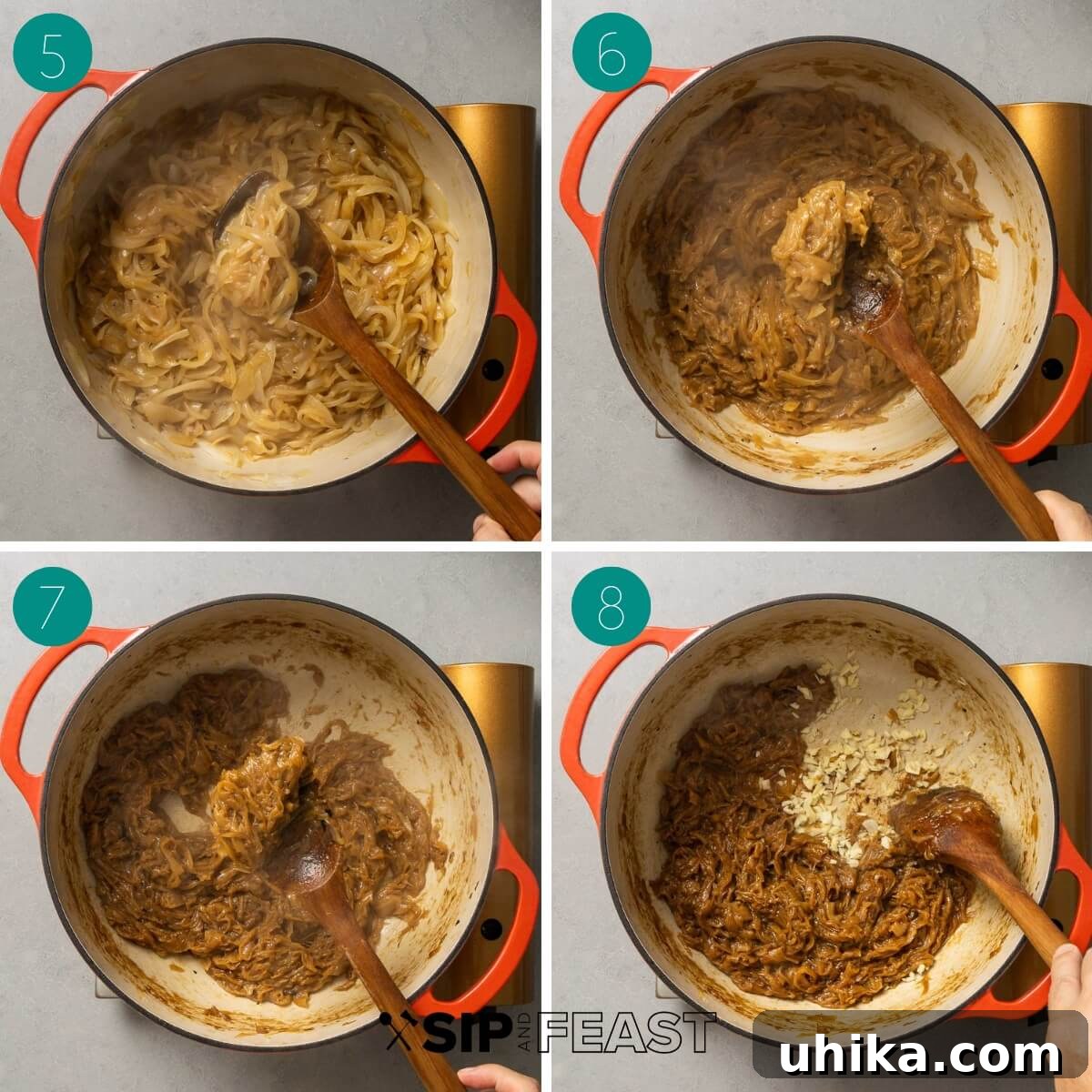
- After about an hour of total cooking time for the onions, they will be significantly reduced in volume and should be a rich, amber brown. Continue to add splashes of water where necessary to deglaze the pot and keep them from sticking or burning, ensuring an even and thorough caramelization.
- The onions are fully caramelized when they achieve a deep, glossy caramel color and are intensely sweet with a slight stickiness. This usually happens between 60 to 90 minutes of total cooking time, depending on your heat and the onions themselves. Once they reach this perfect stage, add the minced garlic and cook for just 1-2 minutes until fragrant. Be careful not to burn the garlic, as it cooks much faster than the onions and can turn bitter quickly.
- Stir in 1 tablespoon of tomato paste and cook for 5 minutes, stirring frequently. The tomato paste adds another layer of umami and helps deepen the soup’s rich color. Again, if you notice any burning or sticking, a small splash of water can quickly rescue it by deglazing the pot.
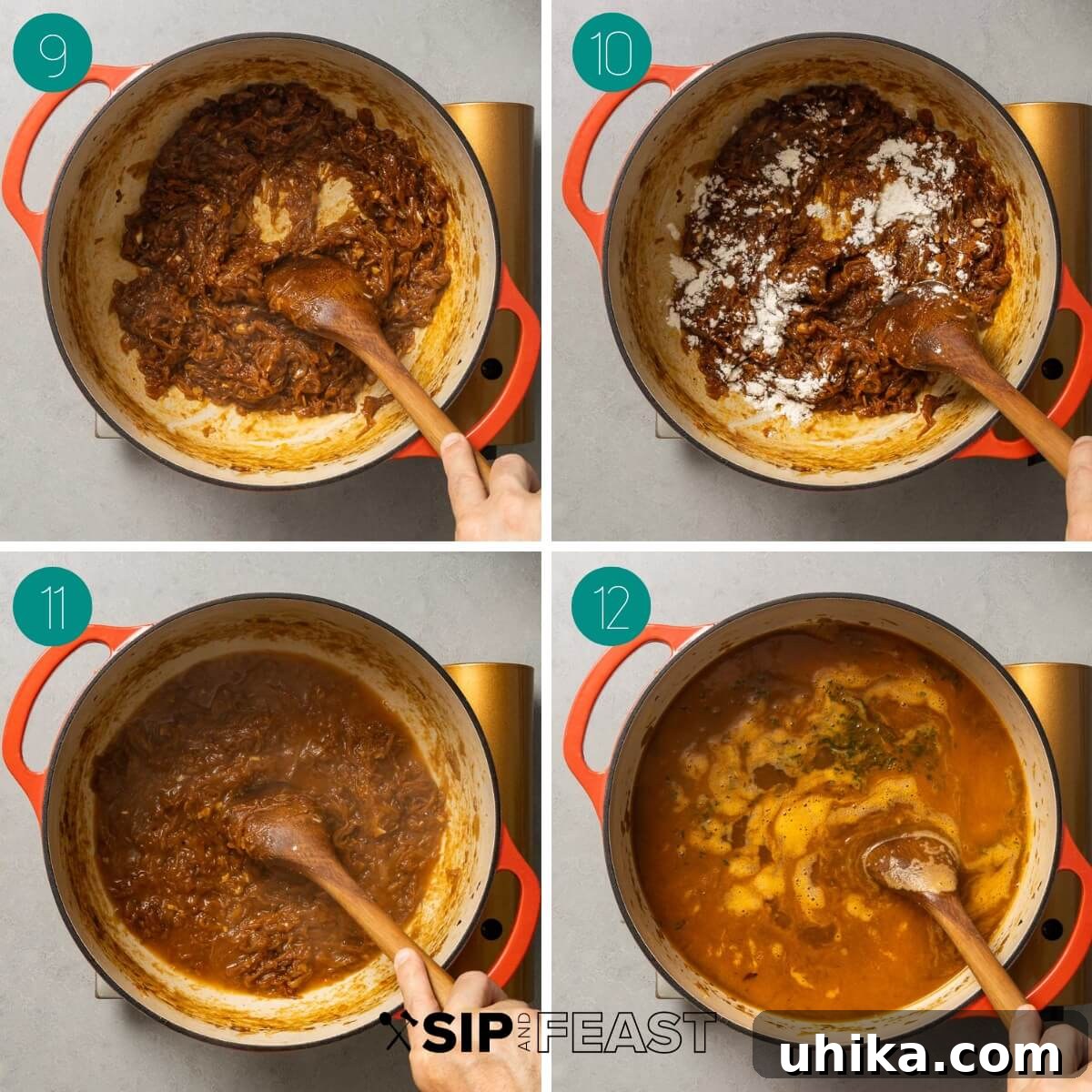
- Sprinkle 1 tablespoon of all-purpose flour evenly over the caramelized onions and tomato paste. Cook for 2 minutes, stirring continuously, until the flour is no longer white and has been fully incorporated into the onion mixture. This flour creates a light roux, which will slightly thicken the soup and help bind all the incredible flavors together.
Building the Broth: A Symphony of Flavors
With your caramelized onions perfectly prepared and forming a rich foundation, it’s time to build the savory, aromatic broth that truly defines French Onion Soup. The choice of liquids and careful simmering here are paramount to achieving that classic, comforting taste.
- Pour in 1/2 cup of dry vermouth or, if you prefer, 1 cup of dry white wine. Increase the heat to medium-high and bring the liquid to a boil, actively scraping the bottom of the pan with a sturdy wooden spoon. This crucial process, known as deglazing, lifts all the highly flavorful brown bits (fond) that have accumulated during caramelization, incorporating them back into the soup for an even richer, more complex taste.
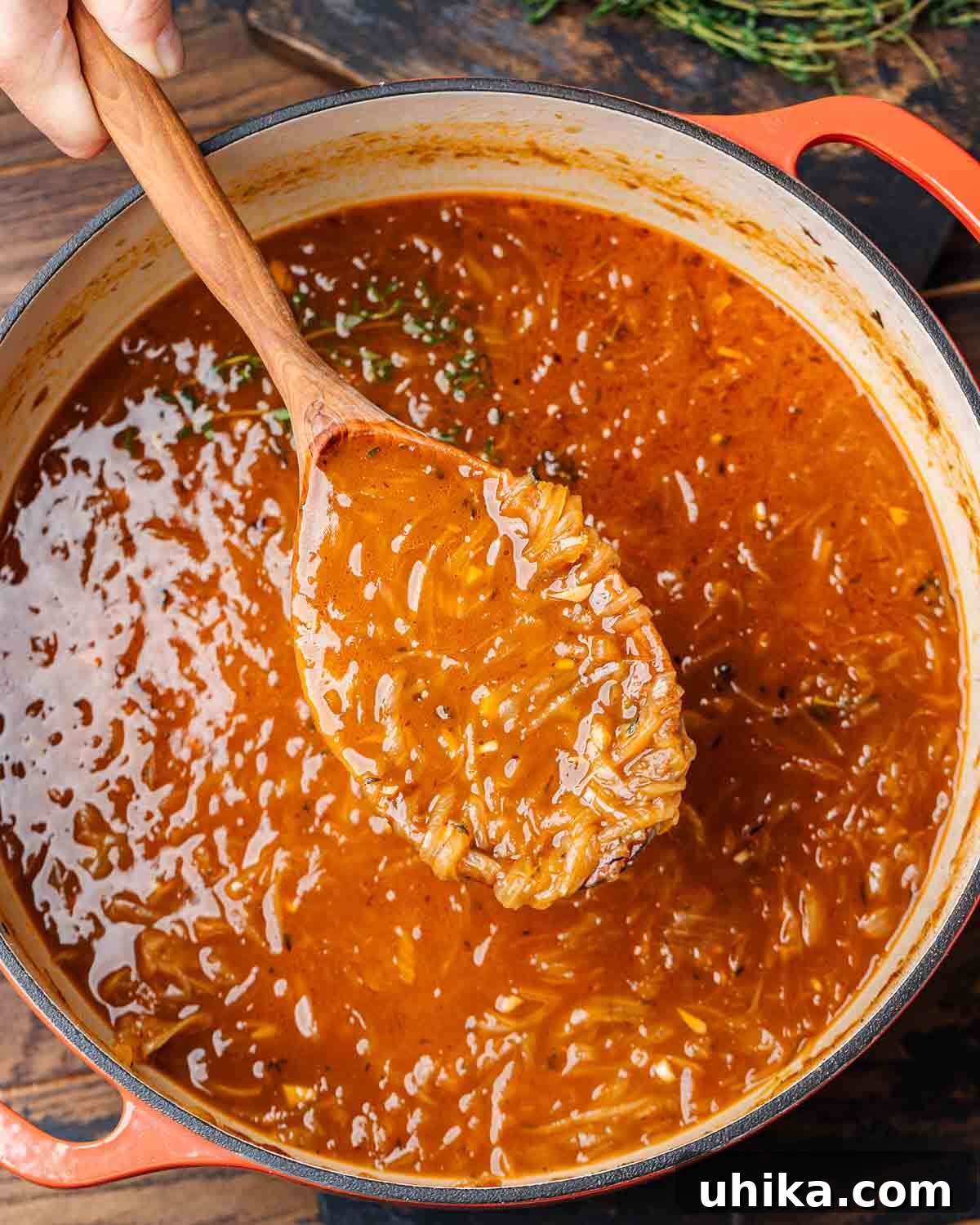
- Once the liquid is boiling, add 8 cups of high-quality, low-sodium beef stock and 1 tablespoon of fresh thyme leaves. Stir everything together thoroughly to combine. Reduce the heat to a low simmer and allow the soup to gently cook for at least 20 minutes. This simmering time is essential as it allows all the magnificent flavors to meld and deepen, creating a harmonious and truly satisfying broth.
- Taste test the soup thoroughly. Adjust seasoning with salt and freshly ground black pepper to your preference. Remember that beef stocks can vary significantly in sodium content, so add salt cautiously. French onion soup typically benefits from a generous amount of freshly ground black pepper to complement its rich flavors. Optional: For an extra layer of complexity, warmth, and a subtle boozy note, stir in 1 tablespoon of brandy or sherry at this stage.
- At this point, your exquisite soup base is complete. It can be ladled directly into oven-safe crocks for immediate finishing or, ideally, stored in the refrigerator overnight. Chilling the soup overnight allows the flavors to intensify and harmonize even further, making it exceptionally delicious the next day. While the soup cools, prepare your toppings: cut 8-12 1/2-inch thick slices from a fresh baguette and shred 1 1/2 cups of Gruyère cheese. Other excellent cheese options that melt beautifully include provolone, Swiss (Emmental), or even a good quality mozzarella for a milder flavor.
The Grand Finale: Broiling to Perfection
The crowning glory of French Onion Soup is its irresistibly golden, bubbling cheese crust atop toasted baguette. This final, magical step adds a delightful textural contrast and an extra layer of savory indulgence that completes the experience.
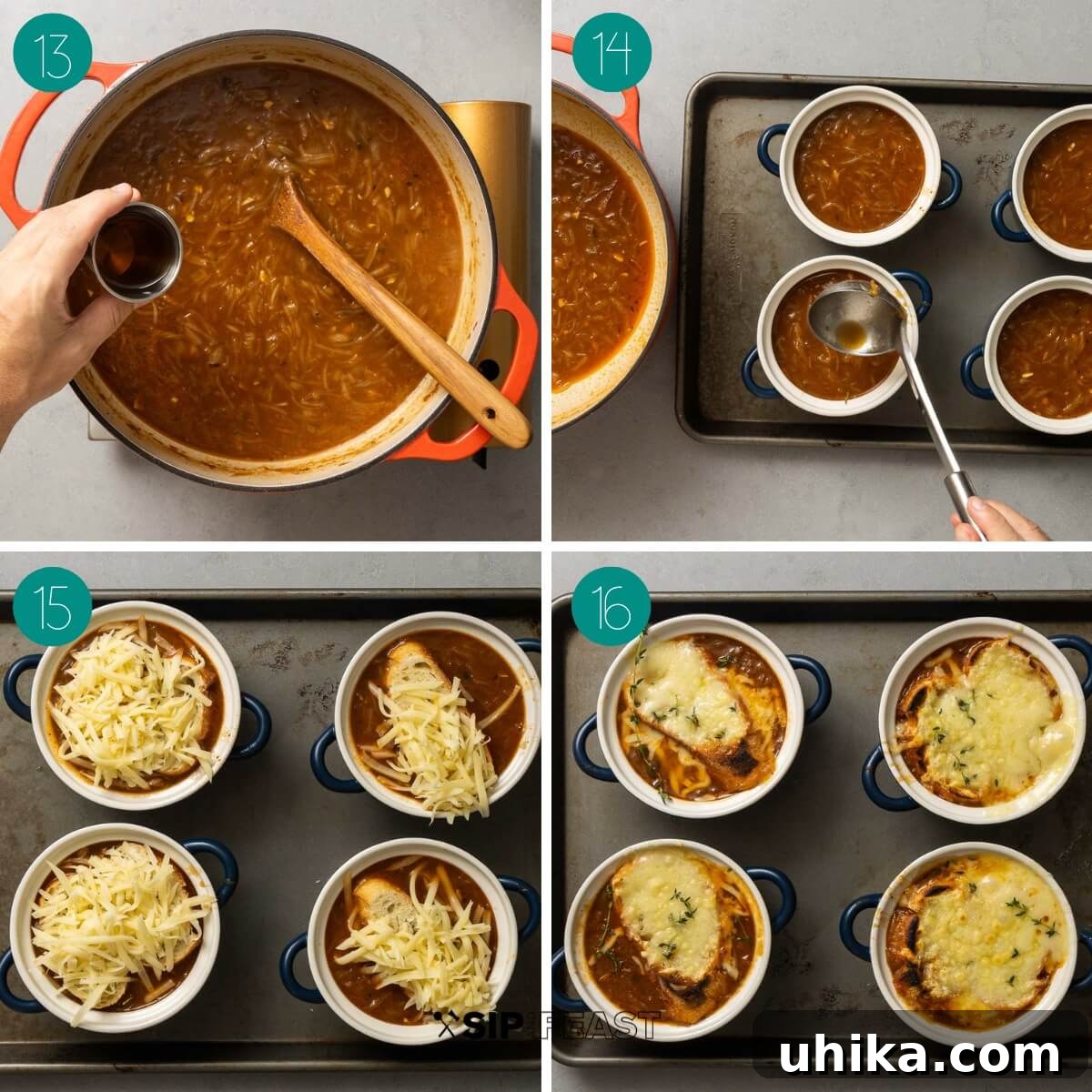
- Before broiling, ensure your oven rack is positioned high enough for the soup crocks to fit comfortably under the broiler element without touching it. This proximity is crucial for achieving that perfect golden crust. When ladling the hot soup into individual oven-safe crocks, remember to leave ample space (about an inch) at the top for the baguette and cheese to melt, bubble, and expand. Place the filled crocks onto a sturdy baking sheet for easy and safe transfer into and out of the hot oven.
- Top each crock generously with two to three slices of baguette, ensuring they mostly cover the soup’s surface, creating a delicious raft. Then, blanket the baguette completely with the shredded or sliced Gruyère cheese. Place the baking sheet with the crocks under the preheated broiler for 2-4 minutes, or until the cheese is beautifully bubbly, melted, and achieves a deep golden-brown crust. Watch constantly and closely, as broilers can vary greatly in intensity, and cheese can burn very quickly. Garnish immediately with fresh thyme leaves for a final touch of aromatic freshness and vibrant color, then serve piping hot. Caution diners about the hot crocks and molten cheese, and prepare to enjoy the magnificent results of your culinary journey!
Expert Tips for the Ultimate French Onion Soup
- Embrace Patience: The Secret to Perfect Caramelization. The cornerstone of an outstanding French Onion Soup is the slow, deliberate caramelization of the onions. This isn’t a process to rush; it typically takes 60-90 minutes, but the resulting depth of sweet, savory flavor is absolutely worth every minute. Unlike a Gumbo roux that demands constant, vigorous stirring, caramelizing onions requires diligent monitoring and frequent, but not continuous, stirring to prevent burning. If the onions start to cook too quickly, stick excessively, or threaten to burn, immediately add a small splash of water (about 1-2 tablespoons). This technique, often called “deglazing” with water throughout the caramelization, helps cool the pot, release any sticking bits of fond, and allows for a more even, profound browning without bitterness.
- The Magic of Making Ahead for Enhanced Flavor. Like most robust stews and hearty soups, French Onion Soup benefits immensely from a resting period. Preparing the soup base (up to the point before adding bread and cheese) a full day in advance allows the flavors to fully meld, deepen, and harmonize, resulting in a far richer and more complex taste. This make-ahead capability makes it an ideal dish for entertaining, as the bulk of the work can be accomplished beforehand, leaving only the quick and impressive broiling step for right before your guests arrive. Simply cool the soup base completely, then store it in an airtight container in the refrigerator for up to 3 days. Reheat gently on the stovetop before proceeding with the final steps.
- Understanding the Role of Alcohol in Flavor Development. Alcohol plays a crucial role in French Onion Soup, contributing significant depth and complexity to the broth. Dry vermouth offers a distinct, aromatic, and slightly herbaceous flavor profile, often being stronger and paradoxically a bit sweeter than many dry white wines. If substituting, use a full cup of dry white wine (suchables as Sauvignon Blanc, Pinot Grigio, or even a dry Chardonnay) for every half cup of dry vermouth to achieve a comparable flavor intensity without overwhelming the soup. For a non-alcoholic version, extra beef stock or even a dash of balsamic vinegar can provide a similar depth, though the flavor profile will naturally differ. The optional tablespoon of brandy or sherry added at the very end provides a final flourish, enhancing the soup’s warmth and adding a layer of subtle richness.
- Presentation and Serving: Elevating the Culinary Experience. While a simple bowl of French Onion Soup is undoubtedly delicious, serving it in traditional, individual, oven-safe crocks with the signature toasted baguette and generously melted cheese topping elevates the experience to gourmet levels. Gruyère cheese is the classic and highly recommended choice, offering a delightful nutty, salty flavor and achieving a perfect, bubbly melt. However, don’t hesitate to experiment with other excellent melting cheeses such as Swiss (Emmental), Provolone, or even a good quality mozzarella for a slightly different character. For a professional and aromatic finish, save a few fresh thyme leaves to sprinkle over the golden, bubbly cheese immediately after it comes out of the broiler. Serve piping hot, always cautioning diners about the extremely hot crocks and molten cheese to ensure a safe and enjoyable experience.
Discover More Comforting Soup Recipes
If you’re seeking further warmth and solace in a bowl, you’ve arrived at the perfect destination. Dive into our curated collection of favorite cozy soup recipes, ideal for any season and guaranteed to bring comfort to your table.
- Hearty Beef Barley Soup
- Velvety Creamy Tomato Soup
- Wholesome Broccoli Cheddar Soup
We genuinely hope you’ve savored this detailed guide to French Onion Soup. If you’ve tried this recipe, or any other recipe from our site, we would be incredibly grateful if you could take a moment to leave a 5-star rating and share your experience in the comments below. Your feedback helps us grow and inspires other home cooks to embark on their culinary adventures!
We are dedicated to providing culinary inspiration through various learning styles to cater to all our enthusiastic cooks. If you prefer visual guidance, you can find most of our recipes demonstrated on our engaging YouTube channel and our vibrant Facebook Page. Don’t forget to follow us for daily deliciousness, tips, and inspiration!
Authentic French Onion Soup Recipe
James Delmage
★
★
★
★
20 minutes
1 hour
50 minutes
2 hours
10 minutes
6

Pin Recipe
Ingredients
For the Caramelized Onions
-
4 pounds yellow onions sliced thinly from root to stem -
2 tablespoons olive oil -
3 ounces water -
1 teaspoon salt -
4 tablespoons butter
For the French Onion Soup
-
1 tablespoon all-purpose flour -
1 tablespoon tomato paste -
1/2 cup dry vermouth or 1 cup dry white wine -
1 tablespoon brandy or sherry (optional, for added depth) -
1 tablespoon fresh thyme leaves -
8 cups low-sodium beef stock (preferably homemade or high-quality) -
4 cloves garlic minced -
8-12 slices baguette 1/2″ thick, or enough to cover soup bowls -
1 1/2 cups Gruyere cheese sliced or shredded (or Swiss, Provolone) -
Salt and freshly ground black pepper to taste
Instructions
Part 1: Caramelizing the Onions
-
Heat a large Dutch oven or heavy pot with the olive oil over medium heat. Add the thinly sliced onions, 3 ounces of water, and 1 teaspoon of salt. Mix thoroughly to coat the onions. Cover the pot with a lid and cook for 15 minutes to allow the onions to soften.
-
Remove the lid and add the 4 tablespoons of butter. Continue to cook, stirring occasionally to prevent sticking. Actively monitor the onions and adjust the heat to avoid burning. If the onions start to brown too quickly or stick, add a splash of water (about 1-2 tablespoons) to deglaze the pot and regulate the temperature. Continue this process of stirring, adjusting heat, and adding water as needed, until the onions achieve a deep caramel-brown color. This full caramelization will take approximately 60-90 minutes from this point.
Part 2: Building the Soup Base
-
Once the onions are deeply caramelized and fragrant, add the minced garlic and cook for 1-2 minutes until aromatic, being careful not to burn it. Stir in 1 tablespoon of tomato paste and cook, stirring frequently, for another 5 minutes. If the paste starts to burn, add a small splash of water.
-
Sprinkle 1 tablespoon of all-purpose flour into the pot. Cook for 2 minutes, stirring constantly, until the flour is fully incorporated and no longer appears white. This forms a light roux to thicken the soup.
-
Pour in 1/2 cup of dry vermouth (or 1 cup dry white wine). Bring to a boil, using a wooden spoon to vigorously scrape the bottom of the pan to release any browned bits (fond). This deglazing step is crucial for flavor.
-
Once boiling, add 8 cups of low-sodium beef stock and 1 tablespoon of fresh thyme leaves. Stir well, then reduce the heat and let the soup gently simmer for at least 20 minutes to allow the flavors to deepen and meld.
-
Taste the soup and adjust the seasoning with salt and freshly ground black pepper as needed. Optionally, stir in 1 tablespoon of brandy or sherry for an enhanced aroma and depth. At this point, the soup base is complete and can be served immediately or, for optimal flavor, stored overnight in the refrigerator.
Part 3: Final Assembly and Broiling
-
When ready to serve, preheat your broiler to high. Adjust an oven rack to a position where your soup bowls can fit beneath the broiler element with ample clearance.
-
Ladle the hot soup into individual oven-safe crocks, ensuring you leave sufficient room at the top for the baguette and cheese. Place the filled crocks onto a sturdy baking sheet. Top each bowl with 2 slices of baguette (or enough to cover the surface) and then evenly sprinkle with the shredded Gruyère cheese.
-
Carefully place the baking sheet under the preheated broiler for 2-3 minutes, or until the cheese is wonderfully bubbly, melted, and forms a golden-brown crust. Watch constantly to prevent burning. Garnish with fresh thyme leaves immediately after removing from the oven, and serve piping hot. Enjoy your masterpiece!
Notes for Success
- Flavor Enhancer: Prepare Ahead! As with many robust soups and stews, the flavors of French Onion Soup significantly deepen and harmonize after resting. For the absolute best taste, prepare the soup base (up to step 14) 1 day in advance. Let it cool completely, then refrigerate overnight. Reheat gently on the stovetop before proceeding with the broiling step.
- Stock Quality Matters. The quality of your beef stock profoundly impacts the final flavor of the soup. Homemade beef stock is highly recommended for its depth and richness. If using store-bought, opt for a high-quality, low-sodium beef stock or beef base to control the saltiness and ensure a superior flavor profile. Avoid overly salty or artificial-tasting broths.
- Yield. This recipe yields approximately 6 generous servings (crocks) of French Onion Soup.
- Storing Leftovers. Leftover soup base (without bread and cheese) can be stored in an airtight container in the refrigerator for up to 5 days. Reheat gently on the stovetop. It’s best to add fresh bread and cheese and broil just before serving reheated portions.
Nutrition Information (Approximate)
Carbohydrates: 42.5g |
Protein: 18.5g |
Fat: 24.9g |
Saturated Fat: 12.5g |
Cholesterol: 61mg |
Sodium: 735mg |
Potassium: 632mg |
Fiber: 8.3g |
Sugar: 16.9g |
Calcium: 477mg |
Iron: 2mg
Nutrition information is automatically calculated, so should only be used as an approximation. It is provided for informational purposes only.
Enjoyed This Recipe? Leave a Comment Below!
Connect with us on Instagram @sipandfeast or share your creations using #sipandfeast!