
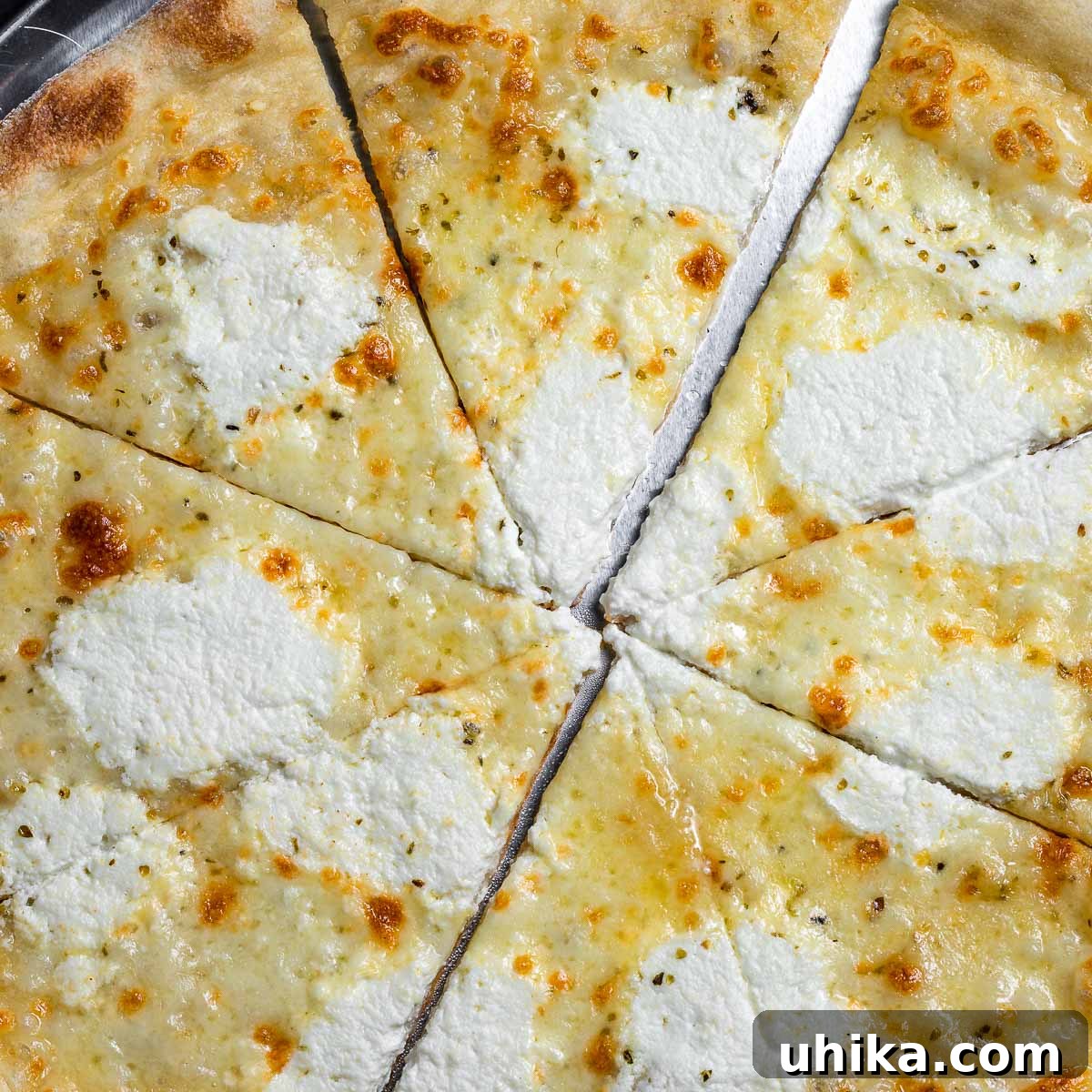
Craving an authentic New York-style white pizza, often known as Pizza Bianca, but think it’s only possible in a professional pizzeria? Think again! With the right ingredients, proper technique, and a touch of patience, you can create a show-stopping NY white pizza right in your own kitchen. The magic lies in the interplay of rich, creamy cheeses and a perfectly hand-stretched, cold-fermented homemade pizza dough. This comprehensive, step-by-step guide will demystify the process, empowering you to confidently bake a white pizza that will impress even the most discerning pizza lovers and rival any establishment!
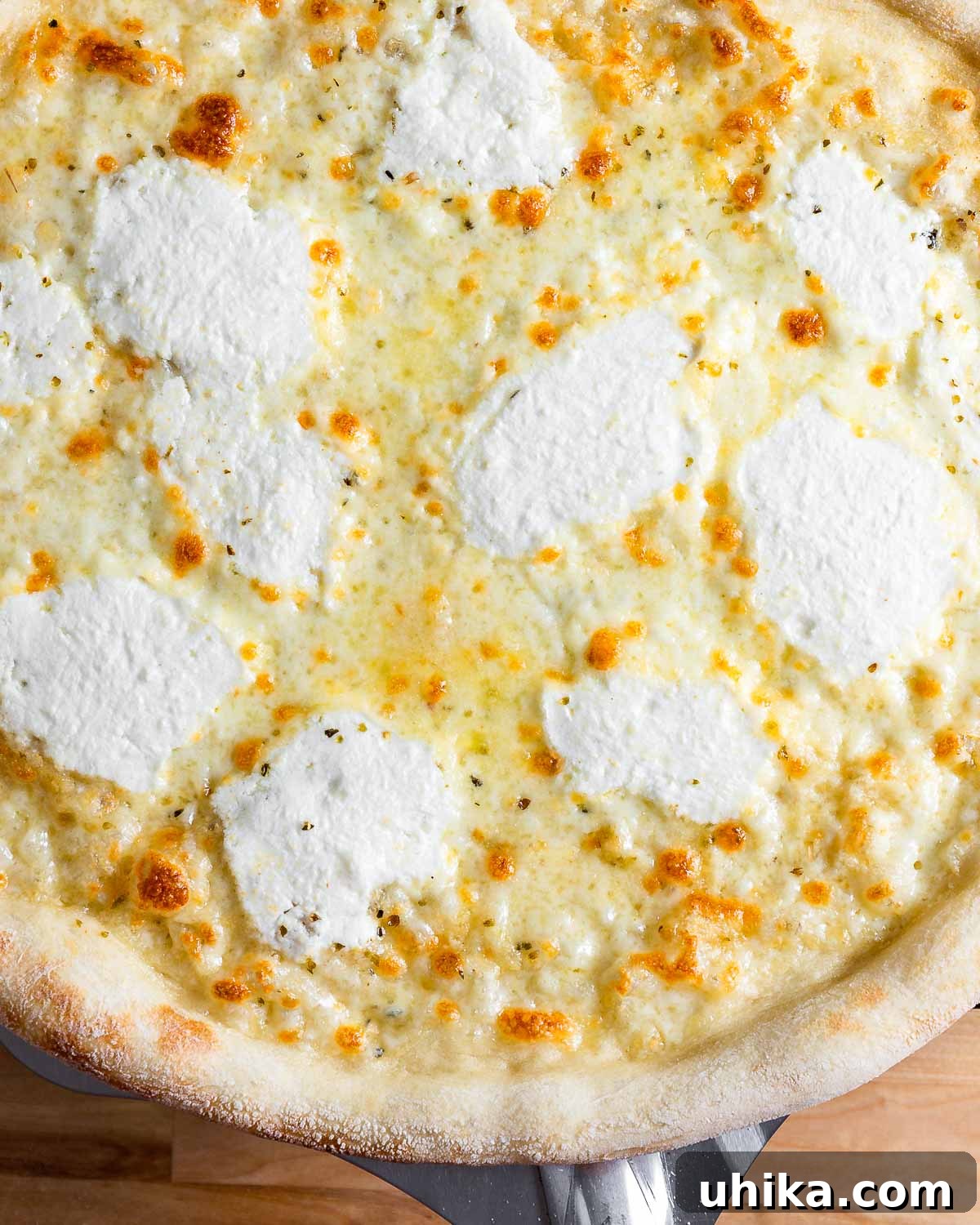
Editor’s Note: This recipe was originally published on May 21, 2018, and has been extensively updated on July 13, 2021, with detailed process shots and expanded information to ensure you achieve the best possible results.
What is Authentic New York White Pizza (Pizza Bianca)?
In the bustling pizzerias of New York, “white pizza” or “pizza bianca” refers to a distinct style of pizza made without the traditional marinara or tomato sauce. Instead, it features a luscious, creamy base of cheeses, primarily ricotta and mozzarella, generously infused with aromatic garlic. This simple yet profound combination allows the exceptional quality of the dough and the rich flavors of the cheeses to truly shine, creating a savory, deeply satisfying culinary experience that is a staple across the five boroughs.
Walk into virtually any pizzeria across the New York metropolitan area, and you’ll find white pizza crafted with a consistent, beloved formula. It’s all about selecting the right components to achieve that signature taste and texture. Ricotta cheese provides a creamy, slightly sweet counterpoint, adding pockets of delightful softness, while mozzarella delivers that signature stretchy, gooey texture and a mild, milky flavor. Many pizzaiolos enhance the flavor profile further by sprinkling Pecorino Romano or Parmesan cheese on top, adding a sharp, salty finish that elevates the overall taste and contributes to a beautiful golden crust.
Garlic is another non-negotiable ingredient, providing a fragrant depth that perfectly complements the richness of the cheeses. While fresh minced garlic can be used, many traditionalists and seasoned pizzaiolos find that garlic powder offers a more even distribution and a subtle, consistent flavor throughout the pie, without the risk of burning or overpowering the other elements. Feel free to experiment with different forms of garlic to discover your personal preference. For instance, incorporating the flavorful garlic oil from our Grandma pizza recipe can introduce a fantastic complexity and extra depth of flavor.
Beyond the classic cheese and garlic combination, New York white pizza is wonderfully adaptable. Many pizzerias offer delicious variations, often incorporating nutrient-rich additions like sautéed spinach with garlic, garlic sautéed broccoli, or even the slightly bitter and robust broccoli rabe. These additions not only introduce new textures and flavors but also offer a delightful way to customize your pizza bianca, making it a perfect meal for any occasion or dietary preference.
The foundation of any great New York pizza, including the white pie, is the dough itself. It requires the same high-quality, cold-fermented dough that forms the backbone of a classic New York slice. This slow fermentation process develops complex flavors and a superior texture that cannot be rushed. We highly recommend consulting our detailed guide on homemade pizza dough and New York pizza recipe. This comprehensive resource will provide you with all the essential knowledge, tips, and tricks for creating the best possible cold-fermented dough, crucial for achieving that authentic chewy texture and crispy, leopard-spotted crust. If you opt for store-bought dough for convenience, try to procure it from your favorite local pizzeria, as their dough is often of higher quality. If it’s sold in a bag rather than pre-balled, we advise shaping it into a ball and refrigerating it as described in our dough recipe to optimize its texture and handling properties, ensuring a better stretch and bake.
What New York White Pizza is NOT: Dispelling Common Misconceptions
It’s important to clarify what a true New York white pizza is not, as there can be confusion, especially with various recipes found online. You might encounter recipes suggesting rich, creamy bases like Alfredo sauce or Béchamel for a “white pizza.” While these sauces are undeniably delicious in their own right and might be found on specialty pizzas at some trendy chains or gourmet restaurants (like Artichoke Pizza, known for its unique and innovative offerings), they are fundamentally different from the traditional white pizza you’d find in the vast majority of classic New York pizzerias.
For lifelong New Yorkers, ordering a “white slice” means expecting the unmistakable, time-honored combination of creamy ricotta, melted mozzarella, and fragrant garlic. This is the definition of pizza bianca in the five boroughs. Any deviation, such as a creamy Alfredo base, would typically be offered as a distinct menu item, explicitly labeled as an “Alfredo slice” or something similar. This distinction is vital for those seeking to replicate the authentic taste of a true New York Pizza Bianca at home. It’s about respecting the simple, high-quality, and time-honored ingredients that define this beloved classic, rather than fusing it with other culinary traditions.
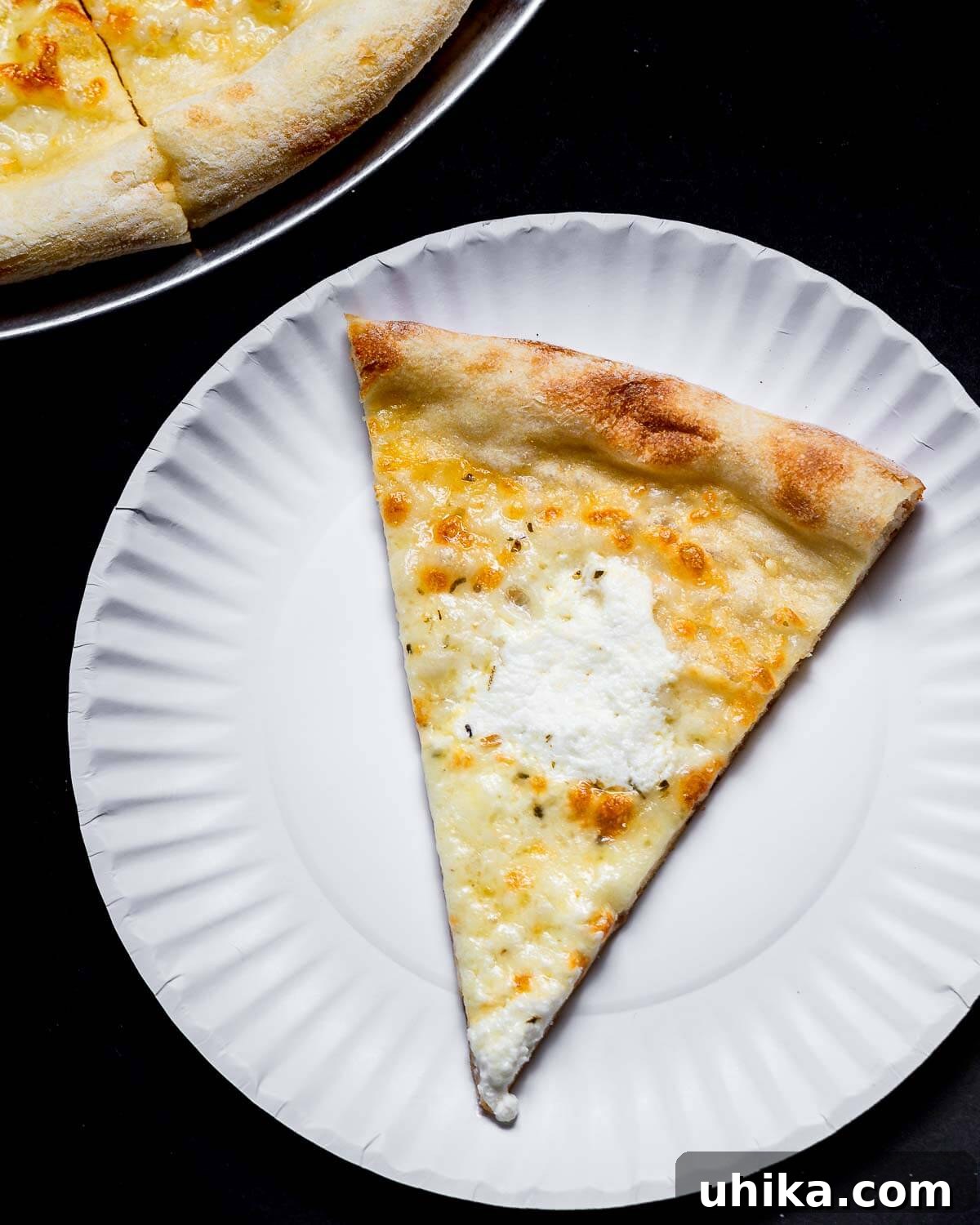
How to Make Authentic New York White Pizza: A Step-by-Step Guide
Achieving pizzeria-quality white pizza at home is entirely possible with the right tools and precise techniques. For optimal results and that coveted crispy, chewy crust, we highly recommend using our homemade pizza dough recipe (linked above) and baking your pizza on a pizza steel. A pizza steel retains heat exceptionally well and transfers it efficiently to the dough, leading to a perfectly crispy crust and a rapid bake. If a steel isn’t available, a high-quality pizza stone is the next best option to achieve a similar effect, though it may require slightly longer baking times.
- Dough Warming & Oven Preheat: The timing for preparing your dough is crucial and depends on the ambient temperature. During warmer months, remove your dough ball from the refrigerator at least 2 hours before you plan to stretch it. In colder periods, allow 3 to 4 hours for the dough to come to a relaxed room temperature. Approximately 45 minutes before stretching the dough, place your pizza steel or stone on the second-highest oven rack. Preheat your oven to its absolute maximum temperature. If your oven can reach 550°F (288°C) or higher, set it there to ensure maximum heat saturation and retention in your baking surface, which is key for a crisp bottom crust.
- Preparing Your Dough for Stretching: Once your oven and steel are adequately preheated and scorching hot (remember to wait the full 45 minutes for optimal heat saturation of the steel), carefully remove your cold-fermented dough ball from its proofing container. Gently drop it into a large bowl generously filled with all-purpose flour. Turn the dough ball over once to lightly coat both sides, preventing it from sticking excessively. Then, transfer it to your clean, floured work surface. We recommend keeping a designated large bowl of flour handy for dough preparation to minimize waste and ensure consistent flouring.
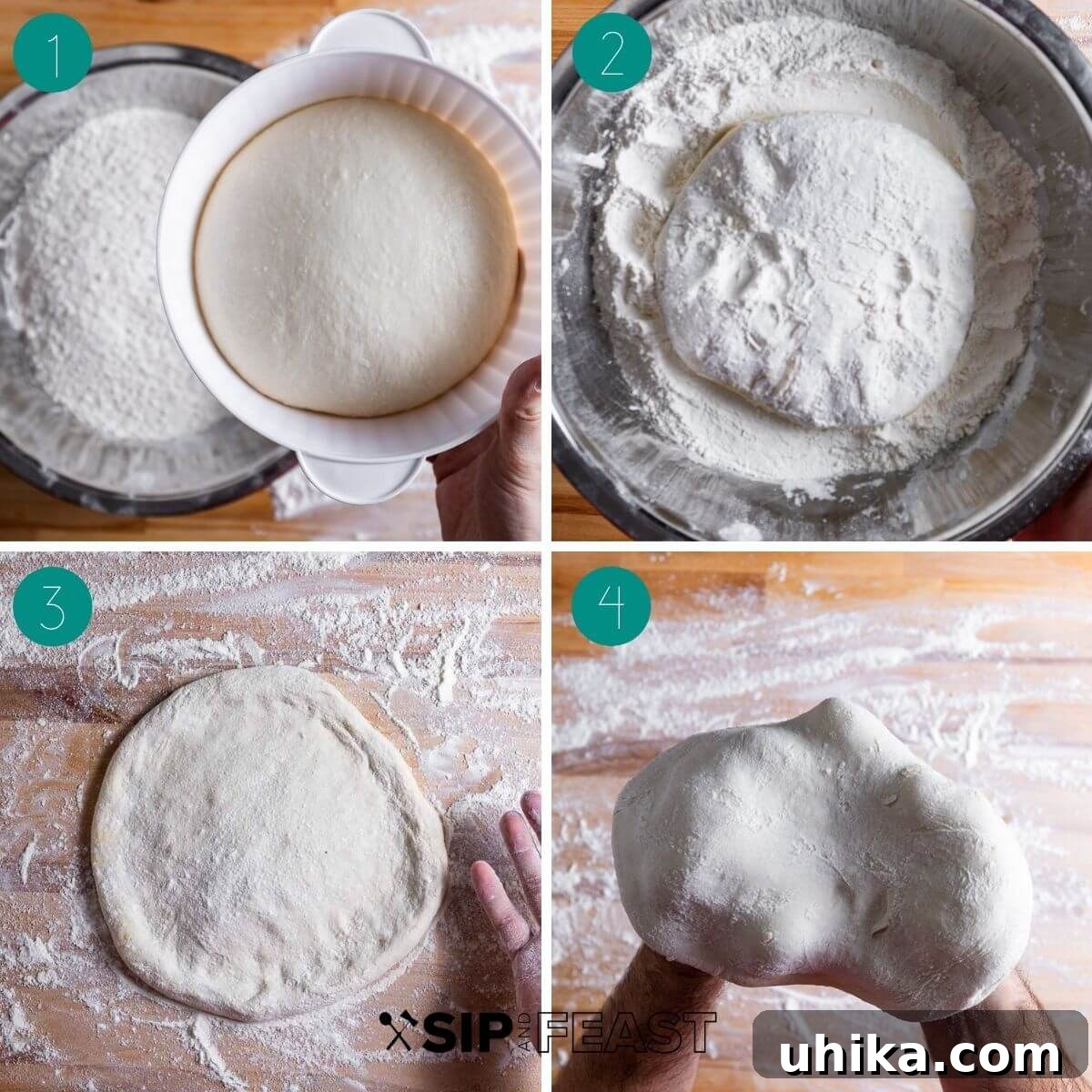
- Forming the Rim (Crust): Ensure your work surface is spacious enough to accommodate a 15-inch pizza comfortably. Place the dough ball down with the sticky side facing upwards – this is typically the side that rested against the bottom of your proofing container. Using your fingertips, gently press down around the perimeter of the dough, about 1/2 to 1 inch from the edge, to form the crust (rim). Be careful not to press too hard or deflate the crucial air bubbles within the rim, as these contribute to its desirable airy, chewy texture. Also, try to leave a slightly thicker portion of dough in the center, which will prevent it from becoming too thin and potentially tearing during the stretching process.
- Initial Stretching & Transfer to Peel: Once you’ve formed an 8-9 inch circle, bring your wooden pizza peel close by and sprinkle it generously with semolina flour. Semolina is highly preferred over all-purpose flour for dusting the peel because its coarser texture acts like tiny ball bearings, significantly helping the pizza slide off smoothly into the oven without sticking. Now, carefully lift the dough, sticky side up, onto your knuckles. Begin stretching the dough by gently pulling your knuckles apart a couple of inches at a time, allowing gravity to assist in expanding the dough. Continue to rotate the dough as you stretch, focusing on expanding the perimeter while trying not to touch the rim itself. If at any point the dough becomes difficult to handle or you need to rest, lay it back down on the wooden peel, sticky side up, to avoid introducing excessive flour to the dough’s surface, which can lead to a dry or tough crust.
- Final Stretch and Shape: When the pizza dough has reached its desired 15-inch diameter, gently place it onto the wooden peel, sticky side up. Don’t worry if the shape isn’t perfectly round; you can gently pull and adjust each side into position on the peel. Remember, pizza making is an art, and practice makes perfect; the more you make pizza, the more confident and skilled you’ll become in handling and stretching the dough with ease.
- Moisture & Oil Application: With a pastry brush (which typically works better than a silicone brush for this specific task due to its bristles), lightly paint a thin, even layer of water over the entire surface of the pizza dough, extending close to the rim. Since white pizza lacks a tomato sauce base, this step is crucial for introducing much-needed moisture and preventing the crust from drying out excessively during the high-heat baking process. Follow this by drizzling approximately 1 tablespoon of high-quality extra virgin olive oil evenly over the dough. This not only enhances flavor but also promotes a beautiful golden crust and a slightly crispy texture.
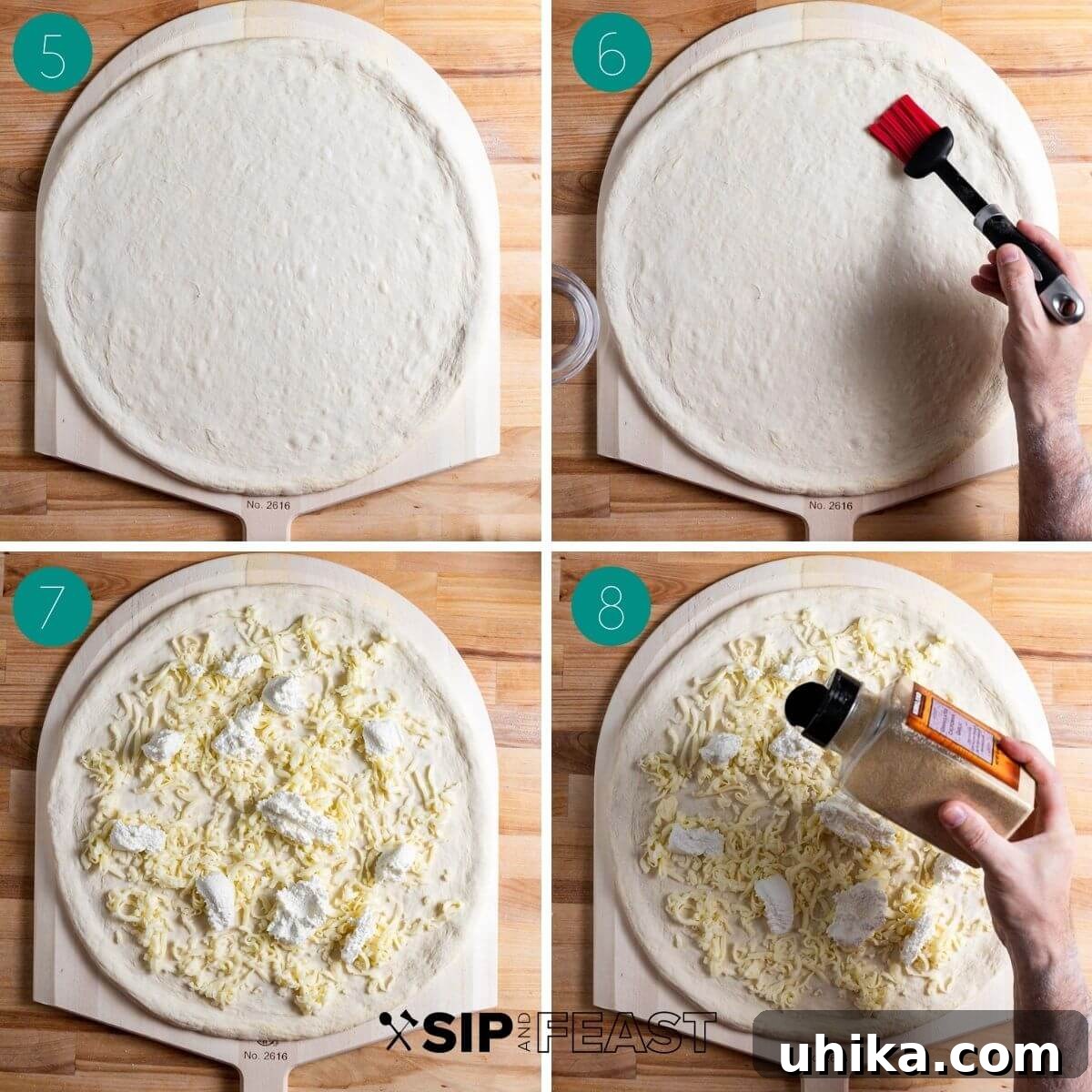
- Applying the Cheese: Before adding any toppings, give the pizza peel a gentle shake to ensure the dough moves freely. If it sticks at all, carefully lift the problematic edge and sprinkle more semolina flour underneath until it slides easily. This step is critical for a smooth and successful launch into the oven. Now, evenly distribute 8 ounces of shredded whole milk mozzarella over the dough, ensuring good coverage. Follow this with generous dollops of 1 1/2 cups of ricotta cheese, artfully placed across the pizza. These quantities are generally suitable for a 15-inch pie, but feel free to adjust based on your preferred cheese-to-crust ratio and the actual size of your stretched dough.
- Seasoning: Sprinkle 1/2 teaspoon of garlic powder, 1/2 teaspoon of kosher salt, and 2 tablespoons of finely grated Pecorino Romano cheese evenly over the layers of mozzarella and ricotta. Adjust the garlic powder amount to your taste – more for an intense garlic flavor, less for a subtle hint. The Pecorino Romano adds a fantastic salty and tangy complexity that is characteristic of authentic white pizza.
- Final Peel Check: Give the pizza peel one final, confident shake to confirm the pizza slides effortlessly. If any spots are still sticking, promptly lift and add a bit more semolina flour beneath them. A perfectly prepared peel and freely moving dough are paramount for a smooth, swift, and successful launch into the oven.
- Confirming Steel Temperature: Use a digital infrared thermometer to check the exact surface temperature of your pizza steel. Aim for a temperature around 600-650°F (315-343°C). Even if your home oven maxes out at 525°F (274°C), your steel should still reach an impressive 575-585°F (302-307°C), providing more than enough heat for a superb, crispy crust.
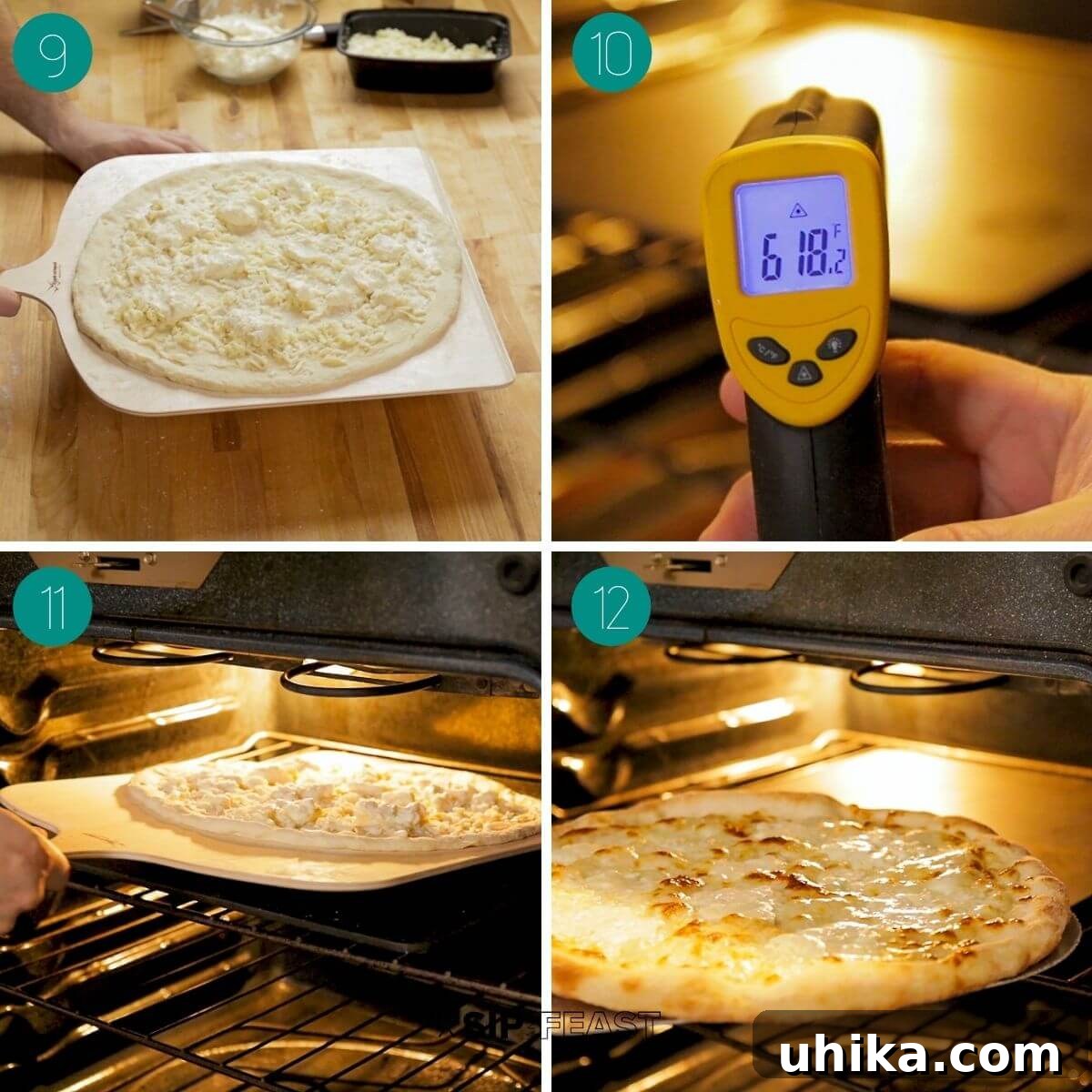
- Launching the Pizza: Open your oven door swiftly. Position the wooden peel at the very back of the hot steel, tilting it slightly downwards. In one swift, smooth, and confident motion, gently slide the pizza off the peel and directly onto the scorching hot steel. The goal is to land it cleanly and evenly. If the pizza’s shape happens to distort slightly during the launch, resist the urge to correct it; simply close the oven door. A slightly imperfect shape will absolutely not diminish the incredible flavor of your homemade pizza!
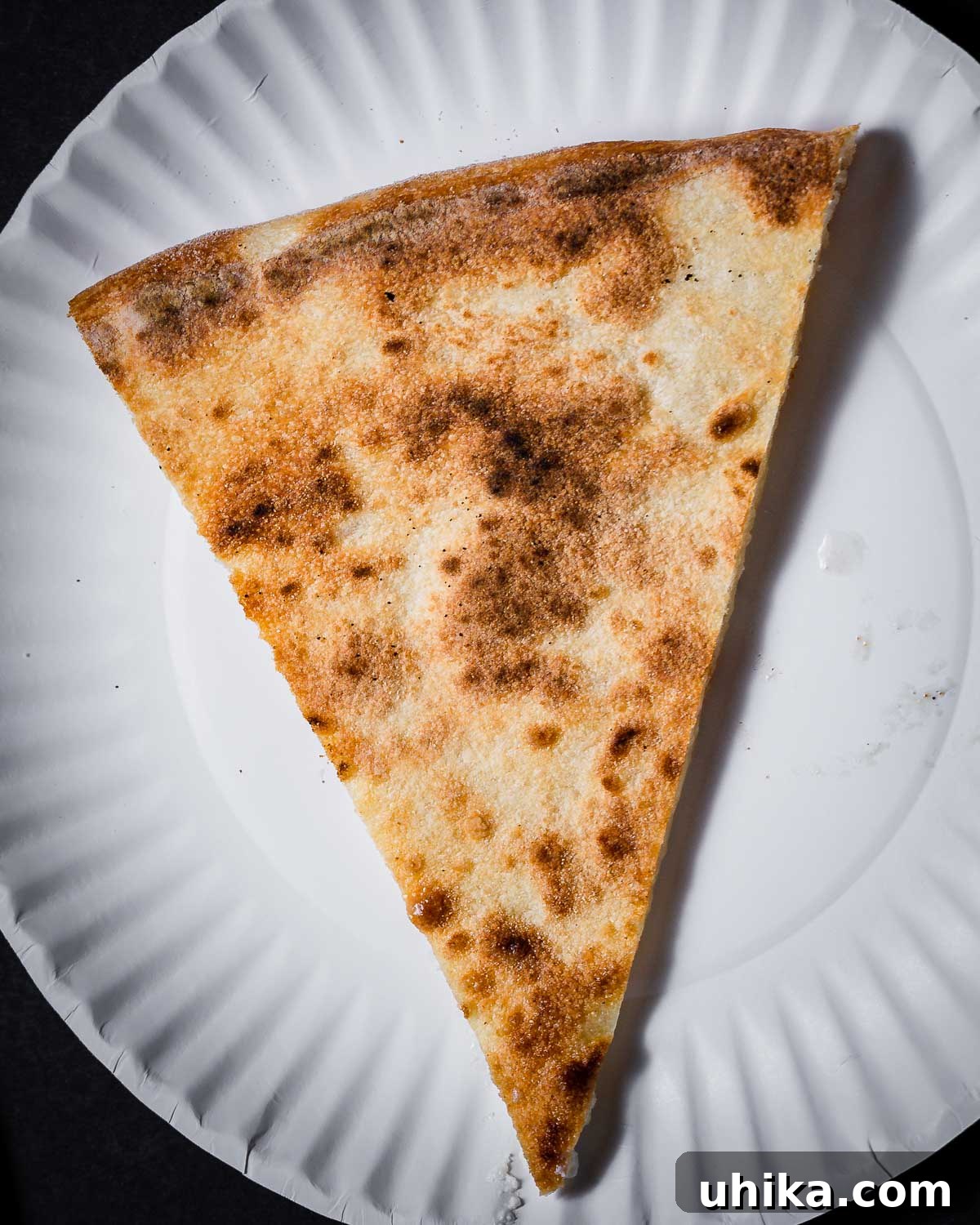
- Baking & Rotating: After precisely 3 minutes of baking, open the oven door and use a metal pizza peel to carefully rotate the pizza 180 degrees. This ensures even cooking and browning across the entire pie. Close the door and allow it to bake for another 3 minutes. Your pizza should now be beautifully golden, bubbly, and the crust should have developed those desirable leopard spots on the bottom. If your steel was closer to the 580°F mark, it might take an additional minute, totaling around 7 minutes. Traditionally, New York white pizza isn’t broiled on top, but if you desire a little extra color or char on your cheese, a quick 15-second blast under the broiler should do the trick – just watch it extremely closely to prevent burning!
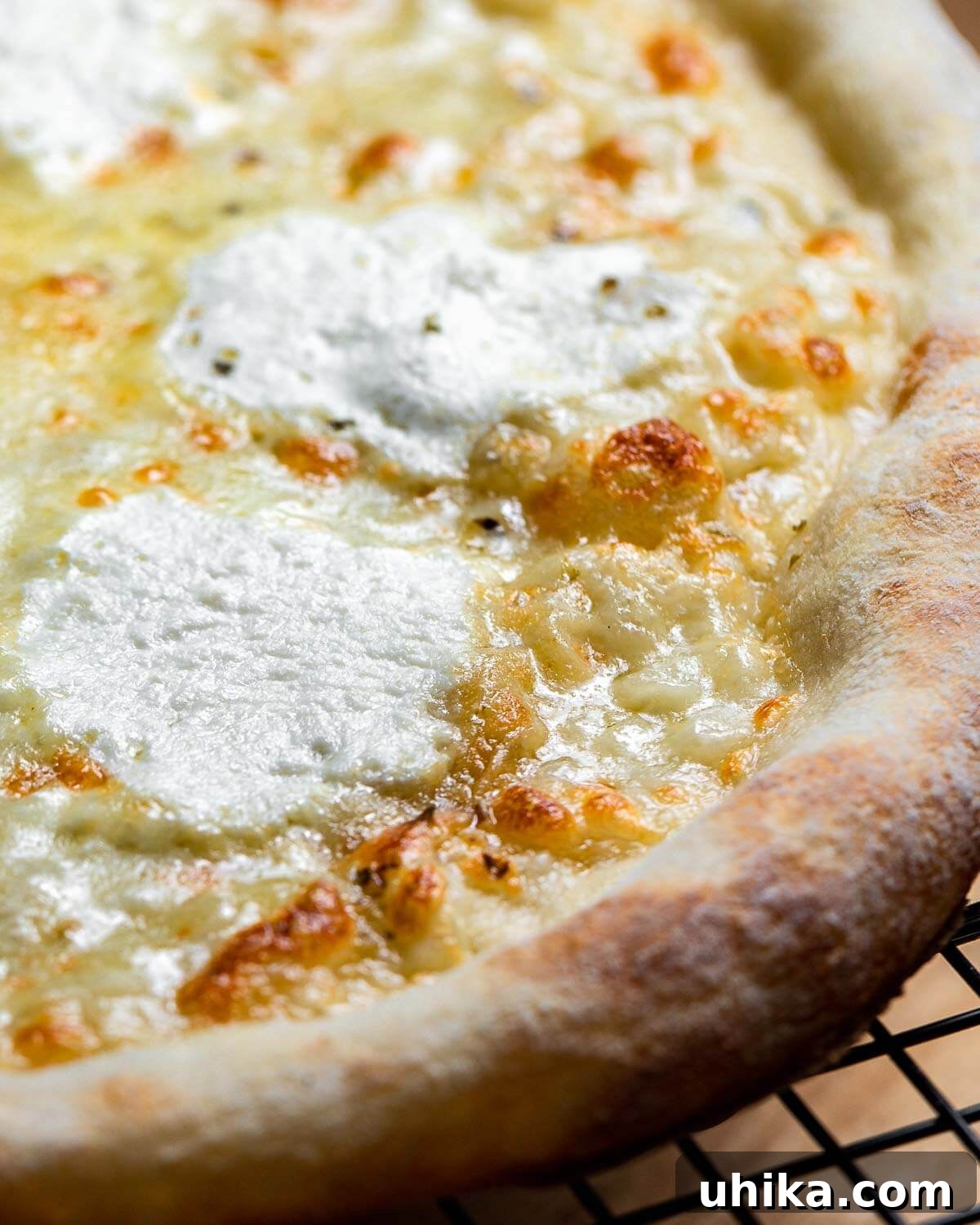
Once your delectable white pizza emerges from the oven, immediately transfer it to a wire rack to cool for a few minutes. This crucial step prevents the bottom crust from becoming soggy by allowing air to circulate freely underneath, something that wouldn’t happen if placed directly into a solid pizza pan. After a couple of minutes of cooling, the pizza will be easier to handle and cut without squishing the cheese. We recommend cutting your pizza on a large cutting board rather than directly in an aluminum pizza pan, as the latter can lead to unsightly cut marks in the soft metal. Then, serve your magnificent creation in a pizza pan for presentation and easy sharing, inviting everyone to enjoy a slice of New York!
The Art of Cheese: Why Your Mozzarella and Ricotta Choices Matter for NY White Pizza
The quality and specific type of cheese you select are paramount to the authenticity and success of your New York white pizza. Not all mozzarellas and ricottas are created equal, and making the right choice can significantly impact the final texture, flavor, and crucial moisture content of your pie, ensuring it’s a true pizza bianca and not a soggy disappointment.
Choosing the Right Mozzarella
When it comes to New York-style pizza, especially white pizza, there’s a golden rule: absolutely avoid fresh mozzarella. While fresh mozzarella is exquisite in its own right and perfectly suited for Neapolitan-style pizzas baked in scorching 1000°F brick ovens, it contains far too much water for a standard home oven environment. Using it on your white pizza will inevitably result in a soggy crust and a watery cheese layer that lacks the desired melt and stretch characteristic of a true NY slice.
For a truly authentic New York white pizza, your go-to should be block mozzarella, specifically a whole milk, low-moisture variety. In the New York metro area, popular and reliable brands like Polly-O and to a lesser extent, Galbani, are widely available in most local supermarkets. These brands, while similar in purpose, possess distinct characteristics:
- Polly-O Whole Milk Mozzarella: This brand is notably wetter than Galbani. This higher moisture content works exceptionally well for a white pizza, providing much-needed hydration to a pie that lacks the inherent moisture of tomato sauce. It contributes to a creamy, rich texture and a beautifully consistent melt. However, a crucial caveat: never make the mistake of using whole milk Polly-O for a traditional red sauce pizza, as the combined moisture from the tomatoes and the wetness of the cheese will inevitably lead to a watery, undesirable pie.
- Galbani Block Mozzarella: Galbani tends to be drier than Polly-O. If you opt for Galbani instead, you’ll definitely need to compensate for the lower moisture by being more liberal with the water and olive oil applied to the dough before adding the cheese, as outlined in our instructions. This extra hydration will help prevent the pizza from drying out during baking.
For home cooks outside of New York, if Polly-O or Galbani aren’t available, look for a “low-moisture, whole milk shredded mozzarella” or a block of whole milk mozzarella that you can shred yourself. Shredding your own cheese often yields superior results as pre-shredded varieties can contain anti-caking agents that affect the cheese’s melt and overall texture. The key is to achieve a balance: enough moisture for creamy deliciousness, but not so much that it leads to an unpleasantly soggy crust.
Selecting the Best Ricotta for Pizza Bianca
Similar to mozzarella, ricotta cheese varies significantly between brands, especially in its moisture content and consistency. This difference can dramatically influence the texture and overall appearance of your white pizza, making the right choice paramount for an authentic result.
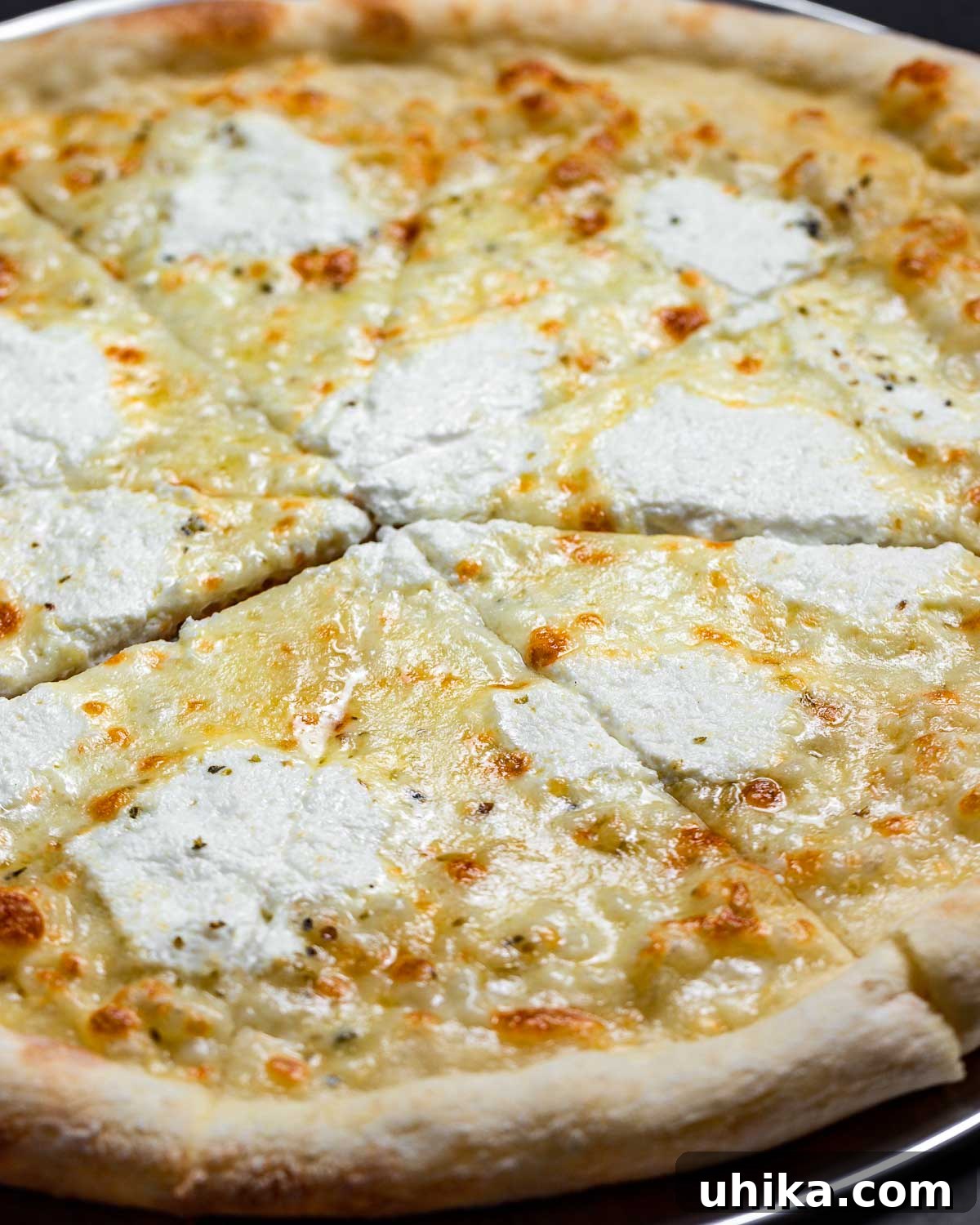
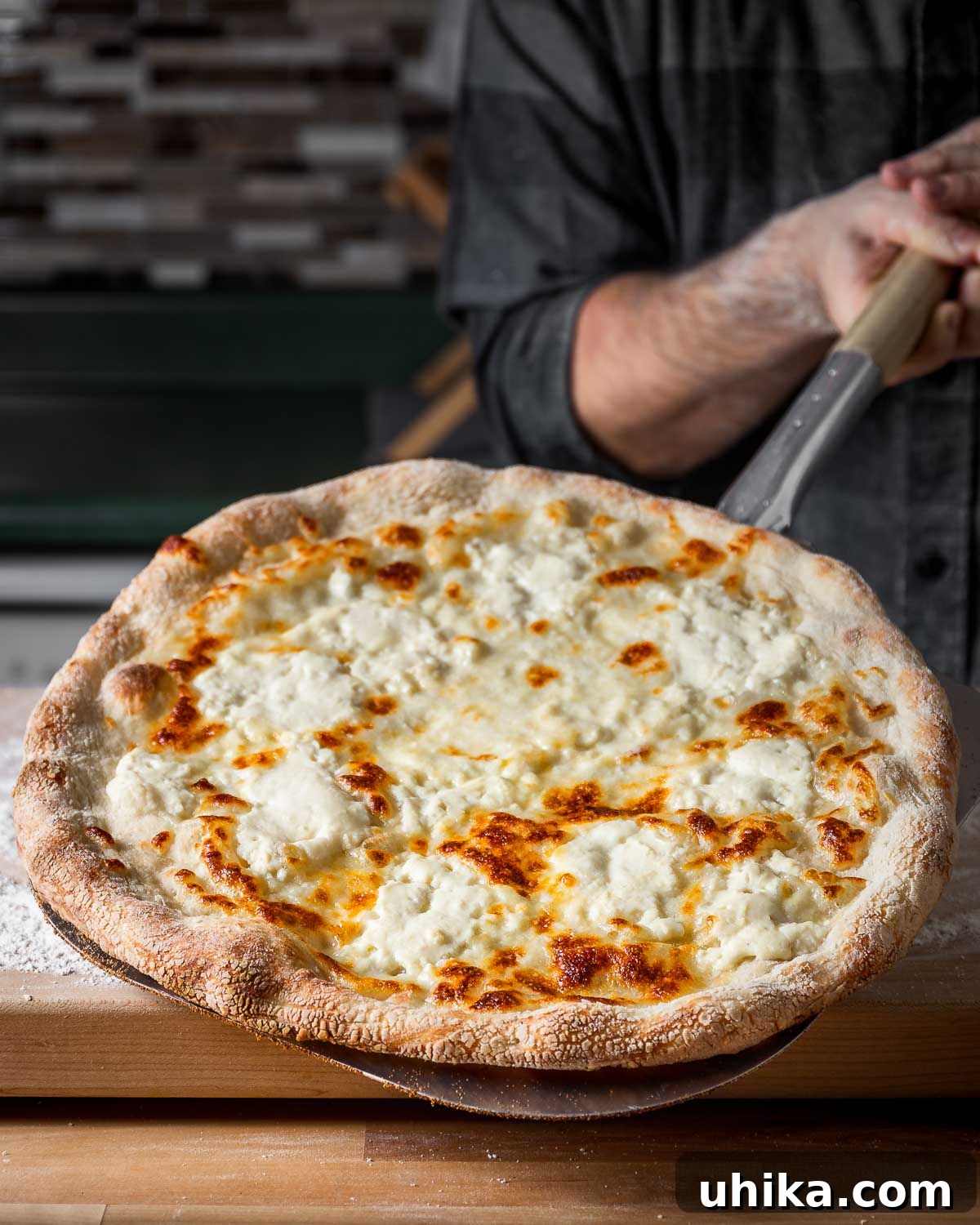
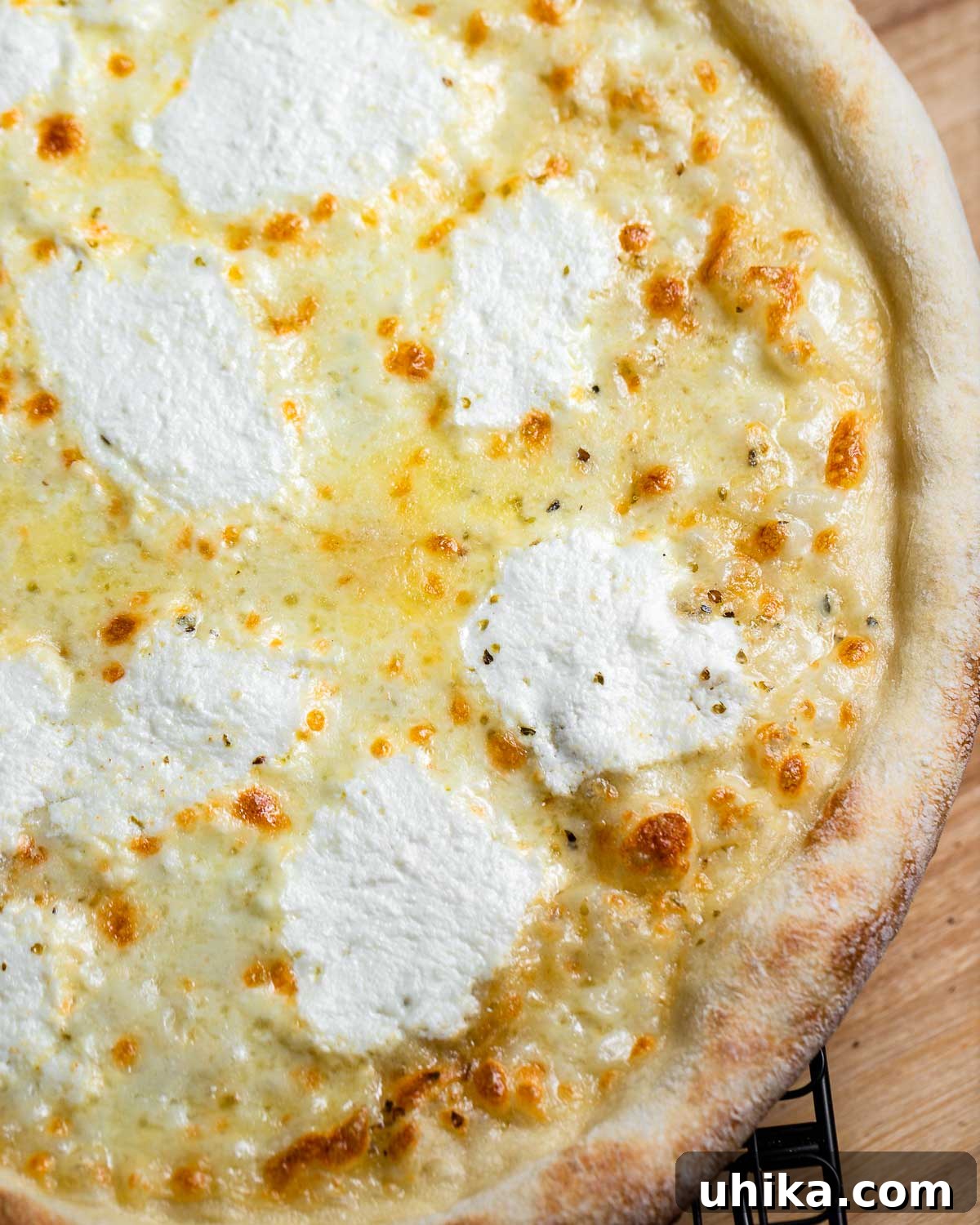
- Polly-O Ricotta: We find Polly-O ricotta to be considerably wetter and smoother than its Galbani counterpart. This higher moisture content and creamier texture are highly desirable for white pizza, contributing to the smooth, luxurious consistency and the classic “white look” typically found in authentic New York pizzerias. Most of the white pizzas photographed in this post (with the exception of the one directly above, which used Galbani) feature Polly-O mozzarella and ricotta for precisely this reason – they deliver that quintessential New York pizzeria experience.
- Galbani Ricotta: While Galbani ricotta is excellent for certain applications, such as cannoli filling where a firmer texture is often preferred, it tends to be grainier and drier for white pizza. If you review some of our white pizza videos on our YouTube channel where Galbani was used, you might notice this slightly more granular texture in the finished pie. While still delicious, it doesn’t achieve the same silky smoothness that many associate with a classic NY pizza bianca.
It’s worth noting that while many top New York pizzerias utilize “Grande” brand mozzarella and ricotta – which are professional-grade products often difficult for home cooks to source – our extensive testing has shown that Polly-O offers the best accessible alternative for achieving that authentic pizzeria quality at home. Of course, national grocery chains like Whole Foods and Trader Joe’s may offer other artisan brands with their own unique characteristics, so don’t hesitate to explore and find what works best for you. Just remember to consider the moisture content and overall smoothness when making your selection!
Top Tips for Baking the Perfect New York White Pizza at Home
Mastering homemade New York white pizza involves a few key insights and techniques. Keep these expert tips in mind to ensure your pizza bianca turns out perfectly every time, just like your favorite neighborhood pizzeria:
- Warm the Dough Properly: Dough elasticity is crucial for stretching without tearing and achieving the desired thinness. Always remove your pizza dough from the refrigerator well in advance of baking. Allow at least 2-3 hours for it to come to a relaxed room temperature during warmer months, and 3-4 hours in cooler weather. This extended relaxation period makes the dough pliable, easier to work with, and less likely to snap back.
- Utilize Semolina for Launching: When transferring your pizza from the peel to the hot oven, a perfectly smooth slide is absolutely essential to maintain the pizza’s shape. Coarse semolina flour creates a superior non-stick barrier compared to all-purpose flour. Sprinkle it generously on your wooden pizza peel; its granular texture acts like tiny ball bearings, ensuring the dough glides effortlessly onto the searing hot steel or stone.
- Invest in a Baking/Pizza Steel: A pizza steel is a true game-changer for home pizza making. Its high thermal conductivity and superior capacity to retain and transfer heat impart an incredibly crispy, charred bottom crust that rivals professional pizzerias. If a steel isn’t an option, a robust pizza stone is a good alternative, though you might need to increase baking time by 4-5 minutes. Avoid using a standard sheet pan or baking pan for this style of pizza, as it simply won’t provide the necessary high heat for an authentic crispy bottom.
- Patience Between Multiple Pies: If you’re planning a pizza party and baking multiple pizzas, allow your pizza steel to reheat adequately between launches. Waiting 10-15 minutes is generally recommended to allow the steel to regain its peak temperature. To expedite this process, you can turn your oven’s broiler on high for a few minutes immediately after removing a pizza, then switch back to the highest bake setting to quickly rebuild the steel’s temperature.
- Keep a Pizza Journal: Pizza making is an art form that greatly benefits from observation and adjustment. If your pizza comes out too dry, make a note of it for next time and consider adding a bit more water to the dough surface or increasing the amount of ricotta. If it’s too wet, reduce the water slightly or adjust your cheese quantities. Each bake offers a valuable learning opportunity to perfect your craft!
- Vary the Ricotta Amount to Your Liking: Pizzerias vary widely in their ricotta application on white pies. Some pile it on generously, making each slice wonderfully heavy and rich, almost obscuring the mozzarella. Others are more judicious, allowing both cheeses to shine equally. Experiment with the amount of ricotta to find your ideal balance of creaminess, texture, and flavor that suits your palate.
Explore More New York Pizzeria Favorites
If you’ve enjoyed mastering the authentic New York white pizza, you’ll love diving into other classic pizzeria staples. Expand your homemade pizza repertoire and bring the taste of a true New York pizzeria right into your kitchen with these delicious recipes:
- Homemade New York Pizza: This is our most comprehensive and in-depth guide on creating the quintessential New York red sauce pizza, covering everything from mastering the cold-fermented dough to perfect topping application.
- New York Sicilian Pizza: Indulge in a thick-crusted, rectangular pie topped with robust tomato sauce, generous layers of mozzarella, Pecorino Romano, and a sprinkle of aromatic Sicilian oregano.
- Classic Cheese Calzone: Similar in spirit to white pizza, this half-moon shaped pocket of pizza dough is generously filled with a delightful blend of creamy ricotta, melted mozzarella, and salty Pecorino Romano.
- Savory Pepperoni Pinwheels: Learn how to recreate those enticing, spiraled pinwheels often seen behind the glass display cases of your favorite pizzerias, perfect as a snack or appetizer.
- Authentic Grandma Pizza: Discover the secrets to the beloved Long Island classic, a rectangular, thinner-crust pizza topped simply with fresh mozzarella, crushed tomatoes, and basil, now popular throughout the New York metropolitan area.
- Iconic New York Garlic Knots: Master the art of making soft, chewy, and irresistibly garlicky knots, prepared just like the best pizzerias here in New York.
- Traditional Chicken Parmigiana: A timeless Italian-American favorite, featuring tender breaded chicken cutlets smothered in marinara sauce and mozzarella, prepared the authentic way.
- Delicious Broccoli Rolls: A delightful savory roll made from fresh pizza dough, generously filled with a flavorful mix of tender broccoli, melted mozzarella, and sharp Pecorino cheese.
New York White Pizza Recipe
This classic New York Pizza Bianca perfectly combines creamy ricotta, stretchy mozzarella, and aromatic garlic atop a perfectly baked, cold-fermented, hand-stretched dough. Get ready to experience a true pizzeria-quality white pizza right in your own home!
Yields: 4 servings
Prep time: 1 hr 15 mins
Cook time: 6 mins
Total time: 1 hr 21 mins
Ingredients
- 1 (12 ounce) pizza dough ball (refer to our linked New York pizza dough recipe or use high-quality store-bought, balled beforehand)
- 1 tablespoon semolina flour, for dusting the wooden pizza peel
- 2 ounces water (you will not need it all, used sparingly for brushing the dough)
- 1 tablespoon extra virgin olive oil
- 8 ounces whole milk mozzarella, shredded (Polly-O brand recommended if available)
- 1 1/2 cups ricotta cheese (Polly-O brand recommended for its smooth texture)
- 1/2 teaspoon kosher salt
- 1/2 teaspoon garlic powder
- 2 tablespoons Pecorino Romano, finely grated
Instructions
- Remove your pizza dough ball from the refrigerator (keeping it covered in its proofing container) to warm up. Allow 2-3 hours during summer months and 3-4 hours in winter for the dough to reach room temperature, ensuring it’s pliable for stretching.
- Position your pizza steel on the second-highest oven rack level. Preheat your oven to its highest possible temperature (ideally 550°F / 288°C) for a minimum of 45 minutes before you begin shaping the dough to ensure the steel is scorching hot.
- Carefully take the dough ball from its container and gently drop it into a large bowl filled with all-purpose flour. Turn it over once to coat evenly. Place the dough ball onto a lightly floured work surface, ensuring the sticky side (the side that was at the bottom of the proofing container) faces up, ready for stretching. Keep a wooden pizza peel, pre-dusted generously with semolina flour, nearby.
- Using your fingers, press down around the perimeter to form a distinct rim (crust), being careful not to completely deflate the dough or press too hard on the crust. Maintain a generally round shape while leaving slightly more dough in the center to prevent it from becoming too thin. Gently rotate the dough a couple of times to expand it slightly, aiming for an 8-9 inch circle.
- Once you have an 8-9 inch base, carefully lift the dough onto your knuckles to continue stretching it to its final 15-inch size. Gently pull your knuckles apart and rotate the dough simultaneously, being mindful not to handle the rim too much. Once the pizza reaches full size, carefully lay it onto the semolina-dusted wooden pizza peel, sticky side up.
- If the dough is not perfectly round on the peel, gently pull the edges to achieve a better circle. Lightly shake the pizza peel to ensure the dough moves freely. If it sticks at all, gently lift the offending edge and sprinkle more semolina underneath until it slides smoothly.
- Using a pastry brush, lightly moisten the entire surface of the pizza dough with water. This adds crucial moisture to prevent the crust from drying out during baking. Drizzle 1 tablespoon of olive oil evenly over the surface and brush it in as well.
- Evenly sprinkle the shredded mozzarella cheese over the dough. Then, distribute dollops of ricotta cheese across the pizza. Finish by scattering the finely grated Pecorino Romano, kosher salt, and garlic powder evenly over the cheeses.
- Perform one final check: ensure the pizza slides freely on the peel. Use an infrared thermometer to verify your pizza steel temperature. Once it reads around 610°F (or the highest achievable temperature for your oven, typically 575-585°F), it’s time to launch.
- Open the oven door, position the wooden peel towards the back of the steel, and smoothly slide the pizza off the peel and onto the hot steel. Close the oven door immediately to retain heat.
- After 3 minutes, open the oven door and use a metal pizza peel to rotate the pizza 180 degrees for even cooking. Close the door. After another 3 minutes, the pizza should be done. Depending on your oven’s exact temperature, it might require one additional minute – watch closely for a golden crust and bubbly cheese. Carefully remove the finished pizza with a metal peel and transfer it to a wire rack to cool for a few minutes before slicing and serving. Enjoy your authentic New York White Pizza!
Notes
- For the best results, use our New York pizza dough recipe to create a 12-ounce dough ball per pizza. If making multiple pizzas, prepare additional dough balls. Alternatively, if using store-bought dough, ensure you ball it prior to use for optimal handling and stretching.
- You will not use all 2 ounces of water. The water is lightly brushed onto the dough to prevent it from drying out, especially if using a drier ricotta and mozzarella, ensuring a moist and delicious crust.
- The recipe time provided (1 hr 21 mins total) accounts for active preparation, preheating the steel, and actual cooking time. Remember to factor in the crucial dough warming time (2-3 hours in summer, 3-4 hours in winter) *before* you start the prep steps.
- Calorie information provided is an approximation for 1 New York white pizza, typically serving 4 people.
- A pizza or baking steel is highly recommended for achieving a consistently crispy crust. If using a pizza stone, expect the pizza to take 3-5 minutes longer to cook. Baking this style of pizza in a standard sheet or baking pan is not recommended, as it will not provide the necessary direct high heat.
- Leftovers can be stored in an airtight container in the refrigerator for up to 3 days. To reheat, place slices on a parchment paper-lined baking sheet and warm at 350°F (175°C) until thoroughly hot, about 10-12 minutes. Microwaving is not recommended as it can make the crust soggy and rubbery.
Nutrition (approximate per serving)
Calories: 721kcal | Carbohydrates: 44g | Protein: 33.8g | Fat: 45.8g | Saturated Fat: 18.3g | Cholesterol: 64mg | Sodium: 1234mg | Potassium: 168mg | Fiber: 3g | Sugar: 0.4g | Calcium: 364mg | Iron: 3mg
Nutrition information is automatically calculated and should only be used as an approximation. Actual values may vary based on ingredients and preparation methods.
If you’ve enjoyed this classic white pizza recipe or any recipe on this site, we’d love for you to give it a 5-star rating and leave a comment below. Your feedback helps us grow and provides valuable insights for other home cooks!
For those who prefer visual learning, most of our recipes are also available on our YouTube channel and our Facebook Page. Don’t forget to check us out on Instagram at @sipandfeast or tag #sipandfeast when you share your incredible homemade creations!