
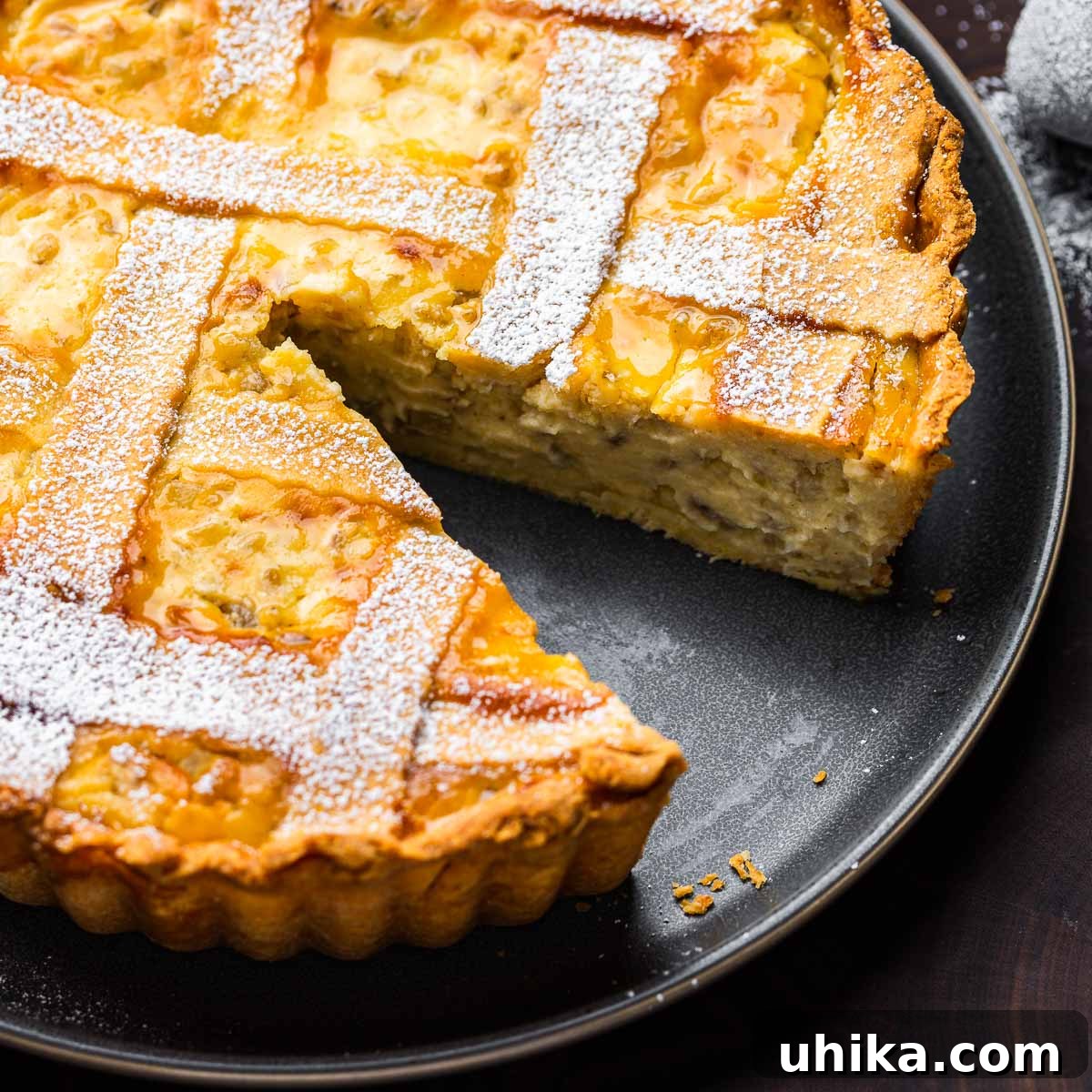
Pastiera Napoletana, a culinary masterpiece often referred to as Italian grain pie, transcends its traditional role as an Easter dessert. Its exquisite blend of textures and flavors makes it a highly anticipated treat, cherished throughout the year. Imagine a tender, buttery homemade crust embracing a rich, creamy filling of fresh ricotta, wholesome cooked wheat berries (grano cotto), fragrant candied citron, and aromatic orange zest. Baked to a beautiful golden perfection and delicately dusted with powdered sugar, each slice of Pastiera Napoletana offers a truly unforgettable experience.
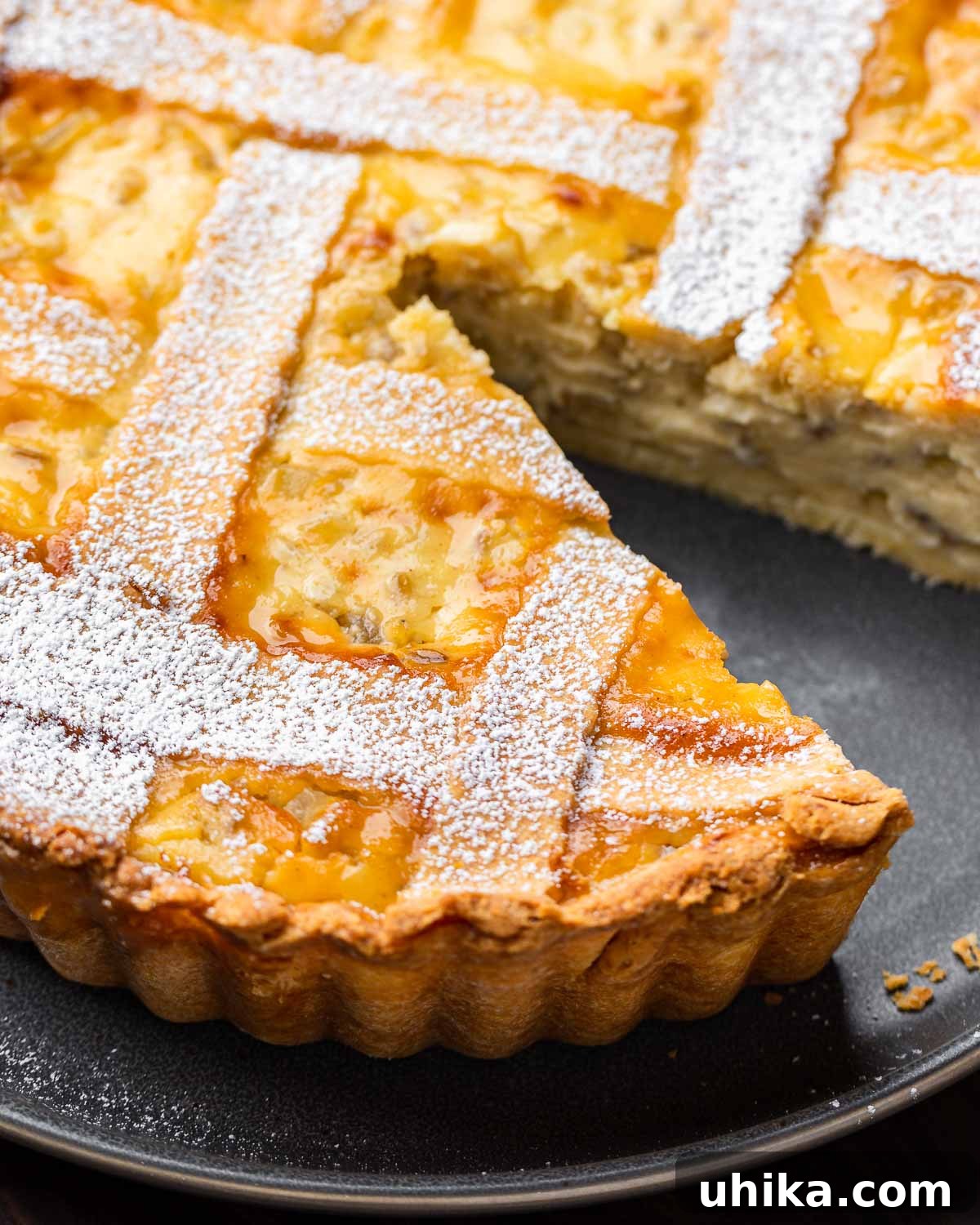

The Unmistakable Sign of Easter: Pastiera Napoletana
For many, the arrival of Easter is heralded by chocolate bunnies appearing on grocery store shelves. For me, however, it’s the sight of end caps brimming with cans of grano cotto – the pre-cooked wheat berries essential for creating Pastiera Napoletana – that truly signals the start of the holiday season. This traditional Italian grain pie is more than just a dessert; it’s a symbol of spring, rebirth, and the rich culinary heritage of Naples.
Authentic Pastiera is typically prepared a few days before Easter Sunday. This allows the intricate flavors of orange blossom water, candied citron, and ricotta to meld and deepen, resulting in an even more intoxicating aroma and taste. Served as the grand finale to the Easter feast, generously adorned with powdered sugar, this exceptional pie often vies for the title of the best Easter food. While delicious contenders like Pizzagaina, Cream Puffs, and Italian Easter Bread are close runners-up, the unique complexity of Pastiera truly sets it apart.
Its extraordinary flavor profile, dominated by the bright notes of orange zest and orange blossom water, is perfectly complemented by the delightful interplay of textures from the chewy grano cotto, smooth ricotta, and exquisitely flaky pie crust. While the temptation to purchase a ready-made Pastiera from a local Italian bakery is strong, I’m here to guide you through the rewarding process of baking this iconic Italian Easter pie right in your own kitchen. You might be surprised to discover that making homemade Pastiera Napoletana is far simpler and more enjoyable than you think, yielding a result that far surpasses any store-bought version.
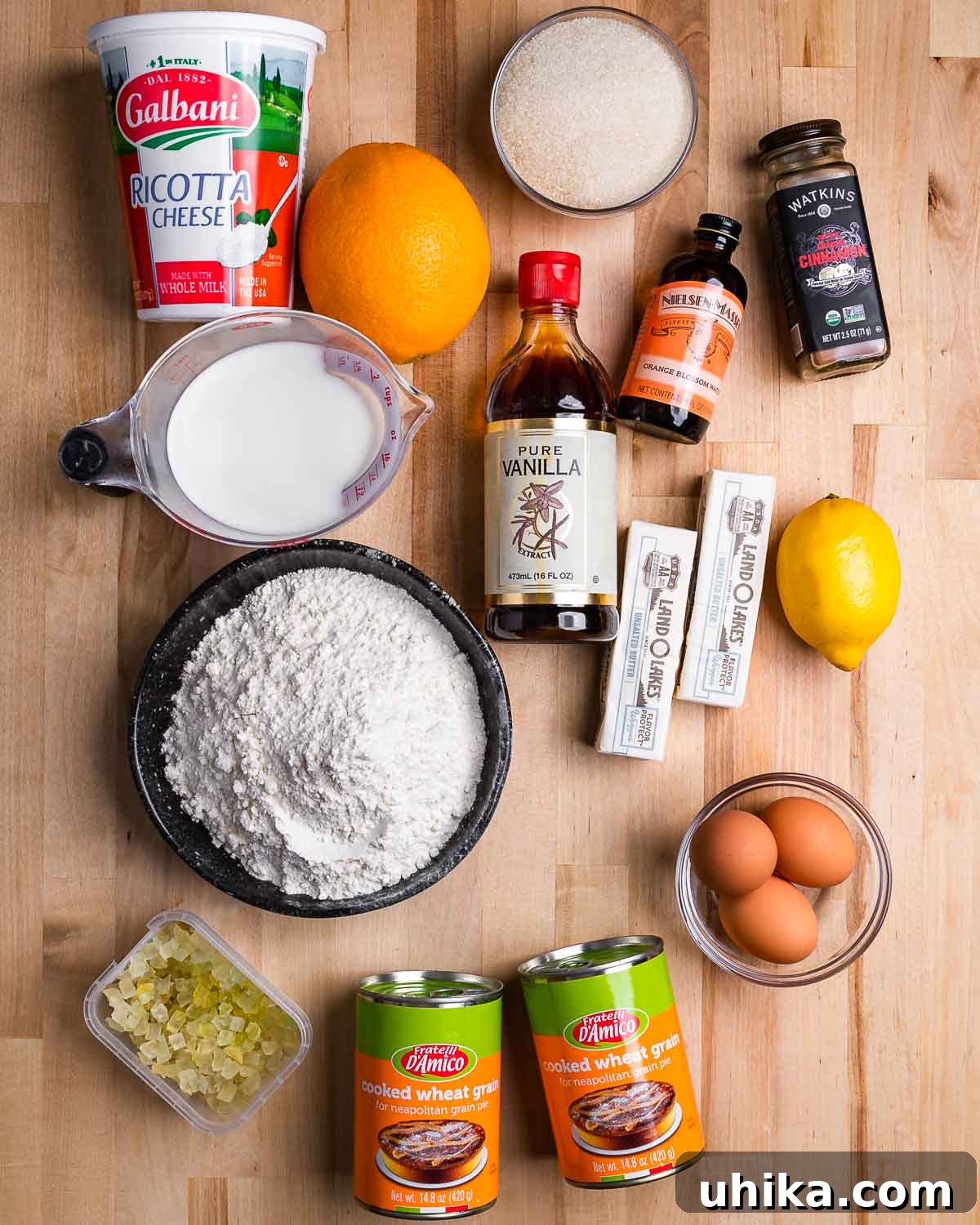
Crafting the Perfect Pastiera Napoletana: A Step-by-Step Guide
Embark on a culinary journey to Naples with this detailed guide to making an authentic Pastiera Napoletana. Each step is designed to simplify the process, ensuring a delicious and rewarding baking experience.
First, Prepare the Aromatic Wheat Cream
- Begin by gently cooking the grano cotto. In a saucepan, combine 22 ounces of canned grano cotto (which typically amounts to 1 1/2 cans of the standard 15-ounce size, or a 20.5-ounce jar for convenience). Add 1 cup of milk, 1 tablespoon of fresh orange zest, 2 teaspoons of sugar, 2 tablespoons of unsalted butter, and a 1/8 teaspoon of fine sea salt. Cook this mixture over low heat for about 10-15 minutes, stirring frequently, until it transforms into a thick, creamy porridge-like consistency. This slow cooking allows the wheat berries to fully absorb the flavors and become wonderfully tender. While an orange peel can be added for visual appeal during cooking, finely grated zest offers a more potent and evenly distributed citrus flavor, especially if you’re not letting the filling sit overnight. Remember to remove any large orange peels before proceeding with the pie assembly.
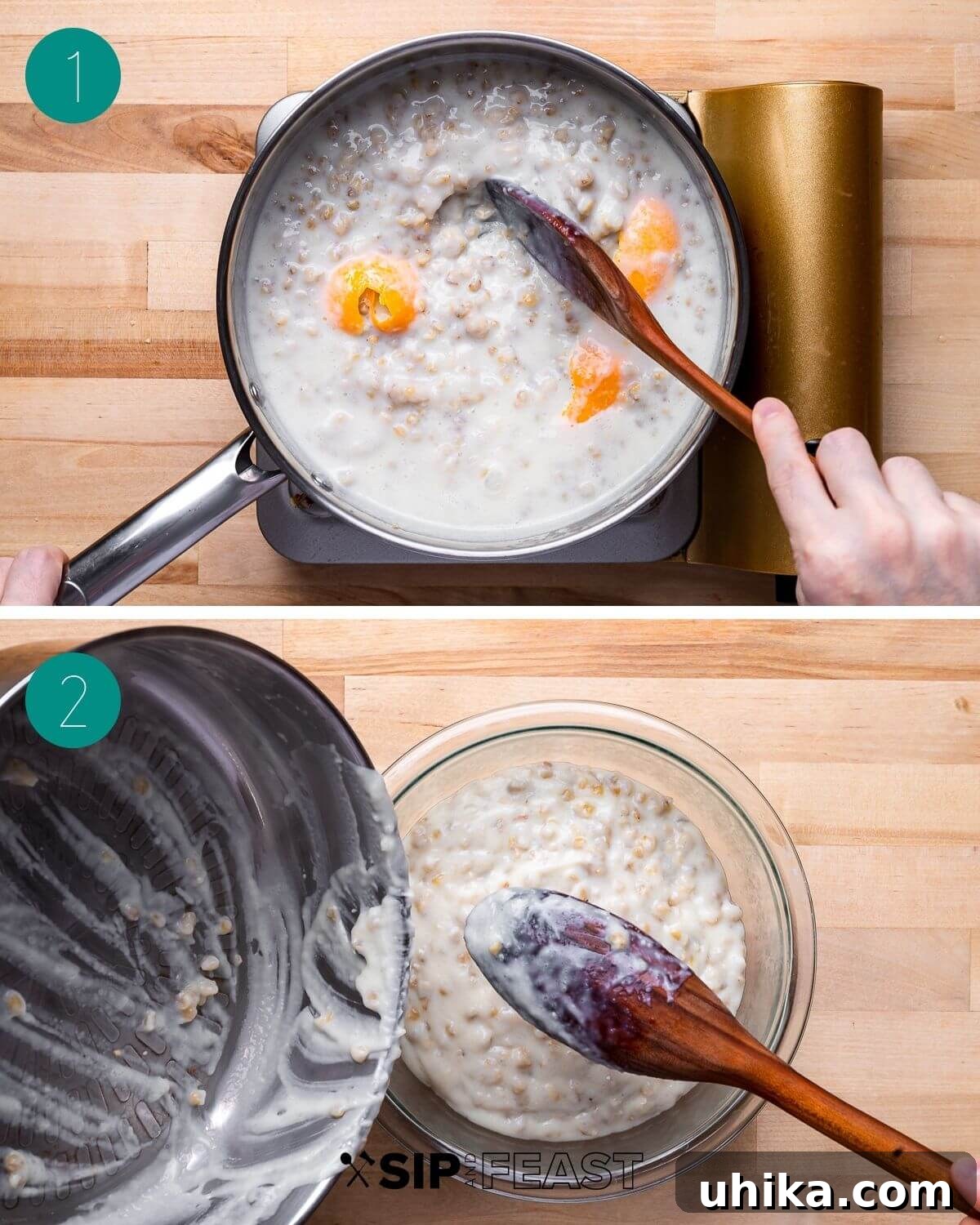
- Once the wheat cream reaches the desired consistency, remove it from the heat. Transfer it to a separate bowl or simply set it aside in the saucepan to cool. Cooling the mixture in a bowl will expedite the process, preparing it for incorporation into the main filling.
Next, Prepare the Rich and Flavorful Ricotta Filling
- In a large mixing bowl, combine 1 pound of well-drained ricotta cheese with 1 cup of granulated sugar. Whisk these ingredients together thoroughly until they are smoothly incorporated. **Crucial Note:** Draining the ricotta is paramount for achieving the perfect creamy, non-soggy filling. Ideally, place the ricotta in a fine-mesh strainer over a bowl and let it drain in the refrigerator overnight. If time is short, you can place the ricotta in cheesecloth and gently squeeze out as much excess moisture as possible, significantly accelerating the draining process.
- To the ricotta and sugar mixture, add the now-cooled wheat cream. Follow this with 1/4 teaspoon of ground cinnamon, 1/4 teaspoon of vanilla extract, 1 teaspoon of delicate orange blossom water, and 3 ounces of finely diced candied citron. Each of these ingredients contributes to the signature aromatic profile of Pastiera Napoletana.
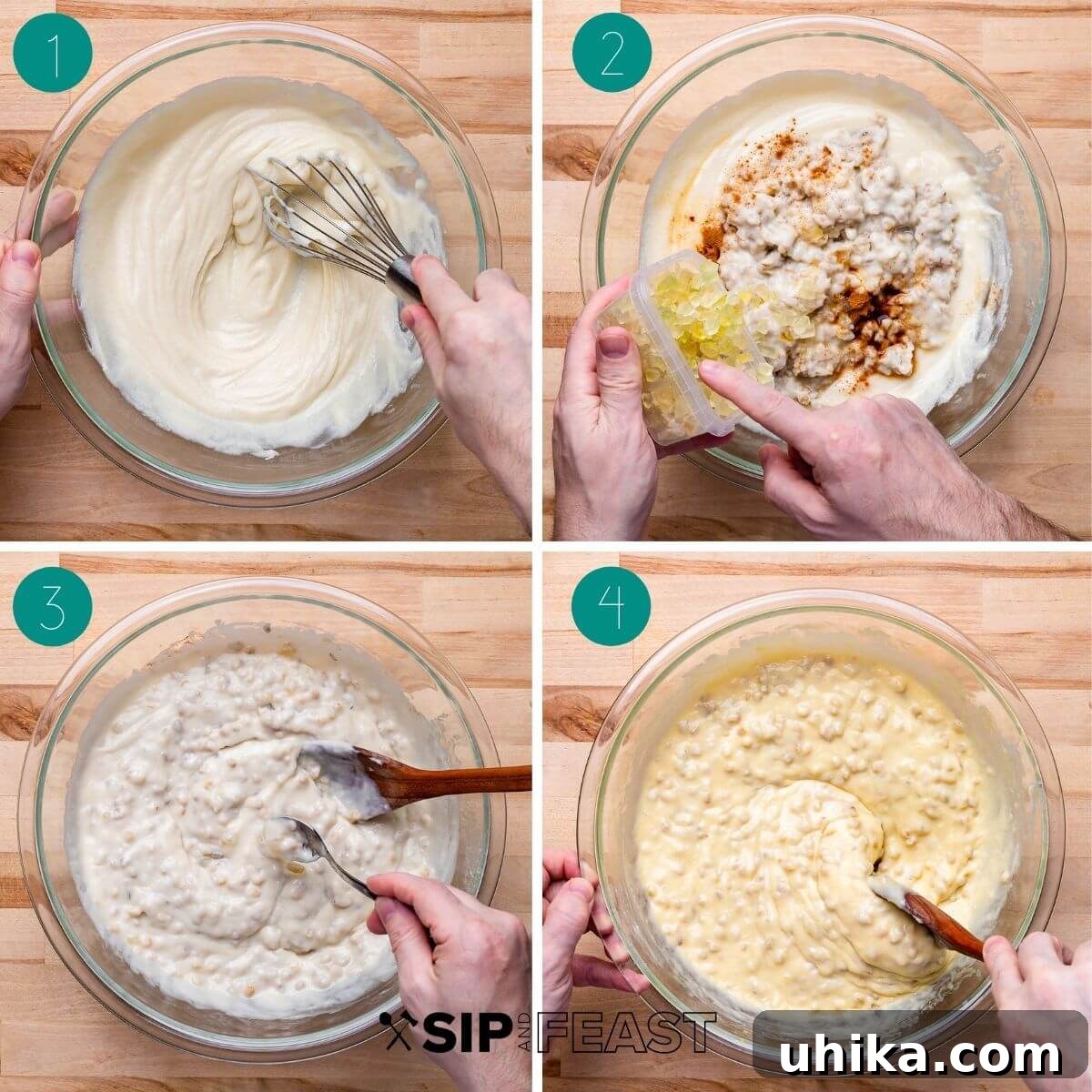
- Mix all the filling ingredients together until thoroughly combined. This is your opportunity to taste the mixture and adjust the flavors. Different brands of orange blossom water can vary in potency, so feel free to add a little more if you desire a stronger floral note. Similarly, adjust cinnamon or vanilla to your preference. Remember, a little goes a long way with these potent flavors, so add gradually.
- Once you are satisfied with the flavor profile, gently mix in 3 large eggs until just incorporated. For the best depth of flavor, it’s highly recommended to prepare the filling a day in advance and refrigerate it overnight. This allows the various aromatics and ingredients to truly meld and intensify. However, if time constraints don’t permit, your Pastiera will still be wonderfully delicious even if assembled and baked on the same day.
Create the Flaky and Tender Pastry Dough
- For the perfect Pastiera crust, we’ll make a classic pasta frolla. In the bowl of a food processor, combine 2 1/2 cups (320 grams) of all-purpose flour, 1/8 teaspoon of fine sea salt, 1/3 cup of granulated sugar, and 2 teaspoons of fresh lemon zest. Pulse these dry ingredients a few times to ensure they are well mixed. Next, add 12 tablespoons of very cold, cubed unsalted butter. Pulse the mixture again for about 30 seconds until the butter is incorporated into small, coarse pieces resembling coarse meal. If any butter pieces appear too large, pulse once or twice more. **Alternative Method:** If you don’t have a food processor, you can easily cut the cold butter into the flour mixture using a pastry cutter, a fork, or by grating the butter with a box grater for small, even pieces.
- Next, add 2 large eggs and 3 tablespoons of milk to the food processor. Pulse just until a rough, crumbly dough begins to form. Be careful not to overmix, as this can lead to a tough crust. The goal is to bring the ingredients together without developing too much gluten.
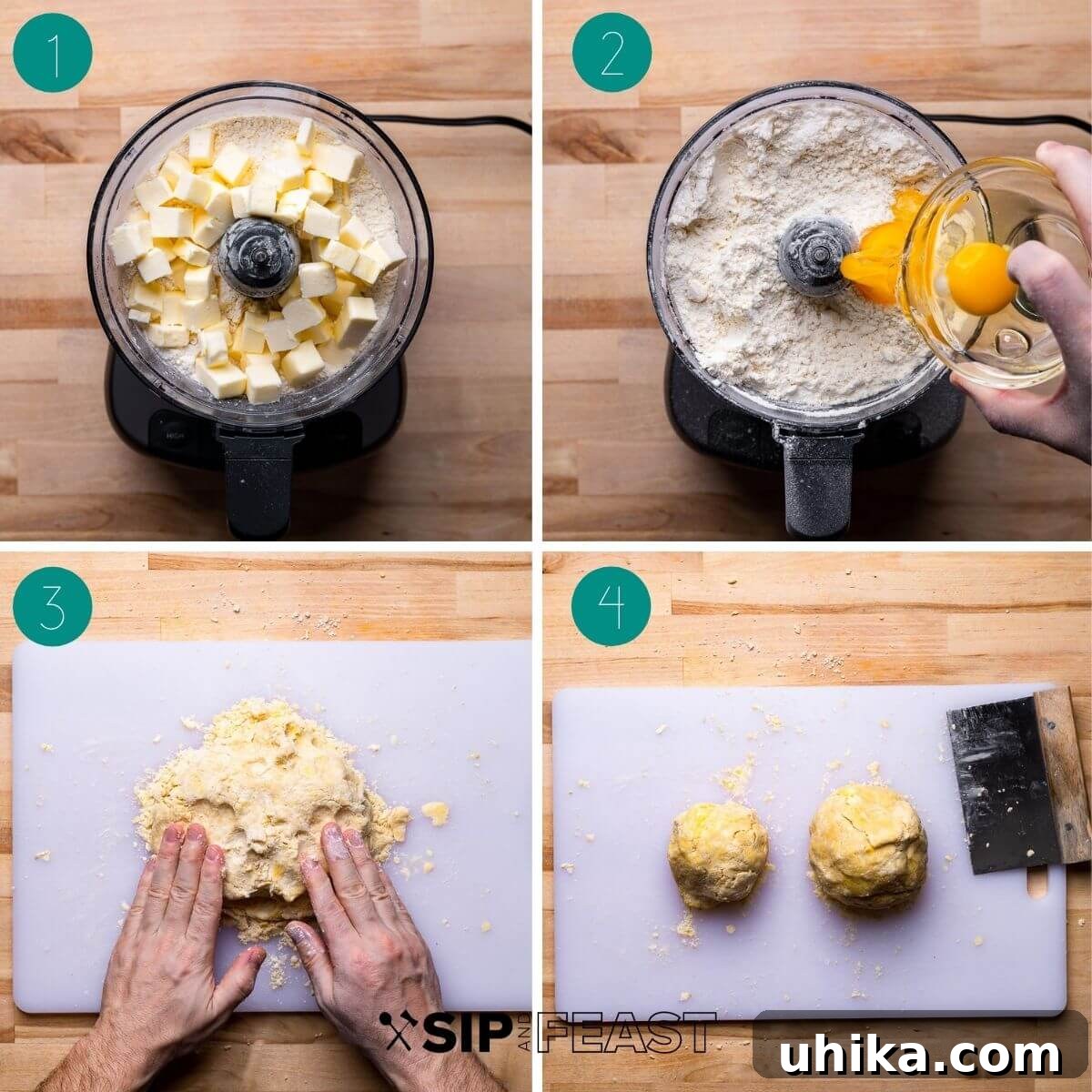
- Turn the dough out onto a lightly floured work surface. Knead it very briefly – just for a few seconds – until it comes together into a cohesive ball. Overworking the dough will result in a tough crust, so aim for minimal handling. Divide the dough into two unequal portions: one large ball, comprising approximately two-thirds of the dough, and a smaller ball with the remaining one-third. The larger portion will form the pie’s base, while the smaller portion will be used for the decorative lattice top.
- Wrap both dough balls tightly in plastic wrap and refrigerate them for at least 1 hour before using. Chilling the dough is essential; it allows the gluten to relax, makes the dough easier to roll, and prevents shrinkage during baking. **Pro Tip:** For optimal flavor development and to streamline your baking schedule, both the wheat cream and the pastry dough can be prepared a day in advance and refrigerated. This thoughtful planning will significantly reduce your workload on baking day, allowing the flavors to meld beautifully.
Assemble Your Pastiera and Bake to Golden Perfection
- Preheat your oven to 375°F (190°C). Position one oven rack on the lowest level and another in the middle. Generously grease a 9.5 by 2-inch pie or tart pan with butter or lard. Using a pan with a removable bottom can significantly simplify the process of serving and unmolding your finished Pastiera.
- Remove the chilled dough from the refrigerator and allow it to sit at room temperature for 10-20 minutes. This slight warming will make the dough more pliable and easier to roll without cracking. Lightly flour your work surface and rolling pin. Begin rolling out the larger dough ball into a circular shape, aiming for approximately 1/4-inch thickness and about 13 inches in diameter.
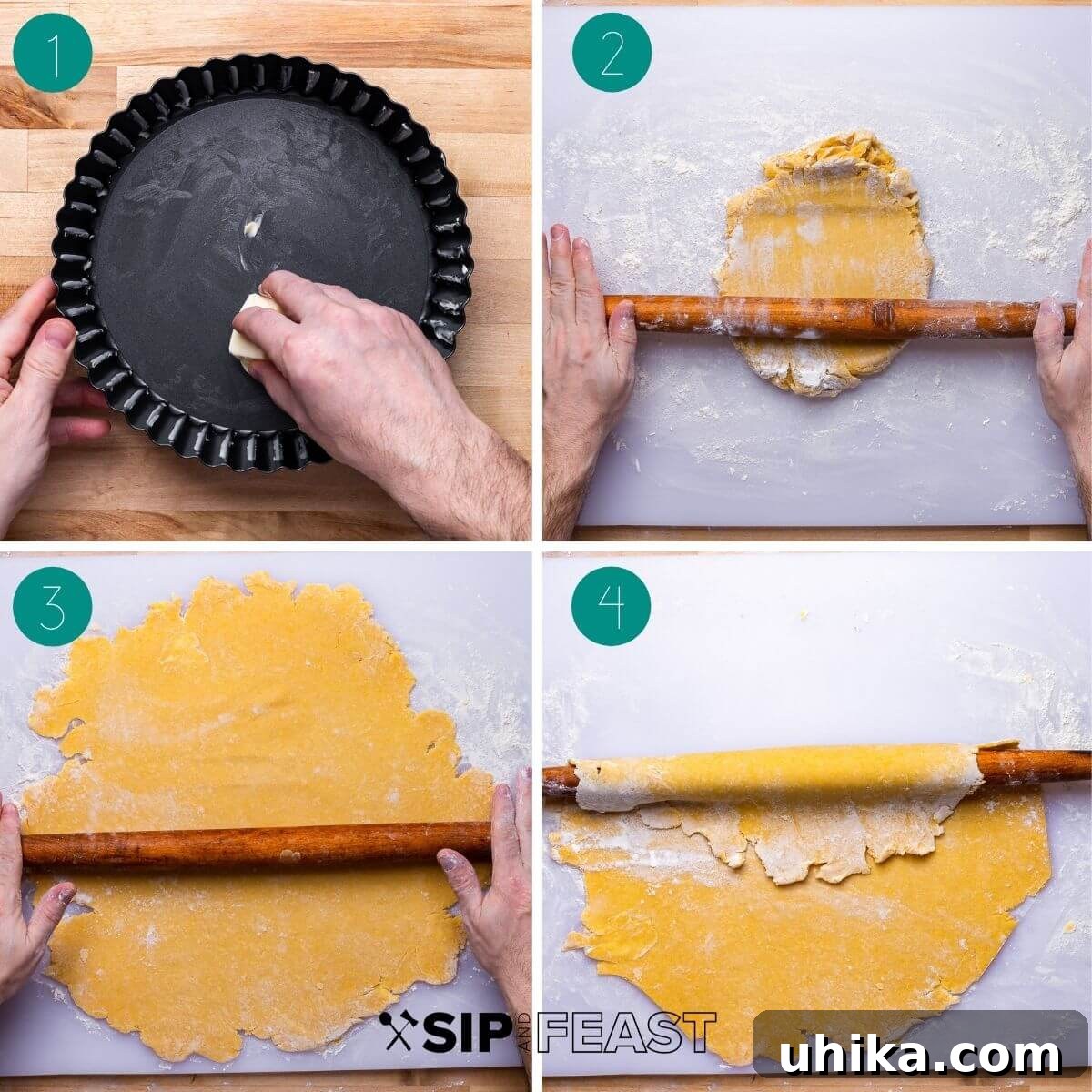
- Once rolled, carefully transfer the dough to your prepared pie pan. A helpful technique is to gently drape the dough over your rolling pin, as illustrated in pic 4 above, then unroll it over the pan. Alternatively, you can roll the dough out onto parchment or wax paper and use the paper to assist in the transfer.
- Center the dough in the pan, ensuring it settles evenly into the bottom and up the sides.
- Gently tuck the edges of the dough, allowing any excess to hang over the rim of the pan.
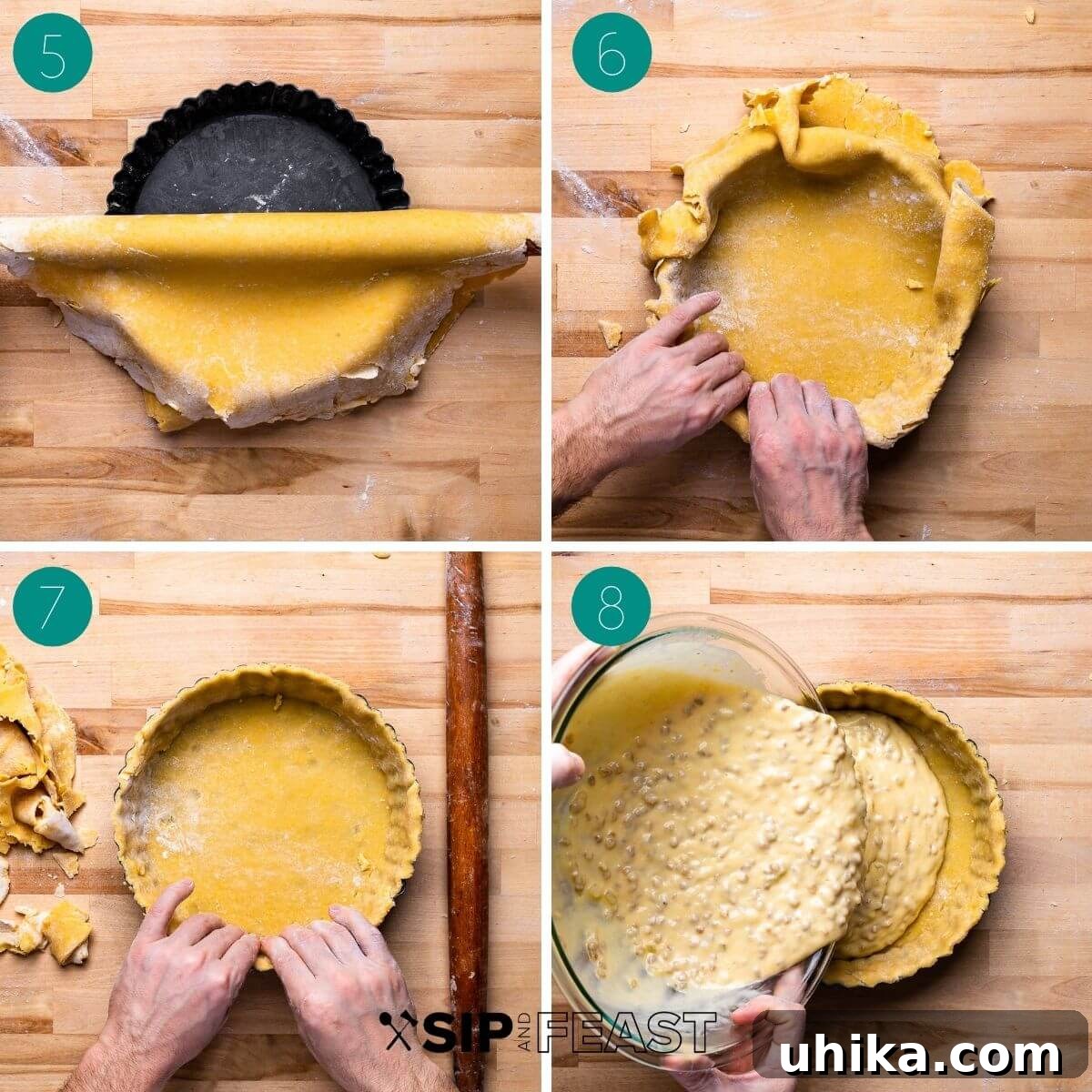
- Trim off any excess overhanging dough from the edges of the pan. Should you notice any small gaps or open spots in your crust, use the trimmed dough to patch them neatly.
- Pour the prepared Pastiera filling into the dough-lined pan. Do not fill it completely to the very top; leave a small margin for expansion during baking. You should not have much, if any, excess filling, but if you do, set it aside.
- Roll out the second, smaller ball of dough into a circle slightly larger than your pie pan. Using a pastry wheel or knife, cut the dough into strips approximately 1/2-inch wide. **Traditional Insight:** Traditionally, Pastiera Napoletana is adorned with seven dough strips, arranged in a diamond or lattice pattern to mimic the architectural window panes seen in Naples. While my arrangement below (pic 10) might feature overlapping strips, the exact design is primarily aesthetic. Feel free to create any design that appeals to you.
- Carefully lay the dough strips over the filling in your desired pattern. Use your fingers or a spoon to gently press the ends of the strips into the edges of the bottom crust, ensuring they adhere well. A touch of water can be used as a “glue” if needed to help the strips stick to the sides. Trim off any excess dough from the lattice. Place the assembled pie onto a baking sheet; this will catch any potential drips and make it easier to transfer in and out of the oven.
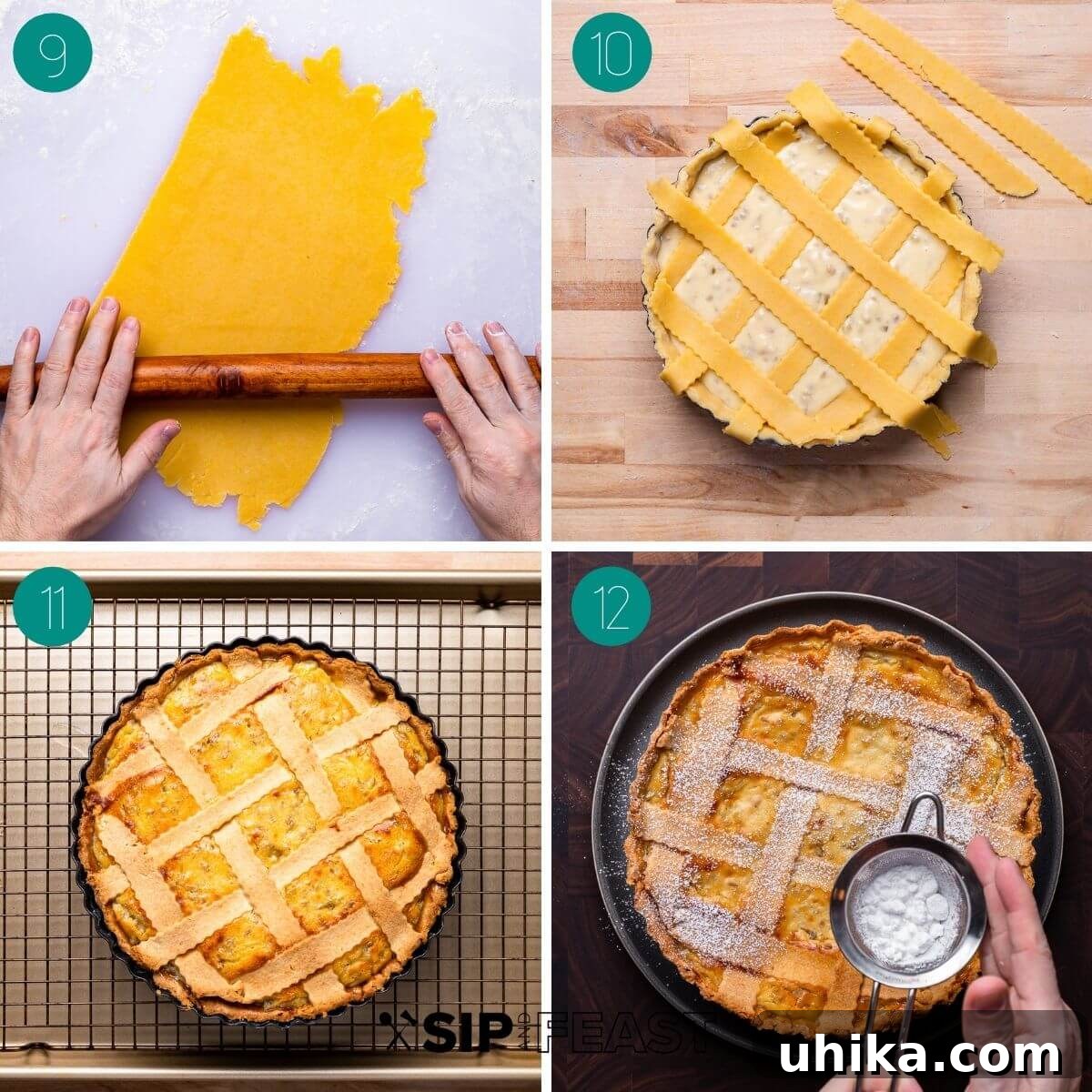
- Bake the Pastiera for 20 minutes on the lowest oven rack to ensure the bottom crust cooks thoroughly. Then, carefully move the pie to the middle rack to continue baking. The total baking time will range from 65-70 minutes, or until the top crust is a beautiful golden brown and the filling is set. Around the halfway point, check on your pie. If the crust or edges appear to be browning too quickly, loosely cover the affected areas (or the entire pie) with aluminum foil to prevent over-browning. In my experience, I didn’t need to cover mine at all, but ovens can vary.
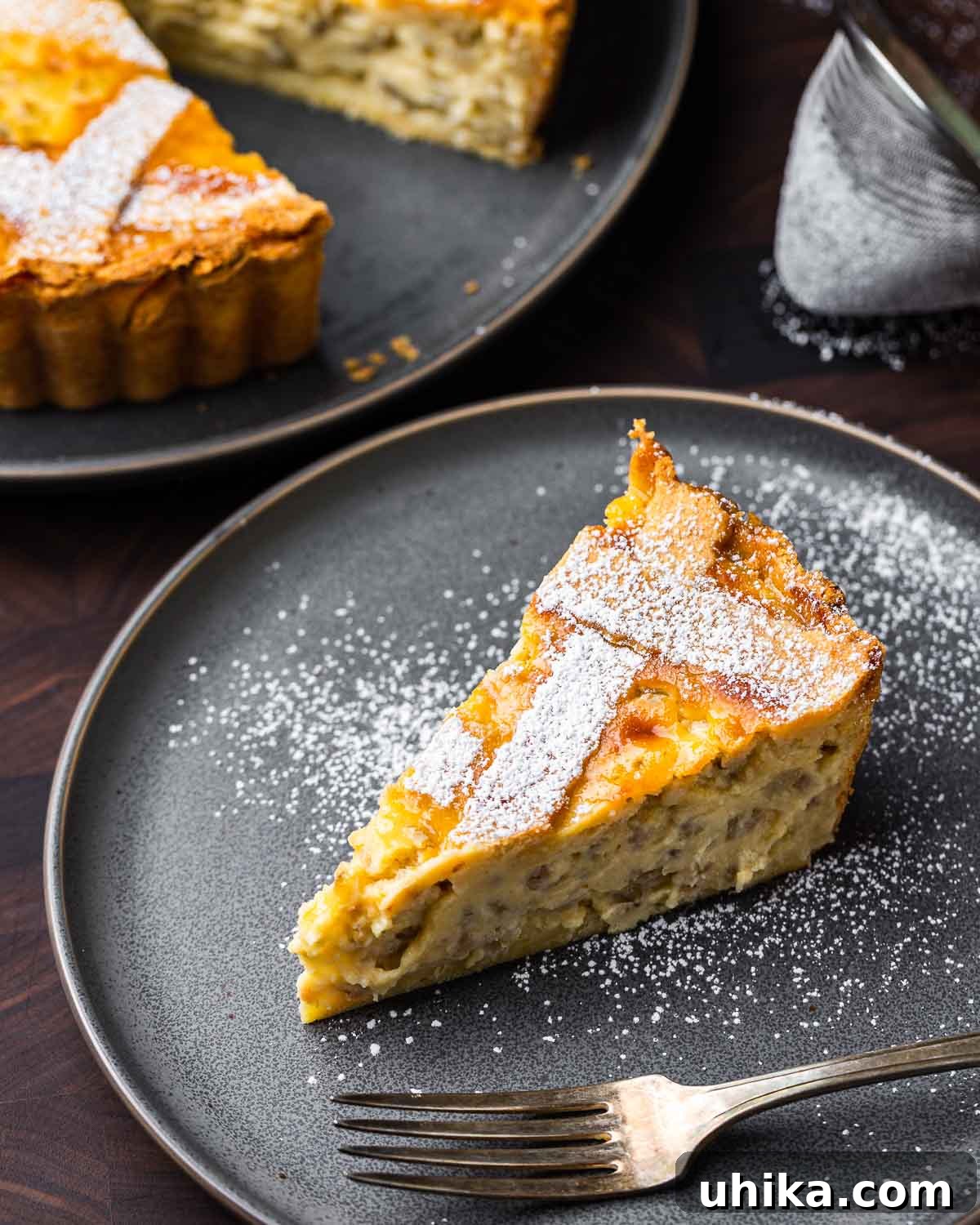
- Once baked, remove the Pastiera Napoletana from the oven and transfer it to a wire rack to cool completely. Allowing it to cool fully is crucial for the filling to properly set and for the flavors to fully develop. Once cool, carefully remove the pie from its pan. Just before serving, generously sift powdered sugar over the top. This final touch adds a delicate sweetness and elegant presentation to your homemade Pastiera. Enjoy this traditional Italian delight!
Expert Tips for the Perfect Pastiera Napoletana
- Sourcing Grano Cotto (Wheat Grain): The star ingredient, grano cotto, is typically available in most Italian grocery stores and specialty food markets, especially leading up to Easter. If you’re unable to find it locally, grano cotto can be purchased online from Amazon or other gourmet food retailers throughout the year. For an adventurous alternative, you can cook raw hard wheat berries from scratch, though this requires soaking and several hours of simmering.
- The Essential Ricotta: To achieve a firm, creamy filling that isn’t watery, it is absolutely essential to strain your ricotta. This technique is common in many classic Italian desserts, including cannoli and Italian cheesecake. The simplest method is to place the ricotta in a fine-mesh strainer set over a bowl and let it drain in the refrigerator overnight. For quicker results, scoop the ricotta into a cheesecloth-lined strainer, gather the cloth, and twist and squeeze firmly to remove as much moisture as possible.
- Flavor Harmony in the Filling: Always taste your Pastiera filling before adding the eggs. This allows you the flexibility to make any necessary adjustments to the amounts of cinnamon, vanilla, or orange blossom water. Getting the balance of these delicate aromatics just right is key to Pastiera’s unique charm. Remember, refrigerating the filling overnight further enhances and deepens these flavors.
- The Art of the Crust: The top of a traditional Pastiera Napoletana is often adorned with seven strips of dough, arranged in a diamond pattern. This design is said to symbolize the seven ancient roadways of Naples or the window grates of the city. While adhering to this specific design is a beautiful nod to tradition, it’s not mandatory for flavor. Feel free to create a simpler lattice or any other decorative pattern you prefer; the taste will remain equally delightful.
- Precision Baking: Keep in mind that oven temperatures can vary significantly. I recommend baking your Pastiera on the bottom rack for the initial 20 minutes to ensure a perfectly cooked bottom crust, then moving it to the middle rack for the remainder of the 60-65 minute baking time (or until golden brown). Monitor your pie closely. If the edges or top crust begin to brown too rapidly, loosely tent the pie with aluminum foil to protect it and prevent over-browning.
- Serving and Storage Recommendations: Italian grain pie is versatile and can be served either chilled or slightly warmed. For optimal flavor development and to fully appreciate its complexity, I usually prepare Pastiera a few days in advance and store it in the refrigerator. Before serving, dust generously with confectioner’s sugar – ensure the pie is cold when you do this to prevent the sugar from melting and disappearing. It pairs beautifully with other Easter desserts like Struffoli. And do yourself a favor: save a slice to enjoy the next morning with your coffee or tea. You’ve earned it after crafting this masterpiece!
Explore More Delightful Easter Recipes
If you loved making this traditional Italian Pastiera Napoletana, you might also enjoy these other festive Easter treats:
- Torta Pasqualina
- Lemon Ricotta Cookies
- Pignoli Cookies
If you’ve enjoyed this **Pastiera Napoletana recipe**, consider giving it a 5-star rating below!
Watch us on YouTube, follow along on our Facebook Page, and explore exclusive content by becoming a Patreon member.
Pastiera Napoletana
Pin
Ingredients
For the wheat cream
- 22 ounces (630g) canned wheat grain (grano cotto) see notes below
- 1 cup (240g) milk
- 1 tablespoon orange zest
- 2 teaspoons sugar
- 2 tablespoons (28g) unsalted butter
- 1/8 teaspoon fine sea salt
For the filling
- 1 pound ricotta drained overnight
- 1 cup (200g) granulated sugar
- 3 large eggs
- 1/4 teaspoon cinnamon
- 1/4 teaspoon vanilla extract
- 1 teaspoon orange blossom water
- 3 ounces (85g) candied citron cut into tiny pieces
For the dough
- 2 teaspoons lemon zest
- 2 1/2 cups (320g) all-purpose flour
- 12 tablespoons (170g) cold butter cubed
- 2 large eggs
- 1/8 teaspoon fine sea salt
- 1/3 cup (75g) granulated sugar
- 3 tablespoons (45g) milk
For serving
- 2 tablespoons powdered sugar for dusting
Instructions
For the wheat cream
-
Place all of the wheat cream ingredients into a large pot and cook over low heat until the mixture softens (about 10 minutes). Stir frequently to avoid burning, then remove from the heat and set aside to cool.
For the filling
-
Add the ricotta and sugar to a large bowl and whisk to incorporate.
-
Add the cooled wheat cream to the filling mixture. Also, add all of the remaining filling ingredients, except for the eggs, and mix once more.
-
Taste test and if needed add more orange blossom water, cinnamon, sugar, or vanilla. Once satisfied, add in the eggs and whisk together.
-
The filling should be covered and refrigerated overnight for the flavors to meld. If you don’t have the time, at least try to refrigerate for a few hours.
For the dough
-
Add the flour, salt, sugar, and lemon zest to the bowl of a food processor and pulse to mix the ingredients. Add the cold butter cubes and pulse again. You should have small coarse pieces.
-
Next, add the eggs and milk and pulse just a few times until the dough is formed.
-
Place the dough onto a work surface and knead for a few seconds only. You just want to bring the dough together. Form two unequal sized balls. Make one large ball with 2/3s of the dough and the other smaller one with the remaining dough.
-
Wrap the balls in plastic wrap and refrigerate for 1 hour before using. The dough can be made 1 day ahead of time.
Assemble and bake
-
Preheat oven to 375f and set one rack to the lowest level and the other to the middle level. Grease with butter or lard a 9 by 2″ pie or tart pan.
-
Remove dough from the fridge and wait 20 minutes for it to warm up. Roll out the larger ball to a circle approximately 1/4-inch thick and about 13-inches round. Place the dough into the pan and tuck in the edges letting the excess overhang. Trim off the excess overhanging dough. Any open spots should be patched with the excess dough.
-
Pour the filling into the pan. Don’t fill it all the way up to the top. You shouldn’t have enough filling to reach the top, but hold off if you do.
-
Roll out the second smaller ball to a circle a bit larger than the pie pan. Cut into approximately 1/2-inch wide strips.
-
Place the strips into a diamond formation about 2 inches apart.
-
Use your fingers or a spoon to press the strips down into the corners so that they stick. If needed a touch of water can be used to “glue” the strips to the sides. Cut off any excess dough. Place the pie onto a baking sheet to prevent any drips.
-
Bake for 20 minutes on the bottom rack then move to the middle. Total baking will take 65-70 minutes or until golden brown. Check the pie at halfway point and if it looks like it’s getting too brown cover loosely with foil. You might have to cover just the edges or possibly the whole pie depending on how brown it is.
-
Remove from the oven and place on a wire rack to cool. Once the pie cools, remove it from the pie pan and sift powdered sugar on top before serving. Enjoy!
Notes
- Makes 12 servings.
- Grano cotto can be purchased in Italian specialty stores or some supermarkets during Easter time or all year long from Amazon and other online sellers.
- Sprinkle powdered sugar before serving and when cold so that it doesn’t melt.
- Testing the filling is very important to get the flavor right. Make adjustments to suit your taste. Refrigerating overnight will further intensify the flavor of the filling.
- Leftovers can be saved for up 4 days, stored in an airtight container in the refrigerator.
Nutrition
Nutrition information is automatically calculated, so should only be used as an approximation.
Did you try this Pastiera Napoletana recipe? Leave a comment below!Check us out on Instagram at @sipandfeast or tag #sipandfeast!