
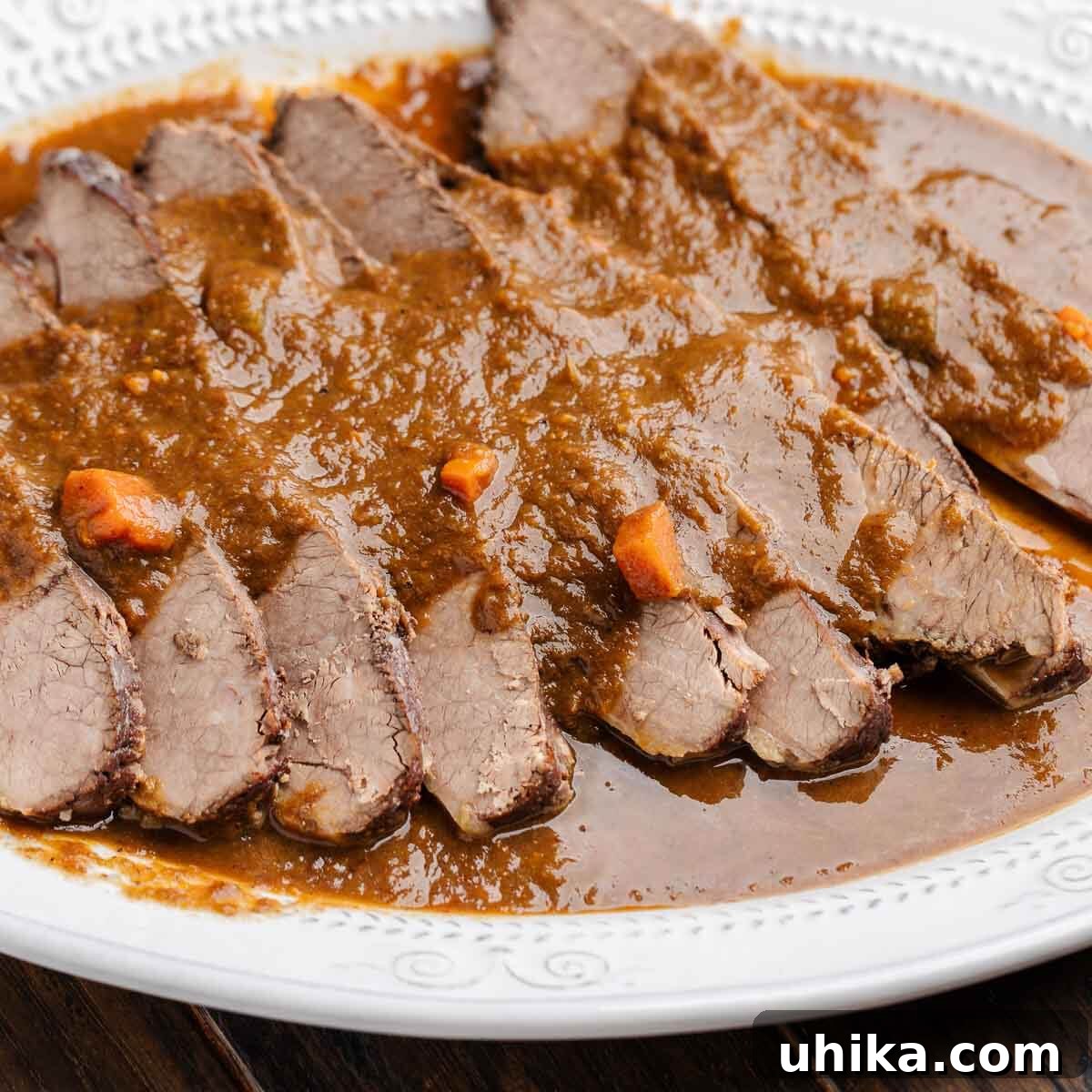
Brasato al Barolo: A Timeless Piedmontese Braised Beef Masterpiece
Indulge in the rich culinary heritage of Italy with this classic Piedmontese-style Brasato al Barolo. This incredibly flavorful dish features succulent beef brisket, slowly braised to melt-in-your-mouth tenderness in a luxurious blend of Barolo red wine and aromatic herbs. Beyond its exquisite taste, the divine aroma alone will transform your home into a haven of Italian comfort. It’s more than just a meal; it’s an experience, a celebration of slow cooking and profound flavors that have captivated palates for generations.
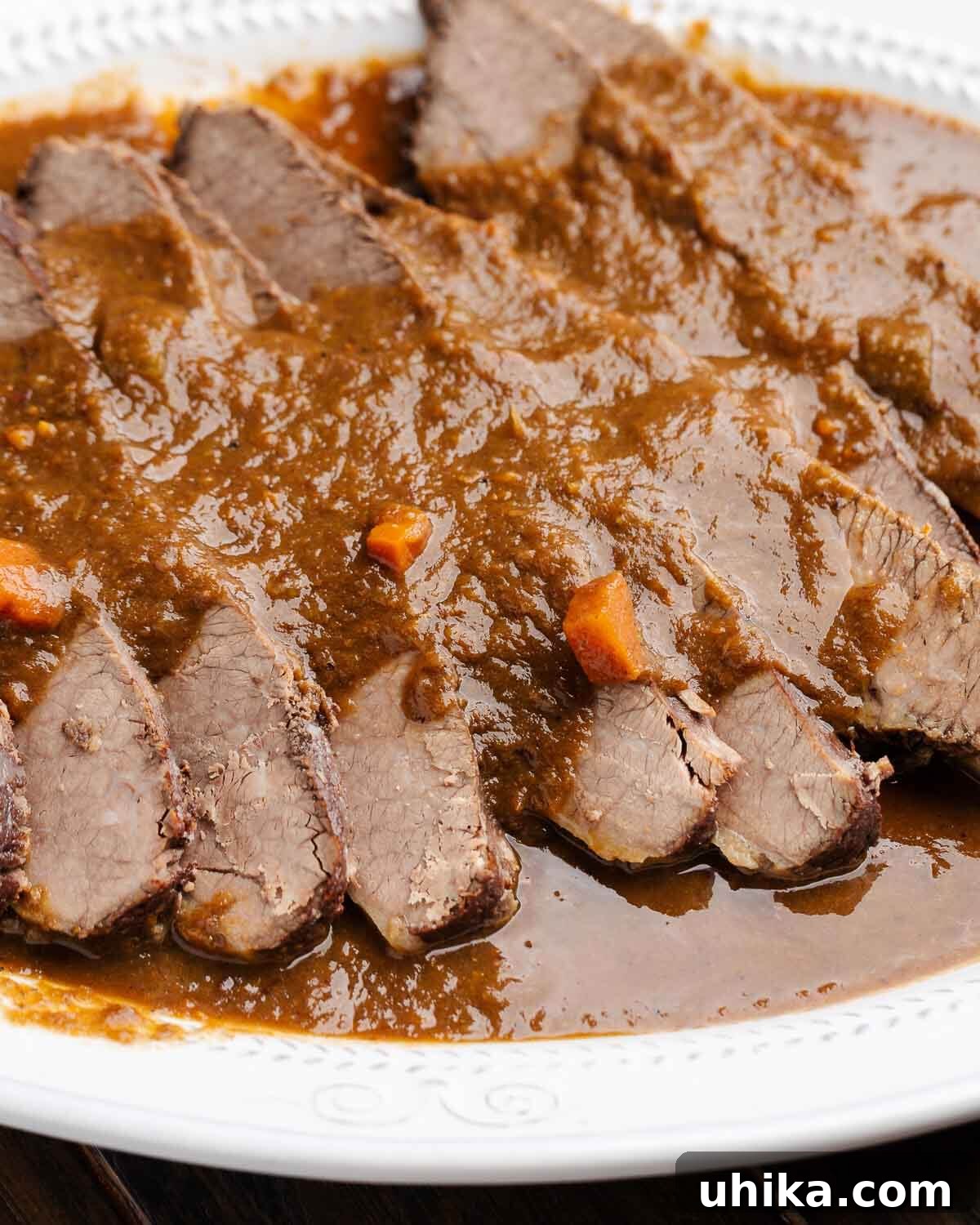
Editor’s Note: This recipe was originally published on December 10, 2018, and has since been updated with expanded information and detailed guidance on November 15, 2023.
The Heart of Piedmontese Cuisine: What is Brasato al Barolo?
Brasato al Barolo, often simply called brasato al vino rosso (braised in red wine), is a quintessential Italian dish, particularly renowned in the Piedmont region of Northern Italy. At its core, “brasato” refers to a traditional cooking method where meat is seared and then slowly simmered in liquid until it becomes exceptionally tender. While many regions boast their own variations of braised meats, the Piedmontese version elevates this technique by incorporating Barolo wine, a prestigious full-bodied red wine indigenous to the area. This noble wine imparts a unique depth and complexity that defines the dish.
Typically, cuts like beef chuck or brisket are chosen for Brasato al Barolo due to their marbling and connective tissues, which break down beautifully during the long braising process, resulting in unparalleled succulence. Given the quality of both the beef and the Barolo wine, this dish is traditionally reserved for special occasions and festive gatherings. It’s a culinary statement, a labor of love that rewards patience with an unforgettable dining experience, making it perfect for holidays, anniversaries, or any moment you wish to make truly memorable.
Crafting the Perfect Brasato: Key Ingredients Explored
The success of Brasato al Barolo hinges on the quality and harmony of its ingredients. Each component plays a crucial role in building the dish’s signature rich, savory, and aromatic profile. Understanding these elements is key to achieving an authentic and delicious result.
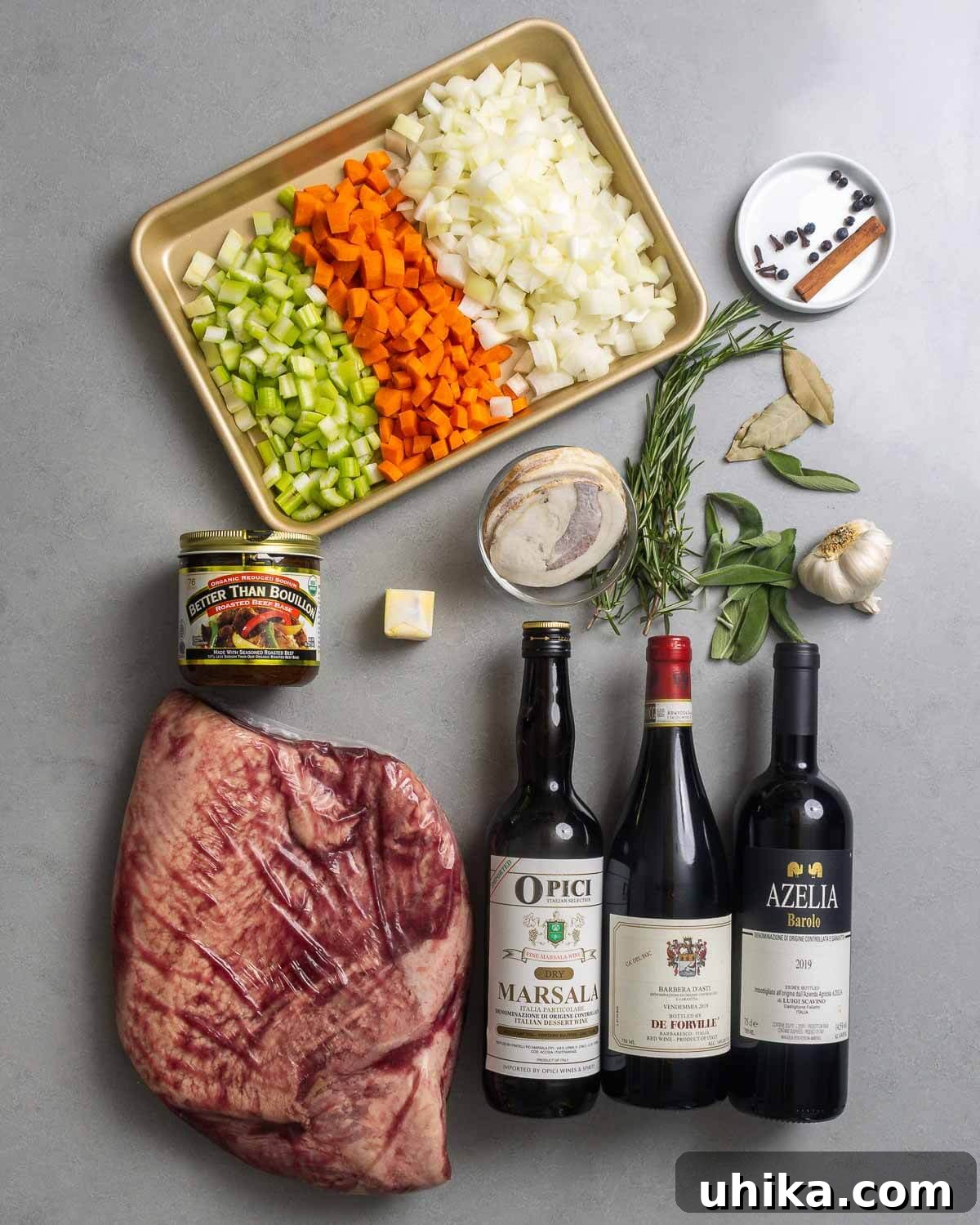
Choosing the Best Beef
For Brasato al Barolo, the choice of beef cut is paramount. I’ve opted for a 6-pound brisket flat in this recipe. Brisket, composed of two distinct muscles – the flat and the point – is ideal for braising. The flat is generally leaner and slices beautifully, offering elegant presentation, as seen in our finished dish. The point, while fattier and incredibly flavorful, can be more challenging to slice neatly. Alternatively, beef chuck roast is another excellent choice, known for its rich marbling and robust flavor, which also breaks down wonderfully under slow heat. Regardless of your choice, look for a well-marbled piece of beef; the fat will render during cooking, keeping the meat moist and adding immense flavor to the braising liquid.
The Star Wine: Barolo and Its Alternatives
The name of the dish proudly highlights its most iconic ingredient: Barolo wine. Hailing from the rolling hills of Piedmont, Barolo is often referred to as “The King of Wines and the Wine of Kings.” Made from the Nebbiolo grape, it boasts bold tannins, high acidity, and complex notes of cherry, roses, tar, and truffles. While traditional, Barolo can be quite expensive, with bottles often costing $50 or more. If you’re on a budget, or simply prefer to save your prized Barolo for drinking, rest assured that you can achieve fantastic results with more economical dry red wines. Excellent Piedmontese alternatives include a less expensive Nebbiolo, Barbera, or Dolcetto. If these are unavailable, a good quality Chianti or a robust Cabernet Sauvignon will also perform admirably. The key is to select a wine you would enjoy drinking, as its character will significantly influence the final flavor of your brasato. A full 750ml bottle is used to ensure maximum flavor infusion during the marination and braising process.
Aromatic Vegetables: The Flavor Foundation
A classic Italian braise begins with a soffritto, and Brasato al Barolo is no exception. Diced onions, celery ribs, and carrots form the aromatic base, slowly sautéed to release their sweet, earthy flavors. These vegetables not only contribute depth to the sauce but also provide a textural contrast and a pleasant sweetness that balances the richness of the beef and wine. Freshly minced garlic cloves are added to further enhance this foundational layer, bringing their pungent and savory notes to the mix.
Herbs and Spices: The Soul of the Marinade
The unique aromatic profile of this brasato comes from a carefully curated blend of herbs and spices, bundled into a convenient sachet for easy removal. A large cinnamon stick adds a subtle warmth and sweetness, while juniper berries contribute a distinctive botanical, slightly peppery, and resinous note that is characteristic of northern Italian cuisine. Fresh bay leaves, fragrant sage leaves, and woody rosemary sprigs round out the herbaceous elements, infusing the meat and liquid with their earthy and piney aromas. This sachet ensures that the flavors are deeply absorbed during the marination and braising, without leaving loose herbs in the final sauce.
Savory Enhancers: Pancetta and Marsala
To kickstart the flavor development, diced pancetta is rendered in olive oil, providing a rich, savory fat for searing the brisket and crisping up to add a delightful textural crunch. Its salty, cured pork flavor perfectly complements the beef. Towards the end of the cooking process, a splash of dry Marsala wine is introduced. This fortified wine, known for its nutty and caramelized notes, adds another layer of complexity and a subtle sweetness that brightens and balances the rich, reduced braising liquid, elevating the sauce to a truly gourmet level. Finally, finishing the sauce with a touch of cubed unsalted butter adds a silky sheen and velvety texture.
For a comprehensive list of all ingredients and precise quantities, please refer to the detailed recipe card below.
Step-by-Step: Mastering the Art of Brasato al Barolo
Creating Brasato al Barolo is a journey, not a sprint. It demands patience and attention to detail, but the process is straightforward and incredibly rewarding. Follow these steps to achieve a dish that will impress even the most discerning palates.
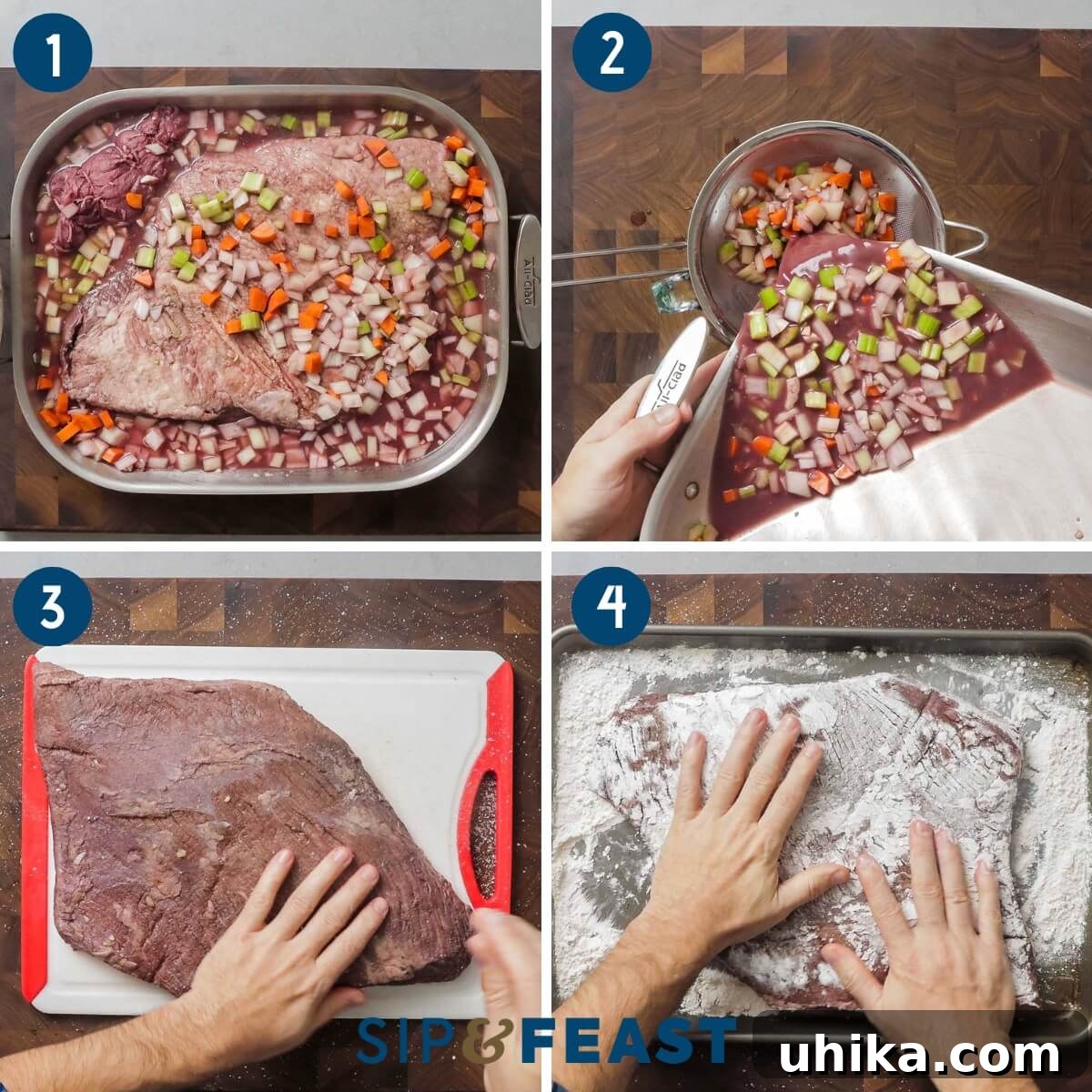
Each numbered step below corresponds to the process photos, guiding you visually through the creation of this magnificent dish.
The Marinade: Infusing Deep Flavors
- Begin by preparing your aromatics and herb sachet. Dice 1 large onion, 2 ribs of celery, and 2 large carrots. Mince 4 cloves of garlic. Next, create a sachet using a piece of cheesecloth, tying together 1 large cinnamon stick, 3 whole cloves, 10 whole juniper berries, 3 large bay leaves, 10 large sage leaves, and 5 sprigs of rosemary. Place the 6-pound brisket flat into a large, flat baking dish. Pour 2 cups of low-sodium beef stock and the entire 750ml bottle of dry red wine over the brisket and vegetables. Ensure the brisket is mostly submerged. Cover the dish tightly and refrigerate for at least 12 hours, but ideally overnight (up to 24 hours), to allow the flavors to penetrate deeply into the meat. Remember to flip the brisket a few times during this period to ensure even marination on both sides. (Photo #1)
- The following day, carefully remove the brisket from the marinade. Strain the marinating liquid and separate the brisket, vegetables, and liquid into different bowls. Discard the sachet for now, but you’ll add it back later for braising. Preheat your oven to 300°F (150°C), preparing it for the slow braising process. (Photo #2)
Searing and Building the Base
- Pat the brisket very dry with paper towels. This step is crucial for achieving a proper sear, which locks in flavor and creates a beautiful crust. Season generously on all sides with 2½ tablespoons of Diamond Crystal kosher salt (or 1¾ tablespoons of Morton’s kosher salt) and 2 teaspoons of freshly ground black pepper. (Photo #3)
- Lightly dredge the seasoned brisket in about ½ cup of all-purpose flour, ensuring it’s evenly coated. Shake off any excess flour; you want a thin layer, not a thick paste. Discard any remaining flour. (Photo #4)
- Heat a large oven-safe roasting pan or Dutch oven over medium heat. Add 2 tablespoons of olive oil, then add ¼ pound of diced pancetta. Cook the pancetta for 7-10 minutes, stirring occasionally, until it becomes crisp and its fat has rendered. (Photo #5)
- Once the pancetta is crisp, remove it from the pan with a slotted spoon and set aside. Leave the rendered fat in the pan. Carefully add the floured brisket to the hot pan and sear it vigorously on all sides until a deep, golden-brown crust forms. This browning step adds immense flavor through the Maillard reaction. Once nicely browned, remove the brisket from the pan and set it aside with the pancetta. (Photo #6)
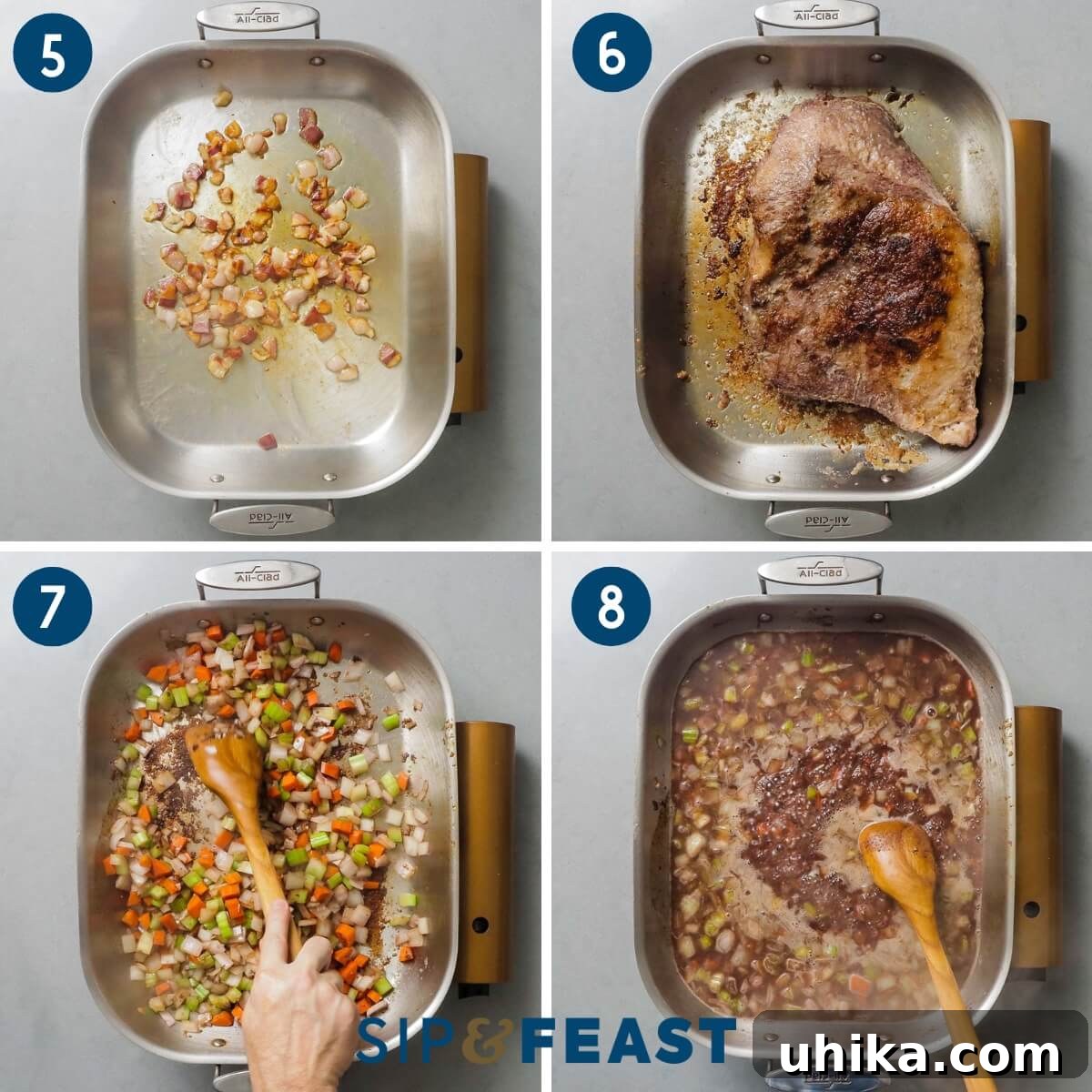
The Slow Braise: Transforming Tough Cuts into Tender Delights
- Add the reserved marinated vegetables (onions, celery, carrots, garlic) to the same pan, scraping up any browned bits from the bottom. Sauté for about 10 minutes, or until they soften and take on a light golden color. (Photo #7)
- Pour the reserved marinating liquid back into the pan with the sautéed vegetables. Bring the liquid to a rolling boil, using a wooden spoon to scrape the bottom of the pan and dislodge any caramelized “fond” (brown bits). This fond is packed with flavor and will enrich your sauce. (Photo #8)
- Turn off the heat. Return the seared brisket to the pan, fat side up. Scatter the crisp pancetta around the brisket and add the herb sachet back into the liquid. Cover the pan tightly with two layers of heavy-duty foil, ensuring a complete seal to prevent steam from escaping. Transfer the covered pan to the preheated 300°F (150°C) oven and cook for 4 hours. After 4 hours, check the brisket for doneness: it should be incredibly tender, allowing a knife or fork to push through the meat with very little resistance. If it’s still tough, return it to the oven for an additional 45-60 minutes, then check again. The total cooking time for a 6-pound brisket can range from 3½ to 5½ hours, depending on its thickness and your oven. (Photo #9)
- Once the brisket is fork-tender, remove the pan from the oven. Keep it covered with the foil and allow it to rest for at least 30 minutes. This resting period allows the juices to redistribute, ensuring a moist and flavorful final product. After resting, remove the brisket from the pan and discard the sachet. (Photo #10)
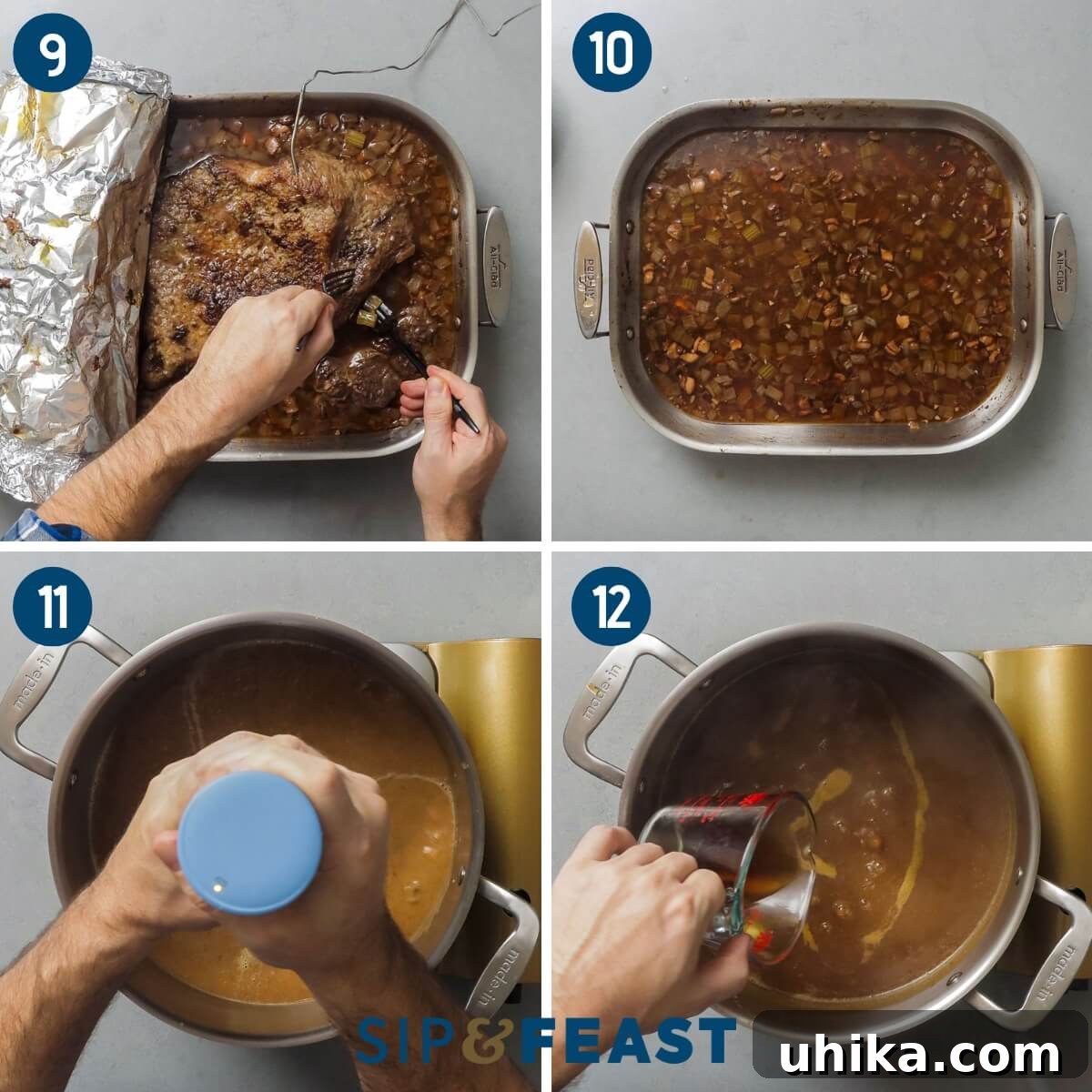
Perfecting the Sauce and Serving
- Place the pan with the braising liquid back onto a burner over medium-high heat. Bring the sauce to a boil and reduce it until it has thickened to your desired consistency. Traditionally, the sauce should be rich enough to lightly coat the back of a wooden spoon but not overly thick. If you prefer a smoother, thicker sauce, you can use an immersion blender to blend the vegetables into the liquid at this stage. (Photo #11)
- Once the sauce has reached the desired consistency, add ½ cup of dry Marsala wine and cook for 1 minute, allowing the alcohol to cook off and the flavors to meld. Then, whisk in 2 tablespoons of cubed unsalted butter until fully incorporated; this will add a lovely sheen and richness to the sauce. Taste the sauce and adjust seasoning with salt and pepper as needed. (Photo #12)
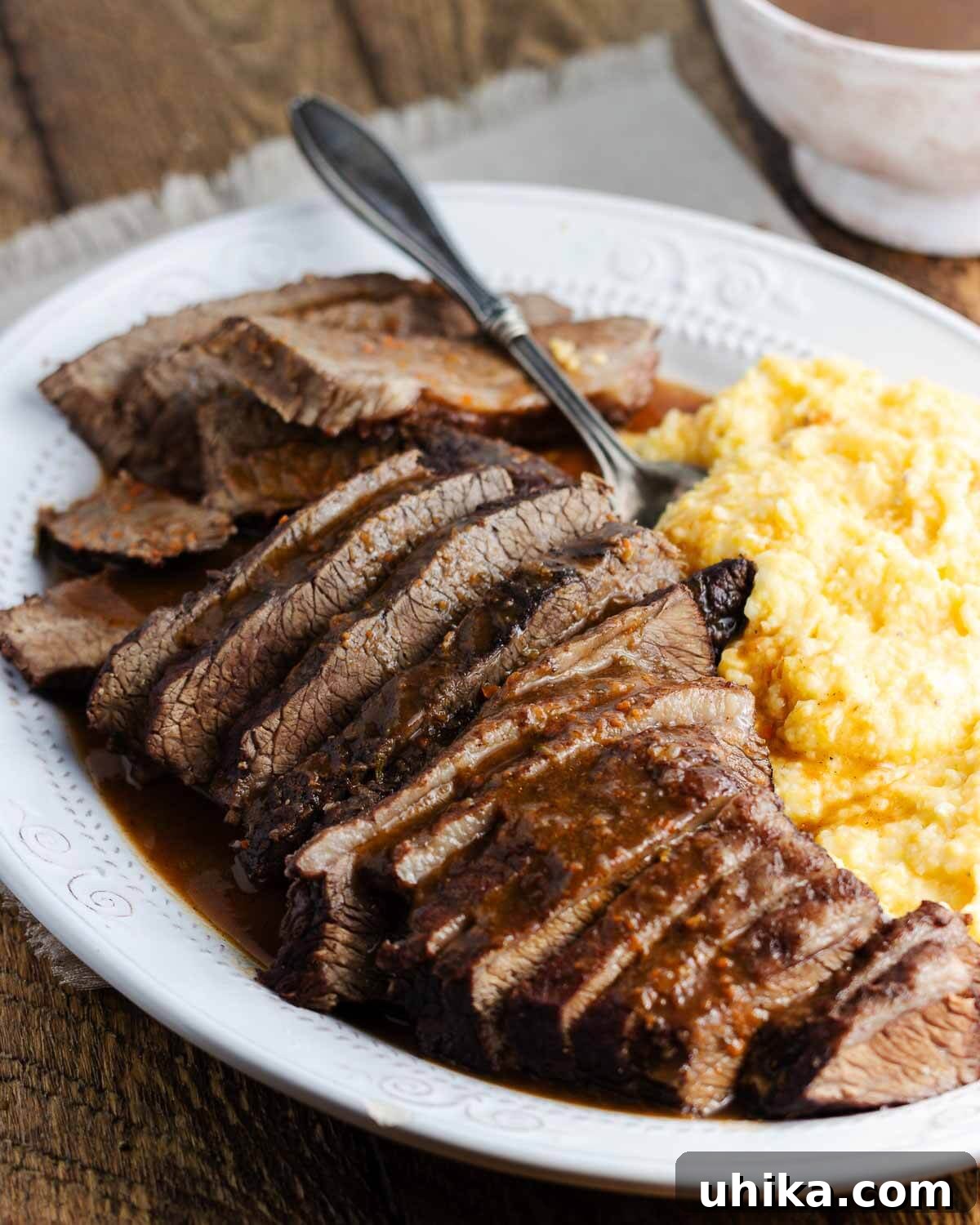
- Carefully slice the tender brisket against the grain into thick, impressive slices. Arrange them beautifully on a large serving platter and generously spoon the luxurious Barolo sauce over the top. This presentation highlights the beauty of the slow-cooked meat and its rich accompaniment. (Photo #13)
- While delicious immediately, Brasato al Barolo is renowned for being even better the next day. If time permits, wrap the cooled brisket tightly in plastic wrap and store it in the refrigerator overnight. This allows the flavors to deepen and meld further, making it an even more spectacular dish. (Photo #14)
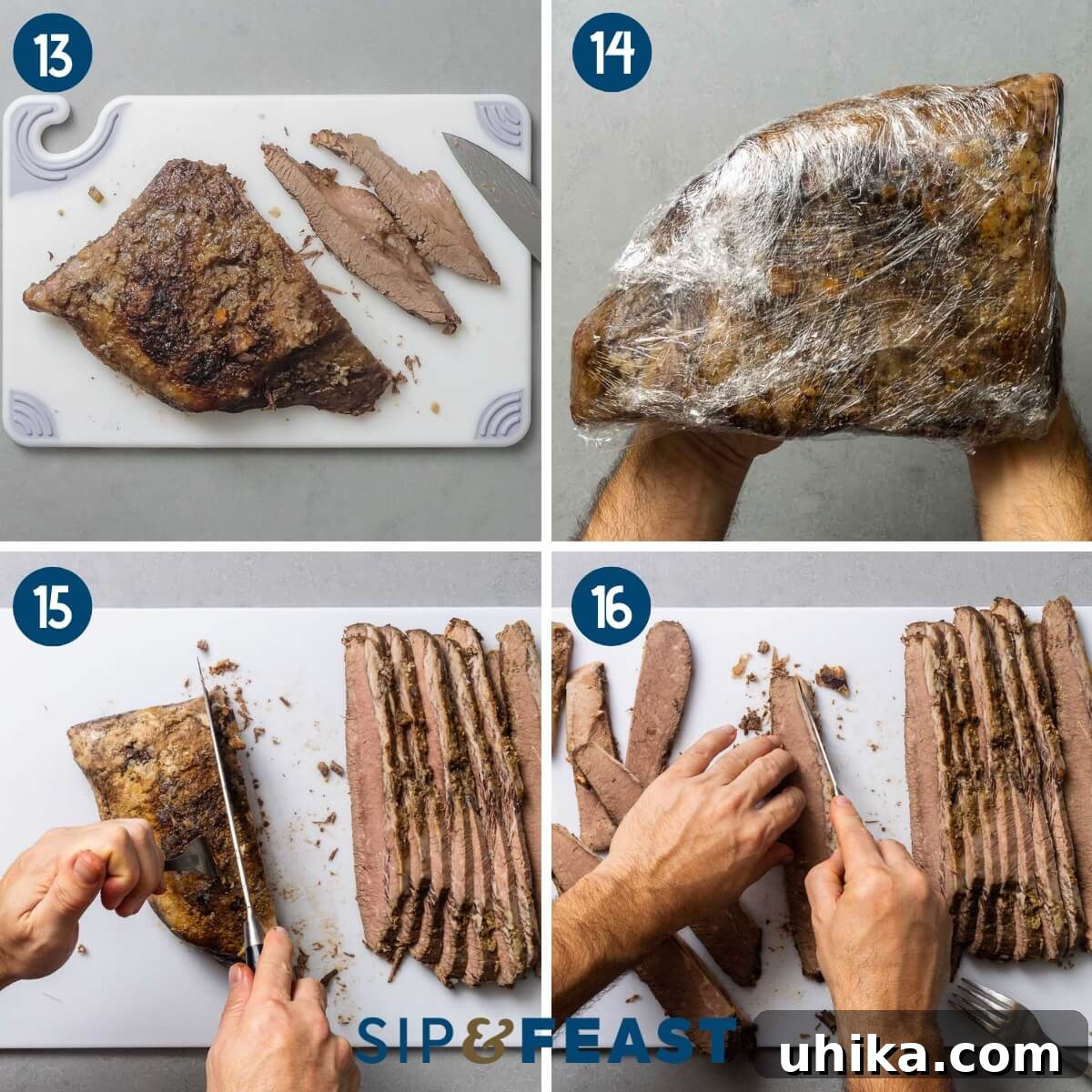
The Day-After Magic: Enhancing Flavors and Ease of Serving
- If you chose to refrigerate the brisket, the next day it will be cold and firm, making it significantly easier to slice into perfectly thin, uniform pieces. (Photo #15)
- Before reheating, you can easily remove any additional solidified fat from the chilled sauce, if desired. To reheat, place the sliced brisket back into the sauce in a covered baking dish. Warm it in the oven at 275°F (135°C) until thoroughly hot. Serve this exquisite Brasato al Barolo with your favorite creamy accompaniment, such as polenta, mashed potatoes, or risotto, and savor every bite! (Photo #16)
Expert Tips for an Unforgettable Brasato al Barolo
- Achieving Fork-Tender Perfection: Unlike steaks, braised dishes like brisket are not about reaching a specific internal temperature for doneness but rather about achieving a fork-tender texture. While beef brisket can be safely consumed at an internal temperature of 200-205°F (93-96°C), it might still be tough at this point during braising. Braising at 300°F (150°C) often brings the meat to 200°F (93°C) within 2-3 hours, but the collagen needs more time to break down. Therefore, continue cooking until a fork or knife can slide into the meat with virtually no resistance. For a 6-pound brisket, this can take anywhere from 3½ to 5½ hours. Don’t rush this process; patience is key to tenderness.
- The Magic of Day-Old Brasato: As with many slow-cooked stews and braises, Brasato al Barolo genuinely benefits from resting overnight. The flavors have time to meld and deepen, resulting in an even more harmonious and complex taste profile. Furthermore, chilling the brisket overnight makes it considerably easier to slice into thin, clean portions, which is ideal for presentation. Simply wrap the cooked brisket tightly and refrigerate it with the sauce separately, then gently reheat both together.
- Choosing Your Wine Wisely: While Barolo is the traditional and namesake wine, don’t feel obligated to use an expensive bottle for cooking. High-quality Barolos can indeed be costly. An economical dry red wine from the same Piedmont region, such as a Nebbiolo, Dolcetto, or Barbera, will yield excellent results. Alternatively, a sturdy Chianti or Cabernet Sauvignon is also a fantastic choice. The general rule is to use a wine you would enjoy drinking on its own, but not necessarily the most expensive one in your cellar. Save your $50+ Barolo for pairing with the finished dish!
- Storage and Reheating: Leftover Brasato al Barolo stores wonderfully. Allow the dish to cool completely, then transfer the meat and sauce to an airtight container. It can be safely refrigerated for up to 3 days. To reheat, place the brisket slices back into the sauce in a covered oven-safe dish and warm gently in a 275°F (135°C) oven until heated through. The flavors will be just as vibrant, if not more so.
Ideal Accompaniments and Pairings
Brasato al Barolo is a hearty and luxurious dish that calls for equally satisfying accompaniments. My personal favorite is serving it alongside creamy polenta. The velvety texture and mild corn flavor of the polenta perfectly absorb the rich Barolo sauce, creating a harmonious and comforting bite. Other excellent choices include garlic mashed potatoes, which offer a similar comforting creaminess, or a sophisticated Risotto alla Milanese, with its saffron-infused arborio rice. For a lighter touch, consider sautéed greens like spinach or Swiss chard, or a simple green salad to cut through the richness. When it comes to wine pairings for drinking with your meal, if you’ve used a more affordable wine for cooking, now is the time to uncork a beautiful Barolo or another full-bodied red from Piedmont to truly complement the flavors of your braised beef.
Explore More Braised Beef Delights
If you’ve fallen in love with the comforting richness of braised beef, you’re in luck! There’s a whole world of slow-cooked meat dishes to explore. Here are a few more of my cherished recipes that promise similar depth of flavor and tender results:
- Braised Short Ribs – Slow-cooked with aromatic herbs, rich tomato, red wine, and vegetables, often finished with a zesty gremolata.
- Italian Beef Stew – Also known as Spezzatino di Manzo, this rustic stew is a staple of Italian home cooking, bursting with savory flavors.
- Short Rib Ragu – Tender short ribs slow-cooked into a magnificent ragu, perfect for tossing with wide pappardelle pasta.
- Peposo – A robust Tuscan beef stew characterized by an abundance of black pepper and red wine, offering a uniquely spicy and rich experience.
If you’ve enjoyed this Brasato al Barolo Recipe or any other recipe on our site, please consider sharing your experience! We’d be thrilled if you could give it a 5-star rating and share your thoughts in the comments below. Your feedback helps us grow and inspires other home cooks.
We believe in catering to various learning styles. If you are someone who prefers to learn by watching, you’ll find most of our recipes, including many braised beef dishes, on our official YouTube Channel and our dedicated Facebook Page. Join our community and let’s cook together!
Brasato Al Barolo Recipe
Brasato al Barolo is a classic Italian meal of brisket braised in red wine with herbs, cloves, and juniper berries. This delicious comfort food is best served with creamy polenta or mashed potatoes, offering a deeply satisfying and aromatic experience.
Prep Time: 30 mins | Cook Time: 4 hrs | Marinating Time: 1 day | Total Time: 4 hrs 30 mins (plus marinating)
Servings: 8
Ingredients
For the Marinade
- 1 (6-pound) brisket flat
- 1 large onion, diced
- 2 ribs celery, diced
- 2 large carrots, diced
- 4 cloves garlic, minced
- 1 bottle dry red wine (750ml, e.g., Barolo, Nebbiolo, Barbera, Chianti, or Cabernet)
- 2 cups low sodium beef broth
- 1 large cinnamon stick
- 10 whole juniper berries
- 3 large bay leaves
- 10 large sage leaves
- 5 sprigs rosemary
- 3 whole cloves
For Searing and Braising
- 2 tablespoons olive oil
- ¼ pound pancetta, diced
- 2½ tablespoons Diamond Crystal Kosher salt (or 1¾ tablespoons Morton’s kosher salt)
- 2 teaspoons black pepper
- ½ cup all-purpose flour (for dredging only, discard excess)
- ½ cup dry Marsala wine
- 2 tablespoons butter, cubed
- Salt and pepper, to taste (for final sauce adjustment)
Instructions
- Marinate the beef: In a large flat baking dish, combine the diced onion, celery, carrots, and minced garlic. Create an herb sachet by tying together the cinnamon stick, cloves, juniper berries, bay leaves, sage leaves, and rosemary sprigs in a piece of cheesecloth. Place the brisket and the sachet in the dish with the vegetables. Pour the red wine and beef broth over everything. Cover tightly and refrigerate for at least 12 hours, ideally overnight, flipping the brisket a few times for even marination.
- Prepare for braising: The next day, preheat your oven to 300°F (150°C). Remove the brisket from the marinade. Strain the liquid, reserving both the liquid and the marinated vegetables in separate bowls. Discard the herb sachet for now.
- Season and dredge: Pat the brisket very dry with paper towels. Season all sides generously with kosher salt and black pepper. Lightly dredge the brisket in all-purpose flour, shaking off any excess.
- Sear pancetta: Heat an oven-safe roasting pan or Dutch oven over medium heat. Add olive oil and diced pancetta. Cook for 7-10 minutes until crisp, then remove with a slotted spoon and set aside.
- Sear brisket: Add the floured brisket to the pan with the rendered pancetta fat. Brown thoroughly on all sides until a deep, golden crust forms. Remove the brisket and set it aside.
- Sauté vegetables: Add the reserved marinated vegetables to the pan. Cook for about 10 minutes, stirring occasionally, until softened and lightly colored, scraping up any browned bits from the bottom of the pan.
- Deglaze and bring to boil: Pour the reserved marinating liquid back into the pan. Bring to a boil, continuing to scrape the bottom of the pan to dislodge any remaining flavorful fond. Turn off the heat.
- Braise: Return the seared brisket (fat side up), the crisp pancetta, and the herb sachet to the pan. Cover the pan tightly with two layers of foil. Transfer to the preheated oven and braise for 4 hours.
- Check for tenderness: After 4 hours, check the brisket for tenderness. A knife or fork should easily slide through the meat with very little resistance. If it’s still tough, return to the oven for another 45-60 minutes, then check again.
- Rest the brisket: Once tender, remove the pan from the oven and let it sit, still covered, for 30 minutes. After resting, remove the brisket and discard the herb sachet.
- Finish the sauce: Place the pan with the braising liquid back onto a burner over medium-high heat. Boil the sauce, reducing it until it thickens to your preferred consistency (it should lightly coat the back of a spoon). If desired, blend the sauce with an immersion blender for a smoother texture.
- Add Marsala and butter: Stir in the dry Marsala wine and cook for 1 minute. Whisk in the cubed butter until fully incorporated. Taste the sauce and season with salt and pepper as needed.
- Serve: Slice the brisket against the grain and arrange on a serving platter. Spoon the rich Barolo sauce generously over the meat. Serve hot with creamy polenta, mashed potatoes, or risotto. Enjoy!
- For day-after serving: If time permits, allow the brisket and sauce to cool completely. Wrap the brisket in plastic wrap and store it in the refrigerator overnight. The next day, the brisket will be firmer and easier to slice thinly. Reheat the sliced brisket and sauce in a covered baking dish at 275°F (135°C) until hot.
Recipe Notes
- Tenderness Over Temperature: Remember, for braised brisket, the goal is fork-tenderness, not a specific internal temperature. While it might reach 200-205°F (93-96°C) within 2-3 hours, the connective tissues need more time to break down. For a 6-pound brisket, expect total braising time to be between 3½ to 5½ hours. Cook until truly tender.
- The Second Day Advantage: Like many braises, Brasato al Barolo develops deeper, more harmonious flavors overnight. If possible, cook it a day in advance. Chilling the brisket also makes it considerably easier to slice into thin, elegant pieces. Reheat gently in a covered baking dish at 275°F (135°C) with the sauce.
- Wine Choices: While the dish traditionally features Barolo, using a less expensive but still good quality dry red wine (such as Nebbiolo, Barbera, Dolcetto, Chianti, or Cabernet Sauvignon) will still yield excellent results. Save your premium Barolo bottles for drinking!
- Leftovers: Leftovers can be stored in an airtight container in the refrigerator for up to 3 days. Reheat gently on the stovetop or in the oven.
Nutrition
Nutrition information is automatically calculated, so should only be used as an approximation.
Like this? Leave a comment below!Check us out on Instagram at @sipandfeast or tag #sipandfeast!
This recipe was originally published on December 10, 2018. It was completely updated on November 15, 2023.