
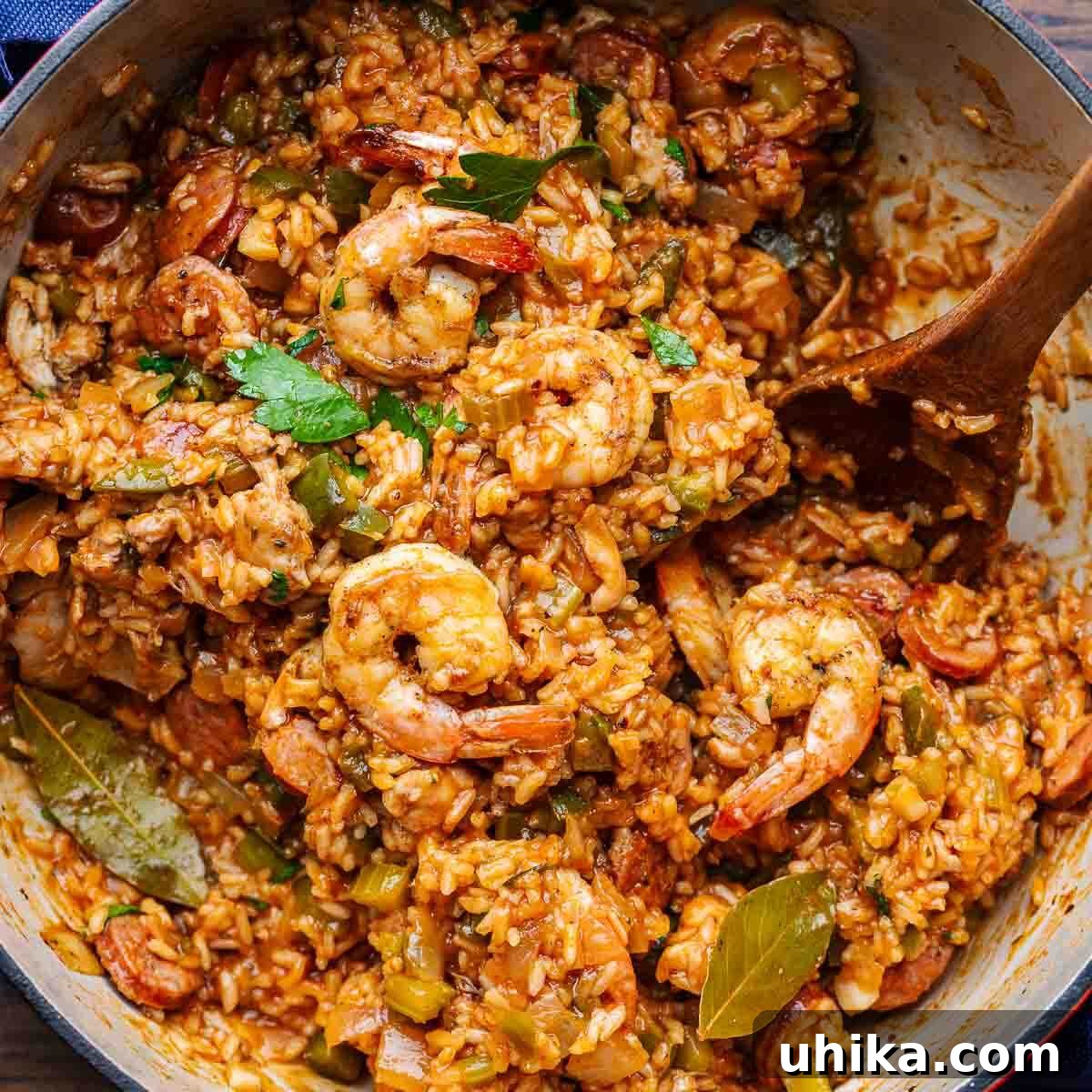
Authentic Creole Jambalaya: A Flavorful One-Pot Louisiana Classic
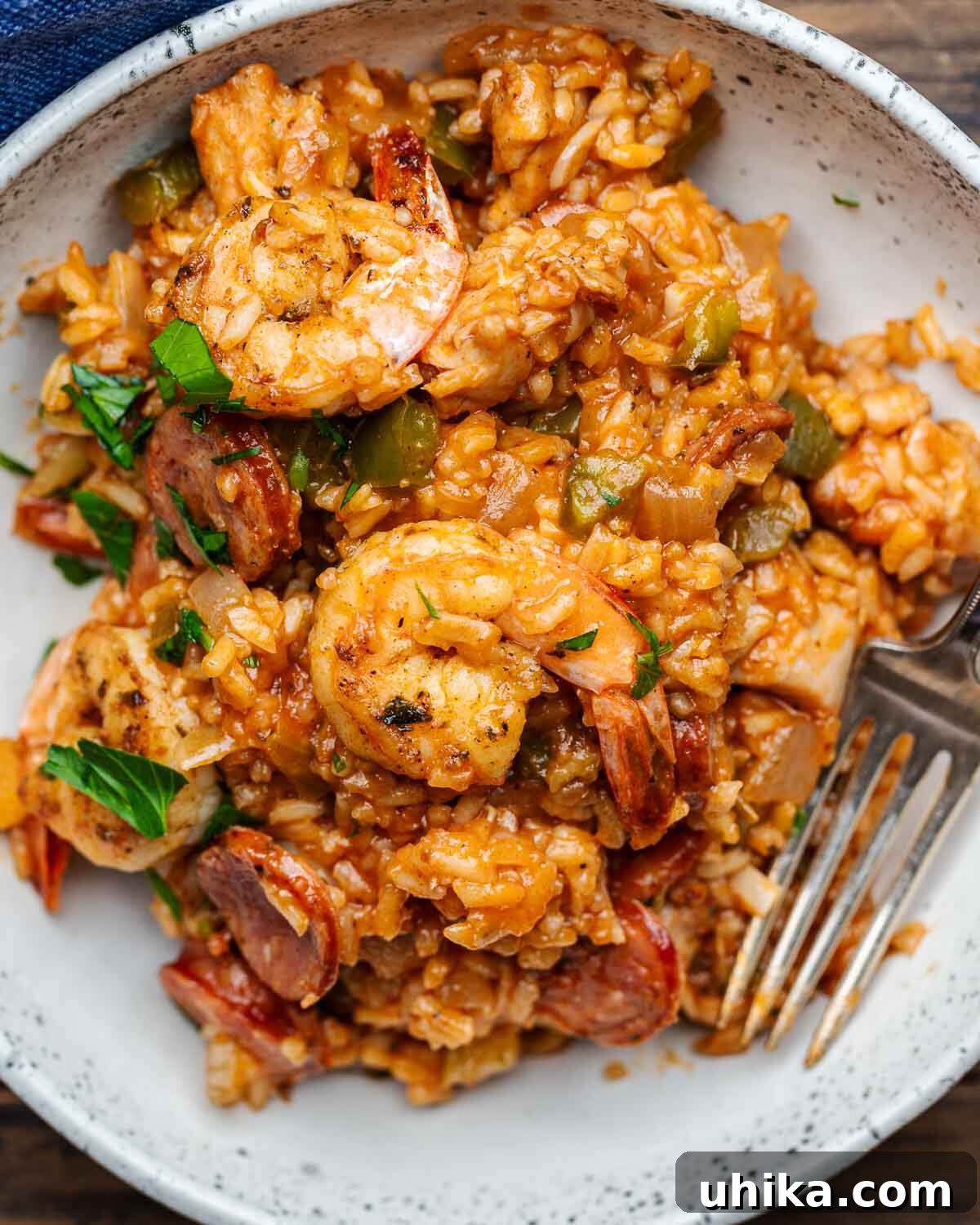
Immerse your senses in the vibrant flavors of Louisiana with a hearty pot of Jambalaya. This iconic Creole masterpiece is a symphony of tastes and textures, artfully combining succulent chicken pieces, smoky Andouille sausage, and tender shrimp, all simmered with rice in a rich, aromatic Creole seasoning. It’s the quintessential one-pot dish that delivers incredible depth of flavor with surprising ease, making it a beloved staple for family dinners and festive gatherings alike.
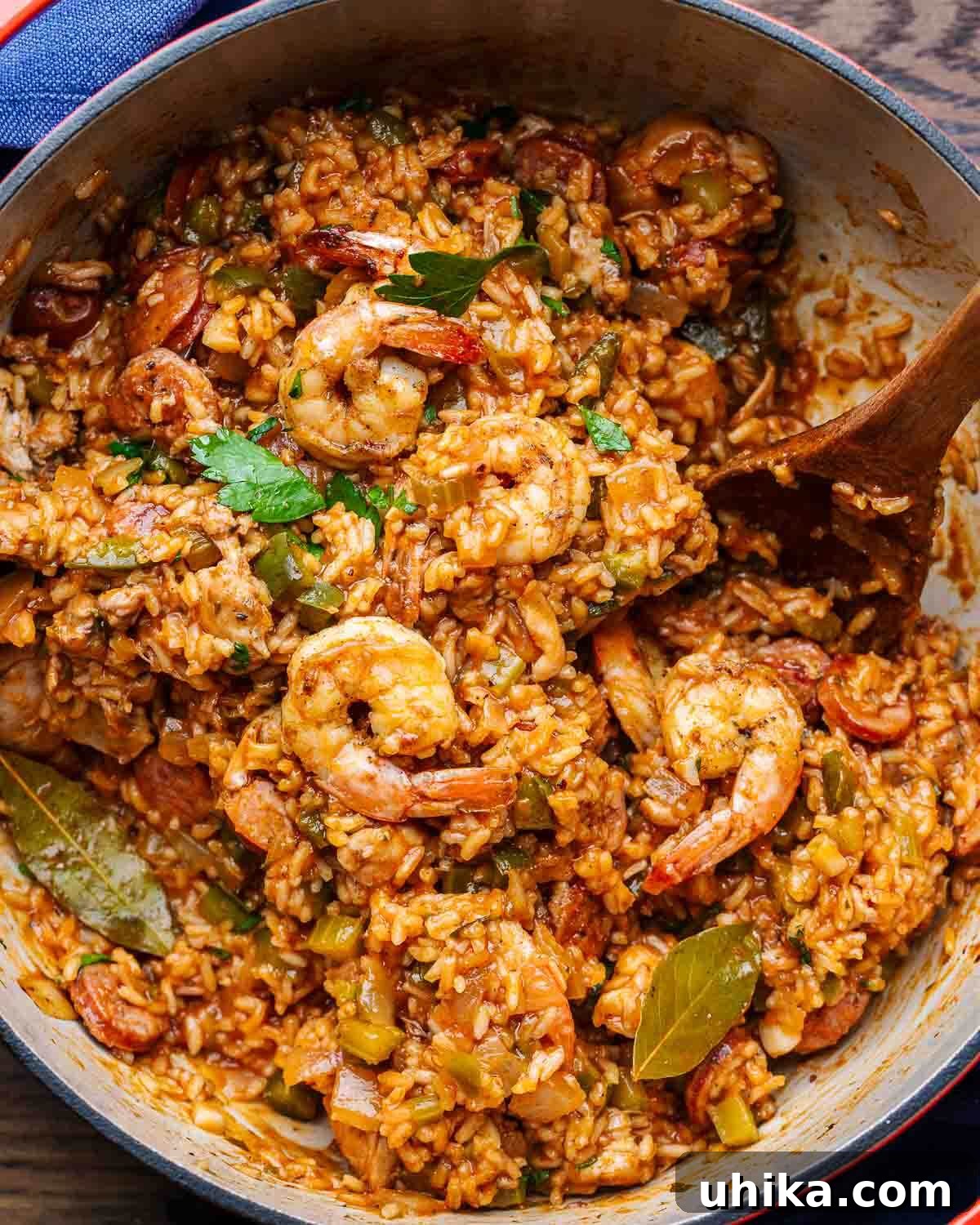
A Taste of New Orleans, Perfected at Home
My culinary journey into the heart of Cajun and Creole cuisine began over two decades ago during a memorable visit to New Orleans. Since then, I’ve been captivated by the unique spices and soulful traditions of Louisiana cooking. From the comforting warmth of Red Beans and Rice to the rich complexity of Étouffée and the smoky depths of Gumbo, these dishes resonate with me on a profound level, transporting me back to the vibrant streets of the French Quarter.
Living on Long Island, authentic Louisiana fare is a rare find. This scarcity ignited a passion within me to recreate these beloved flavors in my own kitchen. Over the years, I’ve dedicated countless hours to perfecting this Creole Jambalaya recipe. My goal has always been to achieve a balance between ease of preparation and the genuine, robust taste of an authentic rendition. This recipe is a testament to that dedication – not only is it incredibly delicious, but it’s also designed to be accessible for home cooks while staying true to its roots.
While Jambalaya is famously associated with Mardi Gras celebrations, its comforting and celebratory nature makes it a perfect dish to enjoy all year round. It has become a cherished family favorite, bringing a little piece of New Orleans magic to our table whenever the craving strikes.
Table of Contents
- The Rich History of Jambalaya
- Creole vs. Cajun Jambalaya: Understanding the Differences
- Essential Recipe Ingredients
- Step-by-Step Cooking Guide
- Expert Tips for Perfect Jambalaya
- Serving Suggestions and Pairings
- Jambalaya FAQs
- More Louisiana-Inspired Recipes
- Creole Jambalaya Recipe Card
The Rich History of Jambalaya
Jambalaya, a truly iconic dish, embodies the rich cultural tapestry of Louisiana. Its origins are steeped in history, reflecting the diverse influences that shaped the region’s unique culinary landscape. Born from a blend of Spanish paella, French, and African culinary traditions, Jambalaya emerged as a hearty, resourceful meal made with readily available ingredients.
The name “Jambalaya” itself is thought to have various origins, with some tracing it back to the French word “jambon” (ham) and African rice dishes, while others suggest a Spanish or even Native American influence. Regardless of its exact etymology, Jambalaya quickly became a staple, especially in New Orleans and the Acadiana region, evolving into the two main styles we know today: Creole and Cajun.
This dish is more than just food; it’s a celebration of community, family, and the vibrant spirit of Louisiana. Every spoonful tells a story of adaptation, ingenuity, and the joy of sharing a deeply flavorful meal.
Creole vs. Cajun Jambalaya: Understanding the Differences
While both Creole and Cajun Jambalaya are beloved rice dishes from Louisiana, they possess distinct characteristics that reflect their geographical and cultural origins. Understanding these differences is key to appreciating the nuances of this versatile dish, and specifically, to crafting our Creole version.
- Creole Jambalaya (Red Jambalaya): Originating in New Orleans, Creole Jambalaya is often referred to as “red jambalaya” due to the inclusion of tomatoes or tomato sauce. This ingredient adds a distinctive reddish hue and a brighter, tangier flavor profile. New Orleans, being a port city, had access to a wider variety of ingredients, and its cuisine was heavily influenced by French, Spanish, African, and Italian traditions. Creole Jambalaya typically features the “holy trinity” (onion, celery, bell pepper), various meats like chicken, sausage, and seafood (especially shrimp), and the defining addition of tomatoes. It’s often cooked in a large pot, making it ideal for feeding large crowds.
- Cajun Jambalaya (Brown Jambalaya): Hailing from the rural areas of Acadiana, where French-speaking exiles from Canada (Acadians) settled, Cajun Jambalaya is often called “brown jambalaya.” Unlike its Creole cousin, it traditionally omits tomatoes. Instead, its deep, rich color and flavor come from browning the meats (especially pork and sausage) and caramelizing the “trinity” directly in the pot, creating a flavorful fond (the browned bits at the bottom of the pan). Cajun Jambalaya tends to be simpler in its ingredient list, often focusing on pork and sausage, reflecting the ingredients available to rural communities. The emphasis is on developing rich, savory flavors through browning and slow cooking.
This particular recipe leans into the Creole tradition with the inclusion of tomato sauce, creating a vibrant, richly flavored dish that proudly showcases the diverse culinary heritage of New Orleans.
Essential Recipe Ingredients
Crafting the perfect Jambalaya begins with selecting fresh, high-quality ingredients. Below, you’ll find a visual guide to all the components you’ll need, along with special notes to help you choose wisely and understand their role in this fantastic dish.
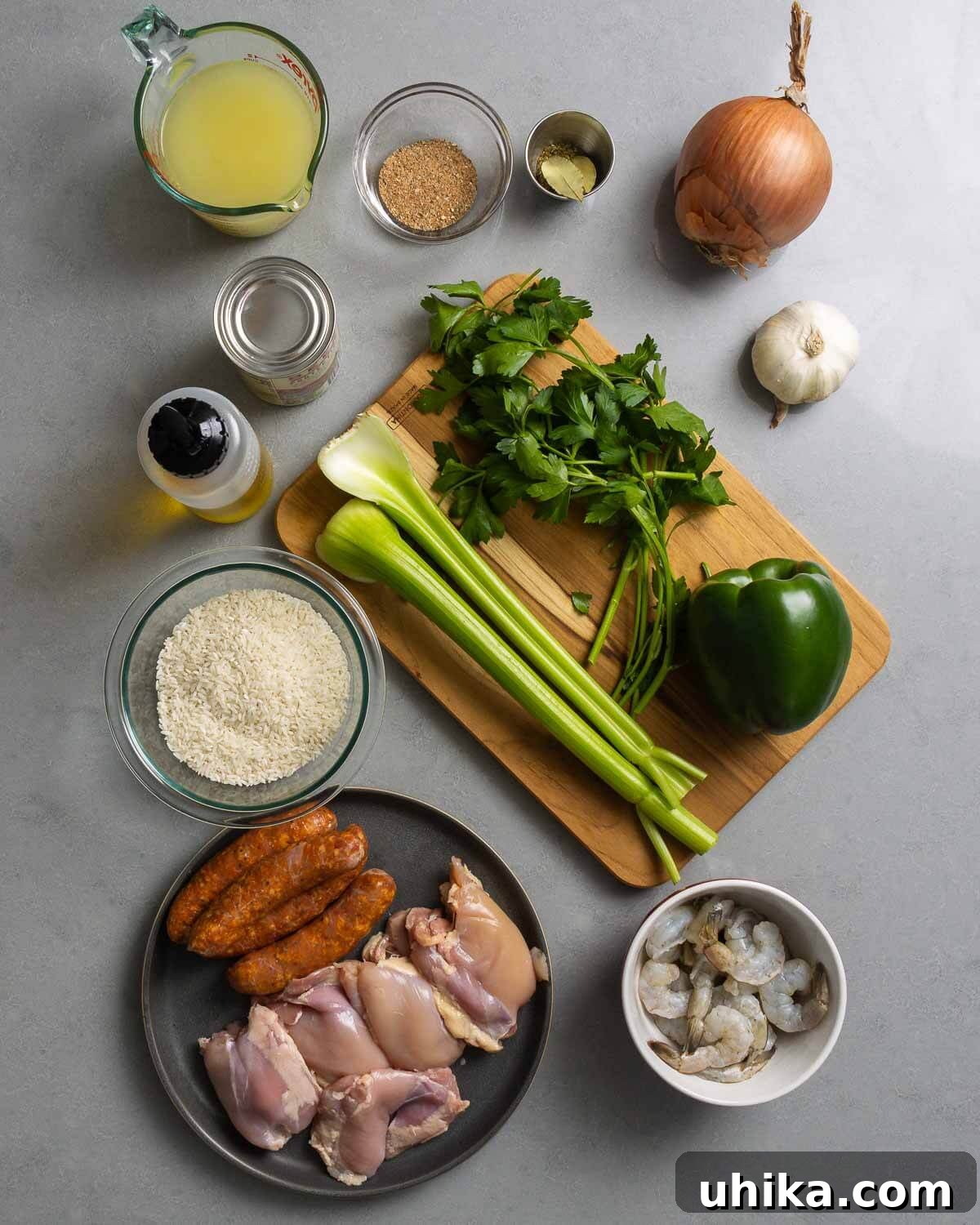
- The Holy Trinity. A cornerstone of Cajun and Creole cooking, this aromatic base of green bell pepper, celery, and onion provides the foundational flavor for our Jambalaya. Dice them uniformly for even cooking.
- Chicken. For this recipe, boneless, skinless chicken thighs are highly recommended. While chicken breasts are often used, thighs offer superior flavor, remain more tender during cooking, and are generally more economical.
- Andouille Sausage. This smoked, spiced pork sausage is indispensable for its bold, savory flavor and slight kick. I prefer pork andouille, but chicken andouille is a great alternative if you prefer. If authentic Andouille is hard to find, good quality chorizo, kielbasa, or even a robust hot dog can serve as a substitute, though the flavor profile will vary.
- Shrimp. Any size shrimp can be used, but I typically opt for U26-sized shrimp for a substantial bite. Fresh or frozen (thawed) shrimp work well.
- Creole Seasoning. A good quality Creole seasoning is crucial. Tony Chachere’s Creole seasoning is a classic choice, or you can find other reputable Creole or Cajun blends like Slap Ya Mama. For ultimate control over flavor and sodium, consider making your own Cajun spice blend. Remember that store-bought seasonings often contain significant salt, so adjust additional salt accordingly.
- Tomato Sauce. Canned tomato sauce is ideal for this Creole-style Jambalaya, contributing to its characteristic “red” color and tangy depth. Crushed tomatoes can also be used. This inclusion is what distinguishes Creole Jambalaya from its tomato-free Cajun counterpart.
- Chicken Stock. The liquid base of your Jambalaya greatly impacts the final flavor. Opt for homemade chicken stock for the richest taste, or use a good quality low-sodium chicken base dissolved in water to control the saltiness.
- Garnish. Freshly chopped parsley and/or green onions add a vibrant touch of color and a burst of freshness to the finished dish, elevating its visual appeal and taste.
Refer to the full Creole Jambalaya Recipe Card below for precise information on ingredients and their quantities.
Step-by-Step Cooking Guide
Follow these detailed steps to create a show-stopping Creole Jambalaya. Each instruction is designed to guide you through the process, ensuring a flavorful and authentic result. The accompanying photos illustrate key stages for clarity.
- Prepare Your Ingredients: Begin by precisely dicing one medium onion, one large green bell pepper, and two ribs of celery – this is your “holy trinity.” Mince three green onions (if using for garnish) and six cloves of garlic. Slice 12 ounces of Andouille sausage into 1/4-inch thick rounds (or thinner, if preferred). Cut 1 pound of boneless, skinless chicken thighs into uniform, bite-sized pieces. It’s crucial to pat the chicken pieces very dry with paper towels before seasoning them with 1 tablespoon of Creole seasoning. This dryness promotes better browning and flavor development. (Photo #1)
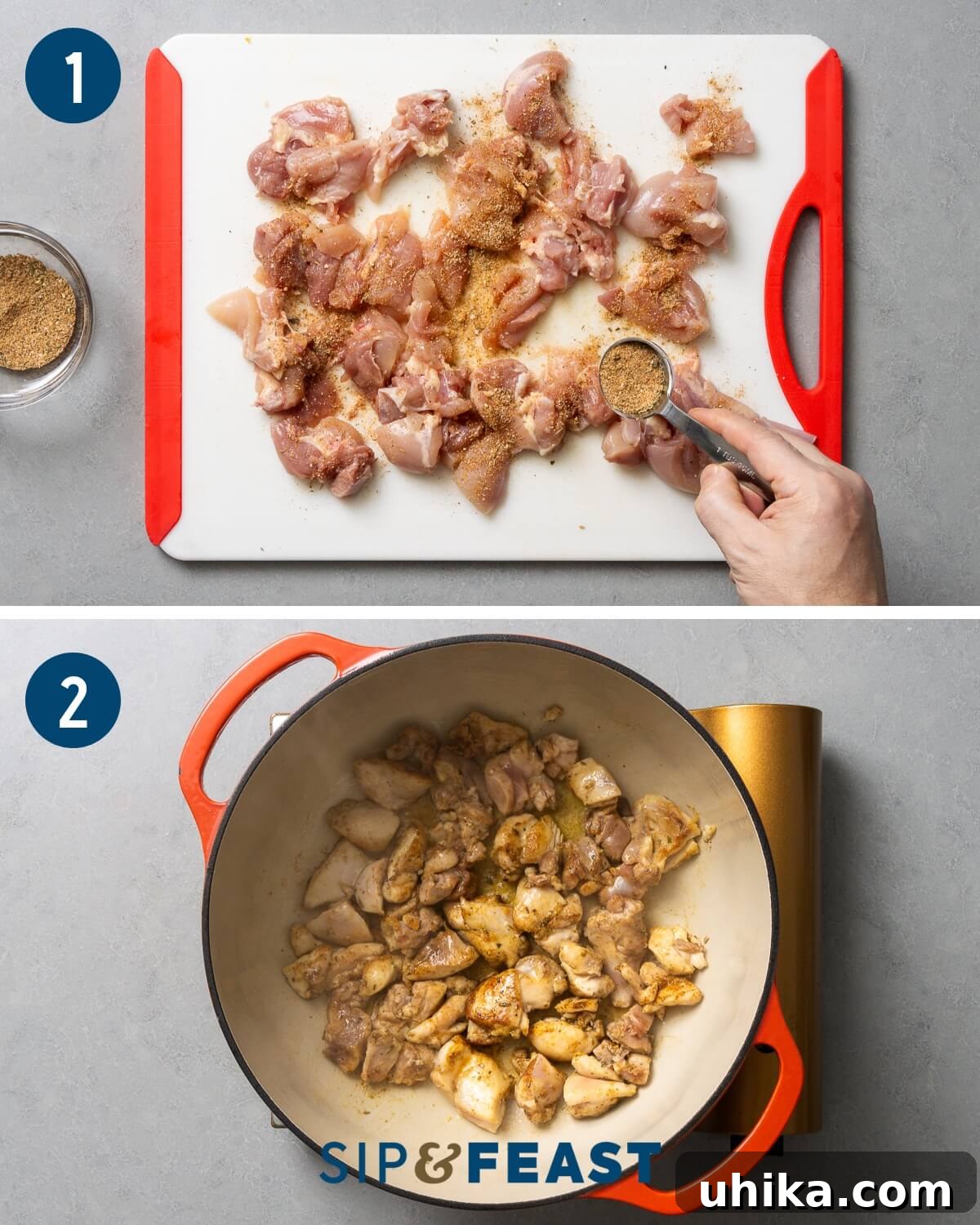
- Sear the Chicken: Heat a large Dutch oven or heavy-bottomed pot over medium heat, then add 3 tablespoons of olive oil. Once the oil shimmers, add the seasoned chicken pieces in a single layer, ensuring not to overcrowd the pot. Cook the chicken until it’s beautifully browned on all sides, developing a rich crust and locking in flavor. Remove the browned chicken with a slotted spoon and place it on a plate.
- Brown the Andouille: Add the sliced Andouille sausage to the same pot. Cook for a few minutes, stirring occasionally, until the sausage is nicely browned and has released some of its flavorful oils into the pot. This step adds significant depth. Remove the browned sausage and place it on the same plate as the chicken, tenting both with foil to keep them warm and prevent them from drying out. (Photo #3)
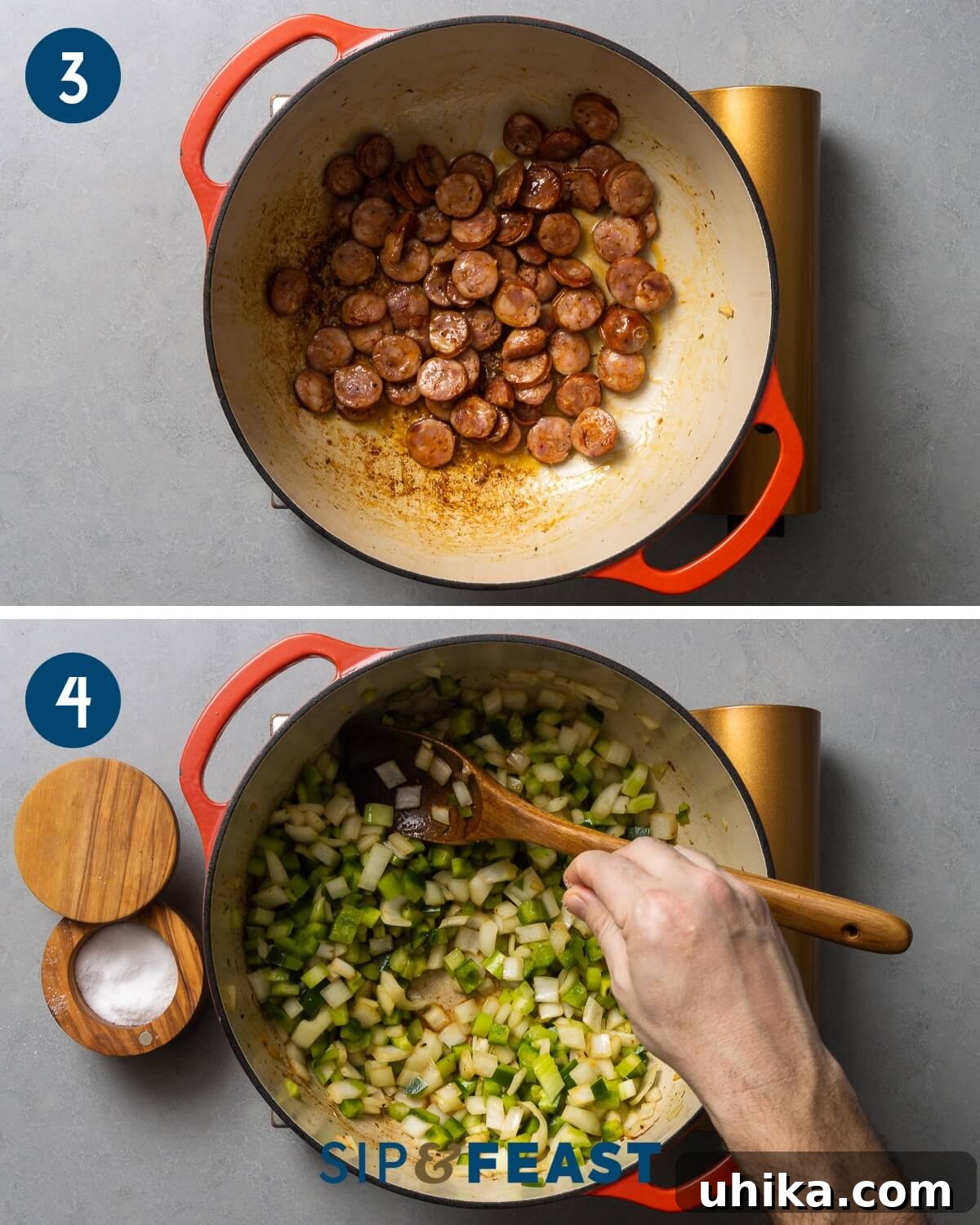
- Sauté the Trinity: Into the same pot, add your diced onions, bell peppers, and celery. Add a pinch of salt to help draw out moisture and flavor. Sauté, stirring occasionally, until the vegetables are soft and translucent, which typically takes about 12-15 minutes. If you notice any bits sticking or burning on the bottom of the pot, add a few ounces of water or a splash of chicken stock and use a wooden spoon to scrape up the flavorful browned bits (this is called deglazing and adds immense flavor). (Photo #4)
- Add the Garlic: Once the trinity is softened, add the minced garlic to the pot. Cook for another 2 minutes, stirring constantly, until the garlic becomes fragrant. Be careful not to burn the garlic, as it can turn bitter. (Photo #5)
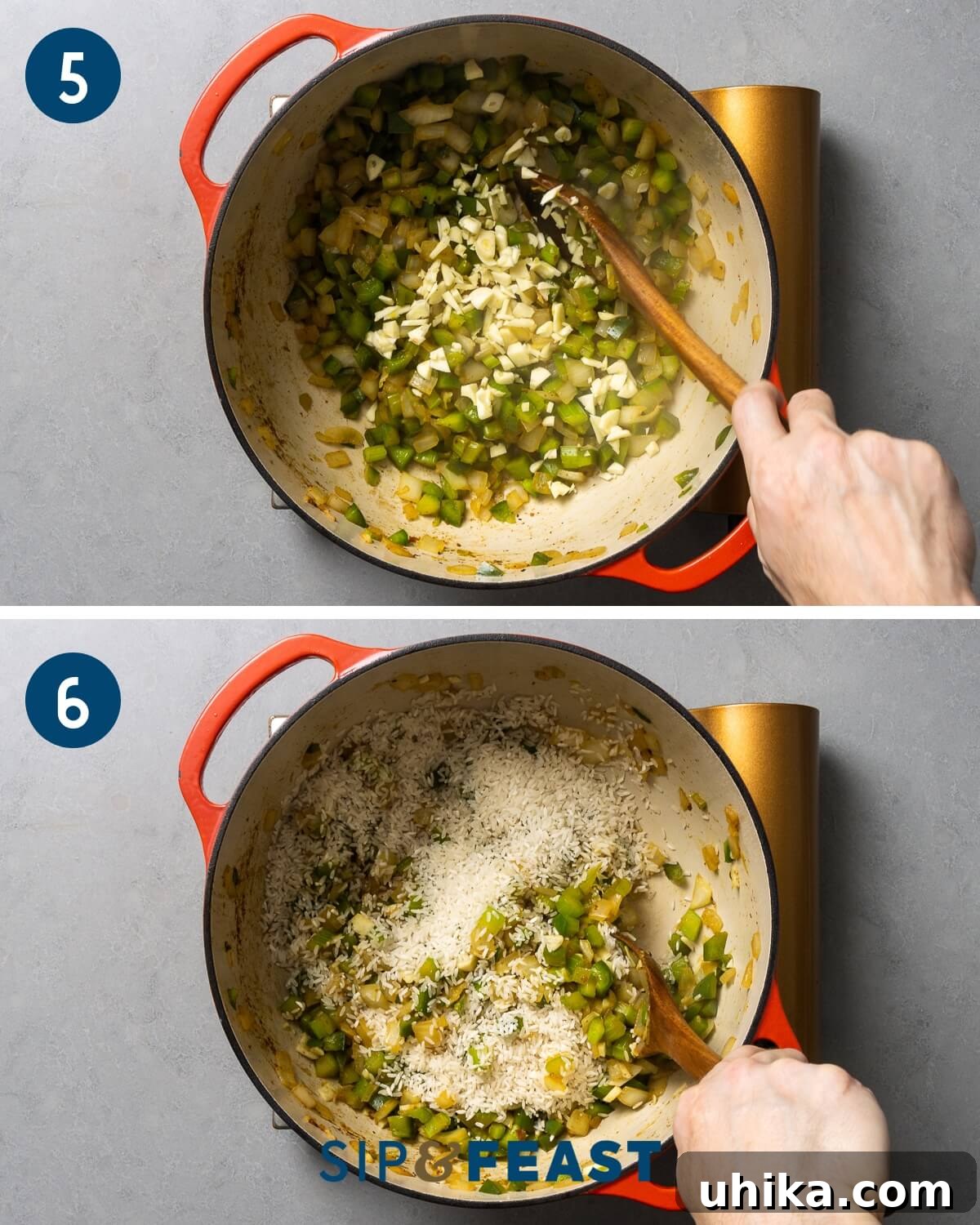
- Toast the Rice: Add 1 1/2 cups of long-grain white rice to the pot with the vegetables. Mix thoroughly, ensuring each grain of rice is coated with the residual oil and flavors in the pot. Toasting the rice briefly helps it cook more evenly and prevents it from becoming mushy. (Photo #6)
- Combine and Simmer: Return the browned sausage and chicken to the pot. Stir in 2 large bay leaves, 1 teaspoon of dried oregano, 14 ounces of tomato sauce, and 2 1/4 cups of low-sodium chicken stock. This is also the point to adjust salt: if using homemade or low-sodium Creole/Cajun seasoning, add 3/4 teaspoon of kosher salt; if using a store-bought brand known for its sodium content, you may want to omit additional salt. Turn the heat to high and bring the mixture to a rolling boil. Use your wooden spoon to scrape the bottom of the pot one last time, dislodging any remaining brown bits and ensuring nothing sticks before covering. (Photo #7)
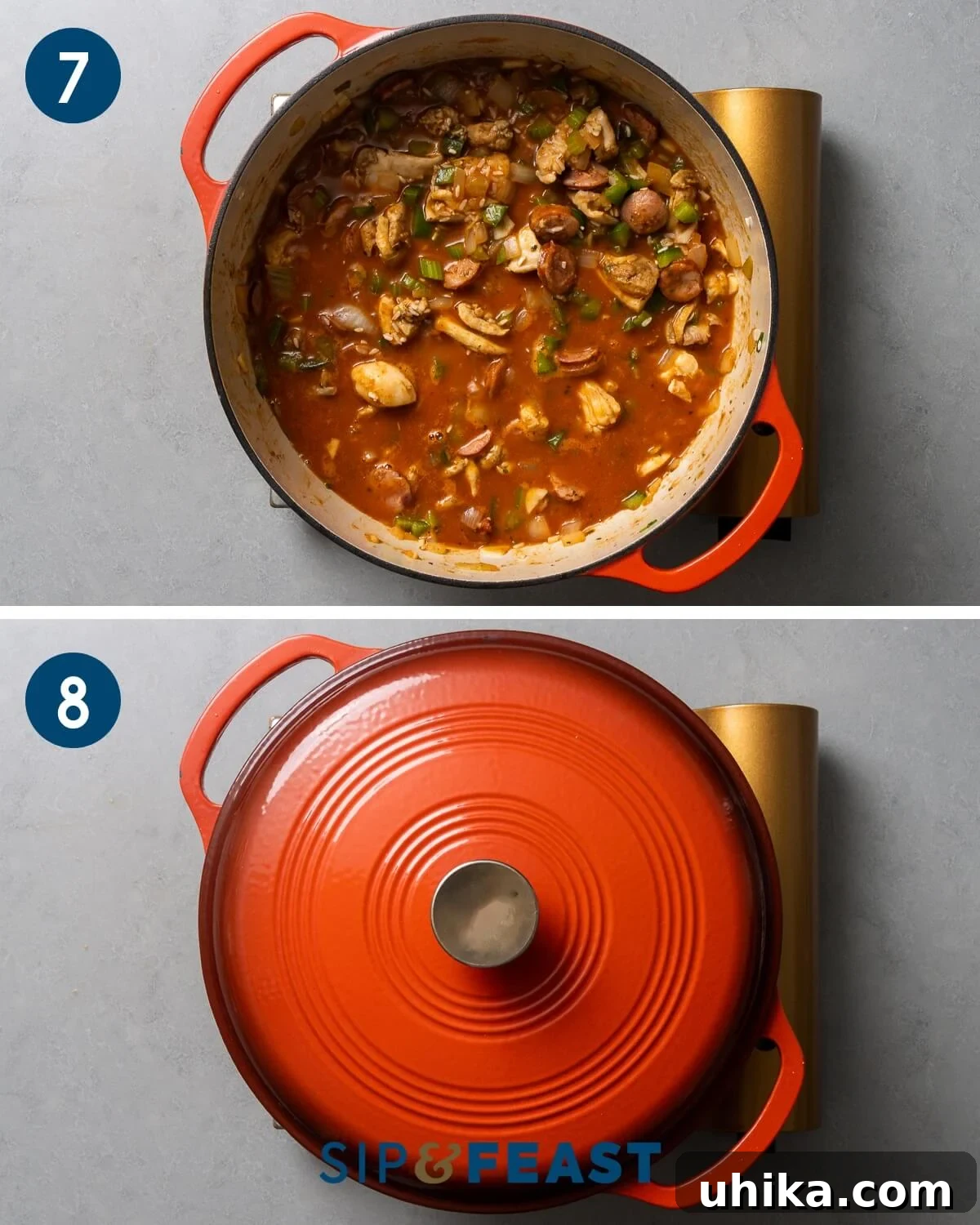
- Cook the Rice: Once boiling, reduce the heat to low. Gently scrape the bottom of the pot with a wooden spoon to prevent sticking, then cover tightly with a lid. Allow the rice to cook until it is just tender but still has a slight bite, not mushy, which typically takes about 25 minutes. Crucially, at the halfway point (around 12-13 minutes), briefly remove the lid and give the rice a single, gentle stir. This helps prevent excessive sticking to the bottom without releasing too much starch, which can lead to sticky Jambalaya. Some minimal sticking is normal and part of the traditional cooking process. (Photo #8)
- Cook the Shrimp Separately: While the rice is simmering, season 1/2 pound of large shrimp with 2 teaspoons of Creole or Cajun seasoning. Heat a separate large pan over medium heat and add 2 tablespoons of olive oil. Once the oil is shimmering, add the seasoned shrimp and cook for approximately 1 minute per side, or until the shrimp are almost cooked through and turn pink. Avoid overcooking. Remove the shrimp from the pan and place them on a plate, tented with foil to keep warm. Cooking the shrimp separately ensures they remain tender and perfectly cooked, rather than overcooking in the rice. (Photo #9)
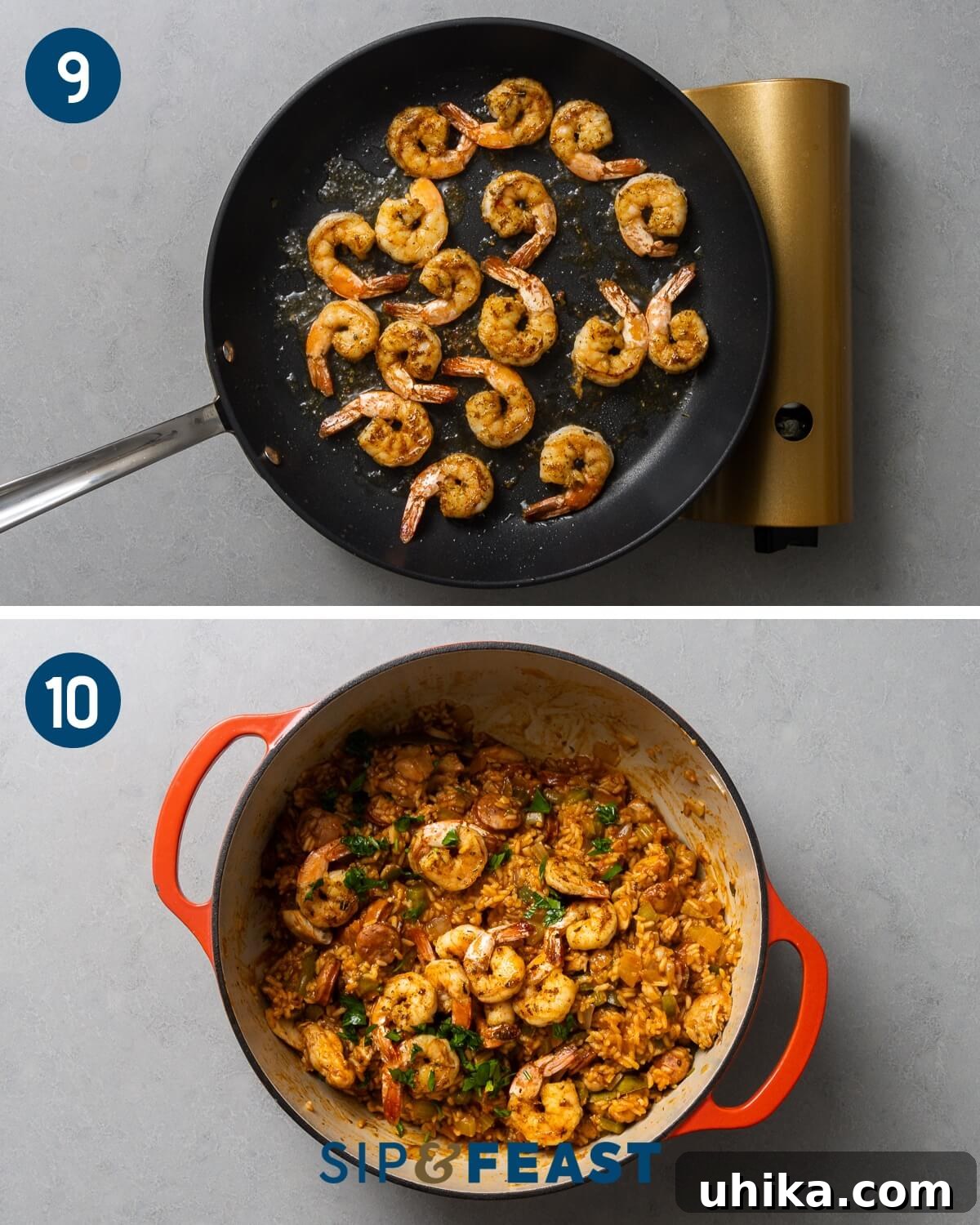
- Final Assembly and Serve: Once the rice is tender and fully cooked, uncover the pot and gently fold in the cooked shrimp. Fluff the Jambalaya with a fork to incorporate the shrimp and separate the rice grains. Garnish generously with fresh parsley and green onion. Serve immediately and savor the rich, complex flavors of your homemade Creole Jambalaya! (Photo #10)
Expert Tips for Perfect Jambalaya
- The Oven Method for Rice: Preventing rice from sticking to the bottom of the pot can be tricky, even with a gentle stir. To help mitigate this, consider using the oven method for cooking the rice. After bringing the liquid to a boil and covering the pot, transfer it to a preheated oven at 325°F (160°C) and cook for about 20 minutes with the lid on. Check the rice; if it’s still firm, return it to the oven and check every 5 minutes until it reaches your desired tenderness. This method provides more even heat distribution and reduces sticking.
- Mindful Rice Stirring: Over-stirring Jambalaya rice is a common mistake that can lead to a mushy, gelatinous texture. The key is minimal intervention. By following our instruction of one gentle stir at the halfway point, you help prevent significant sticking without agitating the rice too much. Embrace a little bit of sticking at the bottom – it’s often considered the “cajun candy” or “gratin” in traditional preparations, full of flavor.
- Sodium Levels in Seasoning: Be mindful of the salt content in your Creole or Cajun seasoning. Most commercial blends (like Tony Chachere’s or Slap Ya Mama) are quite high in sodium. If you use one of these, it’s best to omit any additional salt specified in the recipe. If you opt for a homemade spice blend or a low-sodium commercial seasoning, then adding the 3/4 teaspoon of salt (or to taste) as indicated will be necessary to achieve balanced flavor.
- Separate Shrimp Cooking: While some traditionalists may fold raw shrimp directly into the Jambalaya a few minutes before it’s done, I’ve found that sautéing the shrimp separately yields superior results. This method ensures the shrimp are perfectly cooked – tender and succulent – rather than becoming rubbery or overcooked from prolonged simmering in the rice. If you prefer the more traditional “one-pot” approach for the shrimp, add them raw to the pot with the rice, about 5-7 minutes before the rice is fully cooked, letting the residual heat cook them through.
- Don’t Rush the Trinity: Sautéing the onion, celery, and bell pepper until truly soft and translucent (12-15 minutes) is crucial for building a strong flavor base. Rushing this step will result in a less flavorful Jambalaya.
Serving Suggestions and Pairings
Jambalaya is a complete meal in itself, packed with protein, vegetables, and rice. However, a few simple additions can elevate the dining experience and create a truly memorable feast.
- Fresh Bread: A crusty baguette or cornbread is perfect for soaking up any leftover juices and flavors in your bowl.
- Green Salad: A simple, crisp green salad with a light vinaigrette offers a refreshing counterpoint to the rich, savory flavors of the Jambalaya.
- Hot Sauce: For those who love an extra kick, a dash of your favorite hot sauce is a must-have accompaniment.
- Beverage Pairings: A cold beer (especially a Louisiana craft brew), sweet iced tea, or even a dry white wine can pair wonderfully with Jambalaya.
Jambalaya FAQs
Here are answers to some common questions about making and enjoying Jambalaya:
- Can I make Jambalaya ahead of time? Yes, Jambalaya often tastes even better the next day as the flavors have more time to meld. Reheat gently on the stovetop or in the microwave, adding a splash of chicken stock or water if it seems dry.
- How do I store leftovers? Leftover Jambalaya can be stored in an airtight container in the refrigerator for up to 3-4 days.
- Can Jambalaya be frozen? Yes, it freezes well! Portion it into freezer-safe containers and freeze for up to 3 months. Thaw in the refrigerator overnight before reheating.
- What if I can’t find Andouille sausage? As mentioned in the ingredients section, smoked chorizo, kielbasa, or even a robust hot dog can be used in a pinch. However, for the most authentic flavor, Andouille is highly recommended.
- Is this recipe very spicy? This recipe provides a moderate level of spice from the Creole seasoning. You can adjust the heat by using more or less seasoning, or by adding a pinch of cayenne pepper if you prefer it spicier.
- Can I add other vegetables? Absolutely! While the “holy trinity” is essential, you can add other vegetables like corn, okra, or even diced tomatoes (in addition to the sauce) for extra flavor and nutrition. Add them with the trinity or during the final simmer.
More Louisiana-Inspired Recipes
If this Creole Jambalaya has awakened your love for the unparalleled flavors of New Orleans, explore a few more of our favorite Cajun and Creole-inspired recipes that promise to tantalize your taste buds:
- Chicken, Sausage, and Shrimp Gumbo – Experience the depth of a dark roux in this iconic Cajun stew, a true labor of love and flavor.
- Cajun Shrimp and Sausage Pasta – A delightful twist on the traditional, offering similar robust flavors to Jambalaya but served with comforting pasta.
- Creamy Cajun Chicken Pasta – Indulge in bell peppers, Andouille, and perfectly spiced Cajun chicken bathed in a luxurious creamy sauce.
If you’ve enjoyed this Jambalaya Recipe or any recipe on this site, we encourage you to give it a 5-star rating and share your experience in the comments below. Your feedback truly helps us!
We believe in catering to various learning styles. If you are someone who prefers to learn by watching, you can discover most of our recipes and cooking demonstrations on our official YouTube channel and our dedicated Facebook Page.
Creole Jambalaya Recipe Card
Pin Recipe
Ingredients
- 3 tablespoons olive oil
- 1 pound boneless, skinless chicken thighs cut into bite-sized pieces
- 1 tablespoon Creole seasoning (can sub Cajun seasoning)
- 12 ounces Andouille sausage sliced
- 1 medium white onion diced
- 1 large green bell pepper diced
- 2 ribs celery diced
- 6 cloves garlic minced
- 1 teaspoon dried oregano
- 3/4 teaspoon salt (see notes below)
- 2 large bay leaves
- 14 ounces tomato sauce
- 2 1/4 cups low-sodium chicken stock
- 1 1/2 cups long grain white rice
- 3 green onions minced (for garnish)
- 2 tablespoons flat-leaf parsley for garnishing
For the Shrimp
- 1/2 pound large shrimp
- 2 teaspoons Creole seasoning (can sub Cajun seasoning)
- 2 tablespoons olive oil
Instructions
Make the Jambalaya
-
Pat the chicken pieces very dry with paper towels and season them evenly with 1 tablespoon of the Creole seasoning.
-
Heat a large Dutch oven over medium heat with the olive oil. Add the seasoned chicken and cook until it’s beautifully browned on all sides. Remove the chicken to a plate using a slotted spoon. Next, add the sliced Andouille sausage to the same pot and cook for a few minutes until it’s browned. Remove the sausage to the same plate as the chicken and tent with foil to keep warm.
-
Add the diced onion, bell peppers, and celery to the pot along with a pinch of salt. Sauté, stirring occasionally, until the vegetables are soft and translucent (about 12-15 minutes). If any bits start to stick to the bottom, add a few ounces of water or chicken stock and scrape them up with a wooden spoon. Stir in the minced garlic and cook for an additional 2 minutes until fragrant.
-
Add 1 1/2 cups of long-grain white rice to the pot and mix well, ensuring each kernel is coated with the residual oil and flavors. Return the browned sausage and chicken to the pot. Stir in the bay leaves, oregano, tomato sauce, and chicken stock. If using homemade or low-sodium seasoning, add 3/4 teaspoon of salt. Turn the heat to high and bring the mixture to a boil, scraping the bottom of the pot with a wooden spoon to dislodge any browned bits.
-
Once boiling, reduce the heat to low. Give the bottom of the pot a gentle scrape with a wooden spoon to prevent sticking, then cover tightly with a lid. Cook the rice until it’s just tender but not mushy (approximately 25 minutes). At the halfway point, quickly remove the lid and give the rice one gentle stir to redistribute and prevent sticking. See notes below for the oven method alternative.
Meanwhile, Cook the Shrimp
-
Season the 1/2 pound of shrimp with 2 teaspoons of Creole seasoning.
-
Heat a large pan over medium heat and add 2 tablespoons of olive oil. Once the oil shimmers, add the seasoned shrimp and cook for roughly 1 minute per side, or until the shrimp are almost cooked through and turn pink. Do not overcook. Remove the shrimp from the pan to a plate and tent with foil to keep them warm.
-
Once the rice in the Dutch oven is tender, uncover the pot and gently fold in the cooked shrimp. Fluff the rice with a fork, then garnish with minced green onion and chopped parsley. Serve immediately and enjoy the authentic flavors of Creole Jambalaya!
Notes
- Oven Method for Rice: The rice can sometimes stick to the bottom of the pot, even with a mid-cook stir. To help prevent this, you can cook the rice in the oven. After bringing the mixture to a boil and covering the pot, transfer it to a 325°F (160°C) oven for 20 minutes. Check the rice; if still firm, return it to the oven, checking every 5 minutes until tender.
- Sodium Levels: Be aware that commercial Creole or Cajun spice blends like Tony Chachere’s or Slap Ya Mama typically have high sodium content. If using these, it’s advisable to omit any extra salt from the recipe. If you use a homemade spice blend or a low-sodium commercial mix, you will need to add an extra 3/4 to 1 teaspoon of salt, or adjust to your taste.
- Leftovers: Leftover Jambalaya can be stored in an airtight container in the refrigerator for up to 3 days. It reheats well in the microwave or on the stovetop over low heat, adding a splash of chicken stock if needed to prevent dryness.
Nutrition
Nutrition information is automatically calculated, so should only be used as an approximation.
Like this recipe? Leave a comment below!Check us out on Instagram at @sipandfeast or tag #sipandfeast to share your culinary creations!