
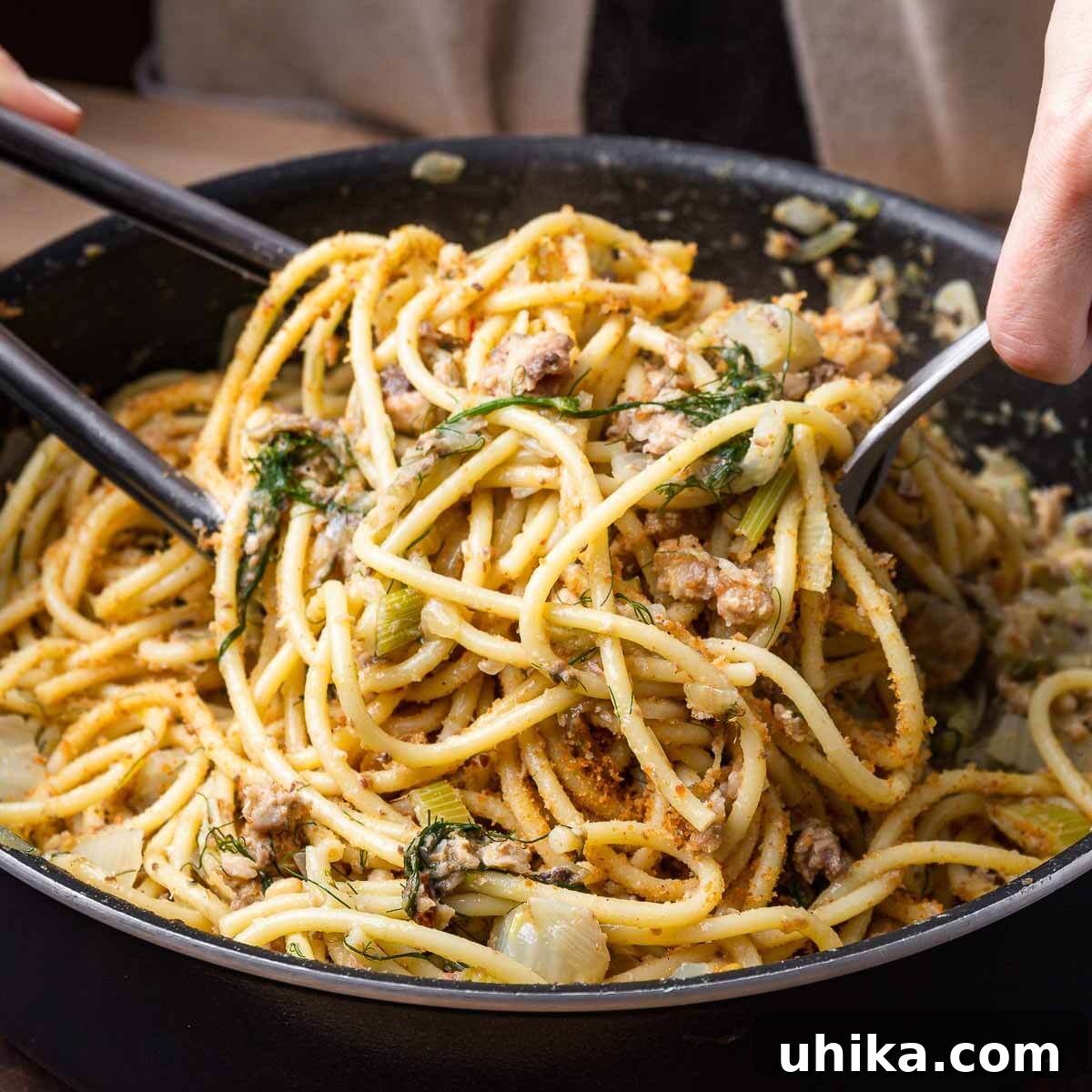
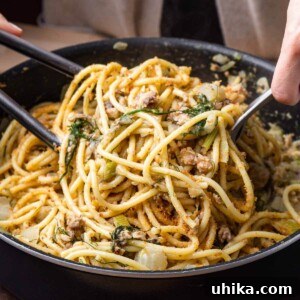
Pasta con le Sarde, or pasta with sardines, is an iconic and deeply cherished traditional Sicilian dish that captivates with its extraordinary blend of flavors and textures. This culinary masterpiece brings together an array of distinct ingredients: the fresh, anise-like notes of fennel bulbs and their delicate fronds, the savory depth of sardines, the unexpected sweetness of golden raisins, the subtle crunch of pignoli (pine nuts), and the comforting toastiness of breadcrumbs. Each component plays a vital role in creating a harmonious and truly special pasta experience.
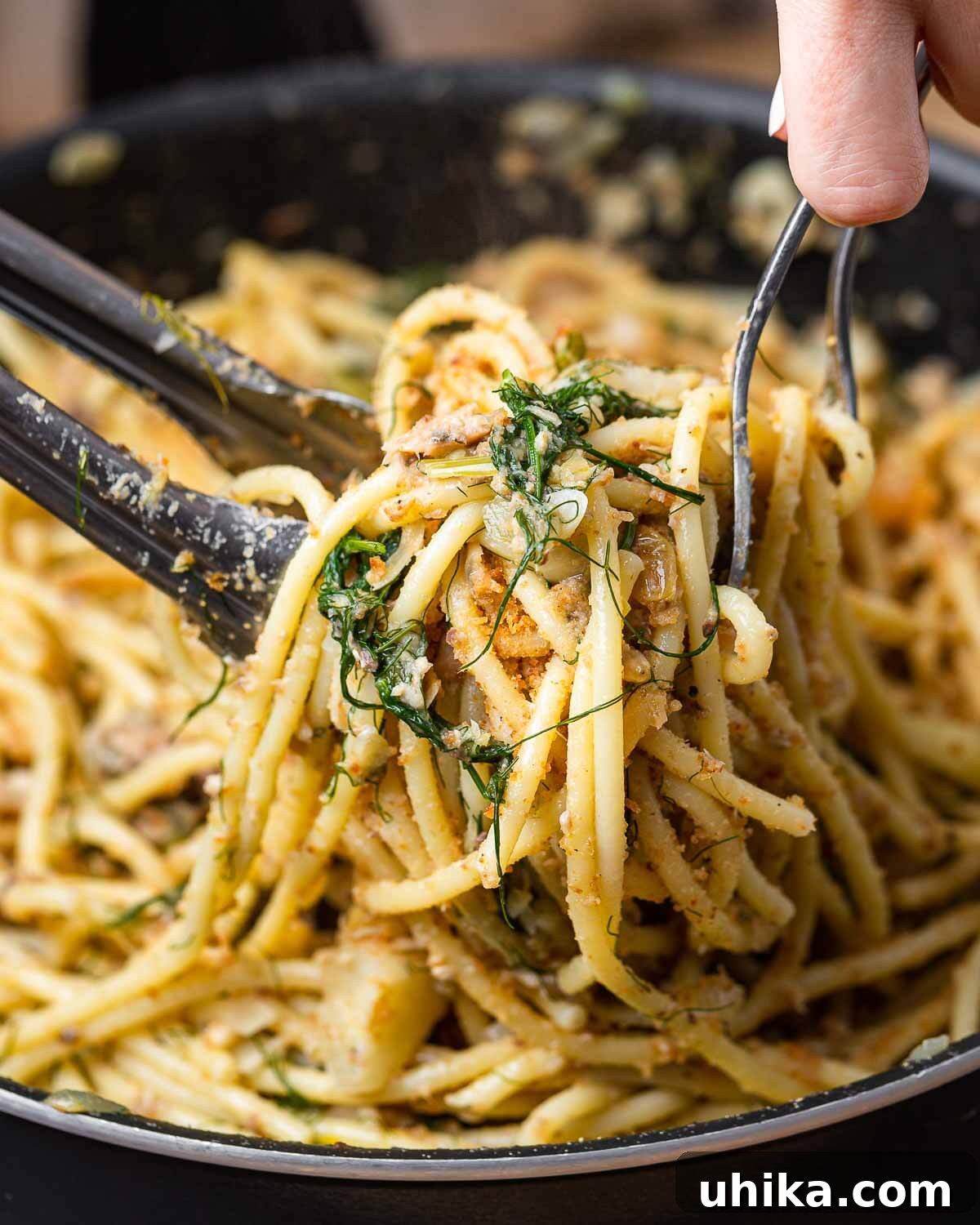
Discovering the Essence of Sicilian Cuisine: Pasta con le Sarde
More than just a meal, Pasta con le Sarde, also reverently known as Pasta di San Giuseppe (St. Joseph’s Day Pasta), stands as a heartfelt homage to the vibrant and diverse flavors of Sicily. This dish is a testament to the island’s rich culinary heritage, seamlessly blending influences from its history, including Arab and Norman cultures, which introduced many of the unique ingredients found in this recipe.
The remarkable combination of sweet, savory, and aromatic elements makes this dish profoundly unique. While it traditionally graces tables on March 19th for St. Joseph’s Day, alongside other festive treats like Zeppole di San Giuseppe, its incredible taste ensures it can be savored and celebrated throughout the entire year. Its profound flavors and satisfying nature also make it a popular addition to special occasions, such as the Feast of the Seven Fishes, complementing other beloved seafood dishes like Baccala Napoletana, Zuppa di Pesce, and Shrimp Oreganata.
Why Pasta con le Sarde is a Must-Try
If you’re seeking an authentic taste of Italy that transcends the ordinary, Pasta con le Sarde offers an unforgettable journey for your palate. This recipe promises:
- Unparalleled Flavor Depth: A symphony of sweet, salty, umami, and fresh notes that dance together in every bite.
- Rich Cultural Heritage: A dish steeped in Sicilian tradition, connecting you to generations of Italian cooking.
- Nutrient-Rich Ingredients: Packed with the goodness of sardines, healthy fats from olive oil and pine nuts, and fiber from fennel.
- Rewarding Culinary Experience: While some traditional recipes can seem intimidating, our detailed, step-by-step guide makes preparing this beloved dish accessible for home cooks of all levels.
We are confident that you will fall in love with Pasta con le Sarde just as much as we have, making it a regular feature in your culinary repertoire.
The Heart of the Dish: Key Ingredients Explored
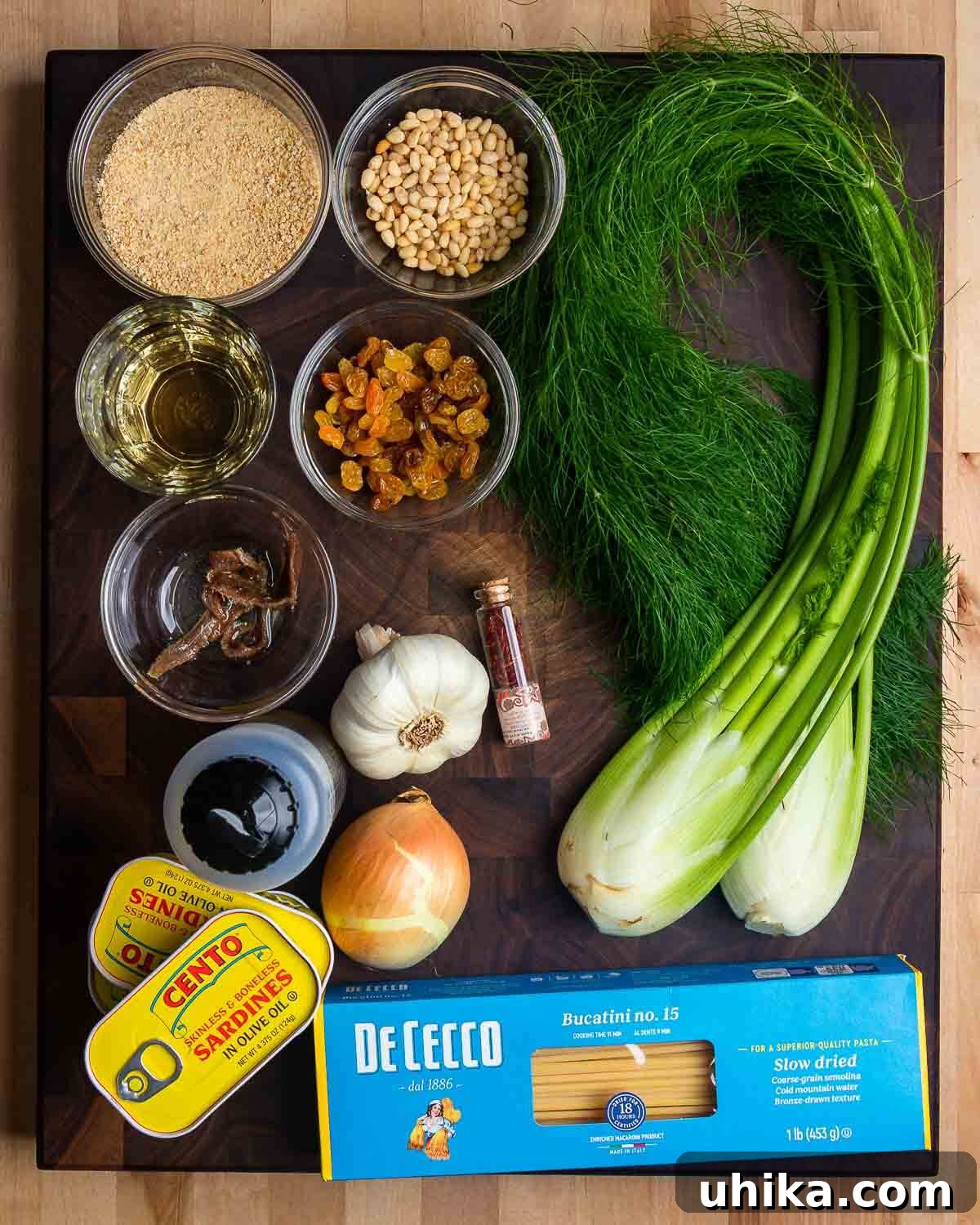
The magic of Pasta con le Sarde lies in its distinctive and carefully balanced ingredients, each contributing significantly to the dish’s unique character. Understanding their roles enhances both the cooking and the eating experience.
- Sardines: The star of the show. Fresh sardines are traditional, but high-quality, oil-packed canned sardines offer convenience without sacrificing flavor, providing a rich, savory, and slightly briny foundation. They are also an excellent source of omega-3 fatty acids.
- Fennel: Both the bulb and the delicate fronds are essential. The bulb provides a subtle anise flavor and tender texture once cooked, while the fronds add a fresh, herbaceous aroma and vibrant color as a garnish. Wild fennel, if available, offers an even more intense flavor.
- Golden Raisins: These bring a surprising but crucial burst of sweetness that beautifully balances the savory and briny elements of the sardines and anchovies. They plump up when soaked, releasing their natural sugars.
- Pignoli (Pine Nuts): Toasted pine nuts add a delightful nutty flavor and a delicate crunch, contrasting with the softer textures of the pasta and fennel. Their richness complements the other ingredients perfectly.
- Toasted Breadcrumbs: Often referred to as “poor man’s Parmesan,” these breadcrumbs are toasted to a golden crispness, offering a delightful texture and a savory, garlicky counterpoint to the dish. They add an essential finishing touch.
- Saffron: A luxurious spice that imparts a beautiful golden hue and an intoxicating, subtly floral aroma to the sauce. It’s a hallmark of authentic Sicilian pasta con le sarde.
- Anchovies: While some might shy away, anchovy fillets melt into the olive oil, providing an incredible umami depth that is foundational to the dish, without making it taste overtly fishy.
Mastering Pasta con le Sarde: A Step-by-Step Guide
Follow these precise instructions to recreate this authentic Sicilian delight in your own kitchen. Each step is designed to make the process clear and enjoyable.
- Prepare the Toasted Breadcrumbs: In a large, dry skillet or pan, heat 3 tablespoons of extra virgin olive oil over medium-low heat. Add 1 cup of plain breadcrumbs and sauté gently, stirring frequently, until they turn golden brown and fragrant. This usually takes about 5 to 7 minutes. Season the toasted breadcrumbs with a pinch of salt and pepper to taste, then transfer them to a small bowl and set aside. These will be used for garnish and texture.
- Infuse Saffron and Prepare Aromatics: In a small bowl, combine 1 pinch of saffron threads with 1/2 cup of dry white wine (such as Sauvignon Blanc or Pinot Grigio) and let it steep. Dice one medium-sized onion and thinly slice 5 cloves of garlic. Place 1/3 cup of golden raisins in a separate bowl and cover them with warm water to soften and plump up.
- Boil Fennel and Reserve Pasta Water: Bring a large pot of generously salted water to a rolling boil. Take a large fennel bulb (or two smaller ones if preferred, as pictured), cut it in half, and reserve about 1/2 cup or less of its delicate fronds. Carefully place the fennel halves into the boiling water and cook for approximately 10 minutes, or until they are tender when pierced with a fork. Using a slotted spoon, remove the cooked fennel from the pot. Important: Do not discard this flavorful water; it will be used later to cook the pasta and is crucial for the sauce.
- Dice the Fennel: Once the boiled fennel is cool enough to handle comfortably, finely dice it into small, uniform pieces. This ensures it integrates well into the sauce.
- Sauté Onion, Anchovies, and Garlic: Return the large pan to medium heat and add 1/4 cup of fresh extra virgin olive oil. Add the diced onion and sauté for about 5 minutes, stirring occasionally, until it becomes soft and translucent. Next, add 5 oil-packed anchovy fillets to the pan. Cook for another 2 minutes, using the back of a wooden spoon to mash the anchovy fillets until they dissolve into the oil, creating a rich base. Add the sliced garlic and cook for 1 minute more, being careful not to burn it.
- Incorporate Fennel: Add the diced cooked fennel to the pan with the onion, anchovy, and garlic mixture. Cook for an additional 2 to 3 minutes, allowing the flavors to meld.
- Cook Pasta and Reduce Wine: While the fennel mixture continues to cook, add 1 pound of bucatini or spaghetti to the boiling fennel water you reserved earlier. Cook the pasta until it is 1 minute shy of al dente, as it will finish cooking in the sauce. Pour the saffron-infused white wine mixture into the pan with the fennel and aromatics. Increase the heat slightly to medium and allow the liquid to cook down and reduce by half, which should take about 2 to 3 minutes.
- Add Raisins, Pine Nuts, and Sardines: Drain the softened golden raisins from their water and add them to the pan. Stir in 1/3 cup of pine nuts and the reserved fennel fronds. Gently add the contents of 3 (4-ounce) cans of oil-packed sardines to the pan. Reduce the heat to low. With a spoon, gently break apart the sardines into chunks, but avoid mashing them completely; you want to maintain some texture in the finished dish.
- Combine Pasta with Sauce: Once the pasta is 1 minute away from al dente (as instructed in step 7), use tongs to transfer it directly into the pan with the sardine and fennel sauce. Add about 1 cup of the reserved pasta water. Toss or mix the pasta vigorously with the sauce until it is perfectly coated and reaches a perfect al dente consistency. The starch from the pasta water will help emulsify the sauce.
- Final Adjustments and Serving: Remove the pan from the heat. Taste the pasta and adjust the seasoning with salt and pepper as needed, remembering that anchovies and sardines are already quite salty. If the pasta appears too dry, add a touch more of the reserved pasta water, 1 to 2 tablespoons at a time, mixing until it reaches your desired consistency. Stir in half of the toasted breadcrumbs. Serve the Pasta con le Sarde immediately in warm bowls, drizzled with a little extra virgin olive oil, and topped with the remaining toasted breadcrumbs. Enjoy this authentic Sicilian masterpiece!
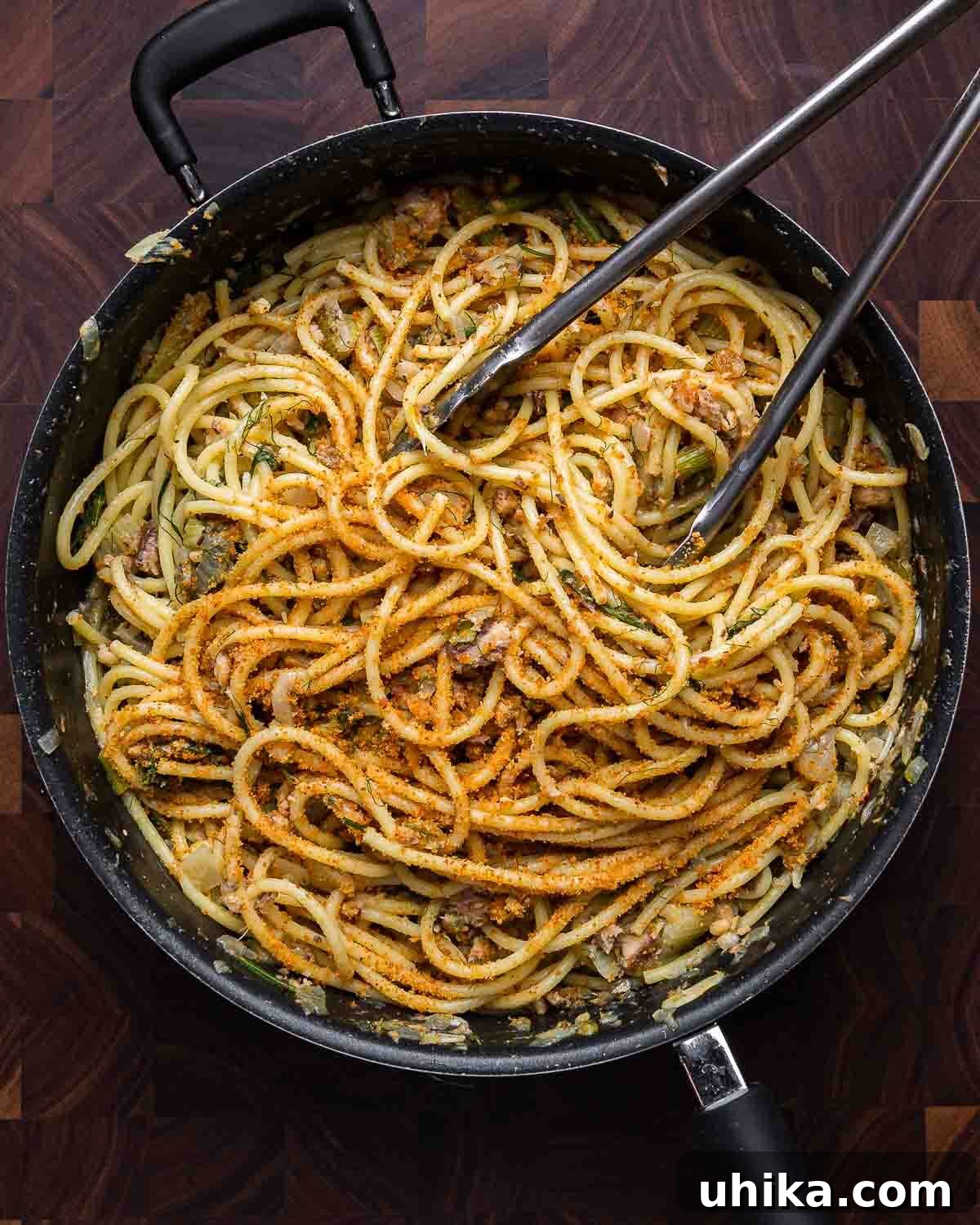
Recipe: Pasta con le Sarde
Pasta con le Sarde
by James Delmage
Prep: 5 mins | Cook: 35 mins | Total: 40 mins
Servings: 6
Pin Recipe
Pasta con le sarde, also known as St. Joseph’s Pasta, is a wonderful combination of al dente bucatini, toasted breadcrumbs, fennel, sardines, pignoli, and golden raisins.
Ingredients
For the breadcrumbs
- 1 cup plain breadcrumbs
- 3 tablespoons extra virgin olive oil
- Salt and pepper to taste
For the pasta
- 1 pinch saffron
- 1/2 cup dry white wine
- 1 pound bucatini or spaghetti
- 1/4 cup extra virgin olive oil
- 1 large fennel bulb, cut in half (reserve 1/2 cup or less of the fronds)
- 1 medium onion, diced
- 5 cloves garlic, sliced
- 5 oil-packed anchovy fillets
- 3 (4-ounce) cans of oil-packed sardines
- 1/3 cup golden raisins, soaked in water then drained
- 1/3 cup pine nuts
- 2 cups reserved pasta water (will most likely not need it all)
- Salt and pepper to taste
Instructions
For the breadcrumbs
- Heat a large pan to medium-low heat and sauté the breadcrumbs in the olive oil until golden (about 5 minutes). Season with salt and pepper and set aside.
For the pasta
- Place the saffron in the wine and set aside to infuse.
- Begin by bringing a large pot of salted water to boil. Boil the fennel for about 10 minutes or until tender, then remove with a slotted spoon. Save the water, as it will be used to cook the pasta. Once the fennel is cool enough to handle, dice it into small pieces.
- Heat a large pan to medium and sauté the onions in extra virgin olive oil until translucent (about 5 minutes). Add the anchovies and sliced garlic and cook for another 2 minutes. Mash the anchovies with a wooden spoon to break them up and incorporate them into the oil.
- Add the diced fennel and cook for another 2 minutes, stirring to combine all ingredients.
- At this time, add the pasta to the boiling fennel water and cook until 1 minute less than al dente.
- Pour the wine and saffron mixture into the pan with the fennel and aromatics. Cook for 2-3 minutes over medium heat to reduce the liquid by about half, allowing the alcohol to evaporate and the saffron flavor to develop.
- Add the drained raisins, pine nuts, and reserved fennel fronds along with the sardines to the pan. Turn the heat down to low and gently break the sardines apart with a spoon, being careful not to mash them completely, preserving some texture.
- Add the partially cooked pasta directly to the pan with the sauce, along with 1 cup of reserved pasta water. Toss or mix quickly and vigorously until the pasta finishes cooking to al dente, absorbing the sauce and creating a cohesive dish.
- Remove the pan from the heat and taste test for seasoning. Adjust salt and pepper as required, keeping in mind the saltiness of the anchovies and sardines. If the pasta is too dry, add a bit more of the reserved pasta water (1-2 tablespoons at a time), mixing until it reaches the desired consistency. Add half of the toasted breadcrumbs and give the pasta a final toss. Serve in bowls with a drizzle of extra virgin olive oil and offer the remaining breadcrumbs at the table for garnish. Enjoy!
Notes
- Traditionally, this dish is prepared with fresh sardines, but high-quality, oil-packed canned sardines are a readily available and excellent alternative.
- Be mindful of sodium levels: anchovies and canned sardines are naturally salty. Taste before adding any extra salt.
- Large supermarket fennel bulbs may have tougher outer layers. If this is the case, use a vegetable peeler to remove them. Smaller, more tender fennel bulbs (like those pictured in the post) can be used as is.
- Always remember to reserve pasta water! It is a magical ingredient for achieving the perfect sauce consistency and can revive the dish if it dries out before serving.
- Leftovers can be stored in an airtight container in the refrigerator for up to 3 days and can be easily reheated in the microwave.
Nutrition
Calories: 676kcal | Carbohydrates: 78.6g | Protein: 28.3g | Fat: 29.5g | Saturated Fat: 3.8g | Cholesterol: 83mg | Sodium: 557mg | Potassium: 512mg | Fiber: 5.2g | Calcium: 583mg | Iron: 6mg
Nutrition information is automatically calculated, so should only be used as an approximation.
Explore More Delicious Pasta Recipes
If you’ve savored the unique flavors of Pasta con le Sarde, you’ll surely appreciate these other exquisite seafood pasta dishes:
- Lemon Garlic Shrimp Pasta – A bright and zesty dish featuring plump, garlicky shrimp tossed with al dente pasta, fresh parsley, and a vibrant lemon sauce.
- Linguine alle Vongole – A classic Italian favorite, this elegant pasta combines tender linguine with succulent clams, a delicate white wine sauce, and a generous sprinkle of fresh parsley.
- Linguine with Canned Clams – A convenient yet incredibly flavorful pantry-friendly version of linguine with white clam sauce, perfect for a quick weeknight meal without compromising on taste.
- Pasta al Tonno – A robust and hearty pasta dish featuring high-quality canned yellowfin tuna, capers, and olives, all simmered in a rich red sauce.
Frequently Asked Questions About Pasta con le Sarde
- Can I use fresh sardines instead of canned?
- Absolutely! Fresh sardines are traditional and would elevate the dish significantly. If using fresh, clean and debone them, then gently pan-fry or bake them before adding to the sauce in step 8.
- What if I don’t have saffron?
- While saffron adds an authentic flavor and color, you can omit it if unavailable. The dish will still be delicious due to the other strong flavors.
- Is there a substitute for fennel?
- Fennel is a signature ingredient for this dish, providing its distinct anise notes. While you can’t perfectly replicate it, some recipes use celery for texture, but the flavor profile will differ significantly.
- Can I make this dish vegetarian?
- Pasta con le Sarde is inherently a seafood dish. For a vegetarian version, you would need to omit the sardines and anchovies, focusing on the fennel, raisins, pine nuts, and breadcrumbs, perhaps adding other vegetables for substance. However, it would no longer be Pasta con le Sarde.
- What kind of pasta works best?
- Bucatini or spaghetti are traditional choices, as their long strands are perfect for coating with the rich sauce. However, other long pastas like linguine or even a short, hearty pasta like rigatoni could work.
We truly hope you enjoy preparing and sharing this incredible Pasta con le Sarde Recipe. If you’ve loved this dish or any other recipe from our site, we encourage you to give it a 5-star rating and share your thoughts in the comments below.
We understand that everyone has a preferred learning style. If you’re someone who learns best by watching, you can discover most of our recipes and cooking demonstrations on our YouTube channel and our Facebook Page. Don’t forget to connect with us on Instagram at @sipandfeast or tag your creations with #sipandfeast!