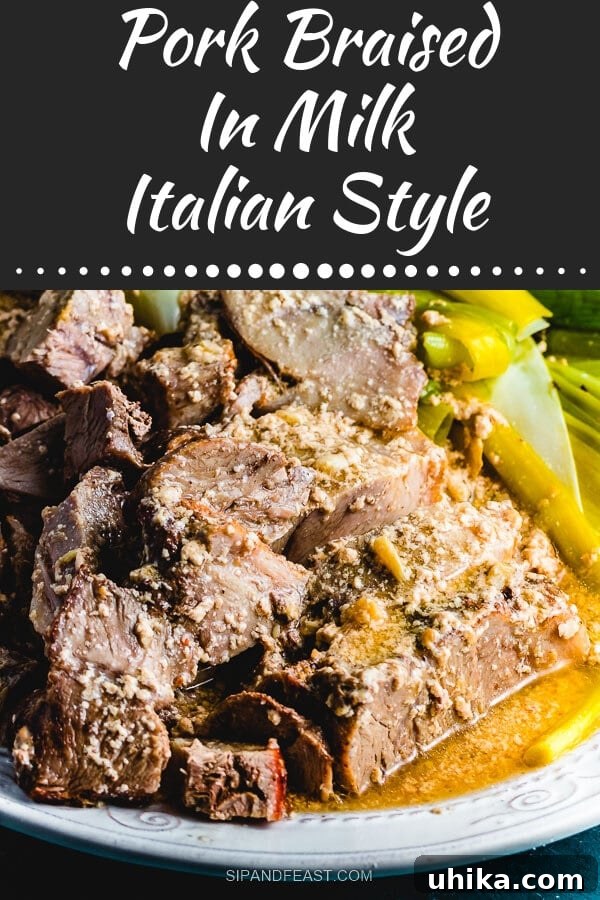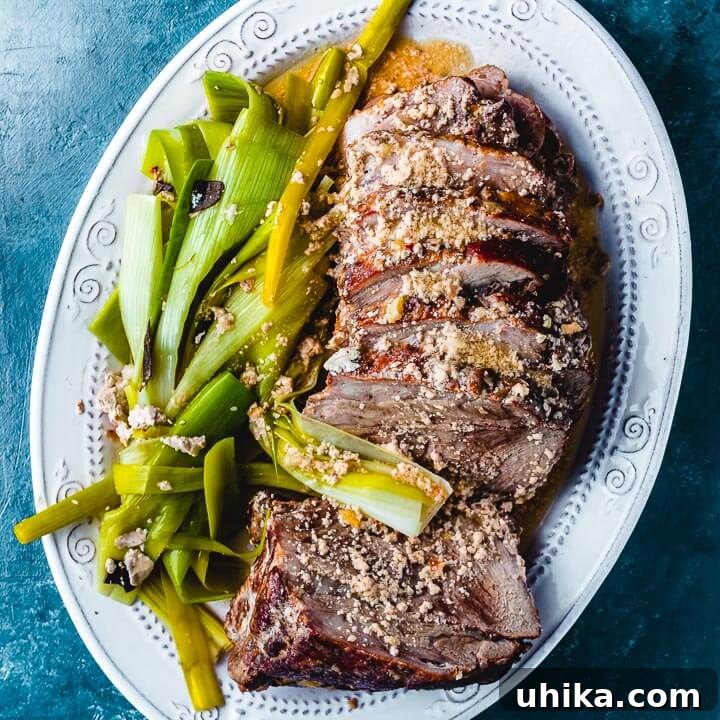
Maiale al latte (pork in milk) is a truly remarkable Italian dish, celebrated for its surprisingly simple preparation and the profound depth of flavor delivered by its unique, nutty milk sauce.
Despite its gourmet appeal, the essence of Maiale al latte lies in its straightforward approach: seasoning a cut of pork generously with salt and pepper, searing it to a beautiful golden-brown in a sturdy pot, then enveloping it in milk for a slow, tender braise. This seemingly minimal combination of ingredients orchestrates a culinary transformation, resulting in incredibly succulent pork bathed in a rich, complex sauce that is far greater than the sum of its parts.
Maiale al Latte: The Art of Milk-Braised Pork
What Exactly Is Maiale al Latte?
Maiale al latte, translating literally to “pork in milk,” is a classic Italian preparation where pork is slow-cooked in milk until it becomes exceptionally tender. This ancient technique, found in various regional Italian cuisines, is a testament to the power of simple ingredients. While many iterations exist, the fundamental components remain constant: pork, milk, salt, and pepper. Some traditional recipes may call for a lean pork loin (lonza), while others embrace fattier cuts like pork shoulder or even pork chops, each contributing its own character to the final dish.
Our rendition of Maiale al latte elevates this rustic classic with thoughtfully chosen additions such as aromatic lemon peel, a splash of dry white wine, fragrant fresh herbs like sage and bay leaves, and a hint of crushed chili flakes for a subtle warmth. These complementary flavors meld harmoniously with the creamy milk, creating a nuanced sauce that truly sings. We specifically favor a pork shoulder for this recipe. Its inherent marbling and connective tissues break down beautifully during the extended braising process, ensuring a moist, deeply flavorful, and fall-apart tender result, preventing any risk of dryness.
The Magic of Milk Braising
The concept of cooking meat in milk might seem unconventional to some, but it’s a time-honored method for achieving unparalleled tenderness and a distinctive flavor profile. As the pork slow-cooks in milk, several fascinating culinary transformations occur. The milk’s lactic acid tenderizes the meat fibers, making the pork incredibly succulent. Simultaneously, the milk solids gently caramelize and separate, forming golden-brown curds that become a treasure trove of nutty, savory flavor within the sauce. This process imbues the entire dish with a rich, almost sweet complexity that cannot be replicated by other braising liquids. The result is a profoundly comforting meal, perfect for a cozy Sunday dinner or a special gathering.
Essential Ingredients for Milk-Braised Pork Shoulder
Crafting our perfected Maiale al latte requires a selection of fresh, high-quality ingredients that work in concert to create its signature taste. Here’s what you’ll need for an unforgettable dish:
- 4-5 pound Boneless Pork Shoulder (Pork Butt): This cut is ideal for braising due to its marbling and connective tissue, which render into a rich, juicy texture. Tying the shoulder with kitchen twine is highly recommended to help it maintain its shape during the long cooking process, ensuring even cooking and easier slicing.
- 2 Tablespoons Olive Oil: Essential for achieving a deep, flavorful sear on the pork shoulder, which is the foundation of the dish’s flavor.
- 1/2 Stick Unsalted Butter: Adds richness and helps to sauté the aromatics, building another layer of flavor.
- Peel of 2 Large Lemons: Use a vegetable peeler to remove wide strips of zest, avoiding the bitter white pith. The lemon peel infuses the dish with a bright, aromatic lift that cuts through the richness of the pork and milk.
- 1/2 Teaspoon Crushed Chili Flakes: (Optional) Adds a very subtle kick and warmth, enhancing the overall flavor without making the dish overtly spicy. Adjust to your preference.
- 10 Cloves Garlic: Fresh garlic, roughly chopped, provides a robust aromatic base that complements the pork and milk beautifully.
- 1 Cup Dry White Wine: A crisp Pinot Grigio is an excellent choice. It deglazes the pot, capturing all the delicious browned bits, and adds acidity and depth to the braising liquid.
- 4 Cups Whole Milk: The star of the sauce! Whole milk is preferred for its fat content, which contributes to a creamier texture and richer flavor.
- 3 Bay Leaves: These fragrant leaves impart a subtle, herbaceous note that is classic in slow-cooked dishes.
- 15 Fresh Sage Leaves: Sage is a traditional pairing with pork, offering an earthy, slightly peppery aroma that is indispensable to this recipe.
- Salt and Freshly Ground Black Pepper: Crucial for seasoning the pork and the sauce to perfection. We recommend kosher salt for its flaky texture and clean taste.
- 4 Medium Leeks: (Optional) These sweet, mild members of the onion family are wonderful when gently cooked in the flavorful milk sauce after the pork is removed. They make an excellent side dish, absorbing the luxurious sauce and complementing the rich pork.
Step-by-Step Guide: How to Master Maiale al Latte
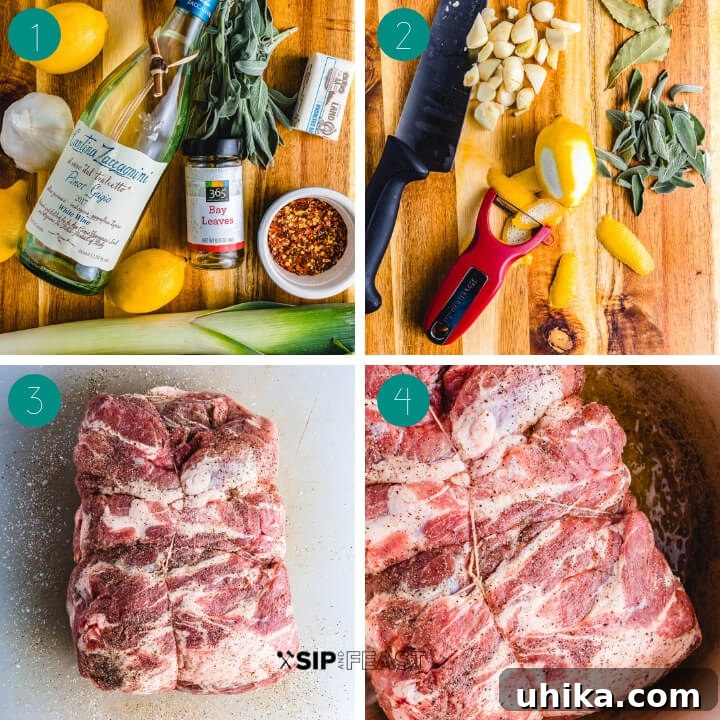
- Prepare the Aromatics: Begin by roughly chopping your 10 cloves of garlic. Using a vegetable peeler, carefully remove large strips of peel from both lemons, ensuring you avoid the bitter white pith as much as possible.
- Prepare and Sear the Pork: Pat the pork shoulder thoroughly dry with paper towels. This step is crucial for achieving a good sear. Season the entire surface of the pork aggressively with approximately 1 to 1 1/2 tablespoons of kosher salt and 1 teaspoon of freshly ground black pepper. Preheat your oven to 325°F (160°C) with an oven rack positioned in the middle. Heat a large, heavy-bottomed pot or Dutch oven over medium-high heat for a few minutes, then add 1-2 tablespoons of olive oil. Once the oil shimmers, carefully place the pork shoulder in the pot and sear it on all sides until a deep, even brown crust forms. This searing process will take a total of 20-30 minutes, turning the pork every few minutes.
- Develop the Flavor Base: Once the pork shoulder is beautifully browned, remove it from the pot and set it aside. Carefully drain any excess pork fat from the pot. Reduce the heat to medium. After about 2 minutes, add the 1/2 stick of unsalted butter to the pot. Once melted, add the chopped garlic, lemon peel, sage leaves, bay leaves, and chili flakes (if using). Sauté these aromatics for 2-3 minutes until the garlic becomes lightly golden and fragrant.
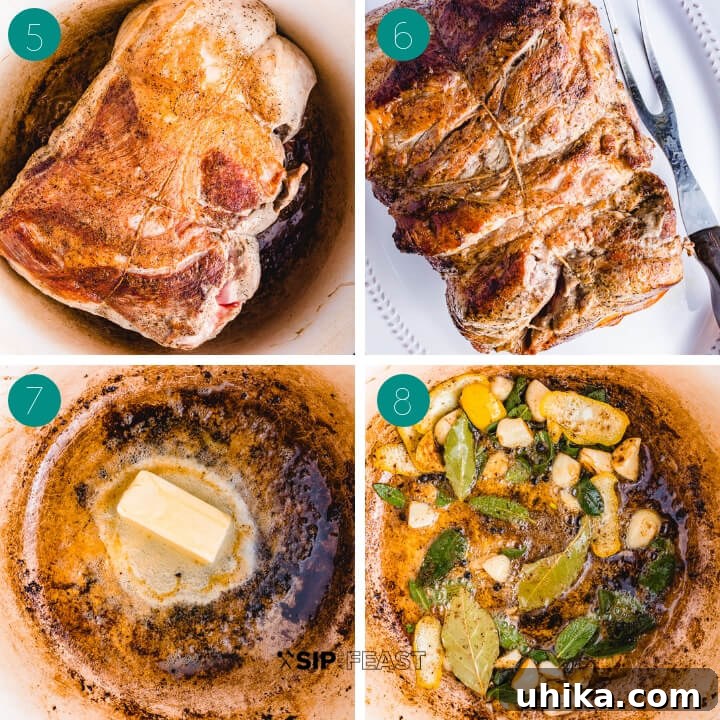
- Deglaze and Add Liquid: Pour the dry white wine into the pot, scraping up any browned bits (fond) from the bottom of the pan with a wooden spoon. This fond is packed with flavor and is essential for a rich sauce. Allow the wine to cook and reduce for 3-5 minutes.
- Begin the Braise: Add the 4 cups of whole milk to the pot and stir to combine all the ingredients. Return the seared pork shoulder to the pot, nestling it into the liquid. Ensure the pot is covered with a tight-fitting lid.

- Slow Cook in the Oven: Transfer the covered pot to the preheated oven and set a timer for 2 hours. After the initial 2 hours, carefully remove the pot from the oven (using oven mitts) and gently turn the pork shoulder over to ensure even cooking and browning. Return the pot to the oven, cracking the lid slightly to allow some moisture to escape, and continue cooking for approximately 1 more hour, or until the pork reaches your desired internal temperature.
- Monitor Temperature for Desired Texture: For perfectly sliceable, yet tender pork shoulder, aim for an internal temperature of 185-190°F (85-88°C) when checked with an instant-read thermometer. If you prefer pulled or shredded pork, continue cooking until the internal temperature reaches 205°F (96°C). Check the pork’s temperature every 20-30 minutes during the final hour of cooking.
- Rest the Pork: Once the pork has reached its ideal doneness, carefully remove it from the pot and transfer it to a cutting board. Tent it loosely with aluminum foil and let it rest for at least 15-20 minutes. Resting allows the juices to redistribute throughout the meat, ensuring maximum tenderness and flavor.
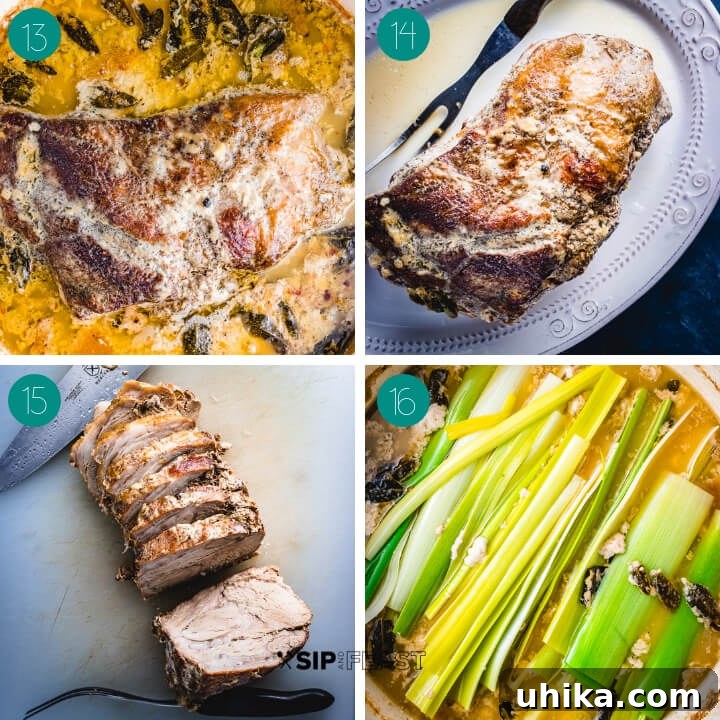
- Prepare Optional Leeks and Finish the Sauce: If you are using leeks, clean and rinse them thoroughly while the pork is resting. Place the cleaned leeks into the hot milk sauce in the pot, cover, and cook on the stovetop over medium heat for 10-15 minutes until they are tender. Remove the leeks once cooked. Taste the sauce and adjust seasonings (salt and pepper) as needed. If the sauce appears too thin, you can thicken it slightly by simmering it uncovered on the stovetop over medium-high heat for about 20 minutes, allowing it to reduce.
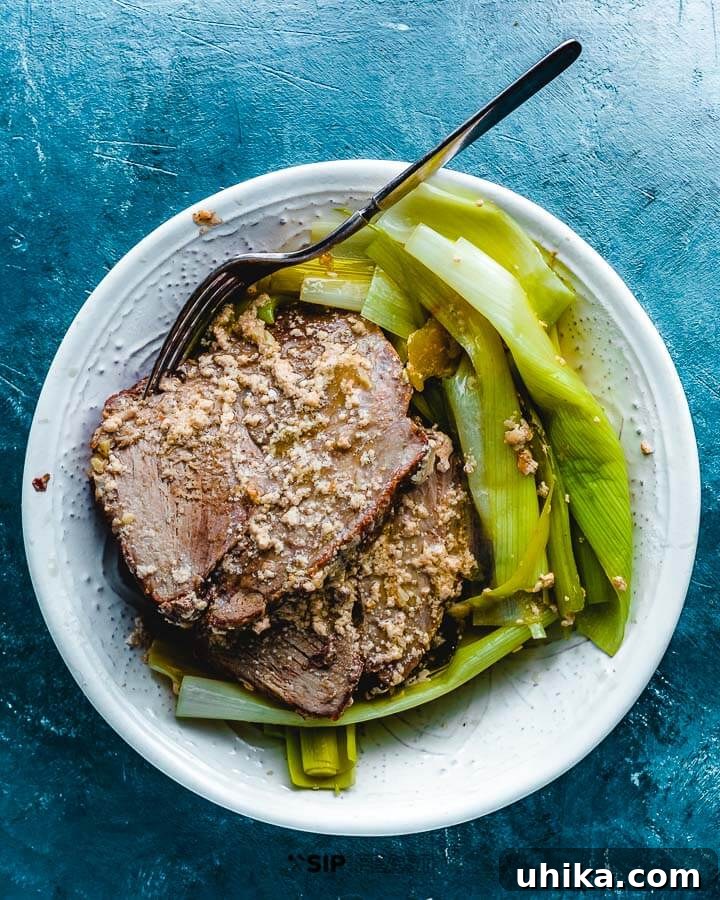
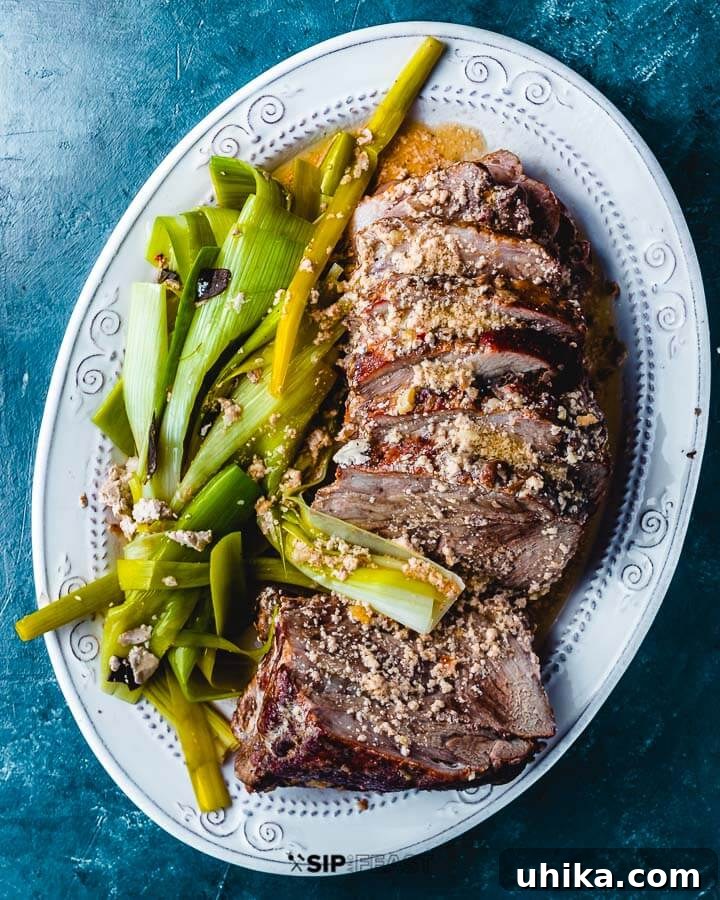
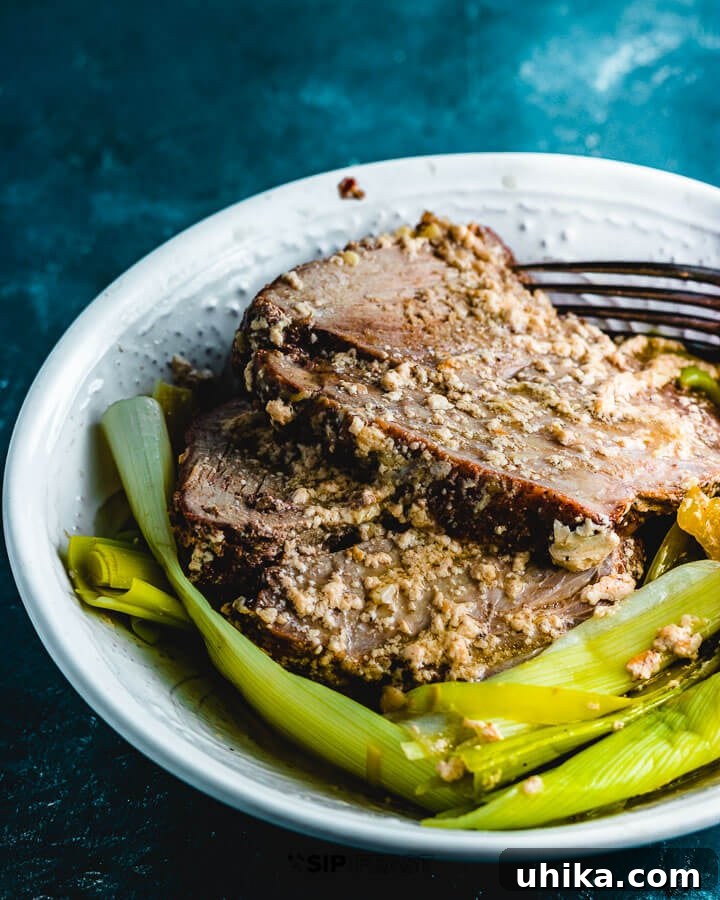
- Serve and Enjoy: Slice the rested pork shoulder into thick, juicy portions. Ladle the rich, nutty milk sauce generously over the sliced pork and serve with the tender braised leeks, if using. A crusty Italian bread is highly recommended for soaking up every last drop of the delectable sauce.
Understanding the Maiale al Latte Sauce: Curds and Flavor
One of the most distinctive characteristics of Maiale al latte is the separation of the milk during the cooking process, leading to the formation of small, golden-brown curds in the sauce. For newcomers, this might initially appear as an undesirable curdling, but in fact, it is the hallmark of an authentic and perfectly executed Maiale al latte. These curds are not a flaw; they are a flavorful consequence of the milk’s proteins reacting to the heat and acidity during the long braise. They contribute significantly to the sauce’s unique texture and its deeply nutty, savory flavor profile.
Many traditional Italian cooks, including the legendary Marcella Hazan, champion this “broken” sauce, recognizing its integral role in the dish’s character. Straining the sauce to remove these curds is an option, but it’s one we strongly advise against. Doing so would strip away much of the rich, complex, and intensely nutty flavor that makes Maiale al latte so special. Embrace the rustic beauty and concentrated taste that the curds provide!
If, despite our recommendation, you prefer a smoother sauce, there are a couple of approaches you can take. You could try adding a cornstarch slurry (a mixture of cornstarch and water) to the sauce towards the end of cooking. Bring the sauce to a simmer after the pork is removed, whisk in the slurry, and cook until it slightly thickens. Alternatively, incorporating a splash of heavy cream at the very end can help to emulsify the sauce somewhat and add a luxurious mouthfeel, although it won’t entirely eliminate the curds. However, to truly experience Maiale al latte as intended, with all its traditional charm and flavor, we encourage you to savor the sauce in its original, curd-filled state.
Choosing the Right Pork Cut for Maiale al Latte
The beauty of Maiale al latte lies in its adaptability to various cuts of pork, each yielding a slightly different texture and flavor. Here are some popular choices and their considerations:
- Pork Shoulder (Pork Butt): This is our top recommendation for Maiale al latte, and the cut specified in our recipe. Pork shoulder is generously marbled with fat and contains ample connective tissue. During the slow braise, this fat melts and the connective tissue breaks down, resulting in incredibly tender, moist, and flavorful pork that can be easily sliced or even shredded. It’s very forgiving and difficult to overcook, making it ideal for beginners.
- Pork Loin (Lonza di Maiale al Latte): If you prefer a leaner cut, pork loin is a traditional choice for Maiale al latte. However, it requires more careful temperature monitoring to prevent it from drying out. Pork loin has less fat and connective tissue, so it can become tough if overcooked. Aim for an internal temperature of 145°F (63°C) for a juicy and tender result. Once removed from the heat, allow it to rest for at least 10 minutes to allow the juices to redistribute.
- Pork Chops (Double-Cut): For a quicker weeknight version, thick-cut pork chops (especially double-cut, bone-in chops) can be successfully braised in milk. You’ll need to adjust the quantities of wine and milk, reducing them by about two-thirds to ensure the chops are just covered. Cook pork chops to an internal temperature of 145°F (63°C) for optimal tenderness. The braising time will be significantly shorter than for a large shoulder or loin, so keep a close eye on the internal temperature.
Maiale al Latte Difficulty Level
On a scale of 1 to 5, with 1 being the easiest, we’d rank this milk-braised pork shoulder recipe at a 2 1/2. While it involves several steps, none are overly complicated, and the slow-cooking process is quite forgiving. The primary element to pay close attention to is the internal temperature of the pork, especially if you opt for a leaner cut like pork loin. For a pork loin, meticulously ensure it reaches an internal temperature of 145°F (63°C) for the best results. However, if you follow our recommendation and use a pork shoulder, you’ll find it far more lenient. Even if the temperature creeps up to 200-210°F (93-99°C), the shoulder will simply become tender enough to shred, yielding a delicious pulled pork in milk. It will still be absolutely amazing!
As for the sauce, don’t hesitate to adjust its consistency to your liking. If you prefer a thicker sauce, after removing the pork, simply increase the heat on your stovetop to medium-high and let it simmer, uncovered, for an additional 20-30 minutes until it reduces and thickens slightly before serving. Always taste and adjust salt and pepper just before serving.
Serving Suggestions for Maiale al Latte
This rich and comforting dish pairs wonderfully with a variety of sides. The creamy, nutty sauce is particularly good with carbohydrates that can soak it up. Consider serving your Maiale al latte with:
- Crusty Italian bread or ciabatta, perfect for dipping into the luxurious sauce.
- Creamy polenta or mashed potatoes for a comforting accompaniment.
- Simple green salad with a light vinaigrette to cut through the richness.
- Roasted root vegetables like carrots or parsnips.
- Sautéed greens such as spinach or bitter rapini.
For a wine pairing, a medium-bodied white wine that can stand up to the richness of the dish, such as a crisp Pinot Grigio (which is also used in the recipe), an unoaked Chardonnay, or a Vermentino, would be excellent. If you prefer red, a light-bodied Sangiovese or a Barbera would also complement the flavors nicely.
Other Hearty Main Courses to Explore
If you’ve enjoyed the comforting depth of flavor in Maiale al latte, you might also appreciate these other hearty Italian-inspired main courses:
- Beef Braciole With Raisins And Pine Nuts
- Porchetta Roast
- Brasato Al Barolo
- Chicken Sorrentino
Recipe: Maiale al Latte (Pork in Milk)
by James Delmage
Prep Time: 5 mins
Cook Time: 3 hrs
Total Time: 3 hrs 5 mins
Servings: 12
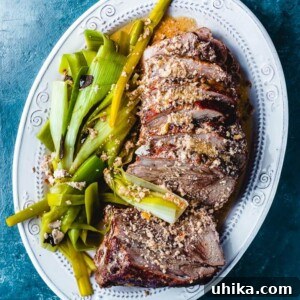
Pork shoulder braised in milk, wine, lemon, garlic, and herbs. Makes the perfect hearty dish for a Sunday dinner.
Ingredients
- 1 (4-5 pound) pork shoulder
- 2 Tbsp olive oil
- 1/2 stick unsalted butter
- 2 large lemons (for peel)
- 10 cloves garlic
- 1 cup dry white wine (e.g., Pinot Grigio)
- 4 cups whole milk
- 3 bay leaves
- 15 sage leaves
- 1/2 tsp crushed chili flakes (optional)
- Salt and freshly ground black pepper (to taste)
- 4 large leeks (optional, for serving)
Instructions
- Roughly chop the garlic. Remove large strips of lemon peel with a vegetable peeler, avoiding the white pith. Pat the pork shoulder dry with paper towels and season aggressively on all sides with about 1 to 1 1/2 Tbsp kosher salt and 1 tsp black pepper.
- Preheat your oven to 325°F (160°C) and place a rack in the middle. Heat a large, heavy-bottomed pot or Dutch oven over medium-high heat. Add 2 Tbsp of olive oil. Once hot, sear the pork shoulder on all sides until a deep, golden-brown crust forms (this will take approximately 20-30 minutes total).
- Once the shoulder is well-browned, remove it from the pot and set aside. Carefully drain any excess pork fat from the pot. Reduce the heat to medium. After 2 minutes, add the 1/2 stick of unsalted butter. Add the chopped garlic, lemon peel, sage leaves, bay leaves, and chili flakes (if using). Sauté for 2-3 minutes until the garlic is lightly golden and fragrant.
- Pour in the white wine, scraping the bottom of the pan with a wooden spoon to deglaze and release all the flavorful browned bits. Let the wine cook and reduce for 3-5 minutes.
- Add the milk to the pot and stir to combine all the ingredients. Return the pork shoulder to the pot, cover with a tight-fitting lid, and transfer to the preheated oven. Set a timer for 2 hours.
- After 2 hours, carefully turn the pork over in the pot for more even cooking. Crack the lid slightly and continue to cook in the oven for about 1 more hour, or until the pork shoulder reaches an internal temperature of 190°F (88°C) for sliceable pork, or 205°F (96°C) for shreddable pork. Check the temperature periodically with an instant-read thermometer.
- When the desired doneness is achieved, remove the pork shoulder from the pot and transfer it to a cutting board. Tent it loosely with foil and let it rest for 15-20 minutes. If using leeks, clean and rinse them at this time.
- If using leeks, add them to the hot milk sauce in the pot (on the stovetop) and cook covered over medium heat for 10-15 minutes until softened. Remove the leeks. Taste the sauce and adjust salt and pepper if necessary. If the sauce is too thin, you can simmer it uncovered over medium-high heat on the stovetop for 20-30 minutes to reduce and thicken slightly.
- Slice the rested pork and serve it with the rich milk sauce spooned generously on top, accompanied by the braised leeks if desired. Enjoy this incredible Italian classic!
Notes
- If the sauce appears too thin before serving, after removing the pork, you can either cook it longer on the stovetop for 20-30 minutes to reduce, or add a cornstarch slurry (1 tablespoon cornstarch mixed with 2 tablespoons cold water) to thicken it slightly. Whisk well and simmer until thickened.
- Initial seasoning with salt and pepper on the pork shoulder is critical. No additional salt was specifically added to the sauce during cooking in this recipe, allowing the flavors to meld. Always taste test the sauce just before serving and make final adjustments to salt and pepper as per your preference.
- For any pork cut other than a shoulder, cook to an internal temperature of 145°F (63°C) for best results. For a pork shoulder, 190°F (88°C) is the ideal target for sliceable, tender meat.
- Serve Maiale al latte with plenty of crusty Italian bread to sop up the delicious nutty sauce.
- Leeks are an optional but highly recommended addition, as they absorb the sauce’s flavors beautifully and complement the rich pork.
Nutrition
Calories: 669 kcal | Carbohydrates: 9.2g | Protein: 47.3g | Fat: 48.8g | Saturated Fat: 18.6g | Cholesterol: 187mg | Sodium: 782mg | Potassium: 735mg | Fiber: 0.7g | Sugar: 4.9g | Calcium: 130mg | Iron: 3.2mg
Nutrition information is automatically calculated, so should only be used as an approximation.
We hope you enjoyed this journey into the flavors of Italy with our Maiale al Latte recipe! We love hearing from you.
Please share this Maiale al latte recipe using #sipandfeast on social media. We would love to know how you did and it’s nice to show others as well. Thanks!
Follow us on Instagram, Pinterest, and Facebook. Sign up to receive great recipe ideas in your inbox.