
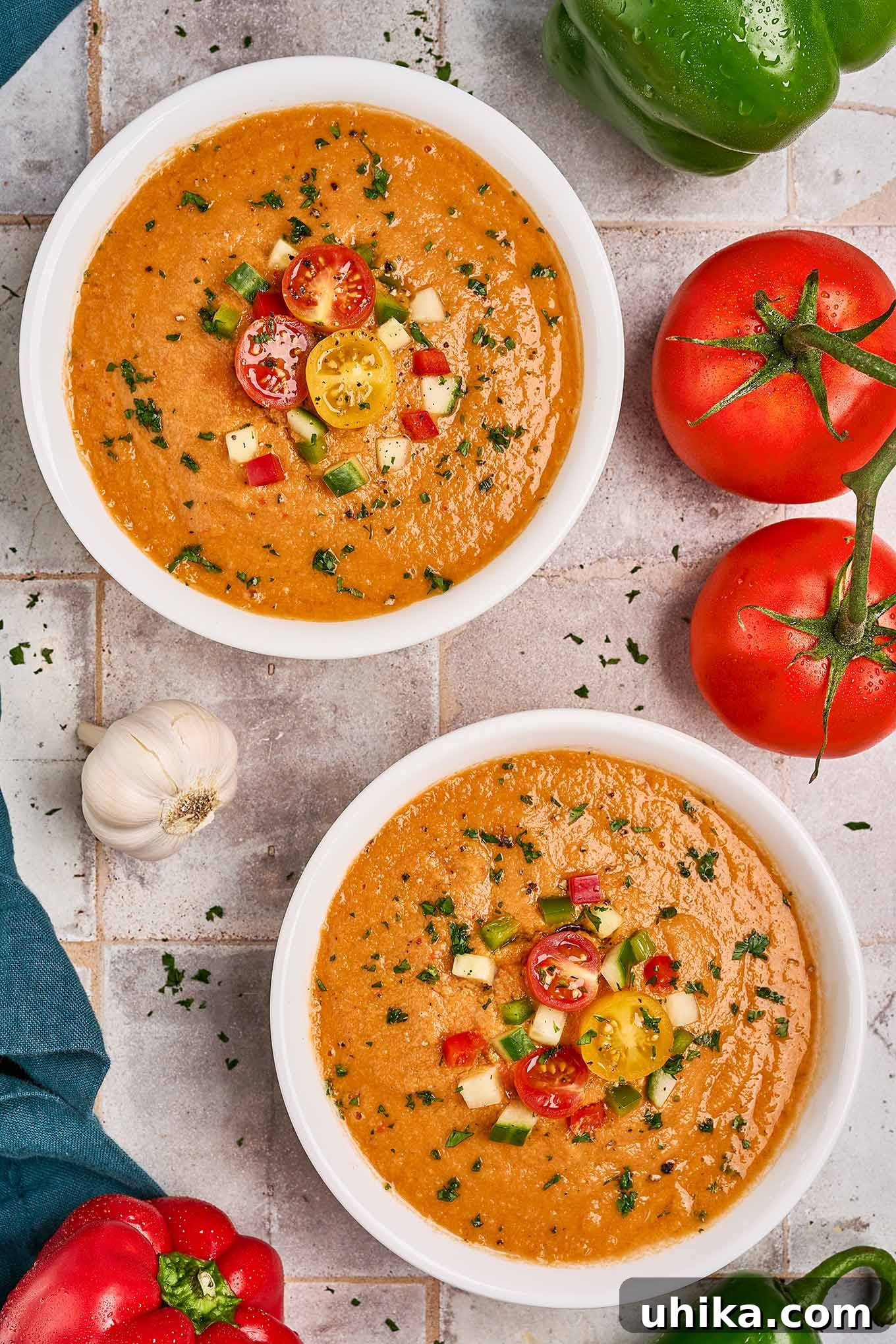
The Ultimate Guide to Authentic & Refreshing Gazpacho Soup
As summer temperatures rise, the craving for light, vibrant, and cooling dishes becomes undeniable. Few culinary creations satisfy this desire quite like a perfectly crafted bowl of **Gazpacho soup**. This iconic Spanish chilled vegetable soup is a true celebration of seasonal produce, combining the robust sweetness of sun-ripened tomatoes with the crisp freshness of cucumbers, the vibrant crunch of bell peppers, and a subtle hint of jalapeño for an invigorating kick. Blended to a silken smoothness with the finest olive oil, tangy sherry vinegar, aromatic garlic, and a touch of bread for ideal body, authentic gazpacho is then beautifully garnished with finely diced fresh vegetables and fragrant parsley. It’s an unparalleled choice for those sweltering days when you seek a meal that is both incredibly flavorful and wonderfully light.
Our journey with gazpacho began decades ago, nurtured by an abundant garden brimming with ripe tomatoes. Over the years, our appreciation for this simple yet profound dish has only deepened. While our core recipe has remained tried and true, we’ve refined our techniques, discovering an effortless method for peeling tomatoes that we’re excited to share. This guide aims to not only provide you with a stellar **easy gazpacho recipe** but also to delve into the nuances of ingredient selection, preparation tips, and delightful serving suggestions, ensuring your homemade gazpacho is nothing short of spectacular.
Crafting the Perfect Gazpacho: Essential Ingredients & Smart Substitutions
The heart of an extraordinary **cold tomato soup** lies in the quality and freshness of its components. Here, we delve deeper into the **key ingredients for gazpacho** and offer valuable insights for selection and potential substitutions. For a precise list of quantities, please refer to the comprehensive recipe card further down this page.
Selecting Your Star Performers for the Best Gazpacho:
TOMATOES: The Soul of Gazpacho
Choosing the right tomatoes is paramount for an outstanding gazpacho. They form the base flavor and texture, so prioritize ripeness, juiciness, and intense flavor. Look for varieties known for their robust, sweet, and slightly acidic profiles. Heirloom tomatoes, with their diverse colors and complex flavors, are an excellent choice. Beefsteak tomatoes offer a good balance of flesh and juice, while other vine-ripened varieties are always preferable to under-ripe, pale alternatives. The deeper the red, the richer the flavor your **summer soup** will possess. Avoid mealy or overly soft tomatoes; they should be firm to the touch but yield slightly when gently squeezed, indicating peak ripeness. Freshness is key – ideally, use tomatoes picked recently from your garden or a local farmer’s market, as this will significantly impact the final taste of your **homemade gazpacho**.
CUCUMBER: The Refreshing Crispness
English cucumbers, often found wrapped in plastic, are highly recommended for gazpacho. Their slightly sweeter taste, thinner skin, and significantly smaller, less noticeable seeds make them superior to conventional cucumbers, eliminating the need for extensive deseeding. This contributes to a smoother, more refined soup texture. If English cucumbers are unavailable, regular garden cucumbers can be used, but you might consider peeling them more thoroughly and removing any large, bitter seeds for the best results, ensuring the soup remains light and palatable.
BELL PEPPERS: Adding Sweetness and Vibrancy
Red and green bell peppers are standard in this **authentic Spanish recipe**. Red bell peppers offer a sweet counterpoint to the tomatoes, while green bell peppers provide a slightly bitter, peppery note that adds complexity and a fresh aroma. Ensure they are firm, brightly colored, and free of blemishes. Yellow or orange bell peppers can also be used for a slightly sweeter, milder flavor profile, allowing for customization based on your preference and the desired color palette of your gazpacho.
JALAPEÑO: The Subtle Kick
A small amount of jalapeño pepper introduces a delightful warmth and depth without overpowering the fresh vegetable flavors. The amount can be adjusted to your personal spice preference. For a milder gazpacho, remove all seeds and membranes, as these contain most of the capsaicin, which is the compound responsible for the heat. For a bolder kick, leave some seeds in, or even consider a small piece of serrano pepper for extra heat. Always taste as you go to achieve your preferred level of spice.
SWEET ONION & GARLIC: Aromatic Foundation
Sweet onions, such as Vidalia or Walla Walla, are preferred for their mildness, ensuring they don’t dominate the soup’s delicate flavors when eaten raw. Their gentle sweetness complements the other vegetables. Garlic, a staple in Spanish cuisine, provides an essential aromatic base and a characteristic pungent flavor. Use fresh garlic cloves; their robust taste mellows beautifully when blended into the cold soup, adding depth and an authentic touch without being overly harsh.
OLIVE OIL: The Golden Elixir
Investing in a high-quality extra-virgin olive oil is crucial for gazpacho. Spanish olive oil is traditionally recommended due to its bold, fruity, and sometimes peppery notes, which perfectly complement the other ingredients, enhancing the soup’s Mediterranean character. However, any premium extra-virgin olive oil will significantly enhance the overall flavor and mouthfeel of your soup, adding richness, a silky texture, and a desirable sheen.
SHERRY VINEGAR: The Tangy Balance
Sherry vinegar, a cornerstone of Spanish gastronomy, lends a distinctive complexity to gazpacho with its subtle sweetness, nutty undertones, and a hint of oak from its aging process. It provides the essential acidic balance that brightens and harmonizes all the flavors, cutting through the richness of the olive oil and enhancing the freshness of the vegetables. If sherry vinegar isn’t readily available, good alternatives include apple cider vinegar or red wine vinegar, both of which will offer a similar tang, albeit with a slightly different flavor profile. Balsamic vinegar is generally too strong and sweet for traditional gazpacho.
BREAD: The Secret to Silky Texture
Bread is traditionally used in gazpacho not just for thickening, but to give the soup a creamy, full-bodied texture that is both satisfying and light. Italian bread, Cuban bread, or a classic French baguette are excellent choices due to their crumb structure and neutral flavor. Stale bread works best as it absorbs liquids more effectively, contributing to a smoother, lump-free blend. If you only have fresh bread, a quick bake in a low oven (around 200°F or 95°C for 10-15 minutes) will help dry it out sufficiently. Don’t remove the crusts; they add another layer of flavor and texture to the blend and are easily incorporated during the puréeing process.
Your Culinary Journey: Making the Best Gazpacho Soup
How to Master Homemade Gazpacho Soup: A Step-by-Step Guide
Creating a phenomenal **homemade gazpacho** is a straightforward process, primarily relying on proper ingredient preparation and precise blending techniques. While the full, detailed instructions are provided in the printable recipe card below, here’s an expanded overview to guide you through each crucial step, ensuring a perfect chilled soup every time.
Step 1: Preparing Your Tomatoes – The Secret to a Smooth Gazpacho
Before you begin blending, properly preparing the tomatoes is essential for a silky-smooth gazpacho, free from unwanted skin and seeds. While some recipes skip this step for a more rustic texture, we find that peeling and seeding significantly elevates the soup’s refinement and palatability, making it truly exceptional.
Our Easy Tomato Peeling Method:
- Begin by preheating your oven to a high temperature, ideally 500°F (260°C). Line a broiler pan or a sturdy baking sheet with aluminum foil for easy cleanup. This high heat will quickly loosen the tomato skins without cooking the flesh excessively.
- Take each ripe tomato and slice a small, thin piece from its bottom, which helps stabilize it. Then, cut the tomato in half lengthwise. Using a small spoon or your fingers, gently scoop out the seeds and any pulpy membrane. The goal is to remove as many seeds as possible, as they can sometimes contribute a slightly bitter taste and affect the soup’s smooth texture.
- Arrange the tomato halves cut-side down on the prepared foil-lined pan. Ensure they are in a single layer to cook evenly.
- With the tip of a sharp knife, make a shallow score lengthwise down the skin of each tomato half. This crucial step helps the skin separate effortlessly during heating, making peeling a breeze.
- Carefully place the pan into the preheated oven. Bake for approximately 3 to 5 minutes. The exact time may vary based on the size and ripeness of your tomatoes. You’ll know they’re ready when you observe the scored lines on the skin begin to widen slightly, indicating that the skin is loosening and ready to be removed.
- Promptly remove the tomatoes from the oven. To prevent them from cooking further and becoming mushy, immediately slide the aluminum foil (with the tomatoes) off the hot pan onto a cooler surface, like a cutting board or wire rack.
- Allow the tomatoes to cool just enough so they are comfortable to handle. Once cooled, grasp a tomato half and easily peel the skin away from the scored center outwards. The skin should come off in large pieces, leaving you with perfectly peeled tomato halves, ready for blending.
- After peeling, cut the tomato halves into quarters or smaller chunks to facilitate easier and more efficient blending.
Step 2: Blending the Core Flavors to Perfection
With your tomatoes meticulously prepared, it’s time to bring all the vibrant flavors together. Place the quartered, peeled, and seeded tomatoes into a high-speed blender or the work bowl of a food processor. Add the roughly chopped English cucumber, the red and green bell peppers, the seeded and chopped jalapeño, the sweet onion, and the quartered garlic clove(s). Pour in the generous amount of extra-virgin olive oil and the tangy sherry vinegar. Season generously with about half a teaspoon of salt and several fresh grinds of black pepper. Remember, you can always add more seasoning later.
Purée this mixture until it reaches a wonderfully smooth and uniform consistency. Ensure there are no large chunks remaining, as the hallmark of a great gazpacho is its velvety liquid base. The goal is a truly silky purée that is already bursting with fresh, tangy, and aromatic flavors.
Step 3: Achieving Your Ideal Thickness with Bread
Now comes the unique step that gives gazpacho its characteristic body and creamy texture. With your blender or food processor still running on a medium setting, gradually add the 1/2-inch bread cubes, starting with one cup. Continue to blend until the soup thickens to your desired consistency. Gazpacho should be pourable, but robust enough to support its garnishes without them sinking to the bottom, offering a satisfying mouthfeel. Start with one cup of bread and add more if you prefer a thicker soup, blending thoroughly after each addition to check the texture. The amount needed can vary based on the bread’s density and moisture content.
Once you’re satisfied with the texture, taste the soup. This is your opportunity to adjust the seasoning to perfection. If you desire more heat, add a little extra jalapeño (blending a small piece at a time). For a more pungent kick, another small piece of garlic can be blended in. Adjust salt and pepper as needed, remembering that flavors can intensify or mellow during chilling, so aim for a well-balanced taste at this stage.
Step 4: The Essential Chill & Garnish Preparation
Transfer the beautifully blended gazpacho into individual serving bowls or a large, airtight container, cover it tightly, and refrigerate. Chilling is not just about bringing the soup to a refreshing temperature; it is a crucial step that allows the flavors to meld, deepen, and fully harmonize. A minimum of 2 hours is required for proper chilling, but 4-6 hours, or even better, overnight, will yield an even more flavorful and well-integrated result. If chilling in a large batch, stir well before serving as some slight separation of ingredients might occur.
While the soup chills, prepare your vibrant garnishes. Dice some of the remaining English cucumber and bell peppers (both red and green) into small, uniform pieces. Aim for about 6 tablespoons of mixed diced vegetables, ensuring they are finely chopped for easy eating and aesthetic appeal. Combine these with freshly chopped parsley. Keep this garnish mixture chilled separately until you are ready to serve, maintaining its crispness and vibrant color.
Step 5: Serving Your Refreshing Gazpacho
When ready to serve, retrieve the thoroughly chilled gazpacho. If stored in a large container, give it a good stir. Ladle the cold soup into individual bowls. Crown each serving with a generous spoonful of the chilled, diced vegetable and parsley garnish. A final drizzle of your finest extra-virgin olive oil over the top can also add an exquisite finish, both visually and in terms of flavor depth. Serve immediately and enjoy the invigorating taste of summer embodied in every spoonful of your perfectly crafted gazpacho!
Perfect Pairings: What to Serve with Refreshing Gazpacho Soup
Gazpacho, with its light body and vibrant, fresh flavors, is incredibly versatile and makes an excellent addition to almost any summer meal. Whether enjoyed as a sophisticated starter or a delightful light main course, finding the right accompaniments can elevate your dining experience and create a memorable culinary moment.
As a Sophisticated Appetizer:
Serving gazpacho as a first course is a classic choice, especially when followed by light and simple entrées. Its refreshing nature cleanses the palate, preparing it beautifully for the main dish. Consider pairing your gazpacho with:
- Broiled Fish: Delicate white fish, such as cod, halibut, or snapper, prepared simply with lemon and fresh herbs, beautifully complements the bright, acidic flavors of gazpacho. The lean protein and crispness of the fish provide a lovely textural contrast to the smooth soup. Discover our simple guide to broiling fish.
- Grilled Chicken: Lightly seasoned and perfectly grilled chicken breasts or thighs offer a hearty yet complementary protein. The subtle smoky notes from the grill can create an interesting counterpoint to the gazpacho’s freshness, making for a balanced meal. Achieve perfect grilled chicken breasts every time with our recipe.
- Seafood Skewers: Grilled shrimp or scallops on skewers, perhaps with some cherry tomatoes or zucchini, would also be an exquisite match, maintaining the light and fresh theme while adding a touch of elegance.
For a Hearty & Satisfying Summer Meal:
While often seen as merely a starter, gazpacho can easily be integrated into a more substantial and fulfilling summer dinner, especially when paired thoughtfully. One of our all-time favorite summer pairings is our interpretation of the famous **Columbia Restaurant’s 1905 Salad**. This iconic salad features crisp iceberg lettuce, generous chunks of savory baked ham, authentic Swiss cheese, briny green olives, and a robust, garlicky vinaigrette dressing. The distinct Spanish-Cuban flair of this salad harmonizes exceptionally well with the vibrant, cool notes of gazpacho, creating a truly memorable and satisfying meal that transports you to sunny Florida or the shores of the Mediterranean.
Other excellent choices for a light yet fulfilling meal include:
- Crusty Bread with Dips: Serve warm, crusty artisan bread alongside your gazpacho. Offer it with a good quality olive oil for dipping, or accompany it with a simple olive tapenade, a rich romesco sauce, or a spread of fresh aioli for a truly Mediterranean experience.
- Light Sandwiches or Paninis: A vegetarian panini with roasted vegetables and fresh mozzarella, a classic caprese sandwich, or even a simple grilled ham and cheese can be a great textural contrast and add substance.
- Spanish Tapas Selection: Fully embrace the Spanish theme by serving gazpacho alongside a curated selection of tapas such as patatas bravas (fried potatoes with spicy sauce), slices of cured jamón serrano, marinated olives, or small plates of albóndigas (meatballs).
- Quinoa or Couscous Salad: A refreshing grain salad packed with fresh herbs, cherry tomatoes, cucumber, and crumbled feta cheese offers another delightful textural and flavor pairing, providing a wholesome and light accompaniment.
- Cheese Board: A simple cheese board featuring fresh goat cheese, manchego, or a mild cheddar, accompanied by some crackers and fruit, can also make a lovely light meal alongside gazpacho.

Gazpacho Soup: The Ultimate Summer Refreshment
Lynne Webb
30 minutes
5 minutes
2 hours
2 hours
35 minutes
4
servings
Rate Recipe
Print Recipe
Ingredients
-
2 lbs (4 to 5 medium) ripe tomatoes, peeled, cored, and seeded -
3/4 English cucumber, peeled and roughly chopped (plus more for garnish) -
1/2 red bell pepper, cored, seeded and roughly chopped (plus more for garnish) -
1/2 green bell pepper, seeded and roughly chopped (plus more for garnish) -
1/2 jalapeño pepper, seeded and roughly chopped (or more to taste) -
1/4 cup chopped sweet onion -
1 clove garlic, quartered (or more to taste) -
3 tablespoons extra-virgin olive oil -
3 tablespoons sherry vinegar, (see notes for substitutions) -
1 to 2 cups 1/2-inch bread cubes, (see notes) -
Salt and freshly ground black pepper -
2 tablespoons fresh parsley, chopped
Instructions
For detailed, step-by-step instructions on making this delightful Gazpacho, please refer to the “How to Master Homemade Gazpacho Soup” section above for comprehensive guidance.
-
1. After meticulously peeling and seeding the tomatoes (as detailed in the “Preparing Your Tomatoes” section above), cut them into quarters and carefully add them to a high-speed blender or the work bowl of a food processor.
-
2. Add the roughly chopped English cucumber, red and green bell peppers, the seeded and chopped jalapeño, sweet onion, garlic, extra-virgin olive oil, and sherry vinegar. Season with approximately 1/2 teaspoon of salt and a few grinds of fresh black pepper.
-
3. Purée the mixture until it is wonderfully smooth and uniform. With the machine still running on a medium setting, gradually add 1 to 2 cups of 1/2-inch bread cubes, continuing to purée until the soup thickens to your desired consistency.
-
4. Taste the soup and adjust seasonings as needed. This is your opportunity to add more jalapeño for heat, garlic for pungency, or additional salt and pepper to achieve perfect balance.
-
5. Transfer the prepared soup into individual serving bowls or a large, airtight container. Cover tightly and refrigerate for a minimum of 2 hours, or ideally 4-6 hours, until thoroughly chilled and the flavors have fully melded.
-
6. Prepare your vibrant garnish: finely dice some of the remaining English cucumber and bell peppers to make about 6 tablespoons. Combine these diced vegetables with the freshly chopped parsley and chill separately until ready to serve.
-
7. When serving, ladle the perfectly chilled soup into bowls and top each serving with a generous spoonful of the prepared garnish. Enjoy immediately!
Chef’s Notes & Pro Tips for Perfect Gazpacho
Tips for Success
Achieving the perfect consistency: The ideal gazpacho consistency is largely a matter of personal preference, but it should generally be smooth and pourable, yet have enough substance to allow garnishes to float enticingly on top without sinking to the bottom of the bowl. Adjust the amount of bread accordingly until you reach your desired texture.
About the bread: The quantity of bread cubes you add will depend on the density and moisture content of the bread you’ve chosen, as well as how thick you prefer your soup. Italian bread, Cuban bread, and French baguettes are all excellent choices. For optimal results, it’s best to use stale bread, as it absorbs liquid more readily, contributing to a smoother and more consistent blend. Don’t discard the crusts; they add an extra layer of flavor that enhances the overall depth of the gazpacho.
Patience is key – allow ample chilling time: For the best flavor development and refreshing temperature, gazpacho needs sufficient chilling. If you portion your gazpacho into individual serving bowls before refrigerating, it typically chills thoroughly within approximately 2 hours. However, if you decide to chill a larger batch in a single container, allow 4 to 6 hours, or even overnight, for a perfectly chilled and harmonized soup where all the flavors have had time to meld beautifully.
Make-Ahead & Storage Tips
Gazpacho soup is an excellent make-ahead dish, making it perfect for entertaining or meal prepping. It can be prepared up to a day in advance and often tastes even better on the second day as the flavors have more time to meld and deepen. Store the soup in a tightly covered, airtight container in the refrigerator, keeping the fresh garnish separate until just before serving. If you notice slight separation of ingredients when removing it from the fridge, a quick stir will bring it back together beautifully before ladling into dishes. Properly stored, homemade gazpacho typically keeps well for 2-3 days in the refrigerator.
Nutrition Information (Approximate)
Total Fat: 24g,
Sodium: 294mg,
Carbohydrates: 34g,
Fiber: 6g,
Sugar: 20g,
Protein: 6g
Nutrition information is automatically calculated and provided for estimation purposes only. Please consult a professional for precise dietary advice tailored to your needs.
Enjoyed this recipe? Share your thoughts and rate it below!
Your feedback helps us create more delicious content for fellow food enthusiasts.