
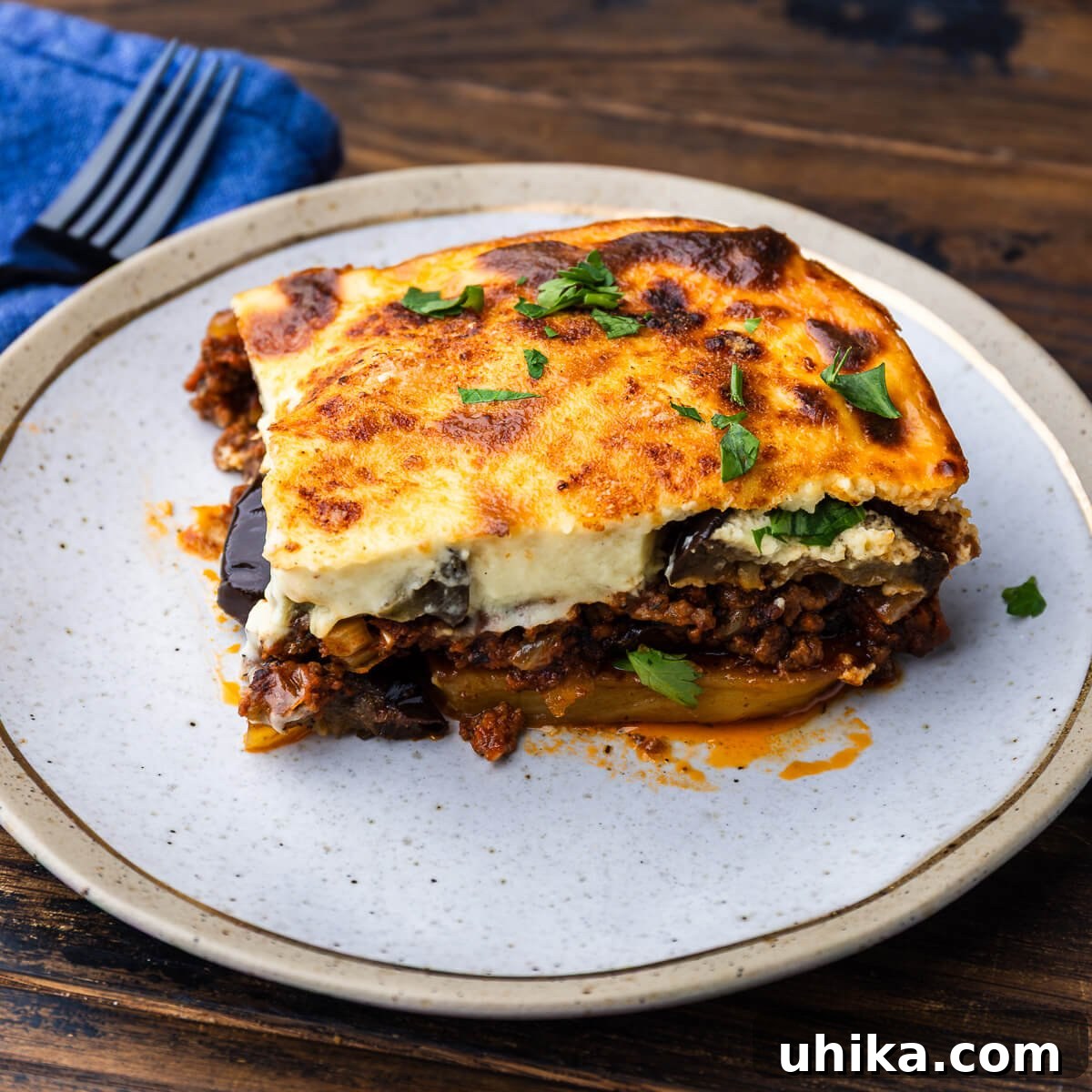
Authentic Greek Moussaka: The Ultimate Comfort Food Recipe
There are few dishes that evoke the warmth and comfort of home quite like a classic Moussaka. This iconic Greek casserole, with its rich layers of tender eggplant, hearty potato, savory beef ragu, and a luxuriously creamy béchamel topping, is truly a culinary masterpiece. It’s a dish that satisfies every craving and leaves you feeling completely nourished, making it a staple in Mediterranean cuisine and a favorite around the world. Whether you’re a seasoned chef or a home cook eager to explore Greek flavors, this detailed recipe will guide you to create an authentic Moussaka that checks all the boxes for a truly unforgettable meal.
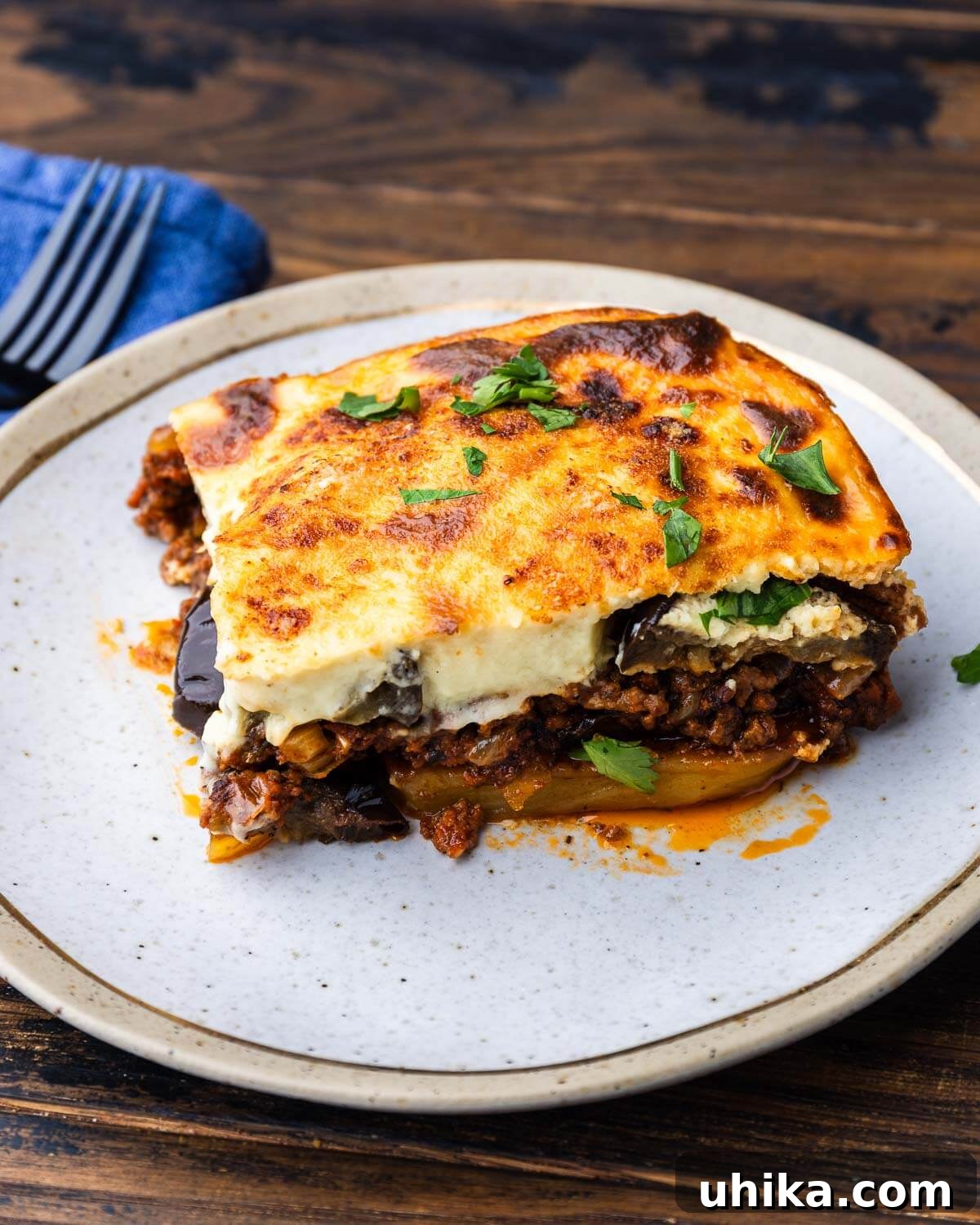

Embracing the Abundance of Summer Eggplant
Summer brings an incredible bounty of fresh produce, and for me, eggplant is always at the top of that list. Its versatility is simply amazing, transforming into delightful dishes from my vibrant ratatouille and zesty caponata, to the unique flavors of miso-glazed eggplant and the comforting classic, eggplant parmesan. This incredible vegetable never fails to impress.
While those recipes are fantastic in their own right, my Moussaka recipe has ascended to the very top of my favorite eggplant dishes, and for excellent reason! The harmonious blend of perfectly seasoned ground beef, the tender layers of potatoes and eggplant, all crowned with an irresistible béchamel sauce, creates a symphony of flavors and textures that simply cannot be matched.
For years, Moussaka was a special treat I would always order from my beloved local Greek restaurant, Akropolis in Nesconset, NY. I am thrilled to share that this homemade version comes remarkably close to their authentic flavor. I genuinely hope you’ll cherish this recipe as much as I do, bringing the taste of Greece directly to your kitchen!
Essential Ingredients for Your Moussaka
Crafting the perfect Moussaka begins with selecting the right ingredients. Below, you’ll find a visual guide and detailed notes on each component, ensuring you have everything you need for this classic Greek dish.
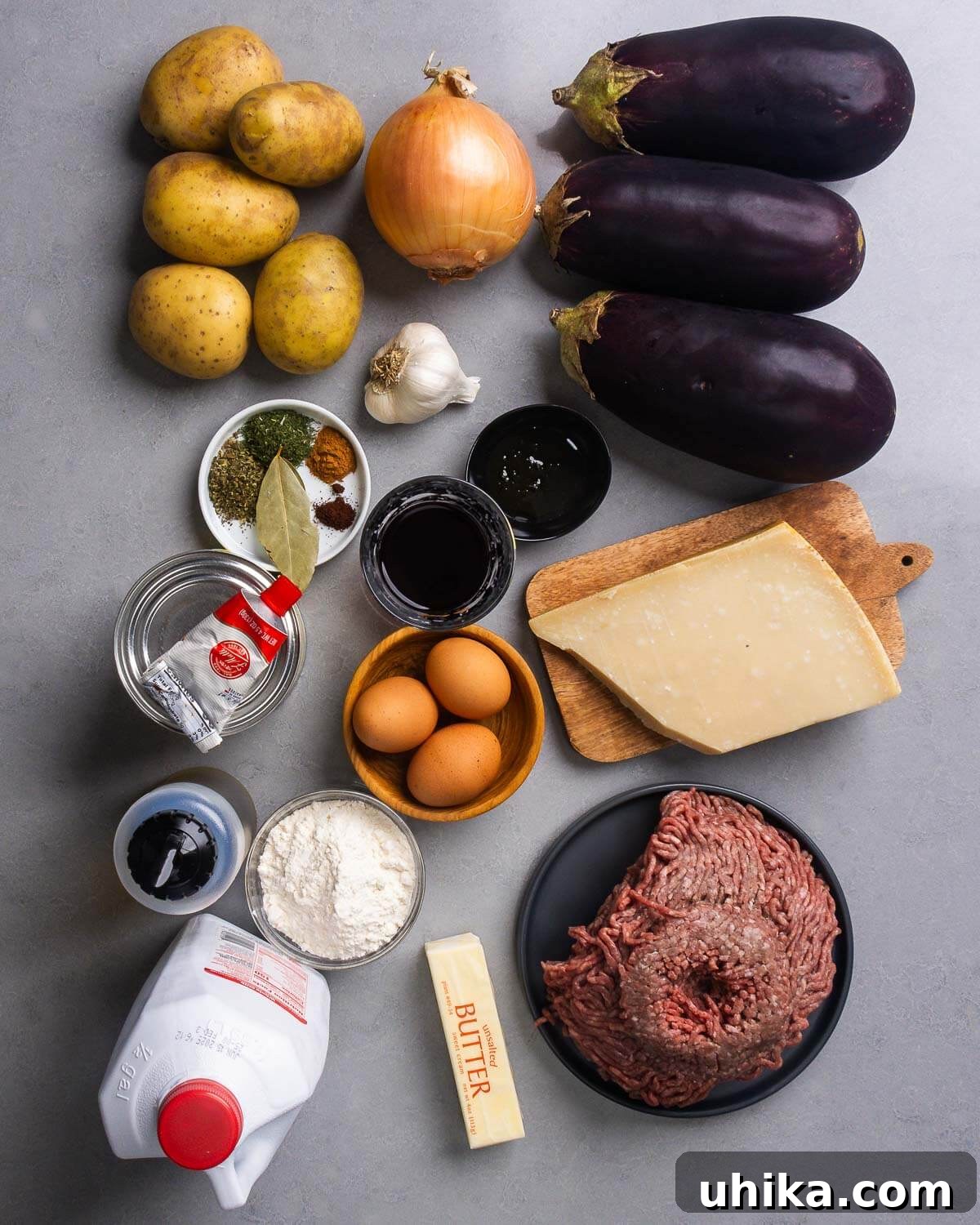
- Meat Selection: For this Moussaka, I highly recommend using 90/10 ground sirloin beef. This leaner cut is ideal because Moussaka already incorporates a good amount of fat from the olive oil used for the eggplant and the butter and milk in the béchamel. If you prefer, you can also opt for all ground lamb, or a 50/50 blend of lamb and beef. I advise against using ground chuck (80/20) as it can make the dish too heavy and greasy.
- Choosing the Right Eggplant: Look for firm, shiny eggplants that feel heavy for their size. I typically use Italian eggplants for their classic shape and texture, but other varieties will work well too. Freshness is key to a delicious Moussaka.
- Potatoes – An Optional Yet Delicious Layer: While not every traditional Greek Moussaka recipe includes potatoes, I find they add a wonderful comforting layer and structural integrity to the dish. For the best results, choose waxy potatoes like Yukon golds. Their firm texture holds up beautifully during baking, unlike floury varieties such as russets, which can become mushy.
- Aromatic Herbs and Spices: The flavor profile of Moussaka is deeply enriched by a thoughtful combination of spices. My recipe features dried oregano for its earthy, traditional Greek taste, along with dried dill, aromatic bay leaves, a hint of ground cloves, and ground cinnamon. These spices provide a warm, fragrant depth to the beef ragu. Additionally, freshly grated nutmeg is essential for infusing the béchamel sauce with its signature sophisticated aroma.
For a complete list of ingredients and precise quantities, please refer to the recipe details below.
Mastering Moussaka: A Step-by-Step Guide
Creating this layered Greek delight is a rewarding culinary journey. Follow these carefully detailed steps to assemble your perfect Moussaka.
- Prepare the Eggplant: Begin by slicing your eggplant into uniform 1/2-inch rounds. Generously salt both sides of each slice and arrange them in a colander. Place a plate on top of the eggplant and weigh it down with a few cans or a heavy object. Allow the eggplant to sit for at least 30 minutes (or up to an hour) to draw out excess moisture. This crucial step prevents a watery Moussaka and enhances the eggplant’s texture. After salting, thoroughly rinse the eggplant slices under cold water to remove any residual salt, then pat them completely dry with paper towels.
- Roast Eggplant and Potatoes: Preheat your oven to 425°F (220°C). Arrange the dried eggplant slices in a single layer on parchment paper-lined baking sheets. Drizzle or brush them lightly with olive oil and season with salt, pepper, and a sprinkle of dried oregano. In a separate baking sheet, arrange the peeled and 1/4-inch sliced Yukon Gold potatoes, drizzling them with olive oil and seasoning with salt, pepper, and oregano. Roast both the eggplant and potatoes for 30-35 minutes, or until golden and tender, flipping them halfway through to ensure even cooking. Add a little more olive oil to the eggplant if they appear dry during roasting.
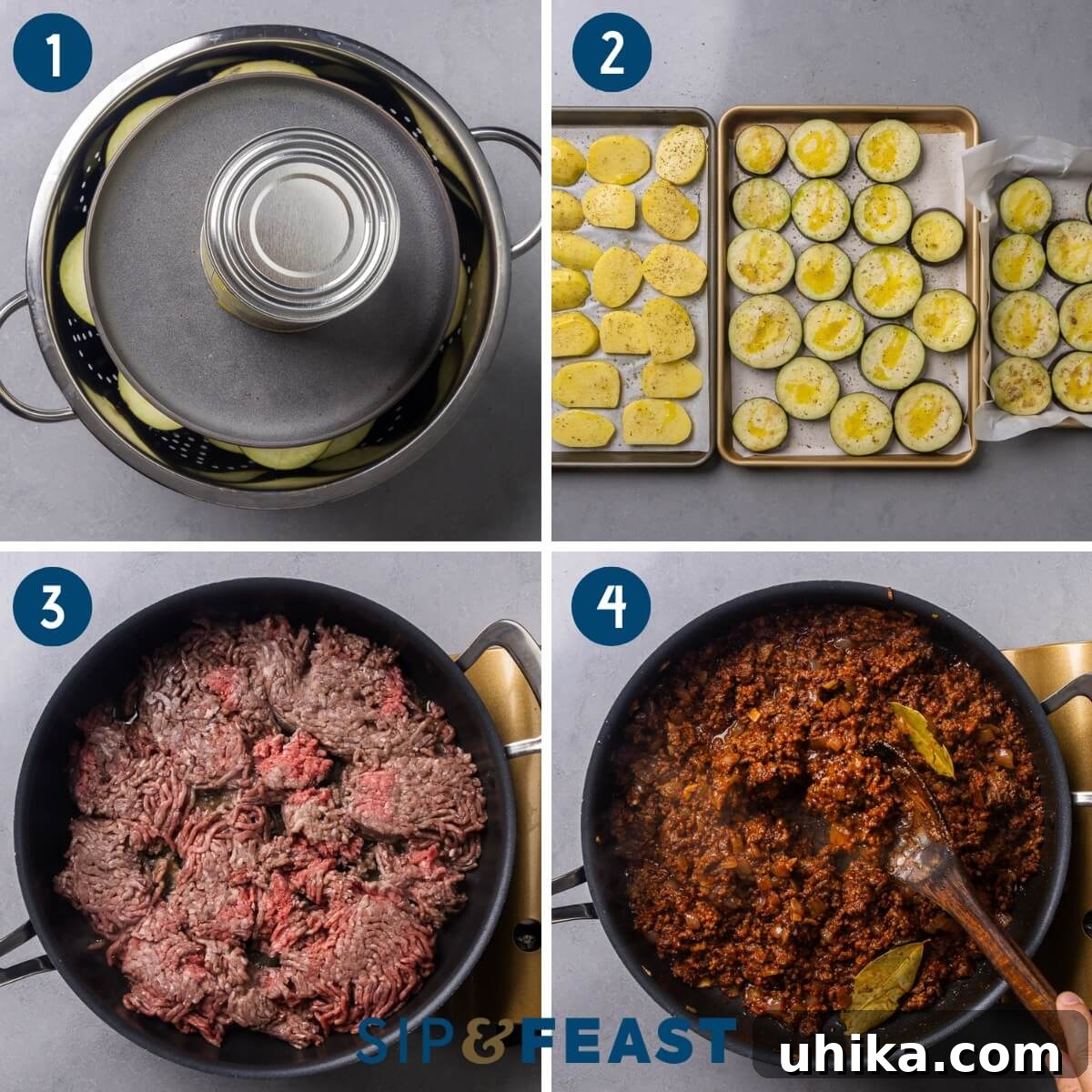
- Brown the Beef: While the vegetables roast, heat 1/4 cup of extra virgin olive oil in a large, heavy-bottomed pan or pot over medium heat. Add the ground sirloin, breaking it up with a spoon or meat masher as it cooks. Brown the beef thoroughly until no pink remains.
- Build the Meat Ragu: Push the browned beef to one side of the pan, then add the finely diced onion to the cleared space. Season the onions and meat with a pinch of salt. Sauté the onions until they begin to soften, about 5-7 minutes. Add the minced garlic and cook for another minute until fragrant. Stir in the tomato paste and cook for 5 minutes, allowing it to deepen in color and flavor. Add a splash of water if the paste starts to stick or burn. Pour in the red wine, increase the heat to high, and use a wooden spoon to scrape up any flavorful brown bits from the bottom of the pan. Let the wine reduce and evaporate.
- Simmer the Ragu: Once the wine has evaporated, add the pulsed plum tomatoes, the remaining dried oregano, dried dill, honey, bay leaves, ground cloves, and ground cinnamon. Bring the sauce to a lively simmer, then reduce the heat to low, cover, and let it gently cook until it thickens into a rich, savory meat sauce. This will take at least 20-30 minutes. Season with salt and pepper to taste. Keep the ragu on low heat while you prepare the béchamel.
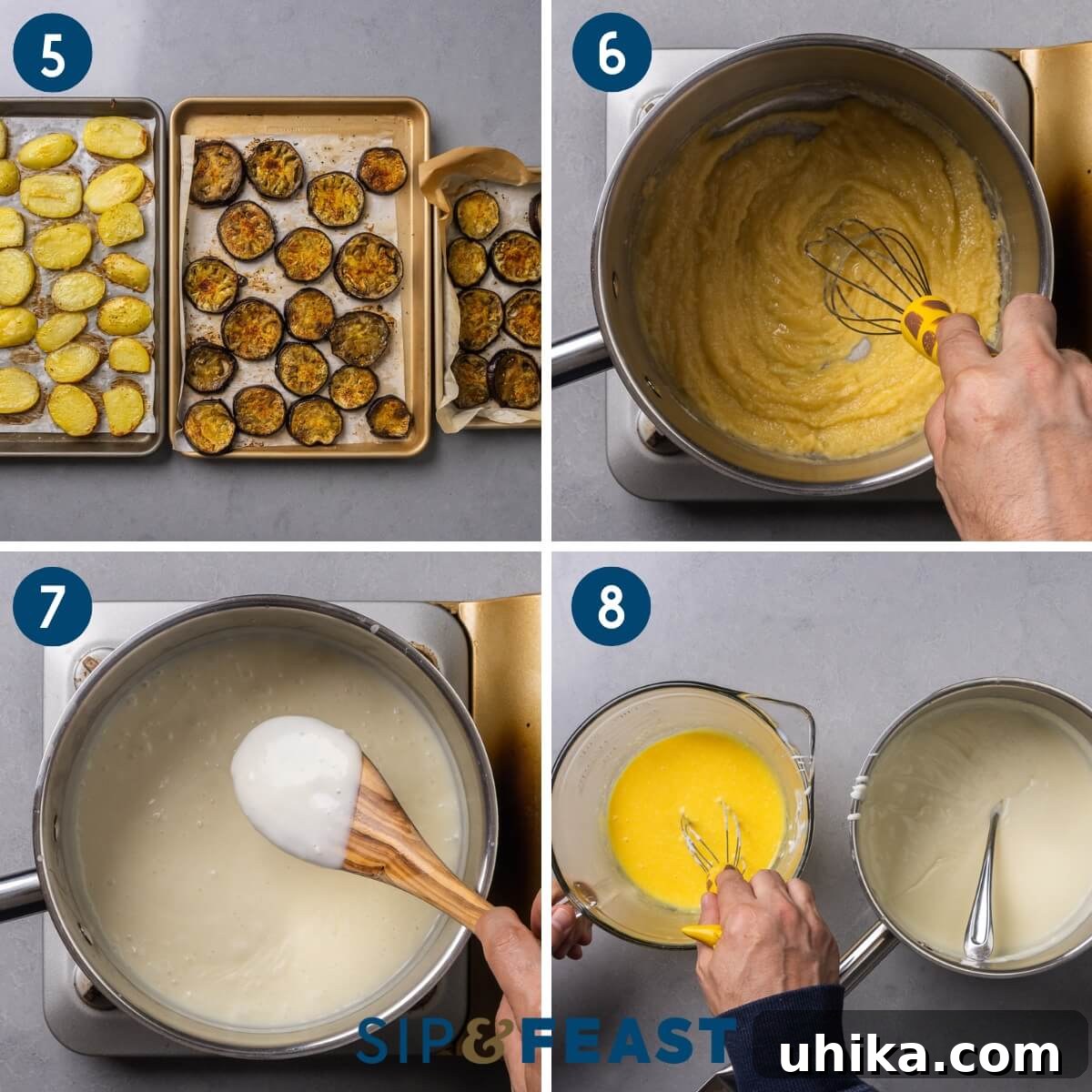
- Prepare the Béichamel Base: In a separate large saucepan, melt one stick (113g) of unsalted butter over low heat. Once melted, add the 3/4 cup (100g) of all-purpose flour, whisking continuously to create a smooth roux. Cook the roux for 2-3 minutes, stirring constantly, until it forms a pale, cohesive paste.
- Add Milk to Béichamel: Gradually pour the 5 cups (1.2L) of warm whole milk into the roux in a slow, steady stream, whisking vigorously the entire time to prevent lumps. Continue whisking as you increase the heat slightly, bringing the béchamel to a gentle simmer. It will begin to thicken and should be able to coat the back of a spoon. Once thickened, remove the pot from the heat.
- Temper the Eggs for Béichamel: In a separate bowl, whisk together the 2 large eggs and 1 egg yolk. To prevent the eggs from scrambling, you need to temper them. Slowly ladle about 2-3 tablespoons of the warm béchamel sauce into the egg mixture, whisking constantly. Repeat this a few times until the egg mixture is warmed through. Then, gradually pour the tempered egg mixture back into the main béchamel pot, stirring continuously to combine. Stir in the 1/2 teaspoon of ground nutmeg and 3/4 cup (68g) of grated Parmesan cheese. Season with salt and pepper to taste.
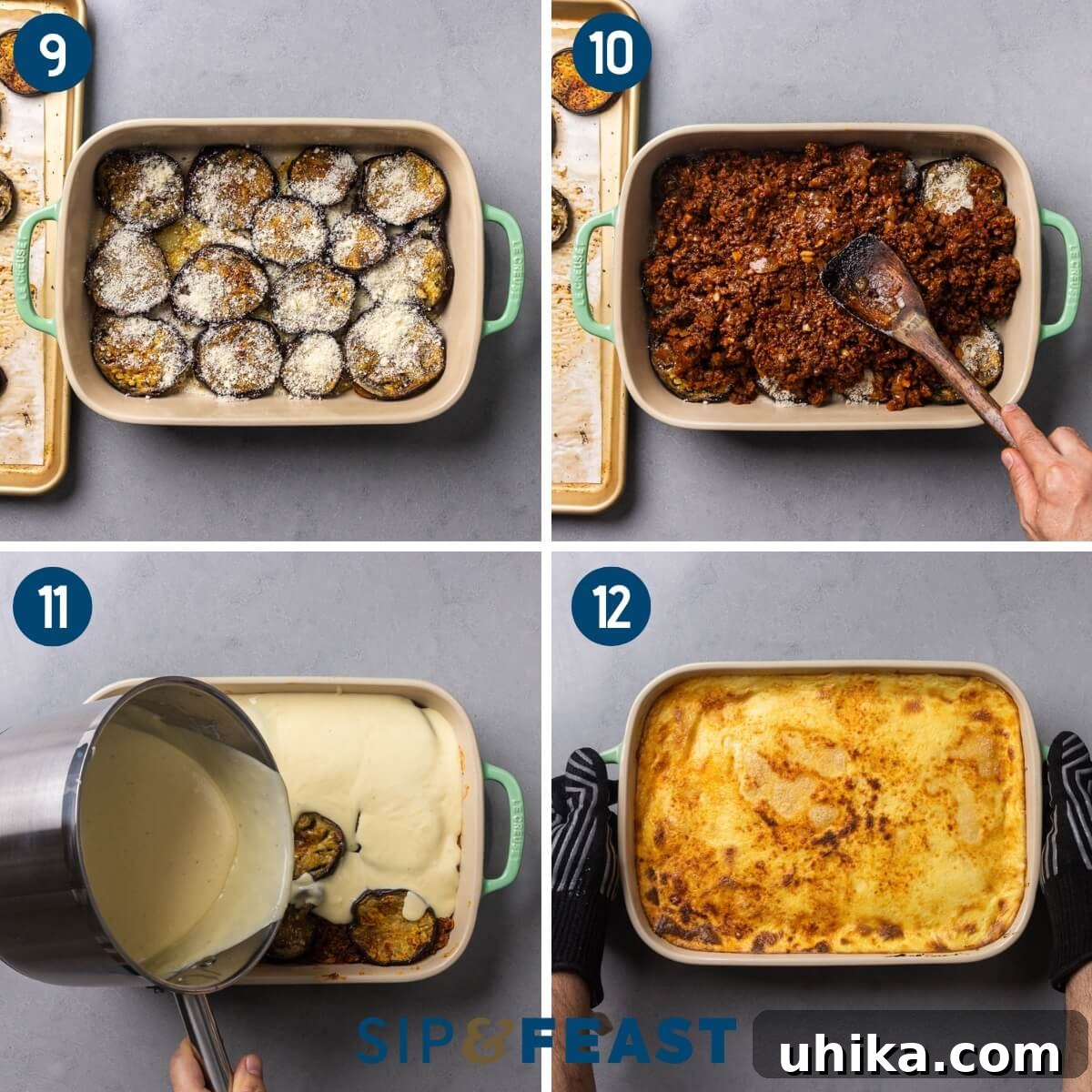
- Assemble the Moussaka: Grease a 9×13-inch baking dish. Arrange an even layer of roasted potatoes at the bottom of the dish. On top of the potatoes, place half of the roasted eggplant slices and sprinkle with half of the remaining Parmesan cheese (about 1/2 cup).
- Add Meat Ragu and Final Layers: Remove the bay leaves from the meat sauce. Spoon the entire meat ragu mixture evenly over the eggplant layer. Arrange the remaining eggplant slices on top of the meat sauce. Finally, pour the béchamel sauce over the entire casserole, spreading it evenly to cover all layers. Sprinkle with the remaining Parmesan cheese (about 1/4 cup).
- Bake and Rest: Preheat your oven to 350°F (175°C) and place the rack in the middle position. Bake the Moussaka for 1 hour, or until the top is golden brown and bubbly. Once baked, this is perhaps the most crucial step: resist the urge to cut into it immediately! Allow the Moussaka to rest for at least 30 minutes, but preferably 1 hour, before slicing and serving. This resting period allows the layers to set, ensuring your slices hold their shape beautifully.
Top Tips for Moussaka Perfection
- To Fry or to Bake Eggplant? Many traditional Moussaka recipes call for frying the eggplant slices until golden. While this method yields undeniably delicious results, it can be quite messy and requires a lot of oil. I’ve found that roasting the eggplant is a much easier, healthier, and less messy alternative, producing equally fantastic flavor and texture. Just be diligent about salting the eggplant beforehand to extract as much water as possible, then rinse thoroughly to remove excess salt, and pat completely dry.
- Optimizing Eggplant Roasting: For perfectly roasted eggplant, ensure slices are not overcrowded on the baking sheet. You may need to roast in batches. During the roasting process, you might need to flip the eggplant slices to ensure even browning on both sides. Don’t hesitate to add a little more olive oil if they look dry; a pastry brush or an olive oil spray works wonders for even distribution. The goal is tender, golden-brown slices, not burnt ones.
- The Essential Resting Period: This tip cannot be stressed enough! As tempting as it is to immediately dive into your freshly baked Moussaka, allowing it to rest is critical for the structural integrity of the dish. Much like lasagna, Moussaka needs time for its layers to settle and for the sauces to firm up. A minimum of 30 minutes, and ideally 1 full hour, will ensure that when you slice into it, each portion holds together beautifully without falling apart. Patience is truly a virtue here.
- Perfecting Your Béichamel: A smooth, lump-free béchamel is key. When adding milk to the roux, pour it in slowly while continuously whisking. Warm milk helps prevent lumps more effectively than cold milk. If your béchamel still has a few small lumps, you can pass it through a fine-mesh sieve for a silky-smooth finish before adding the eggs and cheese.
- Flavor Depth in the Meat Ragu: Don’t rush the browning of the ground beef or the cooking of the tomato paste. Allowing the meat to brown well develops rich, savory notes. Similarly, cooking the tomato paste for a few minutes before adding liquids helps to caramelize it, intensifying its flavor. The red wine deglazing step also adds significant depth.
Explore More Greek Culinary Delights
If the rich flavors of Moussaka and authentic Greek cuisine captivate your palate, then you’ll love exploring more of our traditional Greek recipes!
- Easy Greek Lemon Chicken and Potatoes
- One-Pan Greek Meatballs and Potatoes
- Hearty Greek Beans and Sausage
- Spanakorizo (Greek Spinach and Rice)
If you’ve savored this Moussaka recipe, we’d be delighted if you could give it a 5-star rating below!
Stay connected with us for more culinary inspiration! Watch our cooking demonstrations on YouTube, follow along on our Facebook Page, and consider becoming a Patreon member for exclusive access to full-meal videos and additional content.
Moussaka (Greek Eggplant and Beef Casserole)
by James Delmage
Prep: 45 mins
Cook: 1 hr 30 mins
Total: 2 hrs 15 mins
Servings: 9
Pin Recipe
With its layers of tender eggplant, hearty potatoes, savory beef ragu, and a rich, creamy béchamel topping, Greek Moussaka is the ultimate comfort food experience!
Ingredients
For the Base Layers
- 3 large eggplants, sliced 1/2″ thick
- 2 pounds (908g) Yukon Gold Potatoes, peeled and sliced 1/4″ thick
- 2 teaspoons dried oregano
- Salt and freshly ground black pepper, to taste
- 1/2 cup olive oil (for roasting vegetables)
- 1 cup (90g) grated Parmesan cheese (divided for layers and topping)
For the Rich Meat Sauce (Ragu)
- 1/4 cup (60ml) extra virgin olive oil
- 2 pounds (908g) ground sirloin (90/10 lean)
- 1 large onion, finely diced
- 5 cloves garlic, minced
- 3 tablespoons tomato paste
- 1/2 cup dry red wine (such as Merlot or Cabernet Sauvignon)
- 1 14-ounce can plum tomatoes, pulsed in a blender until chunky
- 1 tablespoon (22g) honey
- 1 teaspoon dried oregano
- 1 teaspoon dried dill
- Salt and freshly ground black pepper, to taste
- 2 large bay leaves
- 1/4 teaspoon ground cloves
- 1/2 teaspoon ground cinnamon
For the Creamy Béichamel Sauce
- 1 stick (113g) unsalted butter
- 3/4 cup (100g) all-purpose flour
- 5 cups (1.2L) whole milk, warmed
- 2 large eggs
- 1 egg yolk
- 1/2 teaspoon ground nutmeg
- 3/4 cup (68g) grated Parmesan cheese
- Salt and freshly ground black pepper, to taste
Want To Save This Recipe?
Enter your email and we’ll send it to you. Plus, get great new recipes from us every week!
Instructions
Step 1: Roast the Eggplant and Potatoes
-
Preheat your oven to 425°F (220°C).
-
Slice eggplant into 1/2-inch thick rounds. Generously salt both sides and place in a colander, topping with a plate and a heavy object (like cans) to press out liquid. Let sit for at least 30 minutes, then rinse thoroughly to remove excess salt and pat completely dry with paper towels. Arrange eggplant on parchment-lined baking sheets, brush with olive oil, and season with salt, pepper, and oregano. Roast for 30-35 minutes or until golden, flipping a few times for even cooking and adding more oil if needed.
-
Place 1/4-inch thick potato slices on a separate parchment-lined baking sheet. Drizzle with the remaining olive oil and season with salt, pepper, and oregano. Roast for 30 minutes until tender and slightly golden.
Step 2: Prepare the Savory Meat Sauce (Ragu)
-
Heat a large pan or pot over medium heat with the extra virgin olive oil. Add the ground beef and cook until thoroughly browned, breaking it up with a spoon. Create a space in the pot, add the diced onions, and season with a pinch of salt. Sauté until onions soften, then add the minced garlic and cook for another minute until fragrant.
-
Stir in the tomato paste and cook for about 5 minutes, allowing it to caramelize and deepen in flavor. Add a splash of water if the paste begins to burn or stick.
-
Pour in the red wine, increase heat to high, and use a wooden spoon to scrape up any browned bits from the bottom of the pan (deglazing). Once the wine has mostly evaporated, add the pulsed plum tomatoes, the second measure of dried oregano, dried dill, honey, bay leaves, ground cloves, and ground cinnamon. Bring to a lively simmer, then reduce heat to low and allow the sauce to thicken into a rich ragu. Season with salt and pepper to taste. Keep warm over low heat while preparing the béchamel.
Step 3: Craft the Creamy Béichamel Sauce
-
In a large saucepan, melt the unsalted butter over low heat. Add the all-purpose flour and whisk continuously for 2-3 minutes to create a smooth roux.
-
Slowly pour the warm whole milk into the roux in a thin stream, whisking constantly to prevent any lumps. Increase the heat slightly and bring the béchamel to a gentle simmer, whisking until it thickens to a consistency that coats the back of a wooden spoon. Remove the pot from the heat.
-
In a separate bowl, whisk the two large eggs and one egg yolk. To temper the eggs, gradually add 2-3 tablespoons of the warm béchamel sauce to the egg mixture, whisking constantly. Once the eggs are warmed, slowly pour the tempered egg mixture back into the béchamel pot, stirring vigorously to combine. Stir in the ground nutmeg and grated Parmesan cheese. Season with salt and pepper to taste.
Step 4: Assemble and Bake Your Moussaka
-
Preheat your oven to 350°F (175°C) and set the oven rack to the middle level.
-
Lightly grease a 9×13-inch baking dish. Spread an even layer of the roasted potato slices across the bottom. Next, layer half of the roasted eggplant slices over the potatoes and sprinkle with half of the grated Parmesan cheese.
-
Remove the bay leaves from the meat sauce. Evenly spoon the entire meat ragu over the eggplant layer. Arrange the remaining eggplant slices on top of the meat sauce. Finally, pour the creamy béchamel sauce over the top, spreading it evenly to cover all layers. Sprinkle with the remaining grated Parmesan cheese.
-
Bake for 1 hour, or until the top is golden brown and bubbling. Once out of the oven, allow the Moussaka to rest for at least 30 minutes, but preferably 1 hour, before slicing and serving. This resting period is crucial for the layers to set and ensures clean, beautiful slices.
Recipe Notes
- Salting the Eggplant: This essential step draws out excess moisture from the eggplant, preventing a watery casserole and ensuring better texture. Remember to always rinse the eggplant thoroughly after salting to remove any residual salt, and then pat it completely dry before cooking.
- Frying vs. Baking Eggplant: While traditionally eggplant slices are pan-fried, roasting them in the oven is a fantastic, less messy, and often healthier alternative. Both methods yield delicious results, but roasting simplifies the preparation significantly.
- Choice of Ground Meat: For this recipe, ground sirloin (90/10) is recommended due to the richness contributed by the olive oil for eggplant and the béchamel sauce. However, you can substitute with all ground lamb, or a traditional blend of 50/50 lamb and beef.
- Handling Leftovers: Moussaka keeps wonderfully! Leftovers can be stored in an airtight container in the refrigerator for up to 3 days. Reheat individual portions gently in the microwave or a larger portion in the oven until warmed through.
- Make Ahead Tip: You can prepare the meat sauce and even roast the vegetables a day in advance. Store them separately in the refrigerator. Assemble the Moussaka just before baking, or assemble the entire dish and refrigerate it before baking (add 15-20 minutes to baking time if baking from cold).
Nutrition Information
Calories: 826kcal
Carbohydrates: 45.8g
Protein: 44.8g
Fat: 53g
Saturated Fat: 19.6g
Cholesterol: 223mg
Sodium: 445mg
Fiber: 8.5g
Sugar: 17.2g
Calcium: 382mg
Iron: 5mg
Nutrition information is automatically calculated and should be used as an approximation.
Like this? Leave a comment below!
Check us out on Instagram at @sipandfeast or tag #sipandfeast!