
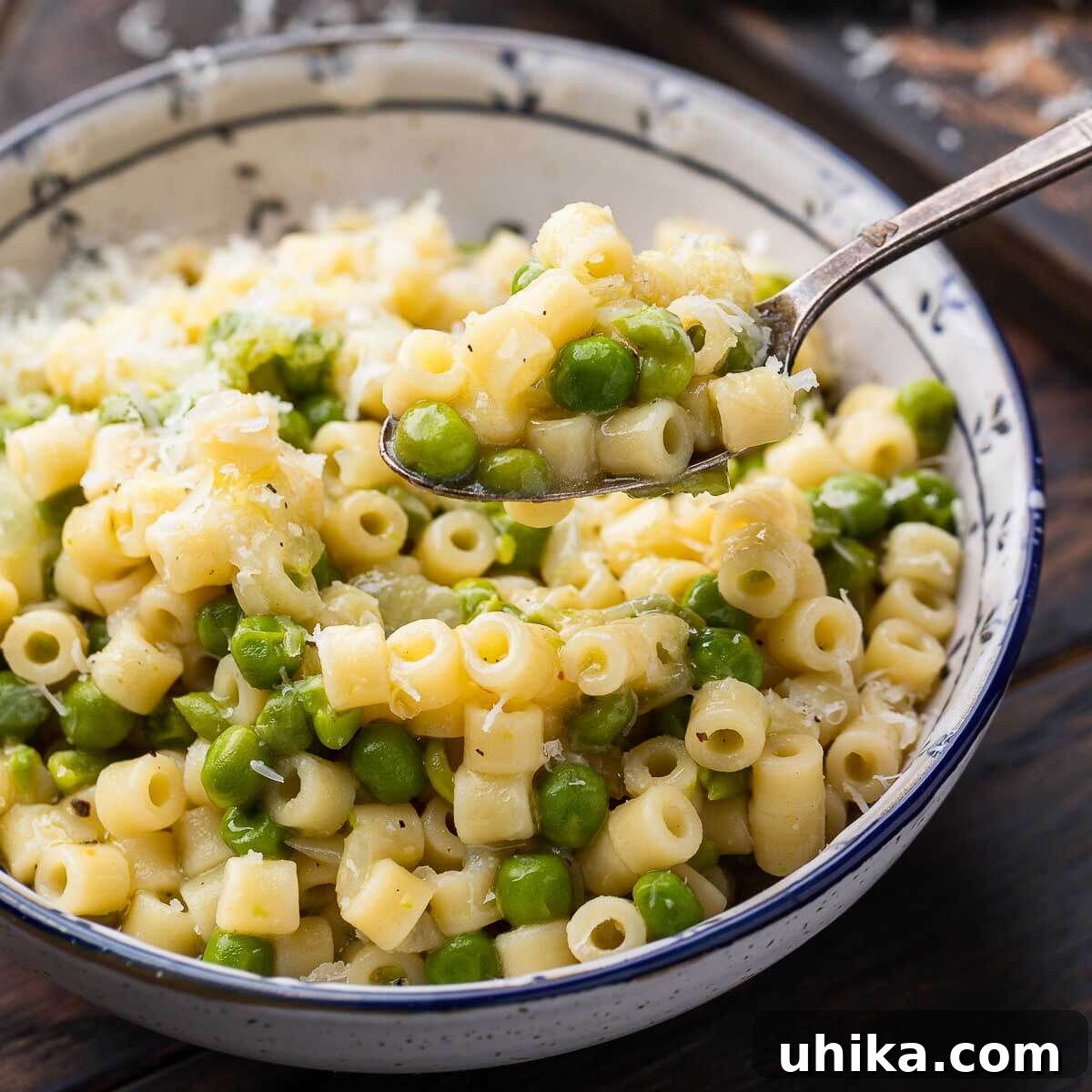
Pasta e Piselli: A Timeless Italian Comfort Dish (Pasta and Peas)
Editor’s Note: This article was originally published on September 5, 2019, and has been comprehensively updated on April 6, 2023, to include new process photos, expanded information, and enhanced tips for a truly authentic experience.
Table of Contents
- Introduction to Pasta e Piselli
- The Essence of Cucina Povera
- Essential Ingredients for Pasta e Piselli
- Step-by-Step Guide to Making Pasta and Peas
- Expert Tips for Perfect Pasta e Piselli
- Serving and Pairing Suggestions
- Storage and Reheating
- Full Pasta e Piselli Recipe
- More Beloved Pantry Pasta Recipes
Introduction to Pasta e Piselli: A Taste of Italian Home Cooking
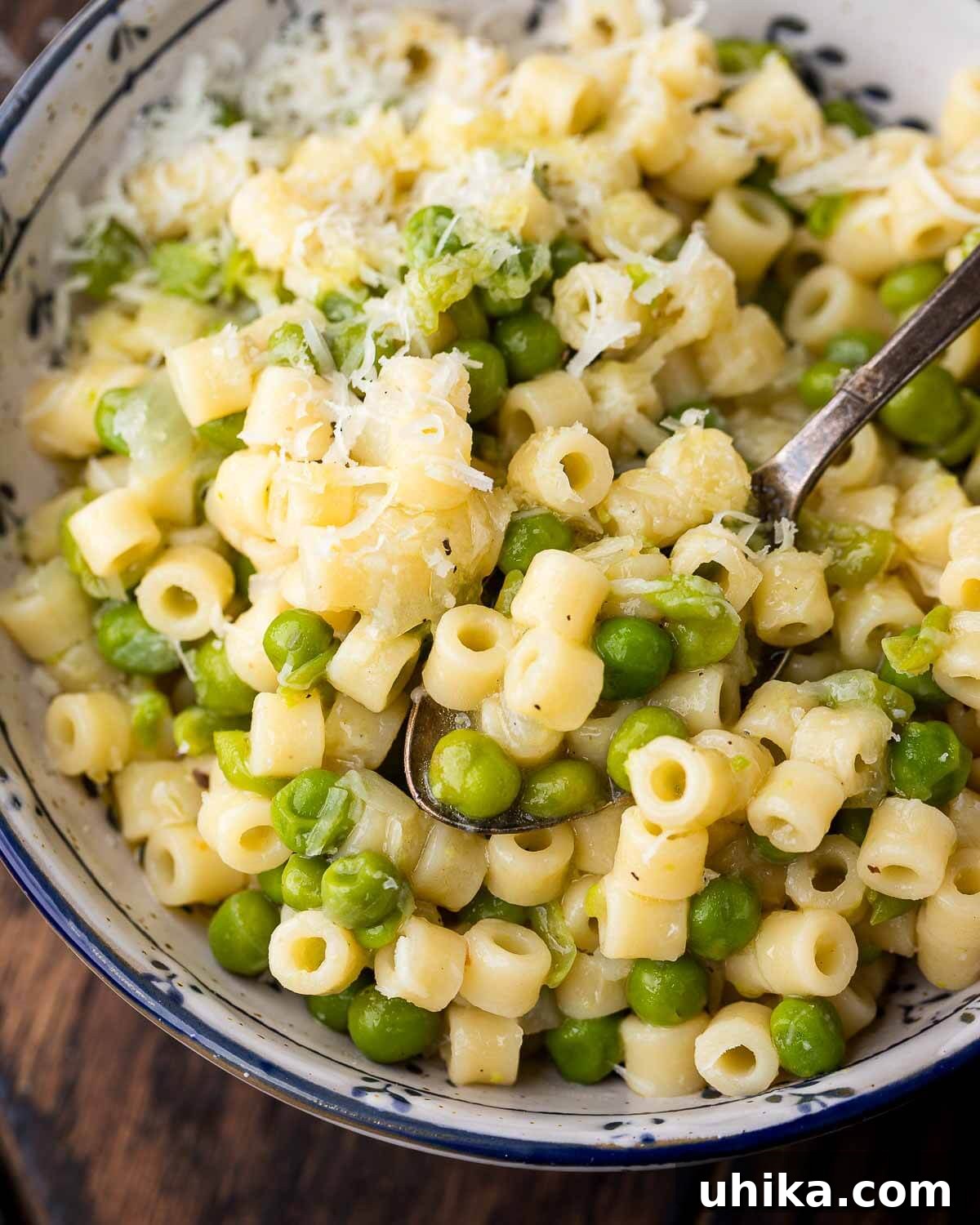
There are few dishes that evoke a sense of warmth and nostalgia quite like Pasta e Piselli, the beloved Italian classic that simply translates to “pasta and peas.” This humble yet incredibly satisfying dish perfectly embodies the heart of Italian home cooking: transforming a few simple, readily available ingredients into something truly extraordinary. With its creamy texture, the delicate sweetness of peas, and a generous sprinkle of grated cheese, Pasta e Piselli is the quintessential comfort food, offering a hug in a bowl with every spoonful.
Far from being just another pasta dish, Pasta e Piselli holds a special place in Italian culinary tradition. It’s a staple in many households, especially during cooler months, thanks to its nourishing qualities and ease of preparation. Whether you’re seeking a quick weeknight dinner, a wholesome family meal, or a taste of authentic Italian heritage, this pasta and peas recipe delivers on all fronts. Its understated elegance lies in the harmonious balance of flavors and textures, proving that sometimes, the simplest recipes are indeed the most profound.
This versatile dish showcases the magical combination of starchy pasta and naturally sweet peas, creating a symphony of flavors that is both comforting and incredibly delicious. While the fundamental concept remains consistent, regional variations abound, reflecting Italy’s diverse culinary landscape. From a white, creamy version like the one we’ll explore, to richer preparations featuring shells with pancetta and peas, or even a pasta with peas in a light red sauce, the core appeal of pasta and peas remains universally cherished.
The Essence of Cucina Povera: Resourcefulness on a Plate
Pasta e Piselli is a prime example of “cucina povera,” or “poor kitchen” cooking, a philosophy deeply ingrained in Italian culinary history. This tradition emphasizes making the most of inexpensive, seasonal, and readily available ingredients to create incredibly flavorful and satisfying meals. Historically, Italian families, often facing economic hardship, became masters of transforming humble pantry staples into delicious and nutritious dishes that could feed many. Pasta e Piselli, with its reliance on pasta, frozen peas, onions, and cheese, perfectly encapsulates this ethos of resourcefulness and ingenuity.
The beauty of cucina povera dishes lies not only in their affordability but also in their robust flavors and heartwarming nature. They are designed to nourish the body and soul, providing sustenance and comfort without requiring elaborate ingredients or complex techniques. This simple pasta and peas dish stands proudly alongside other celebrated cucina povera classics such as Pasta e Fagioli (pasta and beans), Pasta con Broccoli (pasta with broccoli), and Pasta e Patate (pasta and potatoes). Each of these dishes tells a story of tradition, resilience, and the power of good food to bring people together, making them not just meals but cultural touchstones.
In today’s fast-paced world, the principles of cucina povera are more relevant than ever. Pasta e Piselli offers a wonderful solution for those times when you want a home-cooked meal without a trip to the grocery store. Most of the ingredients are likely already in your pantry or freezer, making it an ideal choice for a spontaneous, delicious, and budget-friendly dinner. It’s a testament to the idea that some of the greatest culinary delights come from simplicity and thoughtful preparation.
Essential Ingredients for Pasta e Piselli
Crafting an exceptional Pasta e Piselli relies on a handful of quality ingredients. Below, you’ll find a visual guide to the core components, along with specific notes to help you select and prepare them for the best possible outcome. Each element plays a crucial role in building the layered flavors of this classic Italian dish.
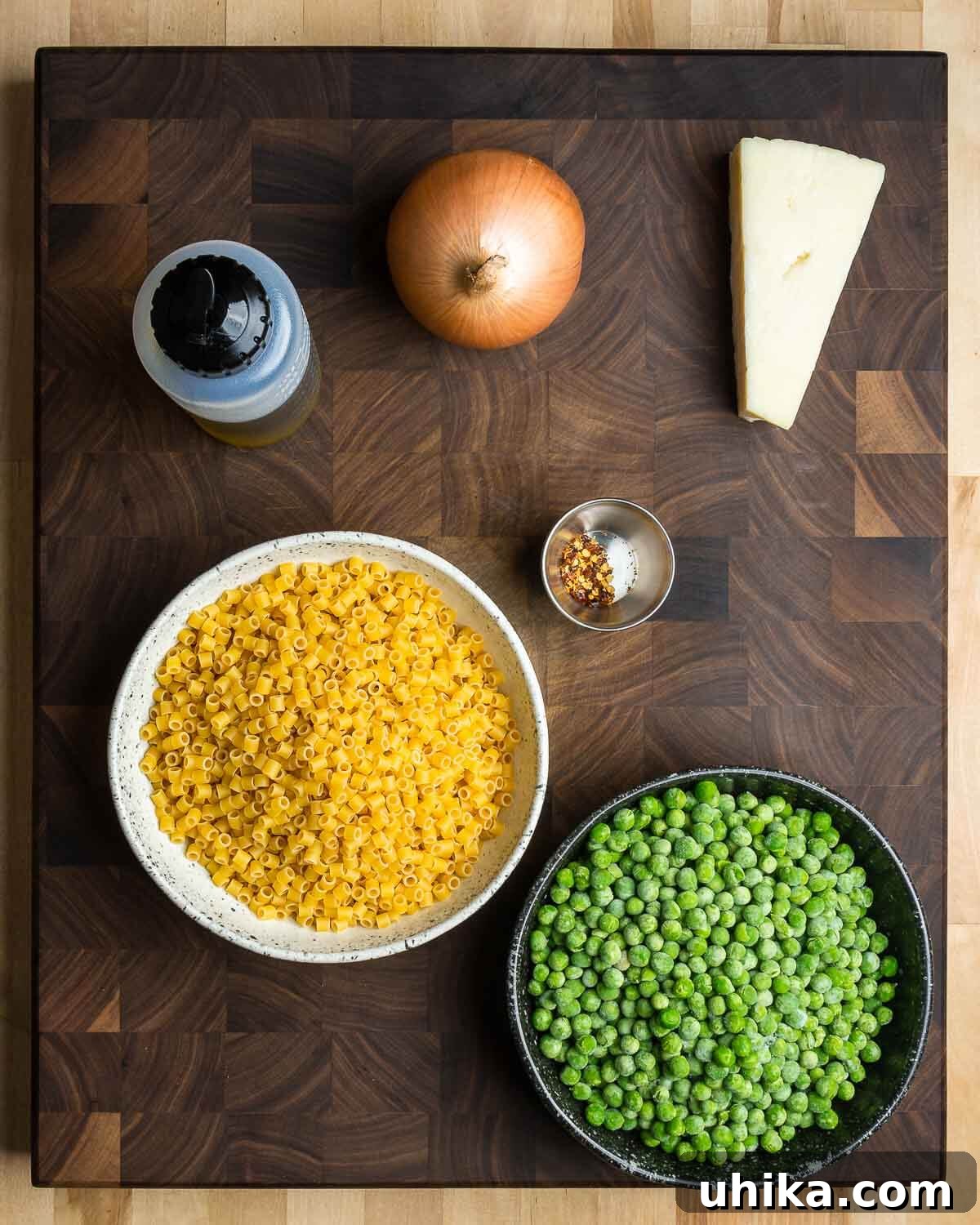
- Pasta: While ditalini is traditionally the star for pasta e piselli, its small, tubular shape is perfect for scooping up the creamy sauce and peas. However, feel free to experiment with other small pasta shapes like elbow macaroni, small shells (conchigliette), or even orzo. The key is to use a pasta that cooks relatively quickly and integrates well into the sauce.
- Peas: The debate between fresh, frozen, and canned peas is an old one in Italian cooking. Traditionally, in cucina povera, canned peas were often used for convenience and cost. They impart a distinct, softer flavor that some purists adore. However, we prefer the vibrant color and slightly sweeter taste of frozen peas, which are almost always available and require no pre-preparation. If using fresh peas, they are delightful but may require a slightly longer cooking time. If opting for canned peas, remember to drain and rinse them thoroughly to remove excess sodium and preserve freshness.
- Olive Oil: Use a good quality extra virgin olive oil. It forms the foundation of flavor for this dish, especially when sautéing the onions. Its fruity and slightly peppery notes truly elevate the overall taste.
- Onion: A large, finely diced onion is crucial for creating the savory base. It should be cooked slowly until very soft and translucent, but without browning, to ensure its sweetness permeates the dish without any harshness.
- Pecorino Romano Cheese: This sharp, salty sheep’s milk cheese is our top choice for Pasta e Piselli. Its robust flavor stands up beautifully to the sweetness of the peas and the richness of the olive oil. While Parmigiano Reggiano is another excellent option, its milder, nuttier profile might be better reserved for dishes where its delicate flavor can truly shine. Don’t skimp on freshly grated cheese; it’s a key finishing touch.
- Crushed Red Pepper Flakes: A small amount adds a subtle warmth and a gentle kick, balancing the sweetness of the peas and adding depth. Adjust to your preferred spice level.
- Water: The cooking liquid for the pasta, which also helps create the creamy sauce.
- Salt and Pepper: Essential for seasoning. Use fine sea salt for best flavor and adjust pepper to taste at the end.
For precise measurements and detailed quantities, please refer to the comprehensive recipe card below.
Step-by-Step Guide to Making Pasta and Peas
Follow these simple steps to create a truly delicious Pasta e Piselli. Each stage is designed to build flavor and achieve the perfect creamy consistency.
- Sauté the Aromatics: Begin by heating a large, heavy-bottomed pot or Dutch oven over a touch less than medium heat. Add a generous 1/2 cup of extra virgin olive oil. Once shimmering, add the diced onions. Cook them gently for about 5-7 minutes, stirring occasionally, until they are very soft and translucent. It’s crucial not to let them brown, as this will impart a bitter flavor. If they start to catch, reduce the heat or add a tiny splash of water to prevent burning. After the onions are tender, stir in 1/2 teaspoon of crushed red pepper flakes and cook for another 30 seconds to release their aromatic oils. This slow sauté lays the groundwork for the dish’s depth of flavor.
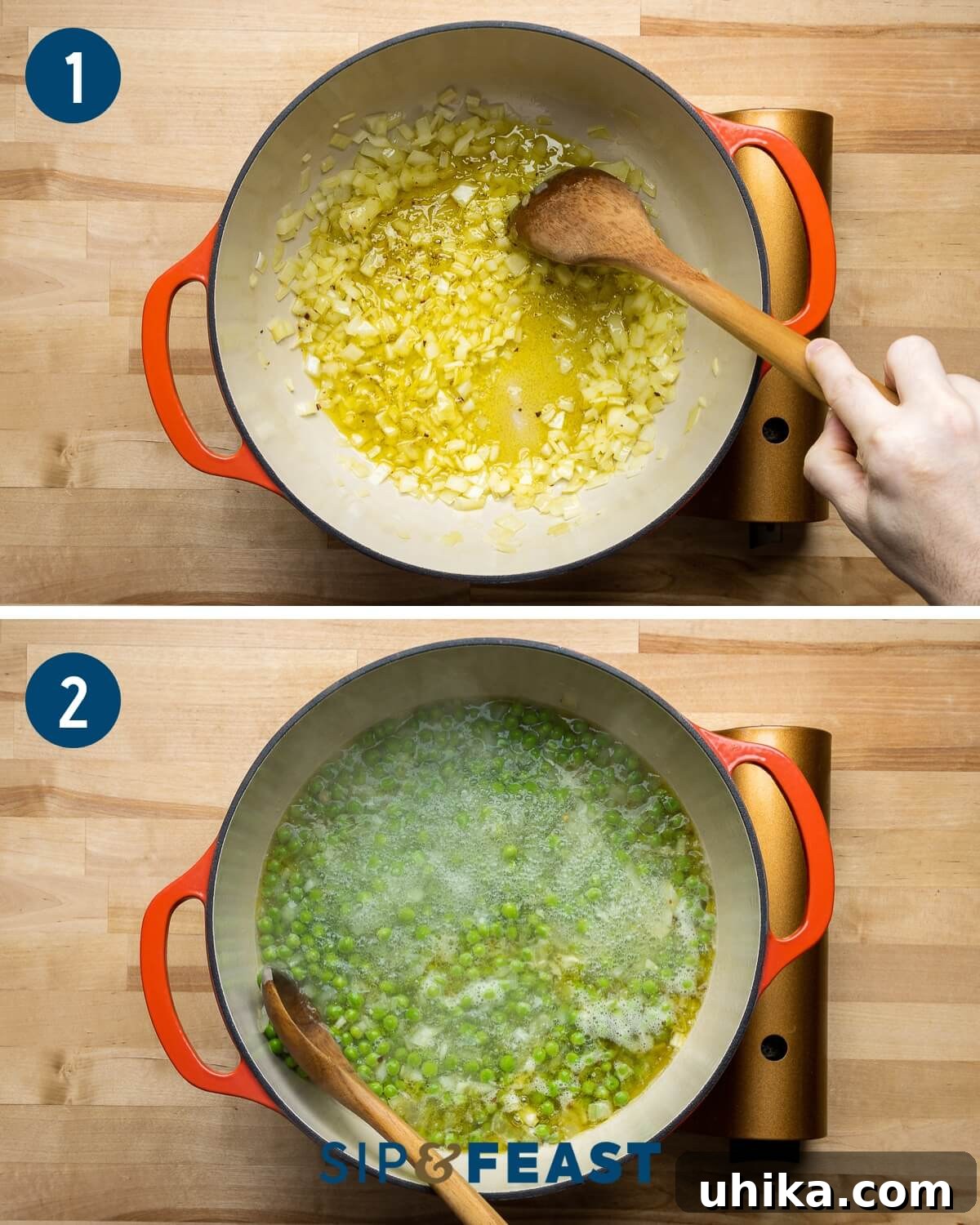
- Bring to a Boil and Mash Peas: Pour in 4 cups of water and add 1 teaspoon of kosher salt to the pot. Stir in the 1 pound of frozen peas. Increase the heat and bring the mixture to a rolling boil. Once boiling, use a wooden spoon to mash some of the peas against the side of the pot. This step is important because it releases starch from the peas, helping to create a naturally creamy sauce and thickening the liquid as the pasta cooks. Don’t mash all of them; you want a mix of whole and slightly mashed peas for texture.
- Add Pasta and Simmer: Add the 1 pound of ditalini (or your chosen small pasta shape) to the boiling pea mixture. Turn the heat down to medium, allowing the pasta to cook at a moderate simmer. This method, often called “risottata,” involves cooking the pasta directly in the flavored liquid, similar to risotto. This allows the pasta to absorb the wonderful flavors of the peas and onions while also releasing its starches, which further enriches and thickens the sauce.
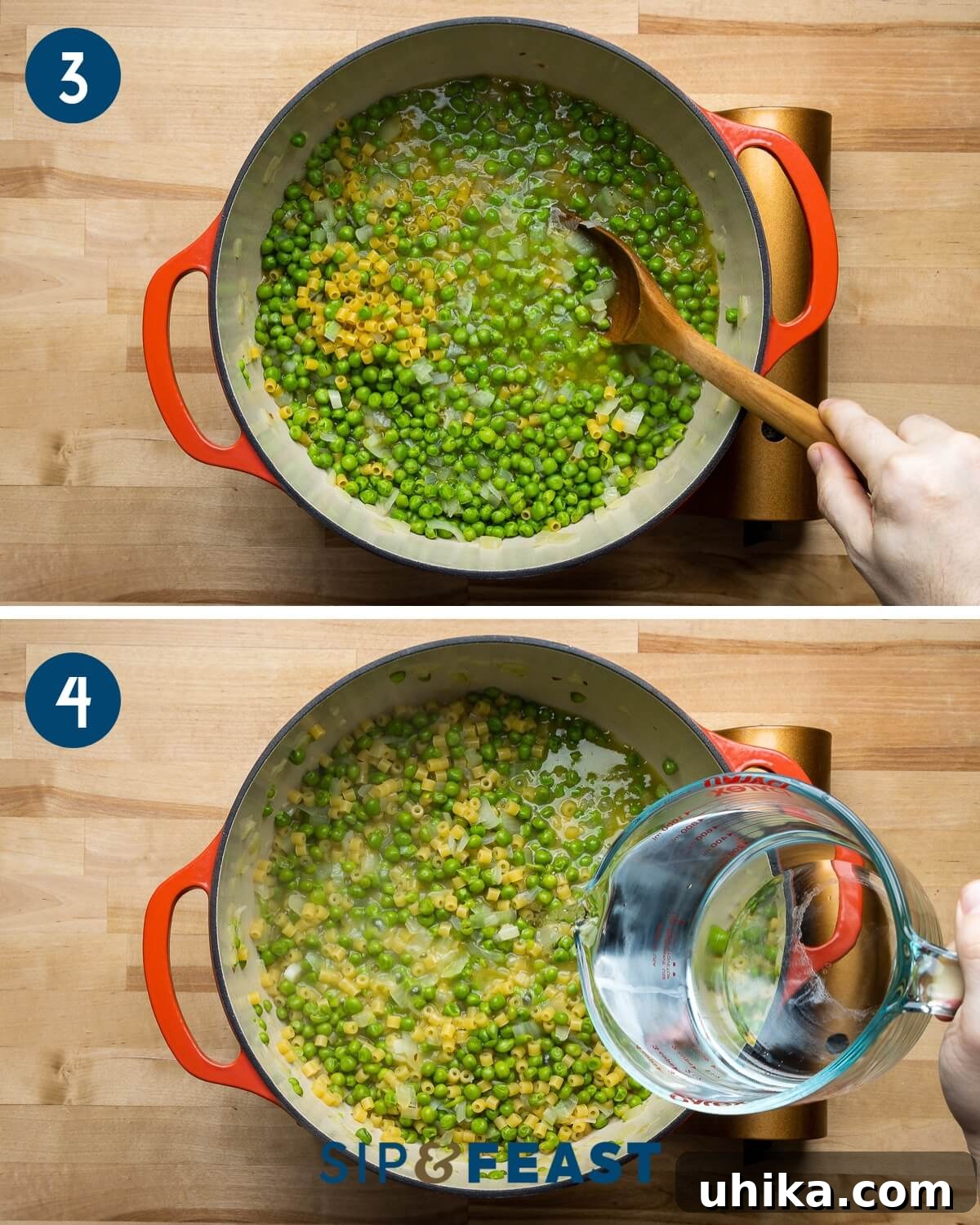
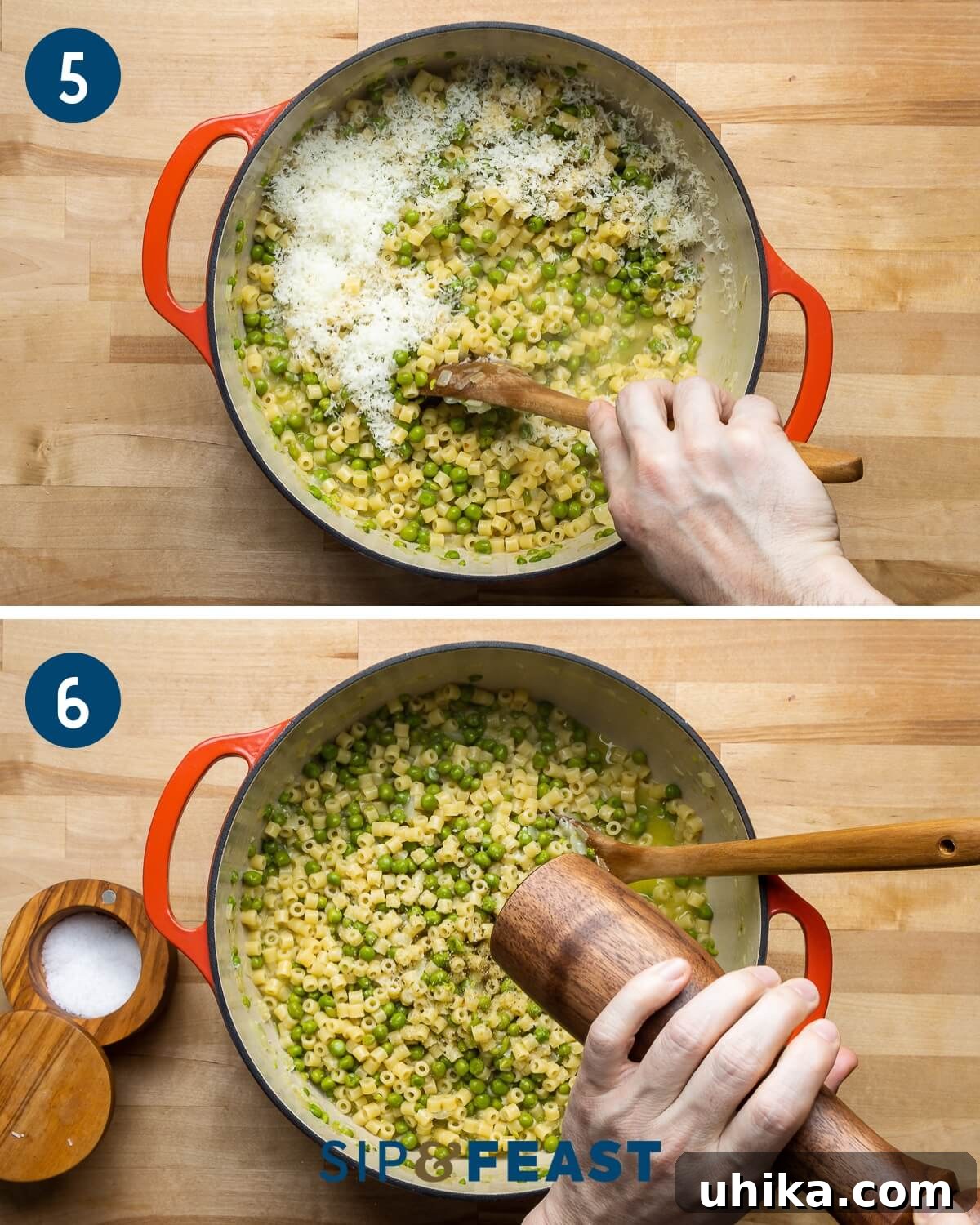
- Cook to Al Dente and Adjust Consistency: Continue to cook the pasta at a moderate simmer, stirring very frequently. Frequent stirring is crucial to prevent the pasta from sticking to the bottom of the pot and to ensure even cooking. As the pasta absorbs the liquid, the sauce will thicken. Keep an eye on the consistency; if the pasta starts to dry out too much or seems too thick, add a touch more water, about 1/4 to 1/2 cup at a time, until you reach your desired consistency. Remember that pasta cooked this way will often take longer than the package instructions suggest because it’s absorbing flavored liquid rather than plain boiling water. Cook until the pasta is al dente – tender but with a slight bite.
- Finish with Cheese and Season: Once the pasta has reached your desired al dente texture and the consistency of the sauce is perfect, remove the pot from the heat. Immediately stir in the grated Pecorino Romano cheese. The residual heat will melt the cheese, creating a luxurious creaminess. Taste the dish and adjust seasoning with additional salt and freshly ground black pepper as needed. If the pasta appears too dry after adding the cheese, a final splash of warm water or even a little reserved pasta cooking water can help loosen it to the perfect, saucy consistency.
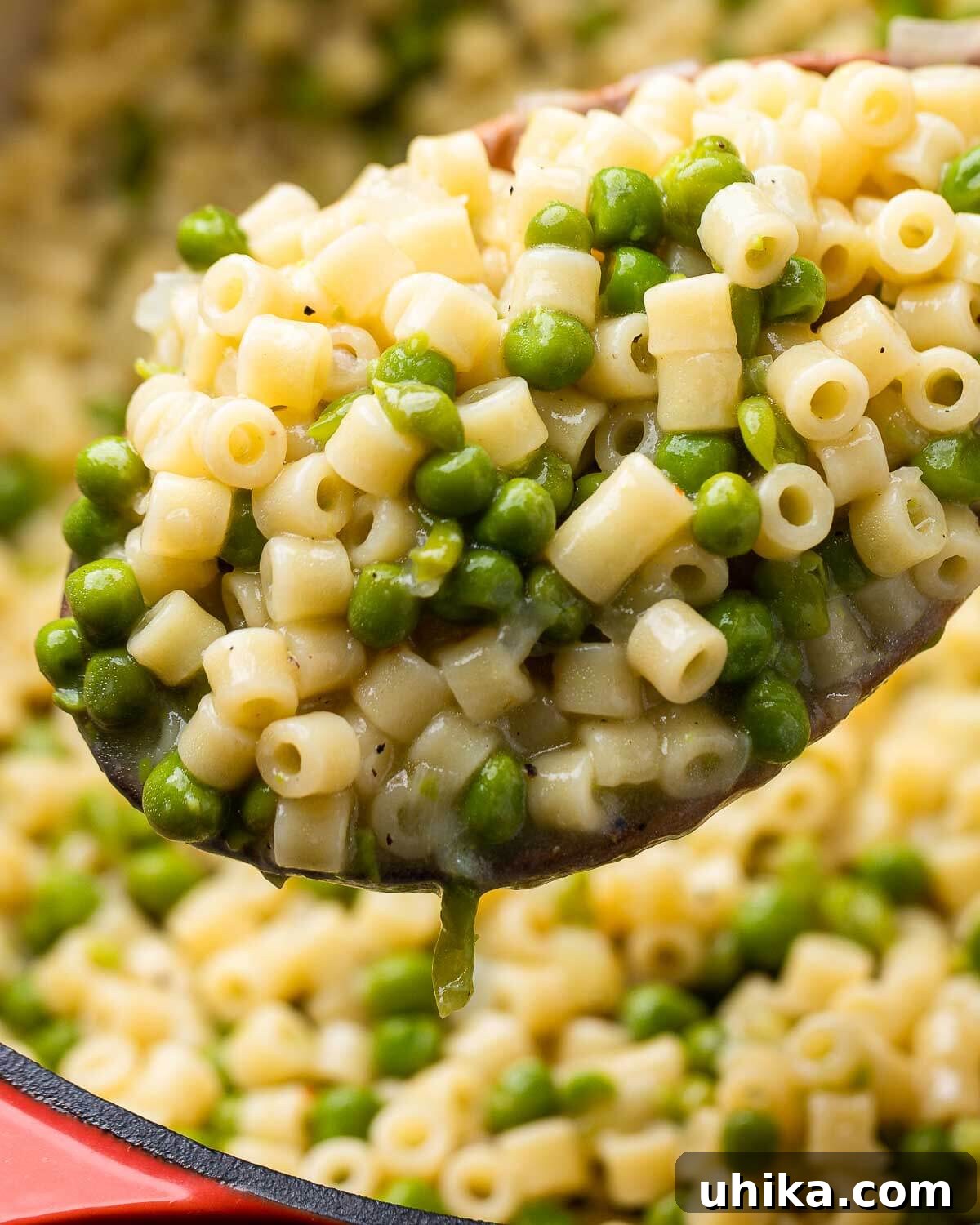
- Serve and Enjoy: Ladle the hot Pasta e Piselli into individual bowls. Finish each serving with a generous drizzle of high-quality extra virgin olive oil and another sprinkle of freshly grated Pecorino Romano cheese. Serve immediately and savor the comforting flavors of this classic Italian dish!
Expert Tips for Perfect Pasta e Piselli
- Choosing the Right Equipment: For this recipe, a large, heavy-bottomed pot or a Dutch oven is highly recommended. The ample surface area allows for even cooking of the pasta and prevents it from clumping, while the heavy construction ensures heat is distributed evenly, minimizing the risk of scorching, especially during the long simmer. It also provides enough space for all the ingredients and the necessary liquid to create that perfect creamy sauce.
- Pea Selection Matters: We personally favor frozen peas for their consistent sweetness and vibrant color, not to mention their year-round availability and convenience straight from the freezer. If you’re using canned peas, make sure to drain and rinse them thoroughly to remove excess sodium and any canning liquid that might impart an undesirable flavor. Fresh peas are a wonderful, seasonal option, offering a truly delicate sweetness. If using fresh, blanch them briefly before adding to the pot, and be prepared for them to potentially require a slightly longer cooking time to reach tenderness. While delicious, fresh peas do stray a bit from the traditional “pantry pasta” concept.
- Mastering Consistency: The texture of Pasta e Piselli is a matter of personal preference. Some enjoy a soupier consistency, while others prefer it thicker, almost like a risotto. To achieve a creamier, thicker sauce, mash more of the peas against the side of the pot in step 2. This releases more starch, which acts as a natural thickener. If you desire a soupier dish, simply add more water (or vegetable broth for added flavor) during step 4, until you reach your ideal consistency. Remember that the pasta will continue to absorb liquid as it cools, so it’s often best to aim for a slightly looser consistency than you might initially prefer.
- Exciting Additions and Variations: While the classic Pasta e Piselli is beautiful in its simplicity, it also lends itself wonderfully to various additions.
- Meaty Richness: Many Italian households incorporate pancetta (Italian cured pork belly) into their pasta e piselli. Sautéing diced pancetta before the onions adds a smoky, savory depth.
- Aromatic Boost: Minced garlic can be added with the red pepper flakes for an extra layer of flavor.
- Umami Depth: For an incredibly rich, savory note, a couple of anchovy fillets can be melted into the olive oil with the onions. Don’t worry, the dish won’t taste fishy; the anchovies simply dissolve and contribute a profound umami flavor.
- Fresh Herbs: A sprinkle of fresh chopped parsley or basil at the end can brighten the dish with herbaceous notes.
- Cheese Alternatives: If Pecorino Romano isn’t to your liking, or you prefer a milder taste, grated Parmigiano Reggiano is a fantastic substitute.
- Vegetable Enhancements: For added nutrients and flavor, consider stirring in a handful of baby spinach or finely chopped zucchini during the last few minutes of cooking.
- Tomato Touch: While typically a “white” dish, a tablespoon of tomato paste added with the red pepper flakes can lend a subtle, rich tomato undertone.
Serving and Pairing Suggestions
Pasta e Piselli is a wonderfully complete meal on its own, but it can be enhanced with a few thoughtful pairings. Serve it hot, straight from the pot, ensuring each bowl gets a good drizzle of extra virgin olive oil and a final shower of grated Pecorino Romano. For a truly authentic experience, offer a crusty loaf of Italian bread on the side to soak up every last bit of the delicious sauce. A simple green salad with a light vinaigrette makes for a refreshing counterpoint to the richness of the pasta. You might also consider a crisp, dry white wine, like a Pinot Grigio or Vermentino, to complement the sweetness of the peas.
Storage and Reheating
One of the many charms of Pasta e Piselli is how well it stores. Leftovers can be kept in an airtight container in the refrigerator for up to 3 days. When reheating, the pasta will have absorbed most of the liquid and become much thicker. To revive its creamy consistency, gently reheat it on the stovetop over low heat, adding splashes of water or vegetable broth until it reaches your desired texture. Stir frequently to prevent sticking. You can also reheat individual portions in the microwave, adding a bit of liquid as needed. The flavors often deepen overnight, making it a fantastic dish for meal prepping.
Pasta e Piselli (Pasta and Peas) Recipe
Pasta e Piselli (Pasta and Peas)
James Delmage
5 mins
35 mins
40 mins
4
Pin
Ingredients
- 1 pound (454g) ditalini or other small shape pasta
- 1/2 cup (120ml) extra virgin olive oil
- 1 large onion diced
- 1/2 teaspoon crushed hot red pepper flakes
- 4 cups (960ml) water plus more to thin
- 1 teaspoon fine sea salt plus more to taste
- 1 pound (454g) frozen peas
- 1 cup (90g) grated Pecorino Romano
- pepper to taste
Want To Save This Recipe?
Enter your email and we’ll send it to you. Plus, get great new recipes from us every week!
Instructions
-
Heat a large pot or pan to a touch less than medium heat and add the olive oil and onions. Cook the onions until soft (about 5-7 minutes), then add the red pepper flakes and cook for another 30 seconds.
-
Add the water, salt, and peas and bring to a boil. Once boiling, mash some of the peas with a wooden spoon.
-
Add the pasta and turn the heat down to medium. Cook the pasta at a moderate simmer until al dente. Make sure to stir frequently to avoid sticking and add more water if the pot begins to dry out.
-
When satisfied with the consistency and the pasta has reached al dente, remove the pot from the heat and mix in the cheese. Taste test and season with salt and pepper. If the pasta is at all dry, add extra water to loosen it up.
-
Serve in bowls with a drizzle of extra virgin olive oil and a generous amount of grated Pecorino Romano. Enjoy!
Notes
- Pasta: Any smallish pasta (small shells, elbows, orzo, orecchiette, etc.) works well.
- Technique: Make sure to stir very frequently and add more water as required to avoid sticking, especially when cooking pasta directly in the sauce.
- Consistency: Some people prefer this dish on the soupier side. If you do, just use extra water or broth to reach your desired texture.
- Variations: Garlic, fresh herbs, pancetta, anchovies, and a variety of other ingredients can be used to enhance this classic recipe. Feel free to experiment!
- Leftovers: Pasta and peas can be saved for up to 3 days in an airtight container in the refrigerator. Reheat gently on the stovetop or microwave, adding a splash of water or broth to loosen the sauce.
Nutrition
Calories:
805
kcal
|
Carbohydrates:
105.1
g
|
Protein:
28.6
g
|
Fat:
33.1
g
|
Saturated Fat:
7.3
g
|
Cholesterol:
18
mg
|
Sodium:
240
mg
|
Potassium:
340
mg
|
Fiber:
10.7
g
|
Sugar:
12.2
g
|
Calcium:
262
mg
|
Iron:
5
mg
Nutrition information is automatically calculated, so should only be used as an approximation.
Like this? Leave a comment below!
Check us out on Instagram at @sipandfeast or tag #sipandfeast!
More Beloved Pantry Pasta Recipes You’ll Love
If you’re a fan of simple, satisfying Italian dishes made with everyday ingredients, you’ll surely enjoy exploring other recipes that embody the spirit of “cucina povera.” These pantry-friendly pastas are perfect for delicious meals without fuss:
- Pasta e Lenticchie (Pasta and Lentils): A hearty and nutritious dish featuring pasta simmered with savory lentils.
- Pasta e Ceci (Pasta and Chickpeas): Another comforting classic where tender chickpeas and pasta create a wonderfully textured meal.
- Linguine Aglio e Olio (Garlic and Oil Pasta): The ultimate minimalist pasta, incredibly flavorful with just garlic, olive oil, and chili flakes.
If you’ve enjoyed this pasta and peas recipe, we would be incredibly grateful if you could share your experience by giving it a 5-star rating below. Your feedback helps us continue to create delicious content!
Stay connected and dive deeper into Italian cuisine by watching us on YouTube, following along on our Facebook Page, and considering becoming a Patreon member to receive access to exclusive full-meal videos and additional culinary content.