
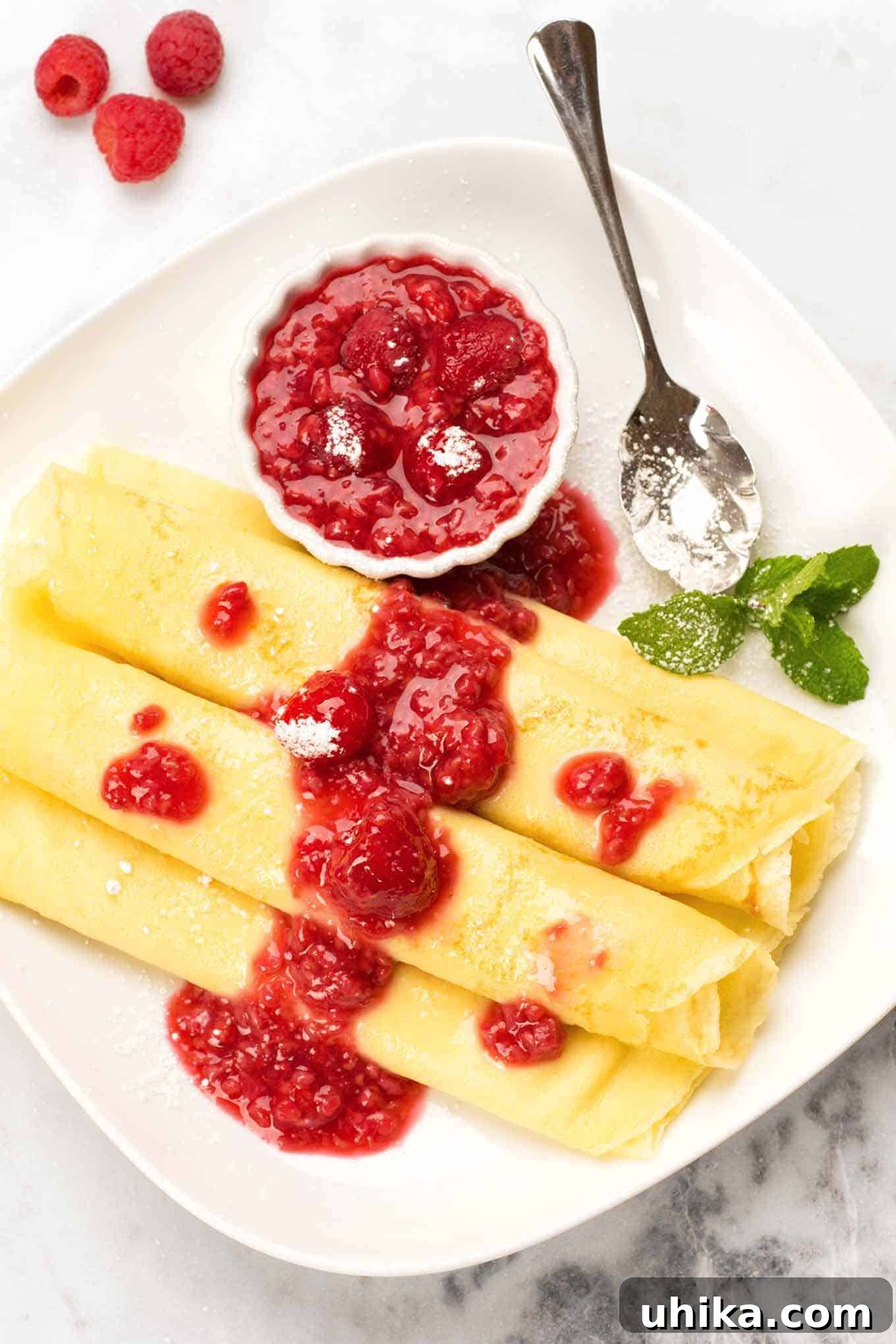
Authentic Hungarian Crepes: Palacsinta with Sweet Cottage Cheese and Raspberry Sauce
Embark on a culinary journey to Hungary with this exquisite recipe for Palacsinta, delicate Hungarian crepes that are a beloved staple in homes across the country. Unlike the thicker, fluffier pancakes often found in North America, Palacsinta (pronounced pah-la-cheen-ta) are incredibly thin, elegant crepes, akin to their French cousins. Their versatility makes them perfect for an array of fillings, from decadent sweet options to hearty savory preparations, ensuring there’s a Palacsinta for every palate and occasion.
This particular recipe highlights a cherished sweet variation, ideal for a special dessert or an impressive brunch centerpiece. Generations of families have savored these crepes, filled with a luscious, lightly sweetened cottage cheese infused with bright lemon zest and aromatic vanilla. To complete this delightful dish, a vibrant, homemade fresh raspberry sauce adds a perfect balance of tartness and sweetness, creating a truly unforgettable experience.
The Legacy of Palacsinta: A Hungarian Delight
Palacsinta are more than just crepes; they are a culinary institution in Hungary, deeply embedded in the nation’s gastronomic heritage. Their origins are thought to trace back centuries, with variations of thin pancakes appearing across Central and Eastern Europe. In Hungary, palacsinta have evolved into a distinct art form, characterized by their wafer-thin texture and the endless creativity applied to their fillings. From humble breakfast fare to elaborate celebratory desserts, these crepes embody the warmth and tradition of Hungarian home cooking. They are a testament to simple ingredients transformed into something extraordinary, a dish that consistently brings comfort and joy.
Why This Hungarian Crepe Recipe Is a Must-Try
If you’ve never experienced the magic of authentic Hungarian Palacsinta, this recipe offers the perfect introduction. The delicate crepes provide a tender canvas for the rich and creamy cottage cheese filling. The addition of fresh lemon zest brightens the cottage cheese, cutting through its richness with a zesty tang, while vanilla adds a comforting sweetness. Complementing this is a homemade raspberry sauce, bursting with the natural sweetness and slight tartness of fresh berries. This combination creates a harmonious symphony of flavors and textures, making it an ideal choice for impressing guests or simply treating yourself to a taste of Hungarian tradition. It’s elegant enough for a holiday brunch but simple enough to become a beloved family favorite.

Hungarian Crêpes: Palacsinta Recipe
Lynne Webb
30 minutes
20 minutes
50 minutes
6 servings
Ingredients
For the Crepes:
- 3 large eggs, lightly beaten
- 1-1/4 cups whole milk, plus more if needed for batter consistency
- 3 tablespoons butter, melted
- 1/4 teaspoon salt
- 1 cup all-purpose flour, plus more if needed
For the Filling:
- 2 cups cottage cheese (full-fat for best texture and flavor)
- 1/4 cup confectioners’ sugar
- Zest of 1 lemon (finely grated for maximum aroma)
- 1/2 teaspoon vanilla extract
For the Raspberry Sauce:
- 2 cups fresh raspberries, washed and well drained (frozen can be used, thawed)
- 1 tablespoon freshly squeezed lemon juice
- 1 tablespoon sugar (adjust to taste based on berry sweetness)
- 2 tablespoons water
- 2 teaspoons cornstarch
Instructions
-
In a medium mixing bowl, combine the eggs, milk, melted butter, and salt. Whisk these wet ingredients until thoroughly blended. Gradually add the all-purpose flour, about 1/4 cup at a time, whisking continuously to ensure the mixture is completely free of lumps and smooth. Once combined, cover the batter and refrigerate it for at least one hour. This resting period is crucial as it allows the flour to fully hydrate and the batter to thicken, which is essential for perfect, tear-free crepes.
-
While the crepe batter chills, prepare both the delicious cottage cheese filling and the vibrant raspberry sauce. For the filling, gently combine the cottage cheese, confectioners’ sugar, finely grated lemon zest, and vanilla extract in a separate bowl. Mix until all ingredients are well incorporated and the filling is evenly sweetened and flavored. Cover the filling and refrigerate it until you are ready to assemble the palacsinta.
-
To make the raspberry sauce, place the fresh raspberries, lemon juice, and sugar in a small saucepan. Bring the mixture to a gentle simmer over medium-high heat, stirring occasionally. In a tiny bowl, whisk together the water and cornstarch until a smooth slurry forms; this will be your thickening agent. Add the cornstarch slurry to the simmering raspberry mixture. Return the sauce to a simmer and continue cooking, stirring constantly, until it thickens to a glossy, syrup-like consistency. Be careful not to overcook, as it can become too thick. Transfer the finished sauce to a bowl and set it aside to cool.
-
Now it’s time to cook the palacsinta! Lightly grease a 10-inch nonstick pan by adding about 1 teaspoon of vegetable oil, then evenly spread it over the bottom and sides with a paper towel. Heat the pan over medium heat until it’s properly hot. Pour approximately 1/4 cup of the chilled batter into the center of the hot pan. Immediately lift the pan from the heat, quickly tilting and rotating it in a circular motion until the batter spreads out evenly and thinly across the entire bottom surface. This swift motion is key to achieving uniformly thin crepes.
-
Cook the crepe for 20 to 30 seconds on the first side, or until the edges begin to dry and lift slightly, and the surface appears “set.” Using a thin, flexible spatula, carefully flip the crepe over. Cook for another 10 to 15 seconds on the second side, just until it is barely browned and cooked through. Transfer the cooked palacsinta to a plate and continue with the remaining batter, stacking the finished crepes. You should yield about 1 dozen delicate Hungarian crepes.
-
To serve your beautiful palacsinta, lay one crepe flat on a clean surface. Spread approximately 2-1/2 tablespoons of the prepared cottage cheese filling on one side of the crepe, leaving about a 1-inch border from the edges. Carefully and gently roll the crepe to form a neat tube, ensuring the sweet filling is evenly distributed throughout. Place the rolled palacsinta seam-side down onto your serving plate to prevent unrolling, then generously drizzle with the cooled raspberry sauce. For an extra touch of elegance, you can dust with a sprinkle of powdered sugar or garnish with a fresh mint sprig.
Notes
Five Tips for Making Perfect Crêpes (Palacsinta):
Making crêpes is often described as an art, and it certainly takes a little practice to get comfortable with the process and achieve consistent results. Don’t be discouraged if your first few aren’t perfect – consider them practice! Here are some tried-and-true tips to help you make a successful batch, even if it’s your very first time crafting these Hungarian delights:
- **Allow the Batter to Rest:** This step is non-negotiable for tender, flexible crepes. Always let your batter rest for at least 1 hour in the refrigerator. This allows the flour to fully hydrate, resulting in a smoother batter and preventing tough crepes. Just before cooking, give it another whisk to ensure there are no lumps and that it’s perfectly smooth. For convenience, you can even prepare the batter up to a day ahead and store it in the fridge.
- **Choose the Right Pan:** A true, high-quality nonstick pan is your best friend when making crepes. We generally recommend a 10-inch size, which produces nicely sized palacsinta. However, an 8-inch pan works just as well; simply reduce the amount of batter you add for each crepe to about 3 tablespoons. Using a smaller pan will typically yield 4 to 6 more crepes from the same batch of batter.
- **Adjust Batter Consistency:** The very first crepe you make acts as your guide for judging the batter’s consistency. If the batter is too thick, you’ll find it hard to swirl and spread it evenly to the edges of the pan before it sets, resulting in thicker, less delicate crepes. A quick fix is to whisk in an additional 2 to 3 tablespoons of milk. Conversely, if the batter is too thin, your first crepe might become dry and brittle as it cooks. In this case, whisk in a little additional flour, starting with 1 or 2 tablespoons at most, until the desired consistency is achieved.
- **Master the Flip:** As soon as the batter begins to dry around the edges and appears set in the center, it’s time to flip. Use a thin, flexible spatula to gently get underneath the crepe and flip it quickly and confidently. Don’t worry if it doesn’t land perfectly flat on the first try; crepes are forgiving, and you can usually straighten it out easily enough with your spatula.
- **Storing Cooked Crepes:** While you can place a layer of wax paper between cooked crepes if you’re concerned about them sticking, we often find it unnecessary. We’ve never encountered issues with them sticking together, even when prepared ahead of time and stored overnight in an airtight container. This makes palacsinta an excellent make-ahead component for any gathering.
Nutrition
Serving: 2crepes
Calories: 288
Total Fat: 12g
Cholesterol: 121mg
Sodium: 403mg
Carbohydrates: 31g
Fiber: 3g
Sugar: 11g
Protein: 14g
Nutrition information is automatically calculated and should only be used as an approximation.

Delicious Palacsinta Variations to Explore
While the sweet cottage cheese and raspberry sauce combination is undeniably exquisite, the beauty of palacsinta lies in its adaptability. Don’t hesitate to experiment with different fillings and toppings to discover your new favorite! Here are a few popular and easy variations, both sweet and savory, to inspire your culinary creativity:
- Jam-Filled Palacsinta: This is a classic and wonderfully simple variation. Spread a generous layer of your favorite fruit preserves – apricot, raspberry, or strawberry jams are particularly popular – over the entire surface of a cooked palacsinta. Gently roll it into a tube, then dust with a snowy sprinkle of powdered sugar. For an extra layer of flavor and texture, you can also combine the powdered sugar with finely ground walnuts before dusting.
- Apple-Filled Palacsinta: For a taste of autumnal comfort, sauté some thinly sliced sweet apples in a knob of butter until they are tender and slightly caramelized. You can add a pinch of cinnamon or nutmeg for warmth. Fill and roll your palacsinta with the warm apple mixture, then finish with a delicate dusting of powdered sugar. A dollop of whipped cream or a scoop of vanilla ice cream makes this a truly indulgent treat.
- Nutella or Chocolate Palacsinta: A favorite for chocolate lovers and children alike! Simply spread a thin layer of Nutella or your preferred chocolate spread onto the warm crepes, roll them up, and serve. You can add sliced bananas or strawberries inside for extra flavor and fruitiness.
- Savory Palacsinta with Paprikash: Palacsinta are not just for sweets! For a truly authentic Hungarian experience, try them savory. Prepare a batch of traditional veal or chicken paprikash, ensuring the meat is diced into small, manageable pieces. Fill and roll the palacsinta, carefully tucking in the ends to keep the filling secure. Arrange them neatly in a lightly greased baking dish, generously top with the rich paprikash gravy, and bake for about 15 minutes, or until thoroughly heated through and bubbling. Garnish with fresh parsley before serving for a hearty and satisfying meal.
More Hungarian Culinary Delights
If you’ve enjoyed making and tasting these traditional Hungarian crepes, you might be eager to explore more of Hungary’s rich and diverse cuisine. Hungarian food is renowned for its hearty flavors, aromatic spices like paprika, and comforting, wholesome dishes. Here are a few more popular Hungarian recipes that are sure to tantalize your taste buds and bring the flavors of Hungary into your kitchen:
- Hungarian Stuffed Cabbage Rolls
- Hungarian Kiffles
- Hungarian Summer Squash with Dill
- Hungarian Noodle Dumplings (Nokedli)
- Hungarian Cabbage Noodles
Conclusion: Savor the Flavor of Hungary
Making Hungarian Palacsinta is a rewarding culinary endeavor that brings a piece of European charm right to your dining table. This recipe, with its sweet and tangy cottage cheese filling and vibrant raspberry sauce, is a testament to the simple elegance and profound deliciousness of Hungarian cuisine. Whether you’re preparing them for a special occasion brunch, a comforting dessert, or simply to explore new flavors, these delicate crepes are guaranteed to delight. So, gather your ingredients, follow these tips, and enjoy the process of creating a truly authentic and incredibly tasty Hungarian classic!