
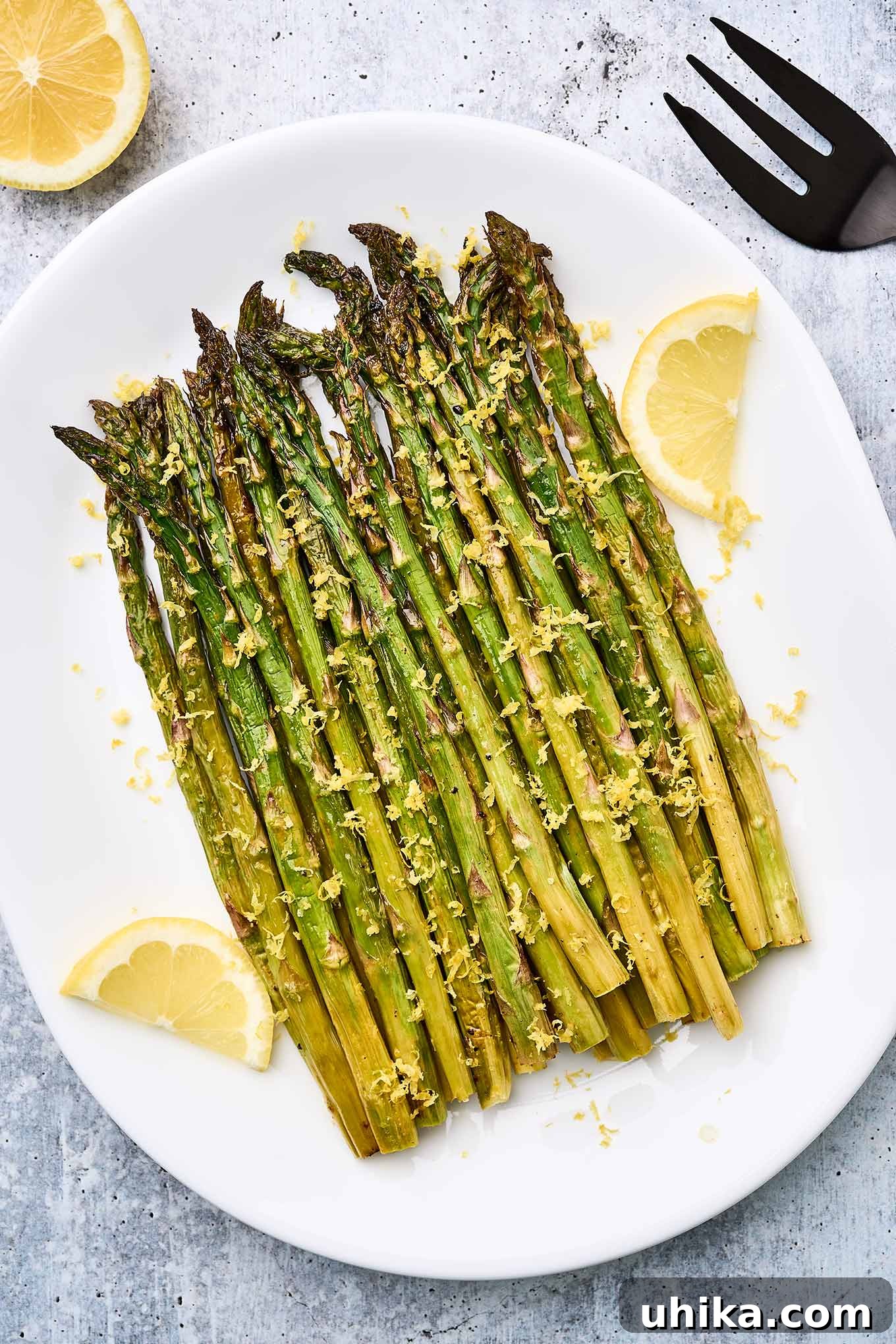
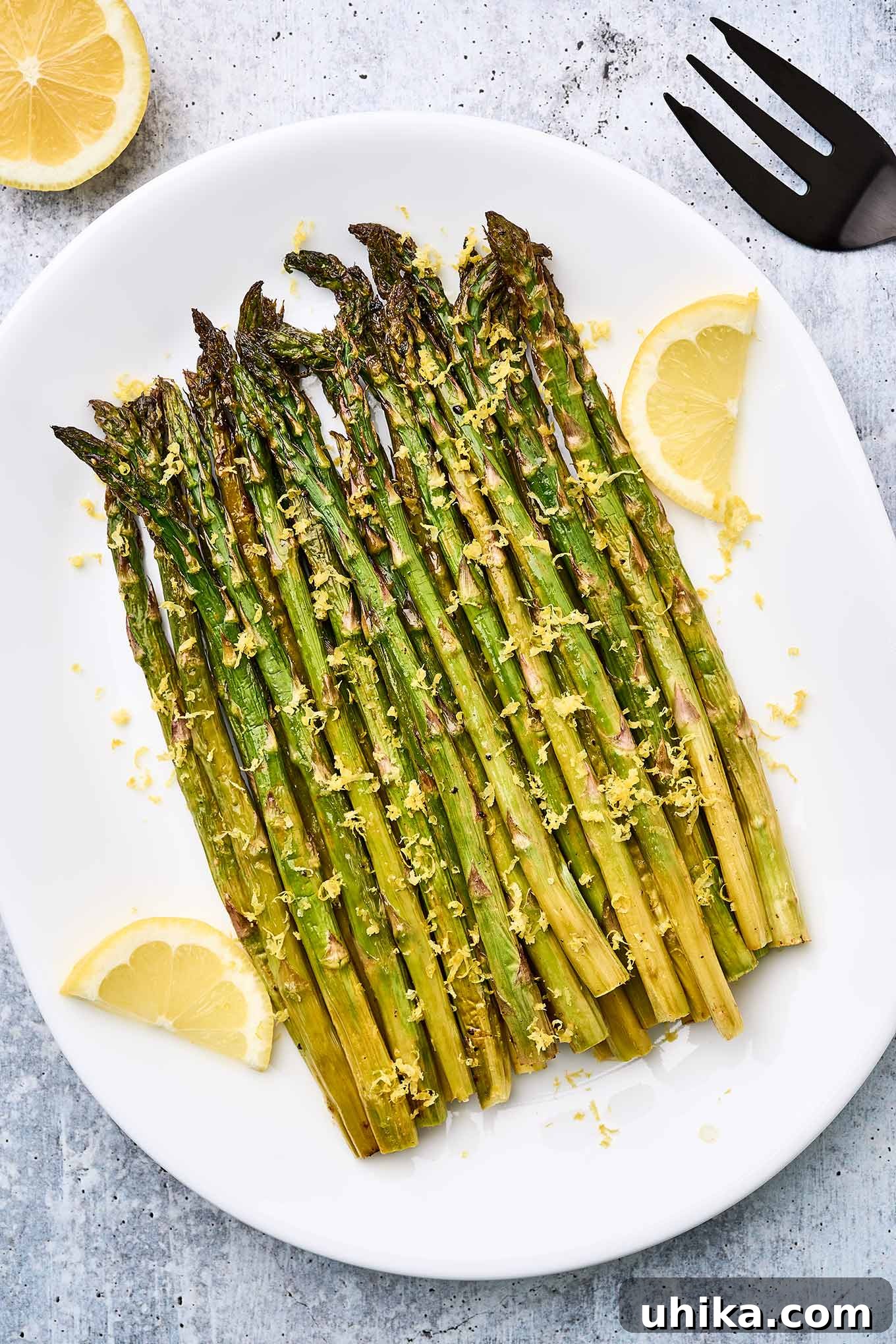
Lemon Roasted Asparagus: Your Go-To Simple Spring Side Dish
Discover the easiest and most delicious way to prepare asparagus with this effortless lemon roasted asparagus recipe. Requiring just a few essential ingredients and minimal prep time, this dish promises maximum flavor, making it a perfect accompaniment to almost any main course. A quick toss with bright lemon and rich melted butter before roasting unlocks the natural sweetness of the asparagus, finishing with a fresh, zesty flourish that truly captures the essence of spring.
Whether you’re hosting a dinner party or simply looking for a quick, healthy weeknight side, this lemon roasted asparagus will quickly become a staple in your culinary repertoire. It’s an elegant yet simple dish that elevates any meal, offering a vibrant burst of flavor and a tender-crisp texture that’s utterly irresistible.
Why You’ll Love This Easy Roasted Asparagus Recipe
This recipe isn’t just easy; it’s a celebration of fresh, seasonal ingredients. Roasting brings out the best in asparagus, caramelizing its natural sugars and intensifying its distinct flavor. The addition of lemon brightens the entire dish, cutting through the richness of the butter and leaving a refreshingly clean taste. Here’s why this recipe stands out:
- Simplicity at its Best: With only a handful of ingredients and straightforward steps, even novice cooks can achieve perfect results.
- Quick Prep & Cook Time: From start to finish, you can have this delightful side dish on your table in under 20 minutes. Ideal for busy evenings!
- Versatile Pairing: Its light yet flavorful profile makes it incredibly versatile, complementing everything from delicate fish to hearty meats.
- Healthy & Nutritious: Asparagus is packed with vitamins and minerals, offering a wholesome addition to your diet.
- Seasonal Perfection: While available year-round, asparagus truly shines in spring, making this recipe a perfect way to enjoy it at its peak.
We often pair this dish with Trout Meunière and roasted new potatoes for an easy yet elegant dinner menu that perfectly encapsulates the fresh flavors of the season. The combination creates a harmonious meal that feels gourmet without the fuss.
Key Ingredients for Flawless Lemon Roasted Asparagus
To create this simple yet spectacular side, you’ll only need a few high-quality ingredients. The full list with exact quantities is provided in the recipe card below.
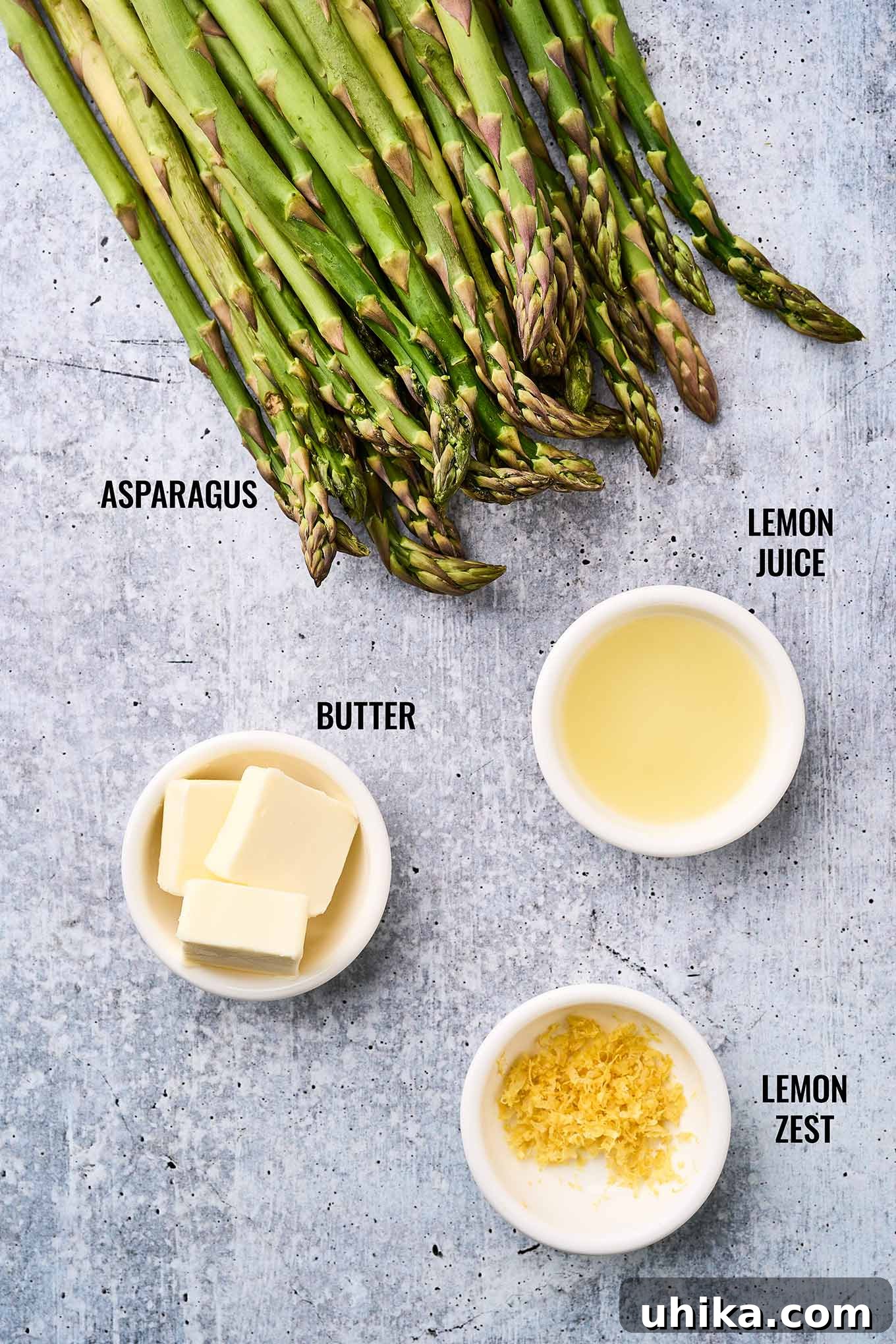
Asparagus: The Star of the Show
Asparagus is a vibrant green vegetable known for its unique flavor and tender spears. While you can find it in grocery stores year-round, its true peak season is during spring and early summer, typically from February to June. During this time, the spears are at their most tender, flavorful, and often more affordable.
Selecting the Best Asparagus:
- Look for Firmness: Choose spears that are firm and stand upright. Avoid any that appear limp, withered, or have soft spots.
- Tight Tips: The tips should be tightly closed and compact, indicating freshness. Open or flowering tips suggest older asparagus.
- Bright Green Color: Healthy asparagus will have a vibrant green color, though some varieties can be purple or white. Avoid spears with yellowing or dull patches.
- Uniform Thickness: While not strictly necessary, selecting spears of similar thickness will ensure more even cooking. Thicker spears tend to be juicier, while thinner ones are more tender.
Storing Asparagus to Maximize Freshness:
Proper storage is crucial for keeping asparagus crisp and delicious for longer. To keep it fresh, trim about an inch off the woody ends of the spears. Then, stand the asparagus upright in a container (like a glass or jar) with about an inch of water at the bottom. Cover the tips loosely with a plastic bag to create a humid environment and refrigerate for up to three to five days. This method helps the asparagus absorb water, maintaining its freshness and snap.
Lemon: The Zesty Game-Changer
Fresh lemon juice and zest are absolutely indispensable for this recipe. The bright, acidic notes of lemon perfectly cut through the richness of the butter and beautifully complement the earthy sweetness of the asparagus. The zest, in particular, carries concentrated lemon oils, providing an aromatic burst of flavor that cannot be replicated by bottled juice or artificial extracts.
If you don’t have a fresh lemon on hand, it’s better to roast your asparagus in plain butter with salt and pepper, rather than using bottled lemon juice. The fresh zest added at the end is a critical component that truly elevates this dish, so make sure to get a fresh lemon for the best results.
Butter: The Richness Factor
Melted butter provides a luxurious coating for the asparagus, helping it brown beautifully in the oven and carrying the lemon flavor deep into the spears. It adds a delicious richness and helps tenderize the vegetable. You can use salted or unsalted butter; just adjust your added salt accordingly.
Salt & Freshly Ground Black Pepper: Essential Seasoning
A good sprinkle of salt enhances all the other flavors, while freshly ground black pepper adds a subtle warmth and aromatic kick. Seasoning to taste is key to balancing the flavors.
How To Make Lemon Roasted Asparagus: A Simple Guide
Preparing this delightful side dish is incredibly simple. Below is a quick overview of the process. For detailed, step-by-step instructions and specific quantities, please refer to the printable recipe card at the bottom of this page.
Step 1: Preheat & Prepare the Pan
Begin by preheating your oven to 425°F (220°C). This high heat is essential for achieving perfectly tender-crisp asparagus with a slight caramelization. While the oven heats, scatter small pieces of butter directly onto a baking sheet. Place the baking sheet into the preheated oven for just one to two minutes, or until the butter is fully melted. Carefully remove the hot baking sheet from the oven and swirl it gently to coat the entire surface with the melted butter. This ensures every spear gets a rich, flavorful coating.
Step 2: Trim and Season the Asparagus
Next, prepare your asparagus. Trim off the woody ends, which are typically lighter in color and tougher in texture. You can easily find the natural breaking point by gently bending a spear until it snaps, but we recommend simply cutting them with a knife to avoid waste, especially with thinner spears. If your asparagus spears are particularly thick, you might also want to peel the lower stalks (about 2-3 inches from the cut end) using a vegetable peeler. This helps ensure uniform tenderness throughout the spear, as thicker stalks can sometimes be fibrous.
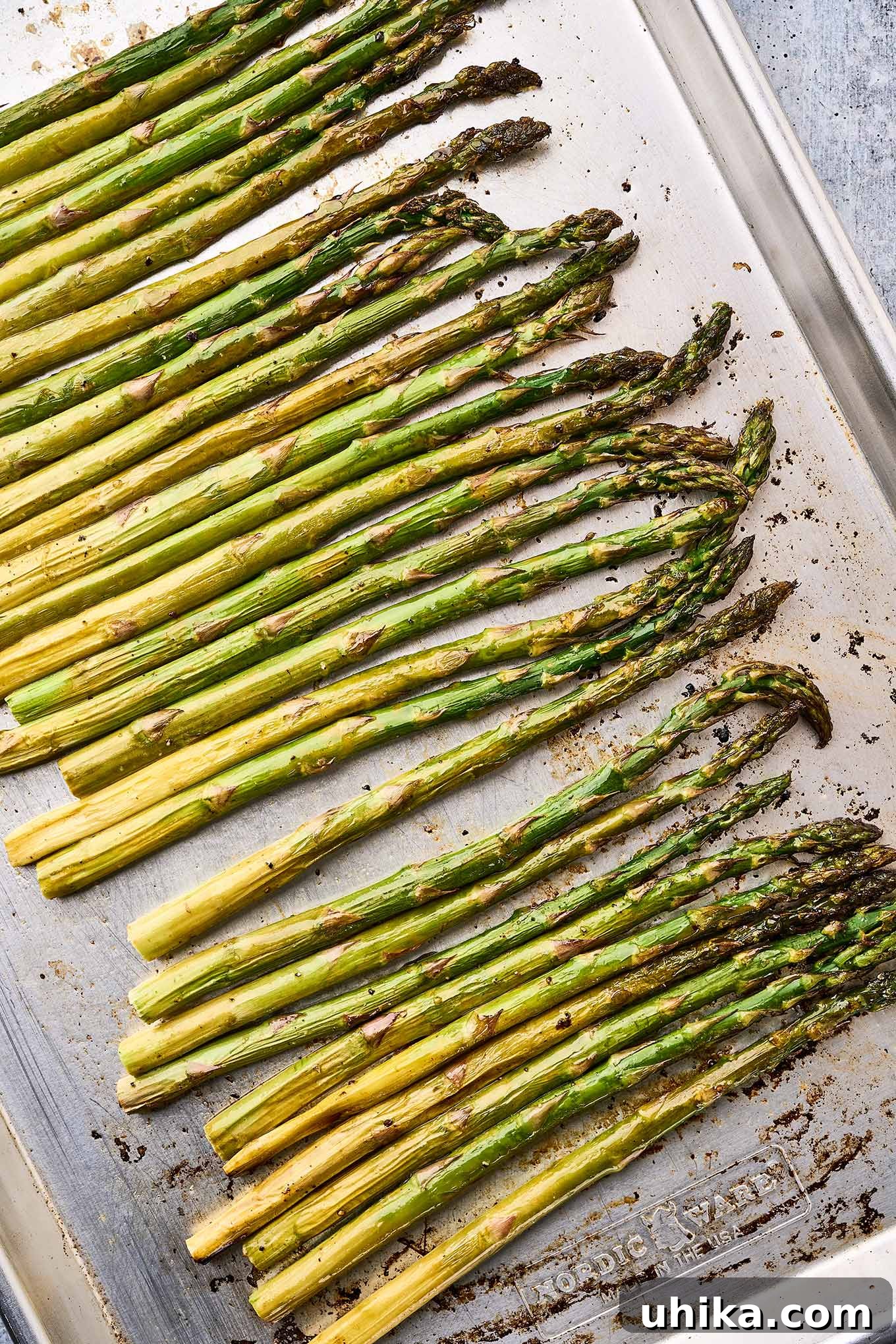
Once trimmed, arrange the asparagus spears in a single layer on the buttered baking sheet. Drizzle them generously with fresh lemon juice. Using tongs, gently toss the spears to ensure they are thoroughly coated in both the melted butter and lemon juice. Finally, season them lightly with salt and freshly ground black pepper.
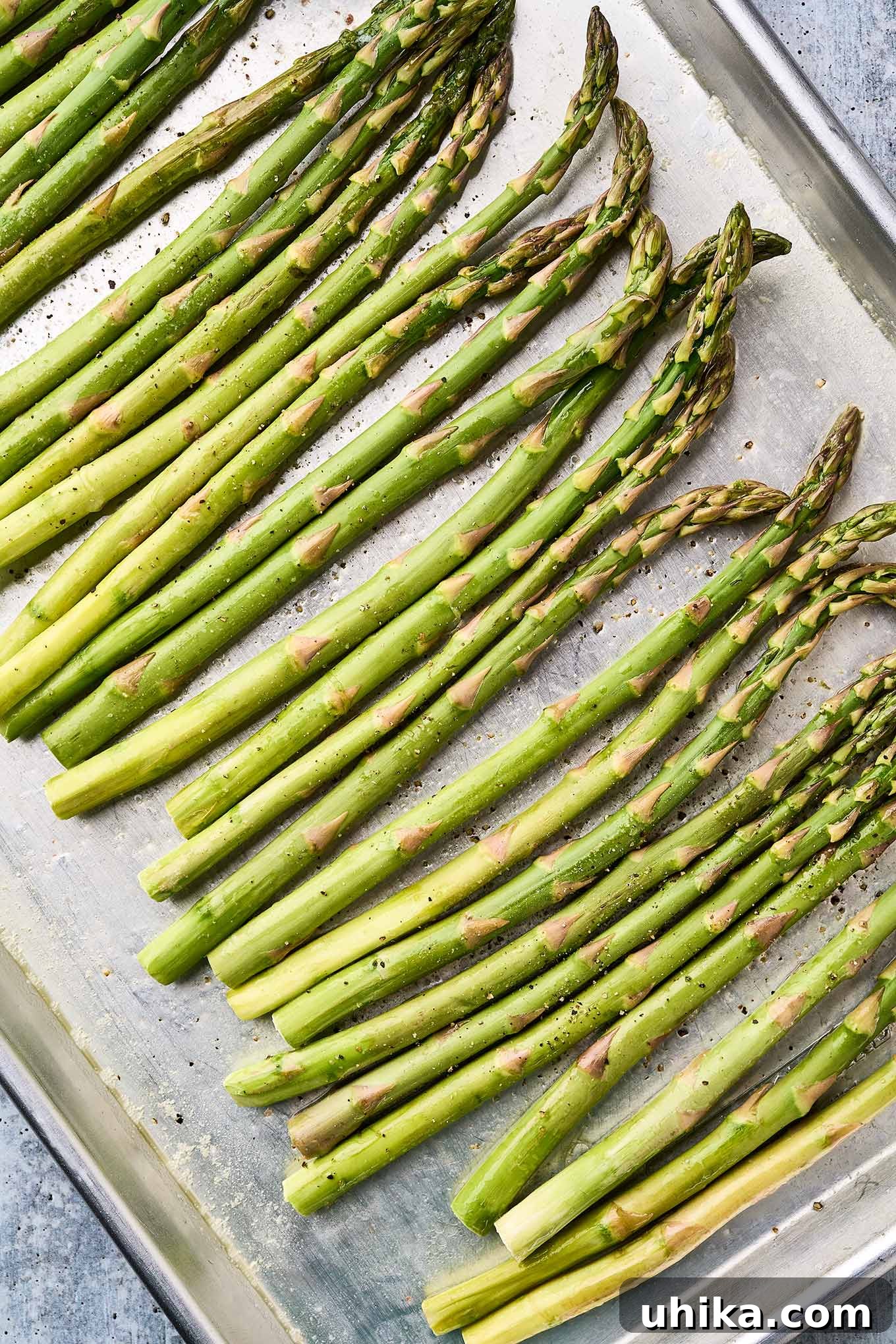
Step 3: Roast to Perfection
Place the baking sheet into the preheated oven and roast the asparagus until it is tender-crisp. This usually takes between 10 to 15 minutes, depending on the thickness of your asparagus spears. To ensure even cooking and browning, rotate the pan about halfway through the cooking time. Keep a close eye on them, especially the delicate tips, to prevent overcooking. You can test for doneness by piercing a spear with the tip of a sharp knife; it should slide in easily but still have a slight bite.
Step 4: The Finishing Touch
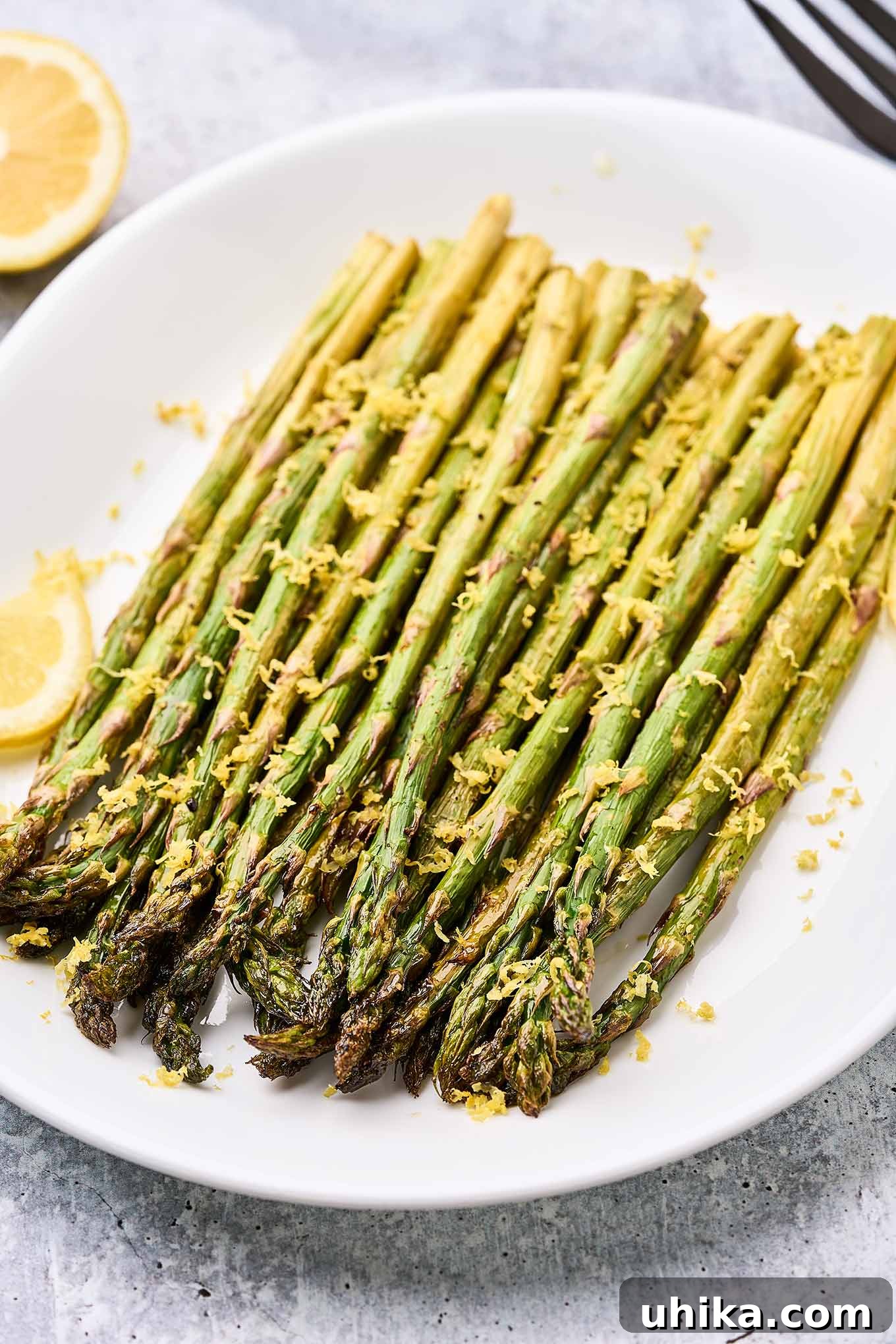
Just before serving, transfer the perfectly roasted asparagus to a serving dish. Sprinkle a generous amount of fresh lemon zest over the top. This final touch adds an extra layer of bright, aromatic lemon flavor that truly makes the dish sing. Serve immediately and enjoy!
Elevate Your Lemon Roasted Asparagus: Variations & Serving Tips
While this recipe is fantastic as is, don’t hesitate to experiment with variations to suit your taste or complement your main dish. Asparagus is incredibly versatile and pairs well with a variety of flavors.
Flavorful Variations to Try:
- Garlic Lover’s Dream: Add 1-2 minced garlic cloves to the melted butter before tossing with the asparagus. The garlic will roast alongside, infusing the spears with a delightful aroma and taste.
- Herbal Infusion: Fresh herbs like finely chopped parsley, dill, chives, or thyme can be added along with the lemon zest at the end for an extra layer of freshness. Rosemary or oregano could also be added with the butter for a more robust flavor profile.
- A Touch of Heat: For those who enjoy a little kick, sprinkle a pinch of red pepper flakes over the asparagus before roasting.
- Parmesan Perfection: A light dusting of grated Parmesan cheese during the last few minutes of roasting adds a savory, salty crust that is incredibly delicious.
- Nutty Crunch: Toasted slivered almonds or pine nuts can be sprinkled over the finished dish for added texture and a delicate nutty flavor.
- Balsamic Glaze: A drizzle of balsamic glaze after roasting can add a sweet and tangy counterpoint to the lemon and butter.
Creative Serving Suggestions:
Beyond being a perfect side for fish like our favorite Trout Meunière, lemon roasted asparagus is incredibly versatile:
- With Roasted Chicken or Pork: Its bright flavor cuts through the richness of roasted meats, creating a balanced meal.
- Alongside Steak: A classic pairing, the freshness of the asparagus provides a welcome contrast to a savory steak.
- As a Brunch Staple: Serve it with scrambled eggs, quiche, or frittatas for a sophisticated breakfast or brunch.
- In Salads: Chop the roasted asparagus and add it to a spring salad for extra flavor and texture.
- Pasta Addition: Toss it with pasta, cherry tomatoes, and a light olive oil-based sauce for a quick and easy vegetarian meal.
More Delicious Ways to Enjoy Asparagus
Asparagus is truly a versatile vegetable, perfect for creating quick, flavorful dishes. If you love this lemon roasted version, you might also enjoy exploring these other fantastic asparagus recipes:
- Our personal favorite, Asparagus with Balsamic Brown Butter, offers steamed asparagus tossed in nutty brown butter with just a hint of balsamic sweetness – a truly gourmet experience!
- For a simple, satisfying meatless dinner, try Tortellini with Roasted Asparagus. This recipe pairs easy-to-make roasted asparagus with cheesy tortellini and plenty of lemon for a bright, citrusy finish.
- And if you’re looking for an easy and unique appetizer that’s always a crowd-pleaser, our Prosciutto-Wrapped Roasted Asparagus brings together two classic ingredients for a salty, savory bite that’s simply irresistible.
Frequently Asked Questions About Roasting Asparagus
1. What is the best temperature for roasting asparagus?
A high oven temperature, typically between 400°F and 425°F (200°C to 220°C), is ideal for roasting asparagus. This ensures the spears cook quickly, becoming tender on the inside while slightly caramelized and crisp on the outside.
2. How do I know when roasted asparagus is done?
Roasted asparagus is done when it’s bright green, tender-crisp, and slightly browned in spots. You should be able to easily pierce a spear with a fork or the tip of a sharp knife, but it should still have a slight bite and not be mushy. The cooking time will vary depending on the thickness of your spears, usually between 8-15 minutes.
3. Should I peel asparagus before roasting?
Generally, thin to medium asparagus spears do not need to be peeled. However, if you have very thick asparagus, the lower stalks can sometimes be fibrous and tough. In this case, peeling the bottom 2-3 inches of the spears with a vegetable peeler can help ensure they cook more evenly and are tender throughout. For most recipes, simply trimming the woody ends is sufficient.
4. Can I prepare roasted asparagus ahead of time?
Roasted asparagus is best enjoyed fresh from the oven, as it can lose its crispness and vibrant color if made too far in advance. However, you can prepare the asparagus by trimming it a day or two ahead of time and storing it properly in the refrigerator (standing upright in water with a plastic bag loosely covering the tips). The actual roasting process is so quick that it’s ideal to do right before serving.
5. What if my asparagus turns out soggy?
Soggy asparagus is usually a result of overcooking or overcrowding the pan. To avoid this, ensure your oven is preheated to the correct high temperature. Also, arrange the asparagus in a single layer on the baking sheet without overlapping, giving each spear enough space to roast rather than steam. Rotate the pan halfway through cooking for even heat distribution. Keep a close eye on it, as cooking times can vary, and pull it out of the oven as soon as it reaches the tender-crisp stage.
6. Can I use olive oil instead of butter?
Yes, you can absolutely use olive oil instead of butter for roasting asparagus. Extra virgin olive oil will also provide a delicious flavor and help the asparagus crisp up nicely. The choice between butter and olive oil often comes down to personal preference for flavor profile and dietary considerations.

Lemon Roasted Asparagus
Lemon roasted asparagus is an easy, 20-minute side dish recipe that combines just a few ingredients to bring out the distinctive natural flavor of this delicious vegetable. It’s particularly good in spring when asparagus is at its peak, offering a vibrant and healthy addition to any meal.
Rate Recipe
Print Recipe
Ingredients
- 1 lb asparagus, ends trimmed and lower stalks peeled if very thick
- 3 tablespoons butter, cut into small pieces
- Salt and freshly ground black pepper, to taste
- 1 tablespoon freshly squeezed lemon juice
- Zest of 1 lemon
Instructions
- Preheat the oven to 425°F (220°C).
- Trim the woody ends from the asparagus spears (about 1 inch from the bottom). If the asparagus spears are particularly thick, peel away about 2-3 inches of the outer skin toward the bottom of the stalk to ensure tenderness and even cooking.
- Scatter the butter pieces on a baking sheet and place it in the preheated oven for one to two minutes, or until the butter is completely melted.
- Carefully remove the hot baking sheet from the oven. Tilt the baking sheet back and forth to evenly coat it with the melted butter.
- Arrange the trimmed asparagus spears in a single layer on the buttered baking sheet, ensuring they do not overlap.
- Drizzle the asparagus with freshly squeezed lemon juice. Using tongs, gently toss the spears until they are thoroughly coated in both butter and lemon juice. Season lightly with salt and freshly ground black pepper to taste.
- Return the baking sheet to the oven and roast the asparagus until tender-crisp, typically 10 to 15 minutes. For even cooking, rotate the pan about halfway through the roasting time. The exact timing will depend on the thickness of the asparagus spears; thinner spears will cook faster than thicker ones. Monitor closely to avoid overcooking the delicate tips.
- Once the asparagus is tender and slightly caramelized, remove it from the oven. Sprinkle generously with fresh lemon zest and transfer to a serving dish. Serve immediately.
Notes
You may have heard about the “snapping method” for trimming asparagus, where you bend a spear until it naturally breaks. However, we don’t recommend this method as it can result in far too much waste, especially if your asparagus spears are relatively thin. A simple cut with a knife is more efficient and ensures you only remove the truly woody portion.
Nutrition
Calories: 99,
Total Fat: 9g,
Cholesterol: 23mg,
Sodium: 70mg,
Carbohydrates: 5g,
Fiber: 2g,
Sugar: 2g,
Protein: 3g
Nutrition information is an estimate calculated automatically and should only be used as an approximation.
Did you enjoy this recipe? Rate and comment below!