
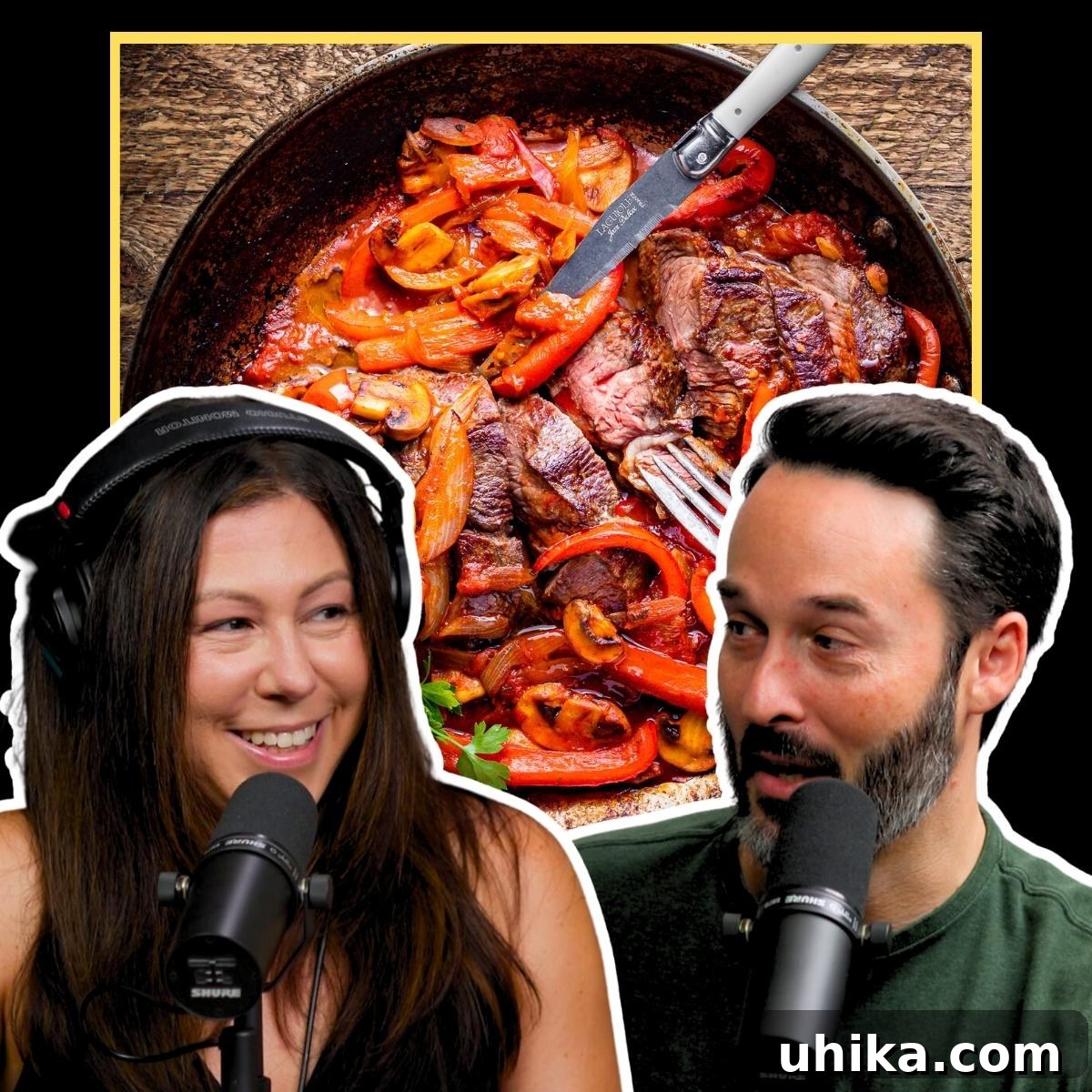
This article accompanies our latest podcast episode on Steak Pizzaiola. Listen to the full discussion here: Play in new window | Download (54:33 — 76.2MB)
Stay updated with our weekly culinary adventures! Subscribe or Follow The Sip and Feast Podcast on Apple Podcasts | Spotify | Amazon Music | RSS | More
Steak Pizzaiola: A Timeless Italian-American Classic Reinvented for Your Table
For many, Steak Pizzaiola evokes cherished childhood memories, a dish that graced family tables with its comforting aroma and hearty flavor. While some restaurants attempt to elevate this classic with premium cuts of beef, the enduring charm of old-school Steak Pizzaiola truly shines when prepared with more affordable ingredients and traditional methods. This isn’t just about saving money; it’s about honoring a culinary heritage where simplicity and flavor reign supreme.
Unveiling Steak Pizzaiola: More Than Just Steak
Steak Pizzaiola, or carne alla pizzaiola, literally translates to “meat in the pizza-maker style.” This evocative name refers to a method of cooking steak (or other meats) in a robust tomato sauce heavily infused with oregano. While interpretations may vary across kitchens and regions, the fundamental elements remain consistent: tender beef enveloped in a savory, aromatic tomato sauce that carries the distinct notes of a classic Neapolitan pizza.
Traditionally, this dish embraces an economical philosophy, using tougher cuts of beef that transform into succulent, fork-tender morsels through slow cooking. Our definitive Sip and Feast Steak Pizzaiola recipe, for instance, features chuck steak, complemented by the earthy flavors of peppers and mushrooms. While some upscale establishments might opt for a ribeye or porterhouse, we advocate for the more humble, yet supremely flavorful, approach. It’s not only kinder to your wallet but also stays true to the historical roots of *alla pizzaiola* as a hearty, family-friendly meal.
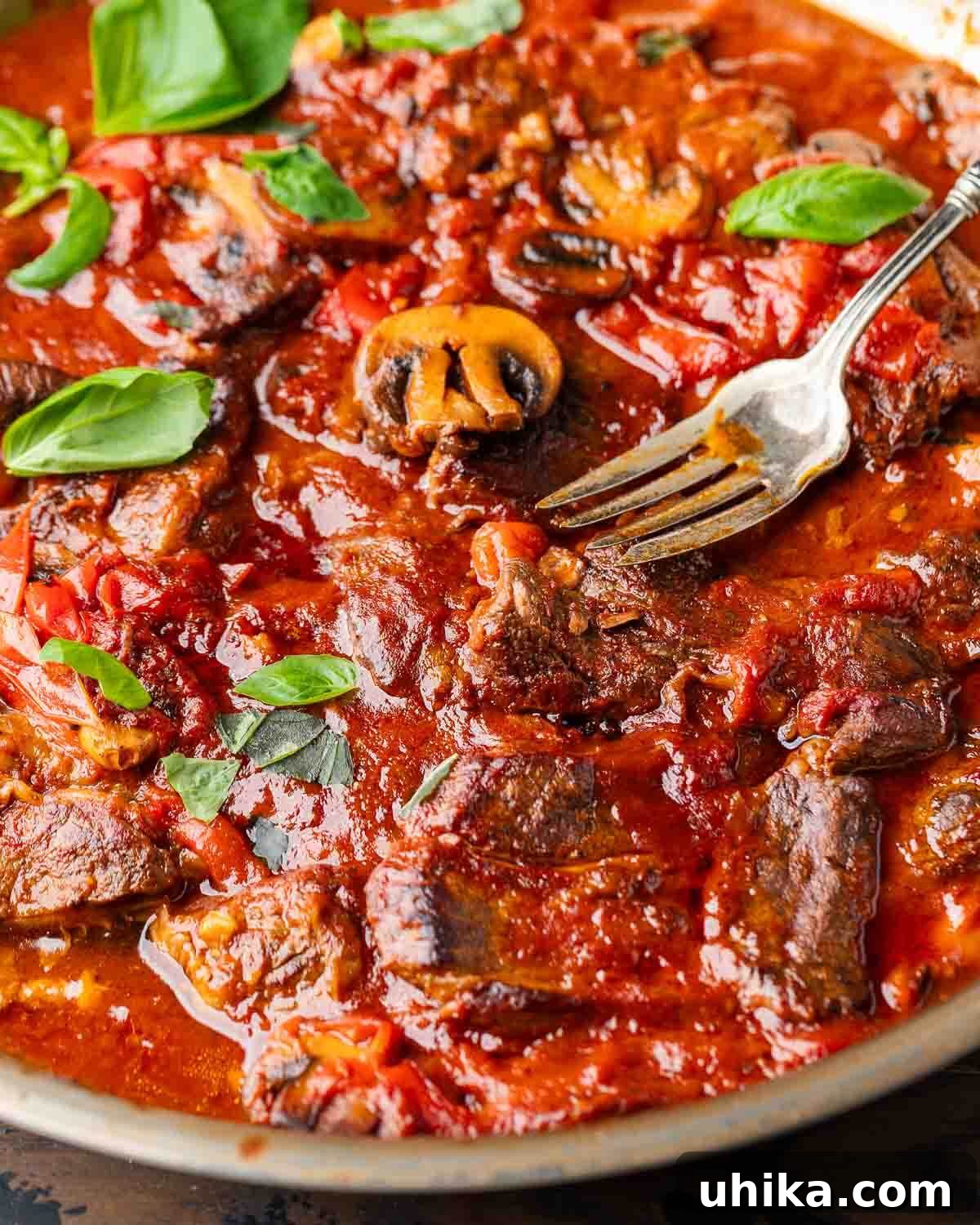
The precise origins of Steak Pizzaiola are somewhat shrouded in mystery, with theories pointing to Naples or Sicily. One popular tale suggests it was a convenient meal for pizza makers, a dish they could “set and forget” while tending to customers’ pizzas. Regardless of its exact birthplace, its comforting nature and rich flavors have made it a beloved staple in many Italian-American households, especially in the New York and New Jersey areas.
A Taste of Tradition: Our Personal Steak Pizzaiola Journey
For many, Steak Pizzaiola is synonymous with home. Growing up, this dish was a regular feature, cooked with love by mothers and grandmothers. It wasn’t just a meal; it was an experience. The choice of meat was crucial: thin-cut chuck steaks, often with the bone in, sliced precisely by the butcher on a bandsaw to about half to three-quarters of an inch thick. This specific cut, usually hard to find pre-packaged today, significantly reduced braising time compared to a full chuck roast, making it ideal for a hearty weeknight dinner.
Our mothers’ and grandmothers’ versions were often incredibly simple: plum tomatoes, plenty of garlic, and a generous sprinkle of oregano. Some might omit vegetables entirely, focusing on the core flavors of beef, tomato, and garlic, often finished with a grating of cheese. The resulting sauce, enriched by the slow-cooked meat, became a dense, flavorful accompaniment, perfect with white rice or even a side of pasta. This humble, yet profoundly satisfying, approach underscored the dish’s heritage as an economical and nourishing meal.
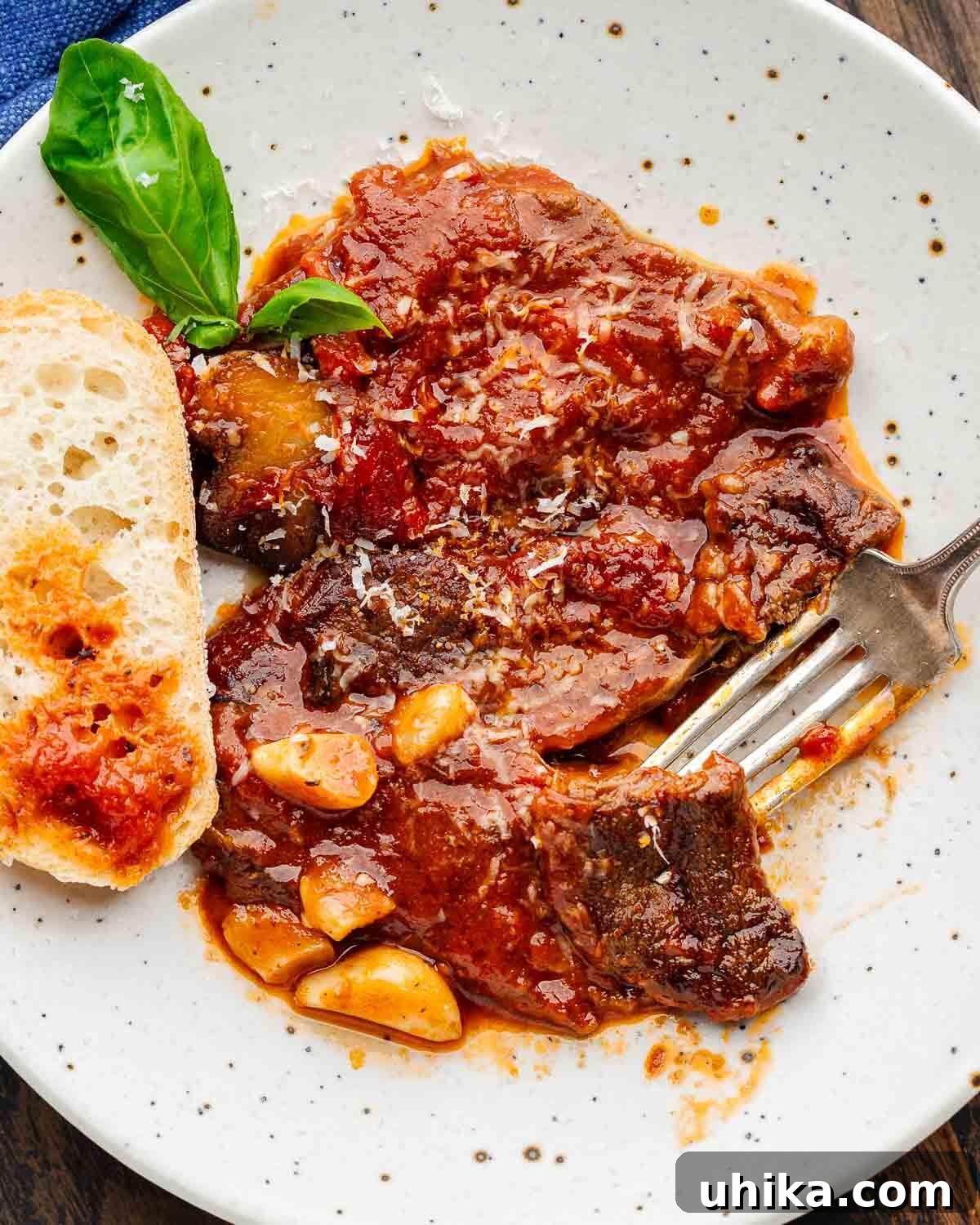
However, the restaurant experience of Steak Pizzaiola can be markedly different. Instead of braised chuck, you might encounter a quickly seared ribeye or porterhouse steak, briefly introduced to a flash-cooked tomato sauce, often laden with mushrooms and garlic. While undeniably tasty, this version offers a lighter, less “beefy” flavor profile compared to the deep, concentrated richness achieved through hours of slow cooking. It’s an important distinction that highlights the versatility of the dish, catering to different preferences and occasions. Whether it’s the robust, stew-like quality of a home-cooked braise or the elegant simplicity of a restaurant plate, Steak Pizzaiola consistently delivers on flavor and comfort.
Mastering the Methods: Braised vs. Quick-Seared Steak Pizzaiola
The beauty of Steak Pizzaiola lies in its adaptability, primarily seen in its two main preparation methods: the traditional slow-braise and the contemporary quick-sear. Each method yields a distinctly different, yet equally delicious, experience.
The Slow-Braise: Embracing Frugality and Flavor
This is the old-school, economical approach. It involves braising tougher, more affordable cuts of beef, such as chuck steaks, bottom round, or even short ribs, in the tomato-oregano sauce for an extended period. The magic happens as the connective tissues in the meat break down, rendering it incredibly tender, while simultaneously infusing the sauce with rich, beefy flavors. This process transforms a bright tomato sauce into a deep, concentrated “Sunday sauce” with a brick-red hue and unparalleled depth.
- Ideal Cuts: Thin-cut chuck steaks (bone-in or boneless), bottom round, or even a smaller chuck roast sliced thinly.
- Cooking Time: Can range from 1.5 to 3 hours, depending on the thickness of the meat.
- Flavor Profile: Hearty, robust, intensely beefy, with a deeply integrated sauce. Perfect for fall and winter meals.
The Quick-Sear: Restaurant Elegance and Efficiency
This method utilizes leaner, more expensive cuts of steak that cook quickly, often found in restaurants. Think ribeye, porterhouse, New York strip, or even flank steak. The steak is seared to your desired doneness (typically medium-rare), removed from the pan, and then a quick tomato-oregano sauce is prepared. The seared steak is briefly returned to the sauce—just long enough to warm through and absorb a hint of flavor without overcooking. This method sacrifices some of the deep, braised flavor integration for speed and the distinct taste of a perfectly seared steak.
- Ideal Cuts: Ribeye, porterhouse, New York strip, top round, flank steak, or skirt steak.
- Cooking Time: Very fast, often under 30 minutes for the entire dish.
- Flavor Profile: Lighter, fresher tomato flavor with distinct seared steak taste. Great for warmer months or when time is limited.
Understanding these two approaches allows home cooks to tailor their Steak Pizzaiola to their budget, time constraints, and flavor preferences. While the slow-braise offers a nostalgic, deeply satisfying experience, the quick-sear provides a delicious, albeit different, take on this beloved dish.
The Heart of the Dish: Essential Ingredients and Smart Substitutions
At its core, Steak Pizzaiola relies on a few high-quality ingredients to shine. The right choices can elevate the dish from good to unforgettable.
The Beef: Economical Choices for Maximum Flavor
For the traditional slow-braised method, chuck steak is king. Its marbling and connective tissue are perfect for breaking down over time, yielding tender, flavorful results. If thin-cut chuck steaks are unavailable, a butcher can slice a chuck roast for you. Alternatively, less expensive cuts like bottom round or flank steak can also work well, especially for the quicker cooking method. When using flank steak, remember to slice it against the grain for maximum tenderness, as demonstrated in our beef stroganoff recipe.
The Tomatoes: The Soul of the Sauce
Use the best quality whole peeled tomatoes you can find. While San Marzano are often touted as the gold standard, excellent American brands like Alta Cucina or Nina (often found at Costco) offer fantastic flavor and value. We recommend using whole tomatoes and crushing them by hand for a rustic texture that allows for better flavor development during long braises. Avoid pre-crushed tomatoes or passata for slow-cooked dishes, as they can become overly thick and mute the fresh tomato flavor.
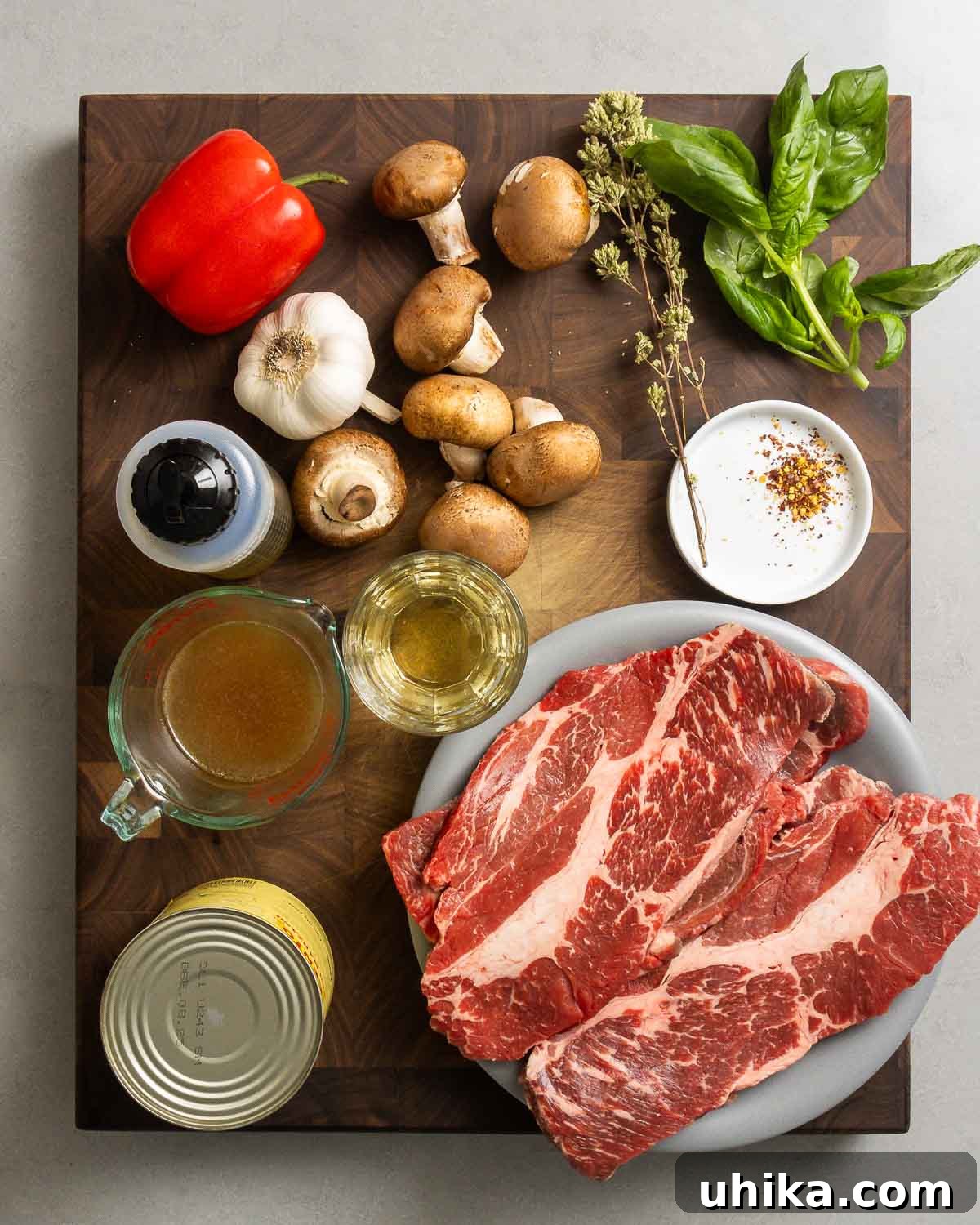
Aromatic Enhancements: Oregano, Garlic, Wine, and Stock
- Oregano: This is the signature “pizza-maker” spice. We highly recommend using dried Sicilian or Greek oregano, which boasts a superior potency and flavor profile compared to standard pre-ground varieties. Its floral, spicy notes are essential to the dish’s character.
- Garlic: Fresh garlic is indispensable. Don’t skimp on it; it provides a foundational flavor that complements the beef and tomatoes beautifully.
- Wine: A dry white wine, such as Pinot Grigio or Sauvignon Blanc, adds a bright, acidic counterpoint to the richness of the beef and tomatoes. While red wine can also be used, white wine tends to preserve the vibrancy of the tomato sauce.
- Beef Stock: For unparalleled depth and control over sodium, homemade beef stock is a game-changer. It allows you to reduce the sauce without making it overly salty. If using store-bought, opt for a low-sodium version and adjust salt to taste.
Optional Add-ins and Serving Suggestions
While purists might stick to beef, tomatoes, and oregano, many versions benefit from the addition of vegetables. Sliced bell peppers and mushrooms are common and add both flavor and texture. For those who dislike mushrooms, simply increase the amount of peppers or add sliced onions. Steak Pizzaiola is incredibly versatile and can be served over fluffy white rice, creamy polenta, or even thin roasted potatoes. If you’re a pasta lover, doubling the amount of canned tomatoes in the recipe will provide enough luscious sauce to toss with a pound of pasta, such as penne or spaghetti, making it a truly satisfying meal. Finish with a grating of Pecorino Romano or Parmesan cheese for an extra layer of savory goodness.
Perfecting the Process: Step-by-Step Cooking Insights
Achieving the perfect Steak Pizzaiola, especially the traditional braised version, hinges on a few key steps that ensure tender meat and a rich, flavorful sauce.
The Braising Method: Patience for Perfection
For the slow-cooked method, the process begins by searing the beef until beautifully browned. This caramelization adds layers of flavor to the dish. After searing, the meat is gently braised in the tomato sauce, either on the stovetop in a heavy-bottomed pot or Dutch oven, or in the oven. Cooking it in the oven (covered) provides more even heat distribution and allows you to “set it and forget it” for a couple of hours. The goal is to cook the chuck steak until it reaches a point of absolute tenderness, where it can be easily pulled apart with a fork. This usually occurs when the internal temperature is around 205°F, indicating that the collagen has broken down, creating that melt-in-your-mouth texture.
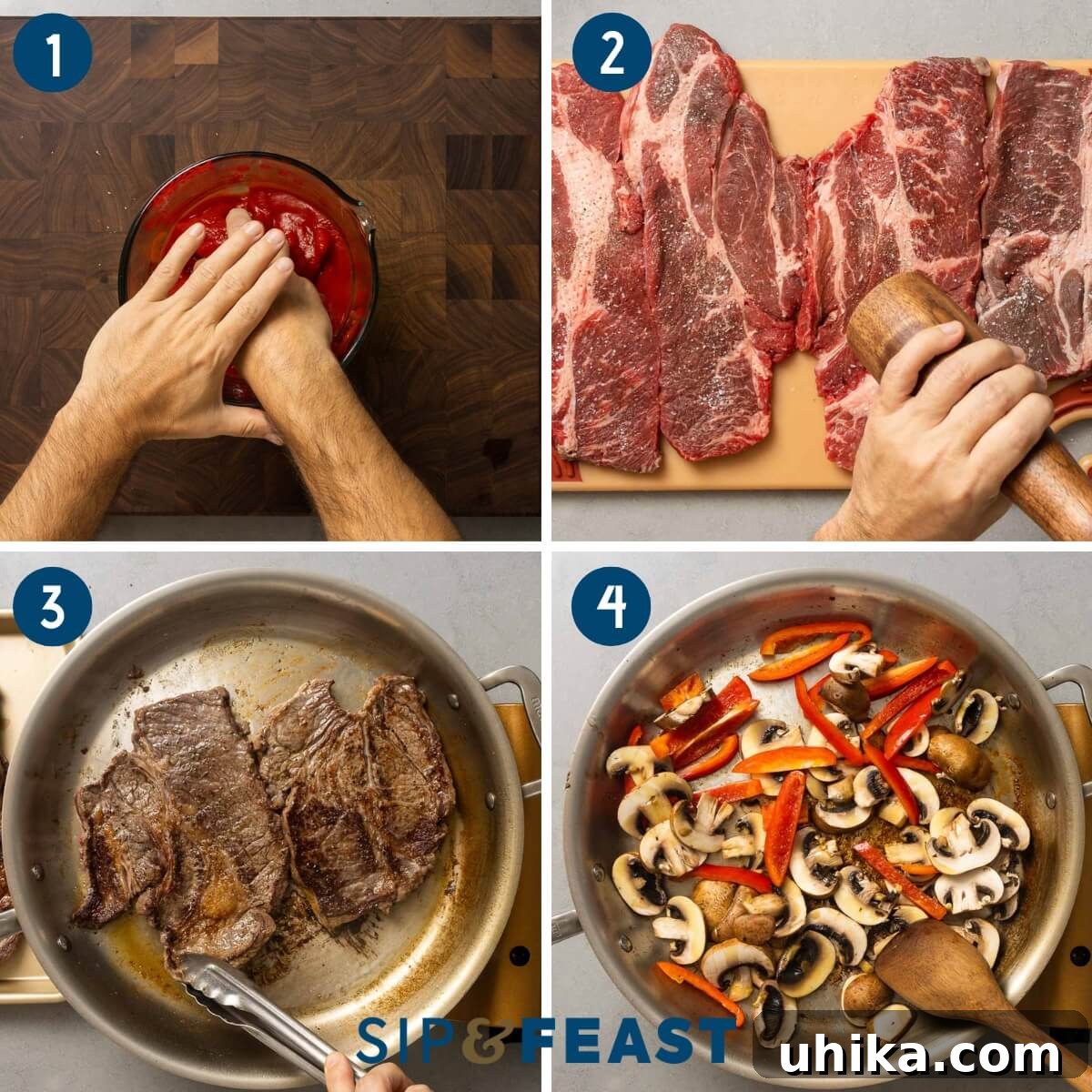
The Quick-Sear Method: Speed and Freshness
If opting for the quicker method with a leaner cut like flank steak or top round, the approach is different. Start by searing thinly sliced steak in a very hot pan for just a minute or two per side, aiming for a medium-rare doneness. Remove the steak from the pan, then quickly build your tomato-oregano sauce in the same pan, scraping up any delicious browned bits. Once the sauce is ready (a flash sauce can be made in about 10-15 minutes), return the seared steak to the pan for just a minute or two to warm through and combine flavors without overcooking the beef. This method delivers a steak with a distinct texture and a fresher, brighter tomato sauce.
Regardless of the method chosen, remember to taste and adjust seasonings as you go. A final sprinkle of fresh parsley or basil (if you insist on fresh herbs, though dried oregano is key here) and a drizzle of good quality olive oil can add a final flourish to your homemade Steak Pizzaiola.
Beyond Beef: Creative Variations and Adaptations
Steak Pizzaiola’s versatile sauce lends itself beautifully to a variety of proteins and flavor enhancements, offering endless possibilities for culinary exploration.
Exploring Other Proteins
- Chicken Pizzaiola: A popular adaptation, our Chicken Pizzaiola recipe uses boneless, skinless chicken breasts or thighs cooked in the same flavorful tomato and oregano sauce, often with added mushrooms, peppers, and onions. It’s a lighter alternative that’s equally satisfying.
- Pork Chop Pizzaiola: This can be approached in two ways. For high-quality, lean loin chops, a quick sear followed by spooning the hot pizzaiola sauce over them (similar to the restaurant-style steak) works best to prevent overcooking. For more economical, tougher blade chops, a slow braise in the sauce will tenderize them beautifully, akin to the traditional beef method.
Adding Exciting Flavors
While the classic recipe is perfect on its own, a few additions can introduce new dimensions of flavor:
- Spicy Kick: For those who appreciate a bit of heat, a touch of cherry peppers or a pinch of red pepper flakes can infuse the sauce with a pleasant warmth. We recommend cherry peppers over extremely hot Calabrian chilies to maintain balance.
- Salty & Briny Notes: A small amount of capers or oil-cured olives, added towards the end of cooking, can introduce a delightful briny depth and complexity, reminiscent of puttanesca. The key is moderation to prevent overpowering the dish.
Vegetarian Adaptations
While traditionally a meat dish, vegetarians can still enjoy the flavors of pizzaiola. Large portobello mushrooms, for instance, can be roasted or grilled and then served with the rich tomato-oregano sauce. For a more substantial vegetarian option, consider making stuffed mushrooms with a pizzaiola-inspired filling (perhaps rice, breadcrumbs, herbs, and cheese) and simmering them in the sauce. Our Sausage Stuffed Mushrooms with Pizzaiola Sauce recipe offers a great starting point, where the sausage could easily be replaced with a vegetarian equivalent or omitted entirely.
These variations encourage creativity in the kitchen while staying true to the comforting essence of Steak Pizzaiola. Don’t hesitate to experiment and discover your own favorite rendition of this Italian-American classic!
Culinary Insights & Reader Questions
Beyond our main recipes, we love to dive into the nuances of cooking and answer your pressing culinary questions. Here are some insights inspired by our community:
The Secret Ingredient: Maximizing Parmesan Rinds
Many home cooks instinctively discard the hard rinds of Parmesan or Pecorino Romano cheese. However, these rinds are flavor powerhouses, packed with umami and capable of enhancing soups, stews, and sauces like pasta e ceci (pasta with chickpeas). To clarify a common misconception: no, you don’t reuse the same rind across 80 dishes! You use one piece of rind per dish and then discard it after cooking. The rind infuses the dish with a subtle, savory depth that elevates the overall flavor profile.
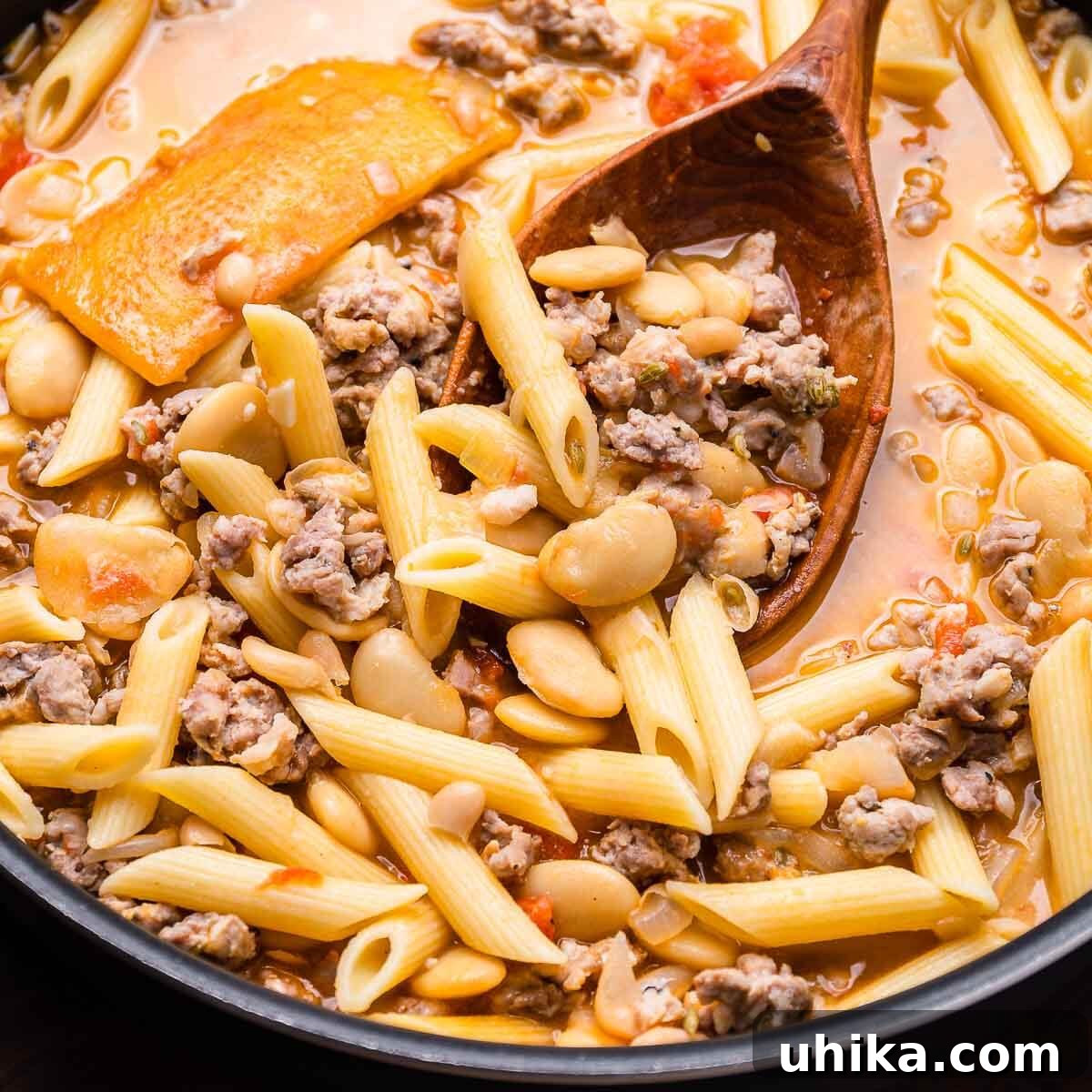
See the cheese rind in the above pic of our sausage pasta fagioli recipe.
For best results, cut larger rinds (like those from a Costco-sized block) into smaller, manageable pieces – about one inch square is ideal. These can be stored in the freezer for future use. You can often find pre-packaged rinds at specialty grocery stores or even ask your local cheese monger; they might even give them away! Utilizing these rinds is a simple, effective way to add restaurant-quality flavor to your homemade dishes without extra cost.
Fresh vs. Dried: Navigating the World of Herbs
The choice between fresh and dried herbs can significantly impact the flavor of a dish. While fresh herbs are often championed, not all dried herbs are created equal, and some should be avoided altogether.
- Dried Basil: A Firm No. We cannot stress this enough: dried basil is, in our opinion, a poor ingredient. It loses its delicate, sweet notes and often develops a strong, licorice-like, and sometimes unpleasantly bitter flavor that bears no resemblance to its fresh counterpart. If fresh basil isn’t available, it’s often better to omit it entirely rather than use dried, which can actively detract from your dish. Similarly, “Italian seasoning” blends, which often contain dried basil, are best avoided in authentic Italian or Italian-American cooking.
- Dried Herbs That Shine: In contrast, certain herbs actually intensify and improve in flavor when dried. Oregano, especially Sicilian or Greek varieties, is a prime example; its potency is enhanced, making it ideal for robust sauces like pizzaiola. Thyme and rosemary also retain their aromatic qualities beautifully when dried, making them excellent staples for your pantry.
- Parsley: Dried parsley is generally harmless; it won’t ruin your food, but it also offers minimal flavor, often serving more as a green garnish. Freezing fresh parsley, chopped and stored in small packets, is a better alternative if fresh is hard to come by.
Understanding these distinctions is crucial for building truly flavorful dishes. Don’t fall for the trap of over-seasoning with poor quality dried herbs; sometimes, less is truly more.
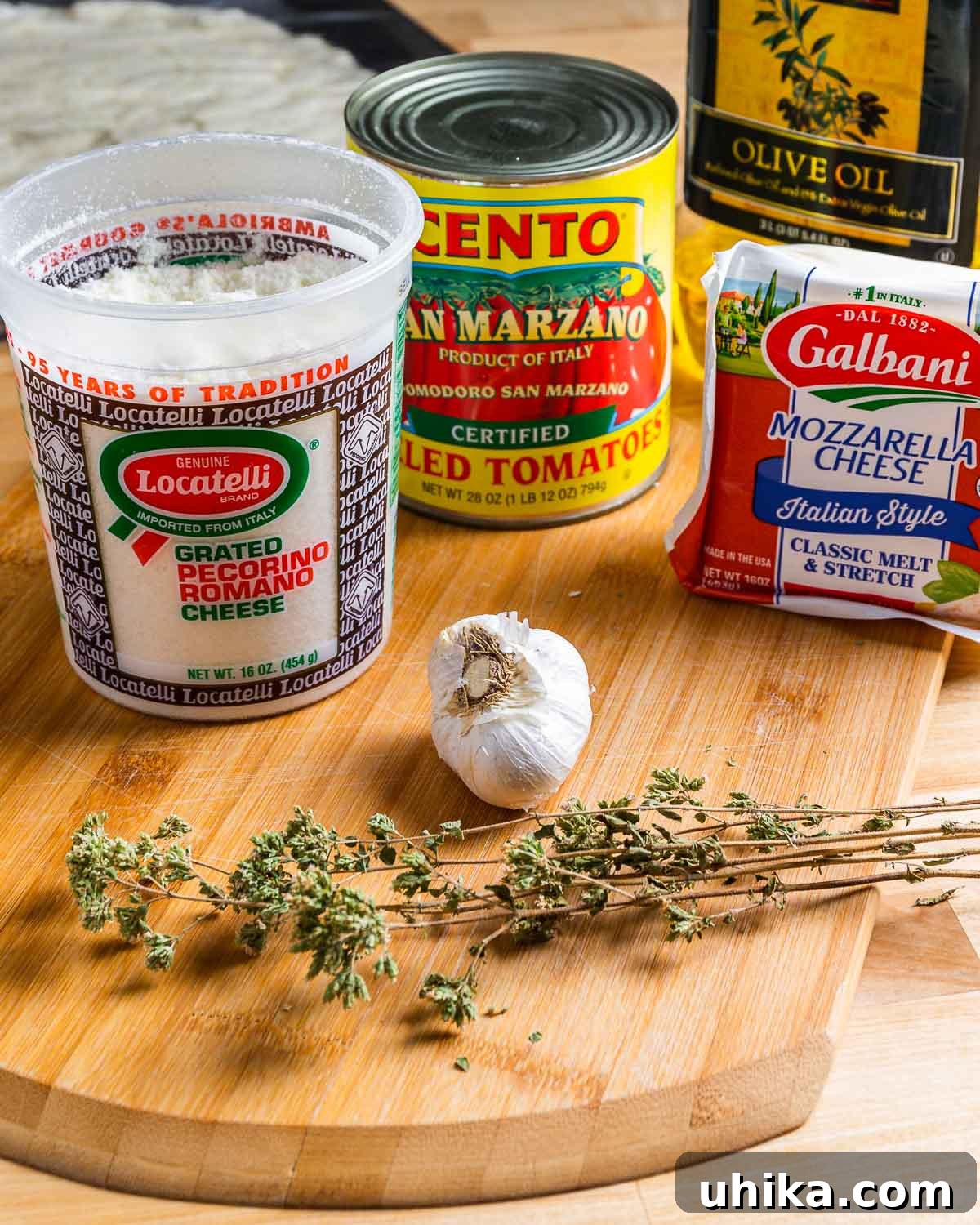
Dried Sicilian oregano is wonderful in certain recipes like our Grandma pizza.
Exploring Culinary Resources & Sweet Delights
When it comes to culinary resources, we often turn to trusted sources that prioritize tradition and accurate information. Frank Fariello’s “Memorie di Angelina” website is an invaluable resource for understanding the historical context and authentic preparation methods of Italian dishes. While we don’t strictly follow recipes, these resources provide a solid foundation and inspiration for our own adaptations, ensuring we respect the culinary heritage. For a deeper dive into the science of cooking, Harold McGee’s works are highly regarded, offering insights that can elevate any home cook’s skills.
On the sweeter side, a common request we receive is for a rainbow cookie recipe. These vibrant, almond-flavored layered cookies are a beloved Italian-American pastry, especially during the holidays. While we don’t have a recipe available just yet, it’s certainly on our radar! Developing and documenting a complex dessert like rainbow cookies is a time-consuming process, involving multiple testing rounds and detailed photography. We’re dedicated to delivering only the best and most thoroughly tested recipes, so while we aim to release it, it might not be ready for this coming holiday season. In the meantime, explore our other delightful Italian cookie recipes, including Cuccidati, Reginae, and Pignoli, to satisfy your sweet cravings.
Explore More Delicious Recipes from Sip and Feast
We hope this deep dive into Steak Pizzaiola has inspired you to bring this incredible dish into your kitchen. For more authentic Italian and Italian-American recipes, explore our culinary resources:
- Sip and Feast Steak Pizzaiola Recipe
- Sip and Feast Chicken Pizzaiola Recipe
- Sip and Feast Stuffed Mushrooms with Pizzaiola Sauce Recipe
- Memorie di Angelina’s La Pizzaiola
- Sip and Feast Homemade Beef Stock Recipe
If you enjoyed our discussion on Steak Pizzaiola, please leave us a comment below! We love hearing from you and answering your questions. Feel free to send your queries to [email protected]. No question is too small when it comes to cooking!
If you enjoy our weekly podcast, consider supporting us on Patreon to gain access to 2 bonus episodes each month and help us continue bringing you delicious content.
Thanks for reading and happy cooking!
For a complete list of all podcast episodes and articles, visit our podcast episode page.